REVIEW · PARIS
WW1 Australians in the Somme -Villers Bretonneux, Le Hamel – Day trip from Paris
Book on Viator →Operated by ADRIAN ROADS · Bookable on Viator
A Somme day with an Australian focus. This 12–13 hour trip takes you from Paris early in the morning to key WW1 sites tied to Australian forces, with a small group of seven and a guide who handles the driving and the commentary. I like the tight focus on Australia’s role—not just generic WW1 stops—and I also like that most sites have free entry, so your money goes mainly to transport and interpretation. One thing to consider: several stops are short, so you’ll want to arrive ready for a “see the place, feel it, move on” rhythm.
You meet at 6:30am at Théâtre du Lido on the Champs-Élysées, then settle into an air-conditioned vehicle with an English driver guide. You’ll spend about 40 minutes at Villers-Bretonneux, then move through Le Hamel, Lochnagar Crater, Pozières Windmill, Mont Saint-Quentin, and finish with the Historial de la Grande Guerre in Péronne, where admission is included.
In This Review
- Key highlights you’ll actually feel on the day
- A Somme day that starts early from the Champs-Élysées
- Entering the Australian National Memorial at Villers-Bretonneux
- Le Hamel and the moment Monash’s tactics looked modern
- Lochnagar Crater: the blast you can still see
- Pozières Windmill: when soil traveled to Canberra
- Mont Saint-Quentin and how memorials get broken and rebuilt
- Péronne’s Historial de la Grande Guerre: where trench art and gear take over
- Why the guide matters on this specific route
- Price and what you’re really paying for ($300.06)
- How to handle a somber day without feeling rushed
- Should you book this Somme day trip?
- FAQ
- What time does the tour start?
- How long is the day trip?
- Where do I meet the group in Paris?
- How big is the group?
- Is lunch included?
- What’s included in the ticket price?
- Is admission free at the other memorial stops?
- What happens if the weather is bad?
- Can I get a full refund if I cancel?
Key highlights you’ll actually feel on the day
- Seven-person max keeps the group calm and personal
- A driver guide handles logistics so you can focus on the sites
- Australia-first memorials like Villers-Bretonneux and Le Hamel
- Free entry for multiple stops, including major memorial grounds
- Trench-art and uniforms at the Historial de la Grande Guerre in Péronne
A Somme day that starts early from the Champs-Élysées
If you only know WW1 as dates and headlines, this tour does a better job of making it real. You leave Paris at 6:30am from Théâtre du Lido (116 bis Av. des Champs-Élysées) and spend the day moving through the Somme region with an air-conditioned vehicle.
Because it’s a long day—about 12 to 13 hours—the early start matters. You’ll likely feel that in your body at first, but you also get a payoff: you’re in the memorial grounds in daylight, before the sites get crowded, and you’re not trying to rush the last stop after a late start from Paris.
The group size is capped at seven travelers, which changes the tone. You’re not just a number on a bus. You can ask questions and actually hear the guide’s explanations without fighting for attention. If you like a structured day with minimal stress, this format is a win.
You can also read our reviews of more tours and experiences in Paris



Entering the Australian National Memorial at Villers-Bretonneux
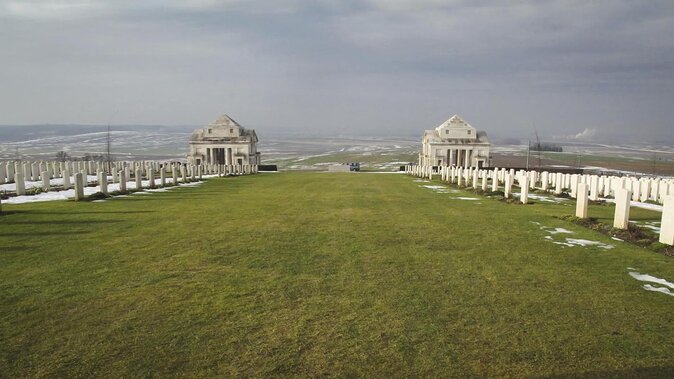
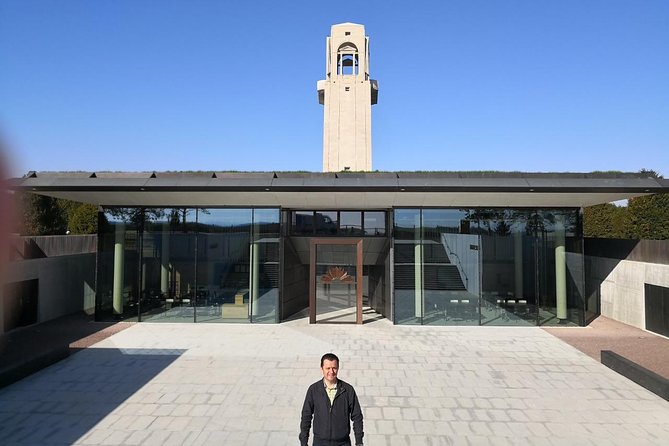
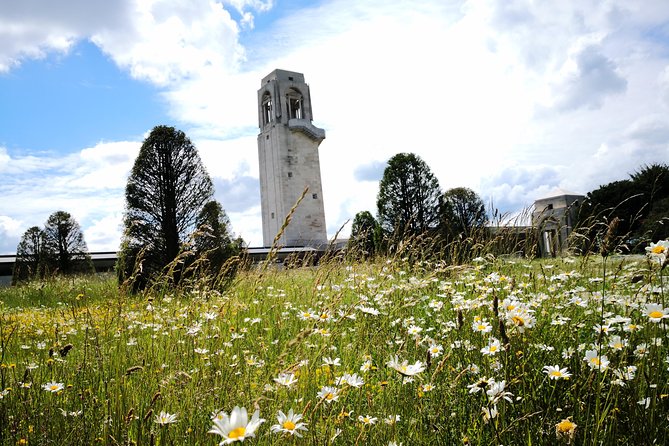
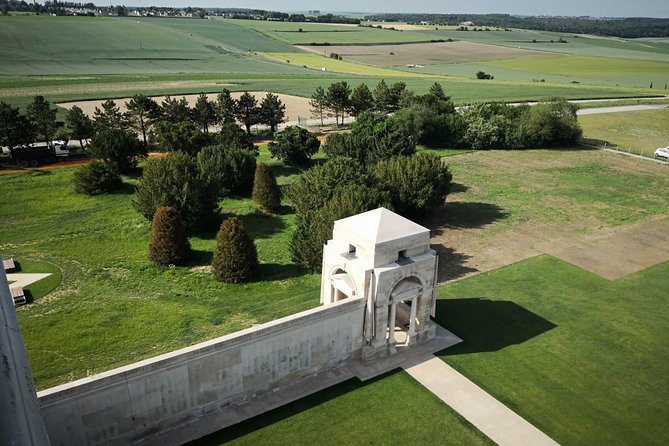
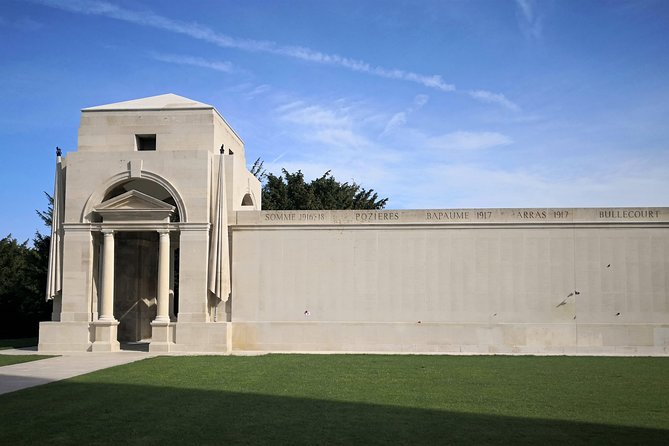
The first stop is the Australian National Memorial in Villers-Bretonneux. This is the main memorial to Australian soldiers killed on the Western Front whose graves are unknown. It lists 10,773 names of members of the Australian Imperial Force with no known grave, for deaths from 1916 (when Australian forces arrived in France and Belgium) through the end of the war.
Designed by Sir Edwin Lutyens, the memorial centers on a tower within the Villers-Bretonneux Military Cemetery. Around it, walls and panels carry the missing men’s names. There’s also a Cross of Sacrifice in the cemetery, and the main inscription is in French and English on either side of the entrance to the tower.
This stop also matters historically for the specific location choice. The memorial is linked to the Second Battle of Villers-Bretonneux (24–27 April 1918). Standing there, you can connect the place to a turning point rather than treating the whole Somme as one blurry slog.
Practical note: you’ll have around 40 minutes, and the cemetery grounds are calm. Don’t try to read every name in one go. Pick a short section, slow down, and let the scale hit you.
Le Hamel and the moment Monash’s tactics looked modern
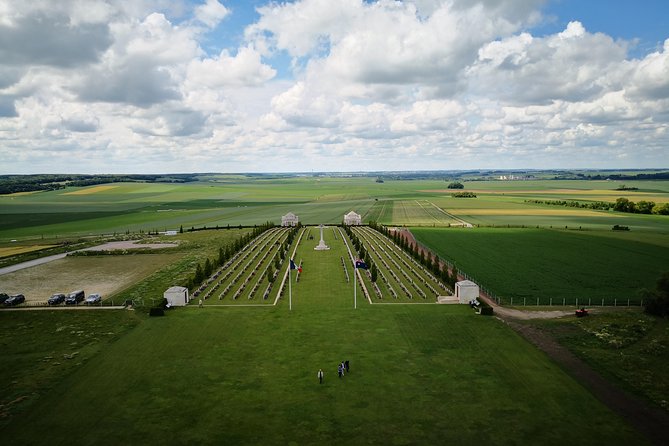
Next up is the Australian Corps Memorial at Le Hamel, focused on the battle of 4 July 1918. This is one of the most interesting stops on the day because it’s not only about sacrifice—it’s about how the battle was fought.
The guide’s explanation ties it to General Monash and the support of the Americans. The attack used a combination that “clicked” for modern warfare: infantry, artillery, air forces, and tanks working together for the first time in this combined way. If you want one place to understand the war evolving, this is it.
The memorial park is in the village of Le Hamel, created by the Australian state and inaugurated in 1998. Instead of just pointing at a battlefield and moving on, the site uses panoramic displays and explanatory panels to show the strategic challenge. Several trenches have also been preserved.
You’ll have about 30 minutes here. It’s enough time to walk and read, but not enough to linger for an hour-long study. If you’re the type who enjoys taking notes, snap a few photos and trust the guide’s spoken context to connect the visuals.
Lochnagar Crater: the blast you can still see

Then you reach Lochnagar Crater, south of La Boisselle. This is the kind of WW1 site that looks simple at first glance—just a hole in the ground—until you learn what made it.
The crater comes from an underground mine, secretly planted by the British under German lines. It was dug by the Tunnelling Companies of the Royal Engineers under a German field fortification known as Schwabenhöhe (Swabian Height). The British named the mine after Lochnagar Street, the British trench from which the gallery was driven.
The mine was part of a wider plan: there were 19 mines placed beneath the German lines along the British section of the Somme front to help the infantry advance on the start date. Lochnagar was sprung at 7:28 a.m. on 1 July 1916. It left a crater about 98 ft (30 m) deep and 330 ft (100 m) wide.
One reason this stop hits is that the battle outcome around it was mixed. The attack on the flanks failed due to German small-arms and artillery fire, with some success only on an extreme right flank area. The crater was captured and held by British troops, and it’s been preserved as a memorial. A religious service is held each 1 July, which adds a sense of ongoing remembrance rather than a museum-only story.
You only get about 10 minutes at Lochnagar. That’s short, so if you tend to stare when something feels heavy, be ready for your time to pass quickly. Still, it’s worth it for the scale. Even in ten minutes, you can picture what those soldiers were facing at the Somme’s opening hour.
Pozières Windmill: when soil traveled to Canberra
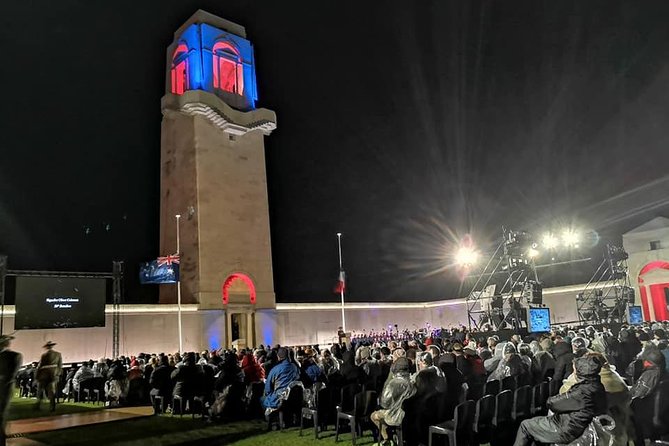
At Pozières, you’ll stop at the Windmill Memorial site, an Australian memorial established in the 1930s. The idea came from Australia’s official war historian, Charles Bean, and the wording matters because it frames what the memorial is trying to express: the Windmill site marks a ridge with an unusually concentrated level of Australian sacrifice.
In the 1916 Battle of the Somme, Australians suffered severe casualties in the countryside around the Windmill. Over seven weeks, the Australian Imperial Force had 23,000 casualties, and more than 6,700 died.
Here’s a detail that stays with you because it connects battlefield memory to modern commemoration. On 11 November 1993, soil from the Windmill site was cast over the coffin of Australia’s Unknown Soldier during his funeral at the Australian War Memorial in Canberra.
This stop also takes about 10 minutes, so think of it as a moving marker in the day’s emotional storyline. You’re not “done” with the war here—you’re given one more hard fact and one more bridge between France and home.




Mont Saint-Quentin and how memorials get broken and rebuilt
Another quick, significant stop is the 2nd Australian Division Memorial at Mont Saint-Quentin. This memorial sits on the road between Bapaume and Péronne and is the only one of five Australian division memorials initiated by members of that division.
The base was erected in 1925. It originally included bronze bas-reliefs by May Butler-George, showing scenes of men hauling and pushing a gun and men advancing with bayoneted rifles and hand-grenades. On top was an Australian soldier thrusting his bayonet through a German eagle, sculpted by Charles Web Gilbert.
During WWII, that physical reminder did not survive intact. In 1940, German soldiers smashed the memorial. A replacement statue by Stanley Hammond—a thoughtful Australian soldier looking down—was erected in 1971.
That timeline does something important for your understanding. The memorial isn’t just a WW1 object. It’s proof that memory gets targeted and then repaired. Even in a short visit of about 10 minutes, you’ll likely feel a shift from battlefield facts to the longer story of remembrance.
Péronne’s Historial de la Grande Guerre: where trench art and gear take over
After lunch (not included), the tour closes with the Historial de la Grande Guerre in Péronne. Admission is included, and you’ll have about 1 hour inside.
This museum is housed in a 13th-century medieval castle, and that setting helps the exhibits feel grounded. The museum displays large collections of uniforms and weapons worn and used by soldiers during the conflict, which is useful when you’ve just spent the day walking real terrain.
A standout part of the museum collection is the permanent display of Trench Artists. The information you’ll see includes artists such as Otto Dix, known for graphic etchings that testify to the atrocities of war. Even if you’re not into art history, this section often does a strong job of putting emotion and witness back into the objects and documents.
One practical consideration: one hour can feel quick in a museum. If you read everything slowly, you might not catch all the details. Still, it’s a strong ending because it shifts you from “where it happened” to “what it looked like from inside the war.”
Why the guide matters on this specific route
The route is heavy on remembrance, but it’s not built as a silent walk. The value is in the commentary—tying each site to Australia’s role and to how the battle unfolded across different moments in the war.
I also like that the tour uses a driver guide, meaning you’re not split between directions and explanations. For a day like this, it saves energy. You don’t have to figure out parking, roads, or where to stand for the best view of a monument. The guide handles navigation so you can focus on the story.
You’ll also notice the small-group size shows up in how the day flows. With only seven travelers, your attention doesn’t get swallowed by the crowd. And if your guide is someone like Regis (names are not always stated, but the tours in this program commonly include guides with deep WW1 background), you get a steady thread between the memorials instead of disconnected site photos.
Price and what you’re really paying for ($300.06)
At $300.06 per person, this is not a cheap day trip. But you’re paying for several things that would take real time to recreate on your own.
Your price includes:
- Air-conditioned vehicle
- Driver guide
- Admission to the Historial de la Grande Guerre in Péronne
Most other stops have free admission, including Villers-Bretonneux (40 minutes), Le Hamel (30 minutes), Lochnagar Crater (10 minutes), Windmill Memorial (10 minutes), and the Mont Saint-Quentin memorial (10 minutes). That free-entry setup matters because it keeps the day from turning into a series of paid attractions. You’re paying mainly for getting there, getting explained to, and ending with the museum admission that isn’t free.
What’s not included is also clear: lunch and hotel pick-up/drop-off. If you’re starting your day at the meeting point on the Champs-Élysées, that’s fine, but you should plan to manage meals yourself.
Value-wise, this works best if you:
- want guided interpretation rather than self-driving and reading alone
- appreciate an efficient route that hits multiple Australian sites in one day
- don’t want the mental overhead of coordinating transportation across the Somme
How to handle a somber day without feeling rushed
This is a full day about WW1 losses. Even if you’re excited, it can hit emotionally. So I’d plan for pacing.
Here are smart ways to make it easier on yourself:
- Wear comfortable shoes. Memorial grounds and walkways add up even when stop times are short.
- Bring layers. Early starts from Paris can feel cool, and the day can change quickly.
- Plan for a simple lunch strategy. Since lunch isn’t included, bring money and keep it light so you don’t feel heavy before the museum.
- Use the guide as your filter. When you see a place that feels overwhelming, let the explanation give you the order of importance.
- Don’t try to read everything. At sites like Villers-Bretonneux, the scale is the point. Slow down for a section, not the whole list.
Also, remember the rhythm: a few longer stops, then a series of shorter ones. That’s not a flaw—it’s how the day fits into a manageable schedule.
Should you book this Somme day trip?
I think you should book if you want a guided, Australia-centered WW1 day from Paris that covers the biggest memorials without you needing to plan each turn. The small group size, the free-entry memorial stops, and the included Historial museum admission make the structure feel practical. If you’re traveling with teens or anyone who learns better by hearing a guided story, the mix of memorials, trench preservation, and museum exhibits is a strong combo.
Skip it if you want lots of free time to linger in one place or if you dislike early departures and tight stop durations. This tour is built for motion and meaning, not for long, quiet solitude at every site.
If your goal is a Somme day that’s specific, thoughtfully sequenced, and not overwhelmed by logistics, this is a solid choice.
FAQ
What time does the tour start?
The tour starts at 6:30 am.
How long is the day trip?
It runs about 12 to 13 hours.
Where do I meet the group in Paris?
You meet at Théâtre du Lido, 116 bis Av. des Champs-Élysées, 75008 Paris.
How big is the group?
The tour has a maximum of 7 travelers.
Is lunch included?
No. Lunch is not included.
What’s included in the ticket price?
Included items are air-conditioned vehicle, driver guide, and admission to the Historial de la Grande Guerre in Péronne.
Is admission free at the other memorial stops?
Admission is listed as free for the memorial and battlefield stops included in the schedule.
What happens if the weather is bad?
The tour requires good weather. If it’s canceled due to poor weather, you’ll be offered a different date or a full refund.
Can I get a full refund if I cancel?
Yes. Free cancellation is available up to 24 hours in advance of the experience start time for a full refund.