REVIEW · PARIS
All of Paris Tour in a Vintage Open-Top French Car Citroen DS
Book on Viator →Operated by Classic 60's Paris Tours · Bookable on Viator
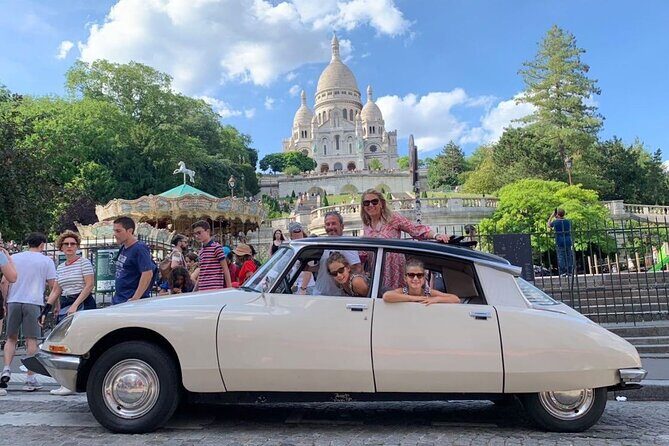
A ride in a vintage Citroën DS is a fun way to see Paris. You’ll get a private outing with guide Benjamin, plus a driver who keeps things calm in traffic while you soak up views from an open top. I like how the tour mixes big-photo icons with smaller Paris details without turning the day into a sprint.
Two things I really like: first, the comfort. The car has heating and roomy seats, so you can enjoy the open-air feeling without freezing. Second, you get full guide attention for up to four people, which makes the stories about landmarks actually stick. Benjamin also has a knack for sharing practical, interesting context at each stop, including photo-friendly moments.
One possible drawback: the route is packed, so most stops are brief. If you’re hoping for long museum time or a slow walk-in-and-out plan, you’ll need to book separate time for that. Also, the tour depends on good weather, since it’s open-top.
In This Review
- Key highlights worth getting excited about
- Why a vintage open-top Citroën DS changes the whole feel of Paris
- Value check: $478.90 per group and what you should calculate
- How the pickup works (and why timing from 10AM to 4PM matters)
- A 3-hour plan built for seeing a lot without feeling rushed
- Champs-Élysées, Grand Palais, and Concorde: starting with the big lights
- Les Invalides and the Arc de Triomphe: scale, ceremony, and one seriously dramatic roundabout
- Pont Alexandre III and Opéra Garnier: luxury views and theatrical architecture
- Place Vendôme and the Eiffel Tower area: from luxury blocks to the most recognizable silhouette
- Louvre and Notre-Dame / Île de la Cité: the historic core in quick, meaningful looks
- Latin Quarter and the Seine Left Bank: books, cafés, and church-and-garden stops
- Montmartre in a single tour window: Sacré-Cœur, Pigalle, art streets, and Je t’aime
- Palais-Royal, covered passages, and the calm around Paris power
- A unique Paris detail: the Statue of Liberty workshop plaque stop
- Logistics you should know before you book
- Should you book this Citroën DS highlights tour?
- FAQ
- How many people are in the group?
- Is hotel pickup included?
- What time of day is best for this tour?
- How long is the tour?
- Are children allowed?
- What happens if the weather is bad?
Key highlights worth getting excited about
- Benjamin’s private-guiding style: full focus for a small group and lots of landmark context
- Vintage Citroën DS comfort: heating, legroom, and the thrill of open-air sightseeing
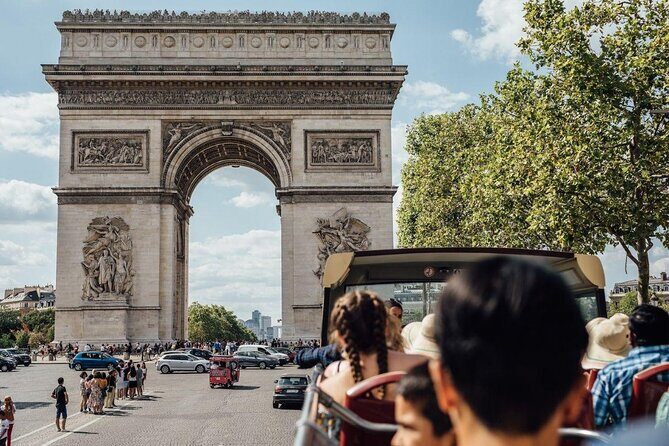
- Arc de Triomphe thrill: a ride through the 12-lane roundabout
- Icon-to-icon efficiency: Champs-Élysées, Louvre area, Île de la Cité, and Eiffel Tower in a single afternoon
- Real Paris details: cafés like Les Deux Magots and Le Café de Flore, plus Montmartre art corners
- Calm, confident driving: the kind of driving that makes chaotic streets feel manageable
Why a vintage open-top Citroën DS changes the whole feel of Paris
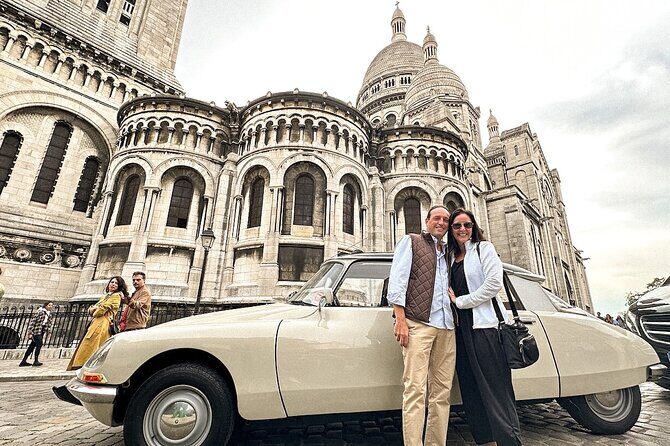
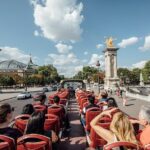
Paris is best when you can see it moving. This tour nails that. Instead of standing in long lines or spending the day figuring out transit, you ride in a vintage Citroën DS with an open-top experience that turns the city into one long viewfinder.
The car is set up for comfort, not just looks. You get heating and comfortable seats with plenty of legroom, which matters because you’re out and about for about 3 hours. That comfort helps you stay present for the stories your guide is telling, rather than thinking about sore legs or cold air.
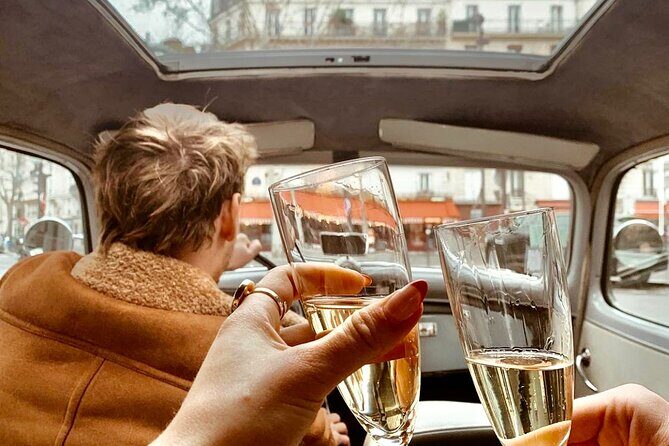
And yes, the car draws attention. People notice the Citroën DS as it rolls by, and that adds a little fun energy to the day. It also helps for photos: you’re higher up than a walking view, and you can catch quick angles of monuments without climbing or hunting for the perfect spot.
You can also read our reviews of more tours and experiences in Paris.


Value check: $478.90 per group and what you should calculate
The price is $478.90 per group for up to four people. That’s not cheap if you’re thinking per person—but it can be good value when you do the math.
- If you go as a solo traveler or couple and only one or two seats are filled, the per-person cost is high.
- If you fill the group up to four, the cost drops a lot and starts to feel like a smart way to buy time and convenience.
Where it becomes especially worth it: you’re not only paying for the car ride. You’re paying for a private guide (Benjamin) plus a professional driver, with passenger insurance and a setup designed for sightseeing rather than just transportation. That’s a big difference versus piecing together a route on your own when time and energy are limited.
How the pickup works (and why timing from 10AM to 4PM matters)
Hotel pickup and drop-off are included, but Paris has tricky access rules. Pickup is available inside the city except for these areas: 3rd, 4th, 10th, 11th, 12th, 19th, and 20th arrondissements. Drop-off is also limited in the same way.
You also won’t pick up or drop off at Le Marais, Bastille, République, or Gare du Nord. If your hotel isn’t centrally located or isn’t on the pickup list, you can choose a meeting point instead.
Two practical options:
- Meet in front of Hôtel Crillon at 10 place de la Concorde (75008)
- Meet in front of the Panthéon at Place du Panthéon (75005)
Timing matters because this is a city that punishes rush hours. The best schedules are between 10AM and 4PM to avoid traffic jams. If you can be flexible with your start time, do it. It helps your guide keep the pacing smooth and your ride more enjoyable.
A 3-hour plan built for seeing a lot without feeling rushed
This is a highlights loop, not a slow-brew Paris seminar. The stops are spread across central Paris, then out toward Montmartre, with plenty of quick photo windows.
Plan on doing short looks rather than deep sightseeing. That’s the trade-off. The upside is you’ll leave with a clear mental map of where everything sits: the grand ceremonial axis (Champs-Élysées to Arc de Triomphe), the major museum zone (Louvre area), the historic core on Île de la Cité, and the hilltop neighborhoods that feel like a separate town (Montmartre).
If you’re arriving for the first time and want to orient yourself fast, this tour is the kind of day that makes the rest of your trip easier.
Champs-Élysées, Grand Palais, and Concorde: starting with the big lights
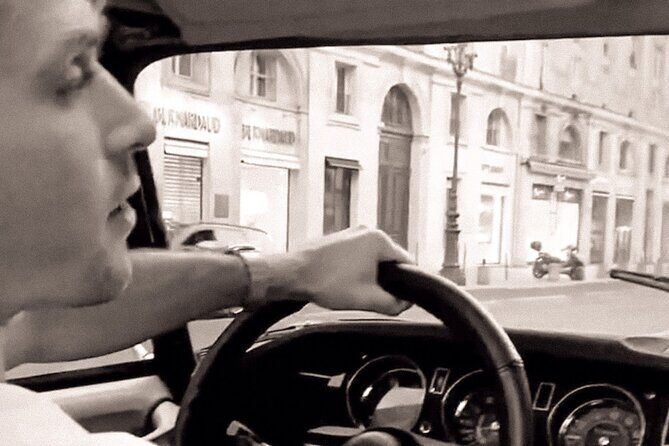
You kick off with Champs-Élysées, the iconic avenue where Paris really leans into spectacle. The best part of starting here in a car is timing. You get context from your guide while the boulevard unfolds around you, so you’re not just looking at the shops—you’re learning how the avenue fits into Paris’s story.
Next comes the Grand Palais, known for its glass-domed grandeur and its role as an arts-and-architecture landmark. You’ll get a quick moment to take in the scale, which is hard to appreciate when you only pass it by on foot for a few seconds.
Then you roll into Place de la Concorde, with the fountains, statues, and the famous obelisk connection. This is a good place to learn how the city layers eras on top of each other—Ancient references, French political power, and modern Paris all in one view.



Les Invalides and the Arc de Triomphe: scale, ceremony, and one seriously dramatic roundabout
From Concorde, you head toward Les Invalides, a major site tied to French military history, topped by its iconic golden dome area. It’s the kind of landmark that looks impressive from a distance, but your guide’s explanation makes it feel more specific than a pretty building.
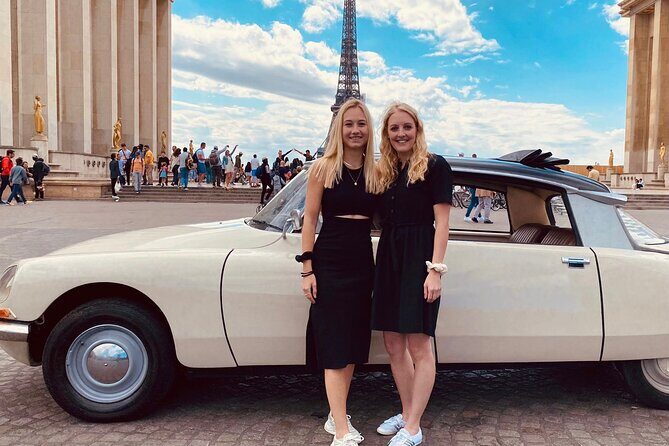
Then comes the highlight that’s hard to forget: the Arc de Triomphe, plus the ride through the 12-lane roundabout. This isn’t theoretical. You get the sensation of moving through one of Paris’s most intense traffic hubs, while your guide narrates what you’re seeing. It turns a stress point into a memorable moment.
You also get a short stop time to take in the arch area. If you’ve never been here before, you’ll walk away with the feeling of its importance in the city’s layout.
Pont Alexandre III and Opéra Garnier: luxury views and theatrical architecture
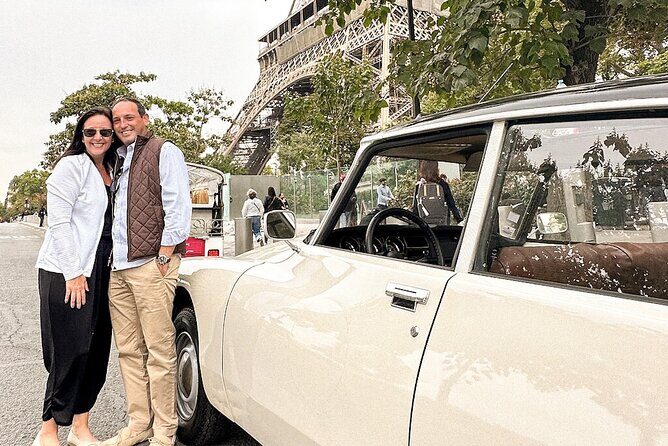
After the Arc area, the route shifts toward Pont Alexandre III, often described for a reason: you get sweeping views and those ornate golden details that make the bridge feel like a piece of art. This is a stop where your guide can point out what to look for while you’re still traveling, so you arrive already knowing what matters.
You also pass by Opéra Garnier, with its grand, detailed exterior. Even if you don’t go inside, the building hits you visually. The tour’s strength here is that you’re not just staring—you’re getting a quick guide to what makes the architecture special.
Place Vendôme and the Eiffel Tower area: from luxury blocks to the most recognizable silhouette
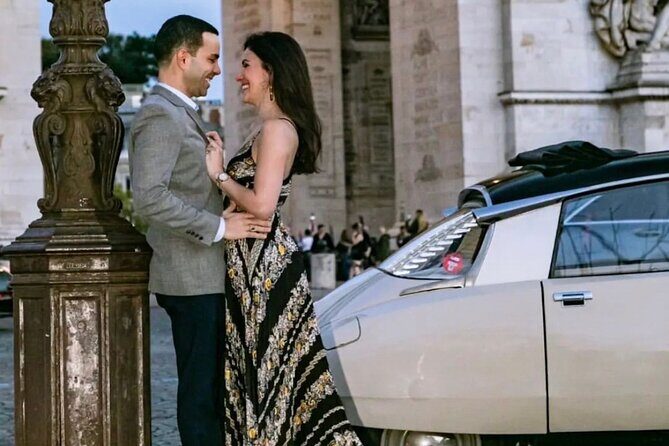
Next is Place Vendôme, another quick hit of Paris refinement, with the Vendôme Column and luxury shopping energy nearby. It’s a good moment to compare districts: the vibe is completely different from the historical ceremonial areas you just saw.
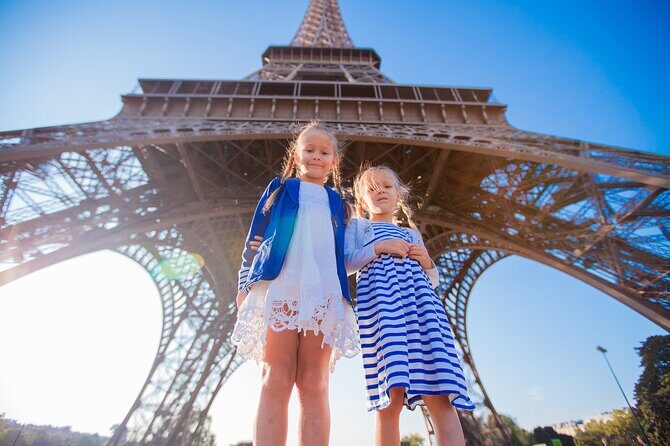
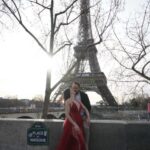
Then it’s time for the Eiffel Tower area, with a stop on Rue de l’Université and surrounding streets for a proper “there it is” moment. You don’t need a long walk for this stop to work. Seeing it from a comfortable, moving vantage gives you scale fast—then you can decide later if you want to go up, which is smart because this tour is short by design.
Louvre and Notre-Dame / Île de la Cité: the historic core in quick, meaningful looks
You’ll also get time around the Louvre Museum and then closer to Île de la Cité, where Notre-Dame sits. These are heavy hitters, and the drawback of many highlight tours is that they spend too long on just one place. This one spreads the attention out, so you see the whole “center of gravity” of Paris.
For the Louvre area, your stop is short. That’s okay. The goal here is orientation: you’ll understand where the museum sits in relation to the rest of what you want to see later.
At Île de la Cité, it’s about the feeling of old Paris. The tour’s messaging here is simple: Gothic landmarks, the Seine’s curve, and the sense that this part of the city has been the stage for centuries. You also get Sainte-Chapelle time later in the route, which makes the Île de la Cité focus more complete.
Latin Quarter and the Seine Left Bank: books, cafés, and church-and-garden stops
The tour then leans into the Latin Quarter and Left Bank—the parts of Paris that feel like you could wander for hours. You get a guided mix of famous and culture-heavy stops, including references your guide can explain quickly.
You’ll see and hear about:
- Panthéon in the Latin Quarter area
- Ernest Hemingway’s Paris apartment location
- Saint-Sulpice Church
- Jardin du Luxembourg
- Pont Neuf, Paris’s oldest standing bridge
Then you shift into café-and-literature territory. Stops include:
- Les Deux Magots
- Le Café de Flore
- Shakespeare and Company
- Rue de Buci
This is where the tour feels especially useful for your trip planning. If you later want to build a walking day around cafés, bookstores, and viewpoints, this tour gives you a shortlist of what to prioritize.
A practical note: some of these places are best enjoyed by foot, not by car. So treat the tour stops like your menu, not the whole meal.
Montmartre in a single tour window: Sacré-Cœur, Pigalle, art streets, and Je t’aime
Montmartre can swallow your day if you let it. This tour doesn’t try to tame it completely, but it gives you the essentials in a short, well-timed push.
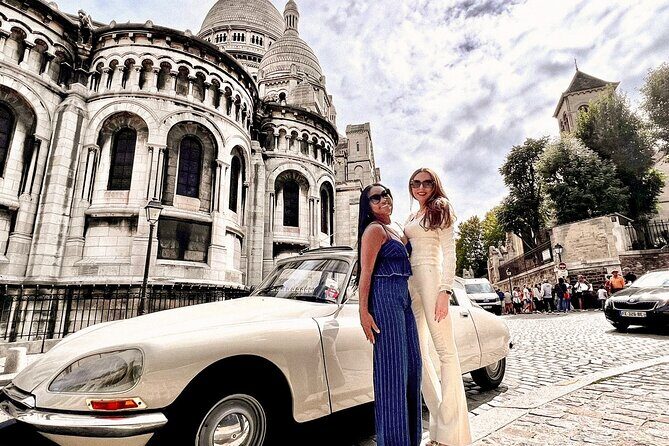
You’ll reach Basilique du Sacré-Cœur and get time for views over the city. From there you move through the Montmartre neighborhood and toward Pigalle, which your guide frames as a major entertainment and nightlife zone.
Then come the art-street stops that make Montmartre feel different from the rest of Paris:
- Place du Tertre (painters and the classic Montmartre feel)
- Rue Lepic
- La Maison Rose
- Rue de l’Abreuvoir
- Le Mur des Je t’aime (the Wall of I Love You)
You also get time connected to Montmartre cultural spots like Le Chat Noir and Moulin de la Galette. The tour includes Van Gogh’s House and Renoir’s House too, plus Clos Montmartre. Even if you don’t go far into any location, the guided context helps you understand why artists were drawn there.
One consideration: Montmartre involves hills and stairs nearby. Even though you’re mostly in the car, some areas are walkable and you may have short climbs. Wear shoes that work for uneven streets and steps.
Palais-Royal, covered passages, and the calm around Paris power
Later, the tour returns toward central Paris with stops that often get skipped in typical “icons only” days.
You’ll see:
- Palais-Royal, with its arcades and the Colonnes de Buren
- Galerie Vivienne, a glass-roofed passage with classic interior charm
- Place des Victoires
- Saint-Étienne-du-Mont
- La Sorbonne
- French Senate / Palais du Luxembourg
- Académie Française
- Place Dauphine
- Île Saint-Louis
This part of the route helps you understand Paris beyond the obvious photos. It’s more about how Paris organizes power, intellect, and everyday elegance in a tight grid of streets.
And you also get a glimpse of political landmarks like the French National Assembly and the Élysée Palace area. Even without long stops, you’ll recognize where government sits relative to where tourists spend their time.
A unique Paris detail: the Statue of Liberty workshop plaque stop
One of the more interesting and less common stops is the Rue de Chazelles area, tied to the workshop at 25 Rue de Chazelles where parts of the Statue of Liberty were built (with a commemorative plaque now marking the location).
This is a great example of what makes a guide-led car tour worth it. Instead of only hitting postcard landmarks, you get a small story that connects Paris craftsmanship to a global icon.
It’s the kind of moment that sticks in your head because it feels surprising but makes sense once you’re told.
Logistics you should know before you book
This is a private tour/activity. Only your group participates. The group limit is up to four people, and it’s offered in English with mobile ticketing.
The car has heating and comfortable seats with legroom, and you’ll have bottled water. Alcoholic beverages are not included, so if you want drinks, you’ll need to handle that separately.
Kids under 10 aren’t allowed because the back seats don’t have seat belts. Service animals are allowed, and the pickup is near public transportation—handy if you ever need a backup plan.
Finally, the tour requires good weather. It’s open-top, so rainy or stormy conditions can affect whether it runs as planned.
Should you book this Citroën DS highlights tour?
Book it if you want a first-day or early-trip orientation and you like your sightseeing to be comfortable, guided, and fast. This is especially smart for couples or small groups who want to hit many top landmarks without spending your afternoon stuck in transit or figuring out where to go next.
I’d skip it if your dream Paris day is slow walking, long museum time, or deep neighborhood wandering. The route is packed, and most stops are brief looks from curbside or short windows.
If you can manage short stops and you’re okay with riding in an open-top classic (with heating to help), this tour is a high-ROI way to see Paris in a way that feels like an event, not just an itinerary.
FAQ
How many people are in the group?
It’s a private tour for up to four people, and only your group participates.
Is hotel pickup included?
Yes. Pickup and drop-off are included inside Paris, but not in the 3rd, 4th, 10th, 11th, 12th, 19th, and 20th arrondissements, and there are also pickup and drop-off limitations for Le Marais, Bastille, République, and Gare du Nord.
What time of day is best for this tour?
The best schedules are between 10AM and 4PM to help avoid traffic.
How long is the tour?
The tour is about 3 hours.
Are children allowed?
Children under 10 are not allowed due to no seat belt on the back seats.
What happens if the weather is bad?
The tour requires good weather. If it’s canceled due to poor weather, you’ll be offered a different date or a full refund.