REVIEW · MONT ST MICHEL
American 101st & 82nd Paratroopers in Normandy battlefield tour
Book on Viator →Operated by DDayYourWay · Bookable on Viator
Normandy tells its story in small places. This private 8-to-10-hour airborne battlefield tour connects the early morning jumps of the 101st and 82nd Airborne Divisions to the ground fighting that followed, with a guide taking you between stops on quiet roads where the action happened. The day is built around locations tied to paratroopers, glider missions, and the desperate fights around villages and bridges.
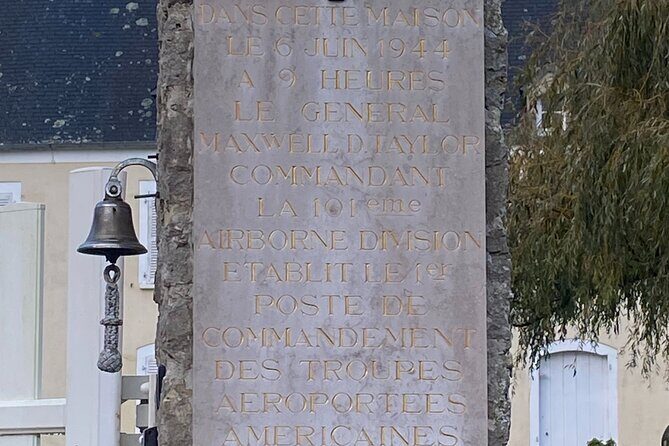
You’ll start with Sainte-Mère-Église, then work your way through key sites toward Utah Beach and the La Fière Bridge area—where the story tightens fast.
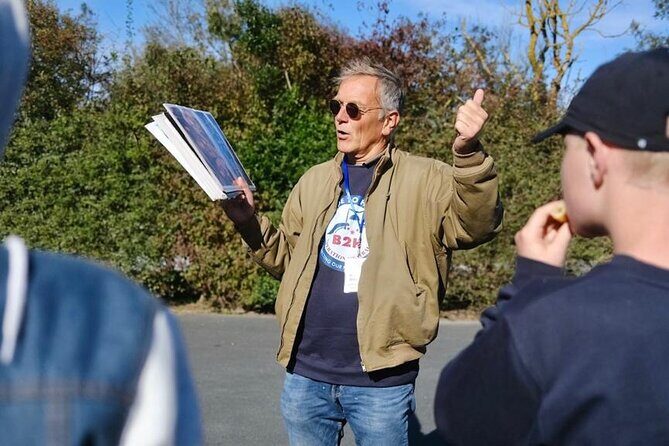
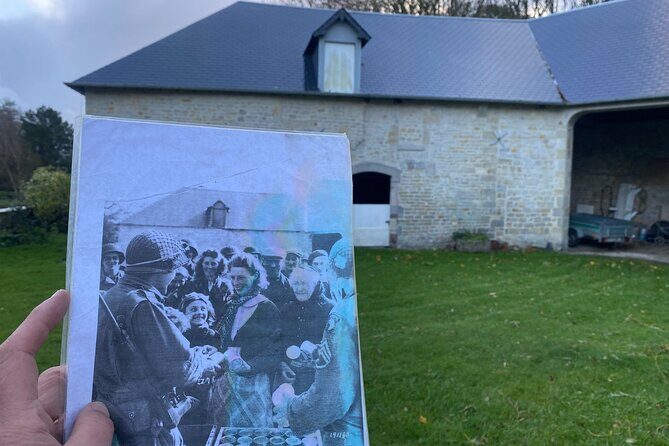
Two things I love: first, you don’t just see big monuments; you visit places with details that make the history feel real, including the church-linked memorials in Sainte-Mère-Église and the kind of physical traces you can’t get from a museum display. Second, Willem’s storytelling approach uses maps and picture books to help you match what you’re looking at to what you see in wartime photographs.
It’s the kind of tour that helps you get your bearings fast.
One drawback to plan for: it’s a long day with 13 focused stops, and lunch isn’t included, so you’ll want to budget snacks or your own food break along the way.
In This Review
- Key highlights at a glance
- A private airborne tour built for spotting meaning in every stop
- Price and what you really get for a $915.13 group day
- Sainte-Mère-Église first: the church, the windows, and the human details
- Beuzeville and the C-47 crash tied to Easy Company
- Foucarville and Ravenoville: POW remains and a hidden battery story
- Utah Beach from the road: the first liberated village fight
- Angoville-au-Plain: a church as a field hospital
- Carentan-les-Marais and Purple Heart Lane: the first bayonet charge question
- Neuville-au-Plain: 44 paratroopers holding back 180 German troops
- Fresville and Gourbesville: railwayline losses and a crossroads with nine days of fighting
- Amfreville and Dropzone T: the flooded drop area that swallowed men
- Cauquigny and La Fière Bridge: a hand-changing fight that keeps its grip
- Why Willem’s approach feels different: maps, photos, and tailoring
- Practical tips to make your day smoother
- Should you book this 101st and 82nd Normandy airborne tour?
- FAQ
- How long is the American 101st & 82nd Paratroopers in Normandy battlefield tour?
- What does the tour cost, and how many people can be in a group?
- Do you offer pickup?
- What’s included in the price?
- Is lunch included?
- Are the stops’ admission fees included?
- Can I cancel and get a full refund?
Key highlights at a glance
- Willem’s photo-to-terrain storytelling with maps and picture books so you can “see” the drop zones
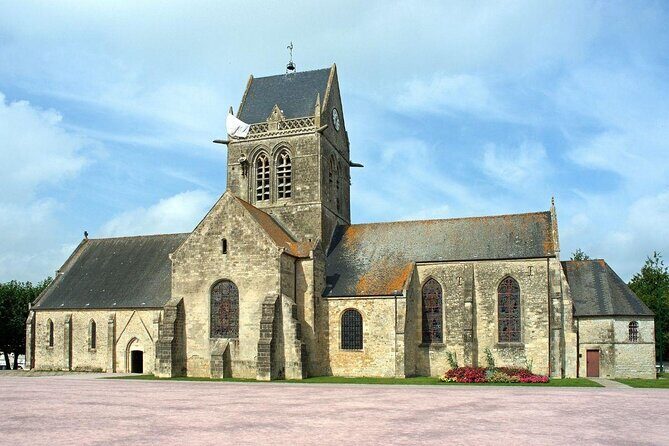
- Sainte-Mère-Église’s church memorials honoring fallen American paratroopers with special stained-glass windows
- 101st and 82nd specific combat sites, from a C-47 crash to roadblocks and bridge fights
- Dropzone T and the flooded drop area—a grim reminder of how weather and terrain shaped outcomes
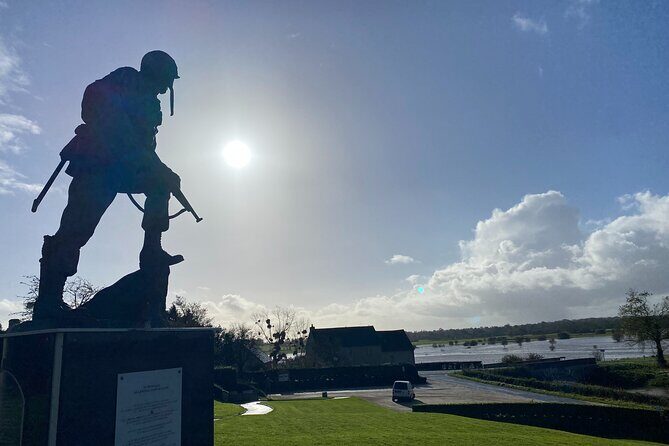
- La Fière Bridge and Iron Mike, including the paratroopers’ repeated stand against counterattacks
- Bottled water included, plus short, well-paced time blocks at each stop for a day this packed
A private airborne tour built for spotting meaning in every stop
What makes this tour work is the way it treats the Normandy battlefield like a sequence, not a checklist. You’re not bouncing from one headline site to another. Instead, you’re moving through the chain of events that links the parachute drops to the fights in and around villages, bridges, and farm lanes.
This is also a “right tool for the job” setup. You’re in a private vehicle, starting around 9:00 am, and the tour runs about 8 to 10 hours. That matters because the Airborne story doesn’t just live on the coast. A lot of it played out on the interior roads and fields—places most people miss because they’re stuck in long bus routes or hopping between visitor centers.
You’ll also feel the difference between a generic World War II drive and a guided airborne retracing of locations. The stops are short on purpose—often around 30 to 45 minutes—so you can take in the site, hear what happened there, and move on while the connections are still fresh.
You can also read our reviews of more tours and experiences in Mont St Michel.


Price and what you really get for a $915.13 group day
The price is listed as $915.13 per group, up to 5 people. On its face, that number can look high—until you compare what you’re buying: private transportation for a full day plus bottled water, and a guide who’s focused specifically on the 101st and 82nd Airborne story rather than a broad “Normandy highlights” route.
Here’s the real value math: if you’re traveling with a small group (family, friends, or a mixed-age crew), the per-person cost drops quickly. And you gain something that’s hard to price: being able to sit with a guide, ask questions, and get location-specific context at each stop. This isn’t just “see a church, take a photo.” You’re learning why that church mattered, why that roadblock mattered, and how units moved from one piece of terrain to the next.
Also, this tour is often booked far ahead. The average booking window is about 151 days, which tells you something simple: it’s popular with people who care about this exact slice of D-Day history.
Sainte-Mère-Église first: the church, the windows, and the human details
You begin in Sainte-Mère-Église, and that’s a smart move. It’s one of the places where the Airborne story turns from strategy into everyday geography—streets, squares, and a church that became a focal point immediately.
You’ll spend about an hour here. The church stands at the center of the memorial story, including two special stained-glass windows dedicated to honor fallen American paratroopers. You’ll also hear about John Steele, the paratrooper associated with getting caught in the church steeple during the D-Day airborne operations.
I like this start because it sets your mental map. Once you’ve heard the significance of Sainte-Mère-Église, later stops stop feeling random. You start understanding how dropped men ended up scattered across fields and hamlets, and how fighting unfolded as they tried to regroup, seize key points, and block German movement.
Possible drawback: Sainte-Mère-Église is famous, so it can feel a little busier than the later, quieter memorial points. If you like peace and empty lanes, plan to take your time with the church details early in the day while the group energy is fresh.
Beuzeville and the C-47 crash tied to Easy Company
Next you head to Beuzeville for a monument connected to a tragic C-47 Skytrain crash. The guide focuses on the crew and command, including Lt. Thomas Meehan and fellow paratroopers of the 101st Airborne Division (506th PIR), often linked to Easy Company through Band of Brothers.
The stop is short—about 30 minutes—but it lands emotionally, because it’s not a monument to a victory. It’s a reminder that the Airborne part of D-Day included accidents and losses that weren’t the result of enemy action alone.
If you’re the kind of visitor who only wants battlefield highlights, this is still worth it. It fills in the missing “how it actually went” part of the airborne story. The drop didn’t happen in perfect conditions, and not every aircraft made it to the same patch of sky.
Foucarville and Ravenoville: POW remains and a hidden battery story
After the crash monument, you move inland to Foucarville, the remains of one of the biggest German POW camps in Normandy. The numbers here are heavy: more than 40,000 German soldiers were held there before being sent onward to captivity in Great Britain, Canada, or the United States.
This is about 30 minutes, and I find that camp-ruins stops can go either way. They can feel vague if you just see stone and grass. With a guide, though, you get a timeline and a sense of why the site existed—what it did after the first days of battle.
Then you go to Ravenoville, tied to a story of accidental landing and a surprise firefight. After paratroopers dropped in a swampy area between Utah Beach and the higher ground toward Sainte-Mère-Église, some 40 men encountered a German mobile battery stationed near a large farm. You’ll learn—using original photographic material—how that battery was taken out of action by American paratroopers.
This is about 45 minutes, and it’s one of the stops that helps you understand something important: being dropped off-target wasn’t just unlucky. Sometimes it created a chance to cut off enemy fire or strike a position before reinforcements arrived.
Utah Beach from the road: the first liberated village fight
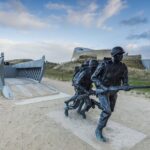
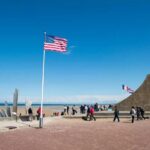
From the Ravenoville area you drive alongside Utah Beach toward Sainte Marie du Mont. Utah is often described as the smaller of the two American landing beaches, and that’s exactly why the drive-through view works here.
You’ll get a guided explanation around the early liberated village environment and how elements of the 101st Airborne Division were involved, including German observers taken out from the church tower of Sainte Marie du Mont.
This stop is about 45 minutes. My advice: don’t treat it as a scenic stop. Treat it like a corridor. When the guide points out the terrain, your job is to connect the line—where the beach meets the interior roads and where those airborne teams ended up pushing.
Angoville-au-Plain: a church as a field hospital
Angoville-Au-Plain is where the tour slows down emotionally. The Church of Angoville au Plain served as a makeshift field hospital on June 6th and beyond. The story centers on American medics Robert Wright and Kenneth Moore, who cared for over 80 wounded American paratroopers and also a wounded local child.
The details matter here: they used what they had, including the pews and even a wheelbarrow. And the visit today lets you step back into the idea of triage under fire—where compassion and urgency were forced into the same room.
You’ll spend about 30 minutes. I think this is one of the best stops for readers who feel a little fatigued by purely military timelines. It reminds you that D-Day wasn’t only about combat. People had to keep each other alive in chaotic spaces.
Carentan-les-Marais and Purple Heart Lane: the first bayonet charge question
From Angoville-Au-Plain you pass through a named area—the Dead Man’s Corner—then head over Purple Heart Lane toward the Ingouff Farm area. This is tied to the first bayonet charge of World War II that ended in favor of the U.S. paratroopers.
This stop runs about 45 minutes. If you’re into tactical history, you’ll like how it connects named roads to known engagement areas. If you’re more of a “story” traveler, you’ll still get plenty out of it, because bayonet charges are one of those moments where you can feel the temperature of the fighting.
Drawback: if you’re sensitive to graphic history, you might want to pace yourself through this section. It’s not gory, but it’s direct about cost—what price came with the courage and leadership required.
Neuville-au-Plain: 44 paratroopers holding back 180 German troops
At Neuville-au-Plain you visit a roadblock location linked to 44 American paratroopers of the 82nd Airborne Division in the early hours of June 6th. Their job was to prevent a German counterattack coming from the direction of Cherbourg. The fighting held up a column of about 180 German troops, including armored vehicles, until relieved by the first American tanks coming from Utah Beach.
You’ll spend about 30 minutes here. I love this stop because it gives you a clear sense of odds and time. The Airborne story can sometimes feel like blurred chaos unless you anchor it with a specific count and purpose. This location gives you both.
If you want to get the most out of the explanation, watch how the guide frames distance and movement. You’ll likely start seeing how a small unit could affect a bigger maneuver when the terrain forces bottlenecks.
Fresville and Gourbesville: railwayline losses and a crossroads with nine days of fighting
Next comes Fresville, centered on a monument where Pfc. William Bill Tucker lost six of his comrades while trying to clear a small hamlet along a railwayline from Caen to Cherbourg. It’s a short stop—about 30 minutes—but it’s sharply focused on a specific moment and a specific location.
Then you move to Gourbesville, a crossroads where nine days of ferocious battle resulted in 300 American losses. Another quick stop, about 30 minutes, but the numbers hit hard.
These two stops work well back-to-back because they show different “shapes” of battle. The railwayline is about movement and choke points. The crossroads is about repeated contact over time—where fighting can flare, cool down, and flare again because the geometry is too important to ignore.
Amfreville and Dropzone T: the flooded drop area that swallowed men
Amfreville is one of the most intense stops on the day, even though the visit is about 45 minutes. You’ll arrive at Dropzone T, described as a deadly dropzone where many 82nd Airborne paratroopers drowned because the area was deliberately flooded.
You’ll visit a monument for Lt. Colonel Timmes and his men, with the layout described as enemy on three sides and a flooded area on the remaining side.
This is not “history trivia.” This is the kind of battlefield explanation that makes you understand why the airborne operation was so risky. It’s also where you get a gut-level appreciation for how terrain and planning decisions could hurt the very people you were trying to help.
Tip for your own comfort: if you’re taking photos, slow down here. Don’t rush through the monument details. This is the stop where I think you’ll benefit most from time.
Cauquigny and La Fière Bridge: a hand-changing fight that keeps its grip
Across the Merderet river you visit the chapel of Cauquigny. This location changed hands several times during the three days of battle from June 6th to June 9th, 1944.
It’s about 30 minutes. Chapel stops can sometimes feel like a quiet pause between big moments, but in this case it’s about control. You’re hearing how even religious structures and river crossings became part of the battle lines.
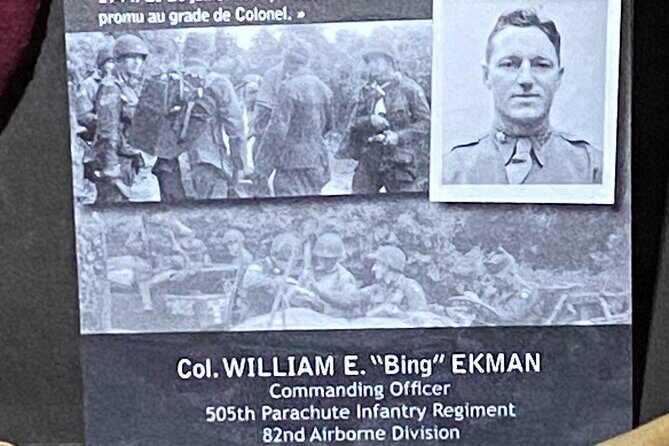
Then you finish at La Fière Bridge and the Iron Mike Monument. The focus is the vital bridge capture by the 505th Parachute Infantry Regiment, 82nd Airborne Division, on June 6th, and then the repeated effort to keep the enemy from crossing again despite counterattacks, including tanks.
This is usually your last stop and takes about 30 minutes. If you remember one thing, make it this: bridges in wars are like pressure points. You can have bravery, manpower, and momentum, but if you don’t control the crossing, the fight can reverse.
Why Willem’s approach feels different: maps, photos, and tailoring
In the feedback for this tour, the guide is repeatedly described as the main ingredient. Willem runs the day with a focus that goes beyond a script. You get the sense of a teacher who has done the homework: maps, picture books, and a careful way of explaining where photographs were taken in relation to what you see now.
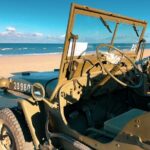
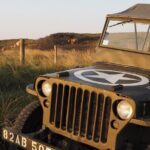
The restored WWII jeep factor adds real texture too. It’s not just a gimmick. When you’re riding along hedge-row lanes and small roads, the environment matches the story. It feels like you’re moving through the same working corridors the soldiers would have recognized, even though the fields have changed over 80 years.
Another smart part: the day can be tailored. People have built in extra stops like the 82nd Airborne museum or focused more heavily on certain areas while still staying within the airborne theme. If you have a specific unit angle (82nd vs 101st, a particular commander, a certain village), you’re not locked into a totally rigid route.
Practical tips to make your day smoother
This is a packed day, so small choices help a lot.
- Wear comfortable shoes. You’ll be stepping around monuments and outdoor areas, often with short time windows.
- Bring a light layer. Coastal regions can shift quickly from warm to cool, and churches often feel colder inside.
- Start hydrating early. Bottled water is included, and you’ll appreciate it once you’re moving between stops.
- Plan for no lunch. If you’re prone to getting hungry, bring a snack you can eat during the ride between stops or plan to pick something up on your own.
- Ask questions at the stops. The guide’s materials (maps and picture books) make it easier to connect details without feeling lost.
If you’re traveling with kids or multi-generation groups, this format still tends to work well because the stops are short and story-driven. Keep an eye on attention spans around the more detailed memorials, but the pace is designed to prevent you from sitting too long in one place.
Should you book this 101st and 82nd Normandy airborne tour?
If you care about the American airborne story on D-Day—especially the 82nd and 101st—this is a strong pick. The value comes from the specificity: you’re not only seeing Utah Beach and famous names. You’re learning about the church hospital, the roadblock at Neuville-au-Plain, the flooded reality of Dropzone T, and the stubborn fight tied to La Fière Bridge.
Book it if:
- you want a private guide who can connect photographs and terrain
- you’re traveling as a small group (up to 5 helps the value)
- you can handle a full day with no lunch included
Consider another option if:
- you prefer a slower, fewer-stop day
- you get worn out by heavy memorial sites and numbers
- you want a tour that also includes lunch as a built-in part of the experience
FAQ
How long is the American 101st & 82nd Paratroopers in Normandy battlefield tour?
It runs about 8 to 10 hours.
What does the tour cost, and how many people can be in a group?
The price is $915.13 per group, up to 5 people.
Do you offer pickup?
Yes. Pickup is offered, and you’ll be asked to provide the address where you’re staying plus an Europe-enabled phone number so the guide can reach you if needed.
What’s included in the price?
Included are private transportation and bottled water. You also use a mobile ticket.
Is lunch included?
No, lunch isn’t included.
Are the stops’ admission fees included?
The tour’s stops are listed as free to enter (free admission ticket).
Can I cancel and get a full refund?
Yes. You can cancel up to 24 hours in advance for a full refund.