REVIEW · MONT ST MICHEL
WW II Private Guided Tour American Landing Beaches in Normandy
Book on Viator →Operated by DDayYourWay · Bookable on Viator
D-Day lands differently when someone guides you.
This private route across the American landing beaches is built for real understanding, not just photo stops. I especially like the way Willem ties each location to what was happening that day, often with original photos and plain talk. I also like the pacing: big, famous moments sit next to smaller, story-filled stops that help you connect the dots.
Two things make this tour feel worth your time and money. First, you get photo-led explanations that make the terrain and units easier to picture. Second, you visit the main sights and also the quieter crossroads that explain how the fighting actually moved. One consideration: there’s no lunch included, so you’ll want to plan for a meal break on the fly and keep energy up for long outdoor stretches.
In This Review
- Quick hits before you go
- Starting point and what a 8–10 hour day really feels like
- Sainte-Mère-Église: the church, John Steele, and Teddy Roosevelt Jr.
- Utah Beach: why the smallest beach mattered for Cherbourg
- Sainte-Marie-du-Mont and the 101st Airborne exit roads
- The crossroads and the DMC tank: a brutal detail that sticks
- Carentan: the bridge between Utah and Omaha
- Pointe du Hoc: following Ranger tracks up the 100-foot cliffs
- Omaha Beach and WN 60: seeing what went wrong, then standing above it
- Colleville-sur-Mer American Cemetery: the respect stop you can’t rush
- What you get, what you don’t, and how to plan your day
- Price and value: how $915.64 works for up to five people
- Who this tour suits best (and who should reconsider)
- Should you book this American Landing Beaches private tour?
- FAQ
- How long is the private guided American Landing Beaches in Normandy tour?
- How many people can be in a group?
- What language is the tour offered in?
- Is pickup available?
- What’s included in the price?
- Is lunch included?
- Can museums be added during the tour?
- Is free cancellation available?
Quick hits before you go
- Private group day (up to 5 people) with private transportation and bottled water
- Sainte-Mère-Église church stories including John Steele and Teddy Roosevelt Jr.
- Utah Beach to Omaha Beach comparison so you see why outcomes differed
- Pointe du Hoc Ranger tracks on the 100-foot cliffs
- Climbing WN 60 strongpoint positions for a top-over-Omaha view
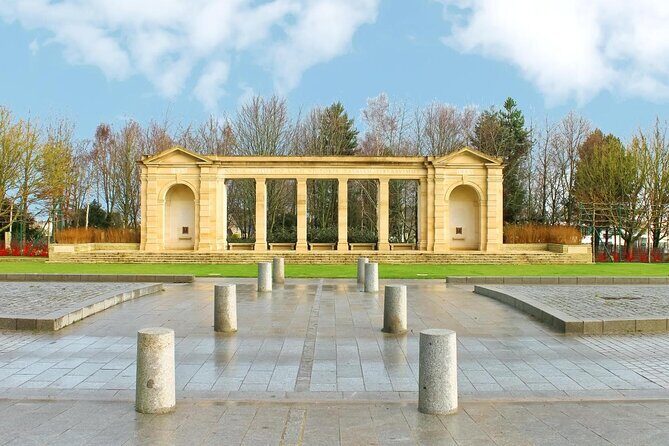
- American Cemetery Colleville-sur-Mer for a final, moving stop overlooking Omaha
Starting point and what a 8–10 hour day really feels like
You’ll start and end back at the meeting point in Sainte-Mère-Église, with pickup possible depending on what’s arranged for you. The tour runs about 8 to 10 hours, which is long enough that timing matters. Bring the mindset of a full day experience: you’ll learn steadily, but you’ll also spend plenty of time outside and walking between sites.
The tour is offered in English and uses a mobile ticket, so it’s low-fuss once you’re there. It’s also private, meaning it’s only your group, not a crowded bus shuffle with strangers competing for the guide’s attention.
You can also read our reviews of more guided tours in Mont St Michel


Sainte-Mère-Église: the church, John Steele, and Teddy Roosevelt Jr.
Your first stop is Sainte-Mère-Église, a town you’ll keep hearing about once your brain starts mapping the airborne mission. This is one of the key objectives of the 82nd US Airborne Division, and the logic is easy to follow when your guide explains it in plain terms: secure the flank, cover the landing beaches, and keep routes open for the infantry moving through.
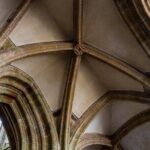
Inside the church area, you’ll connect the famous story of paratrooper John Steele getting stuck on the steeple. And yes, it’s the one made famous in The Longest Day. You’ll also see the statue of Brigadier General Teddy Roosevelt Jr., which adds a human name to the wider strategy you’ll be learning all day.
Practical note: this stop is only about an hour, so it’s not a slow museum crawl. You’ll get the big story points and move on.
Utah Beach: why the smallest beach mattered for Cherbourg
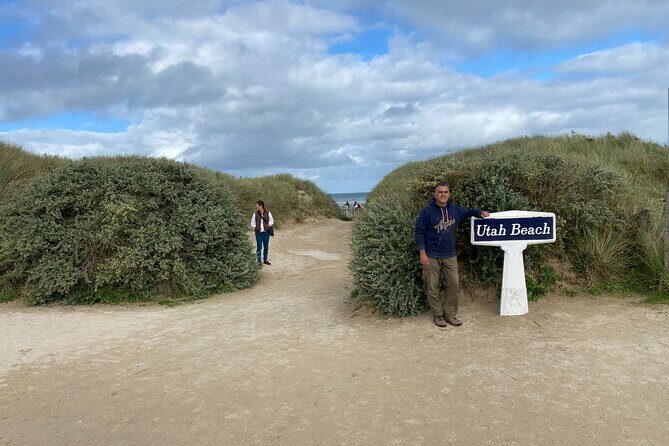
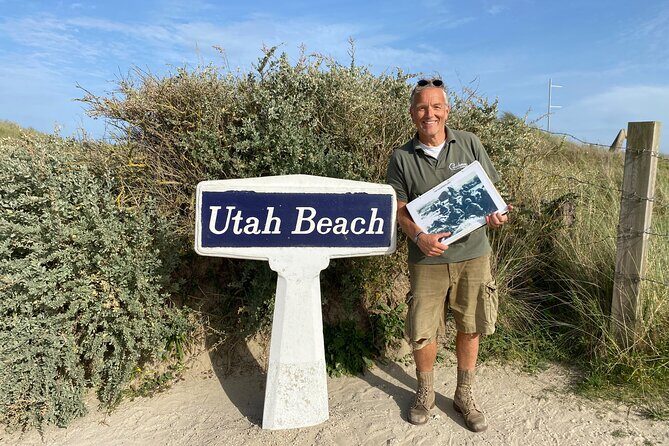
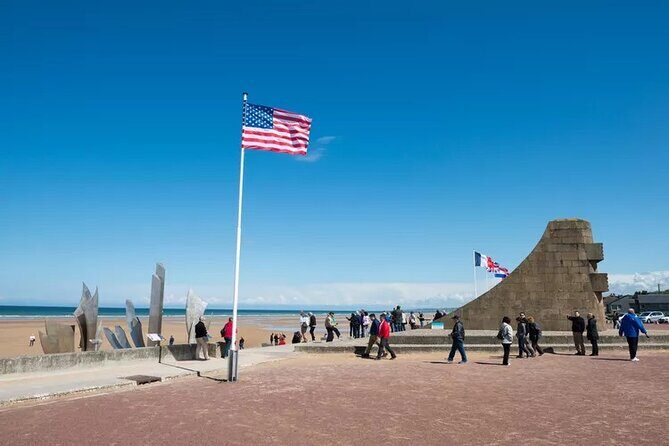
Next comes Utah Beach, described as smaller but crucial. Your guide frames it around the mission to seize the deepwater harbor at Cherbourg, because supplies weren’t just a detail—they were the engine of the campaign.
Utah is often talked about as the beach with the most successful outcome and the least casualties among the Normandy landing sites. You’ll also hear the Roosevelt angle again here: this is the beach where General Teddy Roosevelt came ashore, noted as the first seaborn general to land on Normandy soil.
This stop is about 1 hour 30 minutes, so it’s enough time to stand on the sand, hear the situation June 6th, 1944, and understand what mattered about that coastline. The payoff is clarity: you’ll start to see why different sectors of Normandy weren’t independent—they were connected.
Sainte-Marie-du-Mont and the 101st Airborne exit roads
Sainte-Marie-du-Mont is where the airborne story gets even more specific. This was the first liberated village for the 101st Airborne Division, and the focus here is on securing the exit roads off Utah Beach. In other words, it’s not just about landing—it’s about preventing chaos from trapping the follow-on forces.
You’ll also stop at a French resistance monument, and then spend time around the church where members of the 101st reportedly helped eliminate a German sniper hidden in the steeple. That kind of detail matters because it shows how battles weren’t always tanks and gunfire. Sometimes they were single positions that could ruin an entire movement.
This stop is shorter, about 30 minutes, but it packs a lot of direction into a small block of time. You’re building a map: airborne objectives, village nodes, and the road system linking it all together.
The crossroads and the DMC tank: a brutal detail that sticks
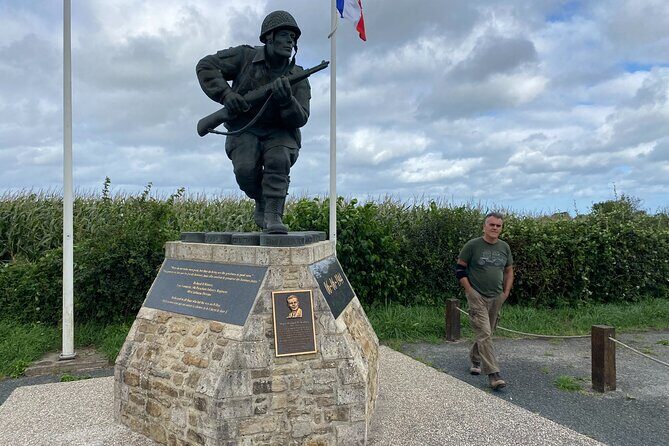
After Sainte-Marie-du-Mont, you’ll hit a key crossroads area tied to how paratroopers would reach Carentan. This is where the tour gets very grounded and very specific: the DMC refers to a small Allied tank reportedly taken out by German paratroopers positioned around a building that now houses a museum.
The story is grim. The tank commander was killed while trying to escape the vehicle, and the body reportedly hung over the turret for days before it could finally be recovered. I won’t pretend that’s comfortable to hear—but that’s exactly why this stop works. It turns strategy into a recognizable, human consequence.
Again, it’s not a long detour. It’s the kind of stop that makes the next fights easier to understand.
You can also read our reviews of more private tours in Mont St Michel



Carentan: the bridge between Utah and Omaha
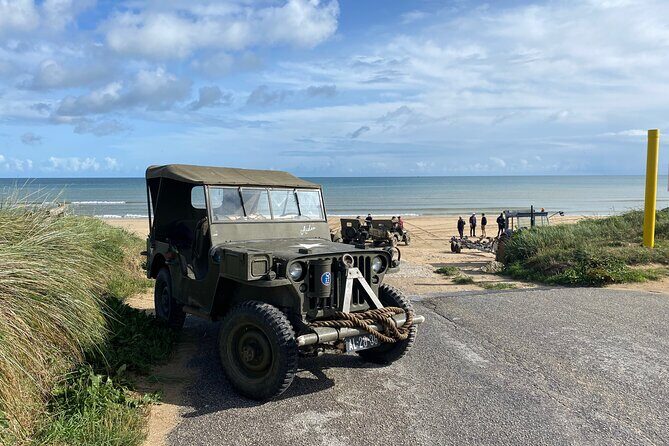
Carentan sits between Utah Beach and Omaha Beach, and the tour treats it like what it was: a vital link. The idea is simple. If you can’t connect those areas, you can’t move strength effectively across the battlefield. Your guide explains why Carentan mattered so much and why the fighting there lasted.
The battle timeframe here is June 10th to June 15th. After five days of intense fighting, the 101st Airborne Paratroopers were essentially relieved by elements of the 2nd Armoured Division and the 29th Infantry Division arriving from the Omaha side—meaning pressure shifted, but it wasn’t an instant switch. It was a relief that came with cost.
This stop runs about 30 minutes, and it plays a key role in making the later Omaha sections make sense.
Pointe du Hoc: following Ranger tracks up the 100-foot cliffs
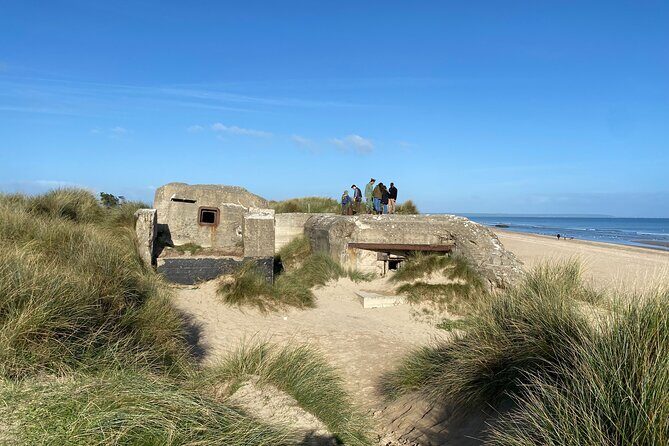
Then you’re at Pointe du Hoc, famous for the high ground and the long-range guns. This is one of the places where your guide’s job matters most. From the cliffs, it’s tempting to think this was just a dramatic setting. But the explanation makes it real: Germans placed major artillery positions here, and the Allies had to destroy them to stop the threat they posed.
You’ll walk and follow the tracks of the American Rangers, under command of Col. James Rudder, given the job to take out the guns. The cliffs are steep in feel even if you’re just standing at specific points, so pacing helps here.
Plan about 1 hour for this segment, including the explanation and the walk between key vantage points.
Omaha Beach and WN 60: seeing what went wrong, then standing above it
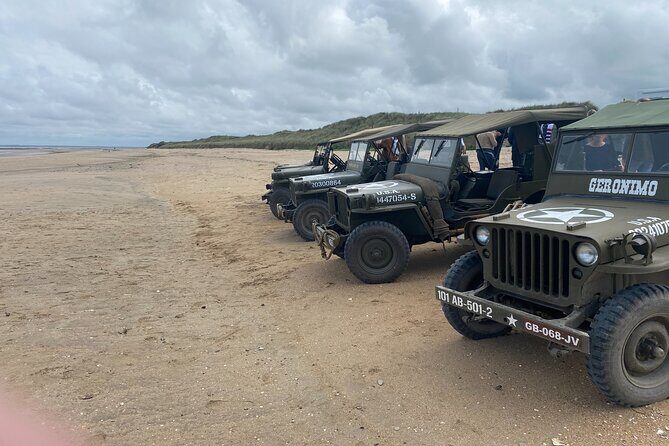
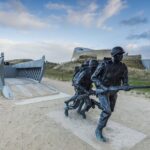
Omaha Beach is next, and it’s handled carefully. Your guide points out how it was the worst place to be on June 6th, and you’ll visit the part of the beach that’s shown in the opening scene of Saving Private Ryan. That pop-culture reference can be powerful, but the tour keeps it grounded by focusing on the units involved and why things went sideways.
After you get the story on what happened, you’ll also get the comparison to Utah Beach. The contrast is the real lesson: success and failure weren’t just luck. Terrain, timing, unit position, and command decisions all played a part.
You’ll spend about 2 hours at Omaha, plus additional viewpoint time at the last stop.
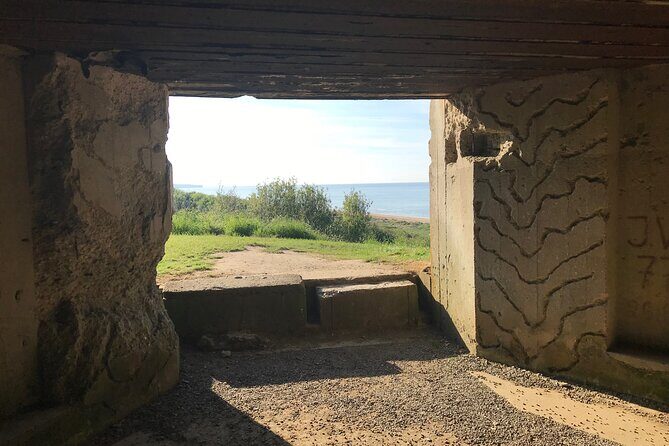
That last stop is WN 60 (Widerstandsnest 60)—a strongpoint with what’s described as the best view over Omaha Beach. Here’s where the tour earns its keep. You’ll learn how this German bunker complex was reportedly the first taken by the Allies, then see original trenches and climb into the machine gun and mortar positions.
This is the most physically demanding part of the day because it includes climbing in a historical structure. If you have mobility limits, you’ll want to think ahead about what that means for you.
Colleville-sur-Mer American Cemetery: the respect stop you can’t rush
After the tactical story comes the human weight. The American Cemetery at Colleville-sur-Mer sits overlooking Omaha Beach, covering more than 170 acres. You’ll see more than 9,300 men and women buried there, and you’ll also be shown the wall of missing with over 1,500 names engraved.
This stop is about 1 hour 30 minutes, and it’s often the moment where the whole day changes tone. It’s not about learning new details. It’s about letting the earlier stories settle into your head.
Bring a quiet pace. Don’t treat it like another site. You’ll likely want time to read and reflect.
What you get, what you don’t, and how to plan your day
Included in the tour are private transportation and bottled water. Admission tickets at the listed stops are also described as free. That’s a big deal for value because many Normandy experiences nickel-and-dime you with entry costs.
Not included is lunch. Also, museum visits aren’t part of the standard plan, though your guide can make an exception after consultation. So if you know you want an extra museum moment, you’ll want to raise it early.
If you’re trying to travel smoothly, here are the practical things I’d plan for:
- Wear comfortable walking shoes since you’ll be moving between beach viewpoints, church areas, and bunker positions.
- Dress for changing weather. Normandy can shift fast, and a long day outdoors punishes bad clothing choices.
- If you’re traveling with kids or teens, this tour’s format works best when you treat it like a story arc, not a scavenger hunt.
Price and value: how $915.64 works for up to five people
At $915.64 per group (up to 5), this tour isn’t priced like a group bus. It’s priced like a private day with a guide who’s driving the learning moment-by-moment. To do the math in a way that’s actually useful: if you fill the group, that’s roughly $183 per person. If you come with fewer people, the per-person cost goes up.
What makes it feel like value is the combination of:
- A full 8 to 10 hours with private transportation
- Multiple high-impact stops across the landing beaches and key airborne objectives
- A final respect stop at the American Cemetery
- A guide who doesn’t just talk, but uses original photos and clear storytelling
In plain terms, this tour fits best when you want a guided day with fewer distractions and better explanations. If you’re the kind of person who likes to bounce between plaques on your own, you could do it independently. But if you want the battlefield explained like a coherent story, private guidance is where your money goes.
Who this tour suits best (and who should reconsider)
This is a great fit if you want:
- A structured D-Day route that connects airborne missions to the beaches
- A guide who can handle both big landmarks and smaller, specific sites
- A day that works well for families, including teens, since the storytelling is designed to keep attention
It may be a less ideal fit if your group needs frequent breaks for longer indoor sitting, or if climbing at WN 60 would be a problem. The tour is described as most people can participate, but that doesn’t mean every physical challenge fits every body.
Also, since the experience is booked far in advance on average, it’s smart to plan early so you can get the day you want.
Should you book this American Landing Beaches private tour?
If your top goal is to understand D-Day as more than beach names, I’d book it. The route is logically built: you start with airborne action in Sainte-Mère-Église, connect that to Utah, tighten the map around Sainte-Marie-du-Mont and Carentan, hit Pointe du Hoc, then face Omaha—and finish with WN 60 and the cemetery.
The deal-breaker risk is mostly about your expectations. This is not a casual sightseeing day with flexible skip-anything freedom built in. It’s a full narrative route with a clear arc.
If you want a day that’s direct, respectful, and actually helps you picture the battlefield, this one is an easy yes.
FAQ
How long is the private guided American Landing Beaches in Normandy tour?
It runs about 8 to 10 hours.
How many people can be in a group?
This is priced per group for up to 5 people.
What language is the tour offered in?
The tour is offered in English.
Is pickup available?
Pickup is offered, and the pick-up or rendez-vous point location is individually discussed and communicated in the tour confirmation.
What’s included in the price?
The tour includes bottled water and private transportation.
Is lunch included?
No. Lunch is not included.
Can museums be added during the tour?
Museum visits are not part of the tour plan, but the guide can make an exception after consultation.
Is free cancellation available?
Yes. You can cancel for free up to 24 hours in advance for a full refund.