REVIEW · PARIS
Classic Tour of Paris in 2CV CITROEN
Book on Viator →Operated by La Petite Frenchie · Bookable on Viator
Paris feels fast when you ride top-speed.
A Classic Tour of Paris in a 2CV Citroën is one of the quickest, funnest ways to get oriented without sprinting across the city. I love the live guide commentary that helps you understand what you are seeing, and I also like the fact you get a private experience just for your group (so you can set the pace). One thing to consider: in only about 1 hour, you are seeing highlights from the road, not doing long monument stops, so it is best for grabbing your bearings rather than going deep.
The whole setup is built around comfort and flexibility. You can request pickup from a restaurant, hotel, or other Paris address, then the driver brings you back to the start area when the tour ends. Routes can shift to match what you want most, and guides often tailor the small details so you get better sightlines and photos.
If you want a showpiece Paris moment plus practical history in a short time window, this is a great fit. Expect bright views from a classic car, smooth navigation around central sights, and plenty of pointers on where to look as you glide past iconic landmarks.
In This Review
- Key things to know before you book
- Why a 2CV Classic Tour is such a smart Paris first move
- Pickup, private group, and the English-language advantage
- The 1-hour plan: how the route usually strings together the big scenes
- Eiffel Tower, Champs de Mars, and Trocadéro: the photo-first mindset
- Arc de Triomphe and Champs-Elysées: grand boulevards at street speed
- Concorde to Vendôme: squares that help you read Paris like a map
- Opéra Garnier to the National Assembly: elegance and power in one line
- Pont Alexandre III to Les Invalides: moving over the Seine’s best storybook moments
- Carousel du Louvre, Notre-Dame, and Île de la Cité: the historic heart
- Hôtel de Ville: how the ride usually wraps up
- Photos and timing: getting the best results in a moving car
- Price and value: what $94.92 per person really buys you
- Who should book this 2CV Paris classic tour
- The decision: should you book?
- FAQ
- How long is the Classic Tour of Paris in a 2CV?
- Is the tour private, and will I be with strangers?
- What is included in the price?
- Where does the tour start and end?
- What languages is the tour offered in?
- What if the weather is bad?
Key things to know before you book
- Classic 2CV ride with live commentary: you learn while you sightsee, without bus-style crowd noise.
- Private for your group: you can adjust the route to match your priorities.
- Fast highlights in ~1 hour: ideal when your schedule is tight.
- Top sights in one loop: Eiffel Tower area, Champs-Elysées, Arc de Triomphe, Concorde, Louvre/Seine zone, and more.
- Pickup at your chosen Paris location: helpful if you do not want to trek to a stop first.
- Good weather matters: the experience depends on conditions, so keep a backup date in mind.
Why a 2CV Classic Tour is such a smart Paris first move
Paris can be overwhelming in the best way. You walk out of the Metro and suddenly you have the Eiffel Tower staring at you from one angle, an opera house façade from another, and a perfect postcard bridge lined up over the Seine. The problem: figuring out where to go first takes time.
A 2CV highlights tour solves that. In roughly an hour, you get a guided “greatest hits” run through central landmarks, plus context so things stop looking random. Instead of seeing monuments as separate photos, you start understanding how they connect by geography and by the stories people attach to them.
I also like the format because it does not require museum ticket planning, timed entry, or long lines. You are not locked into one fixed viewing stop where you stand around hoping for the right angle. You roll through the city with a driver who knows how to position the car for what you want to see, and a guide who can explain what matters.
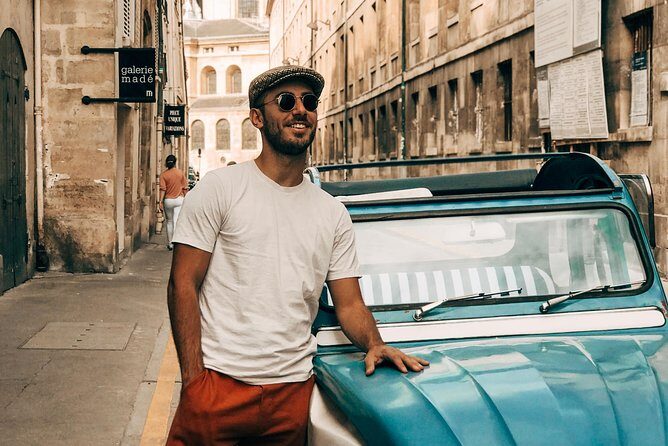
Finally, the car itself changes the tone. A classic Citroën 2CV is not just transportation. It makes the city feel playful. That matters in Paris, where you can spend too much time in “serious sightseeing mode” and forget to enjoy the ride.
You can also read our reviews of more tours and experiences in Paris.

Pickup, private group, and the English-language advantage
This tour is private for your group, which is a big deal in a city where timing can make or break a day. You do not need to match someone else’s pace or squeeze your questions between other people’s requests.
Pickup is also designed to be easy. Your start can be from your requested location in Paris (hotel, restaurant, or anywhere you choose). The official meeting point is 1 Pl. Saint-Germain des Prés, 75006 Paris, and the experience ends back there, but the included pickup/drop-off approach makes it far less annoying than hunting for the right corner.
The tour is offered in English, and you get live commentary on board from a local guide/chauffeur. That live element is important. A guide can point out what you might otherwise miss: why one view works, what building you are looking at, and what kind of landmark it is in the Paris story.
One practical tip: if you have specific priorities, tell the guide early—where you want the best Eiffel Tower photos, whether you care more about royal/imperial-era sites or modern political landmarks, and whether you want more Seine-area viewpoints.
The 1-hour plan: how the route usually strings together the big scenes
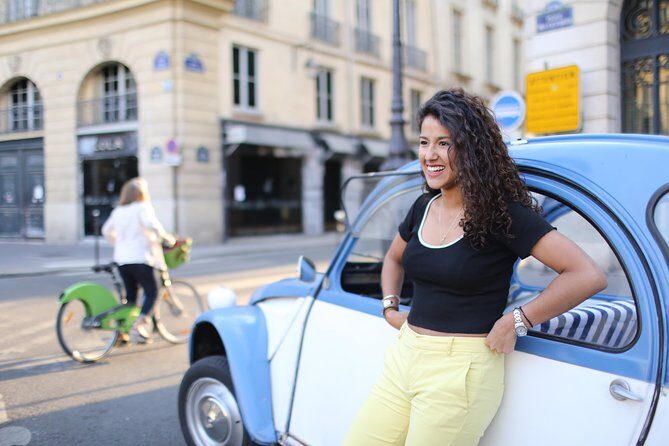
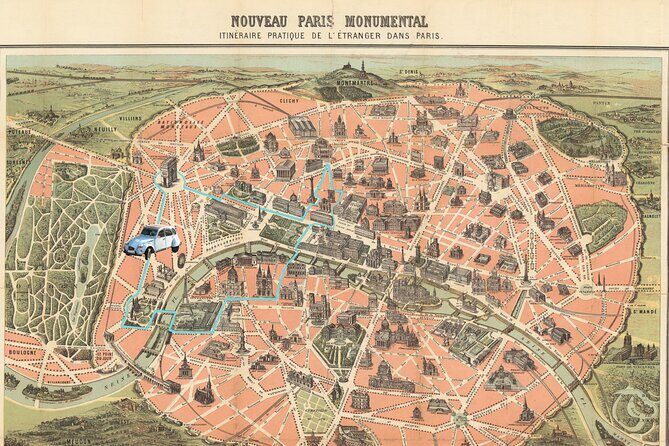
The itinerary is flexible, but the highlight loop centers on major central Paris icons. You will move through the Eiffel Tower area, head toward the grand avenues of the west (think Arc de Triomphe and Champs-Elysées), cross past major historic and ceremonial squares, and continue toward the Seine where you finish among the grand museums and historic islands.
A good mental model: this tour is designed to help you see Paris as a set of connected neighborhoods and viewpoints, not as disconnected attractions. The driver and guide can adjust the route by your preferences, so you might spend a bit more time on the sights you care about most.
The list of key stops includes:
- La Tour Eiffel / Le Champs de Mars / Le Trocadéro
- L’Arc de Triomphe
- L’avenue des Champs-Élysées, Le Grand Palais, Le Petit Palais
- La Place de la Concorde, La Place Vendôme
- L’Opéra Garnier
- L’assemblé nationale
- Le Pont Alexandre III
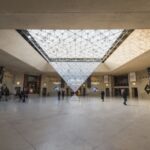
- Les Invalides, Le Carousel du Louvre
- La Cathédrale de Nôtre Dame / L’île de la Cité
- L’hôtel de Ville
Now let’s translate those into what you will actually feel at each stage—what is special, and what to keep in mind given the short time.
Eiffel Tower, Champs de Mars, and Trocadéro: the photo-first mindset
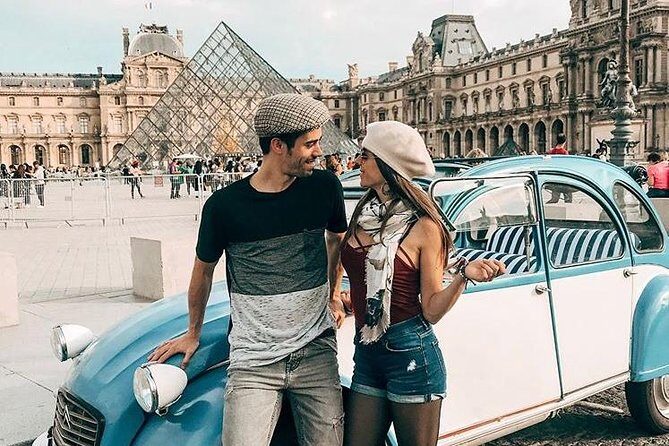
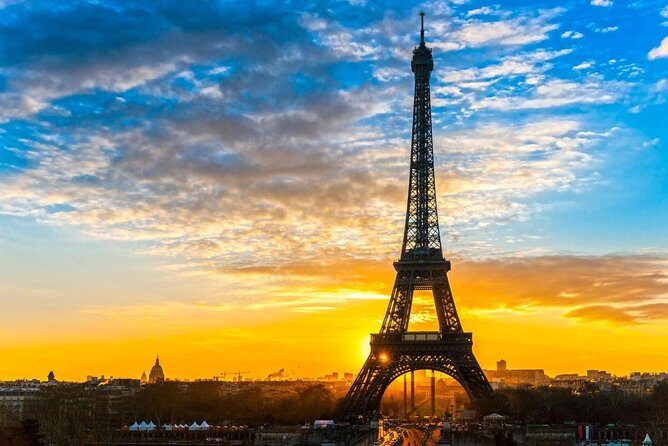
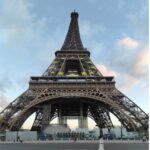
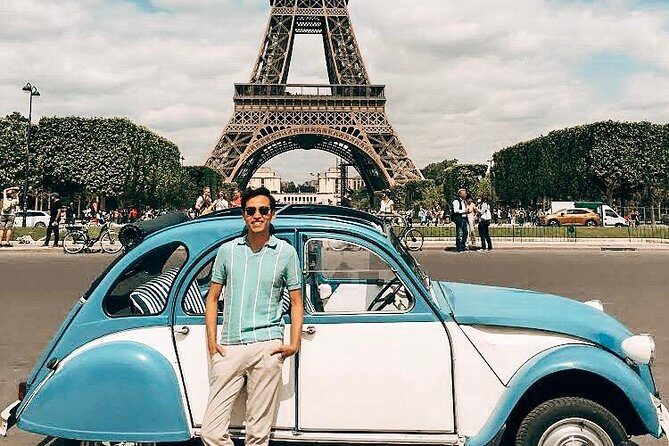
This is where most people’s eyes go first. The tour typically aims you toward La Tour Eiffel and the Champs de Mars area, then adds a viewpoint stop around Trocadéro, where you can get the classic, dramatic perspective of the Eiffel Tower.
What makes this portion work so well in a short tour is the combination of motion and guidance. You are not just staring. The guide helps you line up your angle, and the driver can position the car for a clean view through the city streets.
One standout detail from real experiences: guides like Renato have been praised for giving direction to get flattering angles for Paris photos. Another guide, Nicholas, helped people feel they were getting the right Eiffel Tower shot that looks like it belongs on a postcard.
A drawback to know: you are not climbing the tower or waiting for a long viewing session. You are capturing the big moments from the outside and from road-level or nearby viewpoint angles. If you want Eiffel Tower summit time, this tour should be your companion—not your only Eiffel plan.
Arc de Triomphe and Champs-Elysées: grand boulevards at street speed
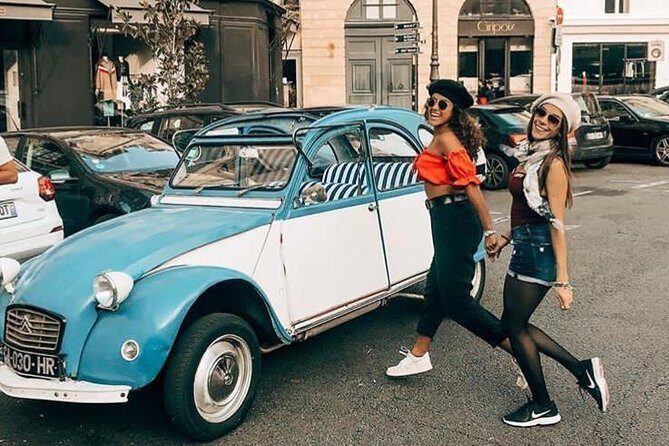
Next you swing into the west-side grandeur: L’Arc de Triomphe and L’avenue des Champs-Élysées. This section is pure “Paris icon” energy. Even when you think you know what Champs-Elysées looks like from pictures, the scale hits you when you’re on the boulevard, surrounded by buildings that feel made for ceremonial moments.
The guide commentary here is especially useful because this is not just a pretty street. You will hear the story behind what the Arc symbolizes and why Champs-Elysées became the kind of avenue people compare across the world.
You will also pass or see related architectural landmarks like Le Grand Palais and Le Petit Palais. These buildings matter because they represent Paris’s approach to spectacle and craft—big façades and formal interiors that you would normally spend time inside. Since this is a highlights ride, you are mostly absorbing what they look like from outside, with the guide giving enough context to make those façades mean something.
Photo tip for this part: because this is a drive-by experience, pay attention when the guide says the car is in position. The best angles can last only a short moment.

Concorde to Vendôme: squares that help you read Paris like a map
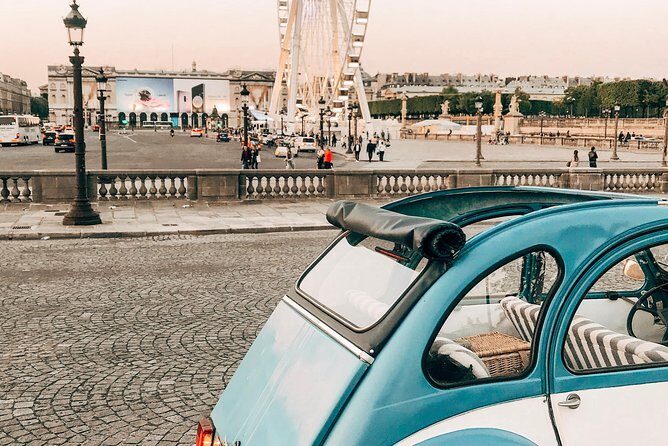
After the big avenues, you hit the world of ceremonial squares—La Place de la Concorde and La Place Vendôme. These places are the kind of Paris geometry that makes everything click when you later walk around on your own.
Here’s what you gain from doing this as a tour: you learn the way Paris streets radiate from key points. Once you understand where Concorde sits in the overall layout, it becomes easier to plan your next day on foot.
This segment also tends to feel calmer than the busiest shopping stretches. The car ride helps you keep your bearings while you watch the city unfold. If you are the type who likes to connect dots—where a bridge leads, where a square lines up, which street becomes a straight corridor—this is a good time to pay attention to the guide’s orientation cues.
Opéra Garnier to the National Assembly: elegance and power in one line
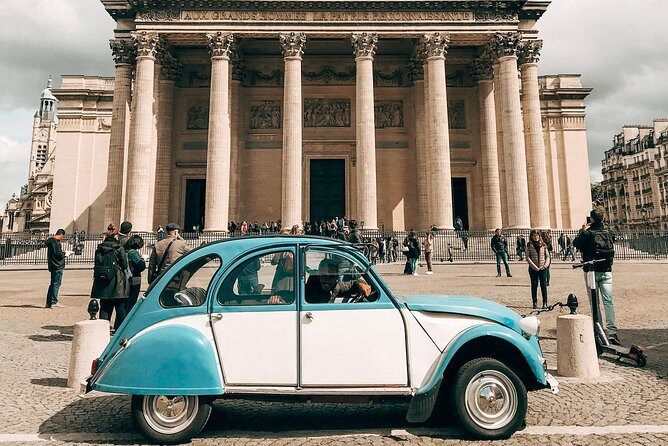
One of my favorite parts of the itinerary is that it does not stop at “pretty” landmarks. You also get the formal energy of L’Opéra Garnier, then the political side with L’assemblé nationale.
This mix matters. Paris is famous for art, fashion, and architecture, but it also runs on governance and national identity. Seeing these landmarks during a single ride helps you understand that the city’s beauty often sits beside institutions that shaped modern France.
Opéra Garnier is the kind of building that looks different depending on the angle. In a short tour, you are not waiting for the perfect view from one exact corner, but you can still catch the vibe and recognize why it is such a signature silhouette.
For the National Assembly area, the payoff is the context. A live guide can point out what kind of landmark you are seeing and how that fits into the broader Paris story you have already started with Eiffel and Arc.
Pont Alexandre III to Les Invalides: moving over the Seine’s best storybook moments
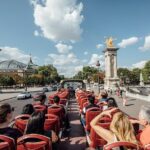
The tour then leans toward the Seine area with Le Pont Alexandre III. Bridges in Paris are not just ways to cross water—they are viewpoints and design statements. Pont Alexandre III is especially strong visually, and it helps you understand how the river acts like a divider and a connector at the same time.
Then you move toward Les Invalides, a major landmark with a distinct presence in the city. Even from the outside, it feels like a place with purpose. The guide’s commentary is what turns it from a name on a sign into a landmark with meaning.
This is also where the overall route design becomes clear. You are not randomly driving past sites. You are moving through a sequence that gives you a sense of how Paris’s historic “anchors” align.
A short time window means this section is fast. If you want to linger for a full museum experience at Les Invalides, you will need a separate stop later. But as a highlights sampler, it works.
Carousel du Louvre, Notre-Dame, and Île de la Cité: the historic heart
Then the loop heads into the most recognizable historic core: Le Carousel du Louvre, La Cathédrale de Nôtre Dame, and L’île de la Cité.
In a typical sightseeing day, Notre-Dame is a magnet that pulls you into the area slowly. Here, it arrives as part of a designed route, so you get an immediate sense of what makes the island feel different. Île de la Cité has that “center of gravity” energy, where the streets and bridges seem to funnel you toward it.
The Louvre Carousel area also helps. Even if you are not entering the Louvre, seeing the edge of the museum complex gives you a better idea of scale. Paris landmarks often feel huge when you’re inside the city streets, but the geography is easier to understand when you see them from a moving vehicle in a planned path.
One consideration: the tour is a quick overview. You will see the landmarks, but you will not have time for slow photo sessions around each one. If Notre-Dame is your top priority, plan follow-up time on a separate day so you can walk around at your own pace.
Hôtel de Ville: how the ride usually wraps up
The highlight loop tends to finish with the city’s civic center area: L’hôtel de Ville. This works as a “reset moment.” You shift from the cathedral island zone into the more civic, everyday Paris feel.
It is also a nice wrap because by the time you reach this point, you have already seen enough of the city’s top symbols—Eiffel, Arc, grand squares, major institutions, and the Seine core—that your brain starts organizing Paris into districts.
If you want to keep the momentum, this is a good spot to decide what you want next: a walk toward the Seine, a museum stop, or a simple café break in the surrounding neighborhoods.
Photos and timing: getting the best results in a moving car
You are on a vehicle that is meant to be fun and scenic. That means your success at photos depends on a couple of small habits from you, not just on the guide.
First, be ready when the guide calls out a viewpoint. In a drive-by experience, the best angles can be brief. Second, take a minute before the tour starts to tell the guide what you want most. That might mean an Eiffel Tower shot, a Champs-Elysées boulevard photo, or a Seine-bridge angle.
There is also a nice advantage to the 2CV setup that comes up in real experiences: people often enjoy how views feel when you can see clearly from inside the car. One review highlighted the car having a clear roof so you do not feel like you are missing the skyline. Guides also offered specific photo directions, especially for getting flattering shots with the Eiffel Tower.
Timing-wise, if you can choose, aim for a moment when light looks good in the central sights. The tour requires good weather, so plan around forecasts and have patience with Paris weather swings.
Price and value: what $94.92 per person really buys you
At $94.92 per person for about 1 hour, this is not a budget “just hop on” activity. But it is also not pretending to be a full-day private tour.
The value comes from what is bundled:
- Private transportation in a classic car
- A local guide/chauffeur
- Live commentary on board
- Pickup/drop-off at a Paris location you choose (plus return to the meeting point)
If you are short on time, that bundle can beat piecing together multiple transit hops and self-guided stops. You also save mental energy. Instead of constantly checking maps and trying to stitch together the best route yourself, you get a planned loop and someone who can explain what you are seeing while you travel.
People also explicitly note that they wished they booked longer the next time. That is a hint for you: if Paris is new to you and you like to ask questions, consider whether an extended version would fit your style. If you want a quick orientation and a few unforgettable shots, the 1-hour format is exactly right.
Who should book this 2CV Paris classic tour
This tour is best for:
- First-timers who want a fast highlights sweep and clear orientation
- Couples who want a fun, photo-friendly experience without planning every stop
- Families with kids, since the ride is engaging and the pace is flexible
- Time-crunched visitors who want major landmarks without committing to hours of walking
It is also a nice option if you do not want to deal with transit stress. You can be picked up and guided through the central sights while the driver handles the route.
Who might want something else: if you want extended time at a specific monument (for example, long indoor visits or summit time), a 1-hour drive-by tour will feel too short. In that case, book this as your opening act and schedule deeper visits later.
The decision: should you book?
Yes, I think you should book if you want:
- A private 2CV ride
- Live commentary
- A quick, iconic loop through Eiffel Tower, Arc de Triomphe, Champs-Elysées, and the Seine core
- A guide who can adapt the route to your interests
It is also a smart choice if you care about photos and want help getting the right angles. Named guides like Thibaut, Nico, Renato, Florian, and Nicholas have been praised for friendly service, flexibility, and practical direction that makes the ride feel worth it beyond the novelty of the car.
Book it when your goal is to see Paris fast and feel oriented fast. Then spend the rest of your trip walking the city with a much better sense of where everything sits.
FAQ
How long is the Classic Tour of Paris in a 2CV?
The tour lasts about 1 hour.
Is the tour private, and will I be with strangers?
It is a private tour/activity, so only your group participates.
What is included in the price?
Included are private transportation, a local guide/chauffeur, and live commentary on board.
Where does the tour start and end?
It ends back at the meeting point. The start meeting point is 1 Pl. Saint-Germain des Prés, 75006 Paris, France.
What languages is the tour offered in?
The tour is offered in English.
What if the weather is bad?
This experience requires good weather. If it is canceled due to poor weather, you will be offered a different date or a full refund.