REVIEW · PARIS
From Paris: Château de Fontainebleau and Vaux-le-Vicomte
Book on Viator →Bookable on Viator
Two palaces, one well-paced day. This outing links Château de Fontainebleau and Vaux-le-Vicomte in a single drive, so you get a real change of pace without spending days on trains. You also get an “easy mode” setup: your driver gets you to the right entry points, while you roam independently with audio guides at your own speed.
I love that the day includes the entrance tickets for both chateaus plus the basics that make the schedule feel human—air-conditioning, WiFi on board, and bottled water. I also like the contrast: Fontainebleau feels like living royal space, then Vaux-le-Vicomte hits baroque drama fast. One possible drawback: because most of the exploring is audio-guide self-paced, you need to keep an eye on time so you don’t lose your slot between the two sites.
In This Review
- Key highlights
- Why This Two-Chateau Plan Works in Real Life
- Fontainebleau: The Royal Castle Still In Use for Centuries
- How to Succeed at Fontainebleau’s Audio-Guided Route
- Vaux-le-Vicomte: Baroque Theater and the Nicolas Fouquet Backstory
- Getting the Most from Vaux-le-Vicomte’s Gardens and Interiors
- Transport, Entry, and Why Small Groups Feel Better
- Lunch: A Simple Plan for When It’s Not Included
- Weather, Crowds, and How Dates Can Change the Day
- Price and Value: What You’re Actually Buying at $231.89
- Who Should Book This Day Trip, and Who Might Not
- Final Call: Should You Book This Two-Chateau Tour from Paris?
- FAQ
- Is lunch included on this tour?
- How long is the day trip?
- Is the tour offered in English?
- Are entrance fees included for both chateaus?
- What’s included in the price besides the entrances?
- When do I get confirmation after booking?
- What happens if the weather is poor or the tour can’t run?
- Can I cancel for free?
Key highlights
- Max 4 travelers makes the day feel calm and efficient, not like a cattle car
- Independent audio-guide exploring means you can linger where you care most
- Two very different palaces: royal continuity at Fontainebleau, baroque set-piece at Vaux-le-Vicomte
- Driver support matters: hosts like Yasser help with entry points and after-tour meeting spots
- Skip-the-ticket-stress value: entrance fees are included for both stops
- Plan for lunch since lunch is not included in the price
Why This Two-Chateau Plan Works in Real Life
This is the kind of day trip that makes sense if you want palace highlights but you also want to feel flexible. The total time lands around 6 to 7 hours, and the logistics are kept tight: one round-trip day from Paris, an air-conditioned vehicle, and entrance fees handled for you. The fact that it’s a small group (up to 4 travelers) is a big deal for pacing. Smaller groups usually mean less time waiting around, and it’s easier to move as the day changes.
Also, the tour style is important to understand up front. You’re not relying on a live guide inside every room. Instead, you explore independently via audio guide, which is perfect if you like setting your own rhythm—fast when you want, slow when you find something you really care about. The tradeoff is that you’re the one managing your time and attention.
And one more practical note: this experience is tied to good weather. If conditions are poor, the operator may shift dates or offer a refund. So if you’re traveling in seasons with unpredictable skies, have a little buffer in your schedule.
You can also read our reviews of more tours and experiences in Paris.



Fontainebleau: The Royal Castle Still In Use for Centuries
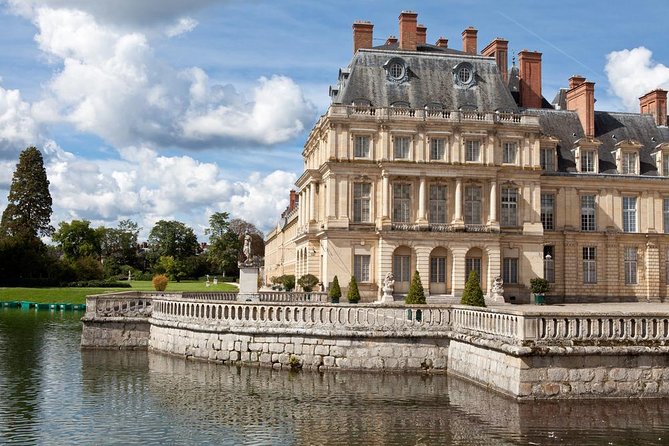
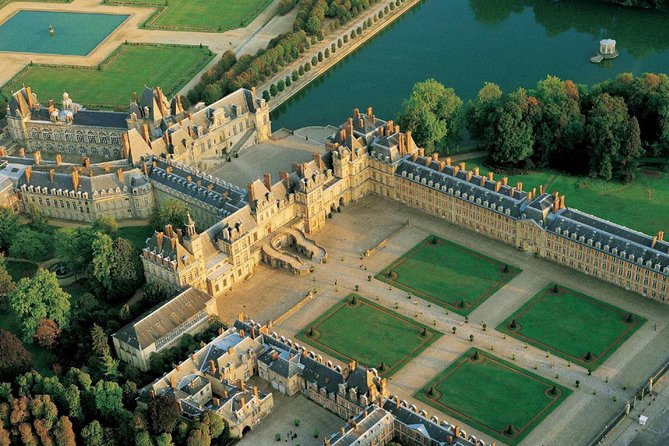
Château de Fontainebleau isn’t just another pretty palace. It’s special because it’s described as the only royal castle still inhabited for more than seven centuries. That continuity changes the feel of the visit. Instead of a museum-only vibe, you sense that royal life and state power have threads running through the place for generations.
Fontainebleau is also a UNESCO World Heritage Site, and the audio guide approach fits UNESCO spaces well. You can take in the major highlights without getting lost in a group flow, and you can spend extra minutes on the sections that catch your attention. The audio format also helps you handle the size of the complex—there’s a lot to see, and a “wander” day needs structure.
One detail I’d file away for context: Fontainebleau is noted as the birthplace of vast gardens and lakes. So even if you’re mostly focused on interiors, keep an eye out for how the grounds connect to the palace story. That connection matters because it explains why French royal sites often blend architecture and designed nature as one idea.
Practical drawback to watch: Fontainebleau can tempt you to dawdle. A helpful tip from real-world experience is simple—don’t let the audio tracks pull you into a long stop-and-start loop. If you want both castles to feel satisfying, move with intention.
How to Succeed at Fontainebleau’s Audio-Guided Route
Since this is mostly audio-guided, your best strategy is to treat the visit like a smart self-guided walk, not a casual stroll. I’d do two things:
First, decide what you want most before you start moving. Are you more interested in royal living and state rooms, or in the way the palace connects to gardens and water? Once you know your priority, you can use the audio to steer your time rather than just play everything at random.
Second, keep your pace steady. The guidance from the experience is that there is quite a lot to see, and you’ll enjoy Fontainebleau more if you don’t fall behind during the audio tour. In other words: let the audio inform you, but don’t let it eat the whole day.
If you’re traveling with someone who likes detail, it’s still doable—you’ll just want to set mini goals. For example: finish the main audio sections you care about, then spend a few extra minutes in one standout area. That way you still leave enough time for Vaux-le-Vicomte, which has its own “wow” factor.
Vaux-le-Vicomte: Baroque Theater and the Nicolas Fouquet Backstory
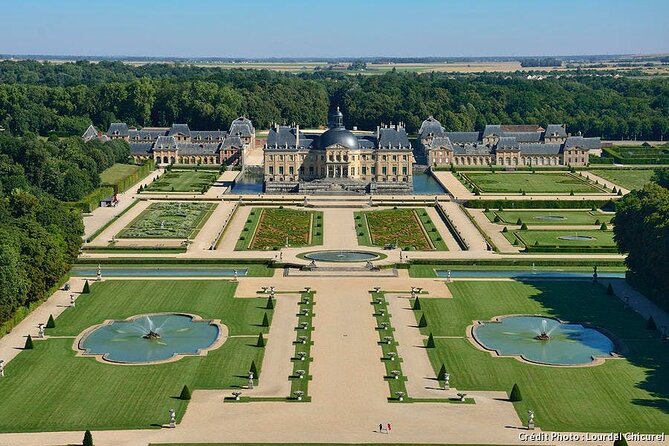
Then you roll into Vaux-le-Vicomte, and the mood flips. This is a baroque castle with an impressive reputation, and it’s even said to have inspired Château de Versailles. Whether you care about Versailles connections or not, the point is that you’re stepping into a different kind of visual experience: grand, decorative, and planned like a stage set.
Inside, you can explore elaborate interiors and vaulted cellars. That cellar detail is a reminder that these places weren’t only about appearance. They were also about systems—storage, logistics, and the behind-the-scenes side of running a massive estate. And in terms of the story you’ll learn, Nicolas Fouquet is central: he was Minister of Finance to King Louis XIV, and he’s described as the man behind this gigantic house.
Outdoors, the estate opens up to 40 hectares. That’s a lot of ground for fountains, flower beds, and vast lawns. This is where the day really becomes more than “rooms.” You get space for photos, walking time, and that sense of stepping into a designed landscape.
The one caution here is the same as Fontainebleau: timing. Vaux-le-Vicomte’s gardens and open spaces are easy to get lost in if you’re not paying attention. Plan for an outdoor walk, but keep the pace so you don’t end the day sprinting just to make the return.
Getting the Most from Vaux-le-Vicomte’s Gardens and Interiors
I’d treat Vaux-le-Vicomte like two separate visits inside one schedule: interiors first, then gardens. The reason is simple—weather and daylight can change quickly, and it’s harder to appreciate interior details when you’re already tired or hungry.
When you’re inside, lean on the audio guide to point you toward the story behind what you’re seeing—especially the Fouquet angle. Knowing who built what, and why, tends to make the decoration feel less like wallpaper and more like power and ambition.
When you go outside, pick a path instead of zigzagging everywhere. With 40 hectares, you can accidentally spend two hours wandering without enjoying the best sections. A focused walk still gives you that grand scale, but you avoid the “I saw everything and remembered nothing” problem.



Transport, Entry, and Why Small Groups Feel Better
The practical value here is that you’re not piecing together transportation and tickets all by yourself. The day includes an air-conditioned vehicle, WiFi on board, and bottled water. Those sound like small comforts, but on a day that’s already long, they help you arrive less frazzled.
Entry is also handled with entrance fees included. That matters because palace lines and ticket systems can turn a smooth day into a frustrating one, especially when you’re trying to fit two sites into the same half-day rhythm.
And then there’s the human factor. Hosts and drivers can make or break the feeling of “organized day.” Multiple experiences highlight that Yasser helps with the tour entry points, gives direction to convenient after-tour meeting spots, and offers helpful historical context in the car. There’s also praise for quick access at both locations, which usually means your time inside is protected.
Balanced note: one experience also raised a serious concern about punctual pickup and car cleanliness. In response to that kind of issue, the operator said they stopped working with that driver. It’s a reminder to build in real-world patience when you’re relying on pickup time—especially in traffic-heavy hours.
Lunch: A Simple Plan for When It’s Not Included
Lunch is not included, so you’ll want a plan before you’re hungry. This matters more on a two-palace itinerary because food timing affects your ability to enjoy the last stretch instead of rushing.
A practical option mentioned is a quick lunch at Paul, located just out the Jardin de Diane gate area—left and up to the corner before your next stop. It’s the kind of stop that works when you want something easy without turning lunch into a long detour.
If you don’t want a sit-down meal, keep it casual: grab something quick, eat, and then get moving. Your best friend on days like this is avoiding a late lunch spiral—because once you’re behind schedule, every “I’ll just take five more minutes” choice becomes a stress test.
Weather, Crowds, and How Dates Can Change the Day
This trip requires good weather, and that affects both comfort and time outdoors. If weather is poor, you may be offered a different date or a full refund. That’s good to know if you’re planning around forecasts.
Crowds can also shift the experience. One helpful example: on a national free day (Saturday), the host was able to reschedule to Sunday, which meant fewer people and better weather. You can’t count on this exact outcome every time, but it’s a good sign that the operation thinks about crowd load, not just the calendar.
My advice: if you have the flexibility to choose among nearby dates, pick the day that gives you the best weather odds and the least crowd pressure. Even on a well-run tour, crowds change the vibe inside historic spaces.
Price and Value: What You’re Actually Buying at $231.89
Let’s talk value in plain terms. This costs $231.89 per person, lasts about 6 hours (roughly 6 to 7 hours), and includes entrance fees for both chateaus. It also includes transportation with air-conditioning and WiFi and includes bottled water.
So your payment covers three major headaches:
- getting from Paris to two major sites without planning transfers
- paying for entry without doing it yourself
- avoiding long stretches stuck figuring out where to be next
Lunch is not included, which is the main extra cost. But compared with a do-it-yourself day, you’re paying for the “day-management” portion. And because the group is limited to up to 4 travelers, you get more of the benefits of a private-feeling day without the full cost of a true private charter for each traveler.
Another small value clue: the tour is often booked around 65 days in advance. That suggests demand is steady. If you wait too long in high season, you may lose the date you wanted.
Balanced conclusion on price: if you want both palaces in one day with minimal friction, the cost starts to look reasonable. If you’re the type who loves independent logistics and enjoys building your own itinerary, you might find cheaper options—but they’ll take more effort.
Who Should Book This Day Trip, and Who Might Not
This works especially well if you:
- want a first-time, high-impact day outside Paris
- prefer a small group and hate big-bus crowds
- like learning through audio guide while having freedom in the pace
- appreciate that your driver supports entry points and timing
It may not fit as well if you:
- want a live, room-by-room guide explanation at every stop
- get easily stressed by schedule pressure and need tons of unstructured wandering
- are extremely sensitive to pickup punctuality (even one bad pickup can throw off the whole day)
For seniors and mixed-age groups, this can be a comfort zone because the pace is managed and the transport is direct. Just plan your energy level: it’s a full palace day, not a quick hit.
Final Call: Should You Book This Two-Chateau Tour from Paris?
I’d book this if your goal is a smooth, high-value day that hits two headline chateaus with included entry and a small group setup. The combination of Fontainebleau’s long-lived royal character and Vaux-le-Vicomte’s baroque splendor is exactly the kind of contrast that makes a one-day itinerary feel worth it.
Also, if you pick your lunch plan early and keep an eye on audio-tour pacing, the day feels enjoyable rather than rushed. If you’re sensitive to timing, consider choosing a date with better weather odds and a bit less crowd pressure.
Bottom line: for most people doing Paris for the first time, this is a practical way to see the kind of palaces that usually take more time than you have.
FAQ
Is lunch included on this tour?
No. Lunch is not included.
How long is the day trip?
It runs for about 6 to 7 hours (approximately).
Is the tour offered in English?
Yes, it is offered in English.
Are entrance fees included for both chateaus?
Yes. Entrance fees for the castles are included.
What’s included in the price besides the entrances?
The tour includes an air-conditioned vehicle, WiFi on board, bottled water, and the entrance fees.
When do I get confirmation after booking?
You should receive confirmation within 48 hours of booking, subject to availability.
What happens if the weather is poor or the tour can’t run?
The experience requires good weather. If it’s canceled due to poor weather, you’ll be offered a different date or a full refund.
Can I cancel for free?
You can cancel for a full refund if you cancel at least 24 hours in advance of the experience’s start time.