REVIEW · PARIS
From Paris: Versailles Palace Guided Tour with Gardens Access
Book on Viator →Operated by City Wonders Ltd · Bookable on Viator
Versailles, minus the stress. This guided day trip is built for first-timers who want the big rooms, clear storytelling, and a smooth round-trip ride from Paris. I especially like the air-conditioned coach that handles the getting-there part, and the reserved, timed-entry ticket that helps you get inside faster. One thing to keep in mind: this is a popular site, so even with timed entry, you’ll still deal with security checks and a crowd vibe inside.
The palace tour uses audio headsets, which makes a huge difference when you’re packed in with other groups. Depending on your option, you’ll also get real time to wander the gardens on your own schedule, or upgrade for Monet’s Giverny. The trade-off is time. You’ll see the essentials, but you won’t have unlimited time to linger everywhere.
In This Review
- Quick takeaways before you go
- A smooth coach ride from Paris to Versailles
- Reserved timed entry and the Hall of Mirrors
- Royal Chapel: where baroque design meets old power
- Gardens of Versailles: symmetry, axes, and your pacing choice
- When you upgrade: Full-day Giverny with Monet house access
- How long you really have in Versailles (and why it matters)
- Group size, crowd energy, and the difference a good guide makes
- Timing realities: security lines and optional activities
- Where this tour is best value
- Who should book this Versailles day trip?
- Should you book it?
- FAQ
- How long is the Versailles tour from Paris?
- Does the price include admission to the Palace of Versailles?
- Are audio headsets provided?
- Is the Hall of Mirrors included?
- If I choose the gardens option, what’s included?
- Are Versailles gardens accessible for free in winter?
- What does the Giverny upgrade add?
Quick takeaways before you go

- Reserved timed entry helps you skip the longest waits, though security lines can still slow things down a bit
- Audio headsets mean you can actually hear the guide in busy rooms
- Up to 25 people keeps the group size manageable (still not “quiet,” but better than bigger tours)
- Gardens vary by season: winter access is generally easier; spring through fall can include musical fountain days on select dates
- Optional Giverny upgrade adds Claude Monet’s former home and time in the village
- Correct meeting point matters: Notre-Dame de Compassion has a similar name to other Paris churches, so use the map link and arrive early
A smooth coach ride from Paris to Versailles
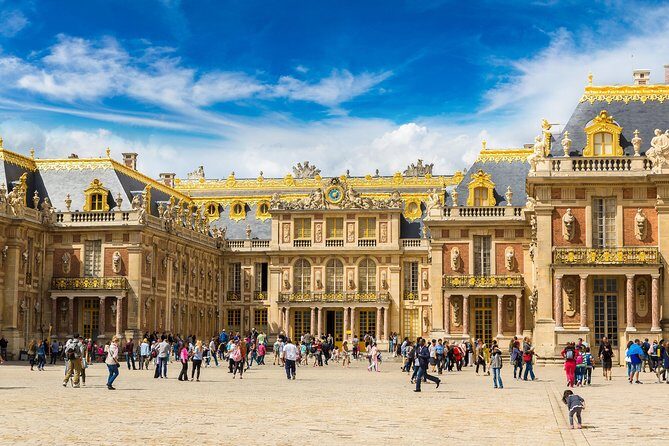
Let’s start with the part that saves your vacation energy: the round-trip coach from Paris. You meet at Église Notre-Dame de Compassion (Pl. du Général Kœnig), and you’re back at Porte Maillot at the end. No hotel pickup. But the pickup is straightforward, and you’re near public transportation.
The drive is where you can reset. Versailles isn’t just a “walk around and look” kind of place. It’s big, spread out, and best enjoyed when you’re not starting the day frazzled. Having a coach also means you can arrive in a more organized flow. That matters because the palace itself moves fast.
Two practical notes from the field:
First, treat the meeting point like an appointment. There’s enough confusion in Paris with similarly named churches, and if you’re late, you can miss the group. Second, weather is part of the deal. Even if you’re mostly indoors, you’ll still step outside for gardens and canal views, so bring a layer.
You can also read our reviews of more guided tours in Paris



Reserved timed entry and the Hall of Mirrors
Once you reach the palace, you go in with your reserved, timed entry. You’ll still see crowds, but the difference is you’re not stuck trying to work out the system on the fly. This is one of the biggest value points of the tour: you trade a bit of flexibility for a lot of certainty.
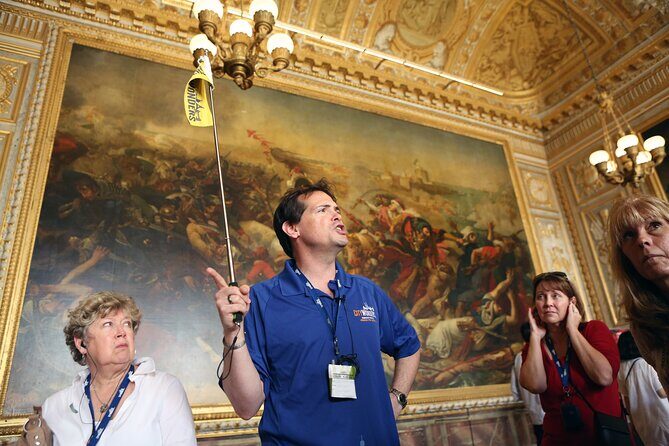
Inside, you’ll follow a guided route through the palace’s major highlights. The center of the show is the Hall of Mirrors (La Galerie des Glaces). You’ll be standing under chandeliers in a room designed for power and performance. The guide points out what you’re looking at and why it mattered—how ceremonial life worked here, and how the court used space, optics, and ritual to impress.
Right beside that spectacle are the rooms that explain the real story behind the glamour: who lived here, who succeeded whom, and how Versailles became a political stage. The tour isn’t trying to do every room on the property. It’s picking the rooms that do the heavy lifting—so you understand what you’re seeing without spending your whole day chasing corners.
Audio headsets help here in a very real way. Palace rooms can get loud, and people tend to cluster. With the headsets, you’re not straining to hear over shoulder-to-shoulder noise.
Royal Chapel: where baroque design meets old power
Next up is the Royal Chapel, one of the best “stop-and-look” moments on the route. You’re not just admiring decoration. You’re seeing a major statement about authority and belief, built in French baroque style.
This stop is short—about 5 minutes in the plan—but that’s actually a benefit. The chapel gives you a mental break from the crowds in the big picture rooms. And it connects dots. Once you’ve seen the chapel, the palace isn’t just “fancy rooms.” It feels more like a full system: ceremony, religion, and monarchy all tied together.
Gardens of Versailles: symmetry, axes, and your pacing choice
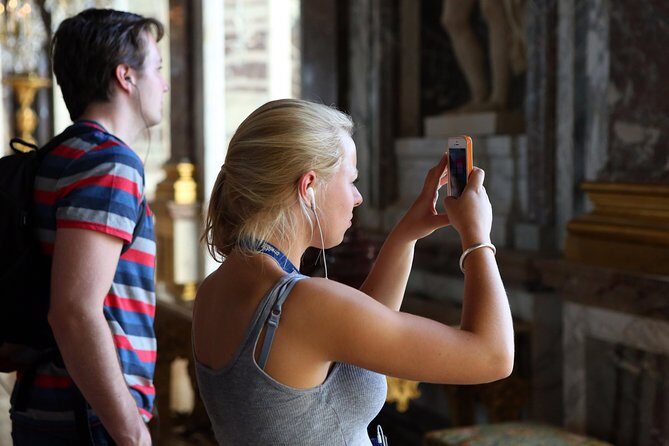
If your option includes gardens, this is where Versailles expands from architecture into landscape design. You get time to explore at your own pace, using a free-time window (about 1 hour 15 minutes for the gardens block) to walk, pause, and reset your feet.
The gardens were designed by André Le Nôtre, and you’ll notice the big idea quickly: the whole place is about symmetry and perspective lines. Even if you’re not a design nerd, your eyes will follow the logic. Long views pull you forward. Axes guide your walking. Water and focal points create the “wow” moments.
Season changes everything. During musical fountain and musical garden season (late March/early April through October), music and water displays happen on select days. In colder months (November to March), garden access is free and you won’t need a garden ticket.
Two tips that keep your day smooth:
- Use the time you have to aim for the main view corridors first, then wander. It’s easy to lose track in a big garden grid.
- If you’re visiting in winter, you’ll still enjoy the space, but don’t expect the same water show energy as peak season. Dress for cold wind, not for postcard weather.
You’ll also have a stop area for the Grand Canal (about 15 minutes) if you selected the gardens option. Even briefly, it gives you a sense of scale. Versailles looks different once you see the “outside geometry” instead of only the palace walls.
When you upgrade: Full-day Giverny with Monet house access

Want a Versailles day that doesn’t end with palaces? Upgrade to the Giverny option. This adds a guided visit to Claude Monet’s former home and includes audio-guided access there, plus free time in the village of Giverny.
This is a good choice if you love the idea that art springs from real places. Monet’s house and gardens are tied to how he saw light and seasons. Going from Versailles to Monet also gives you an interesting contrast: one place is about court spectacle and control; the other is about perception and mood.
One thing to watch: adding Giverny changes the rhythm. It becomes a longer, more “two-attractions” day, so you’ll want to keep your pace realistic. If you know you love photos and want time for quiet corners, this route can feel more satisfying than rushing through Versailles alone.






How long you really have in Versailles (and why it matters)
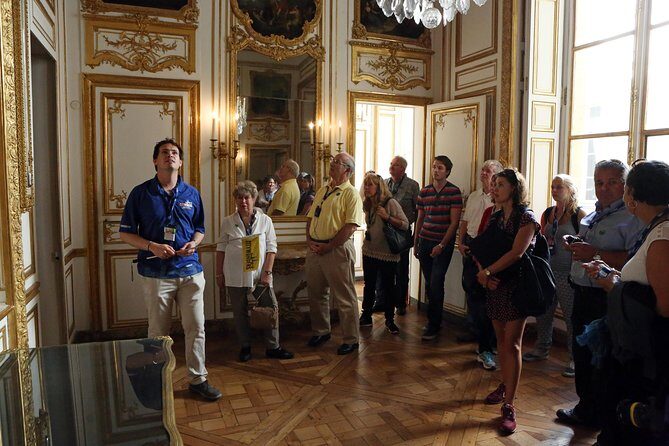
The schedule depends on the time of year. The tour runs about 5 hours from November to March and 6 hours from April to October. That extra hour in warmer months usually aligns with gardens being a bigger part of the experience.
The palace guided portion is about 1 hour 50 minutes, then you move through shorter picture stops like the Hall of Mirrors and Royal Chapel. Your gardens time (if selected) is another block of free pacing, plus Grand Canal views.
Here’s the key planning truth: Versailles rewards people who go in with priorities. If you want to read every inscription, sketch every ceiling panel, or linger in every room, you’ll run out of time. The tour solves that for you by focusing on the highlights. But you still need to accept that this is a “best of” day, not a slow museum marathon.
If the idea of crowding stresses you out, pick a plan that gives you an escape valve. That’s exactly what the audio headsets and scheduled segments do: you’re moving with structure, then getting breathing space in the gardens.
Group size, crowd energy, and the difference a good guide makes
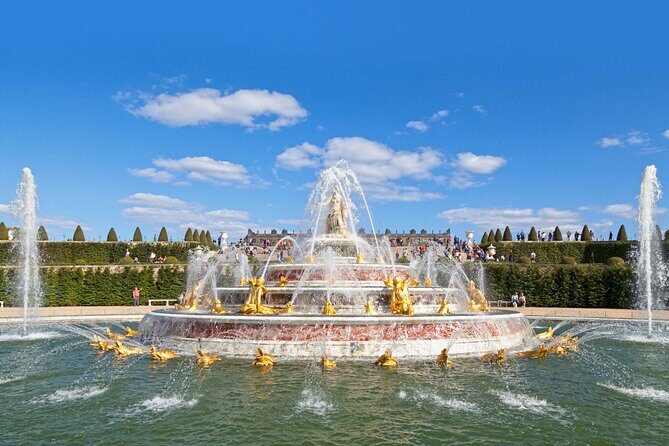
Group size caps at 25 travelers, which is a big deal at Versailles. It usually means you won’t spend your whole time fighting for position. Still, you’ll be inside a world-famous monument that’s designed for ceremonies and designed for crowds to gather.
This is where guide skill matters. The best experiences you can have on this kind of route usually come down to someone who can connect big visuals to human stories—and do it without turning every room into a lecture. In previous tours, names like Laurent, Flor, Martha, Mauro, Gregory, Helin, Johvana, George, and Max have been reported as standout guides for keeping the pace lively and making the rooms make sense. Even if your guide’s style is different, the setup is meant to keep the story clear using the audio headsets.
What I’d call a realistic expectation: you may feel “squeezed” at peak times, especially in the biggest rooms. If you hate that feeling, come earlier in the day if you have any choice outside this tour’s schedule, and don’t plan on stopping randomly for long breaks inside.
Timing realities: security lines and optional activities

Timed entry helps, but it doesn’t turn Versailles into a quiet private visit. Security and entrance checks can still create brief delays, especially when the site is crowded. The practical move is to give yourself a buffer: arrive at the meeting point early, and don’t count on every minute going perfectly.
In the gardens, there are sometimes optional add-ons like garden trains or other ride-on options. If you plan to take one, treat it like a “budget extra time” choice. It can take longer than you think, and you don’t want to miss your bus return. Your day moves on a schedule, so slow pleasures should stay on your side of the clock.
Where this tour is best value
At $82.68 per person, you’re not paying for luxury. You’re paying for three things that matter at Versailles: transportation from Paris, reserved entry, and a guided route that prevents you from wandering aimlessly through a monumental site.
If you were to do this on your own, you’d have to solve multiple friction points:
- figuring out timed tickets and entry windows
- getting there without wasting time
- deciding what to prioritize inside the palace
- hearing context while everyone else is snapping photos
This tour packages those problems into one clean plan. That’s the value.
The upgrade to Giverny adds more time and a second major attraction. That can be excellent if Monet is on your list, and less necessary if you mainly want Versailles and gardens.
Who should book this Versailles day trip?
You’ll like this tour if:
- you want an efficient first visit to Versailles
- you care about hearing explanations clearly (audio headsets are a big plus)
- you want organized movement with time to breathe in the gardens
- you don’t want to coordinate trains, tickets, and day-of logistics
You might want to choose a different approach if:
- you hate crowds and want a slow, flexible palace day
- you expect the gardens to be fully in “show mode” in winter (they won’t be)
- you want lots of unstructured time inside the palace
Should you book it?
Yes—if your goal is a confident, high-impact Versailles visit. The reserved timed entry and audio headsets make this easier than a DIY day, and the gardens option gives you the extra “Versailles isn’t just walls” experience.
My decision rule is simple: if you’re visiting Versailles for the first time and want the main rooms plus at least some garden walking, this tour is a strong fit. If you’re already comfortable building your own itinerary and you have extra days to spend at your own pace, you may prefer a more flexible plan. But for most people, this one hits the sweet spot between structure and freedom.
FAQ
How long is the Versailles tour from Paris?
It’s about 5 hours from November to March and about 6 hours from April to October.
Does the price include admission to the Palace of Versailles?
Yes. Palace of Versailles admission with reserved, timed entry is included.
Are audio headsets provided?
Yes. Audio headsets are provided so you can hear the guide clearly.
Is the Hall of Mirrors included?
Yes. The tour includes a stop at the Hall of Mirrors.
If I choose the gardens option, what’s included?
You get gardens of Versailles admission and free time to explore at your own pace, plus Grand Canal views during the gardens portion.
Are Versailles gardens accessible for free in winter?
Yes. From November to March, garden access is free and no ticket is required.
What does the Giverny upgrade add?
The upgrade includes access to Claude Monet’s house with audio guidance and free time in the village of Giverny, along with your Versailles visit.