REVIEW · PARIS
Giverny Monet’s Home and Gardens Half Day Tour from Paris
Book on Viator →Operated by City Wonders Ltd · Bookable on Viator
Monet’s gardens feel oddly close to magic. This half-day tour is built for real sightseeing time: you ride in an air-conditioned coach with guide commentary, then explore the House and Gardens of Monet at your own pace with an audio app.
What makes it especially interesting is the mix of guided context and free time, plus a bonus stop for the village sights near Monet’s tomb.
One thing to plan for: the place can get crowded and hot at peak times, and the visit is timed tightly enough that you’ll want a game plan.
In This Review
- Key highlights worth marking on your map
- How the Paris-to-Giverny ride sets the tone
- Fondation Claude Monet: your self-guided house and gardens flow
- Chasing the lily pads: what to expect at the pond views
- The house itself: why the interior matters (beyond pictures)
- Giverny village time: shops, cafés, and the tombstone
- When the guide commentary helps—and when to tune it out
- Timing, crowds, and how to avoid feeling rushed
- Price and value: what $91.91 buys you in the real world
- If you choose the full-day option: Versailles is the bonus
- Practical tips to make the day go smoothly
- Should you book this Monet half-day tour?
Key highlights worth marking on your map
- Comfort-first Paris coach ride with English commentary as you head to Giverny
- Audio app self-guided house and gardens after an orientation at the Fondation Claude Monet
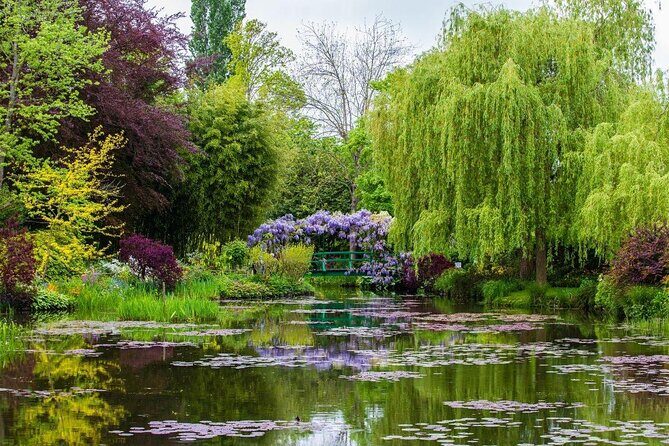
- Lily pads and the pond views that look better in person than in photos
- Real time in Giverny village for shops, cafés, and a visit near Monet’s tombstone
- Small-ish group feel (maximum 50) that still keeps the logistics easy
- Optional Versailles add-on on the full-day option, returning to Paris by 7pm
How the Paris-to-Giverny ride sets the tone

This tour starts in central Paris at Église Notre-Dame de Compassion, Pl. du Général Kœnig (75017). From there, you transfer by comfortable, air-conditioned coach to Claude Monet’s estate in Giverny. The drive is about an hour each way, and the guide uses that time to frame what you’re about to see—Monet’s daily life, why Impressionism mattered, and what to watch for when you arrive.
I like this part because it removes the usual day-trip stress. You get to sit down, let someone else handle the route, and still hear enough context to make the paintings and gardens feel connected rather than random. If you’re arriving in Paris after a long flight, this coach segment also helps you ease into the day instead of jumping straight into navigation and lines.
As for group size, the cap is 50 people. That’s big enough that you’ll move at a steady pace, but small enough that the guide can still wrangle a group through a timed schedule without it feeling like a cattle call every minute.
You can also read our reviews of more tours and experiences in Paris.


Fondation Claude Monet: your self-guided house and gardens flow
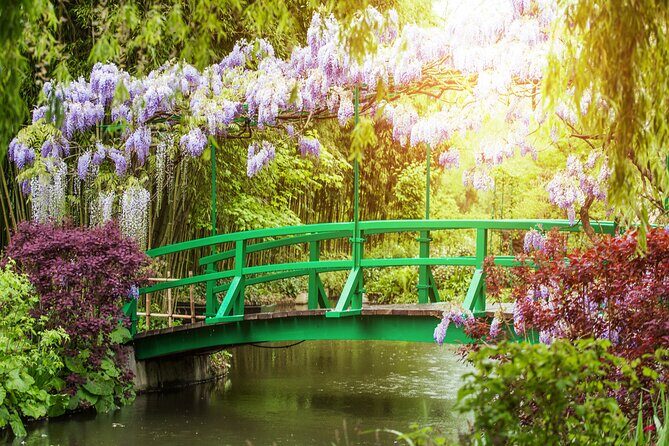
Your first major stop is the Fondation Claude Monet (ticket included) for about 1 hour 30 minutes. The day begins with a brief orientation at the estate—enough to help you find the right paths and understand how the place worked for Monet. Then you’re on your own with the self-guided experience using the audio app.
This is a strong setup for two reasons:
First, you’re not stuck listening nonstop while trying to look. You can pause to stare at a doorway, walk slowly by the pond edge, and come back when you want. Monet’s house and garden aren’t about rushing. They’re about noticing small contrasts—light through windows, the way paths curve, and how plantings shift across the seasons.
Second, you get structure without losing freedom. The audio app is designed to keep you oriented while you explore, and it’s especially helpful for understanding what you’re looking at in rooms that show the house as it would have appeared in Monet’s lifetime.
Practical heads-up: you’ll do more walking than you might expect. The gardens cover ground, and the best views need a bit of repositioning. Wear shoes you can move in for an hour or more, not just “Paris pretty” shoes.
Chasing the lily pads: what to expect at the pond views
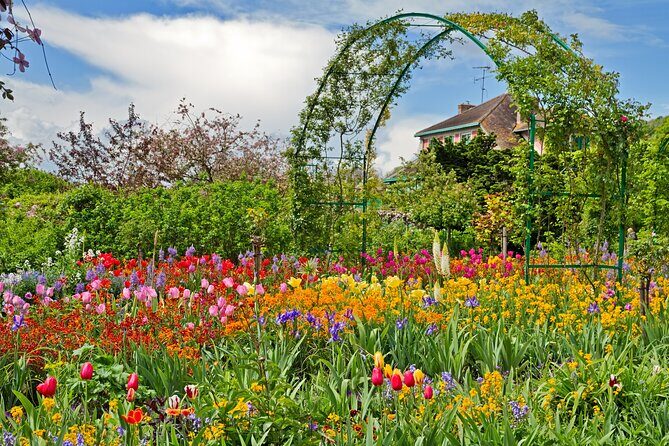
No other stop on this day trip gets mentioned as much as the lily pad ponds. Once you’re in the garden, you’ll see the water features that made Monet famous, including the pond areas filled with those floating lily pads.
Here’s what matters for your planning: these views change. The bloom intensity depends on the season, so even if you visit when some plants have faded, you can still enjoy the pond colors, the reflections, and the overall composition that Monet worked so hard on.
The good news is that you’re not stuck with a single viewpoint. You can wander the garden paths and find multiple angles. That’s why the self-guided time works so well here—if you’re photographing, you can wait for a clear sightline. If you’re just soaking it in, you can take the slower route and let the place do the talking.
One more reality check: peak season can feel hot and crowded. The garden gets busier in summer, and the estate is popular year-round. If you’re going in a hotter month, plan to take small breaks and sip water when you can. Even a short stop inside the house feels like a reset.
The house itself: why the interior matters (beyond pictures)
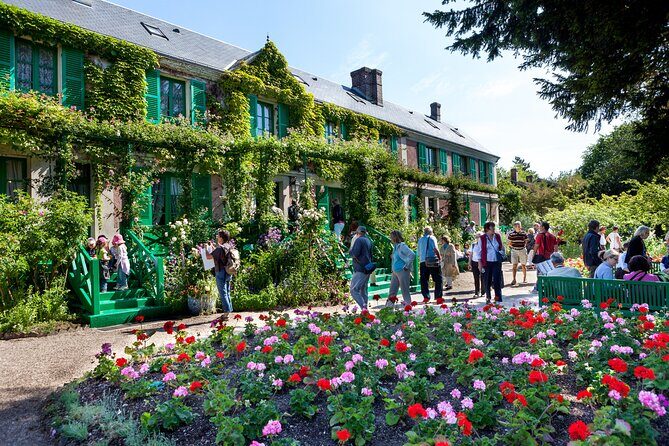
It’s easy to treat Monet’s house like a backdrop for photos. That would be a shame. The interior gives you context you won’t get just from seeing the garden.
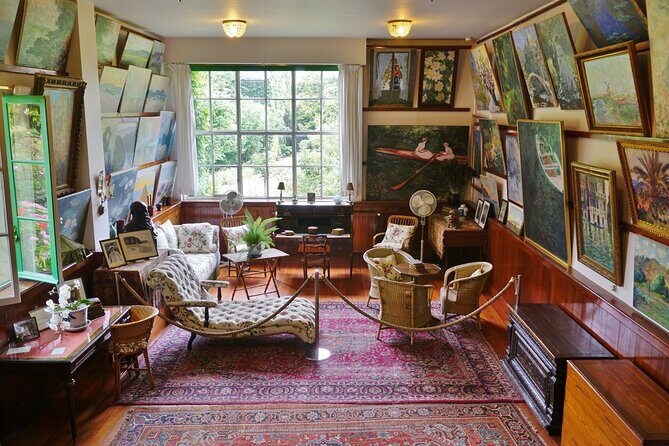
In the rooms, you can see how the house has been restored to reflect how it would have looked during Monet’s lifetime. You’ll also spot displays that connect his work with what he collected and the influences that shaped his style, including references to Japanese art that appear in the house displays.
This is where you start understanding that Monet wasn’t painting a random scenery. He was working from a living studio. Windows, rooms, and garden pathways all feed into each other, and once you notice that, the gardens stop looking like a pretty park and start looking like a carefully composed set.
Timing note: you only have about 1 hour 30 minutes at the Fondation. That doesn’t mean you can’t do it well—but it does mean you should choose priorities. If you’re a serious photographer, you may need to move quickly between the pond highlights and your preferred house viewpoints.
Giverny village time: shops, cafés, and the tombstone
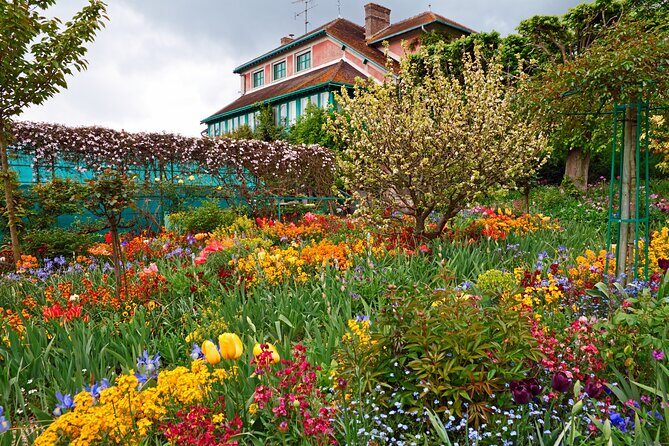
After the house and gardens, you regroup for the village visit. This is the calmer part of the day, with about 1 hour 30 minutes on your own in Giverny (admission free for this portion).
You can browse the small shops, stop for a drink at a local café, and just enjoy the slower village pace. This matters because a good Monet day trip isn’t only visual—it’s also about giving your eyes a break from intense garden colors.
You also have time to visit Monet’s tombstone near the village’s church. It’s a quiet counterpoint to the big pond photography. Even if you’re not usually drawn to tombs, this one adds emotional closure because it connects the man to the place without turning the day into a museum tour.
If you want to make this section smoother, decide before you go whether you’ll prioritize café time, shops, or the tomb. You can do all three in 1.5 hours, but only if you don’t wander aimlessly.



When the guide commentary helps—and when to tune it out
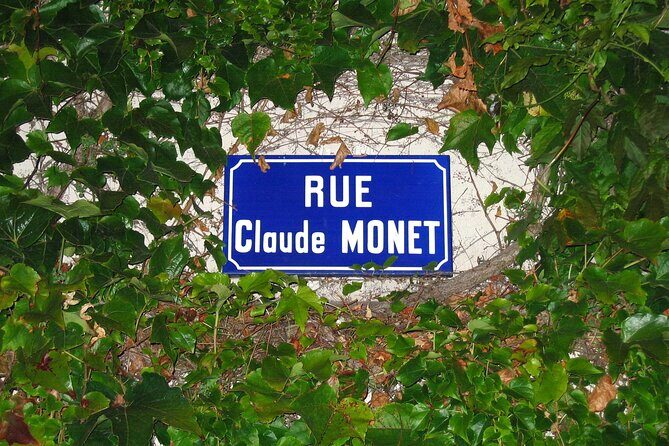
The coach ride includes commentary along the way, in English, from an English-speaking tour leader. The general tone is meant to make you understand Impressionism and how Monet’s estate fits into it.
Guides across different groups have been described as friendly, with real personality, and able to answer questions on the ride. Names that have shown up with this tour include Sam, Liz (from Peru), Aya, Daniel, and Thelma. If you’re lucky enough to have one of these guides, you’ll likely get helpful guidance on what’s worth your attention once you reach the garden paths.
That said, this is still a group tour component, so the drive won’t be silent. If you’re jet-lagged or you prefer quiet scenery, it’s smart to bring earbuds so you can switch between listening and music. The good part is that the actual estate time becomes self-directed—so you get quiet control when it counts.
Timing, crowds, and how to avoid feeling rushed
This is a half-day format, so the schedule is intentionally tight. That’s the tradeoff you’re making for convenience and efficiency.
The upside: you won’t burn the entire day commuting or waiting around. You’ll hit the major estate highlights and still have time to enjoy Giverny on foot.
The downside: you may wish for more minutes at the house and ponds, especially if you stop for photos repeatedly or spend extra time reading signs and listening to the audio app.
Here’s how I’d set yourself up to feel satisfied rather than rushed:
- Pick your pond and house “must-sees” before you enter the gardens.
- Don’t try to complete every audio track back-to-back. Use the app like a menu.
- Plan your village time so the tombstone visit doesn’t eat your café break.
And if you’re visiting in hot or peak season, arrive with water and patience. Crowds aren’t just annoying here; they can also block the best photo angles.
Price and value: what $91.91 buys you in the real world
At $91.91 per person, you’re paying for more than a ticket. You’re paying for:
- Round-trip coach transfer from Paris in comfort
- Entrance fee to Monet’s house and gardens
- English-speaking guided support where it matters (orientation + commentary)
- Self-guided audio access once you’re at the estate
- Free time in the village of Giverny
Could you do it independently? Yes—metro and regional trains can get you into the area. But with limited time in Paris, getting there by public transit can turn into a complicated morning. The coach removes the transfers and keeps your day-trip timing predictable.
So for a lot of people, the value is the simplicity: you reduce decision fatigue. You spend your energy on the pond views, the house rooms, and a relaxed stop in the village instead of spending it figuring out routes and juggling schedules.
If you choose the full-day option: Versailles is the bonus
There’s an option that adds Versailles for a full-day experience. If you pick that version, you’ll visit the Palace of Versailles with a guided tour of the interior and then free time in the gardens. The day ends back in Paris by 7pm.
This can be a great add-on if you want one major Impressionism stop plus a classic royal-site day. Just remember: adding Versailles increases walking and will make your time at each place feel even more scheduled.
Practical tips to make the day go smoothly
A few small things can make a big difference:
- Test your plan for the meeting point ahead of time. This specific start area can be confusing on some navigation apps, and it’s easy to get sent the wrong way. Use your map, but double-check you’re finding the right church plaza.
- Download and get your audio app ready before you arrive. The app is central to how you explore the house and gardens at your own pace.
- Bring comfortable shoes. You’re moving through both garden paths and village streets.
- Pack for weather. Mid-summer heat can be intense at outdoor gardens, and the crowd level can multiply that feeling.
- Use the village time intentionally. If you want the tombstone visit, don’t let shopping take over every minute.
Should you book this Monet half-day tour?
Book it if you want the high-impact Monet experience without turning your day into an all-day logistics project. The mix of coach convenience, an orientation that sets you up fast, and self-guided time in the house and gardens is a winning formula for most schedules.
Skip it or adjust expectations if you’re the type who hates crowds and hates being on any timetable at all. Also consider a different approach if you’re the sort of visitor who needs hours inside one area. This is designed to deliver the essentials, then let you breathe in Giverny.
If you’re visiting Paris for a limited number of days and Monet’s lily ponds are on your list, this is one of the more efficient ways to make that happen while still getting time to enjoy the village.