REVIEW · PARIS
Giverny Monet’s House & Versailles Palace Private Day Trip from Paris
Book on Viator →Operated by Normandy Melody · Bookable on Viator
Two icons, one long day.
This private outing stitches together Monet’s Giverny and Versailles’ Hall of Mirrors so you can see two huge highlights without juggling trains or timing. I love the way the day is guided from the garden’s details to the palace’s big political meaning, and I especially like the round-trip pickup that saves your energy. The main consideration: it’s a full schedule (lunch is on your own), and while priority access helps, you should still expect some waiting when sites are extremely busy.
I also like the pacing options. You can choose a Versailles-in-the-morning plan (with Giverny later), which can help with crowd pressure. And the guides leading these tours (people like Jean-Paul, Gilles (Gil), Ange, and Anna) tend to focus on making the countryside feel readable, not just like a checklist.
In This Review
- Key Highlights You’ll Feel Immediately
- Why This Monet + Versailles Day Trip Actually Works
- Getting Picked Up in Paris: The Part That Saves You Stress
- Fondation Claude Monet: The Water Garden, Pink House, and Studio
- The Water Garden: Where the Light Does the Work
- The House: Everyday Rooms, Not a Museum Showroom
- The Studio: Where Water Lilies Took Shape
- About priority access at Giverny
- Giverny Village Stop: A Real Norman Break (Not Just Photos)
- Versailles Palace: Royal Apartments and the Hall of Mirrors
- Royal Apartments: Power staged in marble and paint
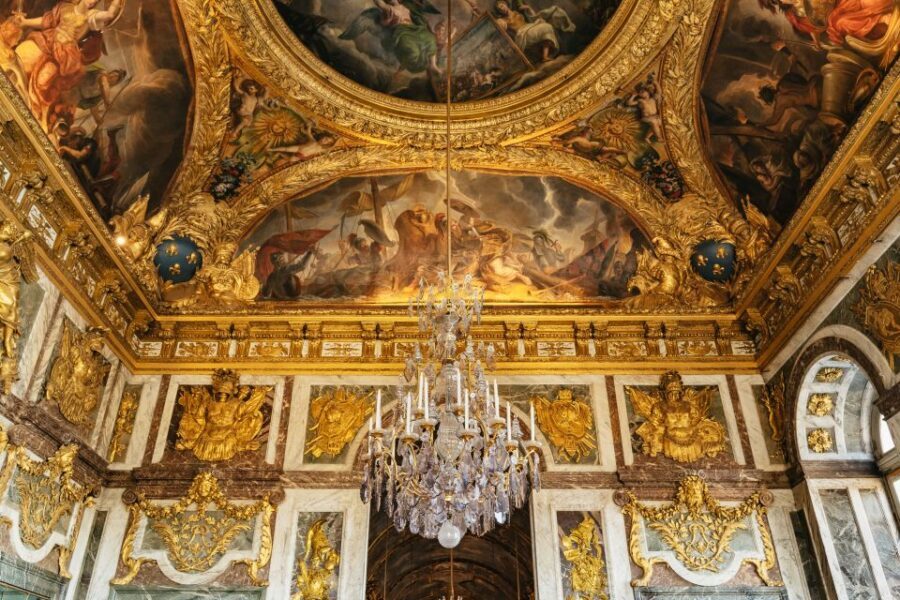
- The Hall of Mirrors: 357 mirrors with a political job
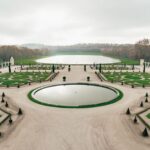
- Versailles Gardens: Le Nôtre’s Geometry Meets Court Entertainment
- What to expect when you walk the axis
- Statues, fountains, and the open-air museum effect
- Musical fountains and garden events (season/day dependent)
- Private Tour Value: Why the Guide Matters More Than You Think
- Price and Logistics: Is $879.41 Per Person Worth It?
- Lunch and Timing: How to Plan So You Don’t Feel Rushed
- Should You Book This Tour?
- FAQ
- How long is the day trip?
- What’s included in the price?
- Is lunch included?
- Does the tour offer hotel pickup?
- Is there skip-the-line access?
- Can I choose whether Versailles is first or Monet is first?
- What language is the tour in?
- Is free cancellation available?
Key Highlights You’ll Feel Immediately

- Hotel pickup and drop-off in Paris, with an air-conditioned minibus
- Monet’s Water Garden + House + Studio in a single guided arc (about 2 hours)
- Versailles skip-the-line entry paired with an introduction to the Royal Apartments
- Hall of Mirrors context (the mirrors, the paintings, and what the room was built to do)
- Versailles gardens with musical programming on set days and seasons
- A short Giverny village stop that grounds the art in real Norman life (about 1 hour)
Why This Monet + Versailles Day Trip Actually Works
Putting Monet’s Giverny and Versailles on the same day sounds like a lot. It is a lot. But it also makes sense if your goal is to get the contrast in one shot.
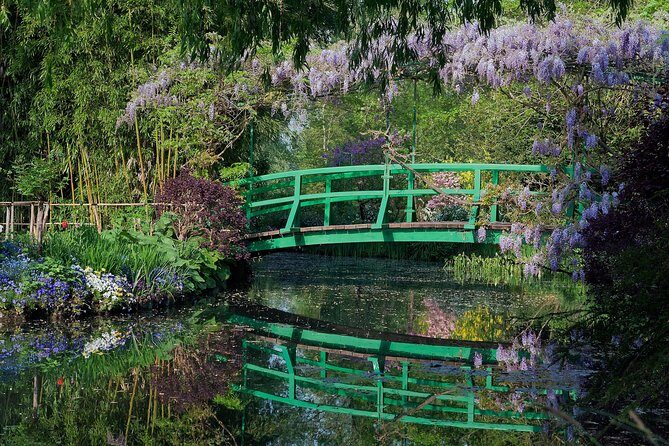
In Giverny, you’re in a world of reflective ponds, wisterias, and the “painted” feel of a garden that changes with light. Then you swing to Versailles, where the design is all about power: marble, bronze, gilding, and geometry stretching out from the palace. One day gives you two ways of thinking about France—art and authority—without forcing you to sleep in a different town.
The schedule is also built around practicality: a morning departure (start time is 8:00 am, with hotel pickup shortly before) and a full loop that usually lands around 9 hours total. That’s long, but it’s the right length for hitting both places with a guide.
You can also read our reviews of more private tours in Paris



Getting Picked Up in Paris: The Part That Saves You Stress
The biggest quality-of-life win here is the transportation. Pickup starts about 5–10 minutes before 8:00 am, and the tour runs with an air-conditioned minibus and a licensed driver-guide setup.
Why that matters: Versailles and Giverny both eat time in getting there and then finding the right entrances. If you’re self-planning, you’re juggling tickets, transit, and the timing of lines. Here, you’re turning it into one simple flow: you walk out of your hotel, and the day moves.
Two practical notes based on real-world friction points:
- Bring something to drink and plan for a hot or rainy morning. A few travelers have reported minor issues like water availability or late arrival, so hydration helps keep the day calm.
- Pay attention to where you’re told to meet at each site. If you’re traveling with kids or anyone who needs an easy rhythm, clear meeting points are gold.
Fondation Claude Monet: The Water Garden, Pink House, and Studio
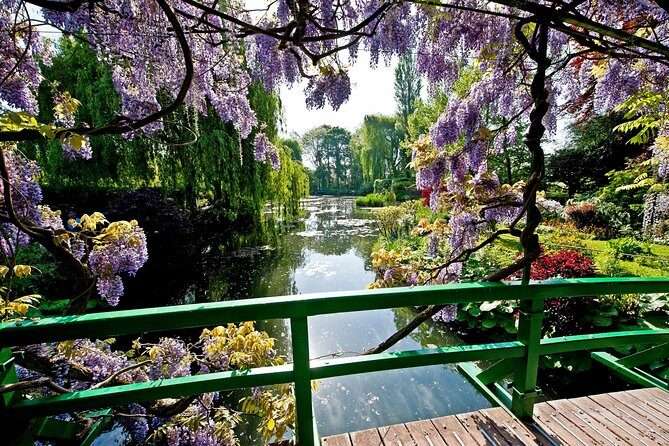
This is the heart of the Giverny side, about 2 hours total, and it’s where the guide’s job really shows.
The Water Garden: Where the Light Does the Work
You’ll spend time in the Water Garden, including the famous Japanese bridge, wisterias, the water-lilies pond, weeping willows, and irises. Monet didn’t treat this like a backdrop. He built a living image where reflections become part of the painting.
Tip for your photos: don’t just shoot the “icon” bridge. Look for the pond angles and the way the garden colors repeat on the water. That reflection effect is the reason these gardens are such a pilgrimage site.
The House: Everyday Rooms, Not a Museum Showroom
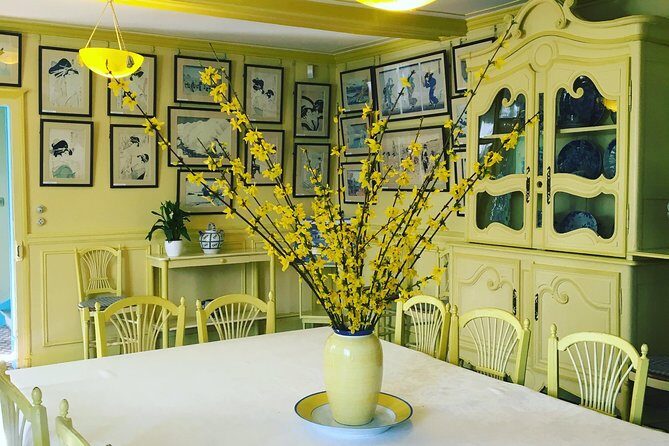
Then comes Monet’s charming pink house. You’ll see the drawing room, pantry, bedroom, study, dining room, and kitchen, and you’ll get a sense of family life in a home with eight children. The house also includes Monet’s collection of Japanese prints, which shaped his thinking.
This section is especially good if you want to understand how Impressionism grew from more than “pretty light.” It’s also about habits, influences, and how artists surrounded themselves with ideas.
You can also read our reviews of more tours and experiences in Paris






The Studio: Where Water Lilies Took Shape
The last stop at Fondation Claude Monet is the big studio, the place where his famous water-lilies paintings saw the light of day. Those paintings connect to the Orangerie Museum in Paris, which is worth knowing so your later museum visit lands with context.
About priority access at Giverny
The tour is marketed as having priority/skip-the-line style access. One important nuance: in practice, that kind of access is often aimed at entry flow. So while it can reduce waiting, it may not make the entire experience line-free. If you’re sensitive to queues, plan a patient mindset and keep the day flexible.
Giverny Village Stop: A Real Norman Break (Not Just Photos)
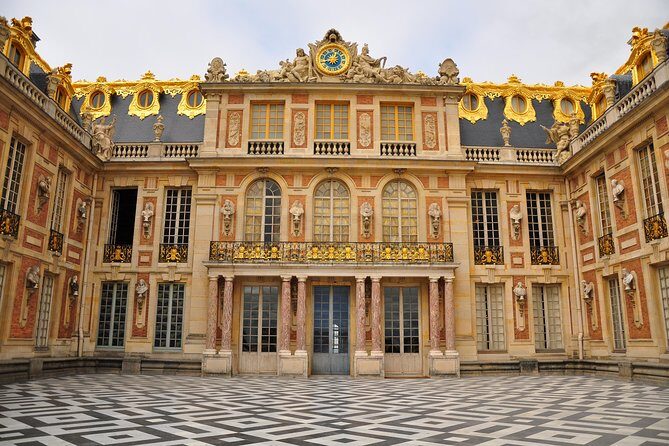
After the gardens, you’ll get about 1 hour in Giverny itself. It’s a typical Norman Seine-side village near Vernon, on the north bank of the Seine. Monet arrived in 1883, and his long years there turned the village into an artistic stop for the world.
This is the portion where you can breathe. If you want a quick walk for local street scenes, a snack, or simply to reset your legs after the garden, this is the time.
Admission for the village stop is free, but don’t expect it to replace lunch. It’s designed as a short, grounding interlude.
Versailles Palace: Royal Apartments and the Hall of Mirrors
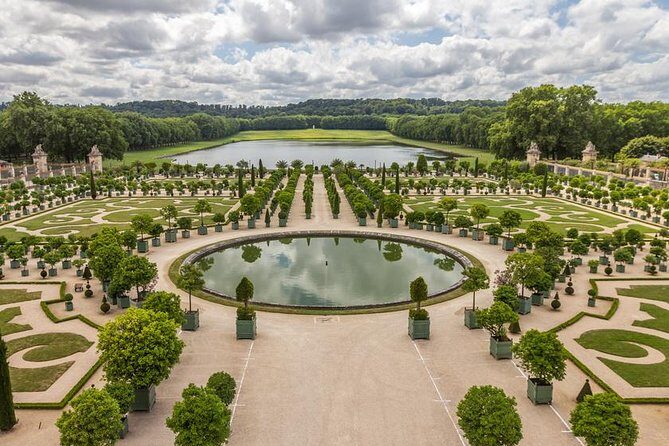
Versailles is overwhelming in a way that’s hard to describe until you’re inside it. That’s exactly why you’re paying for guidance.
This palace portion is about 2 hours, and it includes priority entry plus a guided introduction to the Royal Apartments. You’re not just walking through rooms; the guide helps you understand what these spaces were for and why they were built like they were.
Royal Apartments: Power staged in marble and paint
You’ll focus on the King and Queen’s royal quarters. These parade apartments were meant for official acts of the sovereign, decorated with sumptuous Italian-style touches like marble paneling and painted ceilings.
You’ll also get perspective on how the decor changed, including the idea that the king abandoned these apartments while the queen continued to occupy them, leading to updates over time.
The Hall of Mirrors: 357 mirrors with a political job
The highlight is the Hall of Mirrors, designed from 1678 by Mansart. It’s a monumental room about 8072 square feet, with roughly 239.5 feet of length and 357 mirrors. The painted compositions by Le Brun illustrate Louis XIV’s “glorious history,” including military victories and diplomatic reforms.
Here’s what you should look for beyond the wow-factor: the mirrors are part of the architecture’s message. The room reflects the gardens, so the palace performance changes with daylight. That’s why the Hall feels alive rather than static.
One practical crowd note: the tour pace is guided to hit the best timed moments. If you love gift shops and want long browsing time, you may find you have less freedom than you’d like unless you tell your guide early.
Versailles Gardens: Le Nôtre’s Geometry Meets Court Entertainment
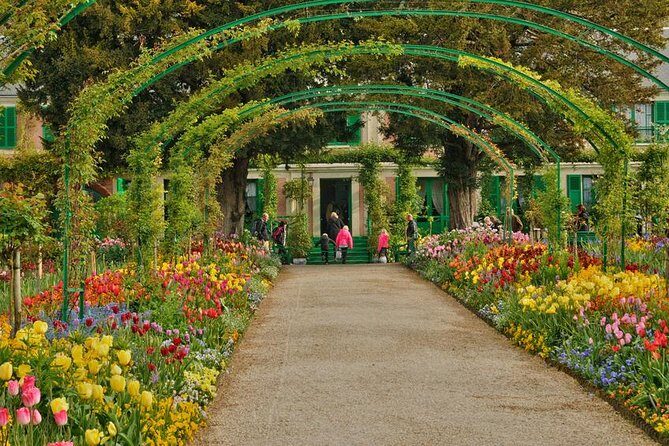
After the palace, the tour continues to the gardens. This is about 1 additional hour focused on the best sections.
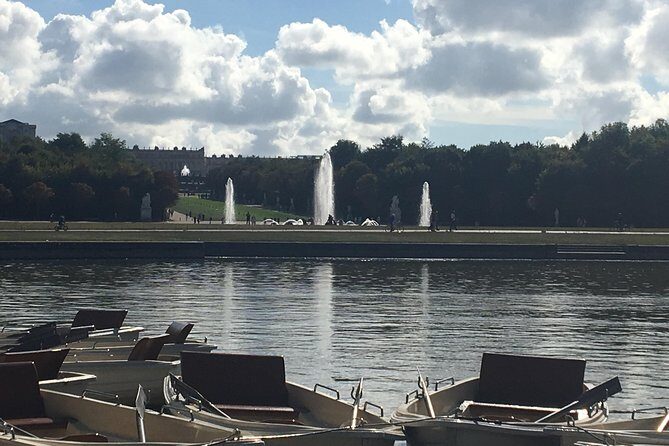
The gardens were designed beginning in 1661 under Louis XIV with André Le Nôtre. The creation took decades: leveling spaces, landscaping beds, and creating ponds and the canal. Louis XIV treated gardens as important as the château itself.
What to expect when you walk the axis
Versailles gardens are designed like a building: geometric organization, terraces with big views, and perspectives that guide where you walk and what you see. You’ll also notice groves that hosted walks and entertainment at court.
If Monet’s garden feels like a painting, Versailles feels like a plan. It’s the same theme—how design shapes perception—just with opposite tools.
Statues, fountains, and the open-air museum effect
There are 221 sculptures, which is why the gardens are often described as an open-air museum. You’ll see fountains and groves, and your guide will aim you at the most meaningful viewpoints rather than leaving you to guess where to start.
Musical fountains and garden events (season/day dependent)
The tour may include musical gardens and musical fountains depending on the calendar:
- Musical gardens: Tuesdays from June to October
- Musical fountains: Saturdays and Sundays from April to October
If you’re visiting in one of those windows, this can add energy to your garden time. If not, you’ll still get the core structure and key sights.
Private Tour Value: Why the Guide Matters More Than You Think
The “private” label matters here because it changes the way you move through complicated places.
In a guided private day, you’re not stuck with a rigid group tempo. Your guide can adjust pacing and focus based on your group’s needs—especially at Versailles, where crowds can make it feel like a timed obstacle course.
Some guides tied to this experience have been praised for:
- explaining the art and history in a way that connects details to the bigger story
- keeping kids engaged
- helping guests with mobility needs
- using flexibility to reposition the experience when timing or traffic shifts
One more smart benefit from the private format: if you’re offered viewpoints during the driving portions, your guide can show you what to look for on the route. Those quick stops are small, but they prevent the countryside from turning into a blur between sites.
Price and Logistics: Is $879.41 Per Person Worth It?
At $879.41 per person for a private day trip, this isn’t a budget choice. The value only shows if you truly want the “one day, two icons” experience with minimal friction.
Here’s what you’re buying:
- Transport with hotel pickup and drop-off (you’re outsourcing the hardest part of getting out of Paris)
- A licensed guide for the guided portions at Monet and Versailles
- Priority entry for key access points that can save time during the busiest parts of the day
- Admission included for the Monet house/gardens and Versailles palace and gardens sections (lunch is the one big gap)
So when does it make sense?
- If you’re short on time and want maximum payoff with less stress.
- If you’re traveling with kids, older adults, or anyone who benefits from smoother pacing.
- If you’d rather pay for convenience than spend your day managing tickets and lines.
When it might not be worth it:
- If you have lots of time and want to explore at your own tempo with lots of free-roam hours.
- If your biggest priority is shopping or long independent wandering inside the palace, you may feel the schedule is tighter than you expect.
Lunch and Timing: How to Plan So You Don’t Feel Rushed
Lunch isn’t included. That’s not a deal-breaker, but it does mean you should plan for your own meal stop.
In practice, this tour style often gives you a reasonable window for lunch, but the exact timing depends on crowd levels and the priority-entry flow. If you want a particular kind of meal, tell your guide early so you’re not making a last-minute decision while hungry.
Practical prep:
- Bring a small snack in your bag for the ride.
- Wear shoes you can stand in for palace corridors and garden paths.
- If it’s rainy, bring a compact umbrella or a light rain jacket. One reason these tours stand or fall is comfort, and weather changes everything.
Should You Book This Tour?
Book it if you want a guided, timed, private day that hits two of France’s biggest “must-see” experiences without making you wrestle Paris-to-suburb logistics. I especially think it’s a strong fit for first-timers who want the key rooms and garden highlights explained clearly, plus families who benefit from an organized flow.
Skip it or consider a different approach if:
- You want lots of unscheduled wandering and long shop time.
- You’re expecting absolutely no queues at every moment.
- Your budget can’t stretch to a private day with guided access and transport.
If you fit the first group, this is one of those rare day trips where paying for structure actually buys you time and better sightlines.
FAQ
How long is the day trip?
It runs about 9 hours, starting at 8:00 am.
What’s included in the price?
You get private guided visits at Monet’s house and gardens plus Versailles palace and gardens, with admission tickets included for the guided stops. Transport by air-conditioned minibus and hotel pickup and drop-off are included too.
Is lunch included?
No. Lunch isn’t included, so you’ll need to plan your own meal.
Does the tour offer hotel pickup?
Yes. Pickup is offered from your accommodation in Paris. Pickup begins about 5–10 minutes before the 8:00 am start time.
Is there skip-the-line access?
Priority access is included for key entry points. The tour emphasizes fast entry, though some waiting can still happen depending on site flow and timing.
Can I choose whether Versailles is first or Monet is first?
Yes. The tour notes that you can visit Versailles in the morning and Giverny in the afternoon, if you request that option.
What language is the tour in?
The tour is offered in English.
Is free cancellation available?
Yes. You can cancel up to 24 hours in advance for a full refund.