REVIEW · PARIS
Historic Paris Walking Tour
Book on Viator →Operated by Walkative! TOUR · Bookable on Viator
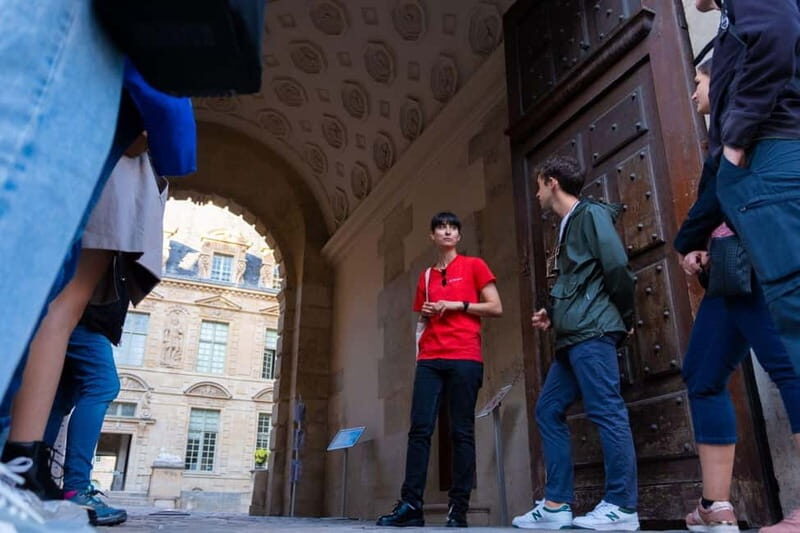
Paris in 2.5 hours, without the map. This is a short, guided route that strings together some of central Paris’s biggest landmarks in a way that’s easy to follow, even when the streets get chaotic. You start at Hôtel de Ville and finish near the Tuileries Gardens, with a guide leading the way and regular chances to pause for photos.
I especially like that the tour is built around ticket-free visits at each stop, so you don’t have to wrestle with extra costs just to see the main sights. I also love the flow: you get a well-structured story from a local expert, and you can stop often without feeling rushed or stuck with awkward map-reading.
One consideration: if you’re late, you may miss the group. On days with street disruptions like parades, timing at the meeting point can get tricky, so showing up a bit early really matters.
In This Review
- Key highlights to know before you go
- Why This 2.5-Hour Historic Paris Walk Fits Real Travel Days
- Hôtel de Ville: Start With the City’s Civic Heart
- Notre-Dame: French Gothic in a Way That Actually Makes Sense
- Sainte-Chapelle: Stained Glass That Changes How You See Light
- The Louvre Stop: Art World Gravity Without Getting Trapped All Day
- Pont des Arts and Pont Neuf: Two Bridges, Two Kinds of Paris Views
- Jardin des Tuileries: Where the Tour Gives You Space to Breathe
- Price and the Pay-What-You-Wish Twist: Is It Good Value?
- Pace, Group Size, and Weather: How to Set Yourself Up
- Should You Book This Historic Paris Walking Tour?
- FAQ
- How long is the Historic Paris Walking Tour?
- Where does the tour start and end?
- Is the tour in English?
- Are tickets included for the stops?
- What’s included in the tour price?
- How big is the group?
- What if the weather is bad?
Key highlights to know before you go
- Seven major stops in 2.5 hours for a tight highlights loop you can fit into a busy itinerary
- Ticket-free admissions listed for every stop so you can focus on sightseeing instead of ticket math
- Guide-led navigation to skip the constant map checking in dense central streets
- Plenty of photo breaks built into the walking rhythm between landmarks
- Max 40 people so it stays manageable and the guide can still corral the group
- All-weather operation with the expectation that you dress for what Paris throws at you
Why This 2.5-Hour Historic Paris Walk Fits Real Travel Days
This tour is designed for people who want the big Paris hits without turning your day into a full-time job. In roughly 2 hours 30 minutes, you cover classic central sights in a clean sequence, with enough time at each stop to actually look up, not just walk past.
What makes it work in the real world is the pacing. Each location gets around 20 minutes (with an extra 30 minutes at the Tuileries), which is long enough to absorb the details and short enough to keep moving. You get the benefit of a local guide to set the context, so it feels like a story instead of a checklist.
Also, you don’t need to plan food around it. There are no food and drinks included, but the whole experience stays short, so you can still grab a proper meal before or after. I’d treat this like your morning or late afternoon “spine walk” that makes the rest of Paris easier to understand.
You can also read our reviews of more tours and experiences in Paris.


Hôtel de Ville: Start With the City’s Civic Heart
The tour begins at Hôtel de Ville (75004), and that’s a smart choice. It’s visually impressive, with a grand façade and Renaissance architecture that instantly signals this is more than just sightseeing for photos. It also gives you a reference point for understanding Paris as a functioning city, not only a museum.
You get about 20 minutes here, which is a sweet spot. You can look closely at the façade and sculptures, then get oriented on where you are in the city before the route pulls you toward the most famous religious and artistic landmarks.
One practical perk: starting at a well-known, central landmark helps with timing and meeting up. If you want to feel less stressed, aim to arrive early and take a minute to confirm where the group tends to gather. When everything else goes well, you won’t notice logistics at all. When it doesn’t, early arrival is what saves your afternoon.
Notre-Dame: French Gothic in a Way That Actually Makes Sense
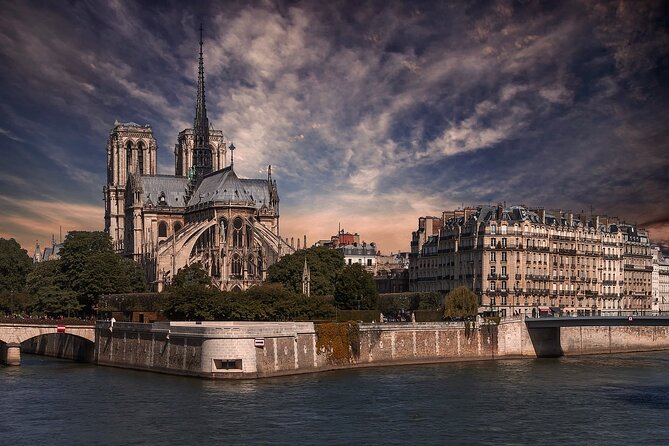
Next up is Notre-Dame Cathedral, with about 20 minutes on-site. Even if you’ve seen photos a hundred times, standing near the cathedral does something different. The scale hits first, then the design details start to matter more.
The guide’s value here is context. Instead of listing dates and facts like a worksheet, the narration ties the cathedral to how Paris thinks about identity—faith, art, and civic pride all mixed together. That’s why this stop feels meaningful even on a short schedule.
There’s also a real-world travel benefit: Notre-Dame sits at a crossroads of pedestrian routes. So it’s a strong waypoint for the tour’s next moves. You can use the time here not only to look around, but also to reset your legs, check your photos, and make sure you’re ready for the next tight segments.
Sainte-Chapelle: Stained Glass That Changes How You See Light
Then you head to Sainte-Chapelle, again with around 20 minutes. This stop is all about Gothic architecture and the effect of light—especially through the soaring stained glass. If you like architecture, this is the kind of place where your eye naturally slows down.
What I like about this being scheduled after Notre-Dame is the contrast. Both are major Gothic touchpoints, but they feel different. You start noticing how different styles and spaces create different emotional vibes, even when they share the same broad architectural language.
Because this is a short tour, you won’t have unlimited time to read every panel like a scholar. But the guide can help you focus on what to notice first: how the glass organizes the scene, how the colors shift with the room, and why the space feels “vertical” even when you’re standing still.
The Louvre Stop: Art World Gravity Without Getting Trapped All Day
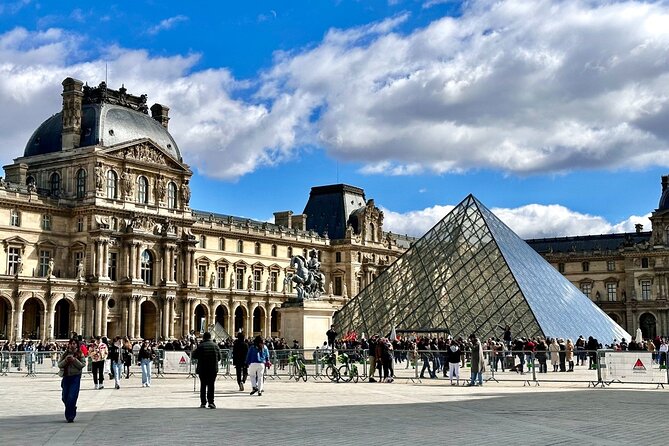
After that, you reach the Louvre Museum area, with about 20 minutes included. The Louvre can swallow entire days, so the trick here is the tour’s structure: you get the key impression and a guided frame, without pretending this short walk replaces a real museum visit.
This stop gives you a sense of the place—the scale of the complex, its cultural importance, and the famous glass pyramid entrance. You’re also walking through a section of Paris where art, power, and tourism all collide. The guide’s narrative helps you connect what you’re seeing to the bigger story of how the Louvre became a cultural magnet.
If you want to go deeper inside galleries, you’ll need a separate plan. But for many first-time visitors, this Louvre moment works like a preview trailer that helps you decide what to target later. You leave with clearer priorities instead of feeling overwhelmed by thousands of rooms.



Pont des Arts and Pont Neuf: Two Bridges, Two Kinds of Paris Views
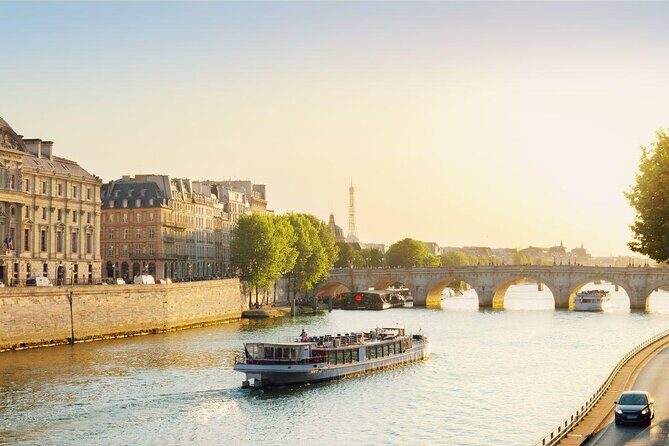
The tour then shifts into some of the most photogenic parts of central Paris by walking the Seine. First comes Pont des Arts, known for romantic vibes and river views. This is the kind of stop where you can step aside, take photos, and just watch how the city moves around the water.
Then you continue to Pont Neuf, the oldest bridge crossing the Seine. It’s a historic link between the Left and Right Banks, and the bridge’s age shows in the way it’s integrated into the city’s layout. You’re not just seeing a view—you’re seeing how Paris built connectivity over centuries.
These two bridge stops are also where you’ll appreciate the tour’s rhythm. The walking between landmarks can feel continuous, but the guide keeps it from becoming nonstop drift. You get time to pause, scan for the best angles, and reset your pace before the tour heads back toward the gardens.
Jardin des Tuileries: Where the Tour Gives You Space to Breathe
The finish is at the Jardin des Tuileries, with about 30 minutes (longest stop on the route). This matters because it’s a change of pace. After cathedrals, museums, and bridges, the gardens feel like a release valve.
The Tuileries sit between the Louvre area and Place de la Concorde, so the location is perfect for a closing “wrap your head around Paris” moment. You can slow down, watch people strolling, and take in the geometry of the gardens without the pressure of hitting another ticketed stop.
At the end of the tour, you’re also positioned for what comes next. Starting at Hôtel de Ville and ending in this zone leaves you close to a lot of other central options—so it’s not like you finish and suddenly feel stranded.
Price and the Pay-What-You-Wish Twist: Is It Good Value?
At $26.49 per person, this tour is priced like a budget-friendly way to get a guided route through major landmarks. The best part is what that money covers: you’re joining a pay-what-you-wish style tour format, where the amount you pay includes a reservation fee plus payment for the guide.
So you’re not only buying a walking route. You’re buying the guide’s time and the narrative structure that makes short stops feel purposeful. It’s also why the route works well for first-timers: you get the “why” behind what you’re seeing, not only the “where.”
One more value angle: admission is listed as free for each stop. That means you’re less likely to run into surprise costs that can wreck the math of a tight sightseeing day. If you’re trying to keep daily expenses controlled, this is a smart choice compared to tours where you’re repeatedly asked to purchase entry tickets.
Pace, Group Size, and Weather: How to Set Yourself Up
The group size is capped at 40 travelers, which helps keep the experience from turning into a moving crowd. With that number, it’s still important to stay close to the guide, but you’re not fighting for space in a mosh pit.
The tour is rated for moderate physical fitness and lasts about 2.5 hours, so plan on walking and standing. Wear comfortable shoes because Paris cobblestones are not subtle. If you’re carrying a camera bag, consider keeping it simple so you’re not constantly re-adjusting straps at each stop.
It runs in all weather, so dress for it. If rain shows up, bring a light layer and be ready to keep going. This is one of those tours where the guide can help you make the most of conditions, but you still need to arrive prepared so the weather doesn’t drain your energy.
One last practical tip: if you’re thinking of attending on a day with a parade or major street closures, give yourself extra time. A review account showed how a disruption combined with a late arrival can lead to missing the group. You can’t control city chaos, but you can control whether you’re ready at the meeting point.
Should You Book This Historic Paris Walking Tour?
Book it if you want a guided highlights route that you can fit into a busy schedule. This is ideal for first-time visitors who want the main sights framed into a story, plus extra time for photos without getting buried in logistics.
Skip it (or at least plan extra buffer) if you’re the kind of person who hates missing a group and can’t arrive early. Central Paris can change fast, and being late can be more costly than on an open, self-paced walk.
If you match the tour’s style—short stops, guide-led narration, and a manageable walking pace—you’ll likely feel like you got your money’s worth: you’ll leave oriented, inspired, and ready to choose what to explore more deeply next.
FAQ
How long is the Historic Paris Walking Tour?
It lasts about 2 hours 30 minutes.
Where does the tour start and end?
It starts at Hôtel de Ville, 75004 Paris, and ends next to the Tuileries Gardens, 75001 Paris.
Is the tour in English?
Yes, it’s offered in English.
Are tickets included for the stops?
Admission is listed as free for each stop on the route.
What’s included in the tour price?
The tour includes a constructed-narrative and a local expert guide. Food and drinks are not included.
How big is the group?
The tour has a maximum of 40 travelers.
What if the weather is bad?
It operates in all weather conditions, so you should dress appropriately.