REVIEW · PARIS
Insider Louvre: from a Royal Palace to a museum
Book on Viator →Operated by Interkultur Paris · Bookable on Viator
A royal palace story hides behind the art. This private Louvre tour takes you past the obvious checklist and into how the building itself became a museum, with architecture and history woven into the visit. You’ll walk through 12th-century foundations, hear about a hidden dungeon, and then see major showpieces like the Mona Lisa and the French crown jewels.
Two things I really like here: first, the guide work is focused and personal, since the group caps at 6 travelers. Second, the tour includes the entrance ticket and the guide, so you’re not juggling separate add-ons while you’re inside one of the world’s busiest museums.
The main thing to consider is timing and pace. At about 2 hours 45 minutes, you’ll cover a lot of ground, but it’s still a curated route, not a free-for-all where you can linger as long as you want in every room.
In This Review
- Key Highlights That Make This Tour Different
- Why This Louvre Tour Feels Like Architecture, Not Just Artwork
- Price and What You Actually Get for $173.64
- Meeting at Place du Carrousel: Starting with the Right Energy
- The Big Louvre Logic: Why a Building-First Tour Works
- Inside the Museum: How the 3-Hour Visit Stays Focused
- The Louvre Highlights You Will Actually See (and Why They Matter)
- Architecture Stops: 12th-Century Foundations and a Hidden Dungeon
- Small-Group Private Touring: Getting Real Attention
- Timing at 2:00 pm: What an Afternoon Louvre Visit Really Means
- Who This Tour Fits Best (and Who Might Prefer Something Else)
- Should You Book Insider Louvre, or Skip This Style?
- FAQ
- How long is the Insider Louvre tour?
- Where does the tour start and end?
- What time does the tour begin?
- Is the museum entrance ticket included?
- How many people are in the group?
- Does the tour include famous Louvre works and royal highlights?
- Is a mobile ticket used?
- Can I get a refund if I cancel?
Key Highlights That Make This Tour Different
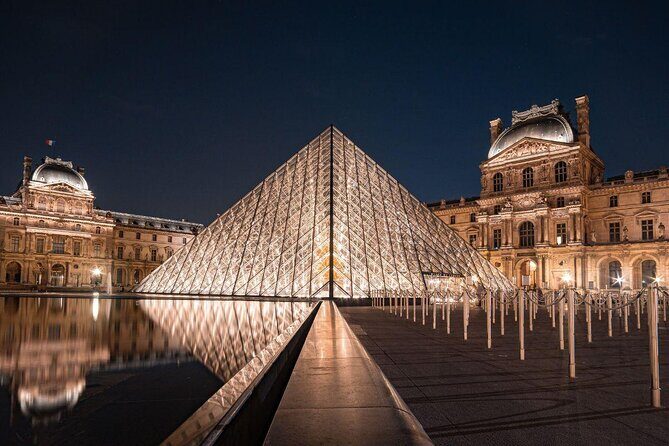
- Royal palace to museum context: you see how the Louvre’s past shapes what you notice today
- 12th-century foundations + royal apartments: building history comes through, not just art captions
- Hidden dungeon stop: a darker, less-common side of the Louvre’s story
- Big-name masterpieces with guidance: Mona Lisa, Venus de Milo, and French crown jewels with direction
- Private attention in a small group: a max of 6 people keeps the tour from feeling like a herd
Why This Louvre Tour Feels Like Architecture, Not Just Artwork
The Louvre can feel like you’re running on museum autopilot. One room looks like the next. You spot a famous painting, take a photo, and move on—usually too fast to notice why that painting matters.
This tour changes the rhythm. Instead of treating the Louvre as a box of masterpieces, you treat it as a building with a backstory. That matters, because the Louvre’s art display is still tied to the site’s older life as royal space. When you know that, the museum starts to click into place.
You also get a guided route that’s designed to help you notice details you might otherwise miss. The highlights are famous for a reason, but the guide’s angle adds a second layer: how the place was built and repurposed over centuries. That’s what makes the experience feel fuller than a standard highlights loop.
And yes, you still get the headliners people come for. But you get them with context, so you’re not just checking names off a list.
You can also read our reviews of more museum experiences in Paris



Price and What You Actually Get for $173.64
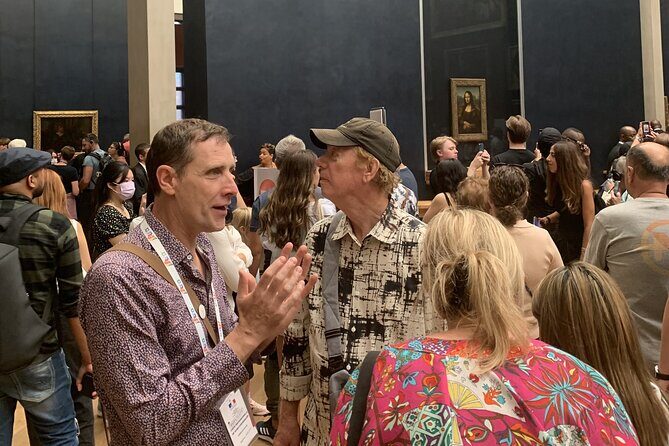
At $173.64 per person for about 2 hours 45 minutes, this is not a budget activity. The value comes from what’s included and how small the group stays.
You’re paying for:
- a private guided experience focused on art, architecture, and history
- entrance ticket and guide included in the price
- a group limited to 6 people max, which usually means more questions and less crowd-pressure
If you’ve ever paid separately for museum entry and then joined a large, slow group, you know how quickly that adds up. Here, the ticket is part of the package, and the guide is already built into the flow. That tends to save time and stress, especially at a place like the Louvre where lines and crowd patterns can make your plan wobble fast.
One more value point: you’re not just buying access to rooms. You’re buying an interpretive lens—royal apartments, hidden spaces, and the Louvre’s evolution into a museum. That’s often the difference between seeing the Louvre and understanding what you saw.
Meeting at Place du Carrousel: Starting with the Right Energy

The tour starts at Place du Carrousel at 2:00 pm, and it ends back at the same meeting point. That back-to-start detail may sound small, but it’s useful. You’re not stuck figuring out where your tour ends or how to get back to your plan afterward.
This area is also a practical launch pad for getting to the Louvre. The activity is noted as near public transportation, which helps if you’re balancing your Louvre visit with other Paris stops later in the day.
Because it’s a guided “from outside” start, you also avoid the awkward first moments of orientation. You’re not wandering at the mercy of signage while the clock ticks. You meet your guide, then you move into the museum with someone already steering the visit.
The Big Louvre Logic: Why a Building-First Tour Works
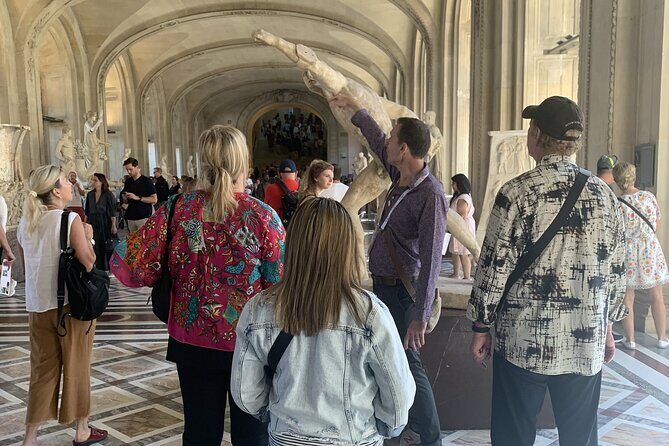
A lot of Louvre visits fail for one simple reason: people try to do everything at once. Without a framework, you can end up with a pile of photos and a vague sense of, I saw famous stuff.
Here, the framework is the Louvre itself.
You go beyond just art and look at the architecture and history that shaped the museum. That means the stories aren’t tacked on as trivia. They connect to what you see in front of you.
When a guide talks about foundations from the 12th century, it gives you a sense of continuity—how the site evolved rather than started from scratch. When the tour mentions royal apartments, it helps you understand why certain spaces feel different: lighter, more formal, more like living quarters than public galleries. And when you hear about a hidden dungeon, it reminds you the Louvre was never only about beauty. Power, control, and fear have a place in the history too.
That context is what makes your attention last longer. You’re not only asking, What is this painting? You start asking, Why is this here, and what role did this building play?
Inside the Museum: How the 3-Hour Visit Stays Focused
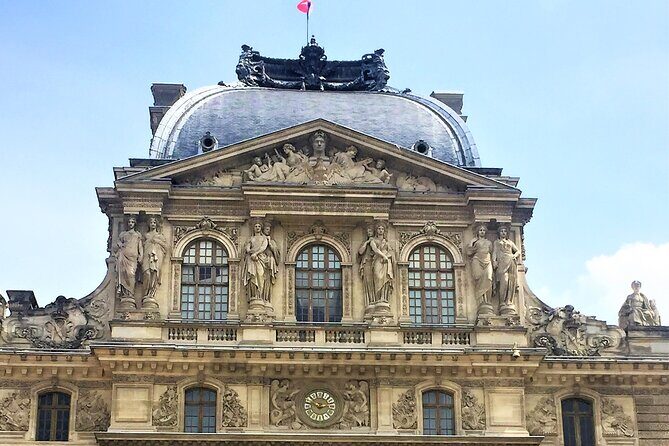
You’ll spend most of the experience inside the Louvre itself, with the guided portion running about 3 hours (the overall duration is listed around 2 hours 45 minutes). In real life, that usually means a paced, high-impact route: enough time to see key works and learn their context, without disappearing into the museum’s maze for an entire afternoon.
One practical benefit of the small group is the way it affects your movement. With a maximum of 6 people, your guide can slow down when needed and speed up when the crowd thickens. You’re less likely to get separated from the group, too, since this isn’t a massive tour where everyone moves in separate planets.
It also means you can ask questions that come up as you walk—especially around architecture and history, where one detail often leads to another. This kind of tour tends to feel like you’re learning as you go, not just listening to a script.





The Louvre Highlights You Will Actually See (and Why They Matter)
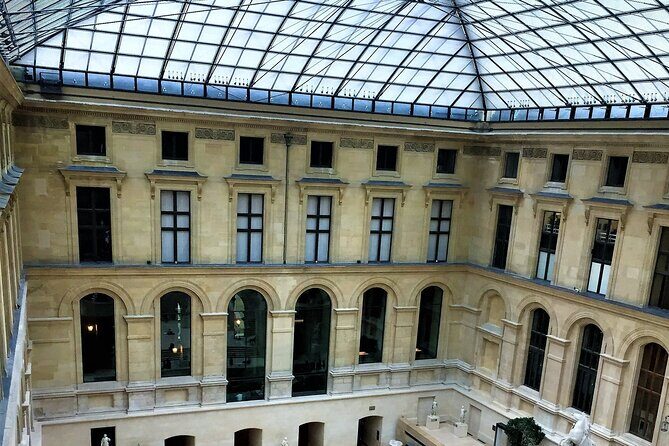
This tour includes some of the Louvre’s most famous works and symbols of French heritage:
- Mona Lisa
- Venus de Milo
- French crown jewels
Getting these on your route is the easy part. The real value is the guidance around them. At the Louvre, the challenge isn’t finding the works—it’s experiencing them. Crowds can distort your sense of time and focus. A guide helps you look with purpose.
For example, when you see the Mona Lisa, you’re not just staring at an image. You’re seeing a cultural icon that has been collected, displayed, and mythologized over time. The tour’s architecture-and-history angle helps you place it in the bigger story of how the Louvre became the stage for global art fame.
With Venus de Milo, you get another kind of value: learning how a single sculpture can represent taste, collecting, and the way classical art became part of modern identity. Again, the guide’s approach helps you see what you might otherwise overlook—more than a famous silhouette.
And the French crown jewels are important for a different reason. They represent royal power made visible. After you’ve heard about royal apartments and the Louvre’s earlier role, these objects stop being just artifacts and start feeling like evidence. They show how the Louvre was tied to authority and state history.
Architecture Stops: 12th-Century Foundations and a Hidden Dungeon
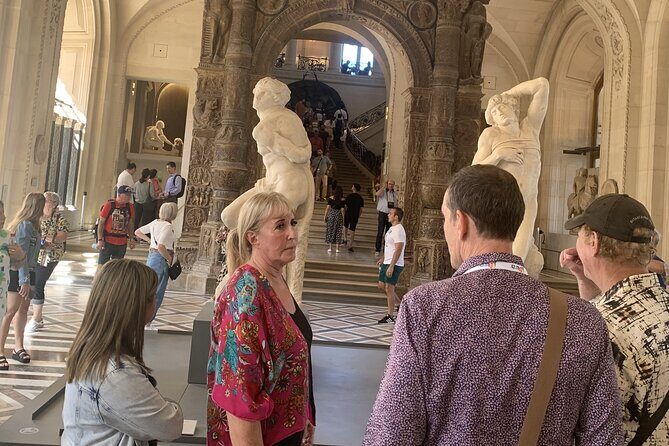
The architectural and historical components are where this tour earns its name. Most Louvre tours do the highlights and move on. This one builds a narrative of the site itself.
You’ll hear about:
- 12th-century foundations
- royal apartments
- a hidden dungeon
Those are exactly the kinds of stops that change your emotional response to the museum. Foundations make you think about time—how the building is layered. Royal apartments shift your perspective from viewer to visitor-with-a-role, like you’re imagining daily life or status inside palace space. And the hidden dungeon adds contrast. It’s a reminder that the Louvre’s story includes darkness and control, not just gilded beauty.
If you like history that you can see in physical space—walls, layouts, reused areas—this is the part that will make you want to slow down and look longer.
Small-Group Private Touring: Getting Real Attention
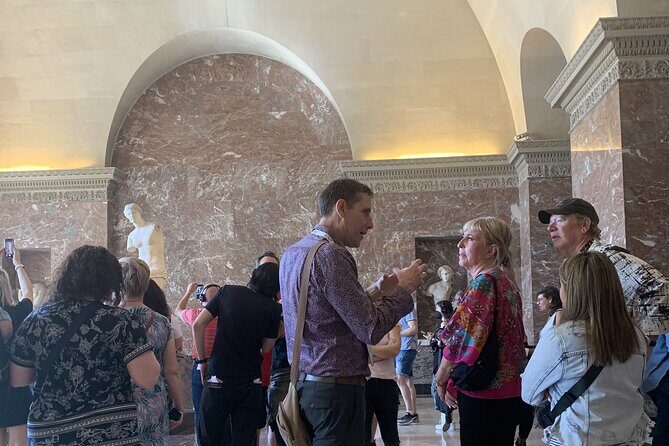
The tour is private guided, with a maximum of 6 people. That small size is more than a comfort feature. It changes what you can do inside the Louvre.
You can:
- ask follow-up questions when something clicks
- spend a little more time when the guide points out an architectural detail
- keep your group together without constantly reshuffling your plan
Two guide impressions stand out from the experience feedback you provided. Ivan is described as fantastic, with the sense that the group covered major Louvre highlights in one afternoon. Thierry is mentioned as especially attentive and helpful with stay-in-touch support when the period was unusually busy and getting tickets was close to impossible. Those points matter because they suggest the guides are active problem-solvers, not just readers of museum placards.
You want that kind of attention at the Louvre, where your biggest enemy is wasted motion.
Timing at 2:00 pm: What an Afternoon Louvre Visit Really Means
Starting at 2:00 pm means you’ll be doing your Louvre time as part of an afternoon block. That can be great if your morning is already planned for other Paris sights.
It also means you’re entering the museum after the earliest wave of visitors. Crowds still exist—this is the Louvre—but your guide’s job is to manage the flow across your route. A guided afternoon visit can work well because you’re less likely to feel the pressure of trying to cram the Louvre into the first hours of the day.
The one thing to keep in mind is energy. A compact museum route still involves walking and standing. If you love museums but your feet need a lot of recovery time, plan a slower evening afterward.
Who This Tour Fits Best (and Who Might Prefer Something Else)
This is a strong match if you:
- want the Louvre’s story, not just famous names
- enjoy architecture and history along with art
- prefer a smaller, more focused group
- like the idea of seeing the Mona Lisa and Venus de Milo without treating it like a sprint
It’s also a good fit if you know you might get overwhelmed in the Louvre’s size and you want someone to steer your attention.
It may not be the best choice if you want a completely self-paced Louvre day. This tour is designed to hit specific highlights and historical architecture moments within a set window. If your ideal museum visit is hours and hours of wandering with no structure, you might feel slightly constrained.
Should You Book Insider Louvre, or Skip This Style?
If you want a Louvre visit that explains the building as much as the art, I’d book it. The blend of royal palace history, architectural highlights, and major masterpieces gives you a better chance of leaving with real understanding, not just snapshots.
Choose it especially if:
- you like context and can handle a guided pace
- you want a small-group experience capped at 6
- you value having the ticket and guide included
Consider a different option if you want maximum freedom to linger in every room on your own. In that case, you’d likely want a self-guided plan.
For most people, this tour hits a smart middle ground: it’s structured, small, and built around the Louvre’s big story.
FAQ
How long is the Insider Louvre tour?
It runs for about 2 hours 45 minutes (approx.), and the main museum visit portion is listed at around 3 hours.
Where does the tour start and end?
The meeting point is Place du Carrousel, 75001 Paris, and the tour ends back at the same meeting point.
What time does the tour begin?
The start time listed is 2:00 pm.
Is the museum entrance ticket included?
Yes. The tour includes an entrance ticket and your guide.
How many people are in the group?
The tour has a maximum group size of 6 travelers.
Does the tour include famous Louvre works and royal highlights?
Yes. It includes major works such as the Mona Lisa, Venus de Milo, and the French crown jewels, plus architecture and history elements like 12th-century foundations, a hidden dungeon, and royal apartments.
Is a mobile ticket used?
Yes. The experience includes a mobile ticket.
Can I get a refund if I cancel?
You can cancel for a full refund up to 24 hours before the experience’s start time.
If you’d like, tell me your travel month and whether you prefer mornings or afternoons, and I’ll suggest the best way to pair this with the rest of your Paris day.