REVIEW · PARIS
Kids/teens escape game in Montmartre
Book on Viator →Operated by Playgreen · Bookable on Viator
Riddles in Montmartre beat the usual sightseeing. This family activity turns the neighborhood into an escape-game walk where kids (from 3) solve questions at landmarks, and you get a host who shares the stories behind what you see. I especially like that the guide is also a photographer, so your family gets nice pictures without worrying about snapping photos between clues.
One catch: you won’t go up or inside Sacré-Cœur. For age fit, some riddles run harder for kids under 10, and the younger booklet can be in cursive.
In This Review
- Key highlights to know before you go
- Why a Montmartre escape game works for families
- A 2-hour riddle walk across iconic Montmartre stops
- Sacré-Cœur riddles: the big sight, and the one limitation
- Montmartre streets as the learning classroom
- Au Lapin Agile: Paris’ old cabaret comes with a game
- Le Mur des Je t’aime: a quick stop with character
- Place du Tertre: the charming square where art feels close
- Bateau-Lavoir and Picasso: clues tied to cubism
- Le Passe-Muraille: the statue riddle kids can picture
- How much you pay, and why it can be good value
- Finding the guide without stress
- Who should book this kids-and-teen Montmartre game
- Should you book it for your Montmartre day?
- FAQ
- What ages is the Montmartre escape game suitable for?
- How long does the experience last?
- How much does it cost?
- Where do we meet and where does it end?
- Are there admission tickets included at the stops?
- Do we get a guide, or is it self-guided?
- Does this activity depend on the weather?
Key highlights to know before you go
- Age range from 3 through teens with kid-friendly missions and games
- A 2-hour guided escape-game format built around real Montmartre landmarks
- A guide who photographs your group for free, plus a host who helps with practical issues
- Learning through puzzles tied to history, painting, architecture, plus arithmetic and language
- Picasso and artistic Paris stops including sites linked to cubism
- Limited group size with a maximum of 100 travelers
Why a Montmartre escape game works for families
Montmartre can be a lot for kids. Cobbled streets, stairs, crowds, and plenty of “look at that” moments that parents end up chasing after. This escape-game style plan gives everyone a job: find clues, answer questions, and solve riddles as you walk.
I like how the activity is built for different ages and attention spans. The game is designed to be educational without turning into school. Kids practice observation and basic skills through playful tasks, and teens get enough challenge to stay engaged.
There’s also a strong “family together” feel. The host is there the whole time to keep things moving and to handle the usual travel headaches—like figuring out where toilets are when you’re wandering around a hillside district. And because the host is also a photographer, you don’t have to choose between playing the game and chasing a photo.
You can also read our reviews of more tours and experiences in Paris.



A 2-hour riddle walk across iconic Montmartre stops
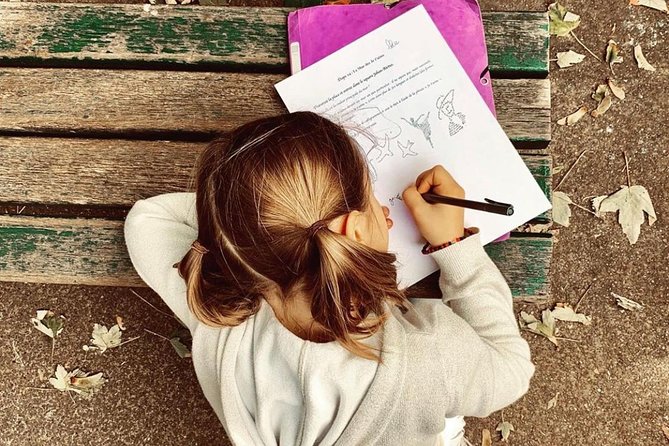
This experience runs about 2 hours, and it’s structured as a sequence of short stops. You’ll move between major sights while your kids work through missions at each location. The pace is not museum-slow, but it also isn’t a race. It’s more like a guided treasure hunt with a cultural script.
The route is also easy to recognize. You start at Funiculaire Gare Haute, 7 Rue Foyatier (75018 Paris) and you end at Place Émile Goudeau, 14 Rue Ravignan (75018 Paris). That matters in Montmartre, where you don’t want to waste the first 20 minutes wandering to find your group.
The “escape” part doesn’t mean you’re locked in a room. It means kids keep earning progress by answering questions and solving riddles tied to what you’re seeing right there on the street.
Sacré-Cœur riddles: the big sight, and the one limitation

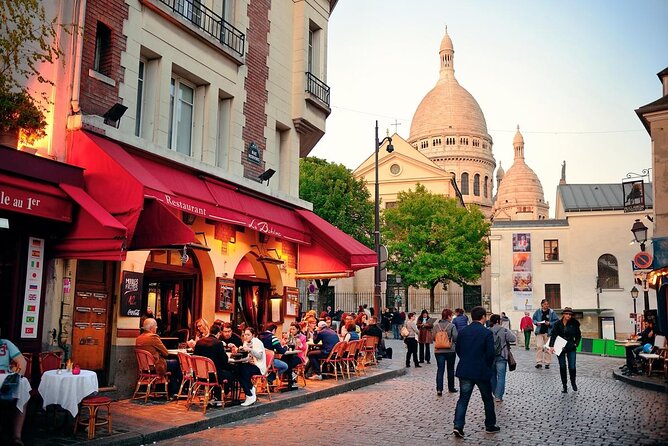
Sacré-Cœur kicks off the game. You’ll spend about 10 minutes at the Basilique du Sacre-Coeur, and your kids answer a riddle tied to what’s in front of you. This is a smart opening because it gives everyone an iconic anchor right away, before you start threading through smaller streets.
Now for the part to plan around: you won’t go up or inside the basilica. That’s important if you were hoping for an interior visit or panoramic time at the top. Think of Sacré-Cœur here as the visual starting line and clue source, not as a full guided church visit.
The upside is that you get the wow factor without turning the whole morning into line-waiting. For families, that tends to mean fewer grumpy faces and more steady clue-solving.
Montmartre streets as the learning classroom
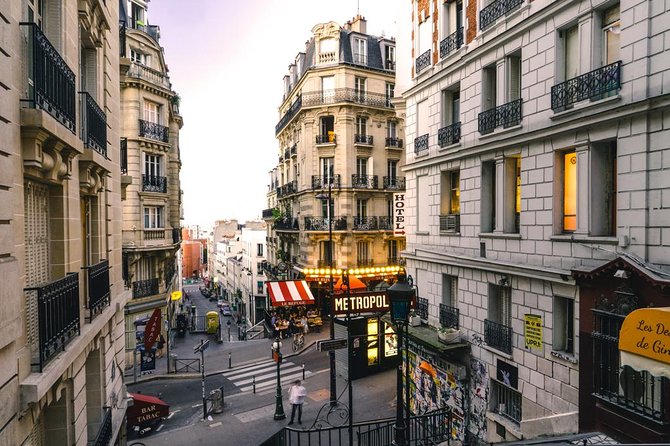
After Sacré-Cœur, you get a longer walk through Montmartre itself—about 2 hours total including all stops. This is where the experience tries to do something harder than “point and tell”: it turns the neighborhood into a puzzle you’re actively interpreting.
Your kids handle questions and mini educational games based on what they notice around them. Depending on the moment, that can connect to things like architectural details, how the district developed, and the artistic vibe Montmartre is famous for. The goal is simple: make observation feel like play.
One reason this works well with multiple ages is that the mission format gives kids something to focus on, while adults still get a guided explanation. Reviews highlight that hosts are patient and flexible, which is exactly what you want when kids need extra time to decode a clue.
Au Lapin Agile: Paris’ old cabaret comes with a game

Next stop is Au Lapin Agile, the area’s famous cabaret. It’s a short visit—around 10 minutes—but it comes with riddles and games about the place. If your kids love stories, this can be a standout stop because it’s a real Paris institution, not just a photo spot.
The concept here is good for families: you’re not asking kids to sit and listen for a long time. Instead, they’re actively answering questions while the host shares what matters about the venue and its place in Paris culture.
And because the guide also takes photos, this is a nice place for a memory shot that won’t feel like an interruption to the game.



Le Mur des Je t’aime: a quick stop with character

Le Mur des Je t’aime is next, and it’s built for short attention spans. Expect about 10 minutes here, plus riddles or mini games tied to what your kids see.
This is also a spot that often helps families slow down for a moment. Even if the mission is quick, the visual is memorable. It gives kids something concrete to process without long walking stretches between big moments.
Place du Tertre: the charming square where art feels close

Then you’ll hit Place du Tertre, again about 10 minutes. This is one of those Montmartre squares that feels tailor-made for sketching, photographing, and people-watching. In this experience, kids get tasks to answer questions about what’s around them, so they’re not just staring at everything.
I like stops like this in family activities because they turn what could be “tourist noise” into a structured moment. Kids can point to details because they’re looking for clues, not just trying to keep up with adults.
Bateau-Lavoir and Picasso: clues tied to cubism

One of the most compelling parts for older kids and teens is Le Bateau-Lavoir. This stop is about 10 minutes and it centers on the studio associated with the rise of cubism by Picasso.
This is where the educational angle gets real. The game is not only about dates on a timeline. It’s about connecting art and place—helping kids connect what they see and what those artists were doing. If your kids love drawing, painting, or just spotting shapes, this stop usually lands well.
It also keeps Montmartre from feeling like a one-note “pretty streets” district. You get at least one stop that points straight at the art history that put Paris on the map.
Le Passe-Muraille: the statue riddle kids can picture
You end at Le Passe-Muraille, where you’ll spend about 10 minutes. Your kids answer riddles tied to the famous statue, and that’s a great way to finish: something visual, easy to remember, and packed with personality.
Ending with a statue also helps the game feel complete. You’re not winding down in a random street corner—you’re closing out at a landmark you can talk about later.
How much you pay, and why it can be good value
At $41.86 per person, this isn’t the cheapest way to do Montmartre. But it can be good value because you’re paying for more than “a walk with stories.”
You’re getting:
- A host-led escape-game format that keeps kids active for about 2 hours
- Riddles and educational games aimed at multiple skills (not just listening)
- A guide who photographs your family
- A route built around major Montmartre stops instead of scattered self-guided wandering
When kids are engaged, you also save yourself time and energy. Parents often know the pain: you plan a sightseeing day, and by hour one everyone is tired, bored, or hungry. A mission-based tour helps keep momentum.
It’s also capped at 100 travelers, and while the exact group size day to day can vary, that limit is a good sign that this isn’t designed like a mass-coach event.
Finding the guide without stress
Montmartre is a maze. Even with a set meeting point, it can be easy to miss the host if you arrive late or you’re distracted. A few families noted difficulty locating the guide, even though the guides were pleasant.
So here’s the simple practical move: arrive a few minutes early at Funiculaire Gare Haute and take a quick second to spot your group. If you’re traveling with younger kids, it’s worth having everyone pause rather than letting kids wander off while you check phones.
Who should book this kids-and-teen Montmartre game
This is best for families who like puzzle-style activities and don’t mind a walk that fits moderate physical fitness. Since it runs about 2 hours and you’re moving between stops on hillside streets, it’s not a sit-everywhere activity.
Age fit is also real. The game is listed for kids from 3 years old and for teens, but older kids (and especially kids who read) usually get the smoothest experience. One review mentioned that it can be a bit difficult for kids under 10, and that a younger children’s booklet may be printed in cursive, which matters if your kid is still learning.
If you have a teen, this can be a fun way to do more than just take photos. And if you’re traveling as a mixed group, one family even played an adult version alongside their kids, which shows the host and materials can work beyond just little ones.
Guides are also part of the formula. Reviews praised hosts like Jules, Sasha, Jeanne, Églantine, and William (Morris) for making the experience fun and adaptable. A good host is the difference between a puzzle that feels like a game and a puzzle that feels like work.
Should you book it for your Montmartre day?
I’d book this if you want Montmartre to feel like an active family outing, not a slow lecture. If your kids enjoy riddles, thrive on short tasks, and can handle a walk for about 2 hours, this is a very logical choice.
I’d hesitate if your main goal is a deep dive into Sacré-Cœur itself, because this activity doesn’t focus on going inside or up. I’d also think twice if your kids aren’t comfortable with reading (especially if cursive is a barrier), since some missions may be tough or take more effort.
If you want a family-friendly Montmartre experience that mixes iconic sights with problem-solving, this one is strong. It keeps everyone pointed in the same direction—and that alone can make a Paris day feel easier.
FAQ
What ages is the Montmartre escape game suitable for?
It’s suitable for kids starting from 3 years old, and it’s also made for teens.
How long does the experience last?
Plan on about 2 hours.
How much does it cost?
The price is $41.86 per person.
Where do we meet and where does it end?
You start at Funiculaire Gare Haute, 7 Rue Foyatier, 75018 Paris, France, and you end at Place Émile Goudeau, 14 Rue Ravignan, 75018 Paris, France.
Are there admission tickets included at the stops?
Some stops include admission as part of the activity, while others are marked as free. The activity includes tickets where noted and relies heavily on outdoor landmark visits.
Do we get a guide, or is it self-guided?
You’ll have a host guiding you through the route and the riddles during the experience.
Does this activity depend on the weather?
Yes. It requires good weather, and if it’s canceled due to poor weather you’ll be offered a different date or a full refund.