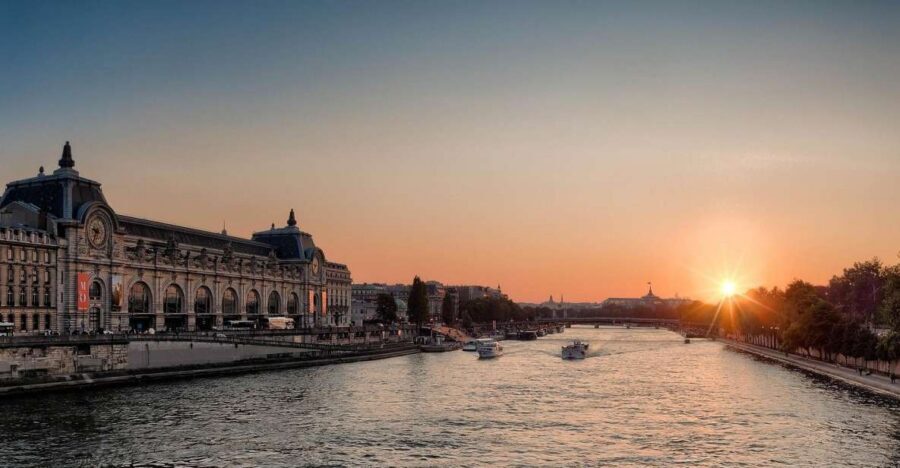
REVIEW · PARIS
Latin Quarter: From La Sorbonne to the Pantheon
Book on Viator →Operated by Vidi Guides · Bookable on Viator
Latin Quarter has a soundtrack worth hearing. This self-guided audio walk threads together the fifth arrondissement’s architecture, street life, and writerly energy, from places tied to Hemingway to the Pantheon and the Sorbonne. I especially like how it turns you loose on a classic area at your pace, while still keeping you pointed at the moments that matter.
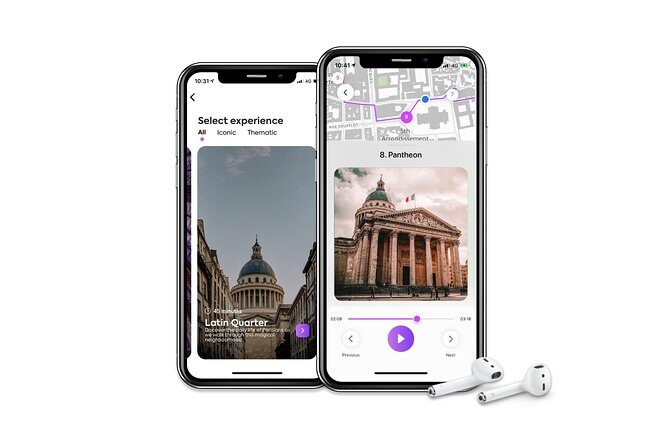
I love the offline mode option, because it means you can listen without hunting for signal as you hop between streets. I also like the GPS, location-aware map, which helps you navigate the route without constantly checking your phone—handy in a neighborhood where a wrong turn can send you a block (or two) off-script.
One possible drawback: this experience depends on your mobile ticket and phone audio working correctly. A small number of people reported code or access problems, and there’s also been some confusion about where to start the audio sequence—so it’s smart to confirm your playback before you wander too far.
In This Review
- Key Points to Know Before You Go
- Why the Latin Quarter Works So Well as an Audio Walk
- At A Glance: Price, Duration, and What You’re Buying
- Getting Started at Rue Saint-Médard (and Why You Should Double-Check “Stop 1”)
- Stop 1: Rue Saint-Médard and the Theme of Religion in France
- Stop 2: Rue Mouffetard and the Journey of French Cuisine
- Stop 3: Fontaine du Pot de Fer and a Bookstore Moment
- Stop 4: Rue Ernest Hemingway and Lost-Generation Reflection
- Stop 5: Philippe Auguste and the Oldest Parts of Paris
- Stop 6: St. Étienne du Mont and a Weirdly Beautiful Church
- Stop 7: The Pantheon and Roman Influence
- Stop 8: La Sorbonne and What Shaped Modern France
- How to Use the GPS and Offline Mode Without Getting Frustrated
- What I Like Most About the Tour’s Stop-by-Stop Design
- Where This Fits Best in Your Paris Day
- Common Snags and How to Avoid Them
- Should You Book This Latin Quarter Audio Tour?
- FAQ
- How long is the audio tour?
- What does the tour cost?
- Where does the tour start and where does it end?
- Is this a guided tour with a person, or self-guided audio?
- Can I use the tour offline?
- Do I need my own phone and earphones?
- Are the stops free to access?
- What’s the maximum group size?
- Is there GPS or location help during the walk?
- Can I cancel and get a refund?
Key Points to Know Before You Go

- Offline listening is built in, so your tour can run without Wi‑Fi once you download.
- GPS map guidance helps you stay on the route, which is a big deal in the Latin Quarter’s dense streets.
- Literary Paris is a core theme, including a walk past Ernest Hemingway’s old apartment.
- You’ll hit major landmarks fast, with short stops at Rue Mouffetard, St. Étienne du Mont, the Pantheon, and La Sorbonne.
- Photo stops are planned, including what the tour calls Instagram hotspots.
- Your own device and earphones are required, because the tour includes audio but not hardware.
Why the Latin Quarter Works So Well as an Audio Walk

The Latin Quarter is one of those Paris neighborhoods where the streets feel layered. You can stand somewhere ordinary—on a small corner, near a church façade, outside a university gate—and still sense that ideas have been bouncing around here for a long time. This tour leans into that feeling by mixing three things you can actually experience on foot: architecture, everyday street culture, and author/thinker history.
What makes it a good audio format is the pacing. The tour is designed as a sequence of stops, each with a short listening window. That means you’re not stuck babysitting a long guide speech while you get dragged from point to point. Instead, you walk, you pause, you hear the context, then you choose whether to look longer at the stonework or move on.
You can also read our reviews of more tours and experiences in Paris.



At A Glance: Price, Duration, and What You’re Buying
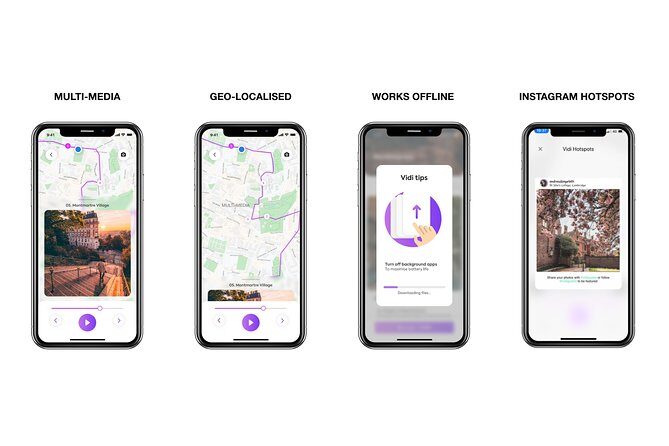
This costs $20.66 per person, and the tour runs about 45 minutes. That time window is realistic for a short “highlights on foot” route—enough to cover the Pantheon and the Sorbonne, but not so long that you’re committed to a full morning or afternoon.
You’re not paying for entry tickets. The listed stops are marked as admission free, which is great for value if you want culture without museum lines eating your time. Your main “investment” is your attention and your phone setup: the tour uses a mobile ticket and an audio player on your device.
Here’s what you get included:
- Access to the self-guided audio tour (provided by Vidi Guides through a local or historian)
- Offline mode (download in advance)
- Location-aware GPS map to help you avoid getting lost
- Planned photo spots (Instagram hotspots)
And here’s what’s on you:
- A mobile device
- Earphones/headset (not included)
Also, the experience has a maximum of 10 travelers. Since it’s self-guided, that matters less than if you were joining a big group on a bus, but it’s still a signal that the route is meant to be manageable and not jammed.
Getting Started at Rue Saint-Médard (and Why You Should Double-Check “Stop 1”)
The tour starts at Rue Saint-Médard in the 5th arrondissement and ends at Paris-Sorbonne University, 1 Rue Victor Cousin.
The listed opening window is 7:00 AM to 10:00 PM, Monday through Sunday. In practice, that gives you flexibility. If you like cooler morning streets or calmer evening photos, you can time this around your day without feeling boxed into one departure.
But here’s the practical thing to watch: the audio sequence matters. One issue reported is that the tour wasn’t clear about where to start, and someone ended up beginning in the middle (around stop 4) instead of at the beginning. So before you walk off:
- Stand at the start area
- Open the tour audio
- Make sure the first stop you’re listening to matches the Rue Saint-Médard theme
That simple check can save you from feeling like the tour jumps around.
Stop 1: Rue Saint-Médard and the Theme of Religion in France
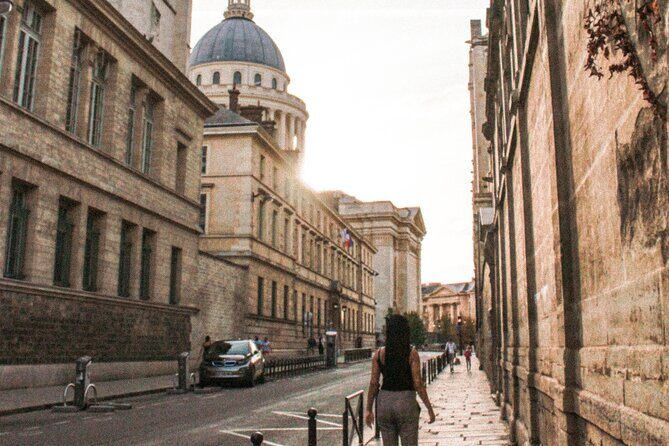
Rue Saint-Médard kicks off the experience with religion in France—its past and present. This stop is short, but it’s a smart choice as a starter because it gives you a lens. Instead of wandering the Latin Quarter like it’s just pretty streets and big buildings, you start noticing how beliefs and institutions shaped where people built, taught, and gathered.
What you should do here: listen first, then look around after. Even if you don’t stop for long, the narration gives you a context clue so you’re not treating every church or monument like a random photo opportunity.
Possible drawback: since the stop is brief, don’t expect a full “religion lecture.” It’s more of a thematic key that you’ll keep using later.
Stop 2: Rue Mouffetard and the Journey of French Cuisine
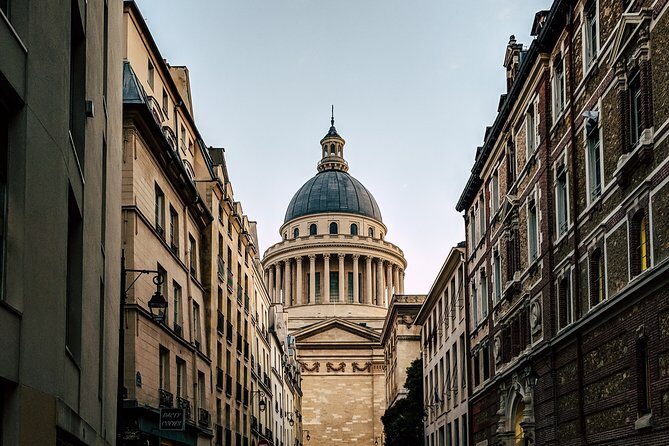
Next up is Rue Mouffetard, one of the neighborhood’s most famous street names. This stop focuses on food—specifically the journey of French cuisine. It’s a “pause to delight your senses” kind of moment.
This is where the Latin Quarter stops feeling like a history slideshow. Rue Mouffetard is the kind of street where you instinctively slow down. You’ll likely notice the texture of a classic Paris food street: shops, small storefronts, the sense that people live here, not just visit here.
How to make this stop pay off: use it as a cue to plan a bite later. Even if you don’t buy anything right at that moment, you can use what you hear to decide what kind of lunch or snack you want after the tour.
Tip: because it’s self-guided and flexible, don’t treat the stop time as a deadline. If Rue Mouffetard is active, take an extra minute to watch the flow.



Stop 3: Fontaine du Pot de Fer and a Bookstore Moment
At Fontaine du Pot de Fer, the audio nudges you to imagine old Paris and its traditions. Then you shift to the idea of a dedicated bookstore stop for traveling bookworms.
This is one of the tour’s strengths: it doesn’t pretend Paris is only museums. It treats the neighborhood as an ecosystem of everyday culture—food streets, fountains, and the written word.
If you like bookshops, this is a natural moment to do two things:
1) Listen closely so you know why this place is being highlighted
2) Look for the shop window vibe—quiet, handwritten, local, and more “neighborhood institution” than chain store
Stop 4: Rue Ernest Hemingway and Lost-Generation Reflection
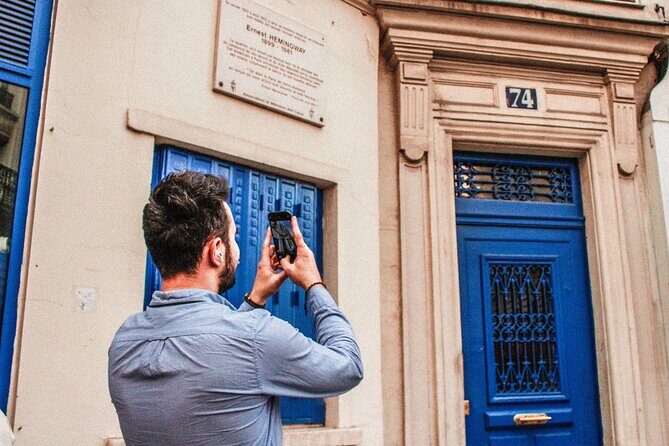
Now you get to the most famous literary name on the route: Ernest Hemingway. The narration is built around his old apartment, and you’ll walk past it while hearing about the lost generation.
This stop is only about five minutes, but it’s memorable because it connects the author to a physical location. It’s the difference between reading Hemingway in an armchair and seeing the kind of street where his life intersected with Paris.
How to get more out of it: slow down just enough to look up and around. Even if you can’t verify details from the street, the narration helps you see the building as part of the story, not just a façade.
Stop 5: Philippe Auguste and the Oldest Parts of Paris
Then comes Philippe Auguste, described as stepping into one of the oldest parts of Paris. The audio calls out an important pile of bricks, which is a great way to get you to notice what you might otherwise ignore.
This stop is a reminder that Paris history often lives in plain sight. You don’t always need a grand monument to feel the past—you can feel it in masonry, in surviving structure, in what’s left after centuries of change.
What to focus on: the narration’s attention to the “pile of bricks.” It’s training your eye. You’ll get better at spotting what’s actually significant once you learn how to look.
Stop 6: St. Étienne du Mont and a Weirdly Beautiful Church
At St. Étienne du Mont, the tour asks you to rest and admire one of the weirdest and most beautiful churches in Paris. That’s not a technical description so much as a promise of personality.
This is where your audio tour becomes a sightseeing pause. Even if you’re not a church-architecture superfan, the “weird and beautiful” framing encourages you to look for the details that make a church distinct.
Practical advice: take a breath here. In a 45-minute tour, this is a natural place to reset your legs and your attention before the big monuments.
Stop 7: The Pantheon and Roman Influence
The Pantheon gets its own pause, and the audio is centered on what makes it unique: history, relevance, and Roman influence.
The Pantheon is the kind of stop where audio can help you interpret what you’re seeing. Even if you’ve passed it before, you might not fully connect how it draws from Roman ideas and why that matters for France’s public identity.
How to best use this moment: treat it like a quick “architecture reading.” Listen, then step back for a clearer view of the façade. If your phone battery is running low, this is a good place to prioritize what you watch with your eyes instead of hunting for extra angles.
Stop 8: La Sorbonne and What Shaped Modern France
The finish line is La Sorbonne, with a wrap-up that recounts how this area shaped France’s modern world history.
This ending is satisfying because it ties back to the neighborhood’s identity as a place where ideas were taught, debated, and spread. You start with religion, you wander through food and literature, and you end in education—an arc that makes the Latin Quarter feel like one connected story rather than eight separate stops.
What you can do after: since the tour ends at the Sorbonne area, you’re perfectly positioned to keep exploring on foot, grab a final coffee, or add time near bookshops and cafés.
How to Use the GPS and Offline Mode Without Getting Frustrated
The tour includes offline mode and a location-aware GPS map. That combination is there to solve two common travel problems: dead Wi‑Fi and “where am I?” wandering.
Here’s the practical way to use it:
- Download the audio in advance so you’re not forced to find Wi‑Fi at a crucial moment
- Rely on the GPS map to orient you, but still use your eyes—Paris streets have their own logic, and the Latin Quarter rewards casual attention
- Plan to keep your phone accessible, since the mobile ticket and audio will be central to the experience
And a quick reality check: because the tour runs via mobile ticket access, it’s smart to confirm it works before you’re deep into the route. Some people reported multiple confirmation numbers and ticket codes that didn’t unlock the audio at all, leading to frustration and refund handling through the platform. You can avoid the worst of that by testing early rather than halfway through the walk.
What I Like Most About the Tour’s Stop-by-Stop Design
Even if you don’t care about everything equally—religion, fountains, author lore, churches, major monuments—you’ll still enjoy this because the design keeps shifting gears.
- Short listening windows mean you don’t feel stuck
- Each stop has a theme, so the walk feels purposeful
- The route hits big names (Pantheon, Sorbonne) without requiring advance planning for tickets
This also makes the experience easy for different traveler styles. If you’re solo, the audio feels like your own guide. If you’re with friends, you can split up briefly for photos and then regroup at the next landmark while the group still moves at the same pace.
Where This Fits Best in Your Paris Day
This is a great “connective tissue” activity. I’d pair it with something that gives you breathing room:
- A longer lunch after Rue Mouffetard
- Extra time for bookshops after the fountain stop
- A museum or café visit after you finish near La Sorbonne
Because the tour is about 45 minutes, you can use it as a warm-up—then keep walking once you’ve learned what to notice. The Latin Quarter rewards that. Once you know where the story beats are, the neighborhood stops being just streets and starts being a timeline you can walk through.
Common Snags and How to Avoid Them
With any mobile audio experience, the main risks are not about the sights. They’re about the tech and your starting rhythm.
Here are the issues to guard against:
- Access problems with ticket codes: a small number of users reported that their codes didn’t work and they couldn’t get the audio to play. If that happens, the practical move is to contact the platform’s support quickly and not wait until you’re far from the start.
- Confusion about where the audio starts: because the stops are numbered, starting in the middle can make the experience feel out of order. Check that you’re on the first stop (Rue Saint-Médard) before you walk too far.
- Missing earphones: the tour includes audio access, but not headset hardware. If you show up with no headphones, your phone speaker will do the job—but it won’t be comfortable in a busy street.
None of this means you should avoid the tour. It just means you should treat it like any tech-dependent experience: test early, then go enjoy the walk.
Should You Book This Latin Quarter Audio Tour?
I think this tour is worth booking if you want a low-pressure way to learn the Latin Quarter and you’re comfortable using your phone for audio and GPS. At $20.66 for roughly 45 minutes, it’s a strong value if you’re aiming for big-picture context at free outdoor stops—Pantheon, Sorbonne, and key neighborhood streets.
I would skip it (or at least reconsider) if you hate troubleshooting apps and mobile tickets. Since playback relies on the mobile ticket and codes, a tech hiccup can turn a fun walk into a frustrating one. Also, if you’re very sensitive to unclear starting instructions, spend an extra minute confirming you’re starting at Rue Saint-Médard.
If you want a walk where literature, architecture, and local everyday life all share the same route, this is an easy yes.
FAQ
How long is the audio tour?
The tour runs for about 45 minutes.
What does the tour cost?
It costs $20.66 per person.
Where does the tour start and where does it end?
It starts on Rue Saint-Médard, 75005 Paris, and ends at Paris-Sorbonne University, 1 Rue Victor Cousin, 75005 Paris.
Is this a guided tour with a person, or self-guided audio?
It’s a self-guided audio tour, with audio provided by a local or historian and supported by a GPS map.
Can I use the tour offline?
Yes. You can download tours in advance for offline mode.
Do I need my own phone and earphones?
Yes. A mobile device and earphones/headset are not included.
Are the stops free to access?
The stops listed on the route are marked as free admission tickets.
What’s the maximum group size?
The tour has a maximum of 10 travelers.
Is there GPS or location help during the walk?
Yes. It includes a location-aware GPS map to help you enjoy the sites without getting lost.
Can I cancel and get a refund?
Yes. You can cancel free up to 24 hours in advance for a full refund. If you cancel within 24 hours, the amount paid is not refunded.