REVIEW · PARIS
Le triangle d’or
Book on GetYourGuide →Operated by Parisgreenride · Bookable on GetYourGuide
Paris lights, in one smart loop. This Le Triangle d’Or tour is built for maximum sight value with minimal planning. You get a guided route through the big-name icons and the in-between streets, day or night, with the city’s lighting adding a second mood after the sun goes down.
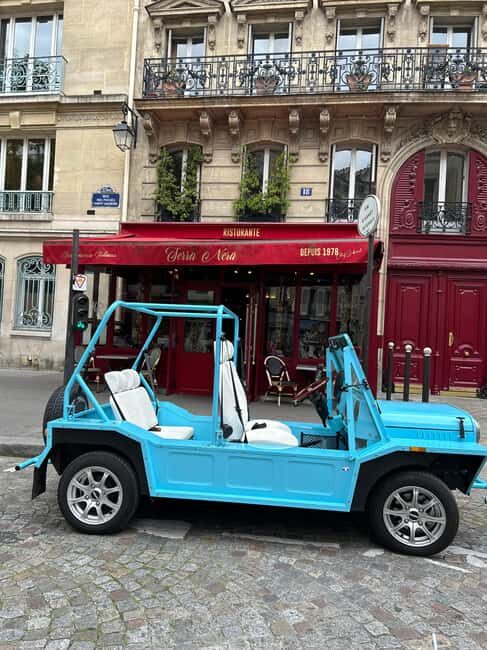
Two things I really like: the Paris-born drivers/guide team who actually know the city from the inside, and the ride style itself. It’s an eco friendly open air vehicle, and they provide gear like raincoats and gloves, so weather usually becomes a minor inconvenience instead of a trip-killer. The main tradeoff is simple: it’s an hour, so monument time is short and entry tickets are not included.
In This Review
- Key Highlights You’ll Feel Right Away
- Getting Your Bearings on the Golden Triangle Route
- Where You Start: Saint Sulpice to Place de la Concorde
- Champs-Élysées: More Than a Name on a Map
- Arc de Triomphe: Fast Photos, Big Impact
- Place du Trocadéro: The Best View That Doesn’t Take Hours
- Eiffel Tower Area and the 7th Arrondissement Pass-by
- Adding the Grand Classics: Invalides, Pont Alexandre III, and the Palais Set
- Day vs. Night: Choosing the Mood You Want
- The Ride Experience: Comfort, Pace, and a Guide Who Keeps Up
- What’s Included (and What You’ll Need to Plan Yourself)
- Price and Value: $147 for a Small Private Group
- Who This Tour Fits Best
- Should You Book Le Triangle d’Or?
- FAQ
- Where does the tour start?
- Can the tour pick you up and drop you off elsewhere in Paris?
- How long is the tour?
- What language is the guide?
- Are monument entry tickets included?
- Is the tour suitable for kids and babies?
Key Highlights You’ll Feel Right Away
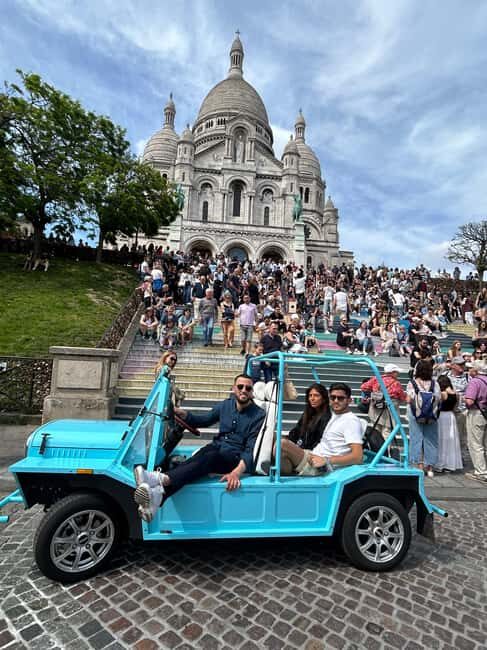
- Eco open-air vehicle with weather gear (raincoat and gloves) so you can stay comfortable
- A local guide born and raised in Paris who can explain what you’re seeing
- Photo stops + guided city moments for the classics: Concorde, Champs-Élysées, Arc de Triomphe, and Trocadéro
- Pickup and drop-off anywhere in Paris, plus a clear meeting point by Saint Sulpice
- Commentary available in multiple languages; English and French are listed
- Works for families, with no age limit noted (just not for babies under 1 year)
Getting Your Bearings on the Golden Triangle Route
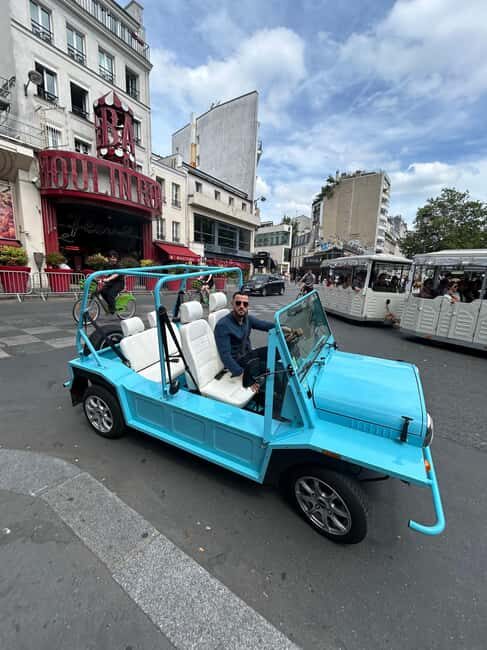
If you’re trying to understand Paris fast, this is the kind of tour that does the job. The Golden Triangle area is where a lot of the city’s most iconic “postcard” streets meet important historical landmarks. Doing it in one hour means you see the structure of the city, not just a list of attractions.
The ride is also part of the value. An open air vehicle lets you look up and around, and it’s easier to track street-level details than if you were stuck staring at a bus window. It’s also why this tour works well for first-time visitors and for anyone who feels like they’ve already walked enough for one day.
One practical note: it’s a private group. That matters because you’re not competing with dozens of voices for the guide’s attention, and the route tends to feel more like a focused conversation than a mass production.
You can also read our reviews of more tours and experiences in Paris.

Where You Start: Saint Sulpice to Place de la Concorde
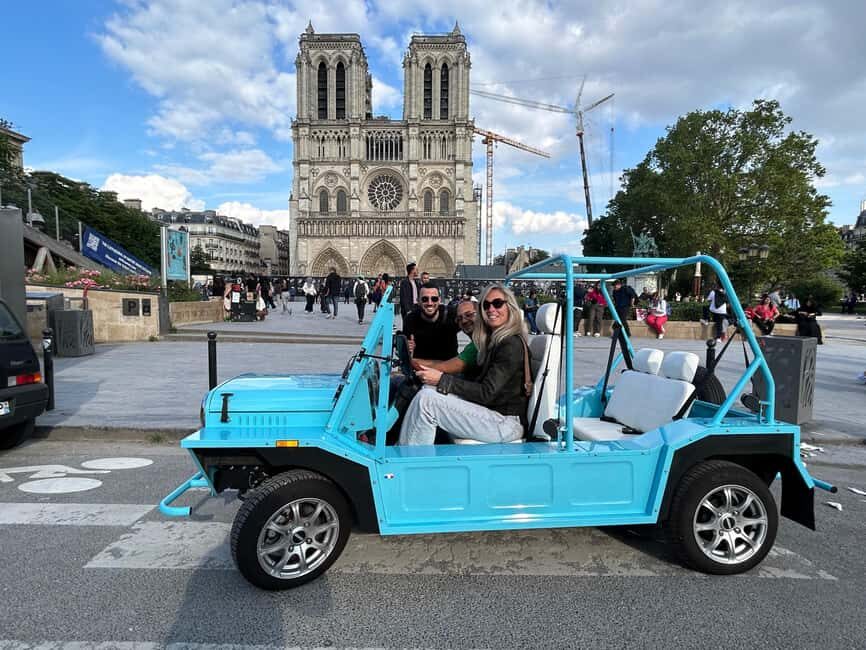
You meet near Saint Sulpice at 3 Rue Palatine (75006). The guide waits in front of the church, so you can orient quickly before rolling out. If you’d rather not deal with the meeting point, pickup and drop-off anywhere in Paris are included, which is a nice option if you’re staying far from the 6th arrondissement.
From there, you head toward Place de la Concorde, one of the city’s biggest public squares. On the route, the guide explains what the square means historically, including its role before it became the “grand plaza” people photograph today. The short stop (about five minutes in the plan) is just enough to get oriented: you’ll understand the geometry of the space and why it’s been a stage for major moments.
Why this stop is worth it: Place de la Concorde is where your eyes learn to align. Once you see how it sits in relation to the wider axis of Paris, the rest of the sights feel more connected instead of random.
Champs-Élysées: More Than a Name on a Map
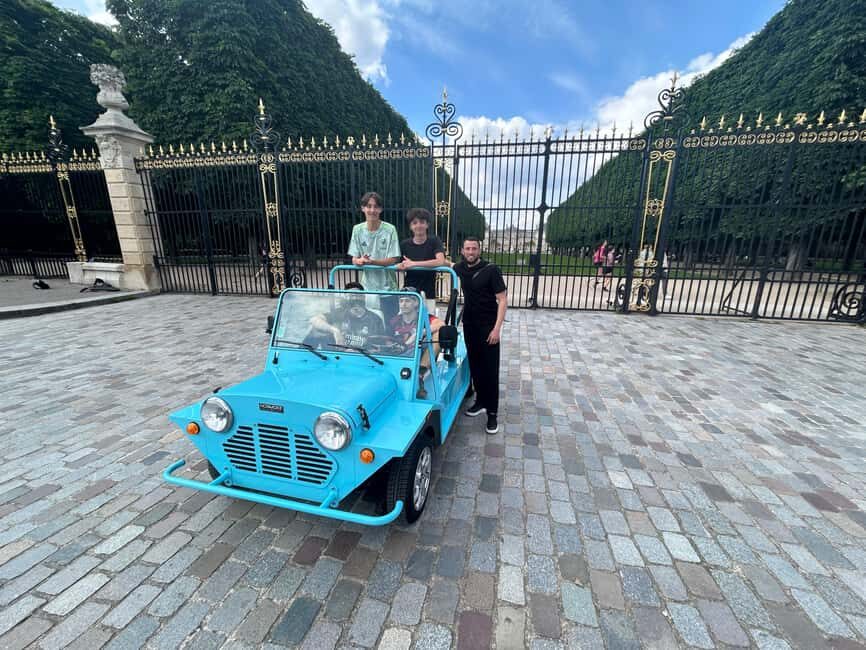
Next comes Champs-Élysées, the famous avenue where Paris shows off its boulevard style. This portion is guided, so you’re not just passing by a street you already know from posters. You get context as you go—what you’re looking at and how the city frames this corridor visually.
The practical value here is time. Walking Champs-Élysées can take forever if you keep stopping for photos, and driving past it alone can feel empty. This is a middle path: a guided pass that keeps you moving, with the right amount of narrative to help you recognize what you’re seeing.
A small consideration: this is still a high-activity area. If you’re hoping for lots of long photo setups or slow stroll time, you’ll need to pair this tour with a separate walk afterward.
Arc de Triomphe: Fast Photos, Big Impact
You’ll reach Arc de Triomphe for a dedicated photo stop. It’s planned at around five minutes, which is enough time to get a few angles and absorb the scale without turning your tour into an all-day photo marathon.
What I like about this stop on an itinerary like this: it’s a “gravity point.” Arc de Triomphe is hard to ignore once it’s in front of you, and it anchors your mental map. After this, Paris starts to make more sense—especially if you’re heading toward viewpoints over the river and toward the Eiffel Tower area.
If the weather is good, stand with your camera ready for the best angles. If it’s misty, the stone still photographs well—just keep an eye on reflections and traffic gaps.
Place du Trocadéro: The Best View That Doesn’t Take Hours
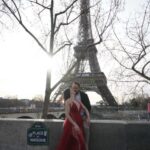
For photos and sightseeing, you stop at Place du Trocadéro for about ten minutes. This is one of the strongest viewpoint choices in Paris because it gives you a clean line of sight toward the Eiffel Tower area.
This is where choosing an open-air vehicle pays off. You’re not buried under glass, and you can turn your head to frame shots quickly. If you go at dusk, the viewpoint becomes more than just a view. You’ll feel that transition from daytime architecture to night-time glow.
One drawback to keep in mind: you won’t have unlimited time here. Ten minutes is a smart block for capturing the shot, but it isn’t designed for sitting around for a long sunset picnic.

Eiffel Tower Area and the 7th Arrondissement Pass-by
The tour then moves toward the Eiffel Tower area. In the plan, it’s listed as a pass by rather than a long stop, and it makes sense. The idea is to show you the sight in motion and keep you on schedule, not to turn this into an Eiffel Tower entry visit.
You also pass through the 7th arrondissement, which helps the route feel like more than a straight line between landmarks. This is where you start seeing the city’s rhythm—how the streets feed into big monuments, and how Paris changes as you move from square to avenue to viewpoint.
If your goal is to get the Eiffel Tower moment early, this is a strong strategy. You can always return later for a longer stay.
Adding the Grand Classics: Invalides, Pont Alexandre III, and the Palais Set
The route is described as covering key monuments beyond the main squares, including Musée des Invalides, Pont Alexandre III, and the Grand Palais / Petit Palais area. Even when the time at these places isn’t framed as long stops, passing by them as part of the same loop is still useful because it ties together the city’s “different Paris” layers.
Here’s how each one fits the puzzle:
- Musée des Invalides: The tour highlights it by connecting it to Napoleon’s resting place. That kind of context helps the building feel meaningful, not just like a large complex you walk past.
- Pont Alexandre III: Bridges are one of those places where Paris tells you a story in design details. Seeing it from the right angle (and with the river setting in mind) can make it stick in your memory.
- Grand Palais / Petit Palais: These are major landmarks for their architecture and presence. Even a pass-by helps you recognize what they look like in real life, not only in pictures.
If you love architecture and you hate wasting a day trying to “hit everything,” this combo makes sense. You’re getting the highlights plus the connections between them, which is exactly what a short tour should do.
Day vs. Night: Choosing the Mood You Want
The tour notes that you can enjoy the experience during the day and at night. I think this matters more than people expect.
Daytime is best if you want to learn the layout quickly—how the squares connect, how avenues funnel you, and how viewpoints line up. Nighttime adds a different kind of clarity: you see the city’s lights and the way monuments become focal points after dark. The Eiffel Tower area and Trocadéro viewpoint are especially relevant here, since the glowing effect changes how you want to frame photos.
Practical tip: if you’re going at night, dress for cooler air even if the daytime weather felt mild. Paris can shift quickly after sunset, and you’ll appreciate the provided gloves and raincoat if the weather turns.
The Ride Experience: Comfort, Pace, and a Guide Who Keeps Up
This tour’s format is built around a simple rhythm: brief stops for photos, short guided moments, and movement between landmarks without exhausting walking. It’s not meant to replace a full day of walking; it’s meant to get you oriented and give you the “greatest hits” in a compact time window.
The eco friendly open air vehicle also changes how you experience Paris. You don’t feel trapped. You’re aware of the street around you, and it’s easier to catch details you might miss when you’re moving on foot too fast.
The guides matter here. One of the listed guides from the experience feedback is Felix, and the comments emphasize how nice he was and how he showed people around. That kind of guide energy is key for a tour like this, because there’s limited time at each stop. If the guide is attentive and clear, the whole hour feels like it has purpose.
Family-friendly is also stated. There’s no age limit noted, but the tour isn’t suitable for babies under 1 year.
What’s Included (and What You’ll Need to Plan Yourself)
This is where the tour delivers practical value. Included items are not just “nice to have.”
Included:
- Guide
- Photo stop support
- Drinks
- Equipment like raincoat and gloves
- Pick up and drop-off
- It’s private group
Not included:
- Monument entry tickets
- Food
So you should treat this like an essentials tour. You’ll leave with photos, orientation, and context, but if you want to go inside a museum or pay for a specific attraction, you’ll handle that separately. If you’re hungry after, plan to eat nearby or return to your hotel for a reset.
Also, bring a charged phone/camera. You’ll get multiple photo windows, especially around Arc de Triomphe and the Trocadéro viewpoint.
Price and Value: $147 for a Small Private Group
The listed price is $147 per group up to 3, for about one hour. For many people, the question isn’t whether it’s “cheap.” The question is whether it’s efficient for how you want to spend your time.
Here’s why the value can make sense:
- Private group pricing means you can split cost versus booking separate private experiences for multiple people.
- Pickup and drop-off anywhere in Paris removes a big hassle cost of time and transit.
- You’re getting a guided loop with photo stops, not just transportation.
- Weather gear and drinks are included, which reduces the small extra spending that adds up on short tours.
If you’re traveling solo, you may still find it worth it if you value having a guide and a tight itinerary more than maximizing walking freedom. If you’re on a budget and you don’t mind doing your own route, you could DIY for less. But if your goal is to see the highlights in a compact hour and get context while someone else handles the route, this hits a sweet spot.
Who This Tour Fits Best
I’d point this tour toward you if:
- You’re short on time and want the Golden Triangle highlights without a stressed schedule.
- You don’t want to coordinate public transport between distant stops.
- You enjoy guided context more than long museum time.
- You’re traveling with friends or family and want everyone to enjoy the ride together.
It may not be ideal if you’re expecting lots of inside-the-building time, since entry tickets aren’t included and stops are short.
Should You Book Le Triangle d’Or?
Book it if you want a focused, guided way to get your bearings in Paris and capture the classic sights in about an hour. The combination of an open air ride, included drinks and weather gear, and pickup/drop-off anywhere in Paris makes it feel practical, not gimmicky.
Skip it if you’re planning to spend most of your day entering monuments, because this tour is designed for seeing and photographing key landmarks, not for long indoor visits.
If you’re deciding between day and night, pick based on your mood: day for learning the layout, night for the glow. Either way, you’ll come away with a clearer mental map of Paris and photos that match what you came to see.
FAQ
Where does the tour start?
The guide waits at 3 Rue Palatine, 75006, in front of Saint Sulpice church.
Can the tour pick you up and drop you off elsewhere in Paris?
Yes. Pickup and drop-off anywhere in Paris are included.
How long is the tour?
It lasts about 1 hour. Starting times depend on availability.
What language is the guide?
The guide is listed as English and French.
Are monument entry tickets included?
No. Monument entry tickets are not included.
Is the tour suitable for kids and babies?
The tour is noted as suitable for families and there is no age limit stated, but it is not suitable for babies under 1 year.