REVIEW · PARIS
Louvre Museum Access Private Guided Visit
Book on Viator →Operated by Paris in person · Bookable on Viator
The Louvre is big. Really big.
This private visit turns that chaos into a clear art-route, with an art historian guide steering you straight to the right rooms. I love that you get a structured highlight plan (with Mona Lisa plus major “must-see” classics like the Nike of Samothrace), so you’re not guessing what to prioritize. I also love that the guide can frame what you’re seeing across eras, from ancient Greece and Rome to Renaissance painting and beyond. One drawback: you’ll be doing a fair amount of walking and navigating crowds for about two hours, so plan for comfortable shoes and a steady pace.
What makes this feel extra valuable is the “private” part. You won’t be squeezed into a mixed group where you have to follow the loudest person, and guides you might meet (based on past experiences) include Boris, Boraz, Tina, Mila, Amy, and Adi.
In This Review
- Key things to know before you go
- Why a Private Art-Historian Plan Works at the Louvre
- Meeting at Arc de Triomphe du Carrousel: Start Smart, Not Stuck
- Your 2-Hour Louvre Route: What You’ll See and Why It’s Designed Like This
- Stop-by-Stop: What Each Room Teaches You in About 15 Minutes
- Stop 1: The Louvre Museum Highlights and the Mona Lisa Moment
- Stop 2: The Roman Gallery and How Rome Shaped Later Europe
- Stop 3: Greek Works and the Roots of European Visual Language
- Stop 4: Medieval Art and the Road to the Renaissance
- Stop 5: The Great Gallery and Italian Renaissance Painting at Its Peak
- Stop 6: Romanticism Gallery and Its Dramatic Edge
- Stop 7: Neoclassicism Gallery and the Controlled Return to Order
- The Value Question: Is $301.71 Worth It for a Louvre Private Tour?
- How to Get the Most Out of the Tour (Even If You Keep Exploring After)
- Physical Comfort and Practical Timing Tips for Two Hours in the Louvre
- Who This Tour Is Best For (And Who Might Skip It)
- Should You Book This Louvre Private Guided Visit?
- FAQ
- How long is the Louvre Museum private guided visit?
- Is this a private tour?
- What language is the tour offered in?
- What is included in the price?
- Are food and drinks included?
- Where do we meet for the tour?
- Will I receive a mobile ticket?
- Is there free admission for some visitors?
- Is the tour suitable for people with limited mobility?
- What is the cancellation policy?
Key things to know before you go
- Private, English-led art historian experience focused on major works and big art changes over time
- Mona Lisa plus landmark sculptures like the Nike of Samothrace, without losing hours to wandering
- A fast 2-hour route built around short stops in major collections (Roman, Greek, Medieval, Renaissance, Romanticism, Neoclassicism)
- Admission for adults included (the tour includes a €22 adult museum ticket)
- Mobile ticket + nearby transit meeting point makes it easier to show up on time
- Your guide shapes the pacing to your interests, so you can spend time on what matters to you
Why a Private Art-Historian Plan Works at the Louvre
The Louvre isn’t just one museum. It’s a small city of galleries, staircases, and turns you don’t notice until you’re halfway down the wrong wing. A private guide helps you use your limited time without turning your visit into a stressful puzzle.
The best part is the way the guide gives you a path through art history that actually feels connected. You’re not just collecting famous paintings like souvenirs. You’re seeing how ideas and styles shift from one period to the next—ancient through classical to modern tastes of its day.
You’ll also notice that the tour is designed for momentum. It lasts about 2 hours, and it’s built around multiple short stops so you can see important works without getting stuck in a single room for too long.
You can also read our reviews of more guided tours in Paris



Meeting at Arc de Triomphe du Carrousel: Start Smart, Not Stuck
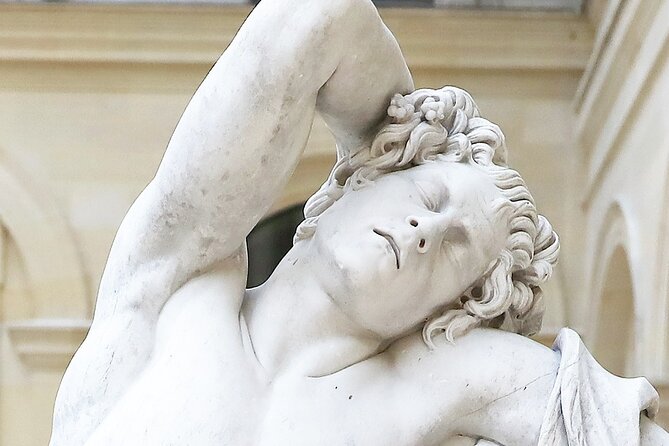
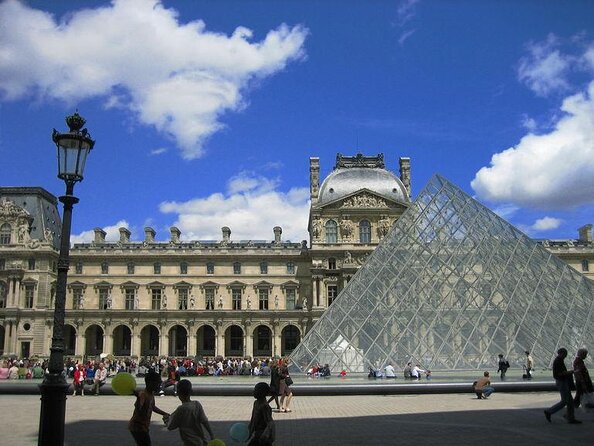
This tour starts and ends back at the meeting point near Arc de Triomphe du Carrousel, Pl. du Carrousel (75001 Paris). That matters because the Louvre area is easy to get turned around in, especially if you’re arriving by metro and walking a few blocks with tired legs.
Because this experience is offered in English, you can ask quick questions right away and still keep moving. If you’ve ever tried to “wing it” in the Louvre, you already know how much energy gets wasted just figuring out where to go next.
Also, you’ll have a mobile ticket, which is helpful when you’re juggling phones, lines, and signage. Still, don’t wait until the last second to confirm your ticket details.
Your 2-Hour Louvre Route: What You’ll See and Why It’s Designed Like This

This private tour is paced in short blocks, roughly 15 minutes at each key stop. That approach is what makes the Louvre possible in just a couple of hours. You get a guided orientation to major collections, and you leave with enough context to keep exploring on your own afterward.
You’ll move through the museum’s story in a logical order: ancient foundations first, then the bridges into later European art. Even if you only came for one famous painting, the guide’s job is to show you what led there.
Expect to focus on headline highlights (like the Mona Lisa and the Nike of Samothrace) plus big artistic periods that explain why European art later looked the way it did.
Stop-by-Stop: What Each Room Teaches You in About 15 Minutes
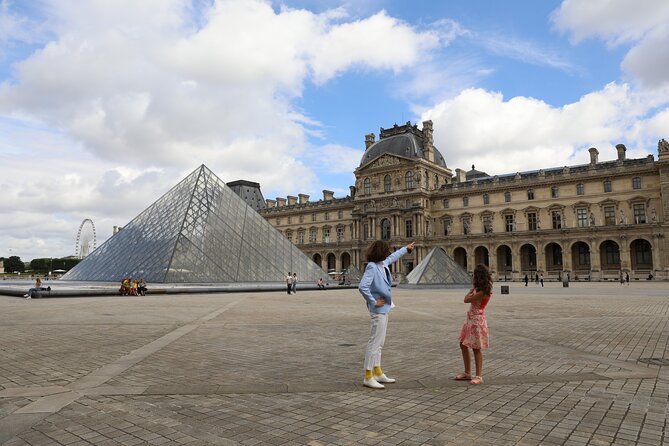
Here’s the tour’s core route, with what each stop adds and what you should watch for.
Stop 1: The Louvre Museum Highlights and the Mona Lisa Moment
You’ll begin in the museum’s main highlight zone. This is where most people come to see the Mona Lisa, but the guide will push you beyond the “only famous thing” plan so you’re not just standing in one spot and calling it a day.
In a short time, the guide can point out how to look at portraits, symbolism, and artistic choices without turning it into a lecture that fries your brain. If you’re prone to getting overwhelmed, this is the stop that sets your bearings.
Potential tradeoff: since it’s a highlight start, you’ll likely spend less time on small details here than you would in a slow self-guided visit. Think orientation and direction, not deep study.
You can also read our reviews of more private tours in Paris






Stop 2: The Roman Gallery and How Rome Shaped Later Europe
Next comes the Roman section, focused on Roman art’s importance and its influence on later European art and culture. This is a key step because it helps you understand why certain subjects, styles, and visual language keep reappearing in Western art.
Roman art can feel more “familiar” once you’re paying attention to realism, civic ideals, and how bodies are represented. The guide’s framing helps you spot those patterns quickly.
Consideration: if Roman art isn’t your thing, ask the guide to emphasize the parts that connect directly to what you do love—otherwise this stop can feel like a background chapter.
Stop 3: Greek Works and the Roots of European Visual Language
After Rome, you’ll move into Greek works and their crucial importance. This portion is where Greek art’s influence becomes easier to “see in real life,” not just read about.
Even when you don’t know the names, you can learn what to notice: proportions, ideal forms, and how Greek artistic thinking helped shape later centuries of European style. This is one of the most useful stops for anyone who wants art history to feel less abstract.
Potential drawback: Greek collections sometimes feel more like a museum of forms and less like a story. A good guide bridges that gap with explanation that connects style to meaning.
Stop 4: Medieval Art and the Road to the Renaissance
Then you’ll hit Medieval art, including how it influenced the Renaissance period. This stop is valuable because it shows art wasn’t a straight line. Styles evolved through changes in religion, politics, and tastes.
Medieval works can be visually intense, and they’re not always “pretty” in a modern way. But with the guide’s context, you’ll understand why they matter and how they set up later developments.
This is also a good moment to ask your guide what to watch for later in the Renaissance section. If you do that, you’ll start catching the “before and after” connections.
Stop 5: The Great Gallery and Italian Renaissance Painting at Its Peak
The tour then arrives at one of the museum’s focal points: the Great Gallery. Here the focus shifts to Italian Renaissance art—often seen as the pinnacle of European painting.
This stop is where you’ll likely feel the emotional pull of technique: composition, light, and how artists structured scenes to guide your eye. You don’t need a background degree to appreciate what’s happening, because the guide will explain the logic behind the look.
One thing to keep in mind: the Renaissance hall can be a busy place. Your guide’s job is to keep you moving and still help you actually look, not just shuffle through.
Stop 6: Romanticism Gallery and Its Dramatic Edge
Next is the Romanticism gallery, known for fiery, dramatic painting. This is where art history starts feeling more like psychology—emotion, tension, and spectacle.
If you tend to prefer paintings that tell stories with energy, this stop often becomes a favorite. The guide’s explanations help you understand what the artists were reacting to, and why their choices look the way they do.
Tradeoff: Romanticism can be intense. If you want a calmer pace, ask for a slightly slower look at fewer works instead of trying to see everything the guide points to.
Stop 7: Neoclassicism Gallery and the Controlled Return to Order
Finally comes Neoclassicism—elegant, poised, and sophisticated painting. This ending makes sense because it’s basically the art world swinging toward structure and restraint after the drama of Romanticism.
Neoclassicism can feel cleaner and more formal, and it’s a nice way to close the loop on what influenced European art over time. You’ll leave with a clearer sense of how tastes changed, not just what the masterpieces are.
If you’re the type who likes a “finished feeling” when a tour ends, this final stop works well. If you’re the type who could keep going, it also sets you up to explore on your own with better instincts.
The Value Question: Is $301.71 Worth It for a Louvre Private Tour?
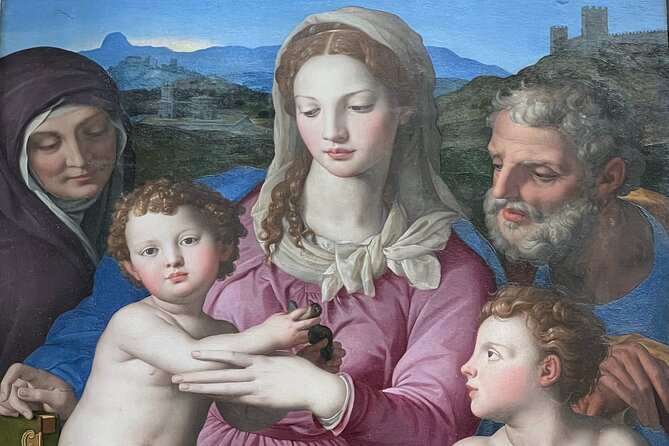
At $301.71 per person for about 2 hours, you’re paying for more than access. You’re paying for time, direction, and an art historian guide who can help you see what matters faster than you could alone.
The tour includes a €22 entrance ticket to the museum for adults. That ticket alone is not the whole value, because the big cost is your guide’s attention and the curated pacing. In other words: this is less like buying admission and more like buying a plan that protects your time.
The tour also notes group discounts, which can make a big difference if you’re traveling with someone and splitting the private experience. If you’re solo, it’s still often worth it when your schedule in Paris is tight—because the Louvre can swallow half your day without delivering the feeling you wanted.
My practical take: this tour is best when you want highlights with context and you don’t want to spend your vacation hours just walking and trying to figure out what’s next.
How to Get the Most Out of the Tour (Even If You Keep Exploring After)
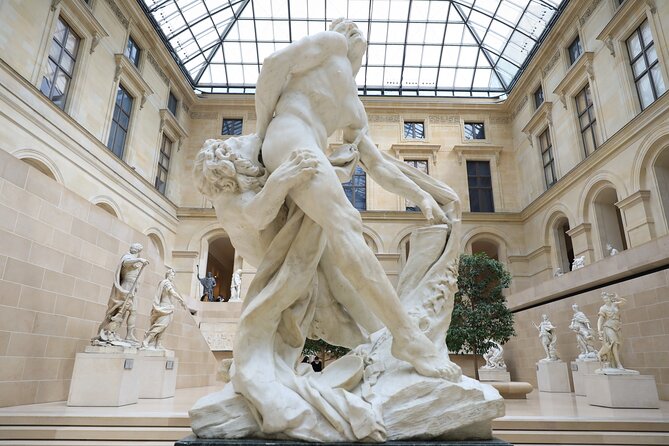
After the guided portion, you can continue on your own. That’s the smart way to use this: treat the guide as your orientation and your translator, then spend your remaining time in the Louvre focusing on what clicked for you.
Here’s how you can make that happen:
- Decide before you arrive what you want most: famous works, art eras, or just feeling oriented.
- Ask the guide at the start what order to follow if you plan to keep going after the tour.
- Notice the “style shifts” as you move, especially between the ancient rooms and the Renaissance and Romantic sections.
Also, a few guides include extra context that helps you picture the museum’s past, such as pointing out the original moat around the earlier fort area. You might not get that exact extra, but it’s the kind of detail that makes the Louvre feel less like a maze and more like a place with a brain.
Physical Comfort and Practical Timing Tips for Two Hours in the Louvre
You’ll want a moderate physical fitness level for this one. The Louvre is famous for being huge, and even a “short” route means walking, stopping, crowd navigation, and standing to look.
Plan to wear comfortable shoes. Bring water if you need it (food and drinks aren’t included), and don’t rely on grabbing a snack on the fly unless you’ve built time into your day.
Timing matters too. Since this is around 2 hours and includes multiple stops, you’ll get the most from the experience if you show up a few minutes early and start relaxed. If you arrive stressed, you’ll feel it in your feet and your attention.
Who This Tour Is Best For (And Who Might Skip It)

This private guided visit is a great match if you:
- Want to see major highlights like Mona Lisa without losing your day
- Prefer art history explained with clear connections between eras
- Are traveling with limited time and don’t want to guess
- Like the idea of being guided in English with a single focused group
It may not be the best match if you:
- Want a slow, quiet, deep look where you spend long stretches studying fewer works
- Plan to spend most of your visit reading every label yourself
- Are feeling totally wiped from jet lag and need an ultra-casual pace
If you’re somewhere in the middle—most people are—this is a strong way to get the Louvre “working” for you.
Should You Book This Louvre Private Guided Visit?
Book it if you want the Louvre to make sense in a limited time window. This tour gives you a tightly planned route across key periods, with a professional art historian guiding the experience in English and getting you oriented fast.
If $301.71 per person feels steep, think about what you’re buying: not just entry, but a plan that helps you see more of what you came for, with less time wasted in confusion. And with private pacing, you’re less likely to end up frustrated in a museum that’s designed to overwhelm your sense of direction.
If your Paris schedule is tight, or you want the Louvre highlights plus real context, this is an easy yes.
FAQ
How long is the Louvre Museum private guided visit?
It’s approximately 2 hours.
Is this a private tour?
Yes. It’s private, and only your group participates.
What language is the tour offered in?
The tour is offered in English.
What is included in the price?
The tour includes a professional art historian guide, a private tour, and an adult museum entrance ticket (€22).
Are food and drinks included?
No. Food and drinks are not included.
Where do we meet for the tour?
The start location is Arc de Triomphe du Carrousel, Pl. du Carrousel, 75001 Paris, France.
Will I receive a mobile ticket?
Yes, a mobile ticket is included.
Is there free admission for some visitors?
Yes. Free admission applies to visitors under 18 and EEA residents under 26, with valid ID and proof of residency.
Is the tour suitable for people with limited mobility?
The tour says travelers should have a moderate physical fitness level.
What is the cancellation policy?
The experience is non-refundable and cannot be changed for any reason.