REVIEW · PARIS
Paris: Baguette and French Breads Class
Book on GetYourGuide →Operated by Le Foodist · Bookable on GetYourGuide
Four hours can change how you see bread. This Paris baguette and French breads class teaches real technique, not just recipes, starting from flour, water, salt, and yeast and ending with loaves you can actually share. I especially like the small group size (up to 8), because you get more attention than big tour groups. I also like that the class is led in English and, in at least one recent session, Florence provided clear demonstrations and then helped people get strong results.
Before you go in, know one tradeoff. In a small-class setup where you often work in pairs, you might want even more time watching every step up close, including mixing and oven baking details, before you try it yourself. If you’re the type who learns best by seeing and measuring everything directly, plan to ask lots of questions.
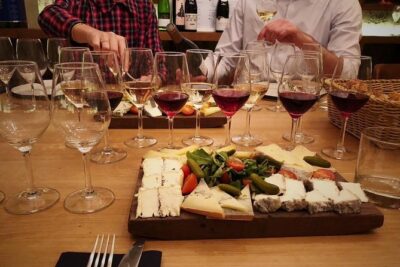
If you want a practical, hands-on food skill while you’re in Paris, this is a good use of a half-day. You’ll leave with a bag full of what you make, plus you’ll taste the breads with simple pairings like butter, cheese, and even wine, depending on the day.
In This Review
- Key things I’d focus on before you book
- A 4-hour Paris bread class that starts with four ingredients
- What you’ll actually make: baguettes, brioche, and more
- The dough stage: measuring and mixing with purpose
- Proofing, deflating, and resting: the hidden rhythm of French bread
- Shaping baguettes: tension is the whole game
- Shaping brioche: rolling technique and richer dough behavior
- Shaping ciabatta: flexible, airy structure in a short class
- The “signing” moment before baking
- Baking: time, temperature, and humidity all matter
- Taste test: eat it with cheese, jam, and even wine
- Small group lessons: why limited to 8 matters
- Who this class is best for (and who should think twice)
- Price and value: is $175 per person fair?
- Should you book this baguette and French breads class?
- FAQ
- How long is the Paris baguette and French breads class?
- What is the price per person?
- How big is the group?
- Is the instructor English-speaking?
- What breads will you make?
- Do you take food home?
- Is the class hands-on?
- What happens during the tasting?
- Can you get a refund if plans change?
Key things I’d focus on before you book
- Up to 8 people means real attention while you shape, proof, and learn the why behind the technique.
- Baguette method centers on tension and careful shaping, not just a pretty final loaf.
- You build confidence through repeated steps: mix, proof, deflate, rest, shape, proof/sign, bake, taste.
- Sign your bread before it goes in the oven, an important finishing step for both looks and bake success.
- You take home your creations, so the lesson becomes something you can share (or enjoy later as a picnic).
- Taste what you bake together with cheese, jam, and options like wine and cooking ideas such as pain perdu.
A 4-hour Paris bread class that starts with four ingredients
Bread teaching in Paris has a reputation for being strict, but what I like about this class is that it stays practical. You start with the basics every serious dough starts with: flour, water, salt, and yeast. Those four ingredients look simple, yet they create a wide range of results depending on timing, handling, and shaping.
That’s the core value for you. You’re not just following a list of steps. You’re learning how changes in dough handling show up in the final crumb, crust, and flavor.
Also, you’ll do the work in a tight time window. The class is 4 hours, so the flow matters: mix, proof, deflate, rest, shape, proof/sign, bake, then taste. When you’re in Paris, a half-day commitment that ends with edible results is exactly the kind of “worth it” activity I look for.
You can also read our reviews of more tours and experiences in Paris

What you’ll actually make: baguettes, brioche, and more
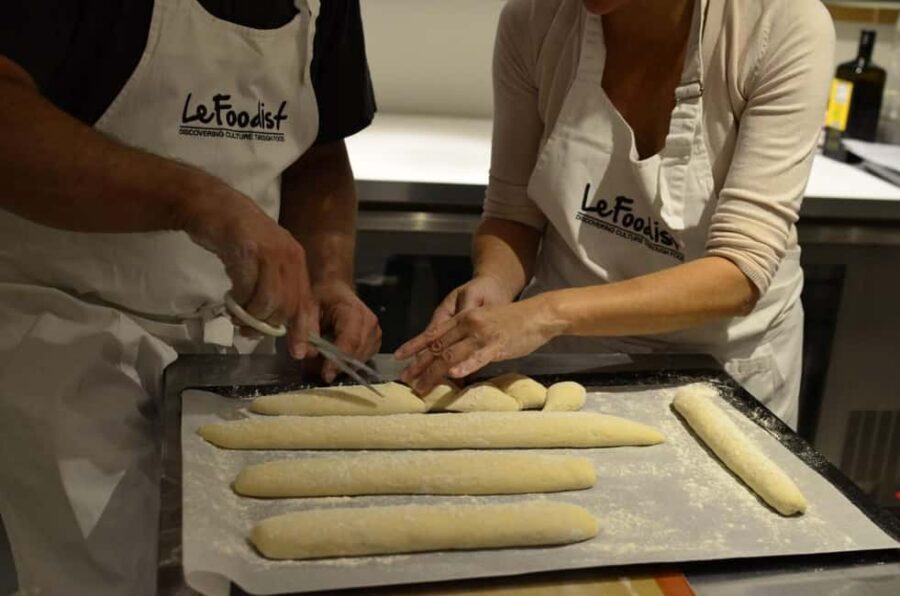
The class covers more than one bread style, and that variety is helpful. Each bread teaches a different technique, so you come away with a broader skill set instead of a single one-trick loaf.
From the information you’re given, you should expect to make:
- Baguettes, where shaping tension matters a lot.
- Brioche, where shaping involves rolling technique.
- Ciabatta, often taught as part of a French bread set in these sessions.
The best part is that the time isn’t wasted. You go from mixing and dough structure to shaping and oven success. When you learn multiple styles in one class, you start to see how dough behaves differently under different handling.
The dough stage: measuring and mixing with purpose
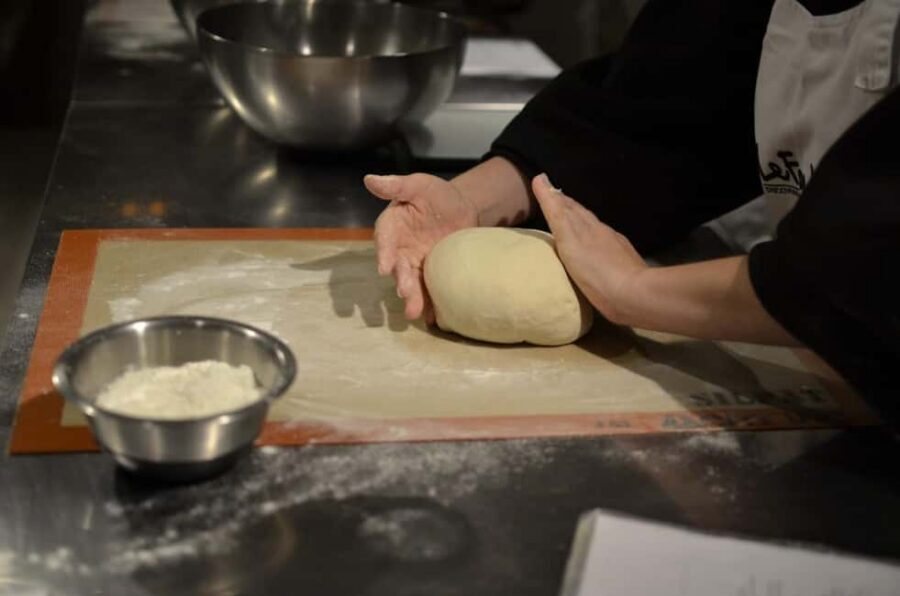
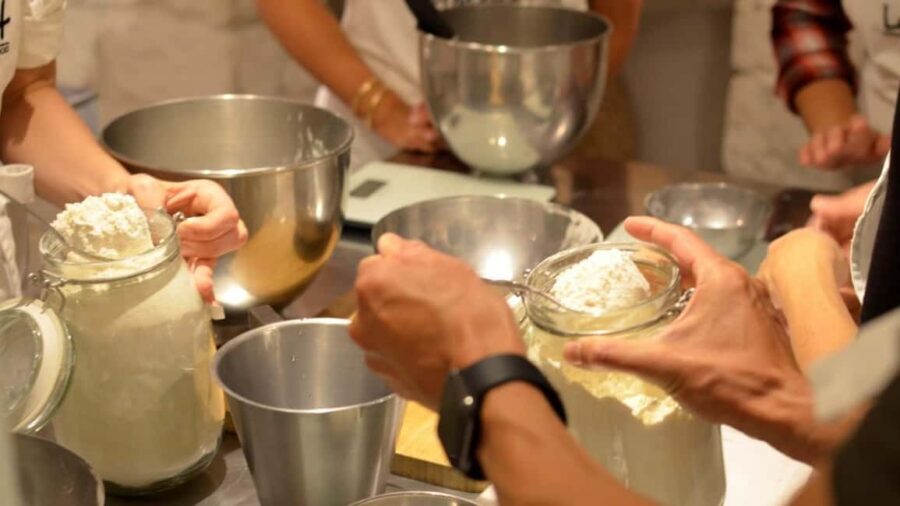
You begin with the measuring step because bread is chemistry with a clock. The class frames it as four ingredients first, then understanding what you’re looking for as you mix. You’ll likely hear guidance on what “good dough” should feel like and how your actions affect structure.
Then comes mixing your doughs. This is where I’d encourage you to slow down mentally, even if the schedule feels fast. The class isn’t just telling you what to do. It’s making you pay attention to the dough’s changes as you combine ingredients.
You’ll also learn that the same base dough concept can shift with additions. The class notes that you can do more once you get the core right, including adding things like butter or oil. That matters because it explains why brioche feels richer and why handling differs.
Proofing, deflating, and resting: the hidden rhythm of French bread
Proofing is where yeast turns your dough from a lump into a living structure. The class walks you through proofing so it can rise, then deflates before shaping. You might handle this as one step or several, depending on how the session flows.
Here’s why this part is worth your attention: proofing timing and handling affect how bread bakes later. If dough is underproofed, you’ll struggle with expansion. If it’s overhandled, you can lose structure. And because the class includes several technique moments, you’ll learn what to watch for during transitions.
After proofing and deflating, you rest the dough. Resting is not just “waiting.” It gives gluten time to relax and makes shaping more manageable. If you’ve ever fought with sticky dough or a loaf that won’t hold shape, this is the moment where the skill clicks.
Shaping baguettes: tension is the whole game
Baguettes sound simple until you try them. The lesson makes this point clearly: for baguette shaping, tension is critical.
You learn to shape in a way that creates surface tension so the loaf can expand in the oven and develop that classic baguette profile. This is one of the most useful techniques for you because it transfers to anything from dinner rolls to thicker country breads. The concept is the same: the outer dough surface needs structure, not just form.
Practically, shaping takes the most patience. It’s normal to feel awkward the first time. What helps is doing it after proofing and resting, when the dough’s texture is in the right zone.






Shaping brioche: rolling technique and richer dough behavior
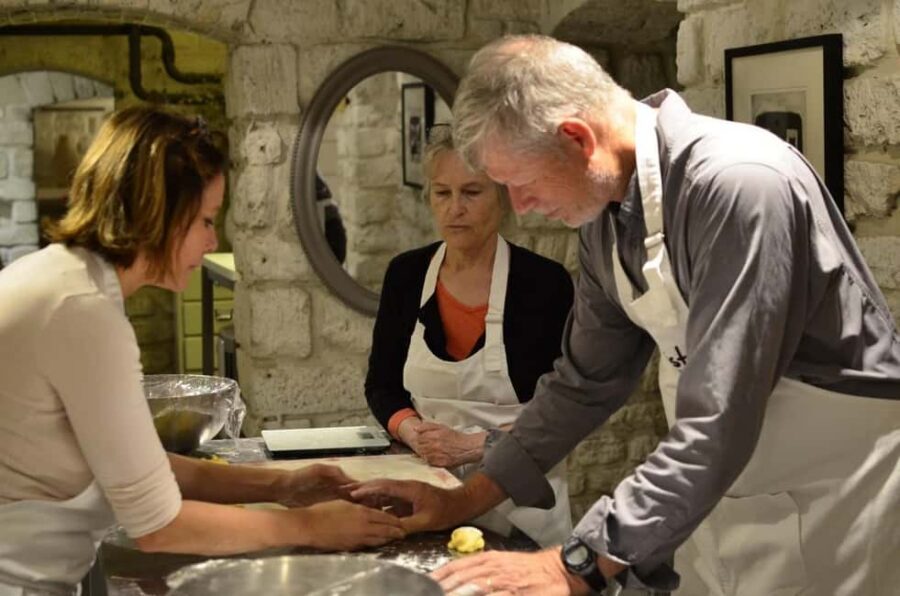
Brioche is a different animal. The class contrast is direct: for brioche you’ll roll, and you’ll master a different set of technique steps.
Richer doughs like brioche behave differently because fat affects gluten development and how the dough stretches. That’s why this class is valuable: you don’t just learn “a baguette trick.” You learn how another dough style requires a different handling approach.
If you love butter-forward pastries and you want a savory-skill version of that French comfort style, brioche in this format gives you a satisfying path from dough to finished bake.
Shaping ciabatta: flexible, airy structure in a short class
Ciabatta training is part of what you’ll do in the 4-hour session. Even without getting too technical, you should expect the class to help you understand ciabatta’s needs: dough handling that supports an open crumb and shaping that doesn’t crush what you’ve built during proofing.
This is one of the breads where your attention to gentle handling pays off. If you press too hard or overwork dough, you lose the light structure that makes ciabatta worth making.
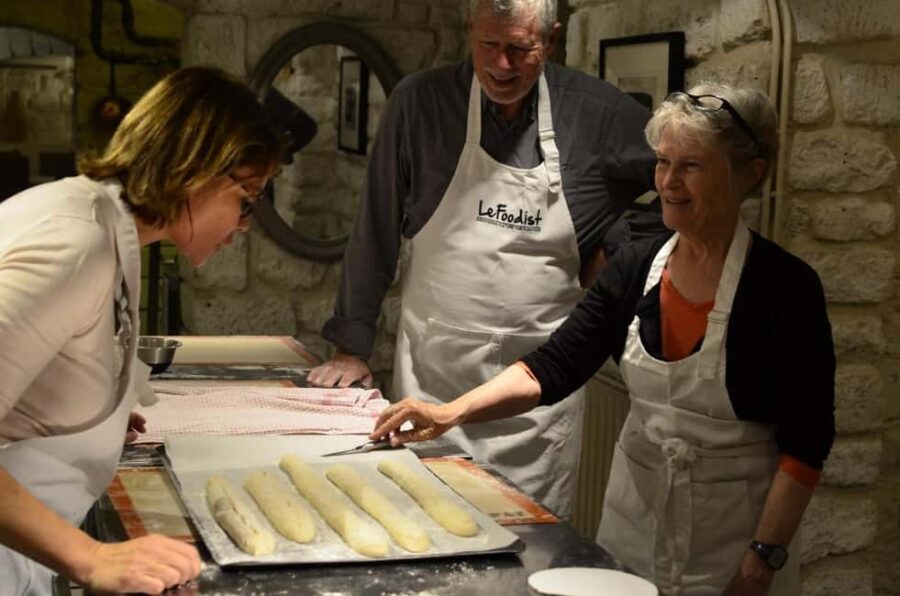
The “signing” moment before baking
One of my favorite teaching moments in French bread classes is the final look step right before the oven. In this class, you’ll proof and also sign your bread. The instructor guides you, and they treat it as both aesthetic and critical to success.
Why it matters: those cuts affect how the loaf opens as it bakes. If you cut too shallow or too deep, the bake outcome changes. If your dough is ready but your cuts are off, expansion won’t look or behave the same way.
So even if you care mostly about taste, you still want to focus here. This is where “pretty” and “function” overlap, and it’s a skill you can repeat later at home.
Baking: time, temperature, and humidity all matter
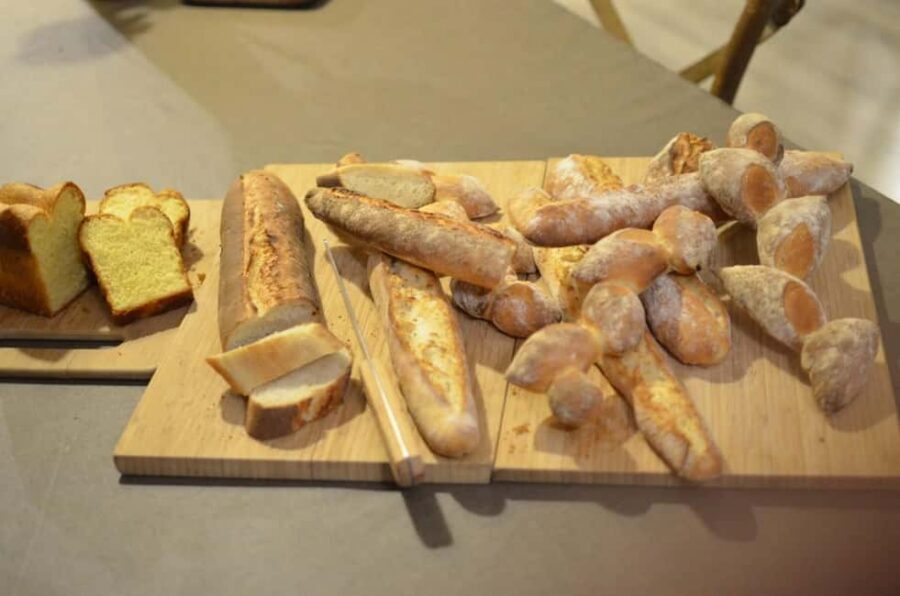
Then it’s time to bake. The class is upfront that temperature, time, and humidity affect results. That’s a real lesson for you, because home ovens and day-to-day conditions can vary a lot.
You’ll taste that difference, too. The crust, the rise, and the aroma all shift with bake conditions. Even if you don’t control humidity at home, learning that it’s a factor changes how you interpret your own results later.
This stage also makes the class feel real and complete. You go from measured dough and shaping into the transformation you came for.
Taste test: eat it with cheese, jam, and even wine
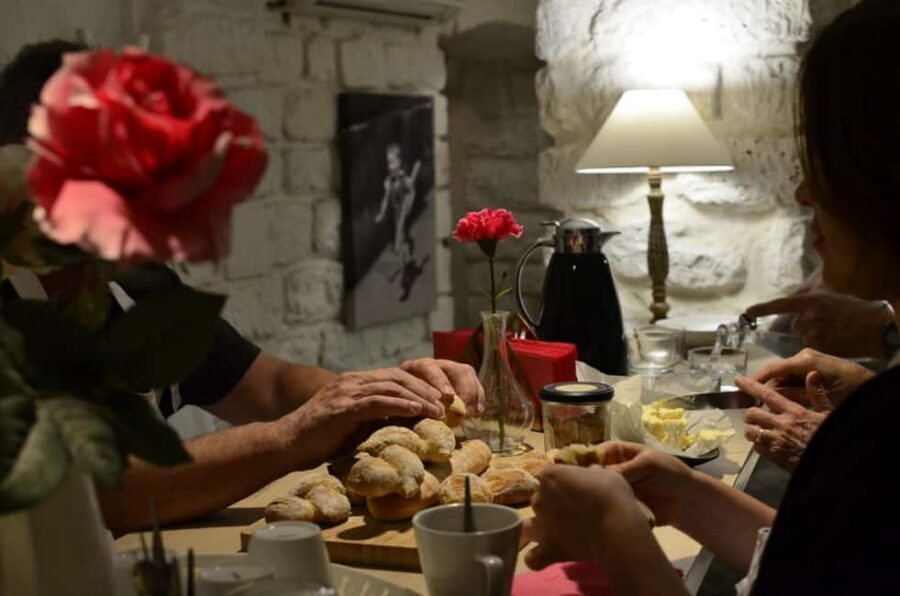
The class doesn’t end when the oven timer beeps. You’ll taste your breads and pair them in different ways.
Depending on the day, you can enjoy your bakes with:
- French cheese
- Jam
- Options like butter and wine, since the class often sits together to eat what you made
- Even ideas like using bread for cooking such as pain perdu
This is a smart value add for you because tasting is feedback. You can connect what you did—tension, rolling, signing—to what you notice: crust thickness, chew, aroma, and sweetness or richness.
And eating with others in a small setting makes the class feel like part of your Paris day, not just a kitchen assignment.
Small group lessons: why limited to 8 matters
The class is capped at 8 participants, taught in English. In practice, that size hits a sweet spot for learning. You’re not alone, but you’re also not lost in a crowd.
You may work in pairs. That can be efficient, but it’s also a hint for you: you’ll probably need to be proactive about who does which steps. If you want maximum hands-on time for every stage, communicate that early with your partner and with the instructor.
It’s also why the class feels supportive. One recent session singled out Florence as an effective teacher who demonstrated first and then helped people land the results. That “show, then guide” flow tends to be the fastest way to learn bread shaping without weeks of trial and error.
Who this class is best for (and who should think twice)
This experience is a strong match if you:
- Want a practical food skill you can repeat later at home
- Enjoy cooking lessons where you learn technique, not just recipes
- Like the idea of leaving with a bag of edible creations
- Are in Paris for a short time and want a high-reward use of a half-day
It’s a weaker match if you’re expecting an extremely hands-on, step-by-step, solo baking apprenticeship. One note from a recent learner was a desire for more direct observation of the dough mixing and what happened in the oven, plus clearer labeling of which bake belonged to which pair. That’s not a dealbreaker for most people, but it’s worth knowing if you learn best when you see every micro-step and every measurement.
Price and value: is $175 per person fair?
At $175 per person for 4 hours, the price isn’t low. But it also isn’t just “someone tells you bread facts.”
You’re paying for several things that raise the value:
- A structured 4-hour teaching flow from base ingredients to finished bakes
- A small group format that keeps instructor help more accessible
- Bread styles that would be harder to pull off confidently on your own right away, especially baguette shaping tension and signing
- The fact that you leave with multiple breads you made, not just one tasting
If you compare it to buying bakery items in Paris, it can feel pricey. But if you value learning technique and want to walk away with breads you can share, the value becomes clearer.
Think of it as an edible skill workshop. For $175, you’re not just eating bread. You’re learning the mechanics of bread success.
Should you book this baguette and French breads class?
Book it if you want a focused, small-group Paris cooking experience that ends with real results you can bring home. The class gives you a repeatable bread workflow: measure, mix, proof, deflate, rest, shape, proof/sign, bake, then taste and pair.
Skip it or go in with eyes open if you expect a solo, fully supervised, every-action view of every stage. In a format that works with pairs and group pacing, you may not see every detail as clearly as you hoped.
If you’re somewhere in the middle, here’s my best advice: arrive with curiosity, pay attention to the key techniques (especially baguette tension and signing), and ask questions when you feel uncertain. That’s the difference between a fun class and a bread skill you’ll still use months from now.
FAQ
How long is the Paris baguette and French breads class?
The class lasts 4 hours.
What is the price per person?
The price is $175 per person.
How big is the group?
It is a small group limited to 8 participants.
Is the instructor English-speaking?
Yes, the instructor teaches in English.
What breads will you make?
You’ll make baguettes and other French breads such as brioche and ciabatta, from scratch.
Do you take food home?
Yes. You leave with a bag full of the breads you create.
Is the class hands-on?
You’ll be working on bread-making steps during the class. Some people may notice the pacing is done in a group format and in pairs.
What happens during the tasting?
After baking, you’ll taste your breads with pairings such as butter, cheese, jam, and options like wine depending on the session.
Can you get a refund if plans change?
Yes. You can cancel up to 24 hours in advance for a full refund.