REVIEW · PARIS
Paris Bakery Tour
Book on GetYourGuide →Operated by Meeting the French · Bookable on GetYourGuide
French bread has a magic smell.
This Paris Bakery Tour puts you close to how classic French loaves and pastries are actually made. You’ll join a small group, step behind the counter of a working boulangerie, and watch the full baguette process, from mixing dough to baking it in special ovens. Then comes the part you’ll remember most: tasting bread that’s fresh from the oven and taking a croissant and baguette home.
What I especially like is the mix of show-and-taste. You get both the hands-on bread science (how kneading and shaping matter) and the sensory payoff (warm, golden baguette). I also like the personal attention of a small group capped at 8, plus an experienced guide; on one tour, Louise was praised for explaining details and answering questions.
The main drawback to consider: this tour leans heavily into baguettes. If you’re hoping for a broader focus across many different breads and pastries, you might wish it spent a bit more time on variety beyond baguette.
In This Review
- Key highlights you should care about
- One Hour In A Working Paris Boulangerie (Not A Museum)
- Getting To Le Grenier à Pain: The Exact Address Matters
- Stepping Behind The Counter In A Paris Bakery Kitchen
- The Baguette Demonstration: Dough, Shaping, And Special Ovens
- Tastings: Croissant Plus Other Baked Goods
- The Guide Experience: Small Group, Big Explanations
- Price and Value: Is $74 for One Hour Worth It?
- When This Tour Fits You Best (And When It Might Not)
- Making The Most Of Your Hour: Simple Moves Before You Go
- Should You Book This Paris Bakery Tour?
- FAQ
- What is the meeting point for the tour?
- How long is the Paris Bakery Tour?
- What size is the group?
- What languages are offered?
- What food is included?
- Do I get anything to take home?
- Will I be allowed behind the counter?
- Where does the tour end?
- What is the cancellation policy?
- FAQ
- Can I reserve without paying right away?
Key highlights you should care about
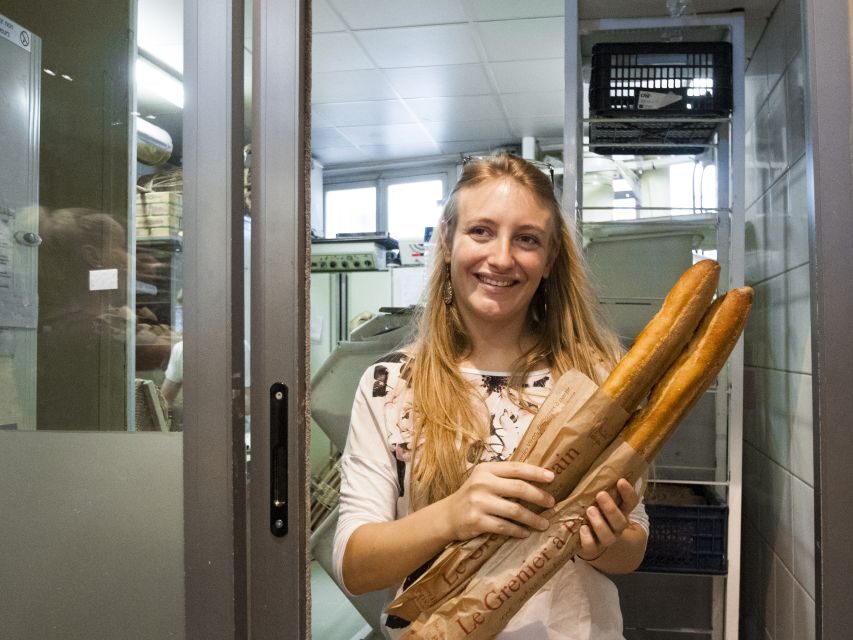
- Behind-the-counter access at a typical Paris boulangerie, for a select few
- Master baker demonstration of baguette technique passed down through generations
- Fresh baguette tasting right after baking, when it’s warm and golden
- Croissant-focused takeaway: you leave with a goodie bag containing a free croissant and baguette per person
- Small group format capped at 8 participants for easier questions
- Multi-language guiding in French, Japanese, and English
One Hour In A Working Paris Boulangerie (Not A Museum)
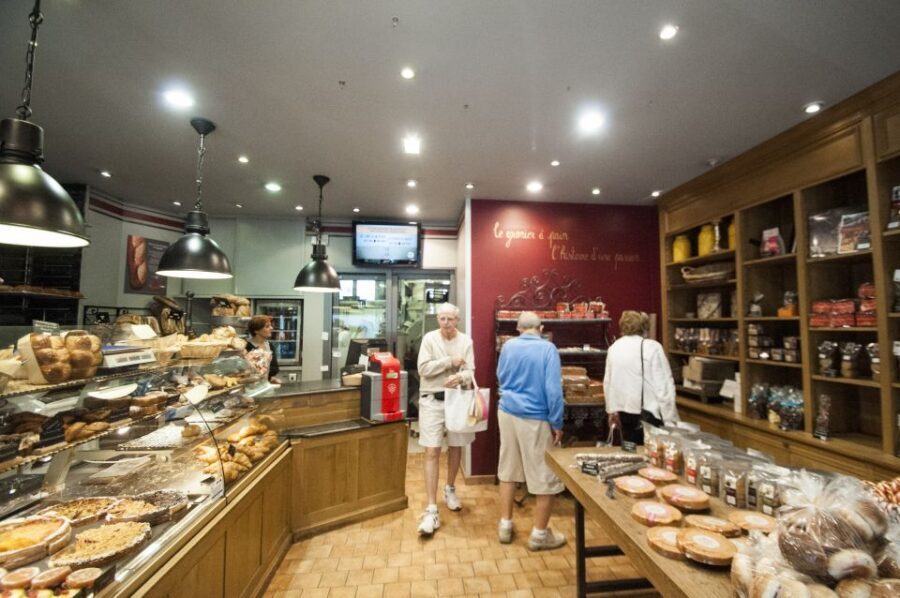
This isn’t a stop where you just look at things behind glass. It’s built around the kitchen workflow of a real bakery, and that changes how fast everything feels. In a short one-hour visit, you still get a clear sequence: dough prep, shaping, baking, and then tasting.
The format also makes questions easier. With a group limited to 8, you’re not stuck in a big line. You can ask how French bakers think about texture, shaping, and timing, and the guide has room to answer without rushing you.
And yes, you’ll smell the bakery. That warm, yeasty aroma is part of the experience for a reason. Bread is not just food here; it’s daily rhythm. When you see it made, baguette and croissant stop being generic “French bakery items” and start being specific crafts.
You can also read our reviews of more tours and experiences in Paris.



Getting To Le Grenier à Pain: The Exact Address Matters
Your start point is Le Grenier à Pain, 127 Rue Caulaincourt, 75018 Paris. One practical note: there are multiple bakeries with this name in Paris. Use the full address so you don’t accidentally arrive at the wrong shop.
This location puts you in the 18th arrondissement area. A couple of guides and groups have also paired the tour with extra time nearby. If you arrive early, you’ll have enough time to get your bearings and then roll directly into the bakery visit without feeling frantic.
Since the tour ends back at the meeting point, you’re not dealing with a complicated route change mid-day. That matters if you’ve got museum plans or a timed reservation later.
Stepping Behind The Counter In A Paris Bakery Kitchen
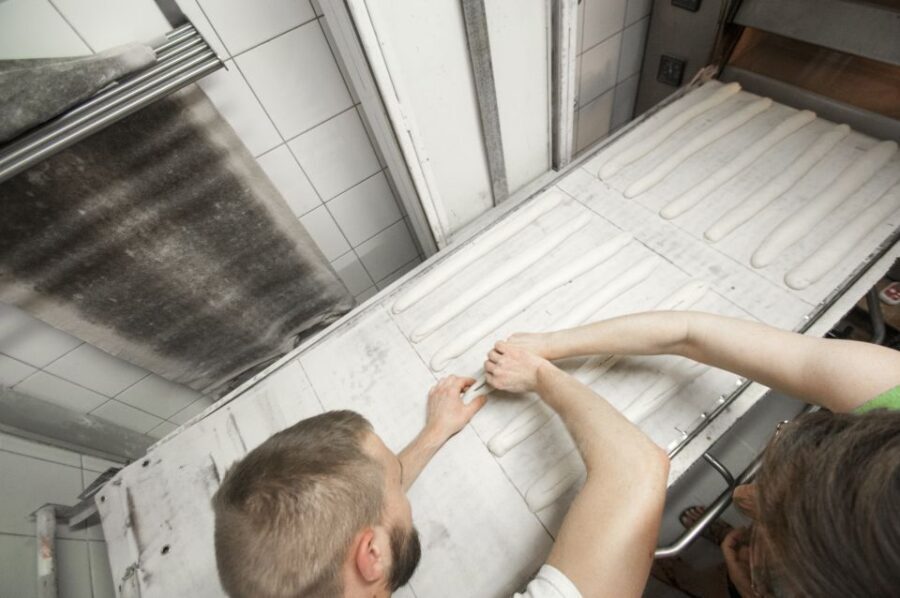
One of the biggest “value moves” in this tour is permission. You’re part of a select group allowed behind the counter of a typical French boulangerie. In real life, that’s where the work happens and where the bread-making details live.
What makes this access useful is what you learn once you’re close: the kitchen is not random. Everything is set up to support repeatable steps—mixing, handling, proofing, baking—so the bakery can turn out daily bread consistently.
You’ll meet a master baker, and you’ll see some of his signature pastries and breads. Even if you’re not a baking nerd, that introduction helps you understand the logic behind what you taste. French bakeries often have their own signature baguette style, and this tour focuses on that idea rather than treating baguettes like interchangeable bread sticks.
The Baguette Demonstration: Dough, Shaping, And Special Ovens
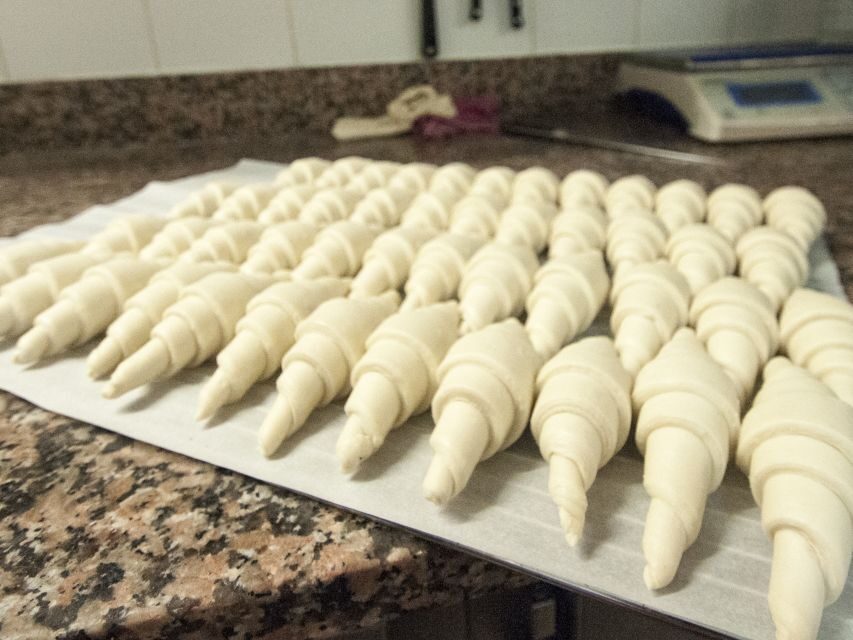
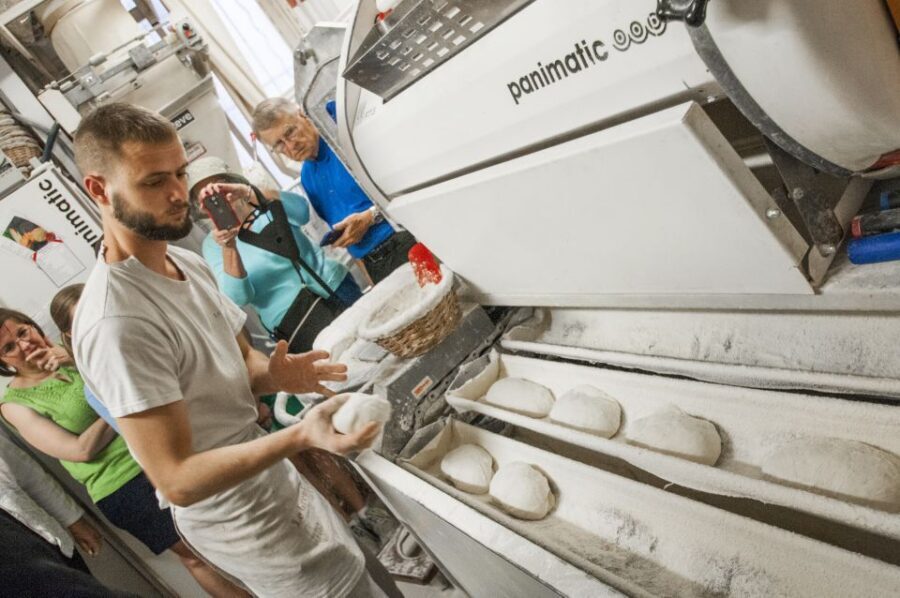
This tour is built around a classic baguette, and it follows the real chain of events. You’ll watch:
- mixing of the dough
- kneading and shaping
- cooking in special baguette ovens
The tour also frames baguette as the heart of French daily life. That context is not just marketing talk. When you see the baker’s steps, you understand why baguette is treated as a daily craft rather than a one-off “event loaf.”
Here’s what you’ll likely pick up fast:
- Kneading and shaping aren’t just technical steps; they affect how the crumb develops and how the crust forms.
- Baking equipment matters. The tour calls out special baguette ovens, which is a clue that crust and heat transfer are part of the craft, not just dough ingredients.
- Freshness is part of the product. A warm baguette tastes and behaves differently than one that’s been sitting.
Then the best timing trick happens. The baguette is made, baked, and brought to the tasting moment when it’s fresh from the oven—warm, aromatic, and at its prime texture.
Tastings: Croissant Plus Other Baked Goods
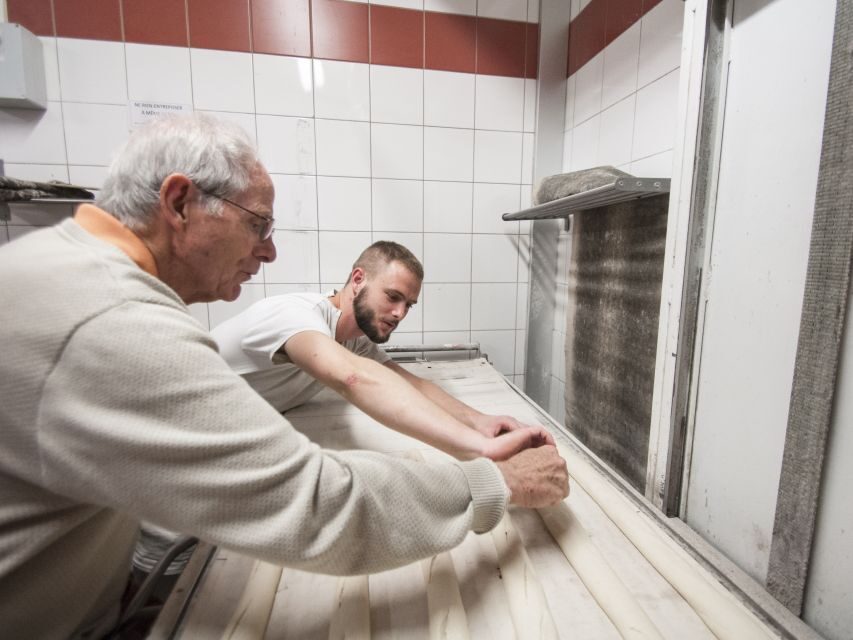
You should expect multiple tastings, not just a single bite. The tour focuses on typical French breads like baguette and also authentic croissants, plus additional baked goods.
The goal is simple: you taste the differences after you’ve seen how the process works. That’s why croissant matters here. Even if you think you know croissant already, it’s a different experience when you’re learning the craft behind it, not just buying one at random.
And when the tour wraps, you don’t go home empty-handed. You’ll receive a goodie bag that includes one free croissant and one free baguette per person.
Practical tip: if you’re taking these on a walk or to a hotel, keep them separate at first. A baguette’s crust stays crisp longer if it isn’t pressed against pastry. You’ll still enjoy them either way, but you’ll get better texture if you treat them like two different products.



The Guide Experience: Small Group, Big Explanations
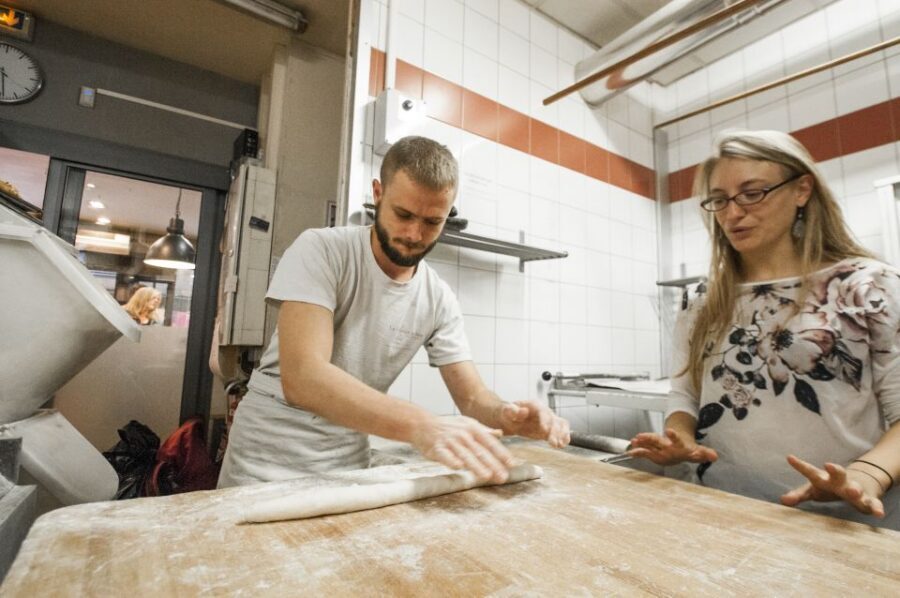
The tour is led by a live guide who speaks French, Japanese, and English, and the format is designed to keep you engaged. In the feedback, guides were praised for both knowledge and charm, and one guide named Louise was specifically highlighted for explaining key aspects and answering questions.
What that tells you as a buyer: this tour is not a silent food walk. It’s structured commentary, with time for interaction. If you enjoy asking questions—about dough handling, baking cues, or why certain pastries are built a certain way—you’ll likely feel your hour was used well.
Also, the tour includes tastings and a goodie bag, which means you’re not stuck only on theory. You leave with both memories and food.
Price and Value: Is $74 for One Hour Worth It?
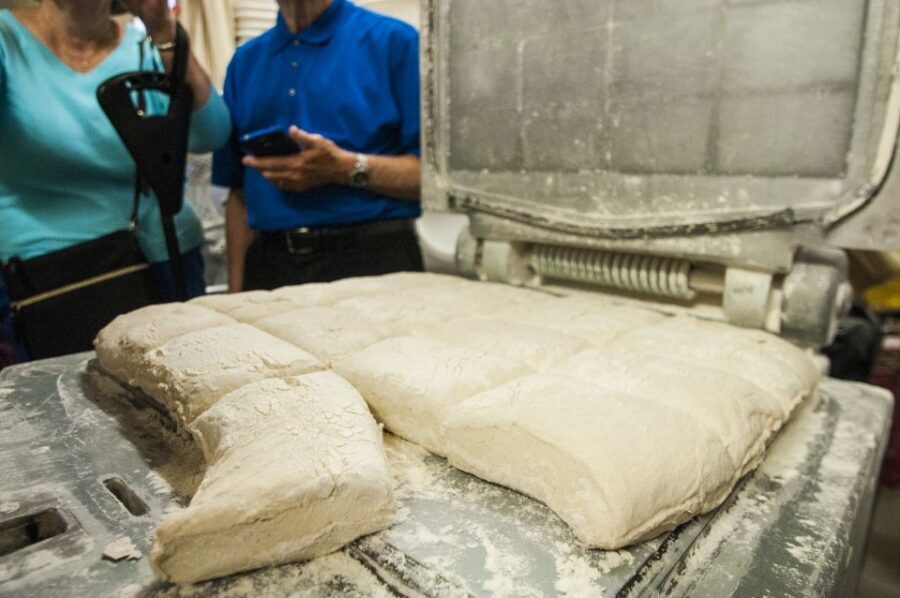
At $74 per person for about 1 hour, the ticket price can feel a bit steep if you’re thinking purely about bread you could buy anywhere. The value comes from what you get that shopping doesn’t provide.
Here’s where the math makes sense:
- You get behind-the-counter access at a working bakery (not just a storefront look).
- You watch a master baker demonstration with step-by-step baguette making.
- You get multiple tastings, including baguette and croissant.
- You take home a goodie bag with a free croissant and baguette per person.
So you’re paying for craft access plus guided context plus food. In other words, it’s closer to a short class with tasting than it is to a standard “sample and leave” experience.
If you’re the type who loves learning how ingredients turn into texture and crust, this will feel like a fair trade. If you’re mostly motivated by quantity of pastries and variety, you may want to compare against longer tours that cover more bread types.
When This Tour Fits You Best (And When It Might Not)
This tour is a great fit if you:
- want authentic technique, not just photo stops
- enjoy baguette and croissant and want to understand why they’re different
- like small groups where you can actually ask questions
- want a practical souvenir: bread you can eat later
It may not be the best fit if:
- you’re hoping for a wider menu of breads beyond baguette
- you’re sensitive to a fast pace (it’s one hour, so it moves)
There’s also a smart strategy: pick a time when you’ll have energy afterward. One guide note suggested an earlier slot can make the day start well. If you’re doing a busy itinerary, schedule this before you’re worn out so you can enjoy the tasting while everything feels fresh.
Making The Most Of Your Hour: Simple Moves Before You Go
To get the most out of this kind of tour, come hungry in a controlled way. You want enough appetite to enjoy tastings, but you don’t want to arrive stuffed from a heavy meal.
Also, be ready to follow the bread-making sequence. The tour structure matters: once you understand the order (mix → handle → shape → bake → taste), you’ll connect the learning to what you’re eating.
If you’re bringing kids or traveling as a family, one guide note mentioned that a baker was friendly and let children participate in some processes. If that matters to you, let the operator know when you book so expectations are clear.
Should You Book This Paris Bakery Tour?
Book it if you want a short, focused experience that teaches you how a real French bakery works and leaves you with both tasting memories and takeaway bread. The small group format, the behind-the-counter access, and the fresh-from-the-oven baguette element are the big reasons to choose it.
Skip it (or at least set your expectations) if you want a broad pastry buffet. This one centers on baguette-making and croissant, and it’s designed to go deep rather than wide.
If you’re deciding right now, ask yourself one question: do you care more about craft and process, or more about variety? For craft-and-process lovers, this tour is a strong pick.
FAQ
What is the meeting point for the tour?
The tour starts at Le Grenier à Pain, 127 Rue Caulaincourt, 75018 Paris. There are multiple bakeries with this name, so double-check the street address.
How long is the Paris Bakery Tour?
It runs for 1 hour. Starting times vary, so you’ll want to check availability for the schedule.
What size is the group?
This is a small group limited to 8 participants.
What languages are offered?
The live tour guide offers French, Japanese, and English.
What food is included?
Tastings are included, with a focus on typical French breads like baguette and authentic croissants, plus other baked goods.
Do I get anything to take home?
Yes. You receive a goodie bag that includes one free croissant and one baguette per person.
Will I be allowed behind the counter?
Yes. The tour includes a select few going behind the counter of a typical French boulangerie.
Where does the tour end?
The activity ends back at the meeting point.
What is the cancellation policy?
You can cancel up to 24 hours in advance for a full refund.
FAQ
Can I reserve without paying right away?
Yes. The booking allows you to reserve now and pay later.