REVIEW · PARIS
Paris City Center w/ Notre Dame interior | Exclusive Walking Tour
Book on Viator →Operated by Babylon Tours Paris · Bookable on Viator
Paris feels doable when it’s planned.
This private walking tour links Île de la Cité to the Tuileries, hitting major landmarks with a human pace (not a herd). I like that the story is guided by real people with great energy, including names like Eden and Adrien, so you’re not just reading plaques. Notre-Dame interior is also included, and after the 2019 fire you’ll be oriented to what you’re seeing and why it matters.
What I really like: you get a tight route that mixes big-ticket sites with the everyday “how Paris works” details—Pont Neuf, Place Dauphine, and the Fontaine Saint-Michel. You also get strong context for the Gothic era and the Revolutionary era, not just dates, so the city makes sense as you walk. One consideration: Notre-Dame’s interior visit is unguided due to regulations, and some other major stops (like Sainte-Chapelle and the Louvre) list admission as not included.
If you want a guided, inside-everywhere museum day, this may feel a bit like a greatest-hits history walk. Still, for orientation plus smart pacing, it’s a very solid use of a morning or early afternoon.
In This Review
- Key things I’d circle before you go
- Why this Notre-Dame to Concorde walk works so well
- Starting on Île de la Cité: where Paris began
- Notre-Dame interior access and what to expect inside
- Palais de Justice, Sainte-Chapelle, and Conciergerie: Gothic to courtroom to prison
- Fontaine Saint-Michel and Place Dauphine: the calmer Paris moments
- Pont Neuf, Henri IV statue, and Pont des Arts: learning the Seine as a timeline
- The Louvre area without the all-day commitment
- Palais-Royal and Tuileries Gardens: where the pace slows on purpose
- Place de la Concorde: finishing with the Revolution’s footprint
- What it’s like on the ground: pace, weather, and comfort
- Price and value: is $59.69 a smart deal?
- Who should book this walking tour
- Should you book it?
- FAQ
- How long is the Notre-Dame to Concorde walking tour?
- Is this tour private?
- Is the Notre-Dame Cathedral interior included?
- Are tickets included for Sainte-Chapelle, the Louvre, or the Palais-Royal?
- Does the tour run in bad weather?
- Where does the tour start and end?
- Is the tour offered in English?
- Do I need to provide a phone number?
- What is the cancellation policy?
Key things I’d circle before you go
- Private pace that protects your comfort: the tour is designed to avoid the worst crush by setting the rhythm for your group.
- Free Notre-Dame entry, but guided time is limited: you go inside, yet the interior is unguided.
- Seine bridges in sequence: Pont Neuf, the statue of Henri IV, and Pont des Arts help you connect the city’s “old Paris” layers.
- Revolution-era stops aren’t skipped: Place de la Concorde is the end point, tied to the guillotine history along the way.
- Art + palace gardens without a full museum marathon: the Louvre area and Palais-Royal/Tuileries give you variety in under three hours.
- It runs rain or shine: you’ll just dress for weather and keep your shoes comfortable.
Why this Notre-Dame to Concorde walk works so well

This route is a smart choice if you want a high-density tour without feeling rushed every 30 seconds. In about 2.5 hours, you cover the kind of “Paris postcard” sights that usually take a whole day if you do them solo, with a guide to explain how they connect.
The other win is pacing. This is a private walking tour, so you’re not glued to a fast-moving group while you try to read stone carvings. If you like asking questions—about restoration work, Gothic design, or why the city layouts are the way they are—this style tends to be the least stressful way to get answers.
You can also read our reviews of more tours and experiences in Paris.



Starting on Île de la Cité: where Paris began
You start on Île de la Cité, Paris’ oldest settled area. Your guide sets the scene by connecting today’s Paris to Lutetia, the earlier Roman city that came before the modern capital grew outward.
This start matters because you’re not walking randomly. You’re beginning where the city’s identity formed, then moving outward in a logical arc toward the Louvre and the grand boulevards. It’s one of the easiest ways to build a mental map fast.
Notre-Dame interior access and what to expect inside
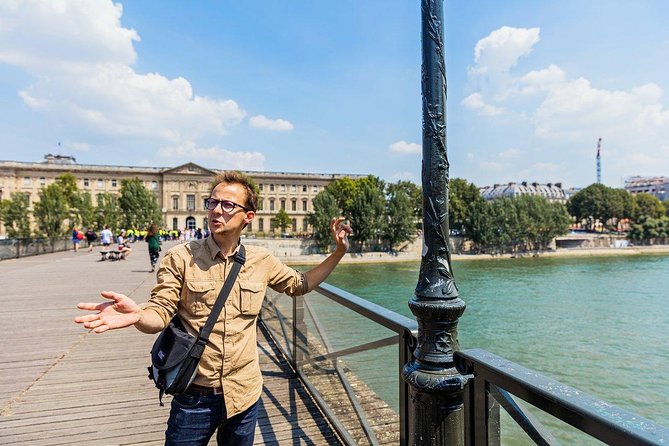
Notre-Dame Cathedral is the big anchor, starting with the exterior and then an interior visit. The tour includes entry, but the interior experience is unguided because of regulations—so your guide isn’t doing a step-by-step narration the whole time.
What that means for you in practice:
- You’ll still get the main historical overview before you go in.
- Once inside, you’ll move at your own pace, and you can spend longer on the details you care about most.
- Since the cathedral was restored after the 2019 fire, your time there will feel more meaningful if you pay attention to what’s different now versus what used to be lost.
If you like design, the Gothic language here is a major reason people fall hard for Notre-Dame. It’s also why guides who are animated and enthusiastic—like Eden and Francois, based on past tours—tend to be such a big part of the experience.
Palais de Justice, Sainte-Chapelle, and Conciergerie: Gothic to courtroom to prison
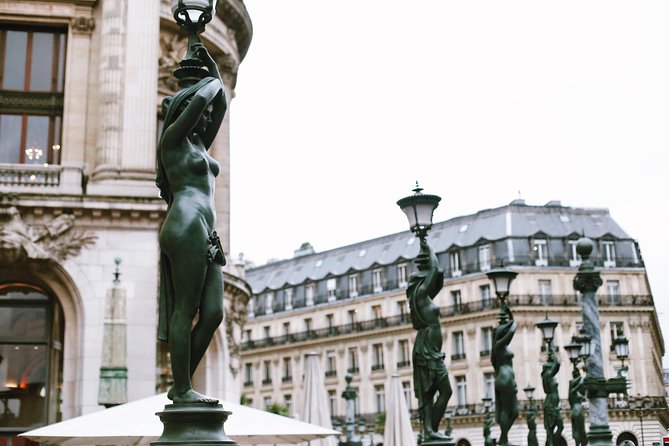
After Notre-Dame, you move through the legal and religious power center of the island. The Palais de Justice (also known as the Palais de la Cité) is part of the story of old Paris—some of the buildings in that complex are among the oldest surviving structures in the area.
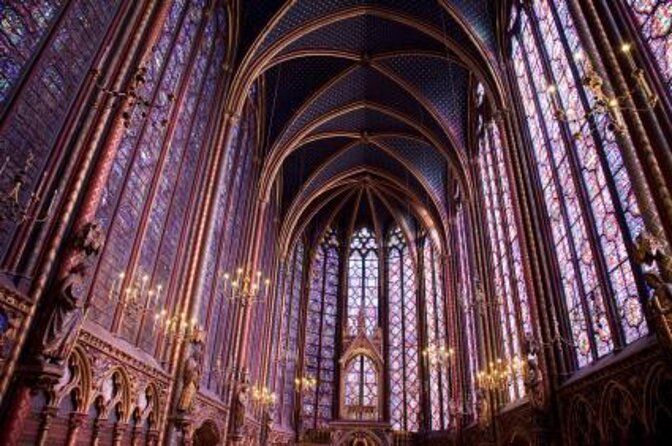
Then comes Sainte-Chapelle. It’s a Gothic standout, and the key detail your guide will tie into the visit is that it was built in seven years to house important Christian relics, including Christ’s crown of thorns, linked to Saint Louis.
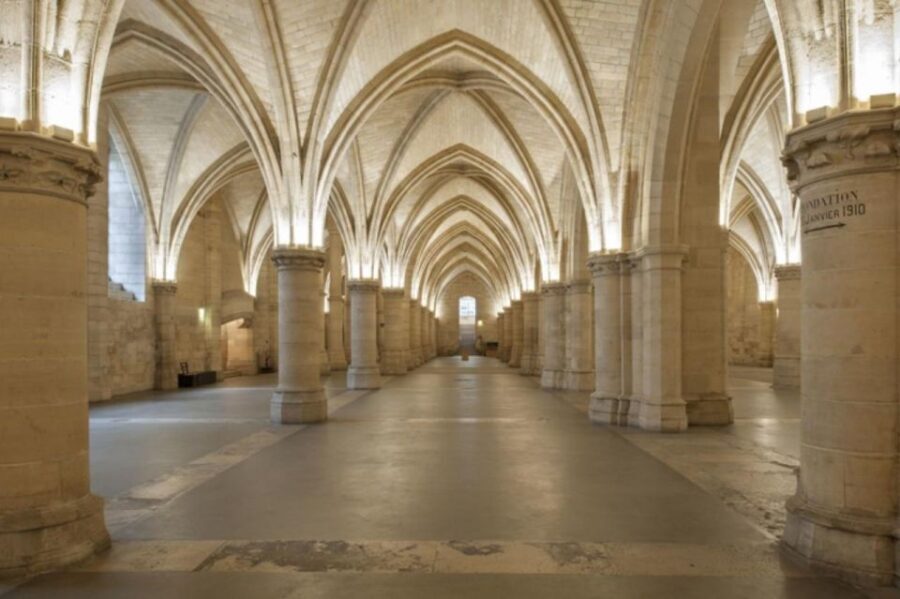
Next you’ll reach the Conciergerie. This is where “Paris beauty meets Paris darkness” really lands. It’s the oldest remaining portion of the Palais de la Cité and once served as a notorious prison, holding more than a thousand people labeled as enemies of the Revolution. Even if you don’t spend long here, the explanation gives the building a heavy, real context instead of turning it into just another pretty facade.
One practical point: admission is not included for Sainte-Chapelle and the Conciergerie. So plan on viewing and learning through your guide’s narration rather than expecting every interior ticketed stop to be covered.
Fontaine Saint-Michel and Place Dauphine: the calmer Paris moments
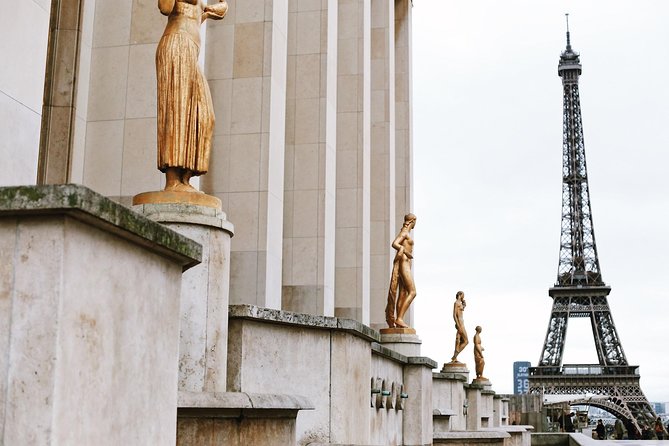
Between the major monuments, the tour gives you breaks that keep the walk from feeling like a checklist. You’ll pass the Fontaine Saint-Michel, a Haussmann-era monumental fountain commissioned under Napoleon III. The sculptural theme of archangel Michael vanquishing the Devil gives you a quick moral contrast that fits the rest of the day’s storytelling.
Then you’ll see Place Dauphine, a historic square at the western tip of Île de la Cité. It was one of the early projects commissioned by Henri IV, and it’s a good spot to regroup—look at the facades, notice the scale of the open space, and let the guide’s historical points settle before you head to the river.



Pont Neuf, Henri IV statue, and Pont des Arts: learning the Seine as a timeline
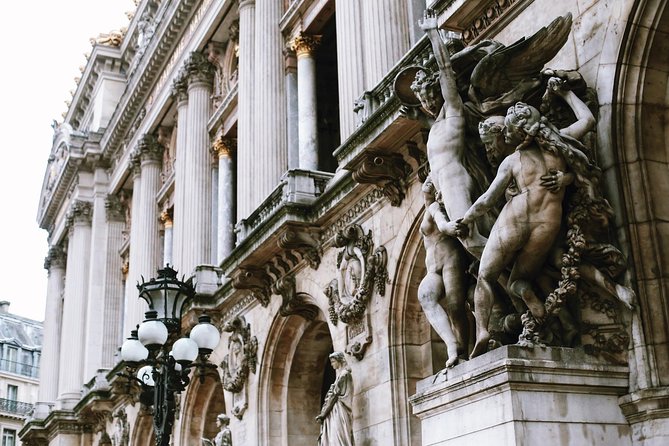
Crossing Pont Neuf is a turning point in the walk. The bridge is considered the oldest stone bridge in Paris, and your guide will frame it within the Seine’s UNESCO-listed banks—so you understand why this stretch matters beyond the photos.
In the middle you’ll see the equestrian statue of Henri IV. The current statue is a replica placed where the original stood, and the reason the present version exists ties directly into what happened during the French Revolution.
Before the Louvre area, you’ll also pass Pont des Arts, a bridge linking the Institut de France and the Louvre. It was built between 1801 and 1804 and is described as the first iron bridge in Paris. That detail is a perfect example of how this tour teaches: you don’t just see architecture—you learn what changed in technology and design when Paris modernized.
The Louvre area without the all-day commitment
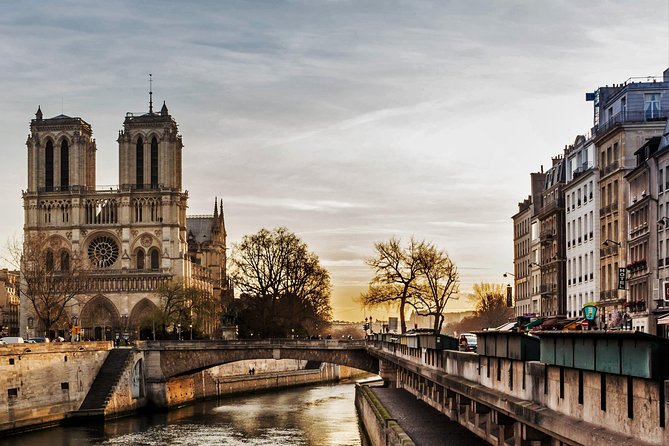
The tour heads toward the Louvre Museum, one of the world’s most visited museums. You’ll move through key exterior points like the Cour Carrée and see the Louvre Pyramid, designed by I. M. Pei.
Here’s the balance: admission for the Louvre is not included, so this part is more about orientation than full gallery time. If you want to go deep into the collection, you’ll need a separate plan and ticket. But as a first-pass experience, the sightlines and architectural cues help you understand how the Louvre fits into Paris’ royal and civic story.
This is also a good time to ask your guide a question about what you should prioritize later. Even if you don’t enter, you can walk away with a clearer game plan for the museum day you’ll do on your own.
Palais-Royal and Tuileries Gardens: where the pace slows on purpose
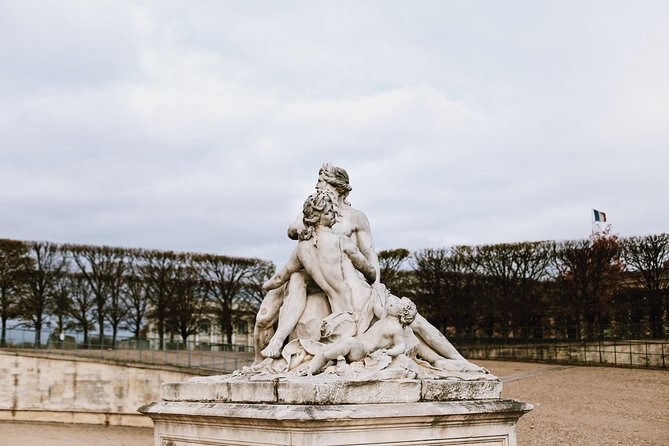
After the Louvre edge, you’ll walk toward the Palais-Royal complex and its gardens. The tour highlights that it was created under Cardinal Richelieu in 1633 and that it served as a home for royal families before Versailles took over. Around this area, your tour shifts from landmark power to city life—open space, strolling, and the “Paris after the monument” feeling.
The fountains, paths, and garden setting here help you cool down from the main sights. You’ll also get a note about modern touches in the space, including contemporary sculptures in the surrounding garden area.
Then you enter the Tuileries Gardens. These are described as the oldest park in Paris with history dating back to the 17th century. Even if you’re not a garden person, this stop is useful because it changes your visual rhythm. After stone and steel bridges, it’s a breather.
There’s even a bookstore stop in the gardens. It’s the kind of small detail that makes the walk feel lived-in instead of strictly monumental.
Place de la Concorde: finishing with the Revolution’s footprint
You end at Place de la Concorde, a major square with an execution-site past tied to the French Revolution. It’s also the start point for the Champs-Élysées, so finishing here naturally hands you a route toward even more sightseeing.
This end point is smart because it gives you emotional closure to the day. Early Paris power, then Gothic faith and relics, then legal and prison history, then Revolution-era consequences, and finally the grand boulevard that became part of modern Paris’ public face.
If you’re thinking about the big picture, your guide’s framing helps you see how one era’s power structures became the next era’s tourist landmarks.
What it’s like on the ground: pace, weather, and comfort
This tour runs in all weather conditions, rain or shine. That’s a big deal in Paris because weather can change fast, and you still need a strategy for your day.
Expect a walking pace that works for moderate fitness. It’s not presented as a strenuous hike, but it is a true walk with multiple stops, and some people like to plan a lighter afternoon afterward.
A few practical notes that matter:
- No large bags or suitcases are allowed.
- Bring comfortable shoes and a bottle of water.
- Use an umbrella if rain is in the forecast, and a hat in summer.
One more small thing: the tour route may be affected by national celebrations, and the operator notes you’ll get an alternate route that still covers the highlights. If that happens, plan to be flexible rather than expecting every exact corner.
Price and value: is $59.69 a smart deal?
At $59.69 per person for about 2.5 hours, the value depends on what you’re trying to get out of the day. This isn’t priced like a museum-heavy experience where everything is ticketed for you. Instead, it’s priced for guided orientation plus a path that ties major sights together in one logical flow.
What makes it feel like good value:
- It’s a private walking tour with your own guide for the full time.
- Notre-Dame interior entry is included, and entry is described as free and open to all, even though it’s unguided once inside.
- Many stops are free to view from the outside, so you’re buying context and time, not stacking admissions.
What can reduce the “all-in” feel: entry is not included for places like the Louvre, Sainte-Chapelle, and the Palais-Royal gardens area (as listed for admission). If you want lots of interior time at multiple paid sites, you’ll likely spend more on tickets separately.
Still, if you want the city to make sense fast, this is one of those tours where you can see a lot and then decide later what deserves a second visit.
Who should book this walking tour
This tour is a great match if you want:
- A history-focused walk that connects neighborhoods and monuments into one story
- A paced, private experience (instead of getting swept along in crowds)
- A way to see Notre-Dame and the core sights around the Seine without committing an entire day right away
It also fits families and mixed-age groups well, based on how guides have handled participants ranging from kids to adults, with guides like Georgia and Augustine praised for keeping the narration clear and engaging.
If you’re the type who prefers long museum hours with lots of time inside, you might find the paid-entry stops too short. But for many first-timers, it’s the perfect way to set your bearings.
Should you book it?
I’d book this if your priority is understanding Paris quickly and walking a clean, well-connected route. The private pace is a real comfort upgrade, and the stops hit the places you’ll keep seeing again later—Île de la Cité, Pont Neuf, the Louvre area, the Tuileries, and Place de la Concorde.
I’d think twice if you want a fully guided, inside-everywhere day with no extra tickets. Notre-Dame interior is included but unguided, and several other admissions are not included, so you’ll still need separate planning if you want more interior time.
If you’re trying to choose one “smart morning/early afternoon” tour that reduces stress and boosts clarity, this one is a strong pick—and it’s hard to beat the value of getting a guided route through Paris’ core story in just a few hours.
FAQ
How long is the Notre-Dame to Concorde walking tour?
It runs about 2 hours 40 minutes, roughly 2.5 hours.
Is this tour private?
Yes. It’s a private walking tour, so only your group participates. (There is also a semi-private option mentioned, but the private version is guide-exclusive.)
Is the Notre-Dame Cathedral interior included?
Yes, the interior visit is included, but it is unguided due to regulations. Entry to Notre-Dame is free and open to all.
Are tickets included for Sainte-Chapelle, the Louvre, or the Palais-Royal?
Admission is listed as not included for several sites, including Sainte-Chapelle, Conciergerie, the Louvre, and the Palais-Royal area. You should plan on purchasing any needed entry separately if you want to go inside.
Does the tour run in bad weather?
Yes. The tour runs rain or shine, so dress appropriately and bring gear like an umbrella if needed.
Where does the tour start and end?
It starts at Cité75004 Paris, France, and ends at Place de la Concorde (Pl. de la Concorde, 75008 Paris, France).
Is the tour offered in English?
Yes, it’s offered in English.
Do I need to provide a phone number?
Yes. You must provide a mobile phone number, including your country code.
What is the cancellation policy?
You can cancel for a full refund up to 24 hours in advance of the experience start time. If you cancel less than 24 hours before, the amount paid is not refunded.