REVIEW · PARIS
Paris: Discovery Hop-On Hop-Off and Paris by Night Tour
Book on GetYourGuide →Operated by Tootbus · Bookable on GetYourGuide
Paris can be a lot.
This tour helps you see the highlights without committing to a fixed walking day. I like the hop-on hop-off freedom for building your own day, and I really value the 2-hour Paris by Night ride for seeing monuments lit up from the top deck. One thing to keep in mind: the day portion can feel slow if you get stuck in traffic or at long stops.
If you want a smooth first look at Paris, this is a solid choice. I also like that you get adult and kids audio plus individual earphones, and you can track buses with the app’s where is my bus feature. The trade-off is the audio can feel a bit uneven in tone, so you’ll want to stay focused on the sights even when the jokes aren’t landing.
In This Review
- Key things I’d mark on your map
- What this tour actually feels like in real Paris time
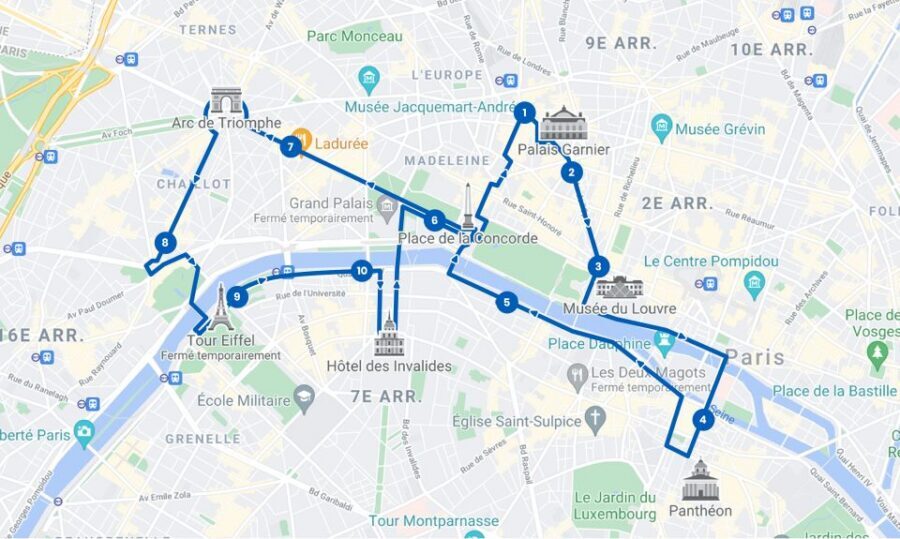
- Day route basics: Blue Line, major monuments, and how to use it
- Stop-by-stop: what you can actually do at each landmark
- Audio guide reality: languages are great, but tone varies
- The night tour: why the 2 hours matters more than you’d think
- The themed walking tours: small extras that make the day tour feel like more
- Price and time value: what $65 buys you
- Who should book this tour (and who might skip it)
- Should you book it? My decision checklist
- FAQ
- Where does the hop-on hop-off day tour start?
- Do I have to start at the meeting point listed on the ticket?
- How long is the Paris by Night tour?
- Where does the night tour depart from?
- What languages are available for the audio guide?
- Is there audio for children?
- Are individual earphones included?
- How do child tickets work?
- Are the buses wheelchair accessible?
Key things I’d mark on your map
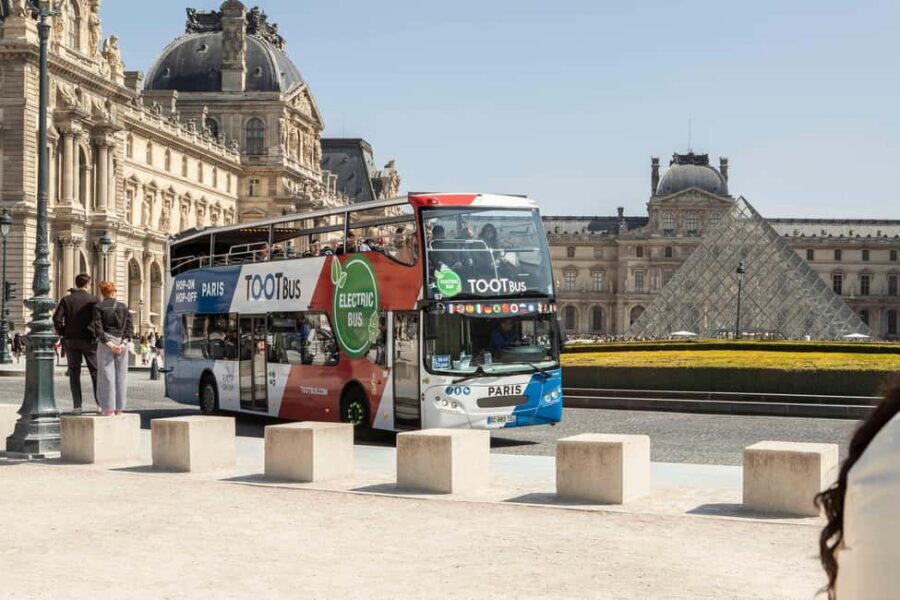
- Unlimited hop-on hop-off day stops on the Blue Line, from Opéra area to the Eiffel and Invalides zone
- A 2-hour night tour past illuminated landmarks with top-deck views designed for the Eiffel area experience
- Audio in 10 languages, with children’s audio in English and French via individual earphones
- Mobile app bus tracking so you’re not guessing at wait times
- Neighborhood access by walking from stops like Latin Quarter and the Marais, plus themed walking routes such as Emily, Fashion, Montmartre, and around the Eiffel Tower
- Plan for the Louvre stop relocation near Comédie-Française (temporary change until further notice)
What this tour actually feels like in real Paris time
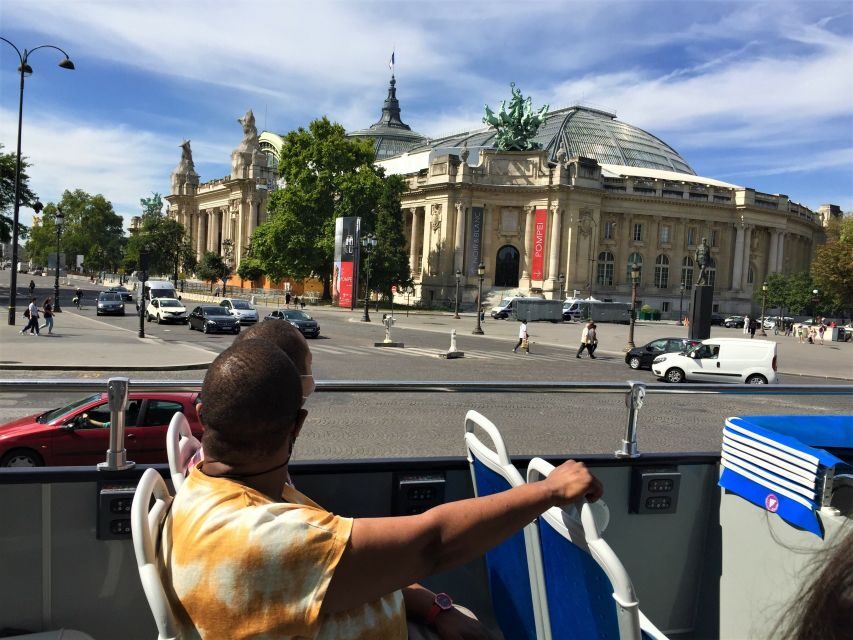
Think of this as two different experiences glued together: a flexible sightseeing day and a timed, nighttime “greatest hits” loop. During the day, you ride past major landmarks, then hop off when a street looks worth exploring. At night, you stay on the bus and watch Paris glow—less walking, more views.
In practice, the value comes from choice. If you’re tired after a museum, you can skip the next stop and wait for the next bus. If you’re energized, you can hop off near Notre-Dame and walk the Latin Quarter, or jump off toward the river and linger around Orsay and the bridges.
I’d treat it like a base layer for your trip: use the bus to get bearings fast, then use your next day(s) for deeper visits. That’s where this kind of pass pays off.
You can also read our reviews of more evening experiences in Paris



Day route basics: Blue Line, major monuments, and how to use it
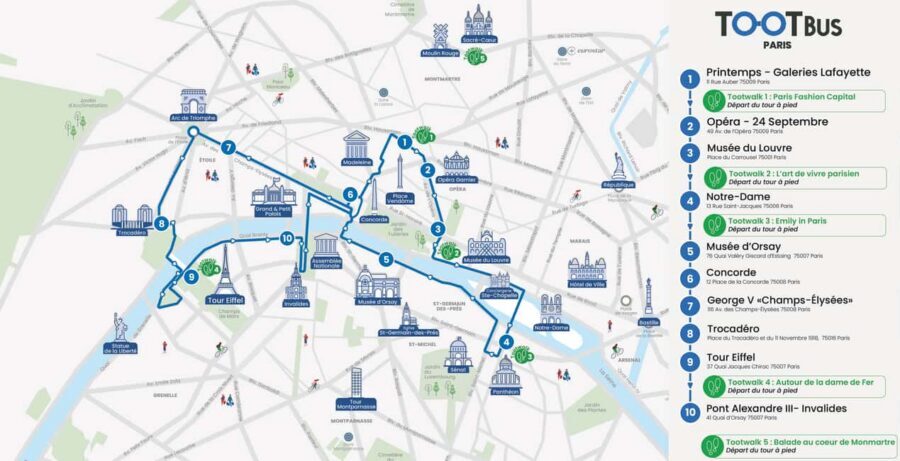
The hop-on hop-off route centers on Paris’s big, photo-friendly landmarks, and it’s structured around areas that make sense to walk from. Your starting point is 23 Bd des Capucines (Opéra/Grands Magasins). But you don’t have to start there—you can redeem and start at designated stops along the route.
Here’s the practical way I’d use it:
- Ride first to spot what you want to see up close.
- Hop off for the one or two big blocks of walking you care about most.
- When you’ve hit your walking limit, re-board and let the bus move you to the next area.
The bus service runs frequently, and the headways tighten in summer. Approximate service windows are seasonal, but you can expect first departures around 9:30 AM from stop 1, then later last departures depending on the period. Buses come about every 10–15 minutes (and roughly 7–10 minutes in peak summer). That frequency matters because it reduces the “I’m stuck waiting” feeling—especially when you’re moving between the Louvre/river side and the Eiffel/Invalides side.
Two practical notes that can save time:
- Traffic is real. Paris roads can slow buses, so plan your stops with flexibility, not with the precision of a train schedule.
- The Louvre stop can be temporarily relocated. Instead of the standard Place du Carrousel area, the stop is listed as near Comédie-Française at 3 Avenue de l’Opera until further notice. Check your current stop details so you don’t walk in the wrong direction.
Stop-by-stop: what you can actually do at each landmark
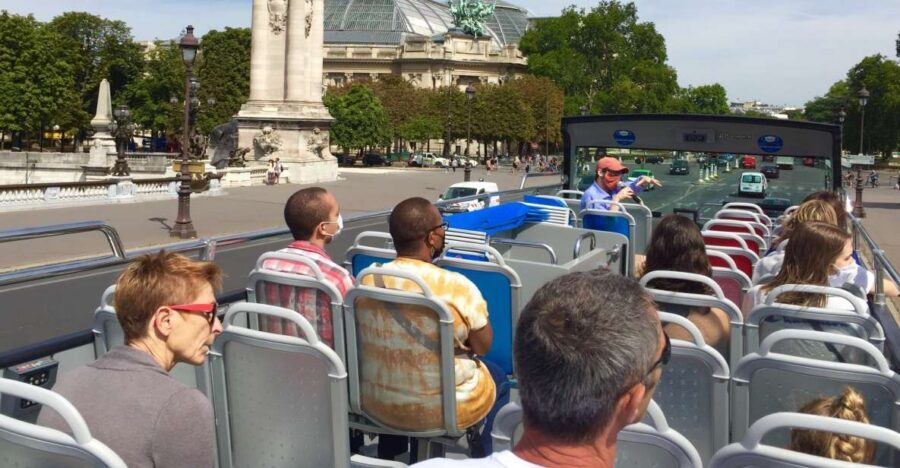
This route is designed for “ride past, then get off to explore.” Here’s how each stop helps you, plus what to watch for.
Opéra / Grands Magasins (Bd des Capucines)
This is a great warm-up stop. You’re close to major shopping streets and easy connections into central Paris. If you like starting your day near landmarks that feel lively and practical, this works well.
Tip: If you’re heading to the Louvre later, consider doing a ride segment first so you understand where the Seine crossings and walking routes line up.
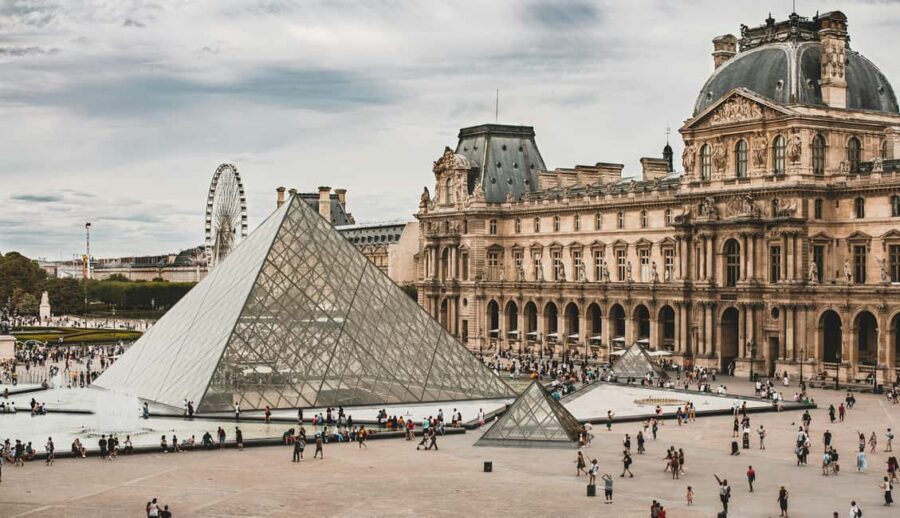
Louvre area (Place du Carrousel / Comédie-Française relocation)
The Louvre stop is the doorway to museum-level Paris. Even if you’re not going inside, the surrounding blocks are full of walkable sights and open plaza views.
What to consider: Because the listed stop location can shift (near Comédie-Française temporarily), don’t assume a single fixed bus stop. Use the app feature to spot where the bus is, especially if you’re returning after hopping off.
Notre-Dame (Rue Saint-Jacques)
This stop is the shortcut to the cathedral area and the streets that feel like classic Paris neighborhoods. From here, you can walk toward the river, browse small streets, and soak up the atmosphere without needing a long transit plan.
What to consider: Notre-Dame-area walks can be crowded, and the best photo angles may require walking a bit. If you’re on a tight schedule, hop off, grab your key sights, and then use the next bus segment to reposition.
Panthéon / Luxembourg (Place Edmond Rostand)
This is a different vibe than the grand central monuments. It’s closer to intellectual Paris energy—university-adjacent, with a calmer feel than the busiest tourist corridors.
Tip: If you want a change of pace from heavy sightseeing, this stop can be your “slow down” moment.
Musée d’Orsay (Quai Valéry Giscard D’Estaing)
Orsay is perfect for river-side walking. Even if you don’t enter, the views and the nearby bridges make this one of the most satisfying “just walk around” stops.
What to consider: This is a popular museum area. If you want photos without crowds, you may need to time your hop-off slightly earlier or be comfortable moving through busy sidewalks.
Place de la Concorde (Place de la Concorde)
Concorde is a big, open square—useful for getting a sense of how Paris’s grand axes connect different neighborhoods. It also helps you orient yourself before heading toward the Champs-Élysées and Arc side.
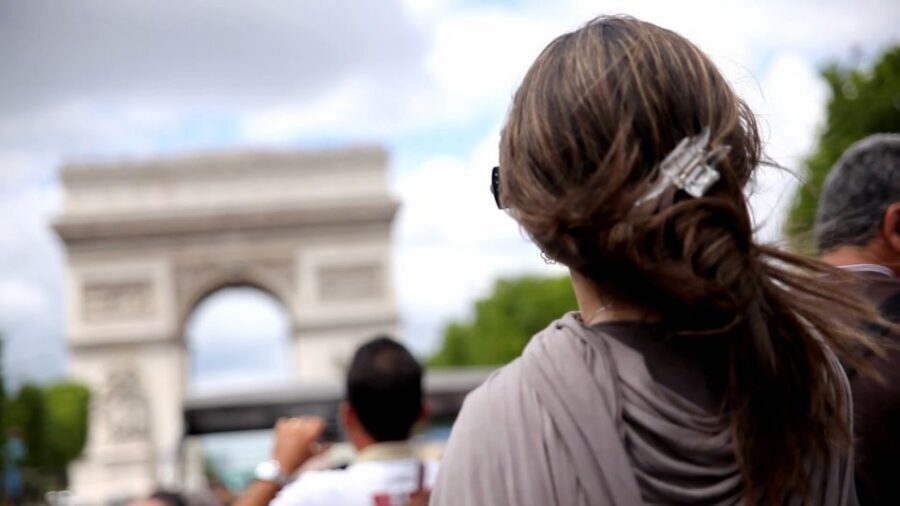
Arc / Champs-Élysées (Avenue des Champs-Élysées)
This is the “Paris postcard boulevard” stop. It’s not subtle, but it’s effective. You’ll get the scale of the city’s grand boulevards fast, and you can pick how far you want to go on foot.
Tip: If shopping or wide pedestrian streets are your thing, spend more time here. If you prefer quieter lanes, hop off briefly, then return to the bus to move toward the Eiffel/Trocadéro side.
Trocadéro (Place du Trocadéro)
This stop sets you up for the Eiffel Tower from a different perspective. The area is famous for views back toward the tower, and it’s one of the best places to pause for photos.
What to consider: This is a high-demand photo zone. Expect crowds. Your best strategy is short, focused photo time, then reposition.
Eiffel Tower (Quai Jacques Chirac)
This is the primary Eiffel access stop. Great for viewpoints, photo ops, and the general “I’m actually here” moment.
Tip: If the goal is seeing the lights, keep your re-boarding timing flexible so you end up in the right place at the right moment.
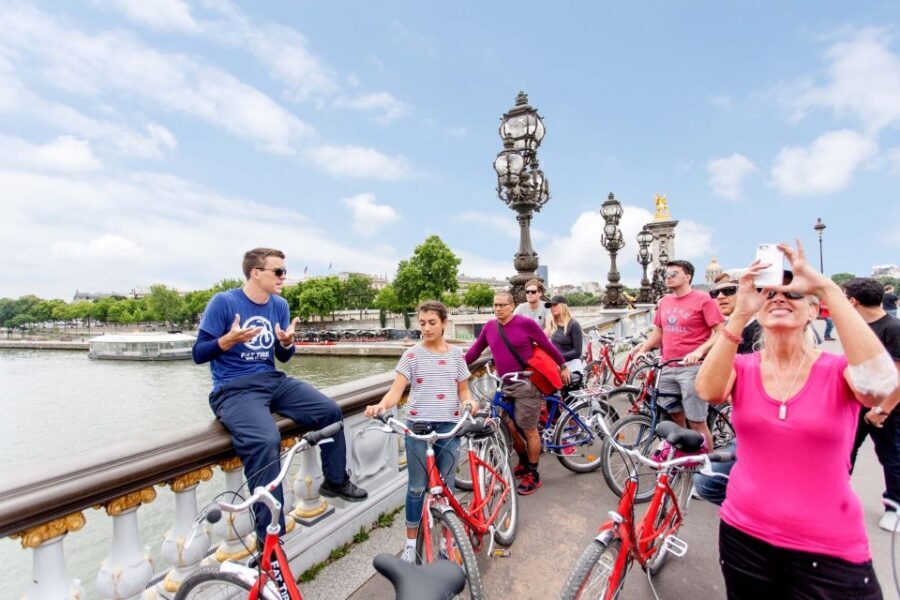
Pont Alexandre III / Invalides (Quai d’Orsay)
This is a strong finale stop because it connects you to the river’s grand bridge views and toward Invalides. It’s a good “wrap-up” zone for your day because you can walk a bit and then finish without feeling like you’re rushing back to the center.
Audio guide reality: languages are great, but tone varies
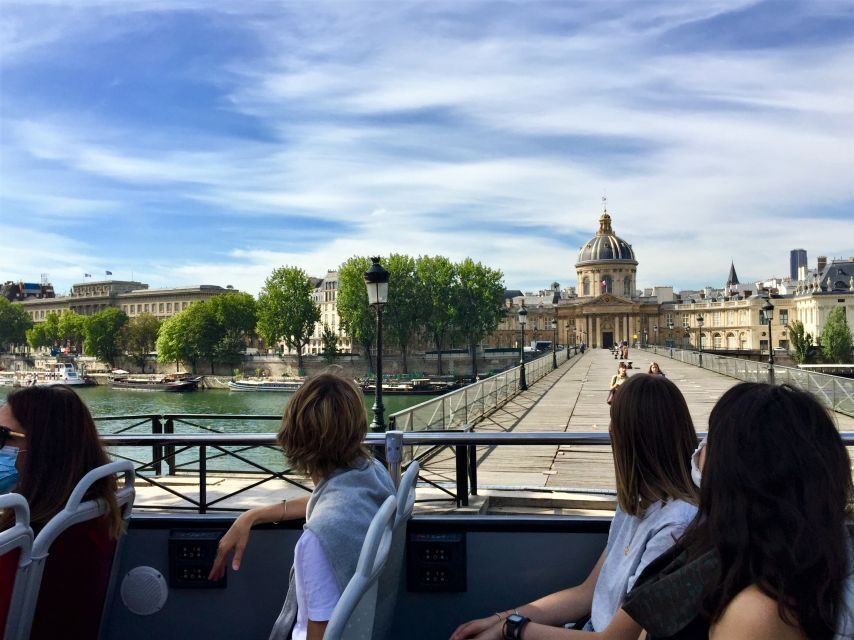
The audio guide is delivered via individual earphones, which is a big deal on noisy streets. You get multiple languages, including Spanish, Chinese, English, French, German, Italian, Japanese, Arabic, Portuguese, and Russian. That means you can actually follow along instead of just enjoying blurry landmark names as scenery passes by.
For kids, there’s a separate children’s audio option available in English and French. If you’re traveling with younger ones, this can turn the ride from “boring car time” into something they’ll tolerate (and maybe even remember).
Now the balanced part: the audio experience can be uneven in style. Some commentary is more playful than strictly historical, and in certain cases it can feel repetitive across day and night. My advice is simple: use the audio as a helpful guide, but don’t make it your only source of context. If you’re the type who wants deep historical detail, pair the bus with one or two focused museum stops later.
If you’re sensitive to that tone shift, keep a light plan. For example, let the bus do orientation and route context, then use your own walking to slow down where you care most.
The night tour: why the 2 hours matters more than you’d think
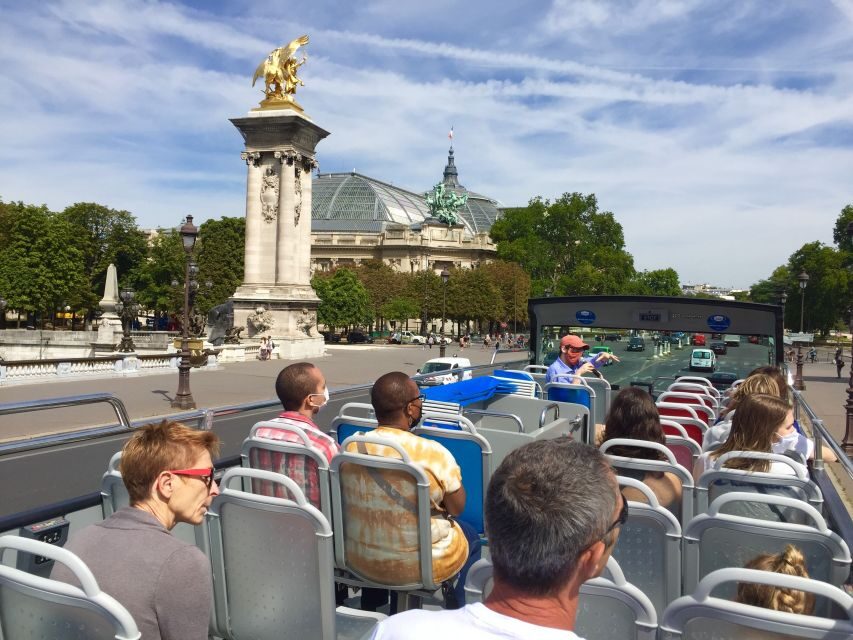
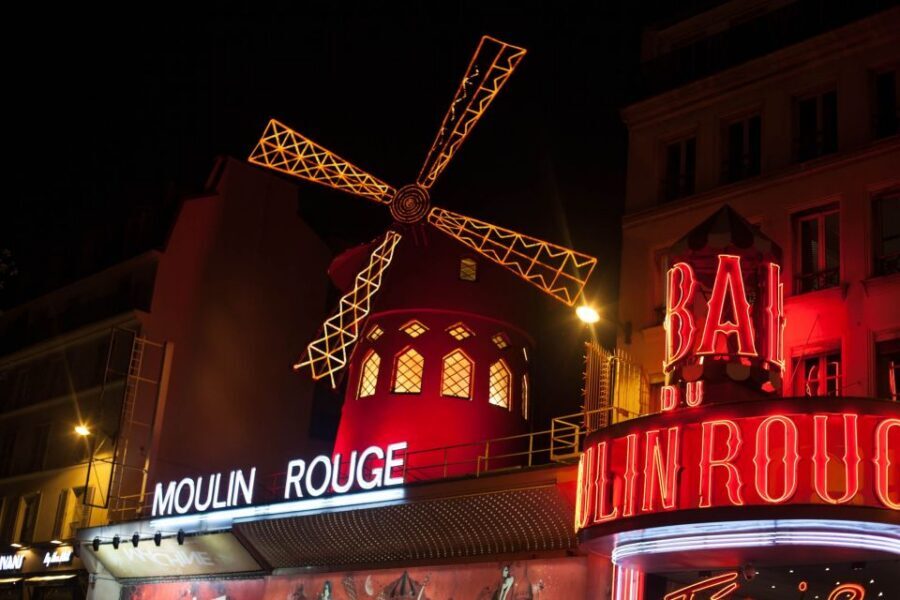
The Paris by Night part is a dedicated ride designed around illuminated landmarks. It runs for about 2 hours on an open-top bus, so you get those classic rooftop views and wide angles that you usually can’t match from street level.
The night departure is from Place du Carrousel du Louvre (stop 2). Your e-ticket shows the departure time, and it’s smart to arrive about 20 minutes early so you’re not hunting for the correct bus in the dark.
What I like about this format is that it reduces the common Paris-night problem: everyone wants to stop for photos, and the city keeps moving. Here, you’re carried along the main sights in a controlled time window. You can focus on watching Paris light up instead of spending your evening navigating crowds and transit.
If your goal is the Eiffel Tower in lights, this timing-based approach can be a lifesaver. You’re not guessing when to show up at the viewpoints—you’re on the route meant to bring you through the city’s illuminated highlights.
What to consider: Night air can be chilly, and open-top means you’ll feel the weather more. Bring something light you can throw on quickly when the temperature drops.




The themed walking tours: small extras that make the day tour feel like more
The hop-on day pass isn’t only about riding. Included are five walking tours, with themes such as Around the Eiffel Tower, Emily, Fashion, and Montmartre (plus another theme that isn’t named in the info you have here).
Even if you don’t follow any of the pop-culture themes, I still think these help. They turn the route into a guided wandering plan, so you don’t feel stuck asking yourself where to go next once you hop off.
This is also a good way to sample different parts of Paris with less decision fatigue:
- If you want viewpoints and iconic streets, you choose the Eiffel-themed walk.
- If you want a story-based route that nudges you to specific streets, the Emily and Fashion options can help.
- If you want a hillside neighborhood feel, Montmartre is one of the best “switch gears” choices.
Price and time value: what $65 buys you
At about $65 per person, this package is strongest when you use both halves: the hop-on day route and the 2-hour night loop. If you only use the daytime ride, you might feel like it’s expensive for a panoramic bus experience. If you use the night portion too, the value shifts a lot, because that second experience is time-based and designed around a specific evening highlight.
Also, the ticket validity is listed as 1–3 days, which is useful if you’re staying more than one night and want a “plan B” day. You can re-ride the hop-on network as your schedule changes—especially handy when museum lines, weather, or your own energy levels don’t cooperate.
One thing to watch: your ticket is valid only on the date booked, so it’s not a flexible “use anytime later” product. For most people, that’s fine. It just means you should pick the day you’re most likely to build around the hop-on rhythm.
Who should book this tour (and who might skip it)
This is a good fit if:
- You want an easy way to see major landmarks like Eiffel Tower, Notre-Dame, and the Louvre area without building a complicated transit map.
- You like flexible pacing—ride when you’re tired, hop off when you spot something you want to walk.
- You’re traveling with kids and want a children’s audio track to keep attention during the ride.
- You’re using the first day (or first evening) to orient yourself.
It might not be the best fit if:
- You’re expecting nonstop, deep historical storytelling from every minute of audio.
- You hate any chance of waiting and you’re the kind of person who wants museum-grade timing. The day portion can be slowed by traffic and stop durations, even with frequent buses.
Should you book it? My decision checklist
Book it if you want a practical Paris routine: ride to orient yourself, hop off for the neighborhoods you care about, then cap it with a lit-up night loop. This is especially convincing if you’re doing only a short visit and want to maximize the “first impression” without burning energy.
I’d pass or adjust expectations if you’re hard on audio quality or you want strict historical depth at bus speed. In that case, treat the audio as a light companion and rely more on your walking plan and the sights you choose to stop for.
Either way, you’ll benefit most by planning your hops with flexibility—ride early, decide fast, and save the must-sees for when you’re ready to slow down on foot.
FAQ
Where does the hop-on hop-off day tour start?
The starting point listed is 23 Bd des Capucines (Opéra/Grands Magasins), but you can redeem your ticket and start at any designated bus stop for the Blue Line.
Do I have to start at the meeting point listed on the ticket?
No. You can redeem your ticket and begin at any designated stop for the hop-on hop-off day pass on the Blue Line route.
How long is the Paris by Night tour?
The night tour is about 2 hours.
Where does the night tour depart from?
It departs from Place du Carrousel du Louvre, 75001 Paris (stop 2). The departure time is shown on your e-ticket, and you should arrive about 20 minutes before departure.
What languages are available for the audio guide?
The audio guide is available in Spanish, Chinese, English, French, German, Italian, Japanese, Arabic, Portuguese, and Russian.
Is there audio for children?
Yes. There is a children’s audio guide in English and French.
Are individual earphones included?
Yes. Individual earphones are included.
How do child tickets work?
Children up to 3 travel for free and should sit on their parents’ lap. Child rates apply for children aged 4–12 years old.
Are the buses wheelchair accessible?
Yes. All buses are wheelchair accessible.