REVIEW · PARIS
Paris: Couture workshop, upcycle your own jacket
Book on GetYourGuide →Operated by Artwear Studio · Bookable on GetYourGuide
Old jacket, new couture magic. This 3-hour Paris workshop near Montmartre lets you learn couture-style techniques and turn a worn piece into a one-of-a-kind creation with Tara in her atelier. I love the hands-on guidance on real sewing decisions, and I love that you start from genuine thrift picks and fabric cutoffs instead of bland, generic craft material.
One thing to weigh: it’s a focused session. You’ll learn and use a few core techniques, but it won’t be a full, multi-day wardrobe rebuild—so choose the details you care about most.
In This Review
- Key things that make this couture upcycling workshop worth your time
- A Paris atelier where upcycling feels like real couture work
- Meeting Tara and choosing your jacket near Montmartre
- How the couture techniques work: patchwork, cut out, embroidery
- Patchwork
- Cut out
- Embroidery
- Turning leftovers into a jacket you actually want to wear
- Why the materials feel more honest than typical classroom supplies
- Time, pace, and what “small group” really gives you
- Price and value: is $170 for 3 hours worth it?
- Who should book this couture upcycling workshop
- Quick logistics: where to meet and what to bring
- Should you book it?
- FAQ
- How long is the workshop?
- How much does it cost?
- How many people are in the group?
- Who teaches the workshop?
- What techniques will I learn?
- Can I bring my own jacket to upcycle?
- Do I get a jacket to work on if I don’t bring one?
- What language is the workshop taught in?
- Is it suitable for children?
- What are the booking and cancellation terms?
Key things that make this couture upcycling workshop worth your time
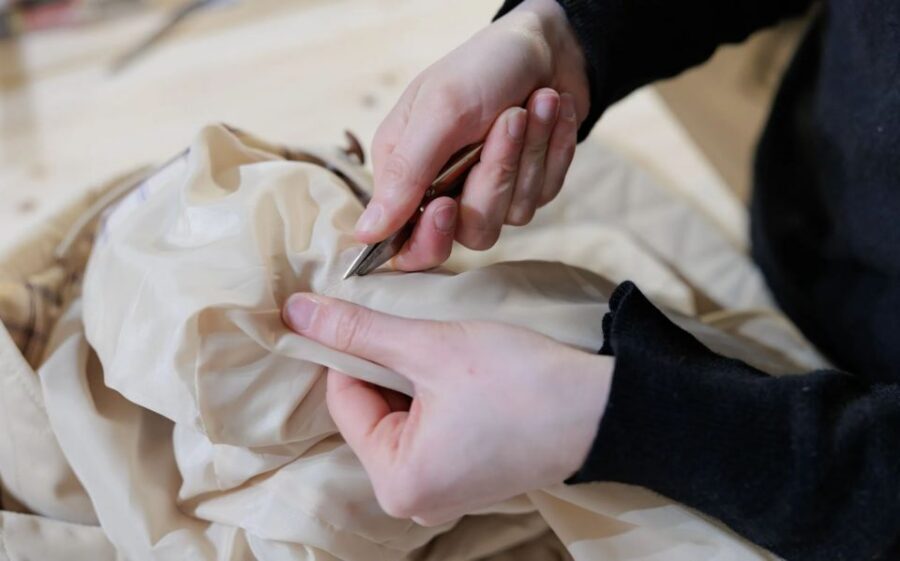
- A tiny group (max 5) means Tara can actually help with your cuts and stitching choices.
- You pick the base jacket from available thrift finds (different sizes) so your “canvas” feels personal.
- Couture techniques with options: patchwork, cut out, and embroidery—use one or mix them.
- Luxury fabric cutoffs + eco-responsible materials keep the upcycling story real, not performative.
- You leave with the finished jacket you designed, not just a pile of scraps and good intentions.
A Paris atelier where upcycling feels like real couture work
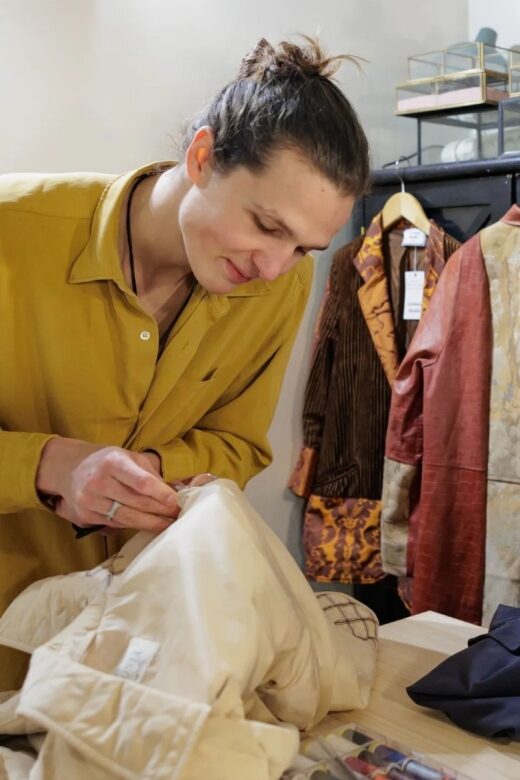
If you’ve ever done a craft class, you’ve seen the same pattern: nice demo, some basic steps, and then everyone goes home with something that looks homemade. This workshop doesn’t do that.
Here, the vibe is closer to what couture workshops are actually like—slow enough to get your stitching right, practical enough that you can finish something you’d wear. Tara’s background as a fashion designer shows in how the workshop moves from discussion to real cutting, sewing, and design choices.
And I like that it’s not just about sustainability as a slogan. You’re working with fabric that already has a past: thrift jackets, luxury cut-offs, and eco-responsible upcycling materials. That matters because it teaches you to look at your wardrobe differently once the class ends. Not in a guilt way. In a practical, get-stuff-made way.
You can also read our reviews of more tours and experiences in Paris


Meeting Tara and choosing your jacket near Montmartre
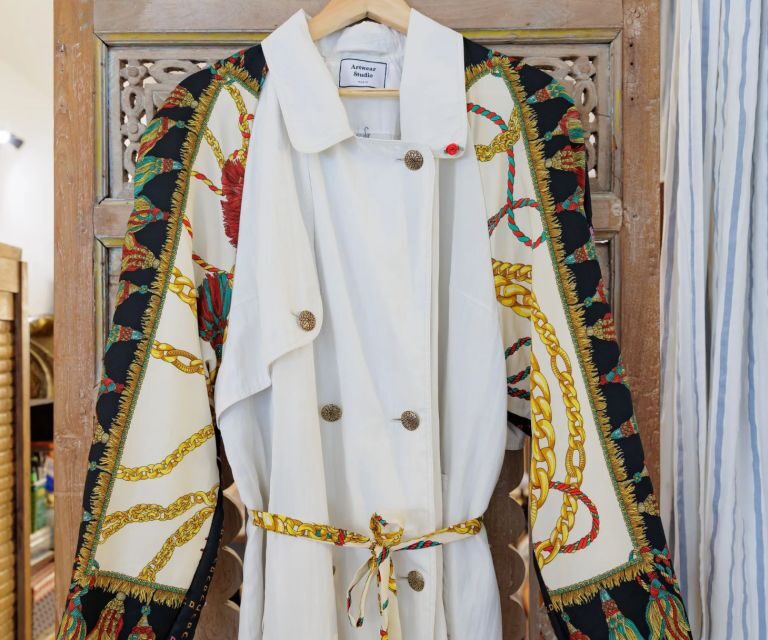
The workshop starts with you arriving at Tara’s Parisian atelier—close enough to Montmartre that it feels like you’re stepping into a creative side street rather than a big studio floor.
You’ll get a warm welcome and a quick orientation to upcycling. Tara also shows examples from her own work, so you’re not guessing what’s possible when you start with a jacket that’s been worn, loved, and then set aside.
Then comes one of the most important parts: choosing the base jacket.
You’ll see:
- fabric cut offs associated with luxury design houses
- thrift store jackets carefully selected by the designer in different sizes
This is where the workshop becomes yours. You’re not stuck with one sad mannequin jacket that everyone gets. Instead, you pick a piece that fits your idea and your body reality.
If you have a jacket you’d rather upcycle, you can bring your own (optional). Otherwise, you’ll use one of the provided vintage thrift options, plus the upcycling materials.
One tip if you’re deciding between two jackets: pick the one that has the best starting structure. Even without perfect fabric, a good foundation makes your final jacket look intentional rather than patched together.
How the couture techniques work: patchwork, cut out, embroidery
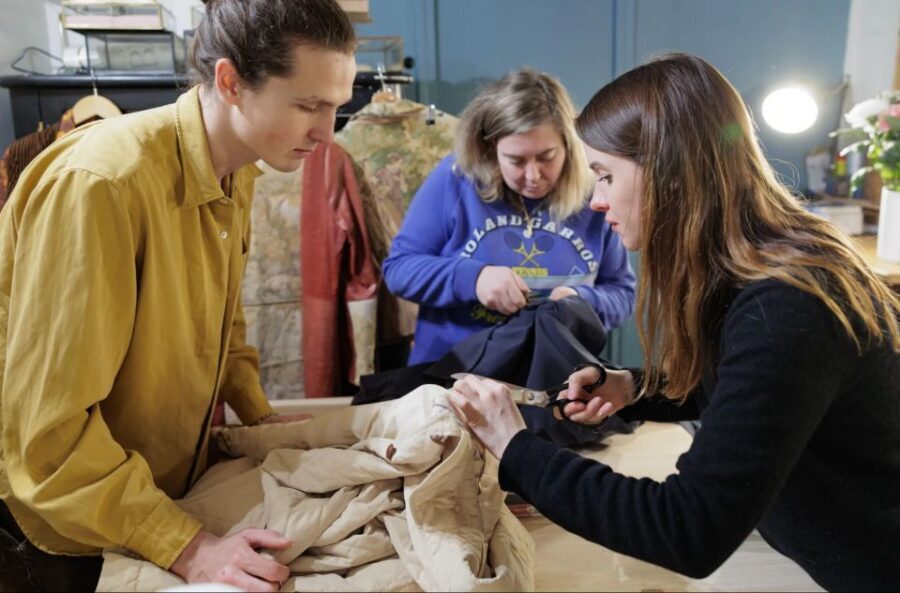
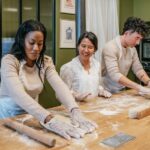
After you choose your jacket, Tara guides you through three techniques. You can do one technique only, or combine all three depending on time and what you’re excited to make.
Patchwork
Patchwork is where your jacket starts looking designed instead of repaired. You’ll use fabric pieces to add shape, contrast, and personality. It’s also forgiving in a good way: if one section doesn’t come out exactly how you pictured, you can adjust the plan around it and still end with something that looks cohesive.
Cut out
Cut out is about creating deliberate openings and patterns. This can turn a heavy old jacket into something with new visual rhythm. It’s also a great way to emphasize the parts of the jacket you want to keep, rather than stripping it down.






Embroidery
Embroidery adds detail and finishes the piece emotionally. Even a simple embroidery plan can make the jacket feel custom, like it belongs to you. It’s also a nice “slow-down” technique when you want your work to look crisp instead of just functional.
What I like about the structure here is that it gives you options without asking you to be a professional designer. Tara steers you through enough of each technique that you can make smart choices in the moment.
And based on the way people describe the workshop experience, Tara’s style is very patient—especially when you’re figuring out what to cut and how to place your first stitches.
Turning leftovers into a jacket you actually want to wear
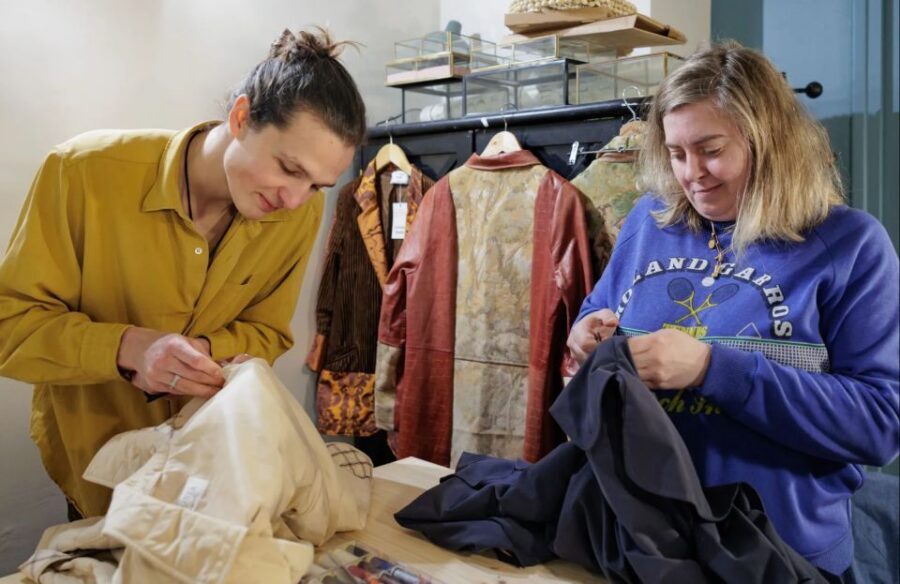
The best part of this type of class is not the sewing itself. It’s what happens in your head while you work.
When you handle the fabric cutoffs and thrift pieces, you start seeing your closet differently. Those scraps stop being trash and start being parts. That shift is the real sustainability win.
You also learn a practical lesson: upcycling isn’t just decorative. It’s about making durable, wearable pieces by giving fabric a second life instead of discarding it.
And you’ll feel that momentum as the workshop goes along:
- first, you understand what’s possible
- then you pick a base jacket
- then you add technique-based design elements
- finally, you put it together so it becomes something you’ll wear outside the atelier
By the time you’re wrapping up, your goal isn’t perfection. It’s completion. And the workshop is designed for that.
You leave with a finished upcycled jacket that you designed. That’s the kind of outcome that sticks.
Why the materials feel more honest than typical classroom supplies
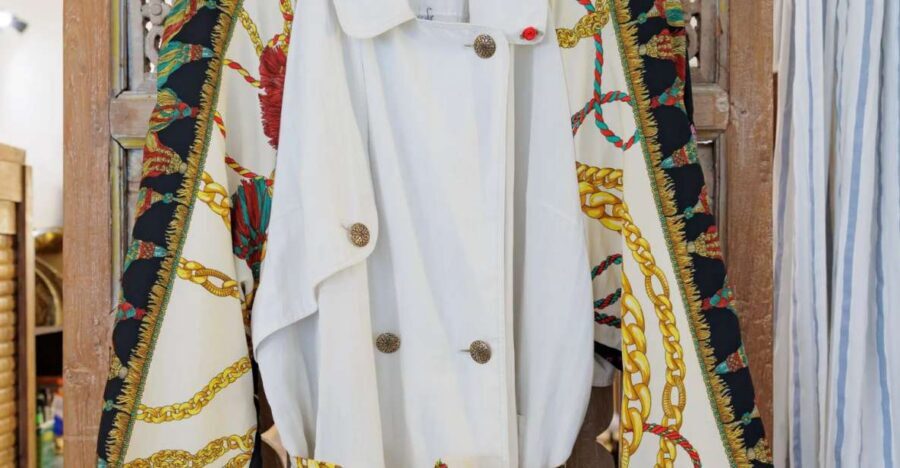
This workshop explicitly focuses on sustainable fashion using eco-responsible materials. And the way the materials are described matters.
Instead of prepackaged craft fabrics, you’re using:
- luxury design house cut offs
- thrift-store jackets chosen by the designer
- additional upcycling materials to build your custom design
That means your jacket tells a story, even if nobody asks. You can look at the seams, the patch placements, and the cut-out shapes and know you made decisions with real fabric constraints.
It also helps you learn a useful skill: how to work with what you can get, not what you wish you had. That’s the part you can carry into your own upcycling projects later.
Time, pace, and what “small group” really gives you
The workshop lasts 3 hours and is limited to 5 participants. That short duration is not a flaw—it’s part of why the workshop works. You get enough time to choose a jacket, learn the technique options, and start transforming the piece right away.
With a small group, Tara can:
- notice where you’re stuck
- guide you through cutting and sewing steps
- help you adjust your plan so you still finish
This is where patient teaching makes a difference. People leave praising Tara’s calm, hands-on guidance. That matters because upcycling involves judgment calls. You’re deciding how much to cut, where to place patches, and how to make embroidery sit naturally on a jacket surface.
If you like making things with your hands—and you want an actual wearable result—this format hits a sweet spot.
Price and value: is $170 for 3 hours worth it?
At $170 per person for a 3-hour sewing workshop, you’re paying for more than sitting at a machine.
Your value comes from several built-in pieces:
- instruction from an established fashion designer
- a vintage jacket provided to upcycle (unless you bring your own)
- upcycling materials so your design can happen
- a studio setting with enough time to finish a jacket, not just start it
If you’ve priced fabric + tools + time, the math usually gets ugly fast. Even without doing the full accounting, this workshop feels like you’re buying a high-impact experience: expert guidance, real materials, and a finished item at the end.
The biggest “value” question for you is simple: do you want to leave with an actual jacket you’ll wear? If yes, the price is easier to justify. If you only want inspiration, you might feel the cost more than the payoff.
Who should book this couture upcycling workshop
This is a strong fit if you:
- like hands-on work more than watching demos
- want a sustainable project with real design decisions
- enjoy fashion that looks personal, not mass-produced
- want to learn couture techniques in a practical, user-friendly way
It’s also a great choice if you’re traveling with a mindset of doing something you can’t replicate at home from a weekend video tutorial.
It’s not suitable for children under 10 years, so keep that in mind if you’re thinking of making it a family activity.
If you’re the type of person who loves structure and step-by-step instructions, you’ll likely appreciate that Tara guides multiple technique options so you can choose what fits your comfort level.
Quick logistics: where to meet and what to bring
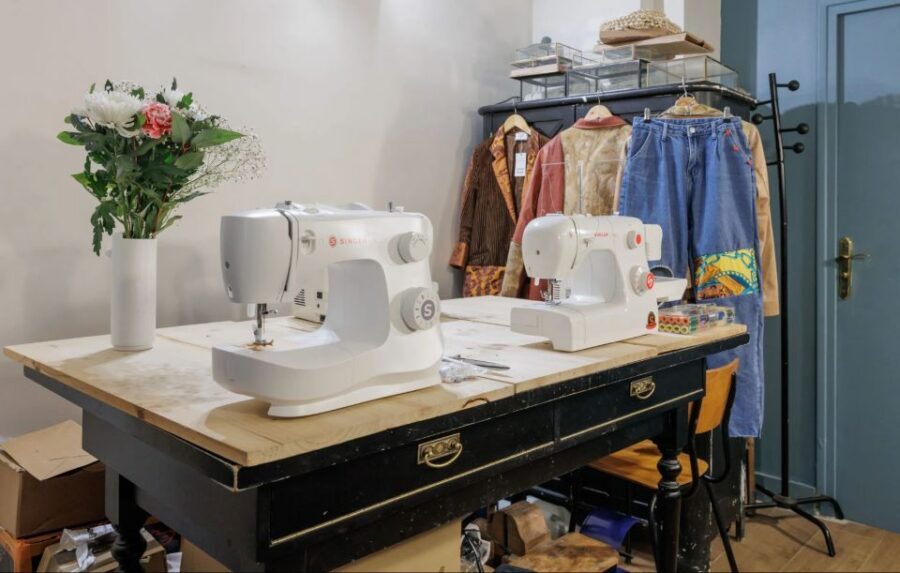
Meeting point is very specific:
- black door code A5961
- Building A, 2nd floor
Because the details are precise, give yourself a little buffer time so you can find the right door and get settled before you start cutting.
What you’ll bring:
- If you want, you can bring your own jacket to upcycle (optional).
- Otherwise, you’ll select a vintage jacket on site.
- Wear something you don’t mind getting small marks on. Sewing classes tend to be messy in the honest way—chalk, pins, fabric dust, and all.
Languages are English and French, so you should be able to follow along comfortably.
Should you book it?
I think you should book this workshop if you want a hands-on Paris experience that feels real and useful—where the outcome is a jacket you designed, not a souvenir craft project.
It’s especially worth it if you care about sustainability but get tired of abstract talk. Here, sustainability is stitched, cut, and embroidered into something wearable in about three hours.
Book it if you like small groups, patient expert guidance, and the satisfaction of making a piece that looks like you actually had a plan.
Skip it only if you want a full-day deep couture course or a guaranteed “blank-slate” start from scratch. This is built around upcycling a jacket and applying specific technique choices, and that focus is exactly what makes it such good value.
FAQ
How long is the workshop?
It lasts 3 hours.
How much does it cost?
The price is $170 per person.
How many people are in the group?
It’s a small group, limited to 5 participants.
Who teaches the workshop?
The workshop is led by an experienced fashion designer (Tara), and the studio is Artwear Studio.
What techniques will I learn?
You’ll be guided through patchwork, cut out, and embroidery.
Can I bring my own jacket to upcycle?
Yes, it’s optional. You may also bring your own jacket.
Do I get a jacket to work on if I don’t bring one?
Yes. A vintage jacket to upcycle is included, along with upcycling materials.
What language is the workshop taught in?
The instructor speaks English and French.
Is it suitable for children?
It’s not suitable for children under 10.
What are the booking and cancellation terms?
You can reserve now & pay later. There is free cancellation up to 24 hours in advance for a full refund.