REVIEW · PARIS
Paris: Famous Monuments Cycling Tour
Book on GetYourGuide →Operated by Bike About Tours · Bookable on GetYourGuide
Paris looks different from a bike.
This tour strings together the big-name sights in a way that feels easy: mostly dedicated bike paths and short stretches where you’re simply rolling through classic Paris streets. I especially like how you don’t just see postcards from a distance—you get close enough for real photos at landmarks like the Eiffel Tower and for memorable moments in museum courtyards.
The best part for me is the pacing. You’ll get stops for context (Notre-Dame, the Louvre, and Les Invalides) without turning it into a full-day lecture, and there’s a snack break on Rue Cler so you can keep your energy up. One thing to consider: the route assumes you can ride confidently, and the storytelling can run long at times for people who came for quick highlights instead of history.
In This Review
- Key highlights at a glance
- Starting in the Marais: Le Peloton Café and getting rolling fast
- Notre-Dame and the Île de la Cité story you can actually picture
- Pont des Arts and the Louvre from the back entrance
- Louvre to Tuileries views: museum geometry without museum fatigue
- Les Invalides and the Concorde to Alexander Bridge pivot
- Rue Cler snack break: the food stop that keeps the tour human
- Eiffel Tower close up and the classic Paris bike-lane advantage
- Grand and Petit Palais, then Arc de Triomphe and Champs-Élysées
- The river ride finish and those two tunnel moments
- Price and value for a 3.5-hour monuments loop
- Should you book this Paris cycling monuments tour?
- FAQ
- How long is the Paris Famous Monuments Cycling Tour?
- Where does the tour start and end?
- Is the ride flat, and how far do you cycle?
- What’s included in the tour price?
- Are food or drinks included?
- Is the tour in English?
- Do I need to know how to ride a bike?
- What should I bring?
- Can I get a refund if my plans change?
Key highlights at a glance
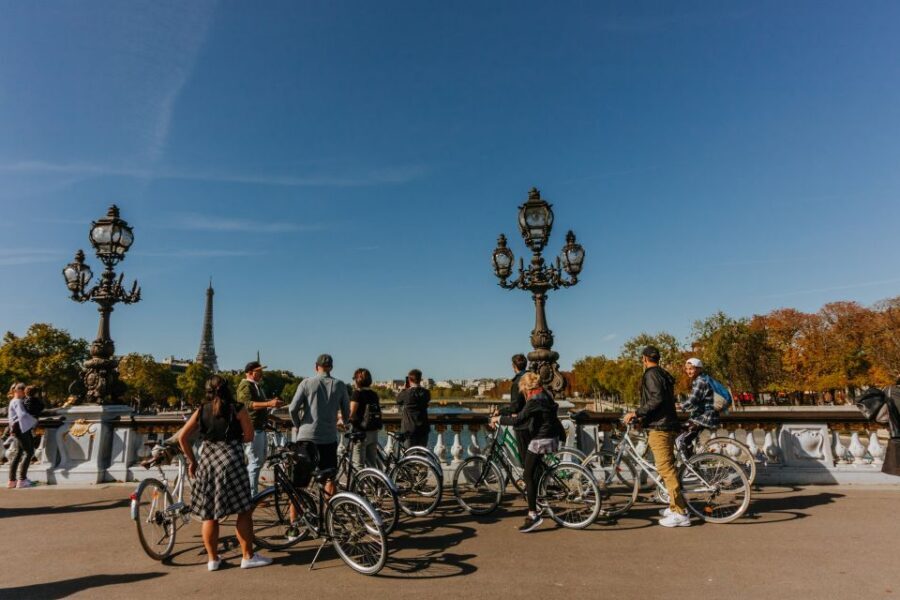
- Mostly-flat ride over about 13 kilometers, with frequent photo stops
- Notre-Dame, Pont des Arts, and the Louvre all tied together with practical city context
- Up-close Eiffel Tower time after a snack stop on Rue Cler
- Les Invalides and Napoleon’s resting place at the heart of the route
- World’s Fair connections taught through stops at the Grand and Petit Palais
- Two fun tunnels plus a final ride along the Seine to close the loop
Starting in the Marais: Le Peloton Café and getting rolling fast
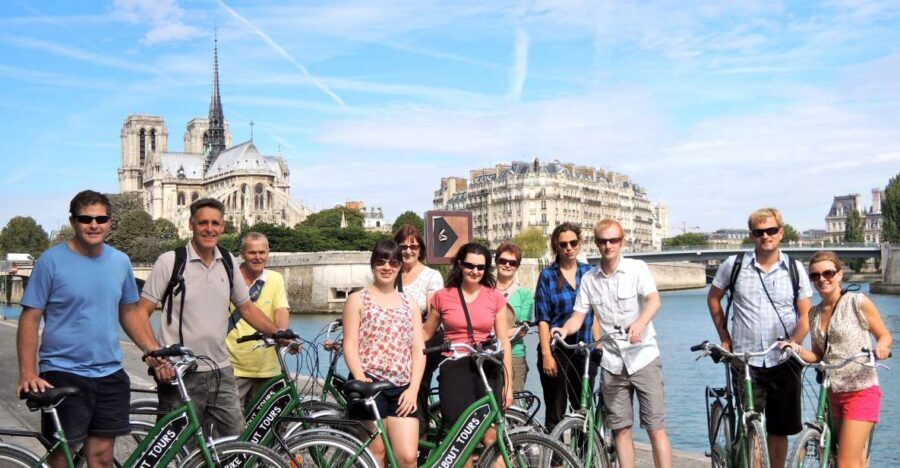
Your tour begins at Le Peloton Café in the Marais, at 17 rue du Pont Louis-Philippe. This matters because the Marais is close to the river sights you’ll hit first, and it keeps your start from feeling like a long commute across town. After you meet your guide and group, you’ll fit into the right bike setup and helmets are available if you want one.
The bike setup is usually the difference between a relaxing Paris ride and a stressful one. If you’re choosing between comfort and speed, go for comfort here. This route is about enjoyment and smooth movement, not racing. Since most of the journey runs on bike paths and the ride is flat, you’ll feel the advantage right away once you’re moving.
Practical tip: since the route is outdoors and you’ll make lots of stops, wear a hat and plan for layers. The tour specifically mentions hat and gloves, and that’s smart advice when weather flips in Paris.
You can also read our reviews of more cycling tours in Paris

Notre-Dame and the Île de la Cité story you can actually picture
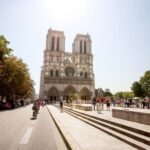
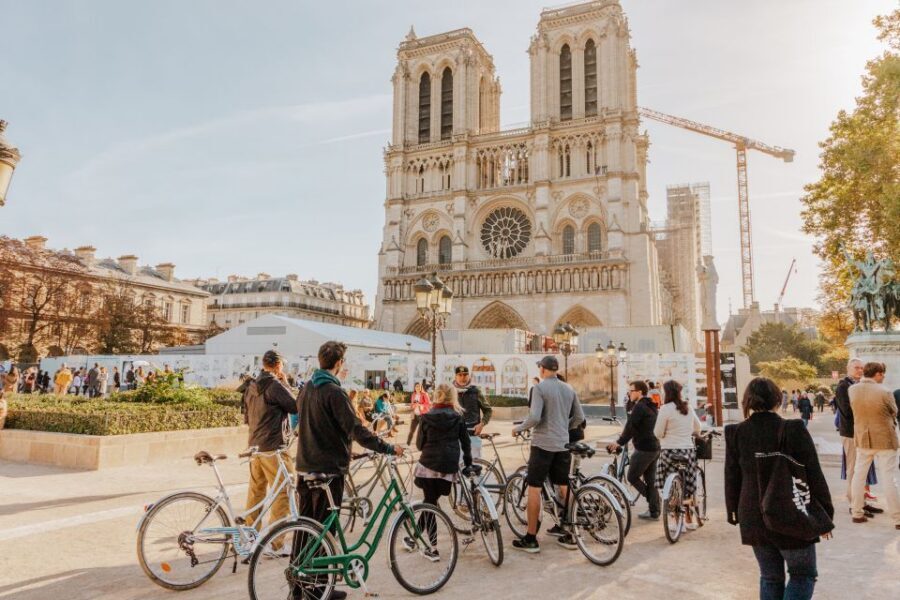
The first major sight you’ll learn about is Notre-Dame, and the guide will frame it around history plus construction and reconstruction. Even if you’ve seen photos for years, the perspective from a bike gives you a better sense of what’s around it—streets, bridges, and the flow of the river islands. It’s also a good moment to start thinking like a local: Paris landmarks aren’t isolated; they’re stitched into neighborhoods and movement.
From there, you’ll continue around the island, pass a local flower market, and then move toward Palais de Justice. This part works well because it shifts your attention from the headline monument to the surrounding city fabric. You’ll be watching how Paris organizes daily life around major institutions.
Then comes a classic Latin Quarter crossing via Fontaine Saint-Michel. You’ll get a sense for how the area frames student life and old-street energy—without having to fight crowds on foot. If you’ve ever felt like you “know” a place but can’t explain why it looks the way it does, this is where the tour helps.
Pont des Arts and the Louvre from the back entrance
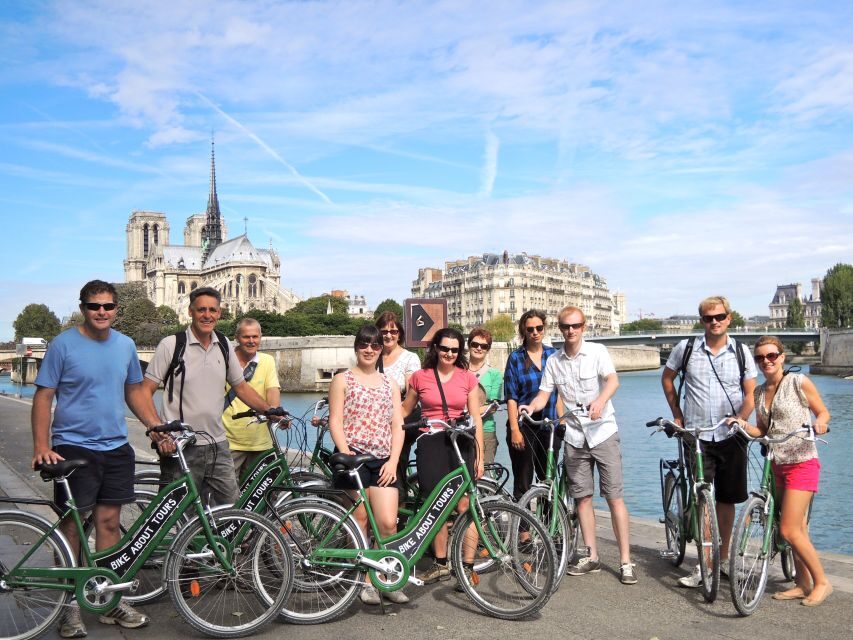
After the Latin Quarter stop, you head toward Pont des Arts, Paris’s first lock bridge. It’s an instantly recognizable spot, and the guide ties it to the idea of how bridges function in Paris—both as movement and as cultural connectors. You’ll also learn about the Institute of France, which gives the bridge a bit more meaning than just photos.
Then you do something that changes the whole experience: you go to the back entrance of the Louvre instead of standing outside where everyone does the same thing. That approach matters because you’re entering through a less obvious path, and it makes the Louvre feel less like a maze of ticket lines and more like a working historical complex.
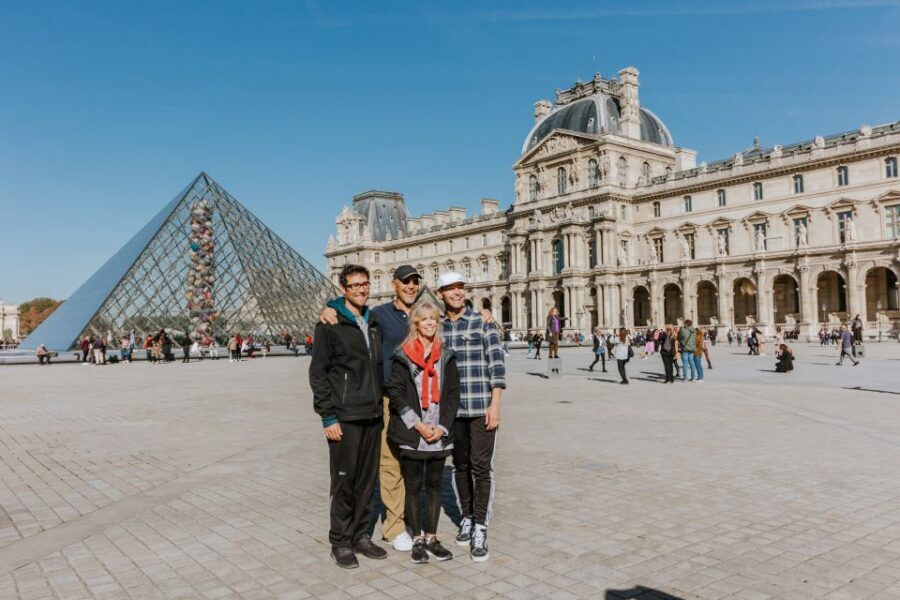
Once inside, you’ll meander through older courtyard space with cobblestones, then glide through archways into a larger courtyard. That’s when you’ll see the Louvre pyramid and take your photos. I like this sequence because it avoids the common “big moment, then scramble” feeling. You get a gradual reveal, and your eyes adjust naturally from stone details to the pyramid landmark.
Louvre to Tuileries views: museum geometry without museum fatigue
After the courtyards, the tour flows into views of Tuileries Garden and Orsay Museum. This is one of those smart bike-tour moves: you’re not being forced into a full museum visit, but you’re still getting the citywide connections. You can see how these institutions sit in relation to the river and the palace-garden axis.
This is also where the tour’s value shows for people who want iconic sights without spending hours ticketing and queueing. The Louvre stop isn’t just about standing where everyone stands. You’re moving through architectural transitions, and the guide’s stories help you notice details like courtyards and sightlines that are easy to miss when you’re rushing.
If you’re the type who loves photos, you’ll likely want a bit of pause time here. Your guide will build in moments for family photos, and the bike format keeps things from feeling like a walking endurance test.
Les Invalides and the Concorde to Alexander Bridge pivot
Next up is Les Invalides, approached in a way that highlights how central it is to Paris narratives. On the ride, you’ll pass Place de la Concorde, with its shift from a monarch-executing guillotine site to today’s Egyptian Obelisk location. That contrast is exactly the kind of thing that’s hard to get from a casual guidebook glance—and much easier to grasp while you’re actually moving through the square.
Then you’ll cross Alexander Bridge and approach Les Invalides head on, which is a great visual moment from the bike. The guide will connect the site to Napoleon Bonaparte’s resting place, which gives you a reason to care beyond the building itself. Even if you’re not a hardcore history buff, this stop helps you understand why this area gets treated like a national stage.
A practical note: this is a longer, more story-driven segment than some pure “photo tour” styles. If you’re hoping to zoom past monuments with quick facts, you may feel the pace shift. Still, for many people, it’s the part that makes the whole ride feel meaningful rather than like a scenic loop.



Rue Cler snack break: the food stop that keeps the tour human
You’ll take a pit stop on Rue Cler, a busy pedestrian street known for quick bites. This is where the tour reminds you you’re in Paris, not just moving between museum stops. You can indulge in something like a crêpe or an éclair, and there’s enough time to grab something and get back on the move.
From a practical standpoint, the most useful thing about Rue Cler in this tour is timing. A bike tour can feel frantic if you skip food until the end. This break helps you keep your energy steady so you’re not riding the Eiffel segment half-zoned out.
Quick planning tip: since this is a short break, don’t plan a sit-down meal. If you want a proper meal later, use this stop for quick fuel and let the rest of your dining happen when you’re done with cycling.
Eiffel Tower close up and the classic Paris bike-lane advantage
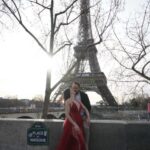
After Rue Cler, you’ll head through smaller streets and work your way toward the Eiffel Tower. Then you’ll pedal alongside Paris’s most famous landmark, taking in views that feel different when you’re at street level and moving. The payoff here is that you see the Eiffel Tower as a structure in a living neighborhood, not as a far-off background.
This is also where the tour’s emphasis on bike lanes feels real. Paris can be chaotic for pedestrians who wander between streets. On a bike tour like this, the route is designed so you can keep rolling without constantly stopping to negotiate crossing plans.
One consideration: the Eiffel segment is a highlight, but it’s also part of a longer loop, so don’t treat it as a standalone event. You’ll enjoy it more if you stay present—watch how the river-side wind feels, notice how the streets tighten and open, and use your stops for the angles you can’t get from the usual viewpoint spots.
Grand and Petit Palais, then Arc de Triomphe and Champs-Élysées
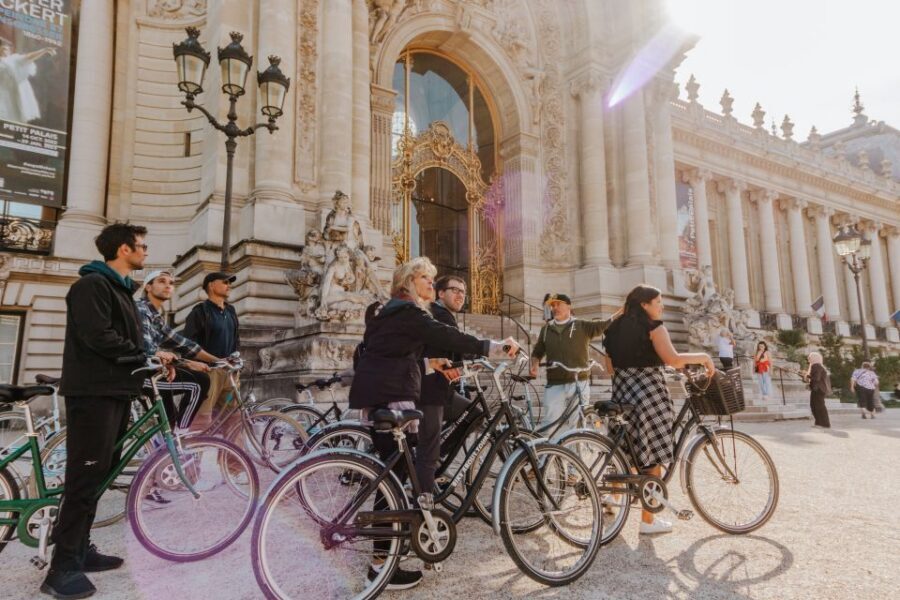
On the way back, the tour adds a few more big symbols of Paris. You’ll pull into the Grand and Petit Palais and learn about connections to the World’s Fairs that once took place in Paris. This stop is a good example of why a guide helps: the buildings are gorgeous, but the context gives you something to look for while you’re passing through.
Then you’ll get a photo opportunity at Arch de Triomphe and ride along Champs-Élysées. The bike format is useful here because it keeps the experience moving. You see the avenue’s scale, the traffic patterns, and the way it functions as a corridor—again, something you feel more than you read.
A fair warning based on typical tour rhythm: some people want more out-of-the-way neighborhoods, and this route stays anchored around the major sights. If you came specifically hoping for areas like Montmartre or the Moulin Rouge zone, you might find this tour doesn’t swing that far off the mainstream axis.
That said, it’s a strong choice if your goal is to cover a lot of Paris icons in a single session without exhausting yourself.
The river ride finish and those two tunnel moments
The tour doesn’t just end at another stop-and-go landmark. It closes with a ride along the Paris riverside, plus two fun tunnels on the way. Those tunnels are more than a novelty; they break up the scenery and give you a moment where the experience feels playful and different from the streets and monuments.
If you love the sensation of moving through the city, this is where it clicks. You’re not standing still anymore—you’re gliding. The route keeps giving you visual changes, and then it lands you back at your meeting point in the Marais.
Price and value for a 3.5-hour monuments loop
Let’s talk money, because the listed price—$113,875 per person—is so high it stops you in your tracks. I can’t tell from the info here whether that figure is accurate for your booking or whether it reflects a special case, but either way, you should double-check the current total before you commit.
Now, how do you judge value if the price is truly that level? For a 3.5-hour tour, the value usually comes from five things:
- you get a structured route with a live English guide
- you avoid the mental load of planning how to combine landmarks efficiently
- the tour format covers a lot of sites—Notre-Dame, Louvre courtyards, Les Invalides, Rue Cler, Eiffel Tower, Champs-Élysées, Arc de Triomphe
- you’re on mostly bike paths and the route is flat, so you spend energy on seeing, not on managing exhaustion
- your guide adds meaning to monuments through short historical context
But if you’re paying a premium, you’ll want to be the type of person who enjoys guided stops and isn’t disappointed if the “deep focus” moments lean toward history rather than quick photo-only pacing. Also, food isn’t included. You’ll likely spend a bit during Rue Cler.
If you’re looking for a lower-cost way to get similar sights, you might compare this with self-guided cycling options. If this is the right price for your plans, though, the main value is the guided flow and the practical bike-lane route that connects everything efficiently.
Should you book this Paris cycling monuments tour?
Book it if you want a guided, mostly-flat bike loop that hits the Eiffel Tower, Louvre courtyards, Les Invalides, and the classic central sights without turning your day into a logistics puzzle. It’s a strong fit for people who can ride a bike well and who enjoy history told on the move—especially if you like your sightseeing with photo stops and short explanations.
Skip it if you only want quick highlight photos and minimal story time, or if your heart is set on neighborhoods far from this central axis. Also, if you’re not confident on a bike, don’t force it. This tour is clearly not set up for that, and you’ll miss the fun because you’ll be thinking about balance instead of Paris.
If you do book, plan for hats and layers, bring gloves, and treat Rue Cler as a grab-and-go snack break—not a long meal.
FAQ
How long is the Paris Famous Monuments Cycling Tour?
The tour lasts 3.5 hours.
Where does the tour start and end?
It starts at Le Peloton Café at 17 rue du Pont Louis-Philippe in the Marais, and it ends back at the meeting point.
Is the ride flat, and how far do you cycle?
The route is described as flat and runs for about 13 kilometers.
What’s included in the tour price?
Bikes and helmets (if desired) and a tour guide are included.
Are food or drinks included?
No. Food or drinks are not included.
Is the tour in English?
Yes, the live tour guide is English.
Do I need to know how to ride a bike?
Yes. The tour is not recommended for people who do not know how to ride a bike.
What should I bring?
Bring a hat and gloves, and pack layers if you’re booking during colder months.
Can I get a refund if my plans change?
Yes. Free cancellation is available up to 24 hours in advance for a full refund.