REVIEW · PARIS
Paris: French Macaron Culinary Class with a Chef
Book on GetYourGuide →Operated by Ateliers Parisiens · Bookable on GetYourGuide
Macarons feel fancy, but the method is teachable. In this Paris class, you work with an experienced chef at Maison Fleuret School, learning the core skills behind those crisp shells and soft centers. What makes it especially fun is the small-group vibe, where you’re not just watching, you’re actively making.
I love the focus on meringue and ganache, two skills that usually make or break macarons at home. I also like the friendly, hands-on teaching style, with multiple English-speaking guides I’ve seen praised by name, including Alice, Delphine, and Amélie. One drawback to keep in mind: the meeting point is simply described as in front of a grey door, and one guest noted there may not be clear signage, so arrive a few minutes early and look carefully.
In This Review
- Key highlights you’ll actually use
- Maison Fleuret School and the grey-door meet-up
- What 150 minutes of macaron practice feels like
- Meringue work: the skill behind the shell
- Ganache and filling: building flavor (not just sweetness)
- Getting the crispy shell and soft center right
- Small group size: why limiting it to 6 is a big deal
- English instruction and chef personality: what to look for
- Picking flavors, piping, and making it look like you
- Taking the box home without crushing the moment
- Value for your time: why this class is worth it
- Who should book this macaron class
- Should you book the French macaron class with a chef?
Key highlights you’ll actually use
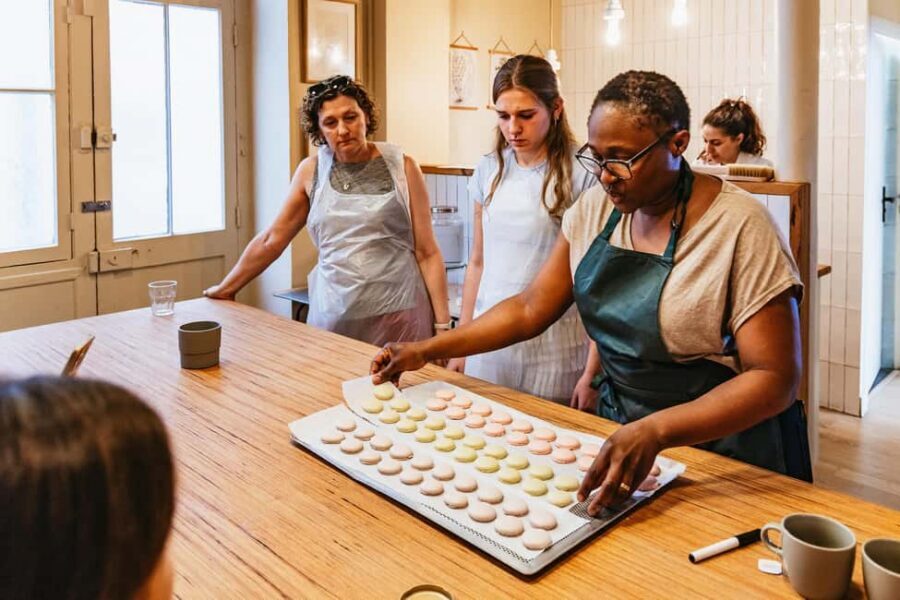
- Small group of 6 means you get direct help when your meringue, piping, or filling needs attention
- Meringue + ganache are taught as connected steps, not separate “baking trivia”
- You learn the macaron goal: crispy outer shell, soft flavorful center
- You’ll share the kitchen time with other participants in a relaxed, friendly workshop
- You leave with a box of macarons you made, ready to snack later
Maison Fleuret School and the grey-door meet-up
Your class starts at Maison Fleuret School in the Ile-de-France region. The meeting point is straightforward but a little understated: meet at the time of your reservation in front of the grey door. That description is simple enough, but it does mean you should give yourself a small buffer to find the entrance without stress.
A practical way to handle this: arrive 10 minutes early, scan the area, and don’t be shy about asking a staff member to point you to the correct door. One guest specifically mentioned there wasn’t obvious signage out front, so early arrival is your friend here.
Also note what you’re not doing: there’s no hotel pickup or drop-off. This is one of those experiences where you’ll want to plan your own short walk or transit hop, then let the chef handle everything once you’re inside.
You can also read our reviews of more tours and experiences in Paris

What 150 minutes of macaron practice feels like
The class is scheduled for 150 minutes, which is long enough to do it properly without turning into an all-day baking marathon. In this time window, you go from ingredients and technique to finished macarons that you can box up and take home.
One thing I’d watch for: the timing can vary a bit. A guest reported their group finished closer to 1 hour 45 minutes than 2.5 hours, so if your schedule is tight, keep that flexibility in mind.
Inside the workshop, the flow is built around clear stages:
- First comes the macaron batter foundation: meringue work
- Then you learn how to form and bake the macaron shells
- After that, you tackle the filling: ganache
- Finally, you assemble so you end with a boxed set of macarons to enjoy later
That “stage-by-stage” structure matters because macarons fail in specific places. If you’re learning, you want each part explained and practiced while you’re still in the kitchen, not only after you’ve returned home.
Meringue work: the skill behind the shell
Macarons live or die by the shell, and the shell starts with meringue. This class is built to teach you how to perfect it, with guidance from your chef as you work through the process.
I like how the instruction is framed: you’re not memorizing steps like a worksheet. You’re learning the point of each step—how the meringue affects texture, consistency, and the final look of the cookie. That’s what makes the class worth it even if you’ve baked before. A lot of home bakers can measure and mix, but macarons demand a very particular texture and mixing awareness.
Another plus: the workshop is small-group focused, so the chef can correct your hand position, texture cues, and pacing while you’re still doing it. That’s hard to get in larger classes where you’re mostly waiting your turn.
And if you’ve ever had macarons turn into sad little domes or hollow shells at home, this is the type of lesson that’s designed to help you understand why the meringue step matters so much.
Ganache and filling: building flavor (not just sweetness)
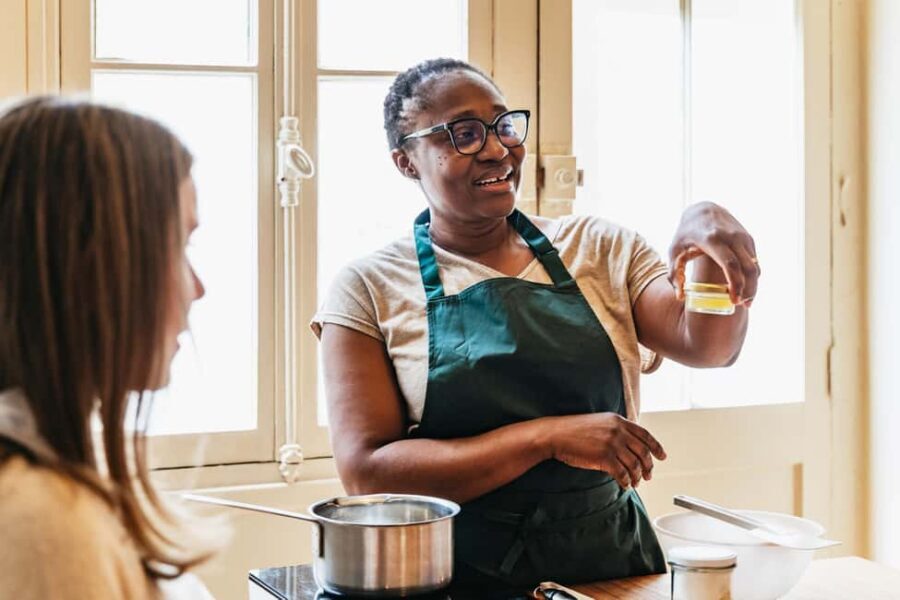
Once the shells are in motion, you move to ganache-making techniques. Ganache is where macarons stop being “cute cookies” and start tasting like a real French pastry.
The workshop doesn’t treat ganache like an afterthought. You learn the method and how to think about what the filling should do—add flavor and balance the crisp outside with a soft, satisfying center.
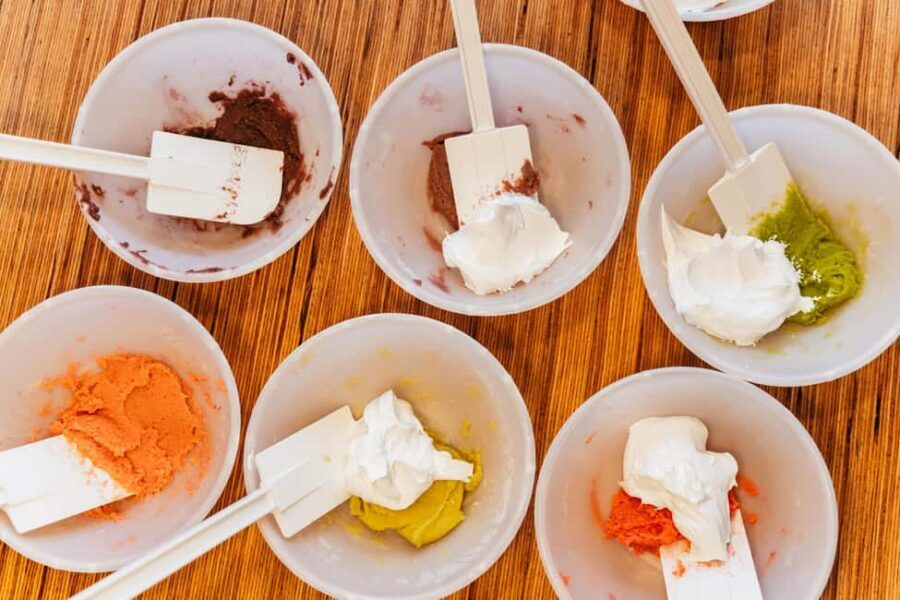
A practical bonus: many classes include some freedom in flavor and color choices. One guest mentioned doing multi-colored macarons, which is fun because it helps you treat macarons like a personalized treat rather than a single forced recipe.
If you’re the type who likes to understand the how as much as the what, ganache is a great place for that. It’s simple in concept, but it teaches you control and consistency—exactly what macarons need.
Getting the crispy shell and soft center right
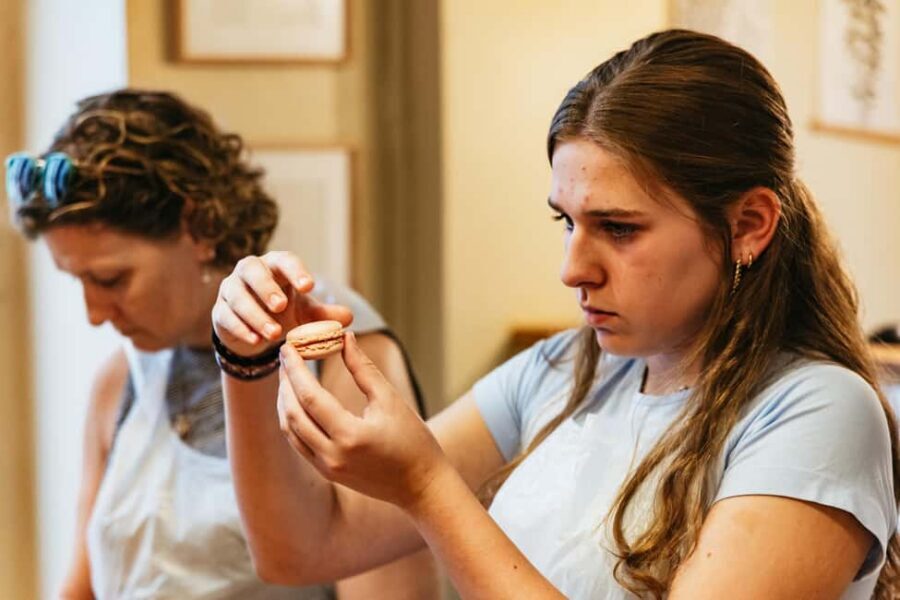
The headline goal is clearly stated in the workshop description: learn how to make a pastry with a crispy outer layer and a soft, tasty center.
What that translates to in real life is texture control. In a good macaron class, you learn that macarons are not just “baked sugar.” They’re a delicate structure that needs:
- the right shell formation
- good pacing
- careful assembly so the final bite matches the idea in your head
Because this workshop focuses on both the shell and the filling, you finish with something cohesive, not just two components that don’t match. That’s why people leave feeling confident enough to try again at home—because they understand the texture target, not just the steps.
One more subtle point: the class outcome matters for your enjoyment later. You’re taking home macarons you crafted during the lesson, which means you’ll see how the texture holds after some time, not only right after baking.






Small group size: why limiting it to 6 is a big deal
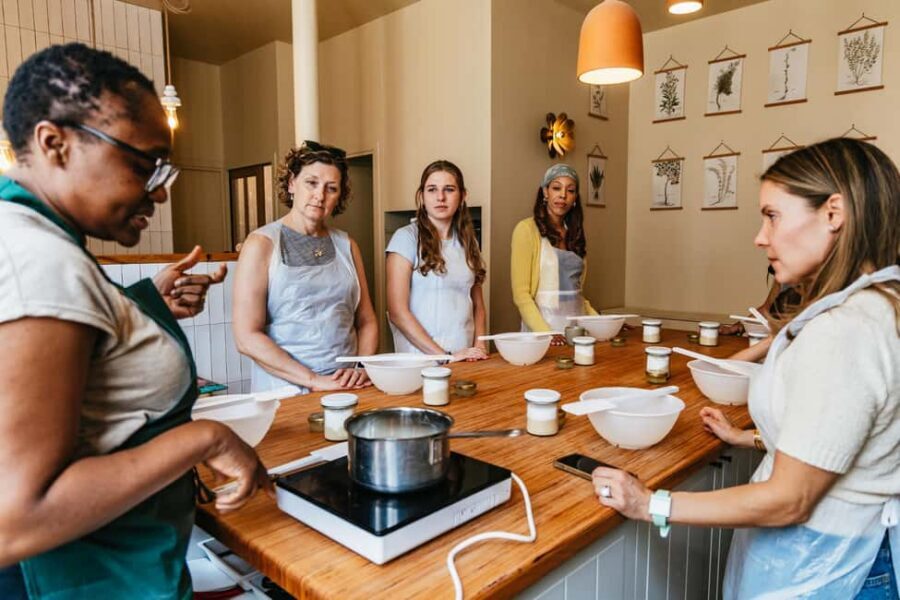
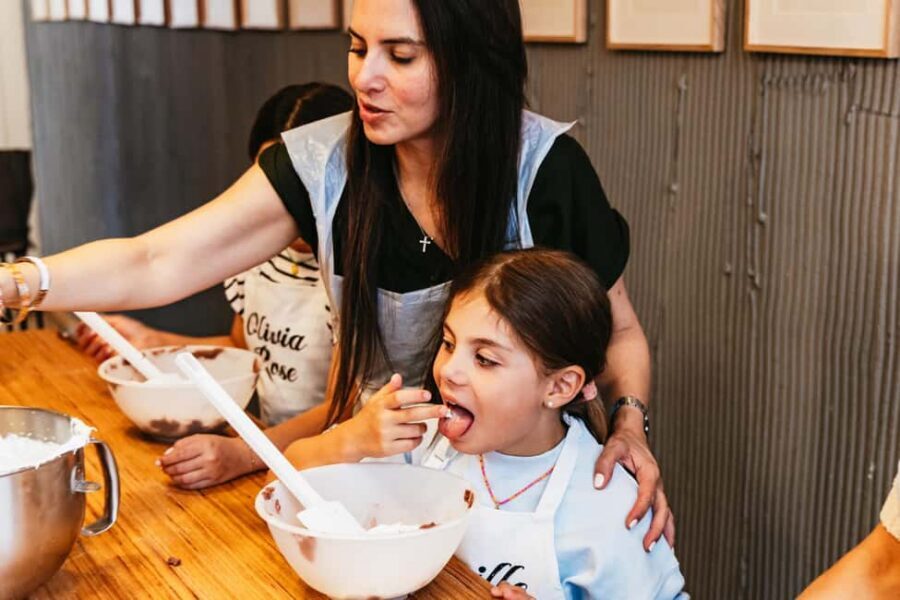
This is limited to 6 participants, and the difference is obvious the moment you’re working at the bench. In a large class, you often become a spectator between turns. Here, you’re far more involved.
That also makes it a great family option. Multiple people described taking kids or teenagers, and the instructors were praised for being patient and getting younger participants involved without making it feel watered down. One guest specifically talked about the instructor getting everyone engaged, including children and adults together.
For you, that matters if:
- you’re a beginner and want correction while you still have time to fix mistakes
- you’re traveling solo and want interaction without awkward group dynamics
- you’re with teens who want a hands-on food experience rather than a long lecture
The best part of a small class is also the most practical: it’s easier to troubleshoot. When your meringue isn’t behaving, you want a real person to notice quickly and tell you what to adjust.
English instruction and chef personality: what to look for
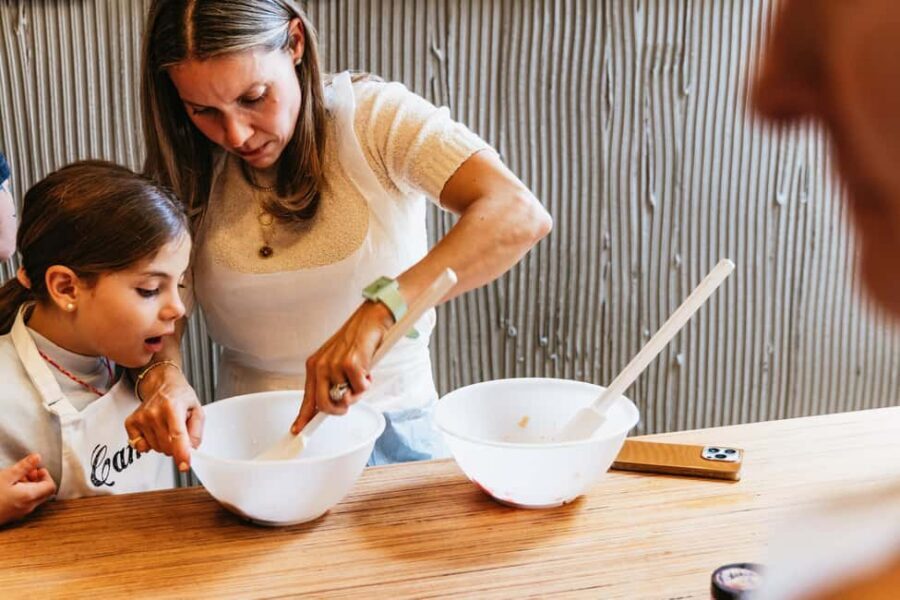
The chef-instructor in this experience is listed as English. Many guides are also described as helpful with mixed-language groups.
From the names shared by guests, you’ll recognize a theme: the chefs are praised for being upbeat and supportive. Alice is singled out for being organized and lively. Delphine is praised for speaking in both French and English so everyone could follow. Amélie also appears repeatedly as a kind, humorous guide who made the class comfortable and not high-pressure.
William, Matteo, Christian, Felix, and Pauline show up in the positive feedback too, and several comments highlight precision, patience, and a sense of humor. In other words: the class is technical, but the atmosphere stays friendly.
You don’t just want someone who can bake macarons. You want someone who can explain why macarons act the way they do—especially to people who don’t bake for a living.
Picking flavors, piping, and making it look like you
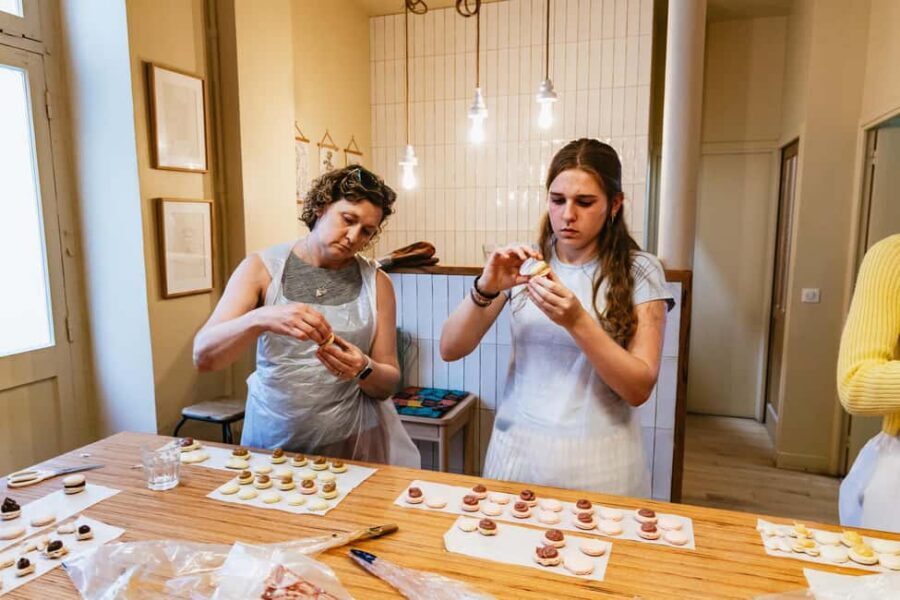
Even though the method is guided, the fun side of macaron-making is personal. Guests mention choosing colors and flavors, and that can turn the workshop into a creative project.
The practical effect for you: choosing flavors makes it easier to remember what you learned because you can connect technique to taste. It’s also more satisfying when you bite into a macaron that matches your own flavor choices.
And visually, macarons are small but dramatic. Multi-colored shells are a hit because each tray looks different once you’re piping and finishing.
If you’re traveling with friends or family, this is also a nice moment to compare results—who made the smoother tops, who assembled the cleanest sandwiches, who managed the best “foot” look.
Taking the box home without crushing the moment
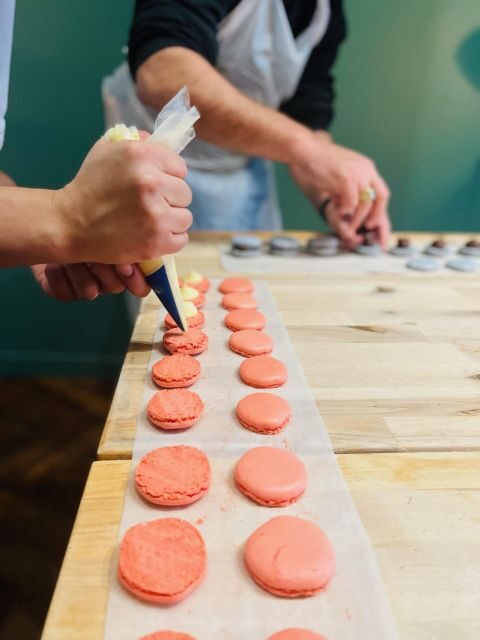
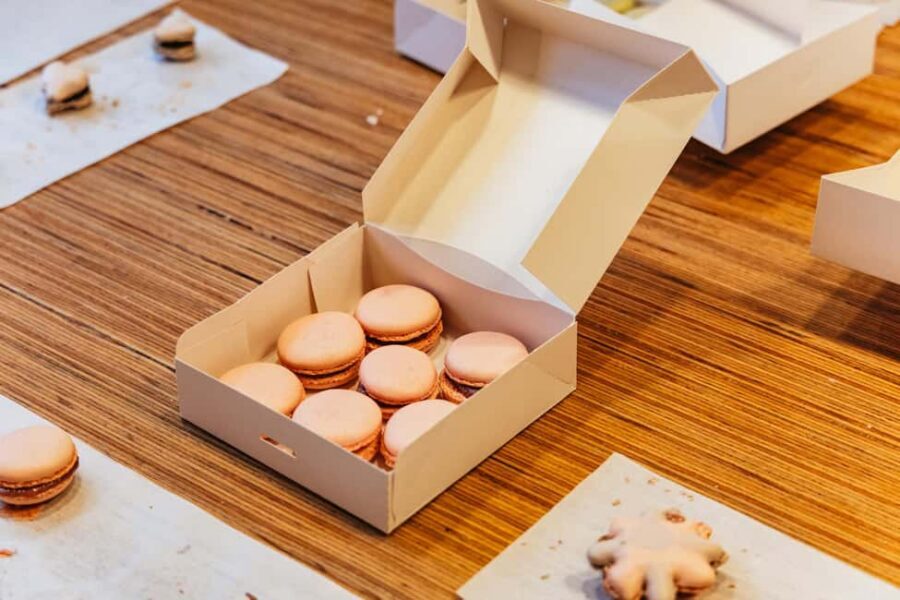
At the end, you get a box of macarons carefully crafted during the lesson. That sounds easy, but transport is the real test. Several guests talked about keeping macarons intact while getting them back to their accommodations, and at least one mentioned the heat affecting how they held up during transport.
So here’s practical advice if you want them to arrive in good shape:
- keep the box protected so shells don’t get scuffed
- avoid leaving it in a hot car or direct sun
- plan to eat them sooner rather than later, especially if the weather is warm
The good news is the class ends with a completed set, so you don’t have to worry about packaging skills beyond handling the box gently.
Value for your time: why this class is worth it
You’re paying for more than a dessert. You’re paying for:
- expert guidance through the most failure-prone parts (meringue and ganache)
- a small setting where your chef can correct you
- a finished product you can taste right away and share
If you’ve tried to make macarons at home, you already know that the biggest cost is not money—it’s wasted time and a fridge full of disappointing batches. A focused class helps you skip some of that trial-and-error.
This also works well as a “signature Paris food” experience. You’re not chasing a line or doing a generic tasting. You’re learning a technique tied to French pastry culture, and you leave with an edible souvenir that feels earned.
Who should book this macaron class
This class fits best if you want a hands-on food activity with real coaching. I’d especially recommend it for:
- beginners who want structure and correction
- intermediate bakers who’ve struggled with texture and want a reset
- families with kids or teens who enjoy practical cooking and want a memorable, shared task
- anyone who loves pastries and wants something more active than a tasting tour
If you’re trying to get advanced theory or highly technical chemistry detail, you might find the format too basic for your needs. One guest noted that for more advanced information it didn’t go as far as they wanted. In that case, you may prefer a more specialized workshop type.
Should you book the French macaron class with a chef?
Yes, if you want a friendly, small-group workshop that teaches the two skills that matter most: meringue and ganache. It’s also a smart pick if you care about the texture goal—crisp shell, soft center—and want to leave with a box of what you made.
Book it especially if you like learning by doing and you’d enjoy chatting with a small group in the kitchen. Just make sure you arrive on time for the grey door meeting point, and plan a little flexibility in your schedule since classes can run slightly faster for some groups.
If you want a classic Paris food experience with practical take-home value, this one is easy to justify.