REVIEW · PARIS
Paris: Hop-On Hop-Off Seine Cruise Pass with 9 Stops
Book on GetYourGuide →Operated by BATOBUS · Bookable on GetYourGuide
Paris looks different from the Seine.
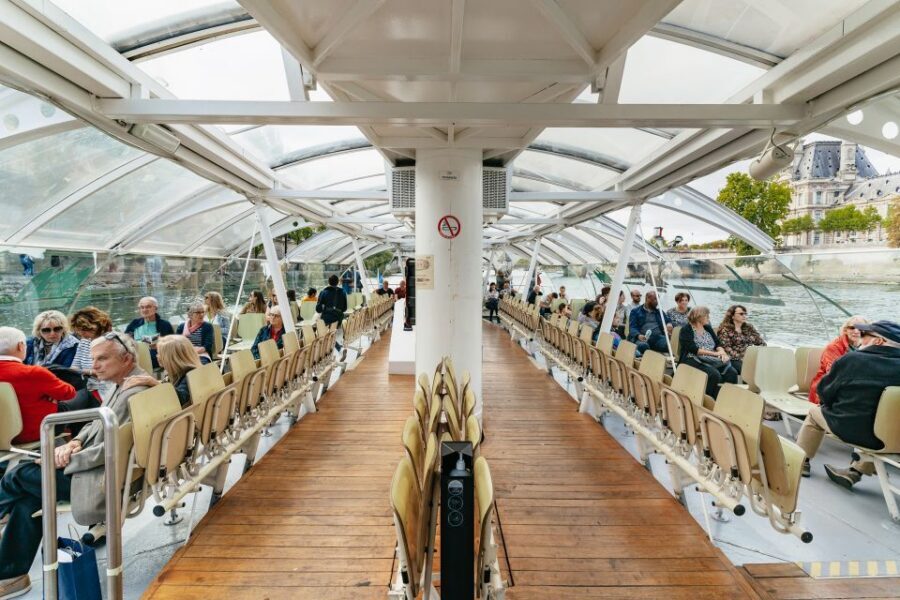
This Hop-On Hop-Off Seine Cruise Pass lets you explore Paris at your own speed, jumping off at 9 carefully placed docks to hit landmarks like the Eiffel Tower, Musée d’Orsay, Notre-Dame, and the Louvre. It’s also a comfortable ride in a glass-covered boat with a terrace—so you get river views without feeling stuck inside a seat all day.
I especially like two things: the heated boats (a real upgrade when the weather turns) and the interactive webapp that gives context around each stop in multiple languages. That combination helps you make sense of what you’re seeing instead of just passing by impressive buildings.
One thing to plan for: the glass can affect photos and comfort. People note it may be blurry from certain angles, and on hot days the area under the glass can feel warm—so sunglasses, sun protection, and smart photo timing matter.
In This Review
- Key highlights you’ll actually use
- The Batobus pass in plain English: what you’re really paying for
- How the 9-stop Seine route saves time (and your legs)
- Your best start: Port de la Bourdonnais and the “first loop” strategy
- Eiffel Tower stop: Port de la Bourdonnais (Tour Eiffel)
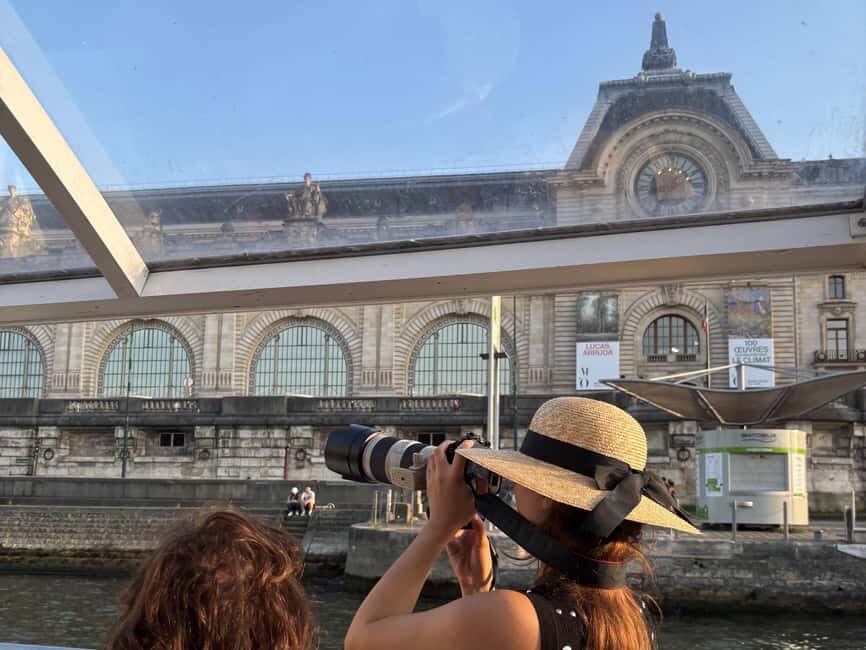
- Musée d’Orsay stop: Quai de Solférino
- Saint-Germain-des-Prés stop: Quai Malaquais
- Notre-Dame stop: Quai de Montebello (Notre-Dame Cathedral)
- Jardin des Plantes stop: Quai Saint-Bernard (plus Cité de la Mode et du Design)
- Hôtel de Ville stop: Quai de l’Hôtel de Ville (and the Marais connection)
- Louvre area stop: Pont Royal and Pont du Carrousel
- Place de la Concorde stop: Port des Champs-Élysées
- Pont Alexandre III stop: Invalides area (then Pont Alexandre III views)
- Glass boat reality check: photos, comfort, and timing
- Using the interactive webapp (and why your charged smartphone matters)
- What to bring and what you can’t bring
- When this pass is the best fit for you
- Should you book the Batobus Seine pass?
- FAQ
- How long is the Batobus hop-on hop-off pass valid?
- Where can I board the boat?
- Do I need to scan my ticket each time?
- Is there a guide included?
- What languages are available on the webapp?
- Are drinks or snacks included?
- What should I bring?
- Can I bring luggage or large bags?
- Is this suitable for wheelchair users?
- What are the opening hours in winter?
Key highlights you’ll actually use
- 9 hop-on stops that map directly to Paris’s big sights along the Seine
- 24 or 48 hours so you can stretch one day into two without rushing
- Heated, terrace-equipped boats for real comfort and better viewing
- Multilingual interactive webapp for monument info at each dock
- Frequent departures reported around every ~20–25 minutes, so you’re not stranded
- Scan-and-hop routine that keeps the day flexible (and keeps you moving)
The Batobus pass in plain English: what you’re really paying for
At around $27 per person, this pass is basically a ticket to two things: a relaxing river ride and easy transportation between major sights. You’re not buying one long guided tour—you’re buying freedom. That’s the value angle.
With 24 hours or 48 hours, your ticket is consecutive from the moment you first board. Translation: if you start on Day 1 morning, you can plan Day 1 and Day 2 around the schedule, hopping off as long as you want and re-boarding when you’re ready.
The boats are heated and have a terrace, which sounds like a nice-to-have until you’re in Paris on a cool morning or evening. Even if you plan to spend most of your day walking, you’ll appreciate having a comfortable way to reset.
You can also read our reviews of more boat tours in Paris


How the 9-stop Seine route saves time (and your legs)
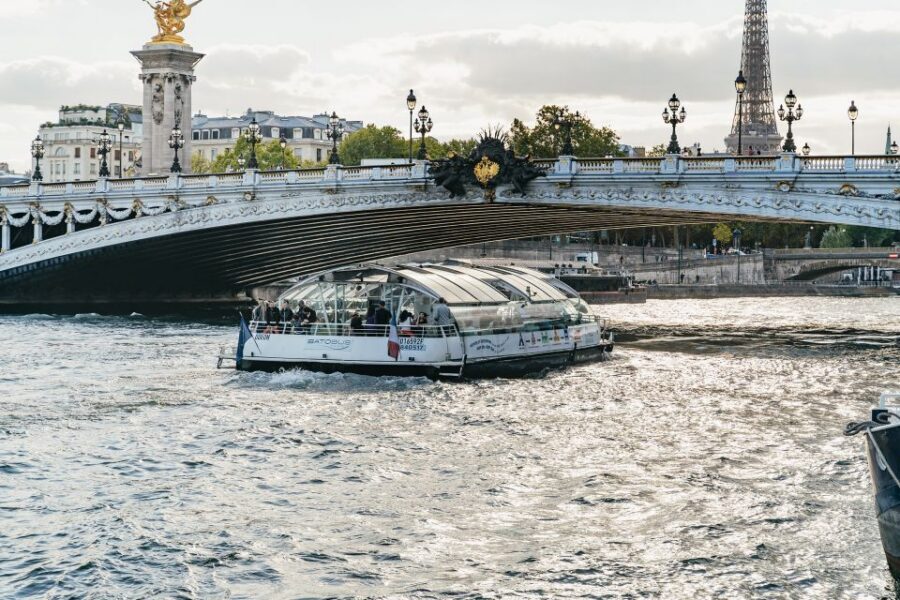
This works because Paris’s top monuments cluster along the river, but getting between them by foot can take a lot longer than the map suggests. The Batobus route gives you a “big picture” way to travel—then you choose how much walking you want at each dock.
Also, the rhythm matters. People report the next cruise often arrives within about 20 minutes, and service can feel frequent enough that you’re not waiting around for ages at each stop. And if you’re trying to see a lot in a short trip, doing a full circuit once can help you “place” everything on the river before you start choosing where to linger.
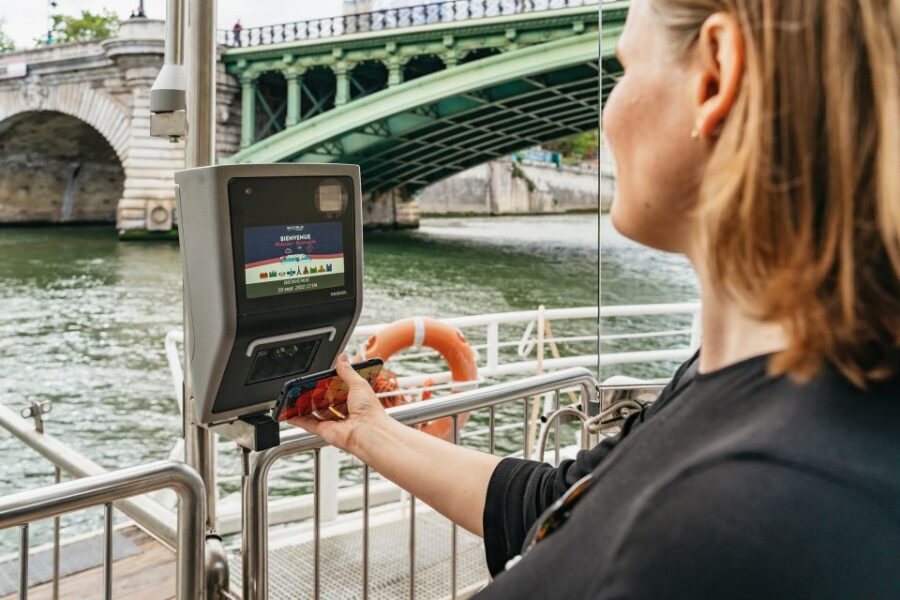
You’ll also want to know one practical detail: you scan your ticket each time you board, and the validity starts with your first boarding. So your best move is to commit to your day plan at the first stop you choose.
Your best start: Port de la Bourdonnais and the “first loop” strategy
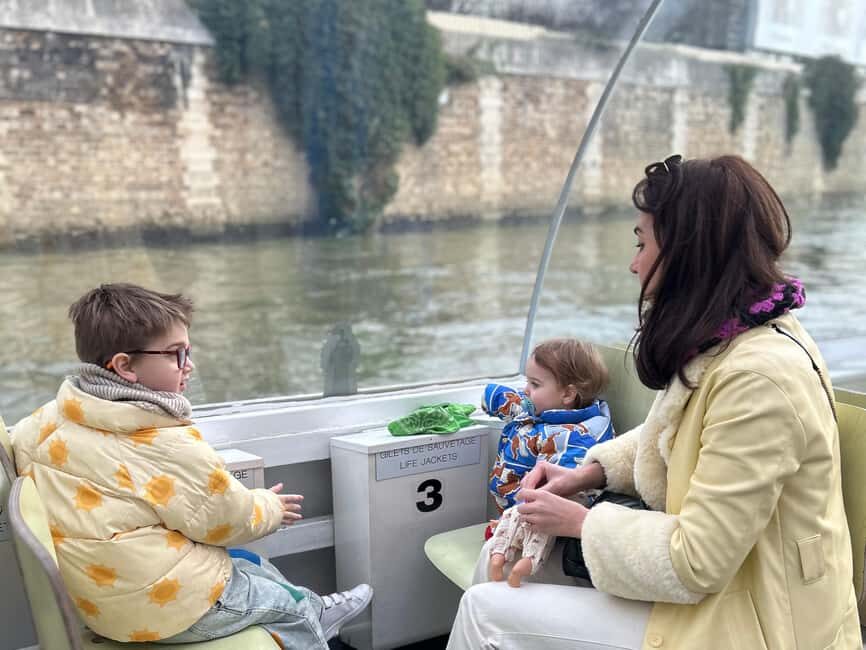
Your pass is centered on Port de la Bourdonnais, which is the starting point, and it’s also a handy place to anchor your plan. If you don’t know the river well yet, your first round is your orientation lap.
Here’s how I’d use your time:
- Go for one full loop early or mid-day to get a clean view of the main landmarks in order.
- Mark the two or three sights you actually want to go inside, then get off and spend the real time there.
- Use the remaining time to wander the neighborhoods around the docks—because the river stations are also close to cafés, shops, and side streets.
One detail that can make or break the day: be sure you understand the direction of travel. One passenger warned that you’ll want to get familiar with which side of the river you need for where you’re headed next. It’s easy to fix once you’re at a stop, but it’s smart to check early.
Eiffel Tower stop: Port de la Bourdonnais (Tour Eiffel)
This is the classic “Paris from the water” moment. Getting off here puts you at the foot-of-the-Eiffel-Tower area and gives you the option to connect with nearby sights, including the Cité de l’Architecture (a museum that’s close by and focused on French architectural heritage from the 12th to the 18th century).
What makes this stop feel worth it is the perspective. From the boat, the Eiffel Tower isn’t just a landmark—it’s part of a river panorama. From street level, it becomes more “destination-y.” You get both angles.
Practical note: if you’re aiming for photos, consider timing. Evening can be a treat because the tower lights up and the river ride helps you see it from multiple viewpoints.
Musée d’Orsay stop: Quai de Solférino
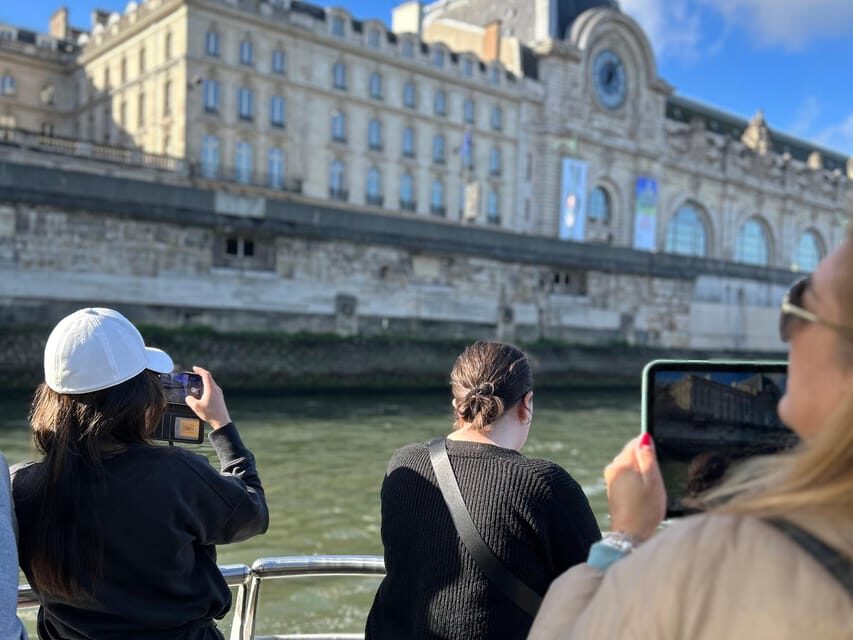
If art is your thing, this stop is a strong “get off, walk, and focus” location. Musée d’Orsay sits close enough that you can plan a shorter visit here if your energy is limited—or stay longer if you’re deep into Impressionism and post-Impressionism.
The value is the same principle as the other docks: you’re not spending your day figuring out the transit puzzle. You’re simply switching between river views and museum time.
If you’re pairing this with a second museum, this is a good stop to use when you want an art break before shifting into cathedral and historic-neighborhood vibes further downstream.





Saint-Germain-des-Prés stop: Quai Malaquais
This is where the cruise stops being only about monuments and starts being about Parisian character. Around Saint-Germain-des-Prés, you can explore the literary and intellectual side of the city and connect with places like Café de Flore and Les Deux Magots, plus nearby cultural spots such as the Institut de France.
One reason this stop is so effective: you can keep walking time flexible. If you’re tired from museum legs, you can do a short neighborhood wander. If you’re in a café mood, you can slow down here and still feel like your day made sense.
This is also a good stop for buying time before you reach the more crowded central icons.
Notre-Dame stop: Quai de Montebello (Notre-Dame Cathedral)
Getting off here gives you a direct route to Notre-Dame Cathedral and the lively streets of the Latin Quarter. The Latin Quarter is a smart choice when you want atmosphere as well as sightseeing—cafés, bookshops, and student-energy streets are right there.
What I like about using this stop as a “reposition” point is how it changes your day’s pace. One minute you’re in a river view bubble; the next you’re in a walkable historic area where it feels normal to just drift.
If your priority is experiencing Notre-Dame’s surroundings without committing to a long transit plan, this stop is one of the most practical.
Jardin des Plantes stop: Quai Saint-Bernard (plus Cité de la Mode et du Design)
Not every stop should be a museum or cathedral. This one is your reset button. Jardin des Plantes is a main botanical garden, and it’s a great way to step away from major crowds and give your body a quieter stretch.
If you want something more modern, the Cité de la Mode et du Design is also in the area. That pairing makes this dock useful even if your interests are mixed—plants one hour, design exhibits another, then back to the boat to cool down and recharge.
This is also a nice idea when the weather is strong. In summer, gardens can offer a different kind of break than sitting in a crowded indoor museum.
Hôtel de Ville stop: Quai de l’Hôtel de Ville (and the Marais connection)
This dock is placed for administrative history and nearby city energy. You can visit Hôtel de Ville (City Hall) and also combine it with the Pompidou Centre area, depending on how you want your afternoon shaped.
It’s also a practical gateway to the Marais district, which is packed with galleries, boutiques, and cafés. If you want your day to feel like Paris in motion—shop windows, side streets, and short walks—this stop helps you do that without overplanning.
And because this is more “neighborhood time,” it’s a good place to use if you already saw the big icons from the water earlier.
Louvre area stop: Pont Royal and Pont du Carrousel
This is the one everyone talks about. Getting off near the Louvre Museum gives you access to the biggest concentration of art and culture on the route.
The key here is not to try to do everything at once. With a hop-on pass, you can set realistic expectations: you can see the outside, walk the nearby river paths, or commit to a timed museum visit if you’ve planned ahead.
The river stops also help you avoid the “transit tax.” Instead of burning time on subways to get between attractions, you keep moving along the river and choose when to slow down.
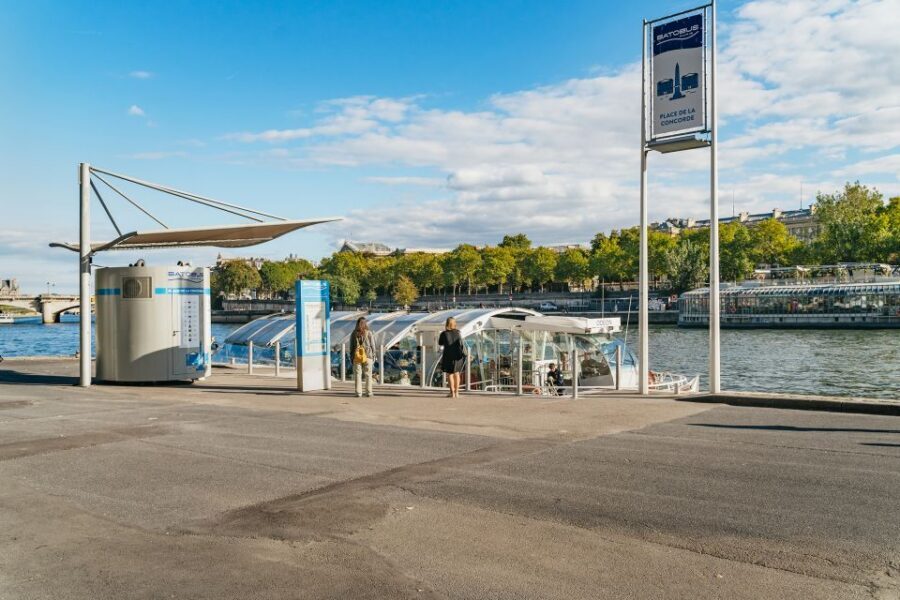
Place de la Concorde stop: Port des Champs-Élysées
This is one of those stops that’s easy to overlook if you only think of Paris as museums and towers. Place de la Concorde is a grand square, and it’s also a strategic walking hub for nearby areas.
From here, you can stroll toward the Grand Palais and Petit Palais museums, and you’re in range of the upscale shopping vibe of Avenue Montaigne. Even if you don’t shop, walking these areas gives you a different flavor of the city than the Latin Quarter or the Eiffel Tower view corridor.
If you’ve already done a couple heavy sights, this is a comfortable “wide-angle Paris” pause.
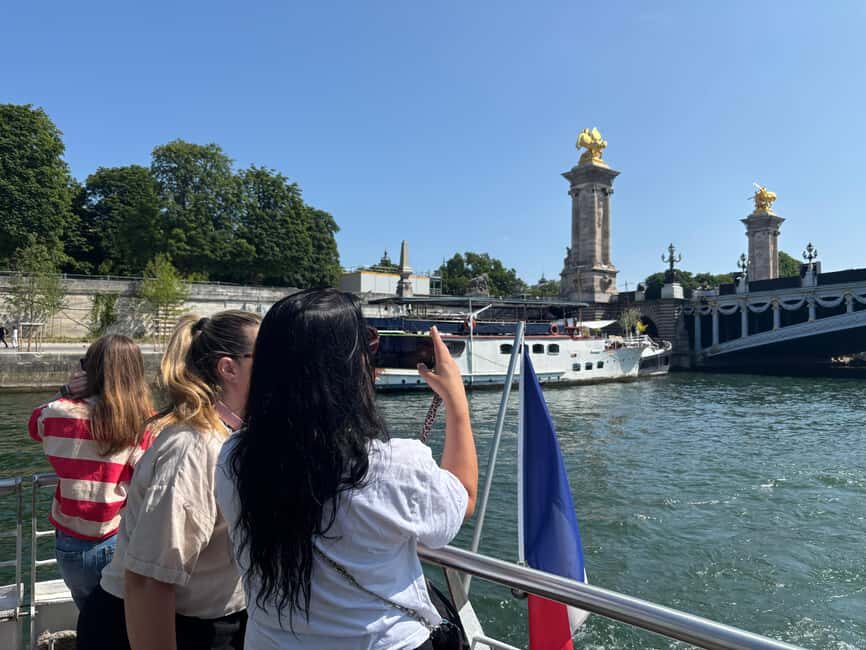
Pont Alexandre III stop: Invalides area (then Pont Alexandre III views)
You’ll pass into one of the most photogenic bridge zones. The Invalides area is built around Hôtel des Invalides and Napoleon’s tomb, and the Pont Alexandre III stop is famous for its showy bridge setting.
From the river, this is where Paris starts to look like a movie set—big architecture, strong angles, and a sense of symmetry that’s easier to catch from water level than from the sidewalk.
If you love one last landmark moment before heading back, this stop is a great choice.
Glass boat reality check: photos, comfort, and timing
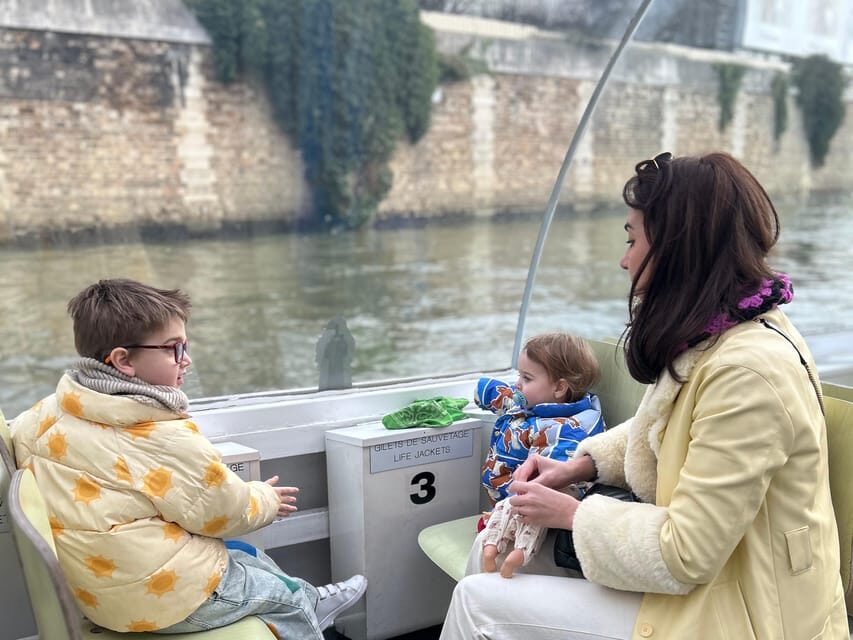
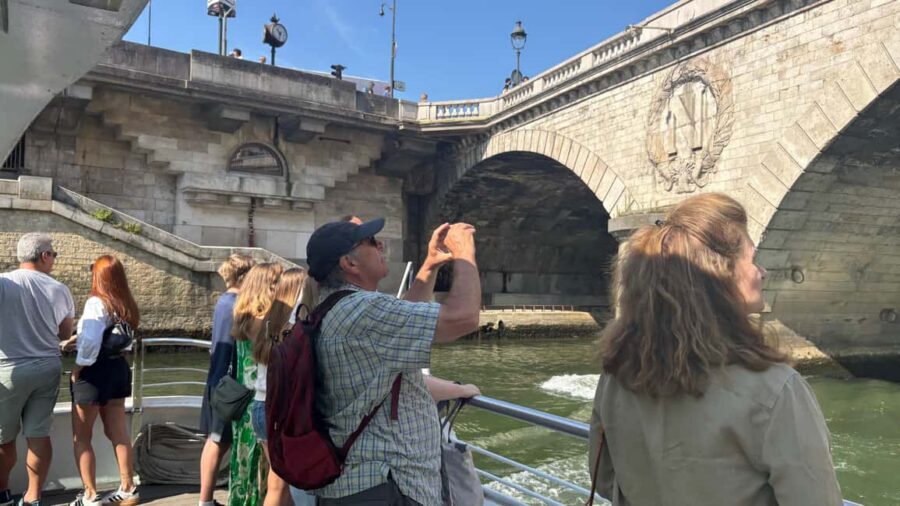
The boats are glass-enclosed with a terrace, and that matters in two ways: comfort and viewing. People like that you can take photos from the deck, and one person even noted there’s a small awning on the deck that can help on rainy days.
But the glass also comes with tradeoffs. Some passengers said the top of the glass could be blurry, and others mentioned it can feel hot under the glass on sunny days. So:
- Take photos from the terrace when you can.
- Plan your best shots for times when the glare is less intense.
- If it’s warm, dress for heat and bring sun protection.
If you’re visiting in February, it can be pleasantly warm on board—one passenger specifically called out that the boat felt warm in winter conditions.
Using the interactive webapp (and why your charged smartphone matters)
The pass includes an interactive webapp with commentaries about monuments and what to do around each stop. It’s available in English, French, Italian, Spanish, and German, so it’s useful even if your group isn’t uniform.
A smart move: keep your smartphone charged. You’re asked to bring a charged phone, and you’ll want enough battery to read the webapp while you’re moving. One passenger also warned that there’s no onboard audio, so if you rely on the app for context, download or load it ahead of time.
Also, you can treat the webapp as a menu. Use it to decide:
- Which stop gets a short photo break.
- Which stop deserves walking time.
- Which stop you’ll skip if your schedule is tight.
What to bring and what you can’t bring
This isn’t a baggage-friendly activity. The boat ride is for light travel.
Bring:
- A charged smartphone for the webapp
Don’t bring:
- Luggage or large bags
- Non-folding strollers
Fold-up options:
- Baby carriages are allowed if they’re folded.
If you’re traveling with kids, you’ll appreciate that the route helps you avoid repeated transit steps. At the same time, the boats can get busy with children and pushchairs, so you may want to be ready for crowds at popular docks.
When this pass is the best fit for you
This works especially well if you:
- Have limited time in Paris and want to hit major sights without over-plotting transit
- Prefer flexible pacing over rigid tours
- Want river views as a break from walking
It’s also ideal for families with kids, as it’s easier to manage “get off, see a bit, get back on” rather than constantly changing between lines and stations.
If you’re someone who enjoys planning but still wants downtime, this pass gives you control. If you’re the type who likes a tight schedule, you’ll still be able to do it—just decide your “real visit” stops and let the river connect the rest.
Should you book the Batobus Seine pass?
Yes, if your goal is a relaxed, efficient way to connect Paris’s top highlights with less walking stress. The biggest win is simple: you get a comfortable ride plus a practical way to reach landmarks along the Seine, with an interactive webapp that helps you understand what you’re seeing.
I’d hesitate only if you know you’ll be frustrated by glass-photo quirks or you need accessibility features that aren’t supported. The activity is marked not suitable for wheelchair users, so it’s important to double-check your needs before committing.
If you can handle light travel and you’re good with a choose-your-own-adventure style day, this pass is a smart way to see Paris from the water while still having control over where your time goes.
FAQ
How long is the Batobus hop-on hop-off pass valid?
You can choose a 24-hour or 48-hour consecutive pass. The validity starts when you first use the ticket by boarding the boat.
Where can I board the boat?
You can hop on at any of the 9 stops along the route, including Port de la Bourdonnais (Tour Eiffel), Quai de Solférino (Musée d’Orsay), Quai de Montebello (Notre-Dame), and others listed on the pass.
Do I need to scan my ticket each time?
Yes. You must scan your ticket at each time you hop on the boat.
Is there a guide included?
Yes. There’s an interactive webapp with commentaries about monuments and things to do around each stop.
What languages are available on the webapp?
The webapp is available in English, French, Italian, Spanish, and German.
Are drinks or snacks included?
No. Drinks or snacks are not included.
What should I bring?
Bring a charged smartphone so you can use the interactive webapp.
Can I bring luggage or large bags?
No. Luggage or large bags are not allowed on board.
Is this suitable for wheelchair users?
The activity is not suitable for wheelchair users.
What are the opening hours in winter?
For 3 Nov 2025 to 31 Mar 2026, first and last departures from the Eiffel Tower stop are listed as 10:00–17:00 Monday–Thursday and 10:00–19:00 Friday–Sunday.