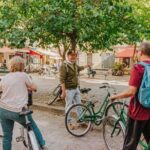
Paris clicks differently when you pedal.
I love that this is a small-group bike tour that stays personal, not chaotic. I also like that bike and helmet rentals are included, so you can roll straight from the meeting point. The one real catch: this is still street riding, so you’ll need comfort around traffic and tight city crossings, especially if you get nervous on bikes.
You’ll stitch together two neighborhoods I think most first-timers miss in the “right order”: the Latin Quarter for bookish, old-Paris streets, then Le Marais for Jewish history and standout architecture. The route is built around quick, meaningful stops, so you get context without losing your whole day.
Expect about 4 hours on your own wheels, with a real lunch break at Marché Monge where you pay for your own food. It runs in all weather, so bring a coat and skip flip-flops.
In This Review
- Key highlights at a glance
- Start at Fontaine Saint-Michel: how the ride actually feels
- Getting oriented fast: bikes, helmets, and practical prep
- Latin Quarter stops: Shakespeare and Company to the Pantheon
- Shakespeare and Company: a bookstore that acts like a time machine
- Le Procope: Paris at café pace, not tourist speed
- Église Saint-Sulpice: big church energy with a small logistics note
- Panthéon: France’s memorial to thinkers, artists, and leaders
- Lunch at Marché Monge: rue Mouffetard’s local rhythm
- Arenes de Lutèce: Roman Paris you can ride into
- Crossing into Le Marais: a neighborhood built and remembered
- Memorial de la Shoah and Rue des Rosiers: history with street-level context
- Place des Vosges and Philip II’s wall: beauty plus fortification
- Hôtel de Sens: the fortress-mansion detour you’ll remember
- Pace, traffic, and which cyclists should say yes
- Price value: why $54.42 can make sense in Paris
- Should you book this Paris bike tour?
- FAQ
- How long is the Paris Bike Tour Hidden Secrets in the Latin Quarter & Le Marais?
- What’s included in the price?
- Do I need to know how to ride a bike?
- What about kids?
- Is food included?
- Where does the tour start and end?
Key highlights at a glance
- Small group size (max 12) for easier pacing and safer navigation
- Included bike + helmet so you’re not scrambling after you arrive
- Latin Quarter storytelling from Shakespeare and Company to the Pantheon
- Le Marais history stops including the Memorial de la Shoah
- Route variety from quiet back streets to major landmarks
- Lunch break at Marché Monge on rue Mouffetard, where locals eat
Start at Fontaine Saint-Michel: how the ride actually feels
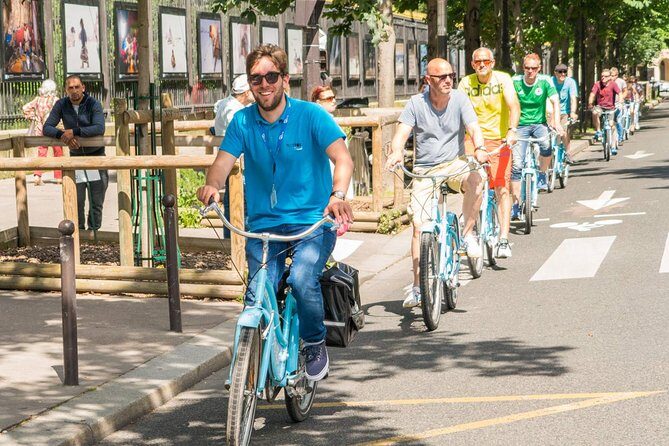
Your day begins at Fontaine Saint-Michel (Pl. Saint-Michel, 75005), and you’ll ride through parts of central Paris that are too compact to cover well on foot. The time on the clock is around 4 hours, but it doesn’t feel like a long slog because you’re stopping often—short walks, photo moments, and quick explanations.
This is a bike tour, not a bus tour with a few photo stops. You’ll need to cycle confidently on your own—this matters. The operator makes it clear that participants aged 10+ must be able to ride independently. If you’re a shaky rider, you’ll spend mental energy on balance and steering instead of enjoying the views.
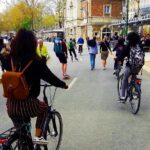
Also, plan your day around the reality of Paris streets. Even when you’re with a guide and helmets are on, you’ll still be navigating traffic flows and crossings. One review note that matched the tour’s overall spirit: it’s not a totally car-free ride, so staying alert is part of the deal.
You can also read our reviews of more cycling tours in Paris

Getting oriented fast: bikes, helmets, and practical prep
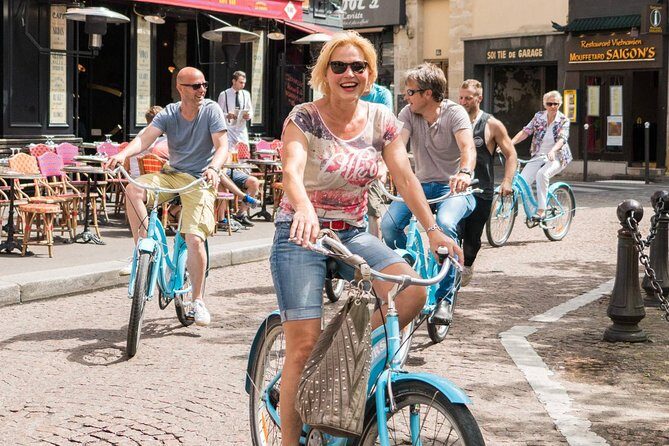
Good news first: bike and helmet rentals are included. That saves time and reduces the stress of finding rentals the day you arrive. You’ll also get a mobile ticket, which tends to make check-in smoother.
What you should prep:
- Wear closed-toe shoes and avoid flip-flops (the tour runs in all weather).
- Bring a small backpack or a plan for carrying water and a layer. The tour data doesn’t promise baskets, and some riders have found they needed to carry their own items.
- If you’re visiting in rain or cold, dress for that. The tour runs in all weather, so “summer outfit” might turn into “why did I come outside like this.”
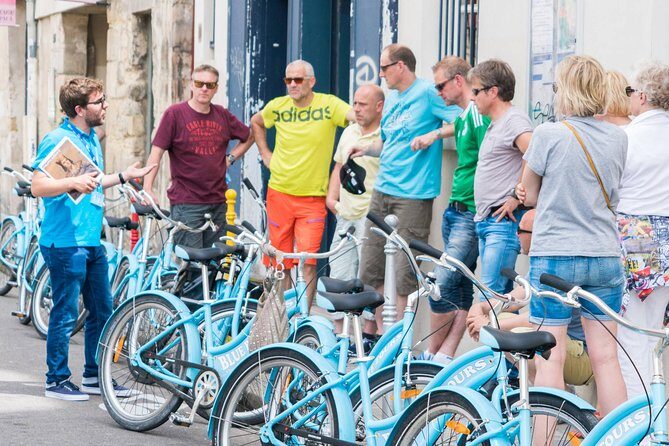
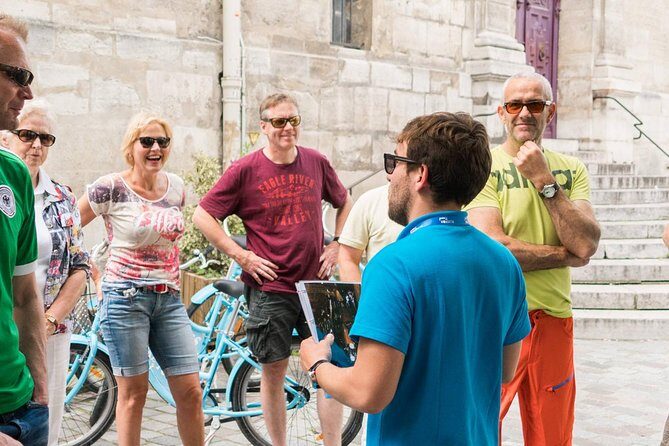
The guide’s job is to keep the group together and explain what you’re seeing. Your job is to keep a steady pace and watch the guide’s cues, especially during crossings.
Latin Quarter stops: Shakespeare and Company to the Pantheon
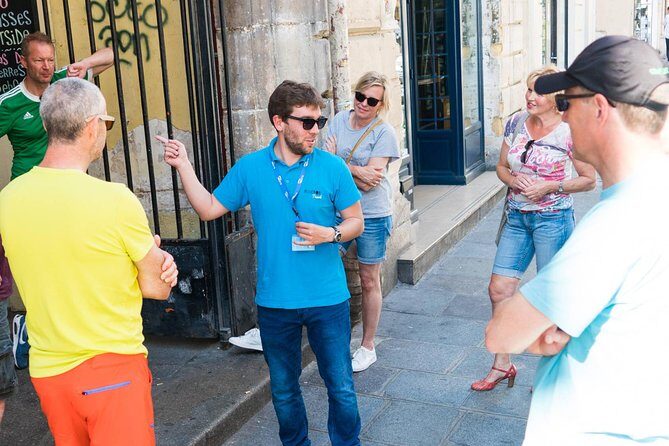
The Latin Quarter section is where the tour earns its “hidden secrets” angle. This is the older Paris feel: narrow streets, medieval-era edges, and landmarks that sit in the middle of neighborhood life instead of behind huge visitor queues.
Shakespeare and Company: a bookstore that acts like a time machine
You start with Shakespeare and Company, a legendary English-language bookstore in a medieval building with wooden beams and plaster walls. The experience here isn’t about a trivia quiz—it’s about atmosphere. You’ll learn a bit about its history, then you get time to explore inside.
What I like about this stop as a bike-tour piece: it’s short but meaningful. You’re close to the action, but you’re not stuck wandering for an hour. And because the store is visually distinct, it’s easy to anchor your memory of the Latin Quarter.
Le Procope: Paris at café pace, not tourist speed
Next up is Le Procope, widely known as the oldest café in Paris, founded in 1686. You’ll get a few stories tied to famous regulars, including Benjamin Franklin, Voltaire, Napoléon Bonaparte, and Victor Hugo.
This stop works well on a bike tour because it gives your legs a reset without breaking the rhythm. It’s also a great contrast to bookstore quiet—café culture, old-school Paris chatter, and quick photos.



Église Saint-Sulpice: big church energy with a small logistics note
Then you cycle to Église Saint-Sulpice. It’s one of the biggest churches in Paris, and the guide’s focus is on the details: the story of its towers, its history, and why it shows up in fiction like The Da Vinci Code.
One practical point: admission is not included here. So if you want to go inside, plan for a separate entry decision. Even if you skip entry, the exterior and the guide’s context make the stop feel useful.
Panthéon: France’s memorial to thinkers, artists, and leaders
You finish this Latin Quarter segment at the Panthéon, which is massive but somehow still under-visited compared with the big-name churches. The tour ties it to people with real cultural reach, including Pierre and Marie Curie, authors like Alexandre Dumas and Victor Hugo, and activist-dancer Josephine Baker.
This is a strong stop for first-timers because it gives you a sense of how France tells stories about national identity—science, literature, activism—stacked under one roof.
Lunch at Marché Monge: rue Mouffetard’s local rhythm
Halfway through the route you hit Marché Monge on rue Mouffetard. Here you get about 30 minutes for lunch, and it’s at your own cost.
Why this stop is valuable: rue Mouffetard is the kind of place you can’t properly “see” from the sidewalk unless you actually sit down. The tour gives you a local focus point—locals go there for savory crêpes, but you’ll also find bakeries and cafés if crêpes aren’t your thing.
A practical tip: this break is time-limited. If you want something quick, decide fast. It’s easy to wander and then realize you only have ten minutes left.
Arenes de Lutèce: Roman Paris you can ride into
Next is Arenes de Lutèce, an ancient Roman arena hidden in the modern city grid. The idea is simple and great: you’re not just near it—you’re cycling into the arena space and hearing how Roman Paris shaped what came later.
If you like history that feels physical, this stop delivers. It’s a reminder that Paris didn’t just happen in medieval times. It’s been layered for a long time, and the city’s architecture keeps that secret in plain sight.
Crossing into Le Marais: a neighborhood built and remembered
After the Latin Quarter, you move into Le Marais, described as having grown from older wetland terrain into a developed area over centuries. The tour also frames Le Marais as a Jewish cultural center, which matters because the stops you’ll visit aren’t only about shopping streets and pretty façades.
Le Marais is where you’ll feel the tour shift from “old Paris charm” to “history you can’t ignore.” If you like your walking tours gentle and your museum stops heavy, this part balances both.
Memorial de la Shoah and Rue des Rosiers: history with street-level context
One of the most emotionally impactful stops is Memorial de la Shoah. The wall is engraved with names of over 3,900 non-Jewish French people who risked their lives—sometimes losing them—to save French Jews during WWII.
This isn’t a casual photo stop. You’ll want a minute to read and absorb what you’re seeing. It’s also one of the reasons the tour pairs Le Marais history with daily neighborhood scenes, like the next stop.
Then comes Rue des Rosiers, a pedestrian street where you can glide along on your bike and peek into shops. The guide connects it to kosher restaurants and boutique stores, and positions it as a focal street of the Jewish quarter.
Practical note: Rue des Rosiers can be busy at peak times, so follow the guide closely and keep your speed controlled. The vibe is fun, but the route still demands attention.
Place des Vosges and Philip II’s wall: beauty plus fortification
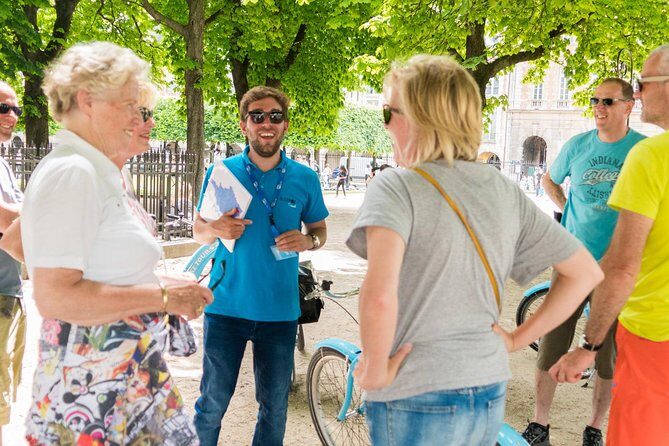
Now you roll to Place des Vosges, one of the prettiest and most distinctive public squares in Paris. The red-brick buildings date back to the 1500s, and the square design mixes elite-looking addresses with everyday life: grass in the center, locals picnicking, and kids splashing in fountains.
As bike-tour material, this stop is perfect because it’s a breather. You’re not sprinting from one thing to another. You’re sitting inside a “view box” where the city looks planned.
After that, you stop at the Wall of Philippe II Augustus, the king who built a massive stone wall around Paris back in the 1100s. You’ll learn about the relationship between Philippe August and England’s Richard the Lionheart, then you’ll see the largest and best-preserved section still visible today.
This is one of those moments where a city’s defensive planning becomes a sightseeing feature. It’s not just a wall—it’s a snapshot of what people feared and how they tried to solve it.
Hôtel de Sens: the fortress-mansion detour you’ll remember
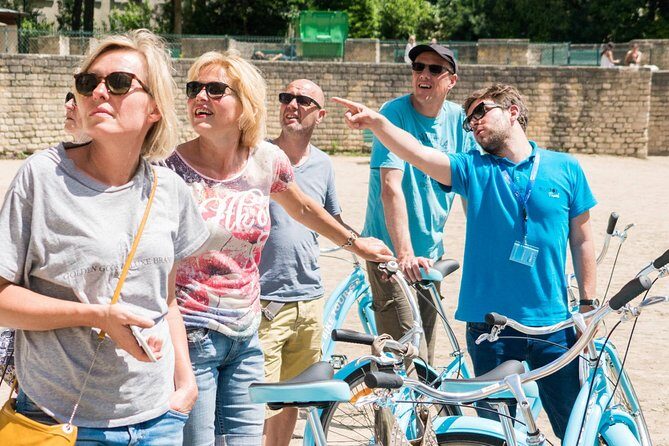
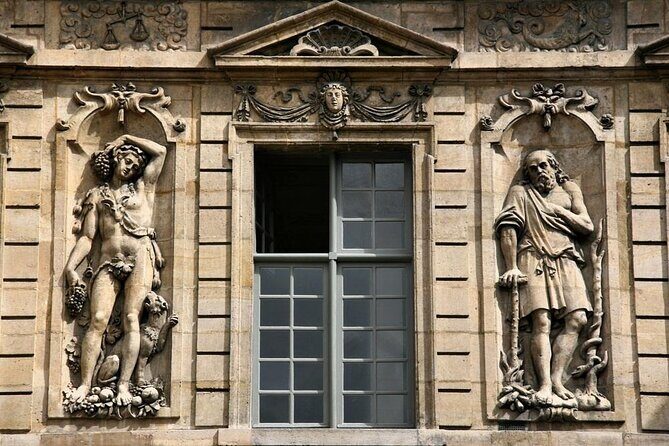
Your last stop is Hôtel de Sens, a fortress-looking mansion tucked away from the main tourist traffic. Turrets and gargoyles give it a dramatic feel, and the guide shares the story behind how it was built—and the humorous detail about a cannonball getting stuck in the facade.
This ending works well because it leaves you with a strong visual memory. Most Paris tours aim for the famous big blocks. This one finishes on a structure that feels like you found it by accident.
Pace, traffic, and which cyclists should say yes
Let’s be straight: you should book this only if you’re comfortable riding a bike in real city conditions. The tour itself says it’s not recommended for adults who scare easily or aren’t confident on bikes, and the route includes moments where crossings can feel exposed.
That doesn’t mean the tour is out of control. The strongest repeated praise centers on guides making riders feel safe and supported. Names that show up for standout leadership include Arnault, Arnaud, Cece, Antoine, Aaron, Joris, Ryan, Lulu, Lucien, Michaelangelo, Joe, Irving, and Michael. The common thread across names is a calm, organized feel and explanations that keep you engaged.
Still, the reality for your body matters:
- If hills and one-speed gearing are a concern for you, you might feel some effort at intersections and steeper segments.
- If you’re traveling with family, note that kids must meet the ride requirements (independent or with reserved child/tandem options).
If you want a gentle, car-free glide, this might disappoint you. If you want a smart “two neighborhoods in one morning” ride that mixes landmark stops with real street atmosphere, it’s a very good fit.
Price value: why $54.42 can make sense in Paris
At $54.42 per person for about 4 hours, the price works best if you factor in what’s included:
- Guide-led route through two neighborhoods with history explained on the move
- Bike rental and helmet rental included
- Multiple timed stops that include several free-entry sights (like Shakespeare and Company time to explore, the café stop, and outdoor-friendly landmarks such as Panthéon and many Le Marais stops)
You pay extra for lunch, and Église Saint-Sulpice has admission not included, so your total day cost will depend on what you choose to enter and what you eat. But even with that, the blend is practical: you’re buying time, routing, and interpretation, not just transportation.
If you’re thinking of DIY biking, add up the mental load: finding a safe route, keeping track of landmarks, and learning what matters at each stop. This tour packages all of that into a planned sequence.
Should you book this Paris bike tour?
Book it if you want a smart active day in Paris that mixes iconic names with quieter neighborhood corners. It’s especially good if:
- you want Latin Quarter + Le Marais in one outing
- you like history that’s explained while you’re moving, not only while you’re seated
- you want included bike/helmet and a guide to manage the route
- you’re comfortable riding and staying alert around city traffic
Skip it (or think twice) if you’re not confident on a bike or you get anxious around cars during crossings. This isn’t a bike lane fantasy.
If your goal is to understand Paris neighborhoods—book culture, café legends, Jewish memorials, a famous square, and fortification remains—then this tour is an efficient way to do it in one morning, without feeling like you raced through everything.
FAQ
How long is the Paris Bike Tour Hidden Secrets in the Latin Quarter & Le Marais?
It’s about 4 hours.
What’s included in the price?
The tour includes a local guide, bike rental, and helmet rental.
Do I need to know how to ride a bike?
Yes. The tour is a bike tour, and participants aged 10 and over must know how to cycle on their own.
What about kids?
Children 1–4 can ride in a reserved child seat on a parent’s bike. Children 5–9 may ride solo if they can, or with a reserved tandem attachment with a parent. All children must have a reserved and paid spot.
Is food included?
No. There’s a lunch break at Marché Monge, and you pay for your own food and drinks.
Where does the tour start and end?
It starts at Fontaine Saint-Michel, Pl. Saint-Michel, 75005 Paris and ends back at the same meeting point.