REVIEW · PARIS
Paris Landmarks & Crepes
Book on Viator →Operated by Bonjour Local Tours · Bookable on Viator
Four hours, and Paris feels packed. This small-group-style tour strings together major sights from Bastille to the Eiffel Tower, with a guide who turns stops into a clear story you can actually remember. You also get a proper crêpe break in the Latin Quarter area, then a final push near La dame de fer after a quick metro hop.
I love the way the route mixes famous places with the in-between details that make Paris feel lived-in. I also like that the crêperie stop is built in, so food is not an afterthought when you are walking all day. One thing to consider: you will see highlights like Notre-Dame and the Louvre from the outside, and you will not go up the Eiffel Tower, so this is sightseeing-without-lines rather than a ticket-heavy day.
In This Review
- Key Things You’ll Remember From This Paris Tour
- Bastille to the Marais: Paris’s Revolution to Royal Prestige
- Notre-Dame and the Latin Quarter Crêpe Break That Actually Feels Like a Pause
- Saint-Germain-des-Prés: Cafés, Church History, and a Bridge View of Paris
- Outside Louvre Territory, Plus a Tour Through Napoleon’s Mini-Arc
- Tuileries to Concorde: Two Big Public Squares That Define the Middle of Paris
- Champ de Mars and the Eiffel Tower Finish Without the Ticket Stress
- Lunch, Crêpes, and the Real Value of Paying for a Guided Half Day
- How Much Walking Is This, and Who Will Enjoy It Most
- Should You Book Paris Landmarks & Crepes?
- FAQ
- Does this tour include lunch and crêpes
- Do we go inside the Louvre Museum
- Do we go up the Eiffel Tower
- How long is the tour
- What language is the tour offered in
- Where does the tour start and end
Key Things You’ll Remember From This Paris Tour
- From Bastille to Eiffel in 4 hours: a focused sweep that helps you get your bearings fast
- Marais + Saint-Germain walking time: you get the older Paris vibe, not just postcard stops
- Hôtel particulier details: private mansions like Hôtel de Sully and Hôtel de Sens show the city’s power history
- One included crêpe stop in Place Saint Andre des Arts: a real break, not a quick bite
- Eiffel Tower viewing up close, but not inside: you finish near the tower without the climb
Bastille to the Marais: Paris’s Revolution to Royal Prestige
You start at Place de la Bastille, a square where the Bastille prison once stood. Today there is no prison remnant, but the area still anchors the Revolution story: the July Column (Colonne de Juillet) marks the 1830 July Revolution, and you can spot landmarks like the Bastille Opera and the Bastille métro station nearby.
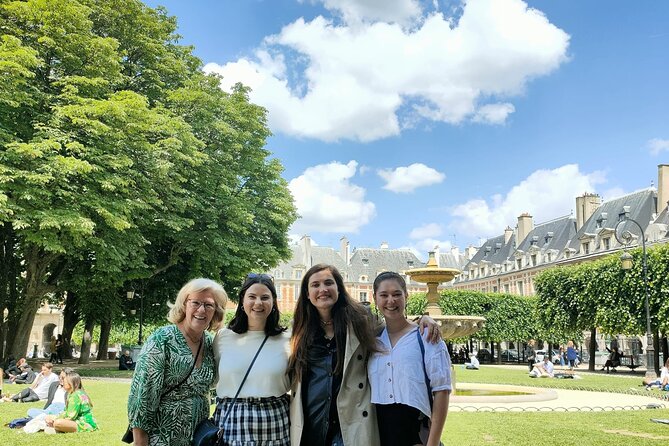
From there, you move into the Marais, and it changes your mood quickly. Place des Vosges is the oldest planned square in Paris, originally called Place Royale, and it sits between the 3rd and 4th arrondissements. This is where you can feel how Paris looks when power had a postal-code.
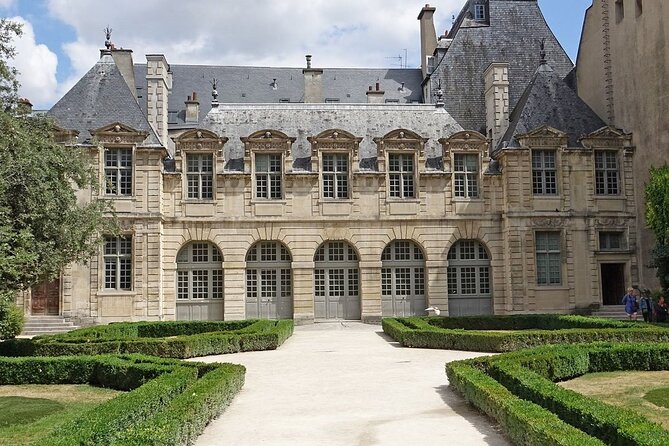
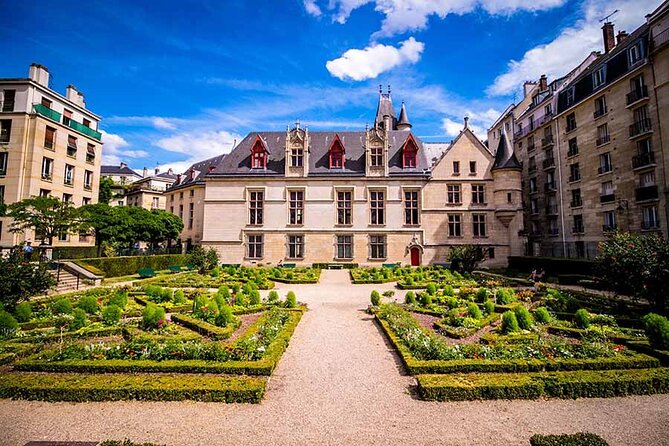
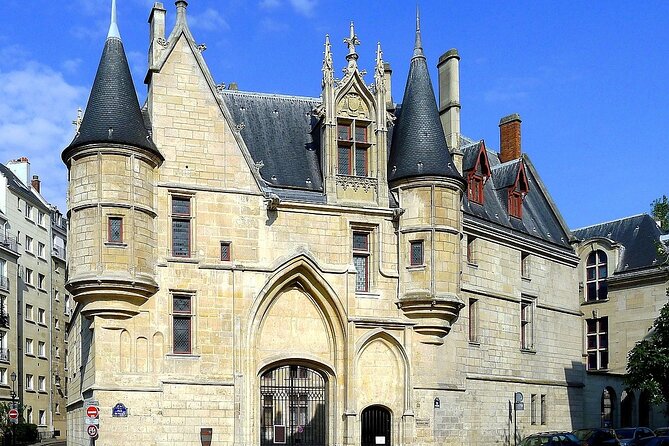
Your next stops lean into architecture and heritage. At the Cour et jardin de l’Hotel de Sully, you are looking at a Louis XIII-style hôtel particulier, built in the early 17th century. It now houses the Centre des Monuments Nationaux, which makes this kind of stop more than a quick glance, because it is part of how France manages national heritage.
Then comes Hôtel de Sens, a 16th-century private mansion that currently houses the Forney art library. If you like seeing how buildings get repurposed instead of frozen in time, this is a satisfying detour. You are not chasing museum admission here, just learning what you are actually standing beside.
You can also read our reviews of more tours and experiences in Paris.

Notre-Dame and the Latin Quarter Crêpe Break That Actually Feels Like a Pause
The tour heads next to Cathedrale Notre-Dame de Paris, on the Île de la Cité. Even from outside, Notre-Dame is a masterclass in French Gothic design: think rib vaults and flying buttresses, plus those huge rose windows and sculptural detail. It is one of the places where Paris looks like it took its time.
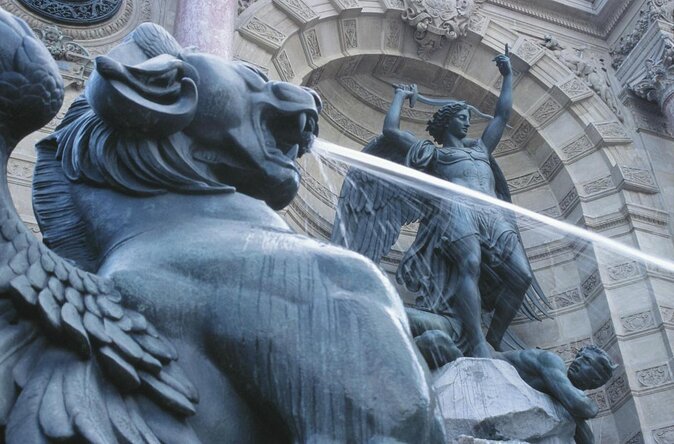
Stop number six is Fontaine Saint-Michel in Place Saint-Michel. This is a monumental fountain built in the Second Empire period (1858–1860) by architect Gabriel Davioud. It is also a great breather visually, because fountains give you a landmark moment without demanding you line up for tickets.
And then you get to the part people talk about: the crêpe stop at Place Saint Andre des Arts. You get 30 minutes included at a traditional French crêperie, which matters because it turns into a real rest stop during the walking-heavy half day. In the feedback I have seen from this experience, the crêpes came up as a clear highlight, so you can expect this to be more than a token snack.
If you are the type who plans food around where you walk, this timing is smart. You eat early enough that you still have energy for the rest of the route, but late enough that you are ready for comfort food.
Saint-Germain-des-Prés: Cafés, Church History, and a Bridge View of Paris
After crêpes, you slide into Saint-Germain-des-Prés, one of the 6th arrondissement quarters centered on the former Abbey area. You will get quick context on the neighborhood’s boundaries and its famous cafés, including names like Les Deux Magots, Café de Flore, and le Procope. This is also where you learn why the area mattered in the 1940s and 1950s for existentialist thinkers like Jean-Paul Sartre and Simone de Beauvoir.
The tour does not stop at cafés, though. You also visit Eglise Saint Germain Des Pres, the Roman Catholic parish church that traces back to a Benedictine abbey founded in the 6th century. You can connect the dots as you look at the building: it was destroyed by the Vikings, rebuilt, and renamed for Saint Germain in the 8th century. The key point for you: it is considered the oldest existing church in Paris, so the storytelling here is not abstract.
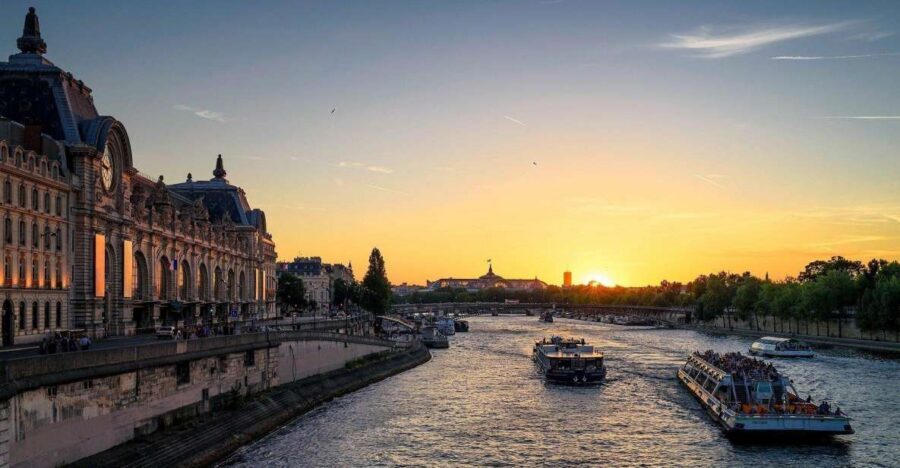
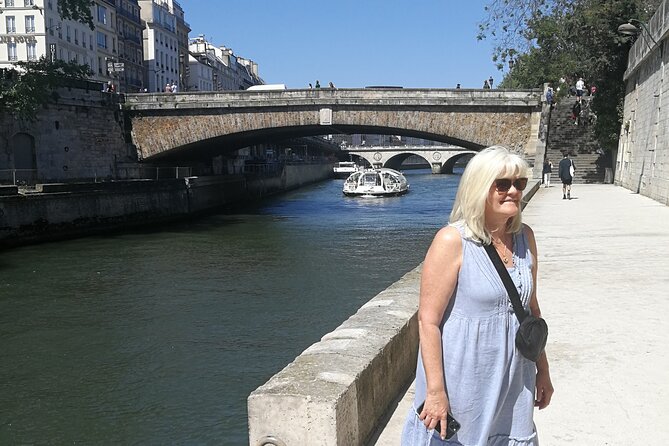
Next is Pont des Arts, a pedestrian bridge over the Seine. It links the Institut de France with the Louvre area (the Palais du Louvre cour carrée). Bridges are useful on a walking tour because they give you a steady viewpoint: you can look along the river, reset your legs, and still feel like you are progressing.
Outside Louvre Territory, Plus a Tour Through Napoleon’s Mini-Arc
You then move into the big museum zone with Louvre Museum, but you do not go inside. You will see the Louvre as a landmark and get the setting around iconic works like the Mona Lisa and the Venus de Milo, without spending your limited time inside galleries. This works well if your goal is to cover a lot and learn what to look for later when you return on your own terms.
A short architectural detour follows at Arc de Triomphe du Carrousel. This is the triumphal arch in Place du Carrousel, built between 1806 and 1808 to commemorate Napoleon’s victories during the Wars of the Third and Fourth Coalitions. It is smaller than the Arc de Triomphe de l’Étoile, but built around the same era, which helps you understand why Paris filled the city with monumental storytelling.
Tuileries to Concorde: Two Big Public Squares That Define the Middle of Paris
You then get Jardin des Tuileries, the public garden between the Louvre and Place de la Concorde. It started as the garden of the Tuileries Palace in 1564, opened to the public in 1667, and became public park space after the French Revolution. Even just walking through, you get a feel for how Parisians use green space—meeting, strolling, and relaxing—without turning it into a long detour.
From there, you cross into Place de la Concorde, one of Paris’s major squares and the largest square in the capital. It is also historically intense: it was a site of public executions during the French Revolution, including King Louis XVI, Marie Antoinette, and Maximilien Robespierre, and it was temporarily renamed Place de la Révolution. You might want a quick mental reset here—this is one of the places where Paris history can feel very real.


Champ de Mars and the Eiffel Tower Finish Without the Ticket Stress
The next stop is Champ de Mars, the large green space between the Eiffel Tower and École Militaire. The name connects back to the Roman Campus Martius, and the lawns here were once used for military drilling. It is also practical: being a big open area near the Eiffel Tower makes it easier for your group to gather and see the tower clearly.
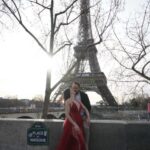
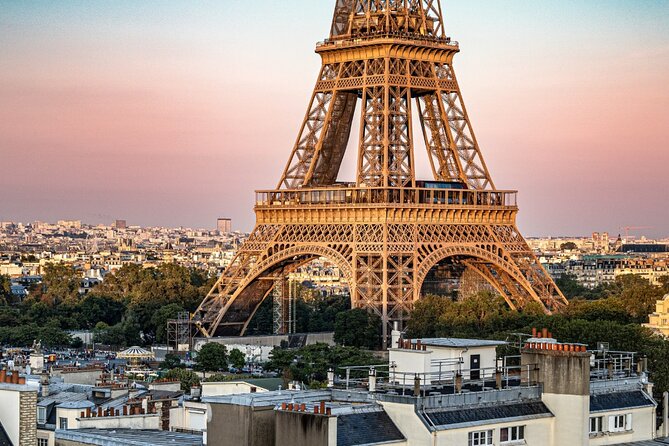
Finally, you reach the Eiffel Tower itself. You get the view right near the tower (so the structure is big and close), but you do not go up. The tower’s “dame de fer” nickname comes from its iron identity, and it was built from 1887 to 1889 for the 1889 World’s Fair. You also get the broader context: it faced criticism at first, then became a global icon and a UNESCO World Heritage Site.
This finish is a smart choice if you want the Eiffel Tower moment but prefer not to spend your half day in queues. You end in front of the Eiffel Tower on the Champs de Mars area, and the route is timed so the last stretch feels rewarding instead of exhausting.
Lunch, Crêpes, and the Real Value of Paying for a Guided Half Day
The total price is $153.80 per person, and the big reason it can feel worth it is that it includes both lunch and the crêpe stop (30 minutes at a traditional crêperie). That matters because food is a moving target when you are walking across multiple neighborhoods, and having it planned saves your energy.
You are also paying for a guide who keeps the story straight as you hop between eras: Revolution-era Bastille, royal Marais squares, medieval Gothic architecture, and monumental Napoleonic-era Paris. One highlight from the guide experience is the strong history explanations delivered in a friendly way; in particular, Simone was mentioned in feedback as helpful, kind, and very prepared. If you like tours where you actually understand what you’re seeing, that counts.
Two practical trade-offs are also baked in:
- You do not go inside the Louvre (you see it from the outside).
- You do not go up the Eiffel Tower (you are right next to it instead).
So if your dream day is museum galleries and tower elevators, this is not that. But if your dream is a high-impact half-day that hits the main icons plus neighborhood texture, it is a solid fit.
One more value signal: this tour is often booked far in advance (on average 85 days). If you want a specific day, booking earlier is a safer move.
How Much Walking Is This, and Who Will Enjoy It Most
This is designed as a walking-oriented route across multiple central neighborhoods, with stops spaced for short looks, photos, and guide explanations. If you can handle stairs or steps, you will do fine. The feedback I saw also points to steps as part of the physical rhythm of the day, so wear shoes you trust.
It is also pitched as suitable for most travelers, and it is English-language. You are not dealing with a huge open registration crowd either, since this is described as a private tour/activity where only your group participates. That format usually helps the guide keep things moving without losing you to the shuffle.
Should You Book Paris Landmarks & Crepes?
Book it if you want:
- a guided, time-efficient sweep from Bastille to the Eiffel Tower in about 4 hours
- a route that includes Marais + Saint-Germain + Seine-area viewpoints
- an actual crêpe stop and lunch included so you are not scrambling
- iconic sights like Notre-Dame and the Louvre, but experienced as exterior storytelling rather than ticket marathons
Consider another option if you want:
- the inside experience of the Louvre or the Eiffel Tower summit itself
- a slower pace with lots of free time to wander without a plan
FAQ
Does this tour include lunch and crêpes
Yes. Lunch is included, and there is an included crêpe stop at Place Saint Andre des Arts with 30 minutes allocated.
Do we go inside the Louvre Museum
No. The tour does not go inside the Louvre Museum, only outside.
Do we go up the Eiffel Tower
No. The tour goes right next to the Eiffel Tower, but you do not go up in it.
How long is the tour
The duration is approximately 4 hours.
What language is the tour offered in
The tour is offered in English.
Where does the tour start and end
It starts near Place de la Bastille at Opera National de Paris area, and it ends in front of the Eiffel Tower on the Champs de Mars area.