REVIEW · PARIS
Paris Louvre Guided Tour To Mona Lisa
Book on Viator →Operated by Adventour · Bookable on Viator
The Louvre can feel like a maze. This tour is built for a fast, focused hit of the museum’s biggest names. You’ll move through standout works that cover Renaissance art, ancient sculpture, and major French paintings in a short time window.
I like that you get a small-group format (max 25), which makes it easier to ask a question and keep your pace without feeling swept along. I also like the artwork mix: you’re not just chasing the Mona Lisa. You also see the Venus de Milo, the Winged Victory of Samothrace, plus political and dramatic French paintings like Liberty Leading the People and The Raft of the Medusa, and you finish with an Egyptian highlight like the Large Sphinx of Tanis.
One thing to think about: this is a tight schedule, and the amount of storytelling can vary by guide. On some days, crowd and security lines can still slow things down, so you may want to arrive with patience and a backup plan for seeing anything beyond the core highlights.
In This Review
- Key things to know before you go
- Meeting at Arc de Triomphe du Carrousel: where your tour really starts
- Price and what you’re really paying for
- Inside the Louvre: what you’ll see in about an hour
- Mona Lisa (La Joconde): the name that controls the whole room
- Venus de Milo: how to notice when arms are missing
- Winged Victory of Samothrace (Nike of Samothrace): drama you can feel
- Napoleon’s Coronation (Le Sacre de Napoléon): royal spectacle made paint
- Liberty Leading the People (La Liberté guidant le peuple): politics that still hits
- The Raft of the Medusa (Le Radeau de la Méduse): tragedy turned into a lesson
- Large Sphinx of Tanis: the Louvre’s Egyptian corner matters
- How the guide can make or break your experience
- Crowds and lines: why timing still matters
- Who this tour is best for
- A few smart ways to get more from the hour
- Should you book this guided Louvre tour?
- FAQ
- FAQ
- Is the tour in English?
- How long is the guided tour?
- How much does the tour cost?
- What does the tour include?
- Where does the tour meet?
- Where does the tour end?
- How many people are in the group?
- Is admission free for some visitors?
- What if the museum visit can’t happen due to weather?
Key things to know before you go
- Mona Lisa plus major “next door” hits so you don’t waste your precious time staring at crowds
- Ancient Greece and Egypt are part of the route, not just French paintings
- French political art in one pass (July Revolution to Napoleonic spectacle)
- Small-group size (max 25) keeps the experience more interactive
- Headsets may not be used for the very smallest groups, so you’ll want to stay where you can hear
- The guide quality can swing, from very informative to very light
Meeting at Arc de Triomphe du Carrousel: where your tour really starts
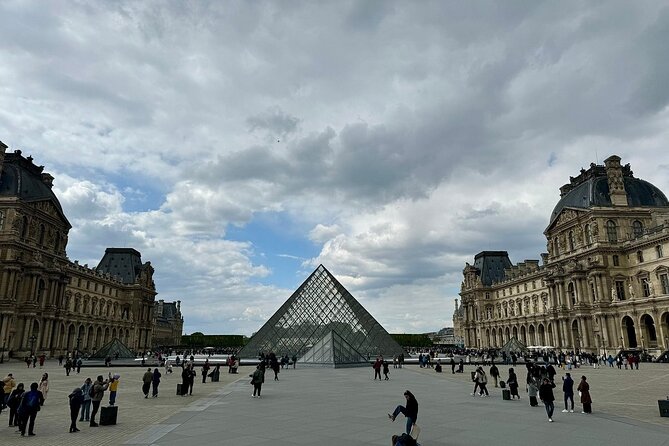
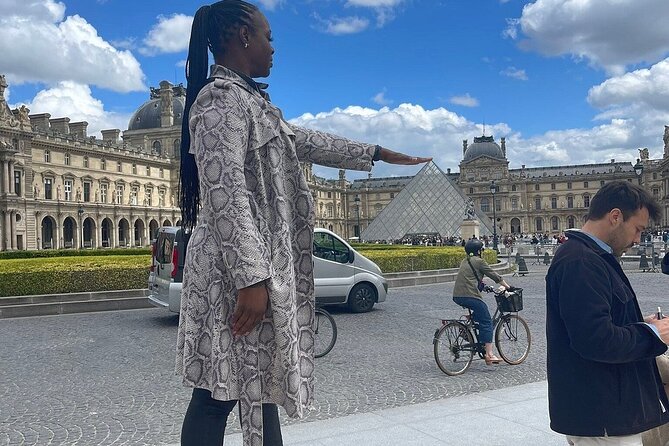
This experience starts right by the Arc de Triomphe du Carrousel at Pl. du Carrousel, 75001. That’s a practical choice. You’re on the edge of the museum grounds, so you’re not spending your tour time crossing half the city.
If you want the day to feel smooth, do two things. First, arrive a bit early so you can check the exact meeting spot and get oriented. Second, mentally budget for walking. Even with a guided plan, the Louvre is huge, and you’ll lose time if you’re still figuring out where you are when the group assembles.
The tour ends back at the meeting point, which is helpful if you plan to hop into another museum, café stop, or a Seine-area stroll afterward. You won’t be dropped somewhere random inside the Louvre like a left-behind tourist extra.
You can also read our reviews of more guided tours in Paris



Price and what you’re really paying for
The price is $95.03 per person, and the big value hook is that the tour includes your Louvre admission ticket (noted as a €22 adult entrance ticket) plus the guided component.
Here’s how I think about value for this type of experience:
- If you buy a ticket alone and still end up waiting in long lines while trying to find the right rooms, you can burn most of your time.
- If you want to see specific “must-sees” in a short time, the guide becomes the time-saving part. You’re paying for direction, pacing, and a simple route through the most recognizable works.
That said, this isn’t a full-day Louvre education. It’s built for a 1 to 2 hour window, and you’ll get the most satisfaction if your goal is highlights only.
Inside the Louvre: what you’ll see in about an hour
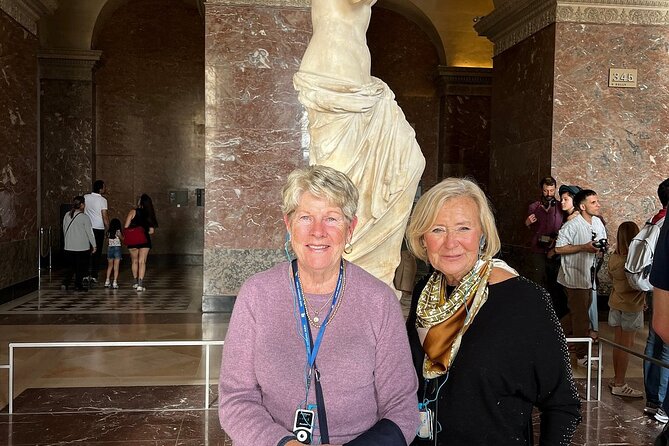
The tour is anchored at one main Louvre visit, with an estimated 1 hour inside the museum and a total duration that can run up to about 2 hours depending on the day and how the group moves.
The route is basically: big icons first, then a quick sweep through major art that many people don’t realize the Louvre owns in the same collection. The payoff is that you leave with a mental map of what belongs where: a Renaissance portrait, Greek sculpture, Hellenistic drama, and then big French storytelling paintings tied to real political events.
Below is what you should expect to catch during that highlight run—and why each stop matters.
Mona Lisa (La Joconde): the name that controls the whole room
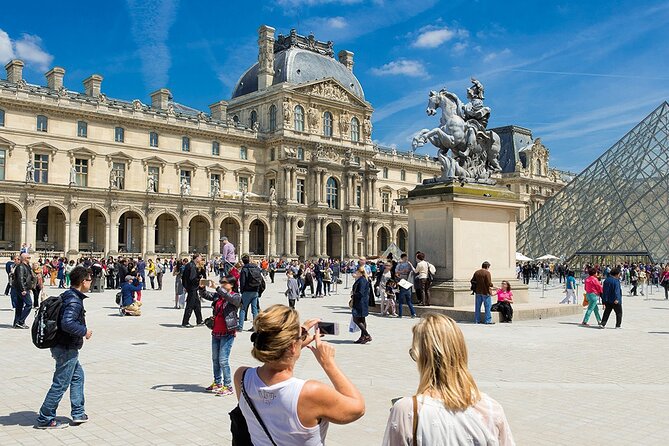
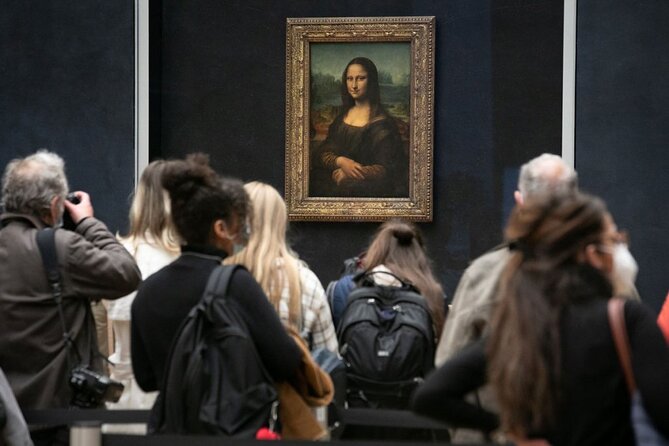
Yes, the Mona Lisa is the star. But it’s also the one that can steal your focus and your time if you’re not strategic.
On this tour, you don’t just arrive at her behind glass and vanish into the crowd. The intent is to help you see why the painting became a world obsession in the first place, and to do it while you’re still moving with the group instead of getting trapped by the constant shuffle.
Do keep your expectations realistic. The Louvre version of seeing the Mona Lisa is always a mix of art and atmosphere—there’s a lot of standing. Your best strategy is to treat the visit as a moment you confirm in person, then move on quickly to the next masterpieces so the rest of the tour doesn’t become one long crowd stand.
Venus de Milo: how to notice when arms are missing
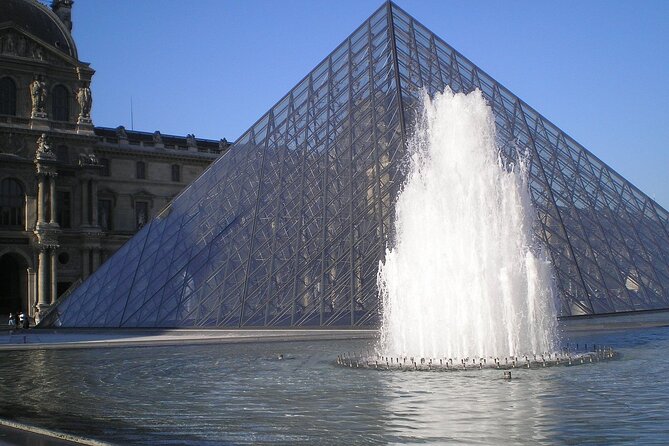
The Venus de Milo is famous for one thing you can’t miss: missing arms. But the best part of seeing her on a guided highlight tour is that you tend to notice the “how” as much as the “what.”
Even in a short stop, it’s easier to learn what the statue is doing visually—pose, balance, and the kind of attention Greek sculpture put into idealized form. The guide’s job here is to prevent you from treating her like a photo stop only.
If your time is limited, this is a good one. She’s recognizable, she’s approachable as a standalone work, and she anchors the tour’s ancient-sculpture thread.






Winged Victory of Samothrace (Nike of Samothrace): drama you can feel
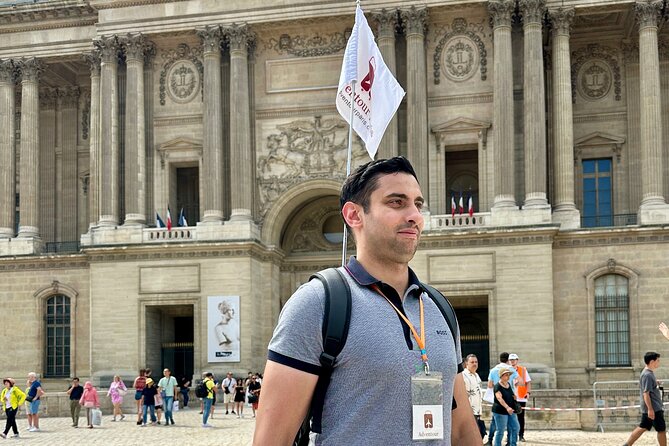
The Winged Victory of Samothrace is one of those artworks that looks impressive in pictures and then becomes genuinely physical when you’re there.
This is a solid choice for a short guided tour because she’s visual storytelling in sculpture form. You can see the energy in the pose, the sense of motion, and why people still track her as a key moment in Hellenistic art.
One practical note: big crowd pressure tends to gather around the most dramatic pieces. If the group keeps a good pace here, you’ll get a strong look without turning the stop into a long wait.
Napoleon’s Coronation (Le Sacre de Napoléon): royal spectacle made paint
From ancient sculpture you jump into French art with massive ambition. The Coronation of Napoleon by Jacques-Louis David is the kind of painting that makes the Louvre feel like a museum of power, not just beauty.
This part of the route helps you connect the museum highlights to real historical moments. When you see Napoleon’s coronation through the lens of a major court painter, you start understanding how official power got packaged as culture.
In a short tour, the danger is that you only skim the surface. The good guide remedy is short, clear context: what you’re looking at, why it was painted, and what kind of message it was meant to carry.
Liberty Leading the People (La Liberté guidant le peuple): politics that still hits
Eugène Delacroix’s Liberty Leading the People is another huge-name work that many people know but don’t fully connect to its historical moment.
The big payoff of seeing it in a guided highlight run is that you get the link to the July Revolution of 1830, not just the iconography. This isn’t just a symbol-fest. It’s a painting tied to unrest, public emotion, and the way art becomes propaganda, memory, and myth at the same time.
If the guide is doing their job well, you’ll walk away thinking about why the image is built the way it is—so it feels like a scene, not a poster.
The Raft of the Medusa (Le Radeau de la Méduse): tragedy turned into a lesson
Théodore Géricault’s The Raft of the Medusa is dramatic and heavy. It’s also a smart choice for this kind of tour because it changes the tone after all the monumental icons.
This painting works because it tells a story. In a shorter tour format, you’ll get the advantage of someone steering you to what matters most in the composition, so you don’t leave with only “it’s sad and famous,” and nothing else.
If you’re the type who loves seeing how artists build meaning through arrangement and emotion, this stop can be one of the most memorable pieces on the whole route.
Large Sphinx of Tanis: the Louvre’s Egyptian corner matters
The stop that often surprises people is the move into ancient Egypt with the Large Sphinx of Tanis. It’s a reminder that the Louvre isn’t just a European-painting factory.
Seeing the sphinx in a guided run helps you understand that the museum’s collections span far beyond the paintings everyone posts online. Even if your focus is the Mona Lisa, this Egyptian stop broadens your perspective without adding hours.
How the guide can make or break your experience
One reason the reviews score this tour at 4.2 (with a spread) is simple: guide style can vary a lot.
Some guides are quick and minimal with explanation. That can leave you thinking you could have done more on your own with a museum map. Other guides bring strong, lively energy and help you notice details you would miss if you only treated the day as a checklist.
Names you may see associated with excellent guiding include Violet and Aaron. If your booking assigns one of the more story-driven guides, you’re likely to enjoy the tour more because the works start connecting into a single theme instead of acting like separate photo ops.
There’s also a practical sound piece. If your group is small, you might not get headsets, and you’ll want to stand where you can hear clearly. If you’re near the front and the guide is speaking confidently, it usually works fine. If you’re stuck farther back, clarity can drop.
Crowds and lines: why timing still matters
Even with a guided route and an included adult admission ticket, the Louvre can be busy. On certain days, longer security lines or changes on the museum side can reduce how much you truly absorb.
What I recommend you do is treat this tour as a best-effort highlight experience, not a guaranteed slow stroll. If you’re easygoing about pacing, you’ll be happy with what you get.
And if you’re the type who gets stressed by queues, arrive early and keep your plans flexible afterward. The Louvre doesn’t always play by a stopwatch, even when the tour has a plan.
Who this tour is best for
This is a great fit if you want:
- A highlights-only Louvre day without spending hours deciding what to see
- A structured route that includes not just the Mona Lisa, but also Greek sculpture and big French painting
- A short time window (about 1 hour inside) and you’d rather use your feet efficiently
It’s not ideal if you’re hoping for:
- A slow, deep education across room after room
- A fully custom experience that answers every question at length
- A day that leaves you with time to wander off and read everything
A few smart ways to get more from the hour
You’ll enjoy the tour more if you go in with a tiny bit of prep.
- Pick one work besides the Mona Lisa that you care about most. Then when the guide talks, you’ll know what to listen for.
- Decide what matters to you: composition, history, symbolism, technique, or just the wow factor. Your attention will stay on track.
- When the group moves on, don’t try to fixatedly reframe your entire opinion of a work in 30 seconds. Treat it as the first look, then if you want more, go back later on your own.
If you only have one Louvre shot, this kind of guided highlight run is a strong way to get your bearings fast.
Should you book this guided Louvre tour?
Book it if your goal is to see the Louvre’s headline works in a short, guided plan, with admission included and a small-group setup that can make asking questions easier. I especially like it for people who want the Mona Lisa experience but also want Greek and Egyptian representation plus major French masterpieces in the same visit.
Skip it or choose a different format if you strongly prefer long explanations, headset audio coverage for sure, or a slower pace that lets you read and linger. With a one-hour museum visit, you’ll get the main hits, but not the full museum.
If you go in knowing it’s a highlights run—and you’re flexible about crowd timing—you’ll likely feel like you got real value for your money and walked out with a clearer sense of what the Louvre is built on.
FAQ
FAQ
Is the tour in English?
Yes. This tour is offered in English.
How long is the guided tour?
It’s listed as approximately 1 to 2 hours, with the museum portion noted at about 1 hour.
How much does the tour cost?
The price is $95.03 per person.
What does the tour include?
It includes all fees and taxes, a ticket to the Louvre, and the guided tour. It also notes a €22 entrance ticket to the museum for adults.
Where does the tour meet?
The meeting point is Arc de Triomphe du Carrousel, Pl. du Carrousel, 75001 Paris, France.
Where does the tour end?
This activity ends back at the meeting point.
How many people are in the group?
The tour has a maximum of 25 travelers.
Is admission free for some visitors?
Yes. Free admission applies to visitors under 18 and EEA residents under 26, with valid ID and proof of residency.
What if the museum visit can’t happen due to weather?
This experience requires good weather. If it’s canceled due to poor weather, you’ll be offered a different date or a full refund.