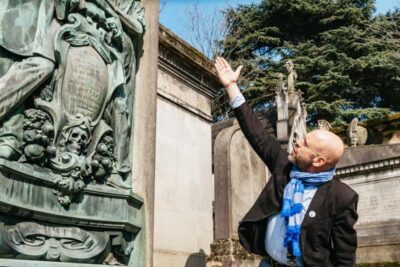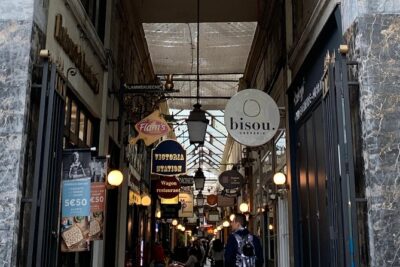
REVIEW · PARIS
Paris: Montmartre Private Guided Tour & River Cruise Option
Book on GetYourGuide →Operated by Exploring Tours and Services · Bookable on GetYourGuide
Montmartre looks better without a crowd. This private guided tour in Paris lets you take in Sacre-Coeur and the hilltop views at your own pace, with a guide who explains how the neighborhood became the city’s artist playground. I love the views from the top of Montmartre and the option to carry the art mood straight onto the Seine. One thing to consider: you’re walking uphill, and this tour isn’t wheelchair-friendly.
I also like that you can choose the Seine cruise option for a one-hour ride with an open ticket you can use any day and any time in the stated window. Guides are live and available in English, Spanish, Italian, and French, and in past departures names like Jasmine, Joaquín, and Rebecca show up as guides people valued for being prepared and patient.
You’ll meet the guide at Anvers metro (Line 2) and start with a focused neighborhood walk that mixes famous art locations, classic Paris postcard stops, and time to breathe. Wear comfortable shoes and keep your phone charged, because you’ll want photos at almost every turn.
In This Review
- Key highlights worth planning for
- Why Montmartre feels like Paris’ art lab (not just a viewpoint)
- Meeting point, timing, and the small rules that keep things smooth
- Anvers to Sacre-Coeur: the hill walk and how the funicular fits
- Sacre-Coeur Basilica: skip the ticket line and focus your visit
- Place du Tertre: where the art happens (and you get real time to enjoy it)
- Vineyards of Montmartre and Moulin de la Galette: the unexpected calm
- Le Bateau-Lavoir and the Wall of Love: art history you can actually point at
- Moulin Rouge from the foot of the hill: iconic, but keep your expectations sane
- Adding the Seine cruise: a simple way to multiply your Paris views
- Price and value: what you’re really paying for
- Who this tour suits best (and who should skip it)
- Should you book this Montmartre + Seine combo?
- FAQ
- Where do I meet the guide?
- How long is the Montmartre part of the tour?
- Is the funicular included if I can’t walk up the hill?
- Is this tour wheelchair accessible?
- What’s included if I choose the Seine River cruise option?
- Where do the Seine cruises depart from?
- Do I need to make a reservation for the Seine cruise?
Key highlights worth planning for
- Private pacing that keeps the experience calm and flexible.
- Skip the ticket line experience at the Basilica of the Sacred Heart.
- Place du Tertre break time where you can watch artists at work and grab a snack nearby.
- Picasso and Cubism context tied to real places, not just names on a map.
- Wall of Love (I love you in many languages) plus photo-friendly stops around Montmartre.
- Optional Bateaux Parisien Seine cruise with an open ticket (no reservations, frequent departures).
Why Montmartre feels like Paris’ art lab (not just a viewpoint)
Montmartre is famous for its photos, but it’s more interesting when you understand why artists flocked here in the first place. This tour is built around that idea: you don’t just “see stuff,” you get the story that makes the streets click. The private format matters, because you can ask questions when something grabs your attention, instead of waiting for a group pace.
The tour also does a nice job mixing big landmarks with smaller, human-scale moments. You’ll be at Sacre-Coeur for the dramatic panorama, then you’ll drop down into the artist-energy area around Place du Tertre, and later you’ll trace art history through places linked to Picasso and the Cubism movement. It’s a solid plan for a short visit because you get both the wow-view and the “why.”
And yes, the Seine cruise option is a smart add-on. It turns Montmartre’s art mood into a river-side perspective of Paris—especially if you haven’t seen much of the city from the water yet.
You can also read our reviews of more boat tours in Paris



Meeting point, timing, and the small rules that keep things smooth
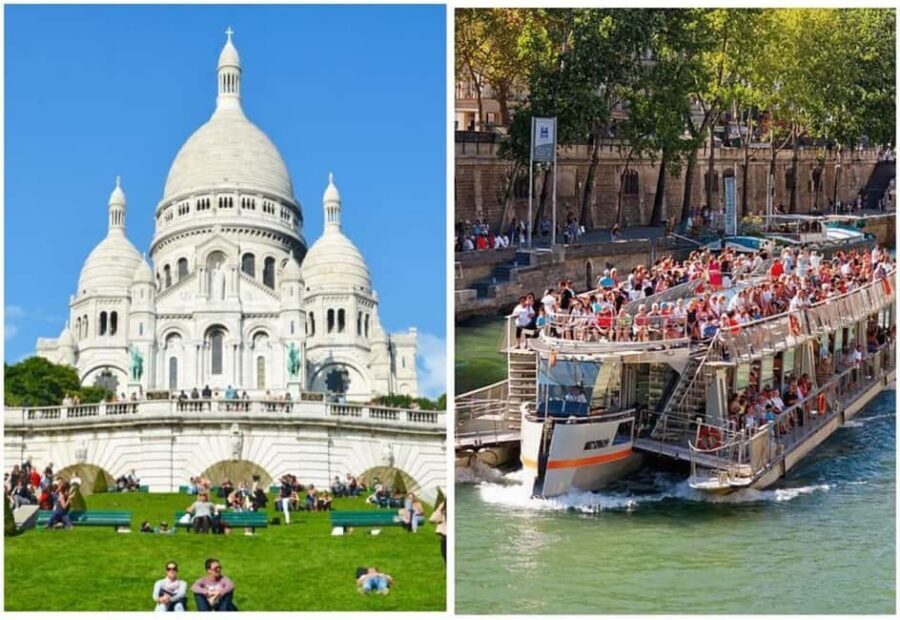
You’ll start at the Anvers metro station, exit at Line 2. The guide will be holding a Get Your Guide sign. Arrive about 10 minutes early. If you show up late, you’re not guaranteed to join the tour.
The tour lasts about 2.5 hours for the Montmartre portion. That’s long enough to cover the key stops without turning into an endurance event—assuming you’re comfortable with steps. If you’re not great with uphill walking, you’ll still have options, but the tour overall is not designed for mobility limitations.
Bring comfortable shoes. Seriously. Montmartre isn’t wearing sneakers-friendly manners. Also bring a charged smartphone, because you’ll be stopping for views and photo angles often.
If you travel with large bags or oversize luggage, you should plan to leave them behind. This experience doesn’t allow oversize luggage or large bags.
Anvers to Sacre-Coeur: the hill walk and how the funicular fits
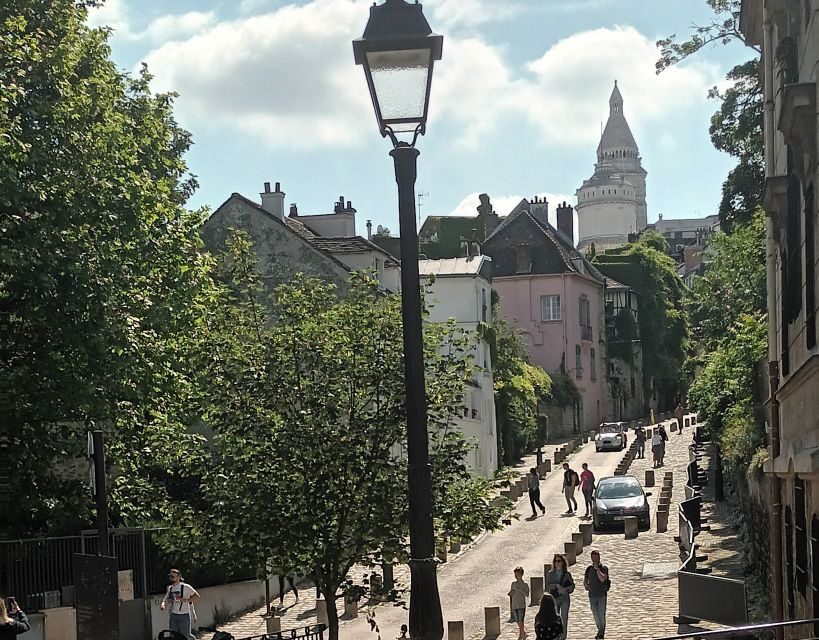
From Anvers, you head uphill with your guide toward Sacre-Coeur Basilica. Along the way, you’ll get the kind of Paris panorama that makes you stop mid-step just to reframe the city in your mind. This part is also where the private tour feels practical—your guide can adjust the pace and help you time photo stops without feeling rushed.
There’s an important note: this tour includes a walk up the hill and is not accessible to wheelchair users or people with mobility issues. But if you need a break or simply can’t manage the full climb, you can take the funicular together with your guide.
The funicular tickets are not included, so you’ll want a backup plan for that cost. If you think you’ll need it, decide early rather than waiting until you’re already exhausted.
Sacre-Coeur Basilica: skip the ticket line and focus your visit
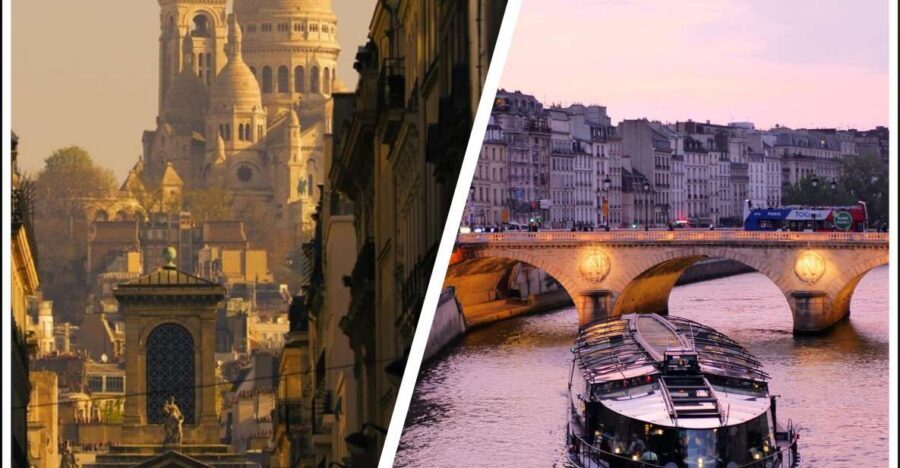
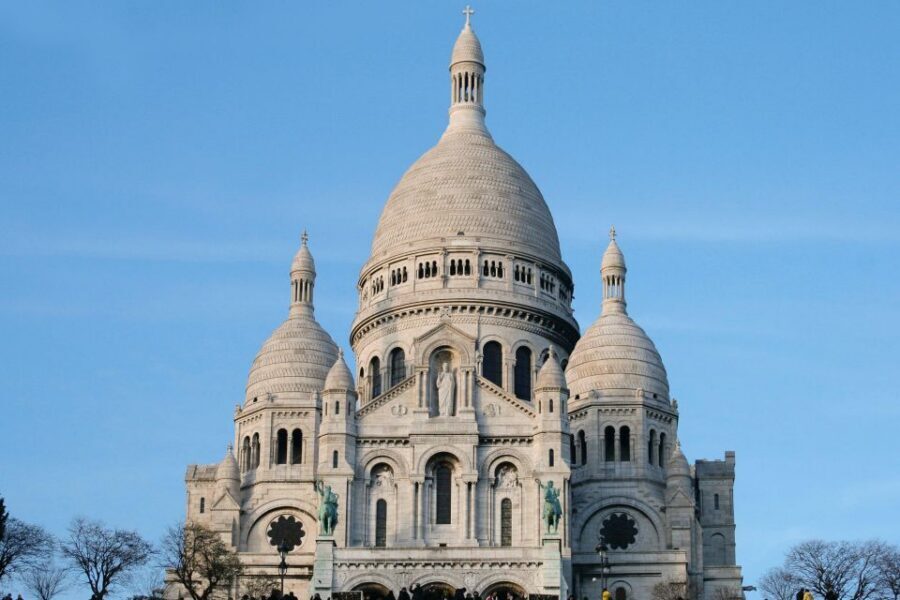
At Sacre-Coeur, you’ll get a guided visit of the Basilica of the Sacred Heart and time to take in the atmosphere. The big advantage here is that you’re not spending your limited time wrestling with ticket lines. That’s a real value point, because Sacre-Coeur is one of those places where delays can eat your day.
What I like about a guided stop at Sacre-Coeur is that it’s easy to turn it into just another pretty interior. With a guide, you’re more likely to notice how the space is used, how it fits into Montmartre’s identity, and what people come here to feel. You also benefit from having your guide point out scenic photo angles without you wandering around trying to figure out the best view by trial and error.
If you’re the type who likes to photograph architecture from different angles, this stop gives you that chance—especially because the plan is built around viewpoints before and after.
Place du Tertre: where the art happens (and you get real time to enjoy it)
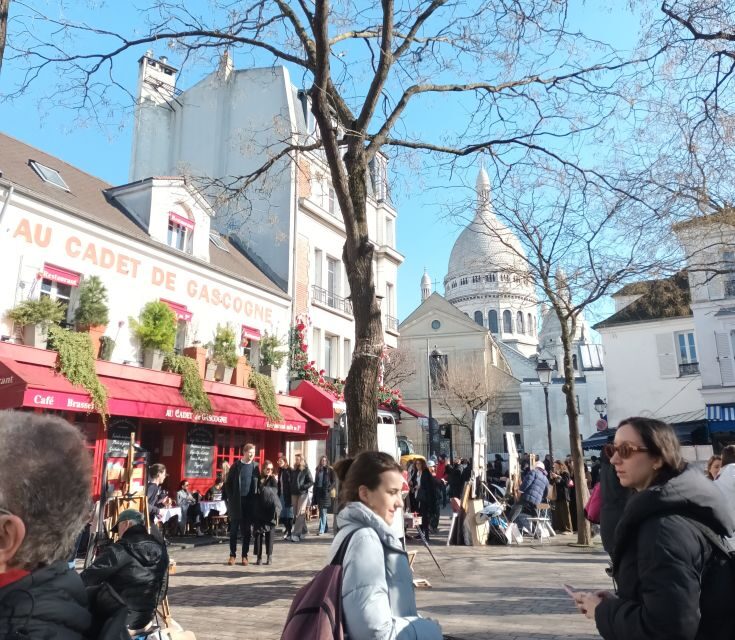
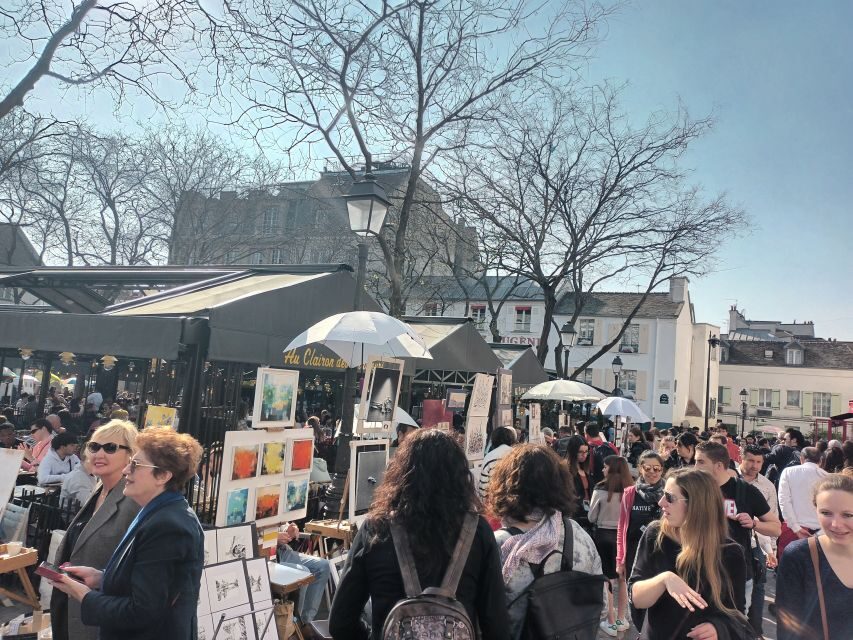
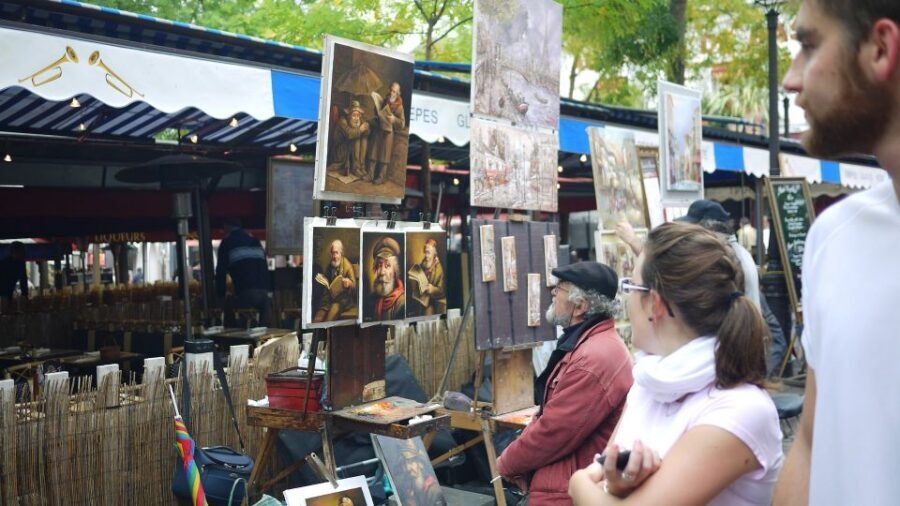
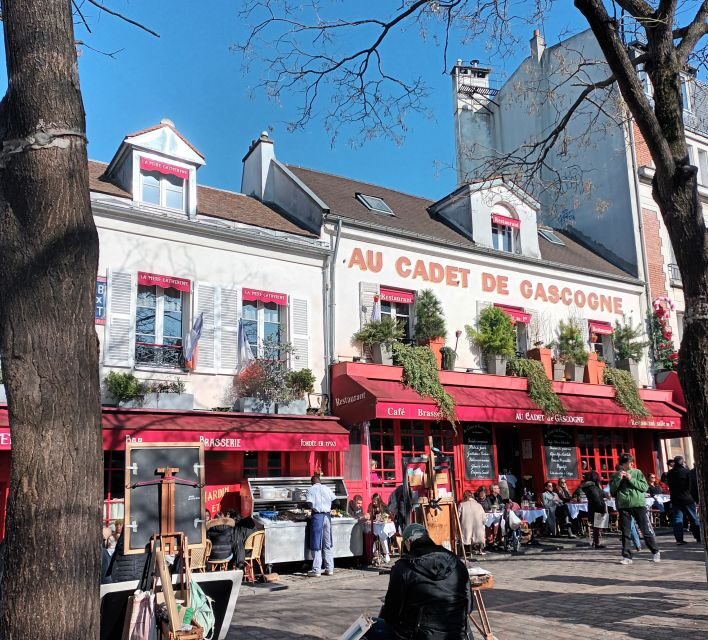
Next you’ll reach Place du Tertre, the classic square where artists set up and work. Your visit includes guided time plus free time to shop, photo, and people-watch. You also get a real break opportunity: there are plenty of nearby bars where you can sit for a drink and a bite, very much the way locals do.
This is one of my favorite parts of the tour because it’s interactive without being forced. You can watch painters at work, ask questions if you’re curious, and decide how long you want to linger. With a private guide, you’re not stuck with a “move along” timer.
A practical consideration: the square can feel touristy. But that doesn’t mean it’s bad. It just means you should treat it like a working artist zone first and a souvenir spot second. If you want one small purchase, consider buying something only if you truly like the style, not just the location.
You can also read our reviews of more guided tours in Paris





Vineyards of Montmartre and Moulin de la Galette: the unexpected calm
After Place du Tertre, you’ll walk through the Vignes du Clos Montmartre. This is the kind of detail that makes Montmartre more than a stage set. The vineyards help you remember that this hill wasn’t always about cabarets and crowds. Your guide brings context while you take photos at a scenic stop.
Then you’ll get to Moulin de la Galette for another quick, guided sightseeing moment. It’s a photo stop, but it matters because it connects the neighborhood’s art legends to physical landmarks. Even if you’ve seen images of windmills and old Montmartre streets before, seeing where they sit on the hill helps you understand the geography that artists were drawn to.
Don’t rush this part. The vineyard and mill areas are quieter than the main square, and that shift in feel is part of why the tour works.
Le Bateau-Lavoir and the Wall of Love: art history you can actually point at
You’ll stop at Le Bateau-Lavoir, another place your guide uses to explain how the area functioned as an art hub. This isn’t just name-dropping. The tour ties the “why” of Montmartre into the places themselves, so when you look at the street and buildings, you can better imagine the creative energy that used to live there.
Then comes one of the most popular photo stops: the Wall of Love. The word I love you appears in many languages, and the guide’s commentary helps make it more than just a snapshot. It’s a good pause point mid-tour because it’s visually playful and gives you a break from the longer walking and story-heavy stretches.
If you’re traveling as a couple or with friends, this stop is perfect for quick photos without needing a long time slot. If you’re traveling solo, it’s also easy to just enjoy the scene without coordinating with a group.
Moulin Rouge from the foot of the hill: iconic, but keep your expectations sane
At the end of the Montmartre walk, you’ll admire Moulin Rouge at the foot of the hill. This is a “see it up close” moment—your guide includes guided context and some free time for photos.
Here’s the balanced take: Moulin Rouge is famous for a reason, but the area around it can feel like the most show-business version of Paris. Don’t expect a quiet artistic retreat. Instead, think of it as a finishing bookmark that ties the cabaret culture to the wider Montmartre story you’ve been hearing.
If you want to go deeper than photos and the street view, you can do that on your own after the tour. This experience mainly focuses on connecting Montmartre’s creative past with what’s still visible today.
Adding the Seine cruise: a simple way to multiply your Paris views
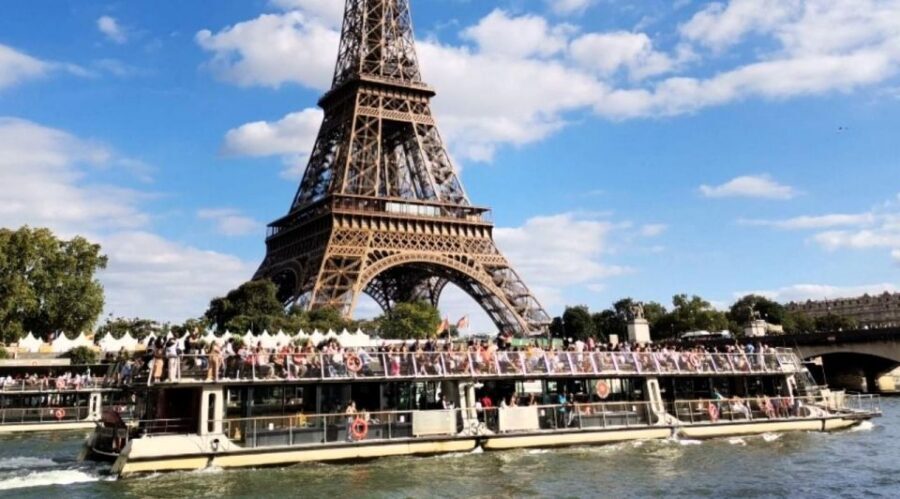
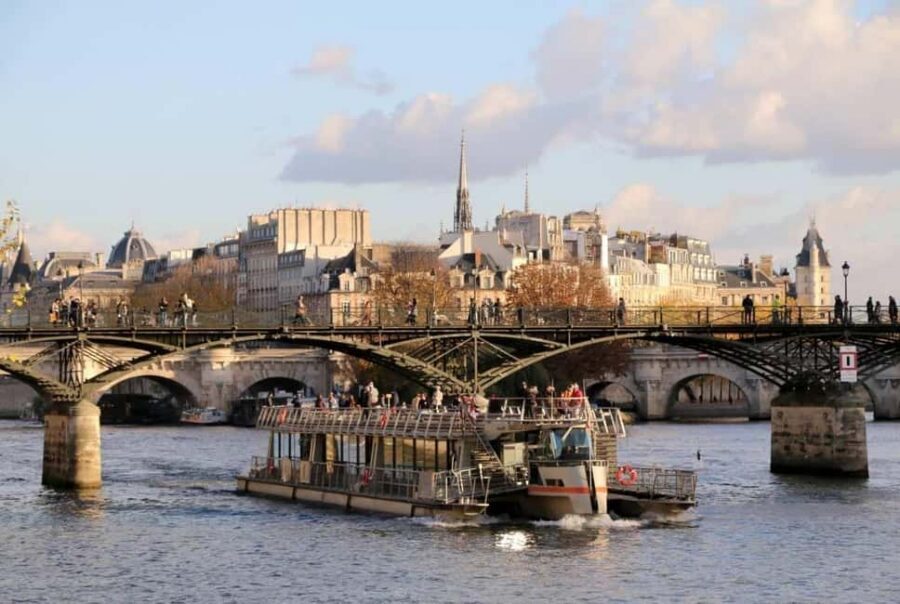
If you choose the Seine option, your guide provides tickets for a one-hour Bateaux Parisien cruise. The departure point is at the base of the Eiffel Tower. The best part: the ticket is open-date and open-time. You can use it any day from 10:00 AM to 10:00 PM (during spring, summer, and French school holiday zone C) or from 10:30 AM to 9:00 PM (during autumn and winter). You don’t need a reservation—just show up and board.
Boats depart about every 30 minutes, so you’re not stuck trying to match a tight schedule. This flexibility is a real travel win. It means you can do Montmartre first, then decide later how you want the day to flow—shopping, museums, or just wandering.
Operational comfort is also covered. The boats are heated in winter, air-conditioned in summer, and covered in case of rain. That matters in Paris, where weather can change its mind fast.
How to plan your timing: if the Montmartre part ends earlier in the day, you can use the cruise at a later hour for nicer light and less rushing. If you’re visiting in off-peak months, the open window still gives you options without forcing a specific reservation time.
Price and value: what you’re really paying for
The tour costs $85 per person for 2.5 hours. The value comes from stacking three practical benefits:
First, it’s private, which usually means less waiting and more direct attention from the guide. Montmartre can be a lot of stops close together; a private format helps you manage that efficiently.
Second, it includes the guided visit to Sacre-Coeur and the skip-the-ticket-line benefit. Those two pieces reduce time friction. Time in Paris is the real currency, not just money.
Third, you’re optionally adding a paid cruise that you can use later with an open ticket. If you were going to do a Seine cruise anyway, this is the kind of add-on that turns one “nice view” into a planned day structure with less guesswork.
Food and drinks are not included, and funicular tickets aren’t included. So if you’re planning snacks or the funicular, budget a little extra. Still, you’re not paying for meals you might not want—you’re paying for guide time and core experiences.
Who this tour suits best (and who should skip it)
This Montmartre private tour + optional Seine cruise is a strong fit if you want art and history in a way that stays practical. I’d recommend it for couples, small friend groups, and anyone who likes a guide who can explain as you walk instead of dumping facts at the end.
It also works well for people who want the classic Montmartre sights—Sacre-Coeur, Place du Tertre, Wall of Love, Moulin Rouge—while still getting context that makes the neighborhood feel more lived-in.
You should skip it if you can’t handle a hill walk. The tour includes walking uphill and is not accessible to wheelchairs or people with mobility impairments. You might think the funicular solves it, but the overall experience is described as not suitable for mobility needs.
If your main limitation is endurance rather than mobility, you may be okay using the funicular option with your guide—but you’ll want comfortable shoes and a realistic plan for how much walking you can manage.
Should you book this Montmartre + Seine combo?
I think this is a smart booking if you want Montmartre’s art story plus a Seine cruise option without committing to a strict timing plan. The private guide makes the short 2.5-hour window feel efficient. And the open Bateaux Parisien ticket is a big deal: you can match the cruise to your day, not the other way around.
Book it if you care about getting the context behind the landmarks, not just checking boxes. Also book it if you like the idea of having a built-in “view plan” that covers both hilltop Paris and river Paris.
Skip it if you can’t do the uphill walking. Also reconsider if you hate crowds in general—because Place du Tertre and the Moulin Rouge area are popular by nature. Even then, a private guide helps you manage time, but it won’t erase the fact that Montmartre is a magnet.
If you’re flexible, bring good shoes, and go with a calm pace, you’ll come away with a better-feeling understanding of why this hill became the city’s art address.
FAQ
Where do I meet the guide?
You’ll meet at the exit of the Anvers metro station, Line 2. The guide will be holding a Get Your Guide sign. Arrive about 10 minutes early.
How long is the Montmartre part of the tour?
The Montmartre private guided tour takes about 2.5 hours.
Is the funicular included if I can’t walk up the hill?
No. If you need to use the funicular, you’ll take it together with your guide, but funicular tickets are not included.
Is this tour wheelchair accessible?
No. The tour is not accessible to wheelchairs and people with mobility issues.
What’s included if I choose the Seine River cruise option?
You’ll receive tickets for a one-hour Bateaux Parisien cruise on the Seine, plus the private guided tour and the Basilica of the Sacred Heart visit.
Where do the Seine cruises depart from?
They depart from the base of the Eiffel Tower.
Do I need to make a reservation for the Seine cruise?
No reservation is required. You use the open ticket by showing up at the starting point.