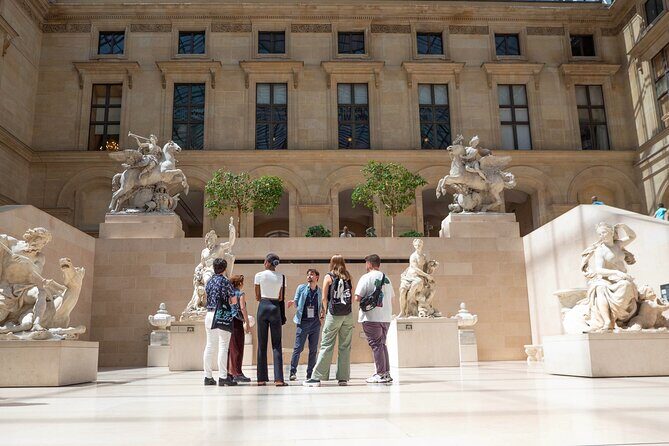
REVIEW · PARIS
Paris : Pastries and Tragedies, The sweet tour of Montmartre
Book on GetYourGuide →Operated by Bon Appétit Walks · Bookable on GetYourGuide
Montmartre tastes better with a dark side. This 2-hour walking tour pairs tragic history with French pastry stops, so you get both the big landmark moments and the small, edible ones.
Two things I like a lot: you’ll sample sweets you may not pick on your own, and the guide connects the neighborhood’s love, loss, and resilience to what you’re eating. Plus, the group is small (up to 10), so the pace stays human.
One thing to plan for: Montmartre is uphill. You’ll climb toward the top, so being in decent shape makes the whole experience far more enjoyable.
In This Review
- Key things to know before you go
- The big idea: tragedy and pastry in the same walk
- Finding your guide at 5 Pl. Blanche (and starting with the right mood)
- Montmartre’s hill factor: plan your legs, not just your appetite
- Moulin Rouge to the first bakery: seeing the icons without rushing past them
- Bakery stop rhythm: what tastings feel like in practice
- Love, loss, resilience: the story moments that make Montmartre stick
- Windmills, viewpoints, and your payoff near Sacré-Cœur
- Price and value: is $79 worth it?
- Who should book this Montmartre pastry walk
- Should you book Paris: Pastries and Tragedies
- FAQ
- How long is the tour?
- What does the tour cost?
- Is food included?
- Do drinks come with the tour?
- What language is the guide in?
- How big is the group?
- Where do we meet?
- Is Montmartre walkable for people who aren’t very fit?
- Can I cancel or pay later?
Key things to know before you go
- At least 6 food stops with tastings included in the $79 price
- A small group capped at 10 keeps the tour feeling personal
- Moulin Rouge, Le Bateau-Lavoir, and Sacré-Cœur land on your route
- A minimum of 6 different treats means variety, not repeat bites
- English live guide tells the stories as you walk
- Uphill route: expect stairs and hill stretches to Sacré-Cœur
The big idea: tragedy and pastry in the same walk

This is a Montmartre tour built around contrast. The neighborhood is famous for romance and artists, but it also has a darker layer—stories of love, loss, and resilience that shaped the way the area feels today. Instead of treating that history like a lecture, the tour threads it through your walk with pauses at bakeries and patisseries.
That structure is what makes the experience feel different. You’re not just collecting sights. You’re switching modes: story, street, corner view, then a small break with something buttery or chocolatey in your hands. The “sweet” part isn’t random snacking. It’s used like a reset button while you hear about heavier themes.
You’ll also get classic Montmartre imagery along the way—Moulin Rouge and the Sacré-Cœur area are part of the payoff. Then the guide adds the context that most people miss when they just wander for views.
You can also read our reviews of more tours and experiences in Paris



Finding your guide at 5 Pl. Blanche (and starting with the right mood)
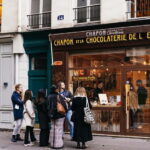
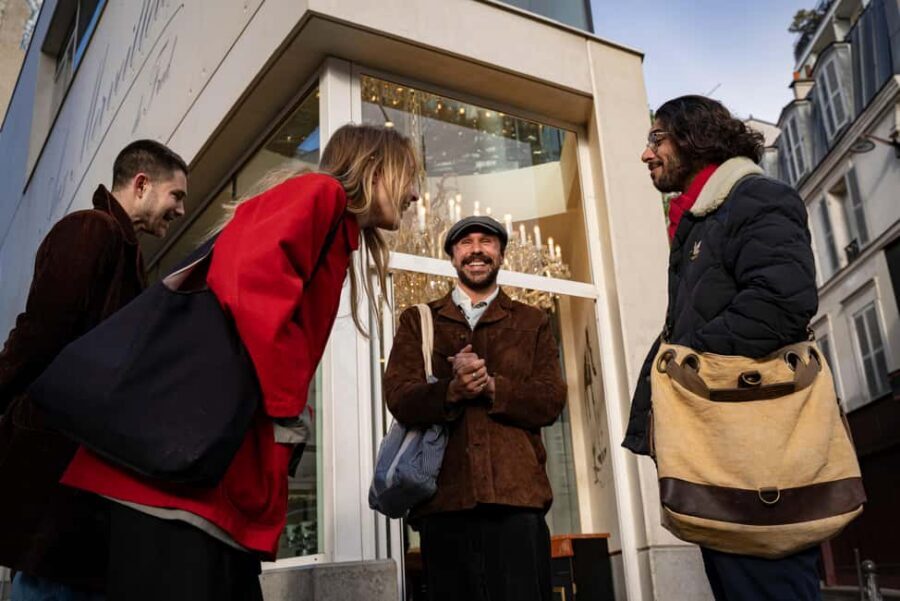
The meeting point is 5 Pl. Blanche, and you’re meant to look for a badge and a moustache in front of the pharmacy. That little detail matters in Montmartre, where you’ll see plenty of tour groups and plenty of distraction. Start clean. Be early-ish. Keep your eyes up for the badge.
What I’ve noticed about how this tour is run (based on what guides like Loïk, Lancelot, and Laurent are praised for) is that the pacing stays friendly. People consistently mention the storytelling balance—history plus snacks, without turning into an information dump. That’s a big deal on a walking tour. If you get stuck with a guide who talks nonstop, you’ll feel tired and cranky before the first pastry even hits your tongue.
The tour lasts 2 hours, so you’re moving at a steady walking pace. You’ll have multiple stops, but you won’t feel like you’re stuck waiting around. The small group size (max 10) helps here, because you’re not negotiating around huge crowds at every corner.
Montmartre’s hill factor: plan your legs, not just your appetite
Montmartre is a hill. This tour goes up. It’s explicitly designed with that in mind, and you’ll feel it in your calves and thighs.
Here’s the practical way to think about it: the pastries are included, so you’ll probably want to taste everything offered. That means you should also plan to walk comfortably right after eating. Wear shoes you trust on cobblestones and steps. Bring water if you’re sensitive to heat or exertion (drinks aren’t included on this tour, so you’ll likely want your own).
If you’re someone who usually avoids stairs, this can still work, but only if you’re okay with slowing down. The group is limited to 10, and guides are praised for making allowances for slower walkers. Still, the route is uphill, and you should expect that as part of the deal—not as a surprise.
Moulin Rouge to the first bakery: seeing the icons without rushing past them
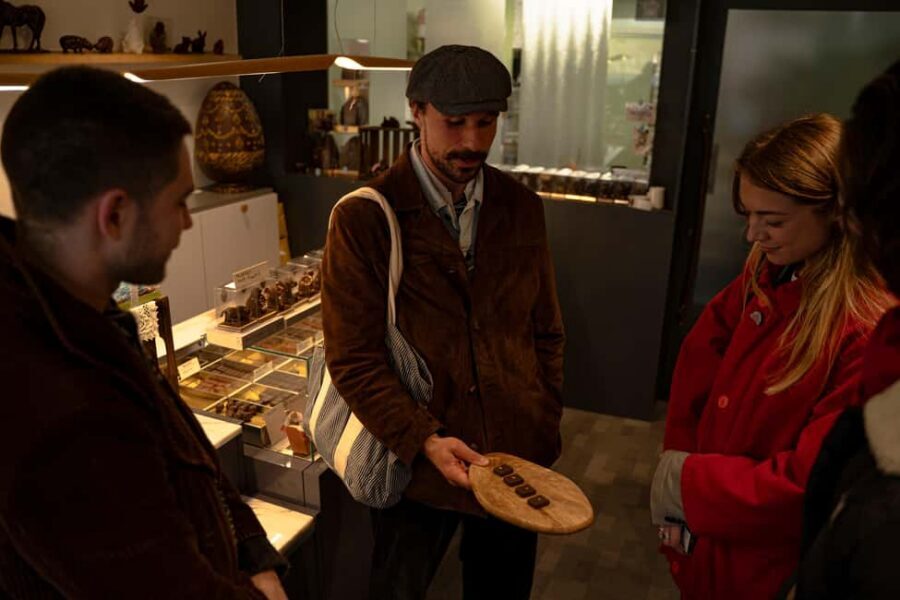
The tour kicks off and quickly pulls you toward the neighborhood’s best-known energy. Moulin Rouge is a sightseeing stop early on, which is smart. If you’re new to Montmartre, you need an anchor image fast. It also helps set the tone for the rest of the story: this area has always been performance, art, and drama.
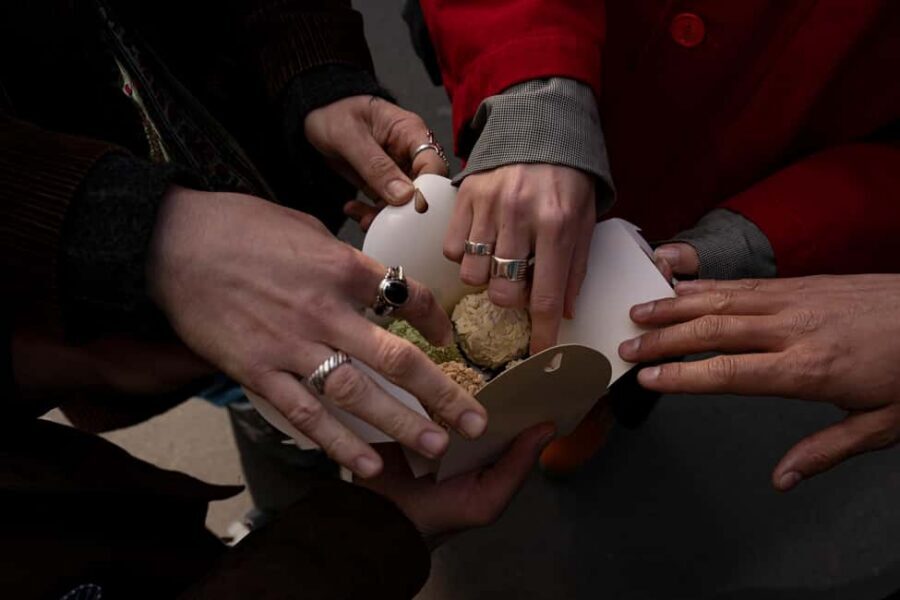
From there, you head to local bakeries for your first tastings. These stops are where the tour turns from sightseeing into something more personal. Instead of buying a single pastry you can’t pronounce and hoping it’s good, you’re tasting a variety chosen for the tour.
One of the best values of this style of walk is that you’re not guessing. You get bakeries you might not discover on your own, and you’re introduced to pastries and chocolates you may never have ordered before. People repeatedly praise the quality of the treats and the variety across stops.
Bakery stop rhythm: what tastings feel like in practice
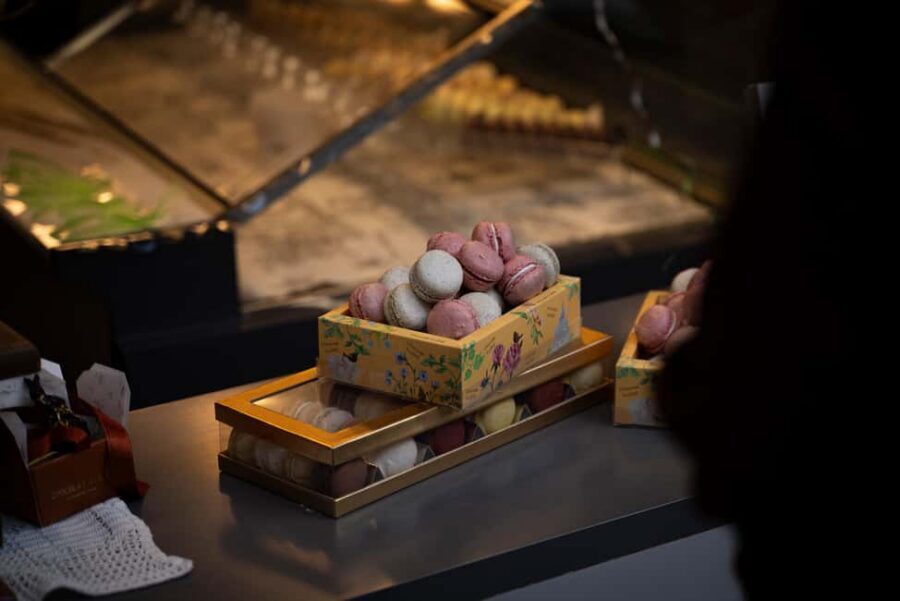
The tour is built around multiple bakery visits (a minimum of 6 food stops), and all food is included. That means you should come hungry, but not reckless-hungry. You’ll be eating at several points over two hours, and by the end you can easily feel full.
The tastings are typically small portions, which is exactly what you want on a walking tour. You can try multiple flavors without feeling like you’ve ordered a full dessert platter every time you stop. That also keeps the history segments from getting swallowed by sugar.
A good thing to remember: drinks aren’t included. If you love water, have it handy. If you’re someone who gets thirsty while walking, consider bringing a small bottle so you can keep the vibe relaxed instead of thirsty.
And yes, these are real bakery experiences, not just a single photo stop with one cookie. The tour is designed so each bakery stop builds the sweetness story, then the walk reconnects you to the streets and landmarks.






Love, loss, resilience: the story moments that make Montmartre stick
What makes this tour memorable is how the guide ties place to feeling. Montmartre’s streets can look like a postcard at first glance. But the tour pushes you to notice the emotional history hiding behind the views.
You’ll hear tales of love and loss as you move between sights. You’ll also get a sense of how artists and residents shaped the neighborhood’s identity over time. Guides like Loïk and Lancelot get praised for finding that balance: they explain why the past matters here, then keep it entertaining so you don’t lose the thread.
The stops add structure to those stories. For example, at Le Bateau-Lavoir you get sightseeing time, which helps you transition from pastry breaks back into the neighborhood’s creative atmosphere. Then you can connect what you learned to what you see.
This is also why the tour’s theme works. Pairing tragedy with sweets isn’t just a gimmick. It reflects how people live with mixed feelings—celebration and grief can sit side-by-side in the same neighborhood, and Montmartre is one of those places where you can feel both.
Windmills, viewpoints, and your payoff near Sacré-Cœur
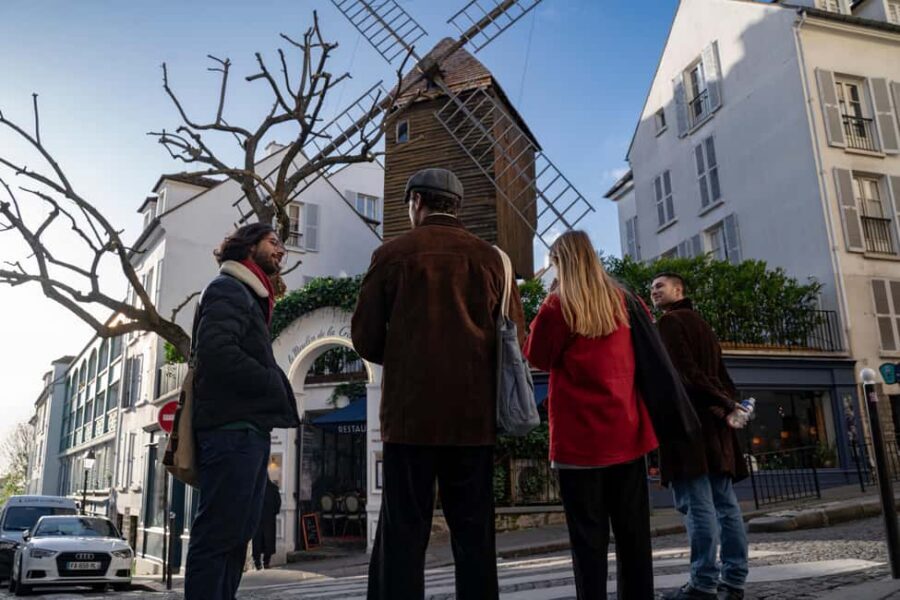
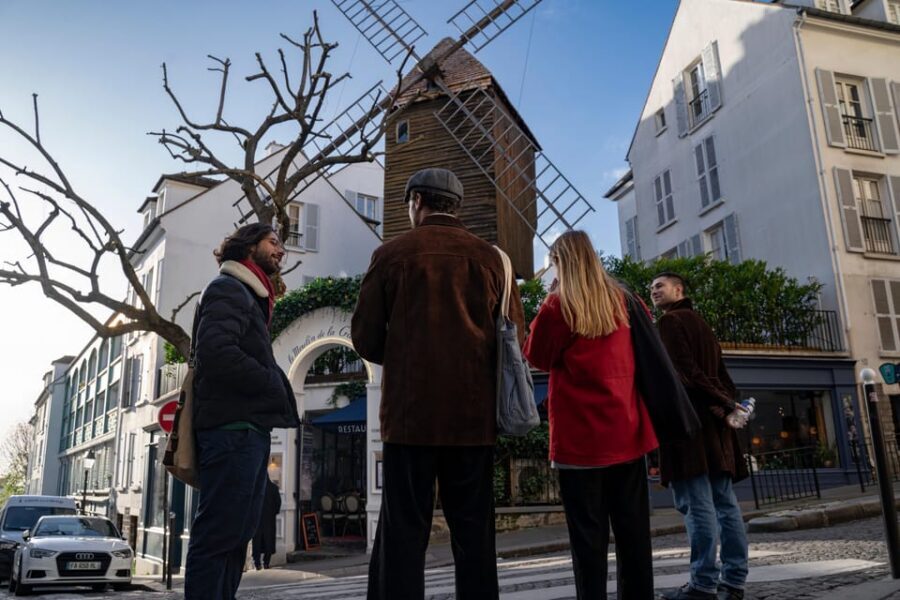
As the walk continues, you’ll reach the part of Montmartre that rewards your effort. Windmills are a sightseeing stop, and it’s one of those iconic signals that you’re getting closer to the highest, most dramatic parts of the hill.
Then come the viewpoint moments. This isn’t just about standing still for a photo. It’s about taking a breath and letting the neighborhood’s layout make sense in your head—streets climbing away, rooftops changing texture, and the feeling of being above the rest of Paris for a moment.
The tour finishes at the Basilica of Sacré-Cœur de Montmartre. You’ll end in that area, and the activity is also described as ending back at the meeting point. In real life, that usually means you’ll be guided back to where you started or nearby after the main Sacré-Cœur moment, but your key destination is clearly the basilica area.
One practical tip: if you want to go inside Sacré-Cœur, plan for that time after the walk if the schedule allows. Some guides help make it fit, and it’s a popular follow-up because the basilica adds a different kind of atmosphere than the bakery stops.
Price and value: is $79 worth it?
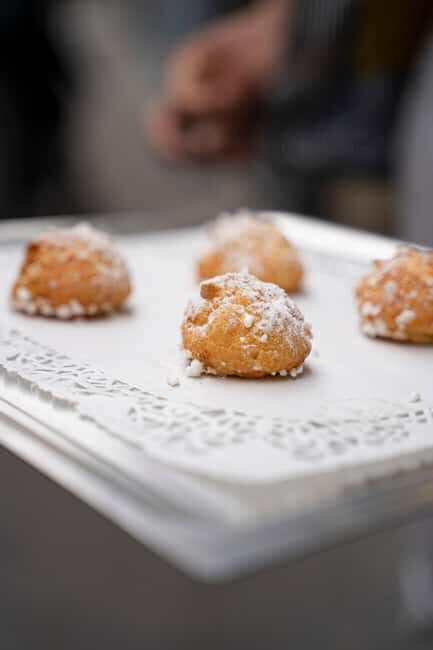
At $79 per person for a 2-hour walking tour, you’re paying for three things: a live guide, a structured route, and a minimum of six tastings with food included.
Here’s why that can be good value. In Paris, dessert can get expensive fast when you’re buying one thing at a time. This tour avoids that problem by stacking multiple small purchases into one set experience. You’re also paying for the guide’s ability to steer you through Montmartre so you don’t spend most of your time guessing which bakery is worth it.
The small group size (up to 10) also matters for value. Less crowding means less time wasted and a better flow between story and tasting. And because the guide chooses the sweets, you don’t have to build your own pastry crawl from scratch.
If you’re the type of traveler who likes to try lots of small bites instead of committing to one big dessert, this is a strong fit.
Who should book this Montmartre pastry walk
Book it if you want:
- Montmartre landmarks plus real street-level history in a short time
- More than one pastry per stop, with at least 6 different treats
- A guide who keeps the tone fun while still sharing the heavier side of the area
- An English tour with a group small enough to feel flexible
This may not be the best choice if:
- You can’t do uphill walking and stairs at all
- You’d rather drink than snack (drinks aren’t included)
- You dislike tours that stop often for food during sightseeing
If you’re traveling with mixed ages, this is often a good way to keep everyone engaged: history fans get stories, and food lovers get tastings. Still, everyone should be ready for the hill.
Should you book Paris: Pastries and Tragedies
I’d book it if you’re coming to Montmartre for more than photos. The combination of iconic sights (Moulin Rouge and Sacré-Cœur), a few story-heavy points (including Le Bateau-Lavoir and other theme stops), and a steady rhythm of included pastry tastings makes this an efficient use of your time.
But don’t ignore the hill. Wear good shoes, go in with a plan for stairs, and treat the tastings as part of the walk, not a separate event. If you do that, you’ll leave with Montmartre’s look and mood in your head—and a sugar-and-story aftertaste that lasts longer than the photos.
FAQ
How long is the tour?
It lasts 2 hours, walking through Montmartre with multiple pastry stops along the way.
What does the tour cost?
The price is $79 per person.
Is food included?
Yes. You’ll have a minimum of 6 food stops, and all food is included in the price.
Do drinks come with the tour?
No. Drinks are not included.
What language is the guide in?
The tour is guided live in English.
How big is the group?
The group is limited to 10 participants.
Where do we meet?
Meet at 5 Pl. Blanche. Look for a badge and a moustache in front of the pharmacy.
Is Montmartre walkable for people who aren’t very fit?
Montmartre is a hill and the tour takes you up toward the top. It’s better to be in decent shape due to the walking and incline.
Can I cancel or pay later?
There’s free cancellation up to 24 hours in advance for a full refund, and you can reserve and pay later.