REVIEW · PARIS
Paris Small-Group Macaron Making Class with a French Chef
Book on Viator →Operated by Patisserie a la Carte · Bookable on Viator
Macarons are tiny, but not simple. This Paris macaron class is built around the Italian meringue method and a max 6-person setup, so you actually learn the technique instead of just watching it.
I also like that you leave with practical tools: an English recipe copy, aprons and equipment provided, plus take-home bags so your work doesn’t disappear the moment it comes out of the oven.
One possible drawback: this is a precision, hands-on class, and it can feel intense. It’s not a slow, casual tasting session, and the pace suits people who are ready to focus for about 2.5 hours.
In This Review
- Key things that make this class worth your time
- A Paris macaron class that teaches technique, not just dessert
- Where the class starts: Patisserie a la Carte, Rue Thimonnier
- Your 2.5-hour plan: making shells and filling from start to finish
- Italian meringue method: crisp shells with better odds
- Ganache filling: the whisking details that make or break texture
- Garnishes and flavor combos: more than basic vanilla
- Gluten-free macarons: what you can realistically expect
- What you get besides the cookies (and why it adds value)
- Price check: does $114.65 make sense?
- Who this class fits best (and who may not love it)
- Should you book this Paris macaron class?
- FAQ
- How long is the macaron making class?
- How big is the group?
- Is the class taught in English?
- What does the class include besides instruction?
- Can I take the macarons home?
- Is the experience gluten-free?
- What kinds of fillings or garnishes are covered?
- Where does the class take place?
- What ages can attend?
- What’s the cancellation policy?
Key things that make this class worth your time
- Small-group coaching (up to 6): you get direct guidance while piping and filling
- Italian meringue method: a technical approach that aims for crisp, light shells
- Ganache technique details: you learn the right way to whisk and fill for a silky finish
- Real flavor choices: chocolate ganache, pistachios, vanilla, raspberries, passionfruit, shavings
- Gluten-free focus: the class experience is designed to be gluten-free
- Chef-led, English-friendly: recipes are provided in English, and instruction is hands-on
A Paris macaron class that teaches technique, not just dessert
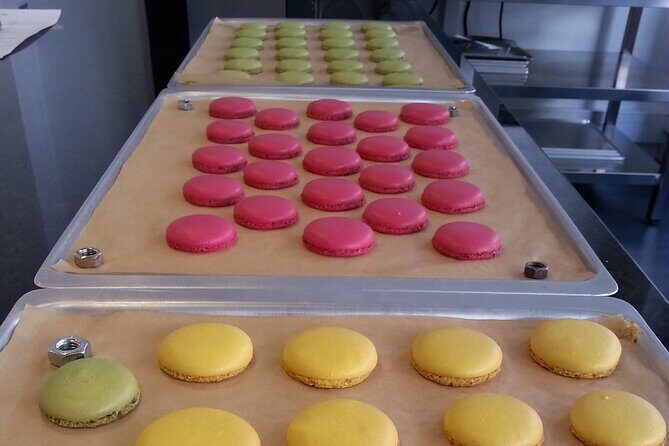
If you’ve ever tried to make macarons at home, you already know the truth: they’re fussy for reasons. This class leans into that reality in a useful way. You’re not just assembling cookies—you’re learning what makes macaron batter behave, when it’s ready, and how to get the right texture in the finished shell.
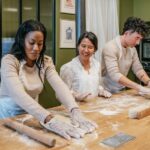
What I like most is the class structure. It’s hands-on with a small ceiling of six participants, and the teaching style is designed to keep you moving step-by-step. That matters because macarons don’t forgive guesswork. You’ll learn to judge doneness by touch, not vibes. And you’ll get the timing and texture cues that normally only come after several failed batches.
There’s also a human factor. The class is led by a professional French pastry chef, and past instructors named by guests include Hiba, Gaëlle, Marie, and Julie. Even with different personalities, the common thread is clear instruction and a focus on doing it correctly.
You can also read our reviews of more tours and experiences in Paris

Where the class starts: Patisserie a la Carte, Rue Thimonnier
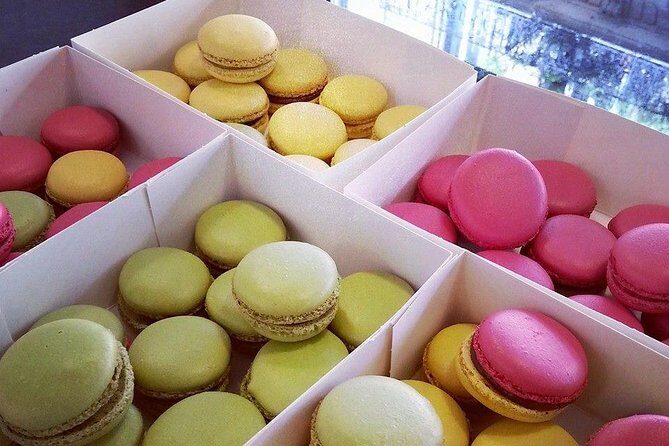
This experience takes place at Patisserie a la Carte at 9 Rue Thimonnier, 75009 Paris. The class begins there and ends back at the meeting point.
Because it’s a single-location experience, you’re not bouncing across town with luggage and timing worries. You can plan your day around one simple anchor. Also, the meeting point is described as near public transportation, which is a practical win in Paris—less time hunting for the right street, more time doing the fun part.
One small planning detail that’s worth knowing: classes start on time, and if you’re late, they may begin without you. So I’d treat this like a museum ticket with a hard start, not a casual café meet-up.
Your 2.5-hour plan: making shells and filling from start to finish
The class runs about 2 hours 30 minutes. In that window, you make macarons and a ganache filling, and you walk away with enough to enjoy immediately and take home too.
Here’s the flow you can expect:
- You’ll work through each step of the macaron process, from batter preparation to finishing touches.
- You’ll learn the method based on the Italian meringue approach and then apply it practically as you pipe and develop the cookies.
- You’ll make a ganache filling (and you’ll get specific guidance on whisking and texture).
- You’ll learn garnish options like chocolate shavings and fruit flavors such as raspberries and passionfruit.
- At the end, you can eat what you made on the spot or take it home in take-home bags.
This is why I think the small-group format matters. If you’re standing in line at home, you can’t fix a mistake quickly. In class, you can. The chef’s guidance is timed for the exact moment your batter, meringue, or ganache needs attention.
And yes, there’s tea and coffee during the class, so it doesn’t feel like you’re only doing work. It’s still hands-on, but it has the comfort of a real pastry workshop.
Italian meringue method: crisp shells with better odds
The class is based on the Italian meringue method, which is described as more technical but reliable. That’s a big deal if your goal is consistent results, not just a one-off batch.
In macarons, the batter texture affects everything: piping, spread, and how the cookies set. In this class, you’ll focus on getting the paste at the right stage and learn how to macaron your paste to create light, crunchy cookies. You’re also taught how to tell when the macaron mixture is ready by using your senses—especially touch.
A practical takeaway here: even if you’ve watched videos at home, “when is it ready” is usually the hardest part to learn. This class gives you the physical benchmarks. That’s why people who’ve struggled before often say it finally clicks.
Also, the coaching doesn’t stop after the batter. You’re guided all the way to the finishing touches, which is where many home attempts fall apart—because the final steps are the ones that determine the look and texture you’ll actually eat.
Ganache filling: the whisking details that make or break texture
Ganache sounds simple: chocolate + cream. But the texture can go from silky to grainy fast. This class addresses that with very specific technique coaching.
You’ll learn:
- The right way to hold your whisk to get a silky ganache texture
- Little tricks for a filling that works well inside the shells
- How to get to the stage where the ganache is smooth and pipeable enough to use confidently
That whisk-hand instruction might sound tiny, but it’s exactly the kind of detail that separates a passable dessert from one you’re proud to serve. Ganache is sensitive to temperature and mixing, and the class teaches what to do so you don’t have to guess.
If you’re the kind of baker who likes control, you’ll appreciate that the class covers more than ingredients. It teaches how to handle the process.






Garnishes and flavor combos: more than basic vanilla
Macarons are basically little flavor vehicles. This class doesn’t keep you stuck in only one direction. You’re taught different garnish and topping ideas, including:
- chocolate ganache
- pistachios and vanilla
- raspberries and chocolate shavings
- passionfruit
Why this matters: it helps you build a small set of repeatable flavor ideas for home. Instead of copying one batch, you can understand how the class’s technique supports multiple fillings and textures.
It’s also a nice way to tailor the class output to your taste. If you’re excited by fruit-forward flavors, you have options. If you love classic chocolate, you’ll have that too.
Gluten-free macarons: what you can realistically expect
The class is described as GLUTEN-FREE. That’s not a throwaway line here—it’s part of the overall experience promise. If you’re looking for a macaron class where gluten-free isn’t an afterthought, this is aligned with that need.
That said, gluten-free desserts can still vary by kitchen practices, and you won’t have extra details beyond the provided information. If cross-contact is a serious concern for you, I’d put it in writing when you book, so the operator can flag the right specifics for your situation.
What you get besides the cookies (and why it adds value)
This class includes more than the “make something” part. It’s also set up so you can reproduce results later.
Included items:
- Professional French pastry chef
- Small group of maximum 6 participants
- English language copy of the recipes
- Aprons and all cooking equipment
- Take-home bags
- Tea and coffee
- An eBook: Everyday Gourmet French Tarts (offered for the 10th anniversary)
For your money, that’s a lot of practical packaging. You’re paying not just for ingredients, but for guidance plus the materials and take-home structure that make the experience useful after the class.
From what I see in the feedback, the most praised moments are exactly these:
- Clear, step-by-step instructions
- Personalized attention in the small group
- Chefs who explain not only what to do but why it works
- The confidence boost for people who previously failed macarons at home
If you’re coming with friends or family (especially teens), it also reads as a social activity that still feels productive. You’re not stuck in a classroom. You’re working together, and the end product is instantly satisfying.
Price check: does $114.65 make sense?
At $114.65 per person, you’re paying for a premium activity: a French pastry chef, a small-group limit, equipment and aprons, English recipe handouts, tea and coffee, and take-home containers.
Is it cheap? No. But value-wise, this price covers the hard parts that make macaron classes expensive in the real world:
- Chef time in a small workshop setup
- Equipment and ingredient handling
- The technical coaching (Italian meringue + ganache texture work)
- The fact you typically leave with macarons you made, not just photos
For me, the best reason to consider the price is this: macarons are one of those recipes where the learning curve is costly if you do it alone. A class that helps you get it right faster can be worth it quickly, especially if you plan to bake again after you return home.
Who this class fits best (and who may not love it)
This is a great fit if:
- you’re visiting Paris and want a food-focused activity that’s hands-on
- you like baking, even if you’re not a professional
- you want to learn the technical reasons behind success, not just follow steps
- you’re looking for a small-group class with real guidance while you work
From the tone of the experience, it’s less ideal if you want something laid-back and purely tasting-oriented. One recurring theme in feedback is that the class can feel intense or very focused. Also, the teaching approach can lean more calm and precise than high-energy showmanship.
On the age side: it’s age 12 and up, and children must attend with a registered adult (one adult per child). Teens and adults seem like an especially natural match because they can focus through the full process and then appreciate the results.
Should you book this Paris macaron class?
I’d book this class if your goal is to learn macarons in a way you can repeat at home. The combination of Italian meringue method coaching, hands-on checks, and ganache texture guidance is exactly what you want if you’ve struggled with shells, timing, or filling consistency.
I’d think twice if you only want a casual souvenir activity or you’re hoping for a pure tasting experience with minimal kitchen work. This is real cooking time, and it asks you to pay attention.
If you can spare the ~2.5 hours, and you’re into precise French pastry results, this is one of the more satisfying ways to spend a Paris day—because you don’t just learn; you leave with something you made and can share.
FAQ
How long is the macaron making class?
It lasts about 2 hours 30 minutes.
How big is the group?
The group is limited to a maximum of 6 participants per booking.
Is the class taught in English?
Yes. It’s offered in English, and you also receive an English language copy of the recipes.
What does the class include besides instruction?
You get aprons, all cooking equipment, tea and coffee, and take-home bags for what you make.
Can I take the macarons home?
Yes. You can enjoy them on the spot, and you can also take them with you in take-home bags.
Is the experience gluten-free?
Yes, the class is described as gluten-free.
What kinds of fillings or garnishes are covered?
You’ll learn about garnishes and options such as chocolate ganache, pistachios, vanilla, raspberries, chocolate shavings, and passionfruit.
Where does the class take place?
It meets at 9 Rue Thimonnier, 75009 Paris, France, at Patisserie a la Carte, and it ends back at the meeting point.
What ages can attend?
Age 12 and up. Children must attend with a registered adult (one adult per child).
What’s the cancellation policy?
Free cancellation is available up to 24 hours in advance for a full refund. If you cancel less than 24 hours before the start time, the amount paid is not refunded.