REVIEW · PARIS
Private Pilotage of a Flight Simulator in Paris
Book on Viator →Operated by AviaSim · Bookable on Viator
Flying the A320 in Paris is a proper hands-on thrill. This private session puts you in the captain’s seat of an Airbus A320 flight simulator, with a professional pilot instructor beside you for coaching and cockpit familiarization. I like that it’s built around doing the job, not just watching buttons, and you get a pilot diploma at the end.
The second big plus: the instruction style. Multiple instructors highlighted in past sessions focus on clear, step-by-step explanations, so the cockpit feels less intimidating fast. One drawback to factor in: because it’s an operational business with real equipment, you should plan with a little time buffer and be ready for the session to run slightly differently than expected if something technical comes up.
In This Review
- Key highlights to know before you go
- In the Captain’s Seat: The Airbus A320 Simulator Setup in Paris
- The Briefing Part: What Happens Before You Start the Engines
- Takeoff and Flight Practice: How You Spend the 35 Minutes
- How This Feels Compared to a Typical Paris Activity
- You’ll Learn Fast: The Value of Pilot Coaching in a Sim
- Who This Suits Best: Age 10+, Families, and First-Timers
- Price and Value: Is $119.48 Worth It?
- Meeting at 16 Rue Raymond Aron: Timing and Getting There Smoothly
- Private Session Reality: Why It Matters for Learning
- Should You Book This Paris A320 Simulator Experience?
- FAQ
- What aircraft will I fly in the Paris simulator?
- How long is the experience?
- Is this experience private?
- What’s included, and are snacks provided?
- Where do I meet, and when is it open?
- Is the session offered in English, and how old do you need to be?
- Can I cancel for a full refund?
Key highlights to know before you go
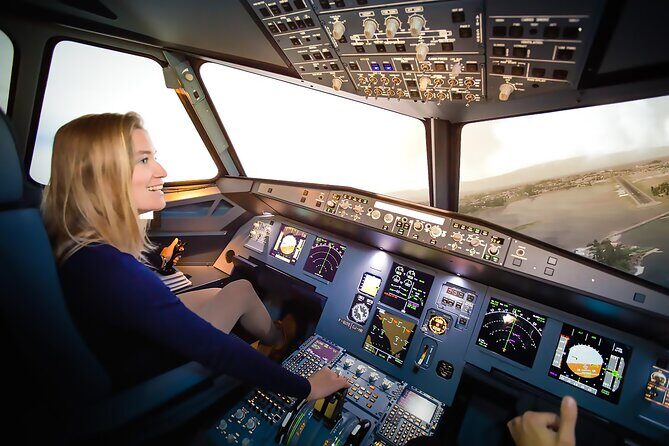
- Airbus A320 cockpit time with active controls, not a passive demo
- Briefing + hands-on flight (about 10 minutes briefing, then about 35 minutes flying)
- Professional pilot instructors who explain the cockpit in plain language
- A private session, so you can ask questions and get tailored coaching
- You can shape what you practice, including changing flight conditions during your session
- Easy meet-up area in central Paris, near public transportation
In the Captain’s Seat: The Airbus A320 Simulator Setup in Paris
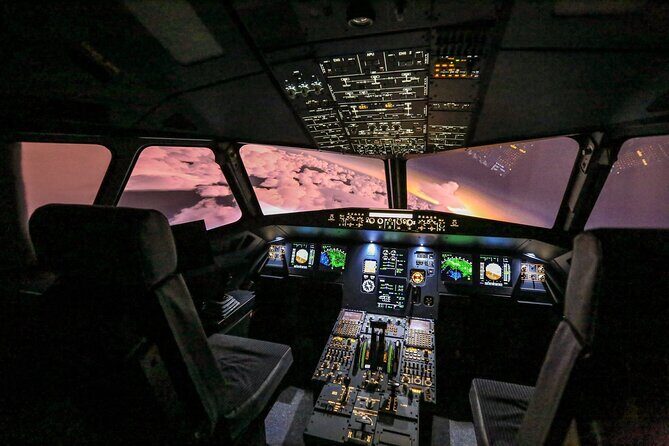
This experience is simple on paper and fun in real life. You take your place in the simulator, then the instructor guides you through getting set up so you can start the engines and take off. The headline here is the aircraft: an Airbus A320 cockpit simulator, which is a great choice if you want something modern and widely used.
Your total time is about 45 minutes, split into roughly 10 minutes briefing and 35 minutes of flight. That timing matters. You’re not stuck in a classroom for half the session, and you’re not tossed into the pilot seat with no support. You get just enough grounding to start operating the cockpit, then you spend most of the time practicing.
It’s also private, meaning it’s only your group. That’s a big deal for learning. You won’t be sharing the instructor’s attention with strangers, and you can move at your own pace without worrying about slowing anyone else down.
You can also read our reviews of more private tours in Paris



The Briefing Part: What Happens Before You Start the Engines
The briefing is where the instructor sets you up to succeed, and it’s short by design. You’ll discover the cockpit of the airliner simulator and get oriented, then you’ll start the engines with help. Several past participants specifically noted that instructors explain a lot of cockpit information in a way that feels manageable, even if the number of switches and instruments looks overwhelming at first.
Here’s what I’d focus on during the briefing, because it directly affects how fun the flight feels afterward:
- Ask what to prioritize during your practice. If you want takeoffs, landings, or basic control feel, say so early.
- Pay attention to the cockpit logic, not just the button locations. Once you understand what the cockpit is trying to tell you, you get more confident quickly.
- If you’ve flown a different simulator before, tell the instructor. People who’d spent time in other aircraft sims reported that the instructor helped them adapt quickly to the A320’s differences.
Instructors like Arnaud, Ryan, and Martin came up by name in past sessions, and the theme is consistent: teaching that’s practical, friendly, and organized. You’ll feel more like a pilot-in-training than a tourist pushing random switches.
Takeoff and Flight Practice: How You Spend the 35 Minutes
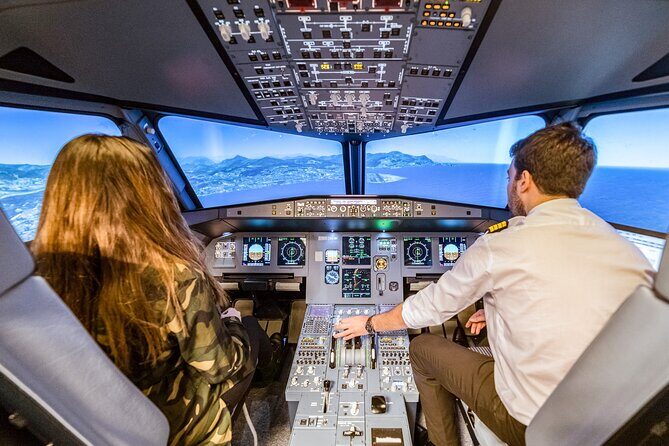
Once the briefing wraps, you’re in the business part: control inputs, basic handling, and practicing maneuvers. Even though you’re in a simulator, this session is designed around real pilot tasks: controlling aircraft attitude and speed, tracking headings, and learning how changes show up in the instruments.
Based on detailed feedback from earlier experiences, you can often shape what you practice. People have reported practicing different flight segments and changing conditions like:
- Weather
- Weight parameters
- Positioning
- Moving between different airports in the session flow
That flexibility is valuable. If you only focus on one thing, the session can feel narrow. If you use the instructor’s guidance to practice a mini “scenario” (for example: set up for departure, handle basic control, then run a landing approach), the 35 minutes feels like more than a novelty.
Also, if you’re the kind of person who worries you’ll fail, consider this a relief: the instructor is there to coach you. In past sessions, instructors were described as accommodating and helpful, including when someone was switching from 737-style flying to the A320. That matters because the control feel and cockpit workflow can be a little different across aircraft types.
How This Feels Compared to a Typical Paris Activity
A lot of Paris experiences are about seeing. This one is about doing. You’re not just looking at a screen; you’re sitting in a cockpit and making control decisions.
What makes it click is the balance of roles:
- You’re the captain.
- The instructor acts like your safety net and teacher.
That combination is what turns the experience into something you’ll remember. You can feel the cause-and-effect of your inputs, and you get to ask questions while you’re actively engaged. If you’ve ever watched aviation videos and thought you’d like to try the real workflow, this gives you a controlled way in.
You’ll Learn Fast: The Value of Pilot Coaching in a Sim
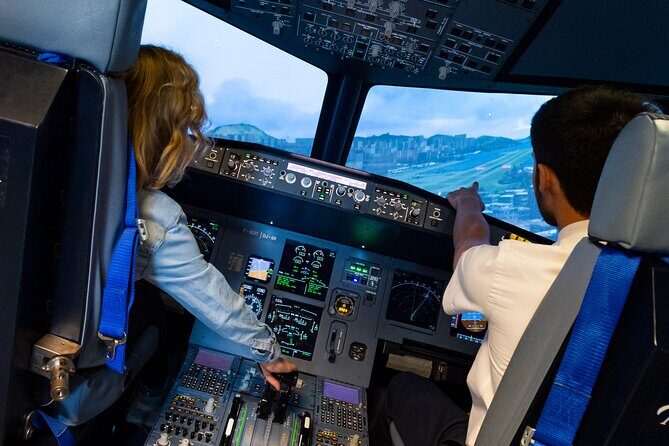
Even if you never plan to become a pilot, you can learn real skills from this format. The simulator environment forces you to think like a pilot:
- Maintain awareness of what the aircraft is doing
- Respond to feedback from instruments
- Make adjustments without panicking
In earlier experiences, participants praised instructors for being pedagogical and for keeping explanations simple. That teaching style is useful even for beginners. It helps you avoid getting stuck in button-chasing mode.
And if you’re already into aviation, this can scratch a different itch. For example, switching between aircraft types is a common challenge in training, and one past participant specifically appreciated a comparison between 737 vs 320 differences. If you’re a simulator nerd, that kind of targeted comparison can make the session feel more like skill-building than entertainment.






Who This Suits Best: Age 10+, Families, and First-Timers
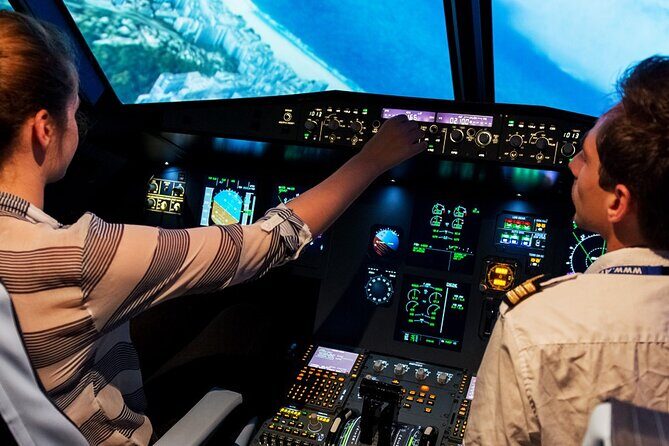
This experience is listed as accessible for people from age 10. That’s important because it tells you the session isn’t only for adults who already know their way around aviation terms.
You also might enjoy this if:
- You’re traveling as a couple or family and want something hands-on.
- One person loves aviation and others want to participate without needing prior knowledge.
- You want a memorable experience that’s not tied to a specific view or weather forecast.
A standout detail from past sessions: families sometimes get extra magic when a child participates as a co-pilot during key moments like takeoffs and landings. If you’re booking with family, it’s worth asking the instructor how participation works in your time window, since the session is private and your group’s preferences matter.
If you’re a “just show me the sights” traveler, this may not be your top choice. This is about flying and learning, not sightseeing.
Price and Value: Is $119.48 Worth It?
The price is $119.48 per person for an experience around 45 minutes total. On its face, that can look pricey compared with standard attractions. But here’s the value logic that makes it feel more fair:
- You’re paying for one-on-one coaching in a private setting.
- The instructor time is real, and so is the simulator time.
- You’re getting a pilot diploma included, which adds a tangible keepsake.
A simulator session is an equipment-heavy activity, and the teaching component matters. If you were doing this as a group with shared attention, you might get less out of the session. Here, private format helps justify the cost because your questions and practice priorities can guide how the session unfolds.
One extra practical note: snacks are not included. If you’re coming straight from lunch or after a day of walking, bring a small snack or plan to eat before. That small step keeps the experience from getting cut short by hunger.
Meeting at 16 Rue Raymond Aron: Timing and Getting There Smoothly
You meet at 16 Rue Raymond Aron, 75013 Paris, France, and the activity ends back at the same meeting point. It’s also described as near public transportation, which is handy because it lowers the stress of getting there on time.
The operating window listed is Tuesday to Saturday, 10:00 AM to 7:00 PM. In practical terms, I’d treat your arrival like you’re heading to an appointment, not just a walk-in attraction. Show up early enough to check in calmly and settle before your briefing begins.
One caution from real-world experience with this kind of business: if there’s any chance of confusion with directions, having a backup plan helps. Past participants flagged issues with GPS directions and finding the premises, so I’d recommend you verify the address in your maps app before you leave and double-check any confirmation messages you receive.
Private Session Reality: Why It Matters for Learning
Because this is a private tour/activity, only your group participates. That means:
- The instructor can tailor pacing to your comfort level.
- You can steer the flight practice toward what you want most.
- You don’t have to wait your turn to try controlling the aircraft feel.
It also means there’s less “ambient learning.” In a shared class, you might overhear tips from other students. Here, you’ll get tips only if you ask. That’s not a problem, but it’s good to know going in. If you want specific practice, say it early.
Should You Book This Paris A320 Simulator Experience?
Book it if you want a hands-on aviation experience with real pilot instruction, and you like the idea of learning through doing. The combination of an A320 cockpit, a short but focused briefing, and most of your time spent flying makes it a strong use of a limited travel window.
Skip it or think twice if:
- You want mostly sightseeing time.
- You’re sensitive to schedule changes and need everything to run perfectly on the minute.
- You’d rather do something less equipment-dependent.
If you fall in the first group, this is exactly the kind of activity that feels like a story, not a checkbox.
FAQ
What aircraft will I fly in the Paris simulator?
You’ll sit in the cockpit of an Airbus A320 flight simulator.
How long is the experience?
The session is about 45 minutes total, including approximately 35 minutes flying and 10 minutes of briefing.
Is this experience private?
Yes. It’s a private tour/activity, and only your group participates.
What’s included, and are snacks provided?
The experience includes a pilot diploma. Snacks are not included.
Where do I meet, and when is it open?
Meet at 16 Rue Raymond Aron, 75013 Paris, France. It runs Tuesday to Saturday, 10:00 AM to 7:00 PM.
Is the session offered in English, and how old do you need to be?
It’s offered in English, and it’s accessible to everyone from 10 years old.
Can I cancel for a full refund?
Yes, you can cancel for a full refund if you cancel at least 24 hours before the experience start time.