REVIEW · PARIS
Paris: Small Group Moulin Rouge &Sacré Cœur Montmartre Tour
Book on Viator →Operated by Danis Tour · Bookable on Viator
Montmartre gets good fast. This small-group walk strings together Moulin Rouge, the Amélie movie café, Dalida landmarks, and the big Sacré-Cœur views in about 2 hours. I love that the guide storytelling feels like a local walk, and guides such as Selda, Zelda, Danyl, Alice, and Daniel keep things fun and easy to follow.
My other favorite part is how the pacing stays human. A lot of stops are short but well chosen, so you get photo breaks without feeling dragged, and your guide can adjust the tempo when the hill gets steep.
One consideration: you’re moving uphill with stairs, and on crowded days it can be tricky to hear. If you get noise-fatigued, plan to step closer to your guide during explanations, and save your longest listening moments for quieter stops.
In This Review
- Key highlights to know before you go
- A 2-hour Montmartre walk that fits real vacation time
- Start at 5 Pl. Blanche, end at 35 Rue du Chevalier de la Barre
- Moulin Rouge: famous name, quick stop, and what you’ll learn
- Café des Deux Moulins: Amélie spotting in real life
- Le Moulin de la Galette: windmill, art inspiration, and the bohemian vibe
- Place des Abbesses and the Red Abbess story
- Le Mur des Je t’aime: quick romance and multilingual charm
- Le Bateau-Lavoir: where early artists’ stories get real
- Dalida stops: a singer’s home and a lasting monument
- La Maison Rose, the vineyard, and La Bonne Franquette
- Sacré-Cœur Basilica: panoramic views and the stair reality
- How guides like Selda, Zelda, Alice, and Danyel change the day
- Who should book this tour, and who should skip it
- Quick tips to make the walk smoother
- Should you book this Montmartre tour?
- FAQ
- How long is the tour?
- How much does it cost?
- Is the tour offered in English?
- What is the group size limit?
- Do I need tickets for Moulin Rouge?
- Is the Café des Deux Moulins stop ticketed?
- Where do I meet, and where does the tour end?
- Is the tour dependent on weather?
Key highlights to know before you go
- Max 15 people means you’re not lost in a crowd.
- Mobile ticket keeps things simple once you arrive.
- Moulin Rouge stop is a learning moment, with admission not included.
- Amélie + Renoir-related Montmartre art stops make the neighborhood feel cinematic.
- Dalida landmarks + artist sites give you more than just postcard views.
- Sacré-Cœur on a hilltop delivers panoramic Paris time at the end.
A 2-hour Montmartre walk that fits real vacation time
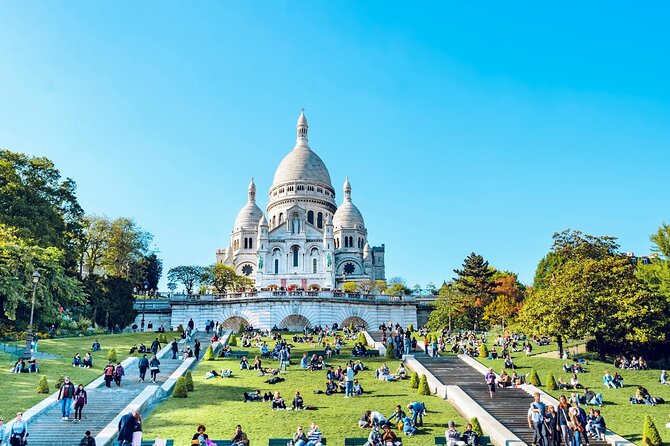
This tour is built for people who want the Montmartre story without giving up half a day. You’ll cover a lot of ground in roughly 2 hours, with a small group size capped at 15. That matters because Montmartre can feel like a maze—smaller groups tend to move with less waiting and fewer bottlenecks.
The price, $59.28 per person, is reasonable for a guide-led route that includes a long sequence of iconic photo stops plus the big finish at Sacré-Cœur. You are not paying extra for a museum ticket here, and many stops are quick and free once you’re on the sidewalk.
Also, this tour runs in English, and you get a mobile ticket. For short tours, that little bit of convenience reduces stress. You can spend more time looking up at the architecture and less time figuring out what time what opens.
You can also read our reviews of more tours and experiences in Paris.



Start at 5 Pl. Blanche, end at 35 Rue du Chevalier de la Barre

Your meeting point is 5 Pl. Blanche, 75009 Paris, and your tour ends at 35 Rue du Chevalier de la Barre, 75018 Paris. That end-point detail is easy to miss, so plan your next move before you start walking. A lot of people assume they’ll return to the start, but here you won’t.
Because the duration is only around 2 hours, it’s worth building a simple plan for after the tour. Check your metro route ahead of time from the ending street, or keep a neighborhood-to-neighborhood connection in mind. If you’re planning dinner nearby, give yourself a little buffer for the hill and foot traffic.
One more practical note: since it’s a walking experience through Montmartre, bring comfortable shoes and dress for weather. The tour also notes that it requires good weather—so if clouds roll in or rain starts, expect that plans may shift.
Moulin Rouge: famous name, quick stop, and what you’ll learn
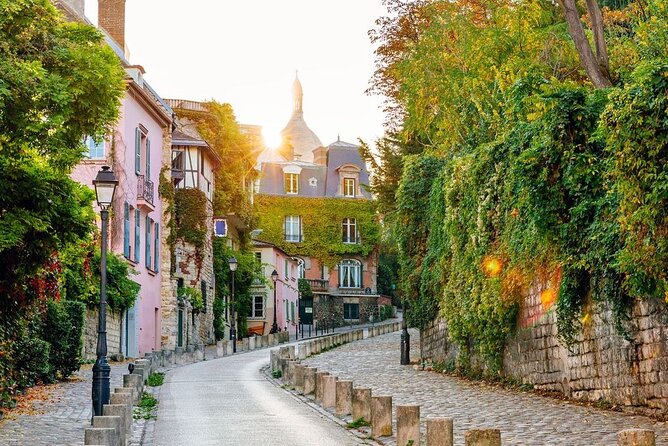
The first stop is Moulin Rouge, where you’ll learn about one of the most famous cabarets in the world. It’s about 10 minutes, and this stop is designed more for context than for ticketed entry. Moulin Rouge admission for this portion is listed as not included.
What I like about this approach is that you get the story before you take in the spectacle. Even if you’ve seen Moulin Rouge photos a hundred times, having a guide connect it to Montmartre’s broader personality makes the area feel less like a billboard and more like a place with a past.
Drawback to consider: because the show is not included, you won’t get the full cabaret experience here. This is the neighborhood walk version—great for understanding the setting, but not a ticket to an evening performance.
Café des Deux Moulins: Amélie spotting in real life
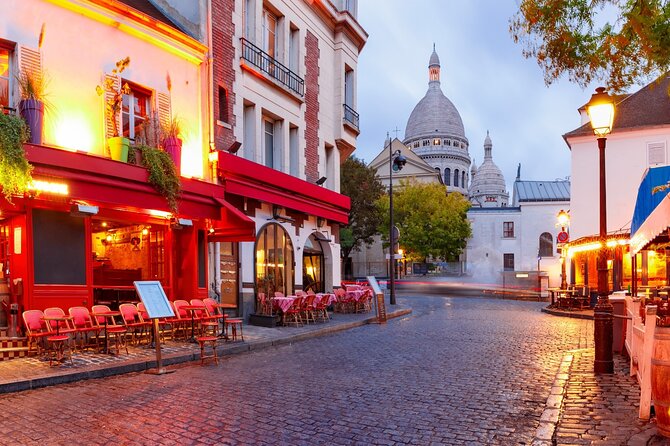
Next up is Café des Deux Moulins, about 5 minutes. The big hook is the film connection: the café is tied to Amélie, and you’ll also see the spot associated with where the character worked.
This stop is short on purpose, and it works well if you’re trying to connect cinema locations to real streets. You’ll likely feel like the movie comes to life around you, but you won’t spend so long here that you lose time for the rest of the hill.
The café portion is listed as admission free, so you’re mainly paying attention to the look, the layout, and the surrounding streets. If you’re trying to snack or buy a drink, keep an eye on your group’s pace so you don’t get split off.
Le Moulin de la Galette: windmill, art inspiration, and the bohemian vibe
Then you’ll see Le Moulin de la Galette, another 5-minute stop with no admission required. This is the windmill tied to paintings by Renoir and other artists, and it’s presented as a symbol of Montmartre’s bohemian past.
Even if you’re not an art-history person, this stop helps you understand why Montmartre attracted painters and writers in the first place. It’s not just a prop; it’s part of the visual identity people kept returning to.
Practical tip: because your time is brief, don’t try to do a full “inspect every corner” session. Instead, pick one good angle for photos, listen to what your guide points out, and then move on. Montmartre rewards momentum on a timed tour.



Place des Abbesses and the Red Abbess story
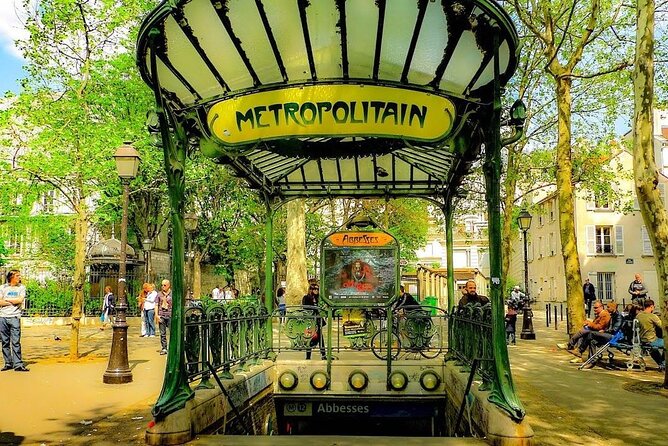
At Place des Abbesses, you’ll get about 10 minutes of context, and admission is free. This stop focuses on the history of Saint Denis, described as the first bishop of Paris, and his martyrdom. You’ll also see the story of the Red Abbess, which is presented as a different kind of church story compared to other Paris churches.
This is one of those moments where a guide can make the neighborhood feel connected. Montmartre is famous, but it can also feel like separate highlights stitched together. This stop helps you see the neighborhood as more than postcards.
Drawback: Place des Abbesses and nearby streets can be busy. On crowded days, hearing details may be harder, so step in and out with intention. If your guide stops in a noisy patch, it’s totally fair to move half a step closer to catch the key points.
Le Mur des Je t’aime: quick romance and multilingual charm
Your next stop is Le Mur des Je t’aime, with 10 minutes on the wall area. The feature is straightforward and fun: it’s covered in the words I love you in numerous languages.
This stop is a crowd magnet, so you’re likely to see the wall from multiple angles. The tour timing makes it doable: you get your photo moment without turning it into a long wait. If you’re photographing, try different perspectives instead of only standing straight-on. A small reposition can change the whole look.
If you’re traveling with kids or teens, this is often the easiest win on the hill. It’s short, visible, and instantly understandable without needing a deep explanation first.
Le Bateau-Lavoir: where early artists’ stories get real
You’ll then visit Le Bateau-Lavoir for about 15 minutes. This is described as a famous artists’ residence, with ties to Pablo Picasso and Amedeo Modigliani. Your guide will connect it to stories from the early 20th-century art scene in Montmartre.
This stop works because it slows the tour down slightly compared to the quick photo moments. You get a chance to absorb the creative-energy vibe that Montmartre became known for.
What to watch for: you’re not paying entry here, so your “visit” is mainly about understanding the site and noticing the surrounding street character. If your guide points out specific details, take a moment to look where they indicate. On a short tour, listening and looking together is the secret sauce.
Dalida stops: a singer’s home and a lasting monument
After Bateau-Lavoir, the tour moves to La Maison de Dalida (about 10 minutes), then to Dalida Statue (another 10 minutes). Both are listed as free stops, and the theme is Dalida’s life and lasting impact on French culture.
I like that these stops show Montmartre as a living cultural neighborhood rather than only an art-museum hill. Dalida gives you a different kind of fame story, one tied to everyday neighborhood presence.
Practical tip: bring your camera for the statue portion, because it’s the type of landmark that usually photographs well from a couple of angles. And since your guide is handling the storytelling, you can focus on framing and capturing the scene rather than hunting for context.
La Maison Rose, the vineyard, and La Bonne Franquette
Now the tour gets more “daily life in Montmartre.” You’ll make a stop at La Maison Rose for about 10 minutes, described as a quintessential pink house that inspired artists and photographers. This is a pure photo stop, but it’s also a reminder that Montmartre’s identity lives in small details.
Next is Vigne du Clos Montmartre for 5 minutes. This is presented as a unique local vineyard producing local wine, tied to the history of winemaking and community significance. Even if you don’t drink wine, it’s a refreshing change of pace from art and romance stops.
Finally, you’ll visit La Bonne Franquette, a historic café in Montmartre for about 10 minutes. The tour describes it as a gathering place for famous artists like Van Gogh and Toulouse-Lautrec, and you’ll get the charming atmosphere of the spot.
These three stops together do something smart: they balance star landmarks (walls, statues, famous houses) with everyday institutions (a café, a vineyard). That balance is part of why the route feels like a walk through a neighborhood, not just a list of famous places.
Sacré-Cœur Basilica: panoramic views and the stair reality
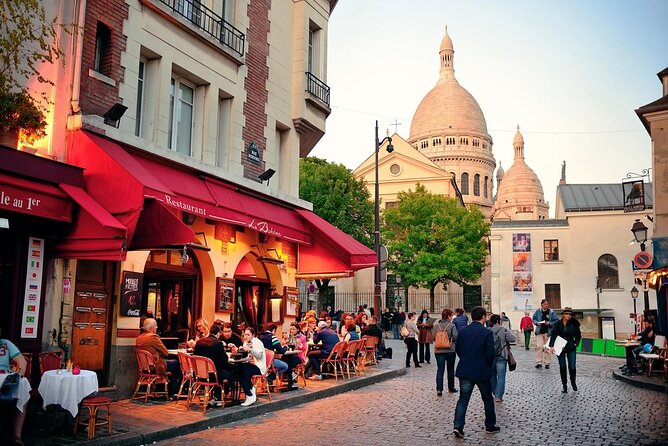
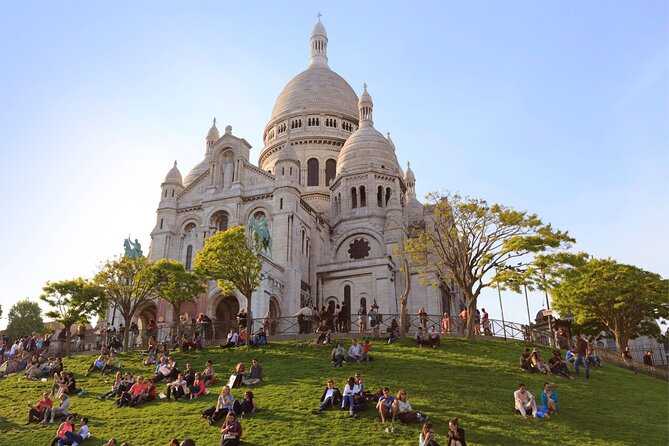
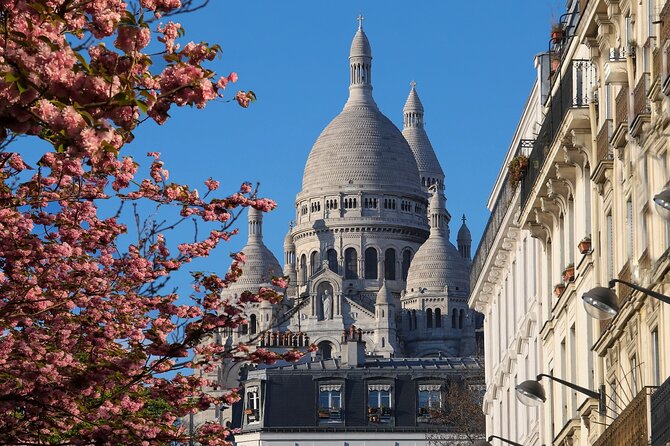
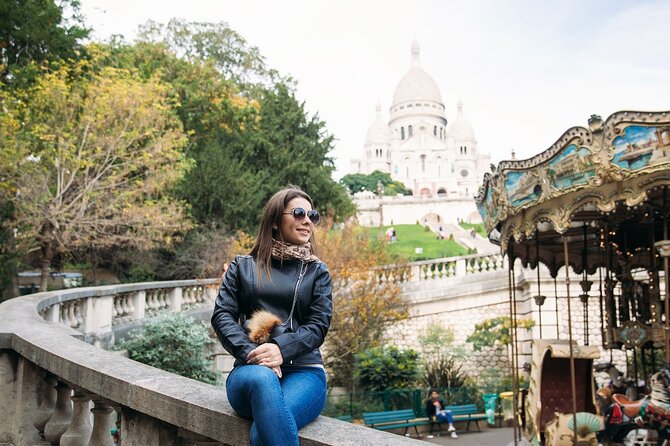
The finale is Basilique du Sacré-Cœur de Montmartre, around 15 minutes. Admission is listed as free, and you’ll admire the architecture plus get panoramic views of Paris from the hilltop location.
This is where the tour pays off visually. The guide time is short enough to keep you moving, but long enough that you can actually take in the skyline. If you like dramatic viewpoints, make time for photos and for just standing still for a minute or two.
Be aware of the uphill walking and stairs. The experience is not flat, and on a cold or rainy day it can feel extra demanding. If you’re up for it, you can take on the big stair challenge to see the dome, but only if you’re comfortable with that level of effort.
How guides like Selda, Zelda, Alice, and Danyel change the day
The biggest recurring strength in this tour is the guide effect. Names you may meet include Selda, Zelda, Danyl, Alice, and Daniel/Danyel—and the pattern is consistent: guides are warm, funny, and good at keeping people involved even when weather or crowds make things less comfortable.
You’ll see it in how stories are told, and how the group is handled. Several guides are described as adjusting pace, offering help when people need a rest, and giving photo-friendly direction. In a neighborhood like Montmartre, that kind of support matters because it turns the walk into something you can actually enjoy.
One small caution: in very crowded areas, it can be hard to hear explanations. When that happens, don’t fight the noise by staying far back. Step forward when your guide gives key info, then back off when you need a breather.
Who should book this tour, and who should skip it
This is a good fit if you want a guided Montmartre highlights walk in a short window. It’s especially ideal for first-timers, people who like art and culture, and families who want stories without a long museum session. The small group size also suits travelers who don’t enjoy being packed shoulder-to-shoulder.
It’s less ideal if you’re hoping for a full Moulin Rouge experience. Moulin Rouge show time is not included, and your Moulin Rouge stop is a quick learning moment rather than ticketed entertainment.
It’s also not a great match if you can’t handle hills and stairs. Even with breaks, the route’s overall shape is uphill. If you prefer mostly flat sightseeing, you may want a different plan.
Quick tips to make the walk smoother
- Wear shoes you trust on stone streets and stairs.
- Bring water, especially if you’re traveling in warmer months.
- Plan your route back from the ending address, not the meeting address.
- Take photos quickly during short stops, then listen for the story points.
- On crowded days, move closer during key explanations so you don’t miss the details.
Should you book this Montmartre tour?
If you want a short, story-driven way to see Moulin Rouge context, Amélie-era places, artist landmarks, Dalida sites, and a Sacré-Cœur finish, this tour makes sense. The small group size, English-guided format, and generally excellent guide energy are strong reasons to book.
Book it when you have limited time and want the neighborhood’s personality, not just a checklist. I’d skip it if you want reserved seating for a show, long indoor time, or a mostly flat route. If you’re comfortable with stairs and you want a guided “highlights with meaning” day, this is a solid choice.
FAQ
How long is the tour?
The tour runs for about 2 hours.
How much does it cost?
It costs $59.28 per person.
Is the tour offered in English?
Yes, the tour is offered in English.
What is the group size limit?
The tour has a maximum of 15 travelers.
Do I need tickets for Moulin Rouge?
No. The Moulin Rouge stop notes that the admission ticket is not included, and the Moulin Rouge show is not included.
Is the Café des Deux Moulins stop ticketed?
No, that stop is listed as free.
Where do I meet, and where does the tour end?
You meet at 5 Pl. Blanche, 75009 Paris, and the tour ends at 35 Rue du Chevalier de la Barre, 75018 Paris.
Is the tour dependent on weather?
Yes. It requires good weather. If canceled due to poor weather, you’re offered a different date or a full refund.