Paris glows from the water.
This 1-hour evening cruise is a simple, low-effort way to see a huge chunk of Paris lit up—bridges, palaces, and big sights sliding by in one continuous ride on a 100% electric boat. I also love that you can pair the music playlist with your own smartphone audio guide when you want the stories (headphones not included, so plan for that).
The main thing to consider: this is not a live “talking guide” cruise. The experience is built around music and scenery, so if you want someone to point out details in real time, you’ll need to use the app yourself.
In This Review
- Key points before you go
- What makes this Seine evening cruise different from the daytime tours
- Music and the Vedettes de Paris audio guide app: how to hear it without frustration
- Drink upgrade reality check: wine and Champagne with no table service
- Getting a good seat: timing and deck strategy for nighttime views
- Stop-by-stop route on the Seine: Eiffel Tower to Chaillot in about an hour
- Weather and comfort tips for a cold, windy night on the river
- Who should book this cruise—and who should choose a guided option instead
- Should you book this Seine River Evening Cruise with Music?
- FAQ
- How long is the Seine River evening cruise?
- Is there a guide on board during the evening cruise?
- Is the boat electric?
- What about music and audio—do I need headphones?
- Can I choose wine or Champagne?
- Are alcoholic drinks served to minors?
- Where does the cruise start and end?
- What happens if the cruise is canceled due to weather?
- What is the cancellation window?
Key points before you go
- It’s scenic over narrated: background music, plus a downloadable audio guide on your phone
- Top-deck seats are limited: arrive early if you care about skyline views
- Drink service is grab-and-go: you collect wine or Champagne at the bar, no table service
- Audio guide needs your headphones: the boat’s music can make low audio hard to hear
- You’ll see a lot in one hour: Eiffel area to Notre-Dame to the Louvre zone and beyond
What makes this Seine evening cruise different from the daytime tours
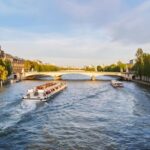
If you want Paris at night without a lot of planning, this cruise is a strong fit. The evening format is designed as a relaxed ride: music played through speakers and you watching the riverfront landmarks glide past. You’re not stuck in a museum, and you’re not commuting across town—you’re just floating.
Here’s the trade-off. The evening cruise does not include a guide on board to explain what you’re seeing. The title says music, not commentary, and that matters. Instead, you get an audio guide app (download before you board) so you can listen at your own pace.
For me, the value is that you’re buying time-saving sightseeing. In about an hour, you get front-row views from the river of major sights that usually require separate stops and tickets.
If you’re the type who likes facts as you go, you’ll get more out of the experience by bringing headphones and using the audio app—otherwise it can feel like you’re just drifting past dark silhouettes with music in the background.
You can also read our reviews of more boat tours in Paris


Music and the Vedettes de Paris audio guide app: how to hear it without frustration
The boat includes a music playlist, and it’s broadcast out loud. That’s great for atmosphere, but it can also compete with your phone audio. One practical move: use personal headphones, then switch between music and narration based on what you want to focus on.
The audio guide is delivered through the Vedettes de Paris app. You’ll want to download it before the cruise and have your phone charged. Headphones are not provided, so plan to bring your own wired or Bluetooth pair.
If you’re traveling with someone who can’t share headphones, that’s where the evening format can get tricky: you might end up with one person using the app while the other mainly listens to the music. It’s still workable, but it’s not as “everyone hears the same thing” as a guided tour.
Also, use the app like a “choose your moments” tool. When you spot something you recognize (like a bridge with gold details or a famous cathedral façade), pause the music in your mind and let the audio fill in the background story.
Drink upgrade reality check: wine and Champagne with no table service
The drink option lets you sip French wine or Champagne while you watch the river. Alcohol is only served to travelers 18 and above, and minors get non-alcoholic drinks.
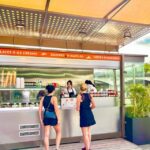
Important practical detail: if you choose the drink option, you collect it at the bar. There’s no table service, so don’t plan on being waited on while you’re trying to film or find a seat.
This setup is fine if your goal is simple: hold a drink, look out the window, and enjoy the lights. If you were imagining a more formal pairing (someone bringing drinks to you on cue), this isn’t that kind of service model.
My advice: arrive early so you’re not rushing at boarding time. When you’re settled, then go get your drink and return to your view point.
Getting a good seat: timing and deck strategy for nighttime views
This cruise is popular, and the top deck does not magically expand to fit everyone. If you care about a higher angle for filming and seeing the skyline, plan to be at the meeting point early.
A good strategy that keeps you in control:
- Go early to line up
- Get your drink once you’re seated
- If the top deck is crowded, you can still enjoy the ride downstairs, but the views will feel more “river-level”
Even on the best night, some parts of the route depend on timing—so don’t count on every photo moment being perfect. If your top priority is a specific sparkle moment (like the Eiffel Tower lighting cycles), you’ll want a departure around sunset or just after, not deep into the night.
Comfort matters too. It can be cold on the water, especially in winter. Wear a warm layer and bring a coat you don’t mind keeping on even while you’re taking photos.
Stop-by-stop route on the Seine: Eiffel Tower to Chaillot in about an hour
You’ll start near Port de Suffren and glide past a long string of Paris icons. The boat returns to the same meeting point at the end, so it’s one continuous loop—no changing rides.
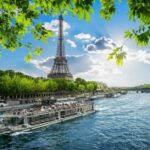
Eiffel Tower (area near the start)
Built for the 1889 Universal Exhibition, the Eiffel Tower took about two years, two months, and five days to construct. It reaches 324 metres tall and got a radio antenna added in 1903, which helped it avoid demolition.
Holy Trinity Cathedral (Russian Orthodox), with the green-roof look
This is the Holy Trinity Cathedral, known for a distinctly Russian Orthodox presence along the Seine. You’ll also pass the school and cultural spaces connected to the complex.
American Church in Paris (green clock-tower)
This stands out for its green clock-tower and its stained-glass windows attributed to Louis Comfort Tiffany. It was the first American church built outside the U.S., dating to 1931.
Hotel des Invalides (Napoleon’s tomb area)
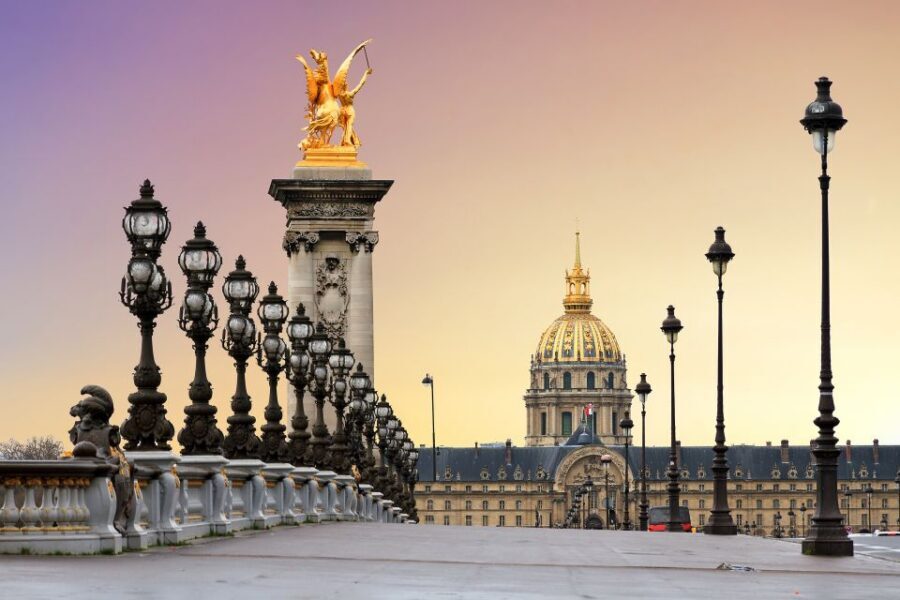
Built on orders of Louis XIV as a military hospital for injured soldiers and officers, Invalides is now tied to Napoleon I. From the river, you get a powerful sense of scale around the complex and its royal chapel.
Pont Alexandre III (gold-leaf glory and alliances)
Built for the 1900 Universal Exhibition and to seal the Franco-Russian Alliance, this bridge is famously detailed. The central coat of arms is covered in gold leaf, with nymphs symbolizing the Seine, and the opposite side references Saint Petersburg and the Neva.
Pont de la Concorde (stones from the Bastille prison)
This bridge was built using stones from the former Bastille prison, stormed during the French Revolution in 1789. It leads toward Place de la Concorde and the Palais Bourbon area.
Hotel de Salm / Légion d’honneur Palace (Napoleon’s honor system)
This green-domed building became the Légion d’honneur Palace under Napoleon I. The Légion d’honneur is France’s highest order of merit.
Former Orsay railway station (now Musée d’Orsay)
The station building was created for the 1900 Universal Exhibition and later turned into a museum in the 1980s. The collection includes major 19th-century artists like Renoir, Monet, and Van Gogh.
Pont Neuf (oldest stone bridge, famous mask details)
Pont Neuf is the oldest bridge in Paris and the first stone bridge with pavements rather than houses. It features 381 grimacing stone masks, each individually decorated.
Pont Saint-Michel (Napoleon III’s imperial Ns)
Built at Napoleon III’s request, it shows two imperial “N” letters on its pillars. It points you toward the Latin Quarter, tied to student life and Latin language history.
Île de la Cité (presumed birthplace of Paris)
This island is one of Paris’s two natural islands. Long before it was Paris, the Parisii tribe settled here around 300 years before the Common Era, calling it Lutetia.
Notre-Dame Cathedral (Rose du Midi and gargoyles)
Construction began in 1163 and took nearly two centuries, finishing around 1345. The cathedral is known for gargoyles and sculptures, plus the south rose window called the Rose du Midi, tied to the New Testament and gifted by Saint Louis.
Statue of Saint Genevieve (Paul Landowski’s work)
You’ll spot the statue of Saint Genevieve with her back toward you. It was sculpted by Paul Landowski, the same artist who later sculpted Christ the Redeemer in Rio de Janeiro.
Île Saint-Louis (prestigious island town houses)
This island is known for 17th-century town houses, including Hotel Lambert and Hotel Lauzun. Famous residents have included Charles Baudelaire and Georges Moustaki.
Hotel de Ville (Paris City Council since 1357)
Paris’s city council has been based here since 1357. The building’s style draws from Neo-Renaissance inspiration, and parts like a banquet hall are open to visitors, designed with a reference to the Hall of Mirrors in Versailles.
Conciergerie (Marie-Antoinette’s final months)
Originally built in the 14th century under Philip IV, it later became a prison. Marie-Antoinette spent her final two months here before being executed in 1793.
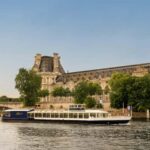
Louvre (royal palace turned museum)
The Louvre was a royal palace and became a museum in 1793. It’s one of the biggest museum complexes in the world, with thousands of works including the Winged Victory of Samothrace, Venus de Milo, and the Mona Lisa.
Place de la Concorde (Luxor obelisk and executions)
This square is linked to the French Revolution executions of Louis XVI and Marie-Antoinette. Its center holds an obelisk from Luxor, Egypt—34 centuries old and brought to France in 1836.
Grand Palais (glass roof and exhibition giant)
Built for the 1900 Universal Exhibition, Grand Palais is an architectural powerhouse with a glass roof described as the largest in Europe. Today it hosts cultural events and other public uses, including an ice area in winter.
Flame of Liberty (a U.S. gift after restoring the Statue of Liberty)
This sculpture is a reproduction of the flame from the Statue of Liberty in New York. It’s connected to a U.S. gift and the International Herald Tribune, in thanks for restoration efforts.
Palais de Chaillot (Trocadéro complex and museums)
Palais de Chaillot was built for the 1937 Universal Exhibition and includes two Neoclassical pavilions flanking an esplanade. It houses multiple institutions, including a navy museum, a museum focused on humankind, and the National Theatre of Chaillot.
You can also read our reviews of more evening experiences in Paris
Weather and comfort tips for a cold, windy night on the river
This cruise rides outside, so dress like you’re going to stand still near water for an hour. Even if the city feels warm in daylight, the river can feel cooler once the sun drops.
In rainy weather, you might get a grayer experience, but the cruise still aims to run as long as conditions are workable. The operator notes the experience requires good weather, and if it’s canceled due to poor weather, you’ll be offered a different date or a full refund.
I like bringing a warm hat and gloves when it’s chilly. You’ll thank yourself when the line is long and the boat is moving slowly under lights. If you’re serious about photos, wipeable cloth for your phone lens can also be useful.
Who should book this cruise—and who should choose a guided option instead
This is a great pick if you want a low-cost, high-views evening. It’s especially good as a first-night activity because you can get your bearings fast: bridges, cathedral silhouettes, and major squares in one sweep.
It’s also a smart move if you’re flexible about narration. Since there’s no live guide on board, you’re responsible for learning what you’re seeing through the app. If that sounds fun, you’ll enjoy it.
If you’re the type who wants a person explaining landmarks as you pass them—pinpointing where to look and what details matter—then you should look for a version that includes a live guide. This evening product is built for relaxing music, not commentary.
Should you book this Seine River Evening Cruise with Music?
I’d book it if your goal is simple: float through Paris at night with minimal effort, good landmarks from the water, and the option to upgrade your drink. At around $27.71 per person for about an hour, the value is strongest when you treat it as a “sights first” night plan.
Skip or rethink it if you’re expecting live narration, table service, or a guaranteed clear view from the top deck. The boat can get crowded, and the music can be loud enough that headphones make a big difference.
My best advice: plan to arrive early, bring headphones, and use the audio app as your personal tour guide. Do that, and you’ll leave with that classic Paris feeling—the city lit, the river moving, and a bunch of famous sights checked off in one smooth hour.
FAQ
How long is the Seine River evening cruise?
It runs for about 1 hour.
Is there a guide on board during the evening cruise?
No guide is on board for this evening cruise. You can use the downloadable audio guide app on your smartphone.
Is the boat electric?
Yes. The cruise uses a 100% electric boat.
What about music and audio—do I need headphones?
There is a music playlist onboard. The audio guide is in a smartphone app, and headphones are not provided, so you should bring your own.
Can I choose wine or Champagne?
Yes. You can upgrade to French wine or Champagne with a drink option. If you choose it, you collect your drink at the bar and there is no table service.
Are alcoholic drinks served to minors?
No. Alcoholic drinks are only for travelers 18 and above. Minors under 18 are served non-alcoholic drinks.
Where does the cruise start and end?
It starts at the meeting point near 2 Port de Suffren, 75007 Paris and ends back at the same meeting point.
What happens if the cruise is canceled due to weather?
The experience requires good weather. If it’s canceled due to poor weather, you’ll be offered a different date or a full refund.
What is the cancellation window?
Free cancellation is available up to 24 hours in advance for a full refund.