REVIEW · PARIS
Paris: Big Bus Panoramic Night Tour by Open-Top Bus
Book on GetYourGuide →Operated by Big Bus Tours/LES CARS ROUGES · Bookable on GetYourGuide
Paris at night is different. This Big Bus ride is an easy way to see major landmarks lit up without pacing the sidewalks. I especially like the Champs-Élysées views from the top deck and the way the route lines you up for the Eiffel Tower sparkle. One thing to plan for: the digital audio can be spotty on some departures, so still watch the landmarks as you go.
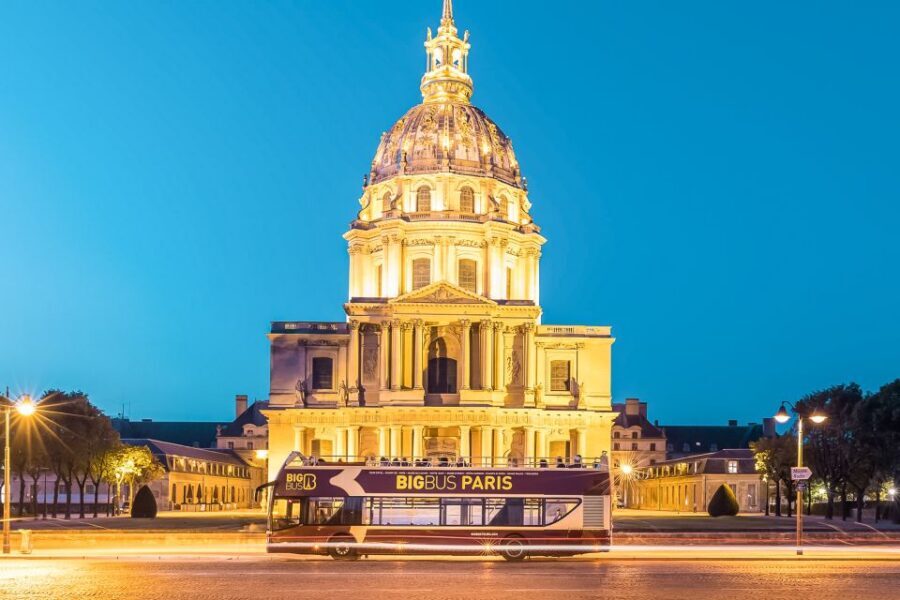
You get a single-loop 2-hour panoramic night drive with digital commentary in multiple languages, plus souvenir earbuds and Wi-Fi onboard. The bus is not hop-on, hop-off, so you can’t hop out to linger—this is about the ride and the timing.
If weather turns ugly, the operator may run with a closed top, and the vibe shifts from open-air to more sheltered viewing. Still, you get the same core sights, which is the whole point of doing Paris at night by bus.
In This Review
- Key Things to Know Before You Go
- Meeting at 156 Av. des Champs-Élysées: Don’t Lose Time Looking Around
- Seats, Headphones, and Onboard Wi-Fi: What Actually Improves the Experience
- The First Leg: Champs-Élysées to Arc de Triomphe Under the Night Lights
- Place de la Concorde, Madeleine, and Palais Garnier: Big-Street Paris Gets Elegant
- Moulin Rouge and the Opera Area: The Night Show Starts Early
- Carrousel du Louvre, Pont des Arts, and Île de la Cité: Where the Seine Turns into a Photo Line
- Musée d’Orsay and the Seine Glow: A Softer Night Mood
- Place du Trocadéro and the Eiffel Tower Sparkle: The Moment You Paid For
- Weather and the Closed-Top Switch: How to Dress for Paris at Night
- Price and Value: Is $35 Worth It for 2 Hours?
- Who This Tour Fits Best (and Who Should Skip It)
- Should You Book the Big Bus Paris Night Tour?
- FAQ
- How long is the Big Bus Paris Night Tour?
- Is this a hop-on, hop-off tour?
- Where does the tour start?
- What languages are available for the audio guide?
- Is Wi-Fi included?
- Is hotel pickup included?
- Is the tour wheelchair accessible?
Key Things to Know Before You Go
- Open-top 360 views for night photography, when weather cooperates
- Single-loop, not hop-on hop-off, so plan your photos fast from the bus
- Digital audio guide in 9 languages plus souvenir earbuds
- Eiffel Tower timing: many departures are set up for the twinkle moment
- Wi-Fi onboard and a comfort-focused heated indoor lower deck in colder weather
- Meeting point is fixed at 156 Av. des Champs-Élysées, opposite the Arc de Triomphe
Meeting at 156 Av. des Champs-Élysées: Don’t Lose Time Looking Around
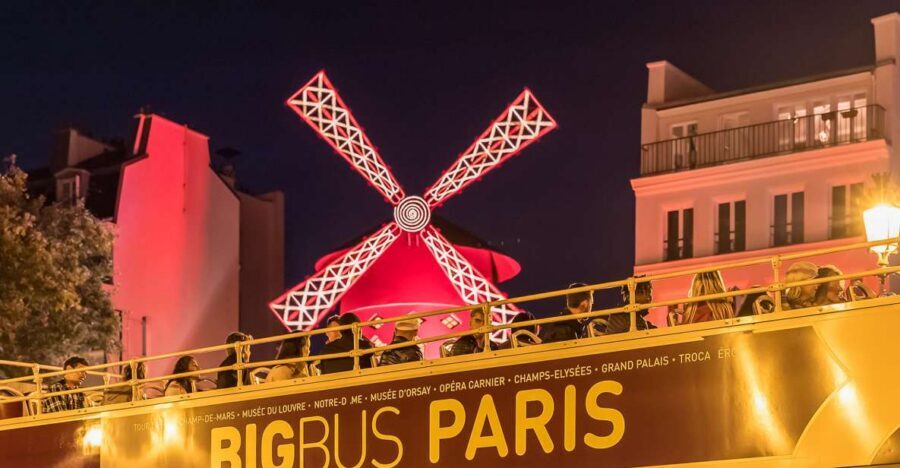
The tour starts and ends at 156 Avenue des Champs-Élysées (75008), on the corner of the Champs-Élysées opposite the Arc de Triomphe. A Big Bus representative helps you check in and board. Still, this is one of those meeting spots where it’s easy to circle the block once or twice if you’re rushing.
I suggest arriving early enough to get oriented. One practical tip: look for the bus stop area and any signage for LES CARS ROUGES / Big Bus near the Arc de Triomphe side of the avenue. When you’re on the right corner, the check-in process tends to feel orderly.
Also note the ride is round-trip on the same route pattern, but you’re not going to jump off at each landmark. That means your best “logistics move” is simply getting a good seat near the front half of the top deck (if open) so you can see both sides as the bus glides along.
You can also read our reviews of more evening experiences in Paris


Seats, Headphones, and Onboard Wi-Fi: What Actually Improves the Experience
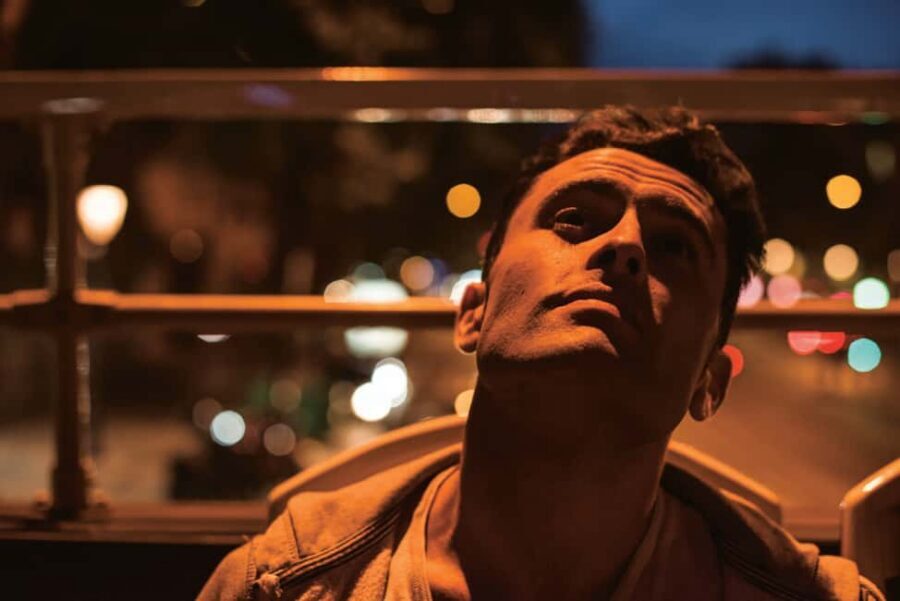
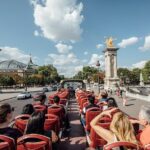
This night tour is built around viewing from above, so seat choice matters more than you’d think. The top deck can fill up quickly, and once it’s packed, you’ll be stuck wherever you end up. If you want the best shots of the skyline and the illuminated façades, arrive early and aim to sit toward the middle-front of the upper level.
You’ll receive souvenir earbuds for the digital audio commentary. Audio is available in Spanish, Chinese, English, French, German, Italian, Portuguese, Russian, and Korean. That’s great if you’re traveling with friends or family and you want everyone on the same page in a language they understand.
Onboard Wi-Fi is included, which is handy for quick map checks and uploading photos right after you take them. And yes, in cold or damp weather you may feel happier on the lower deck, which is more protected. At least one rider noted the indoor lower level can feel warm and cozy when it’s chilly outside.
The First Leg: Champs-Élysées to Arc de Triomphe Under the Night Lights
After you board, the early part of the route is all about Paris’s “big icons” energy—wide streets, bold lighting, and instant orientation. You’ll pass the Champs-Élysées, which at night works like a runway. Even from a bus, you can see how the avenue’s scale changes the feeling of the city: it’s not quaint here, it’s grand.
Next comes Arc de Triomphe. This is where the bus route helps you. Instead of trying to get a perfect angle on foot in crowds, you’re viewing from above and across the roadway. You get a calmer way to understand the monument’s role as a traffic centerpiece and a symbolic gateway.
Why this part matters: if it’s your first night in Paris, this leg helps you connect the city’s map in your head. The Champs-Élysées is the spine. The Arc is the landmark that makes the spine feel important.
Place de la Concorde, Madeleine, and Palais Garnier: Big-Street Paris Gets Elegant
As the bus continues, you’ll roll past Place de la Concorde. The square looks especially dramatic when it’s lit evenly, and from the top deck you can take in how the open space frames the surrounding buildings.
Then you’ll pass Madeleine, Paris. This area’s night lighting gives the neighborhood a polished look. It’s a contrast to the high-energy shopping stretch of the Champs-Élysées—more “classic Paris,” less neon.
After that, you’ll see Palais Garnier. This one’s a visual treat from the bus because you’re high enough to capture the building’s presence, not just its details. It’s also a good chance to slow down your photo pace and think: this is the kind of building that looks best when you include the whole façade rather than cropping tight.
The drawback here is common to all landmark bus tours: you’re looking for the best angle while the bus is moving. Since this is not hop-on hop-off, you’ll want to pre-decide what you want in your frame—whole building, street context, or skyline-only—then grab it when the view lines up.
Moulin Rouge and the Opera Area: The Night Show Starts Early
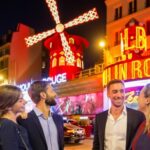
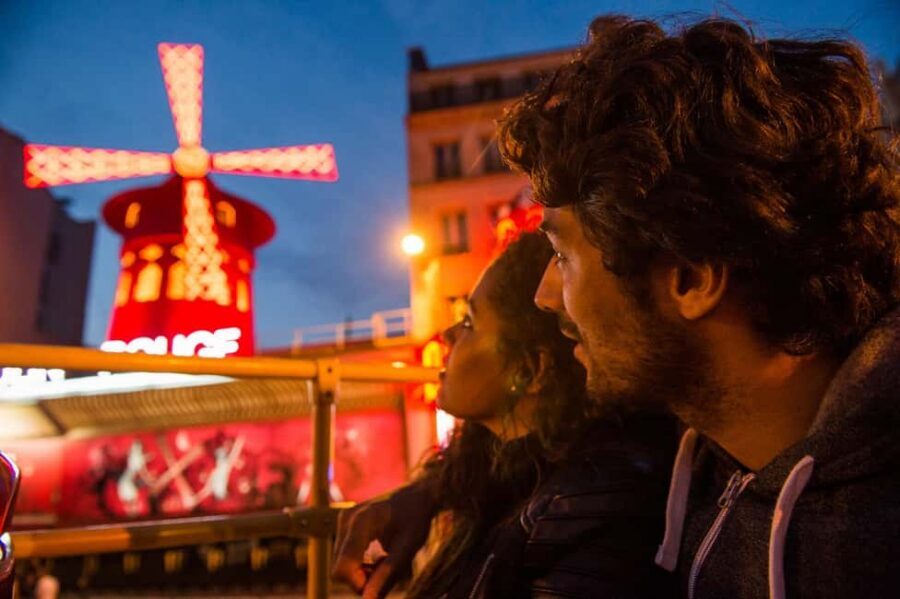
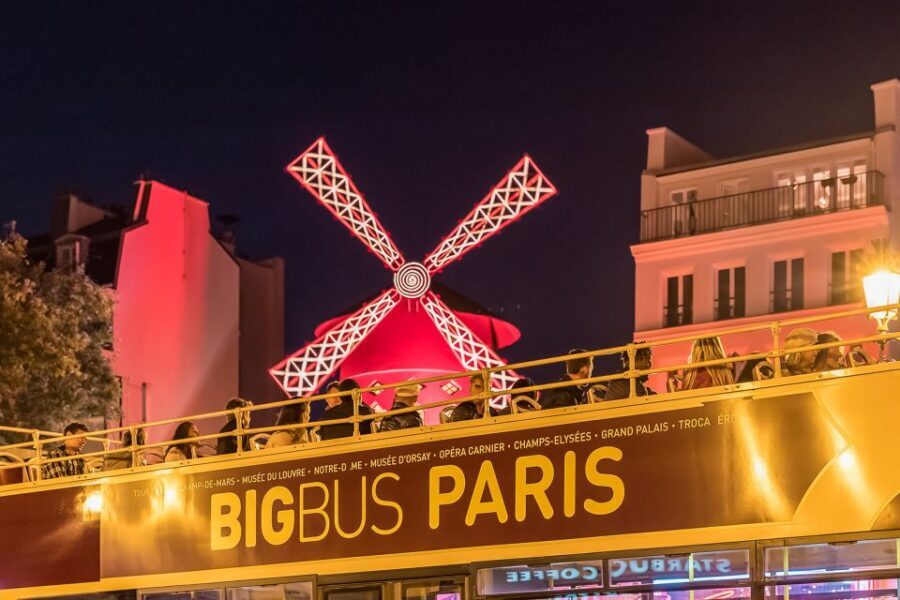
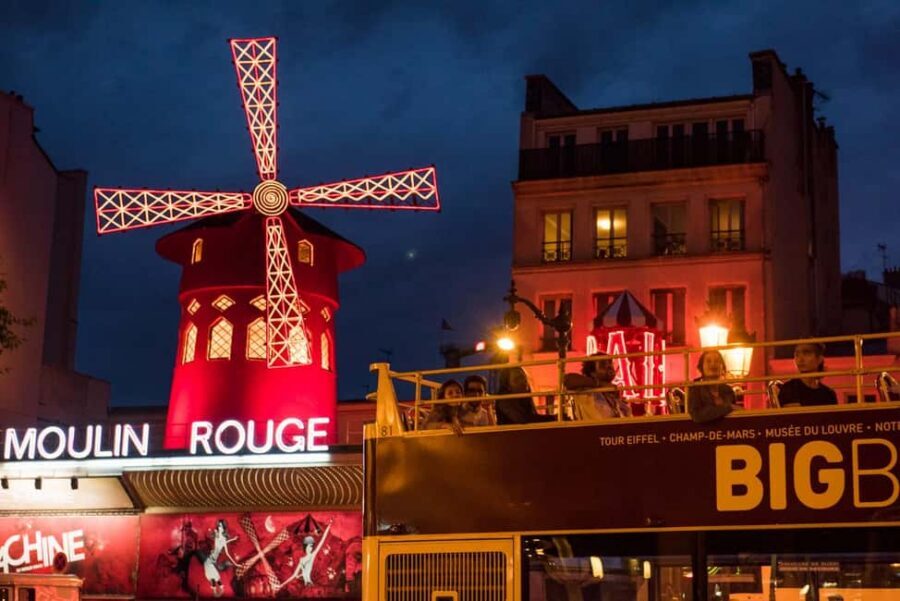
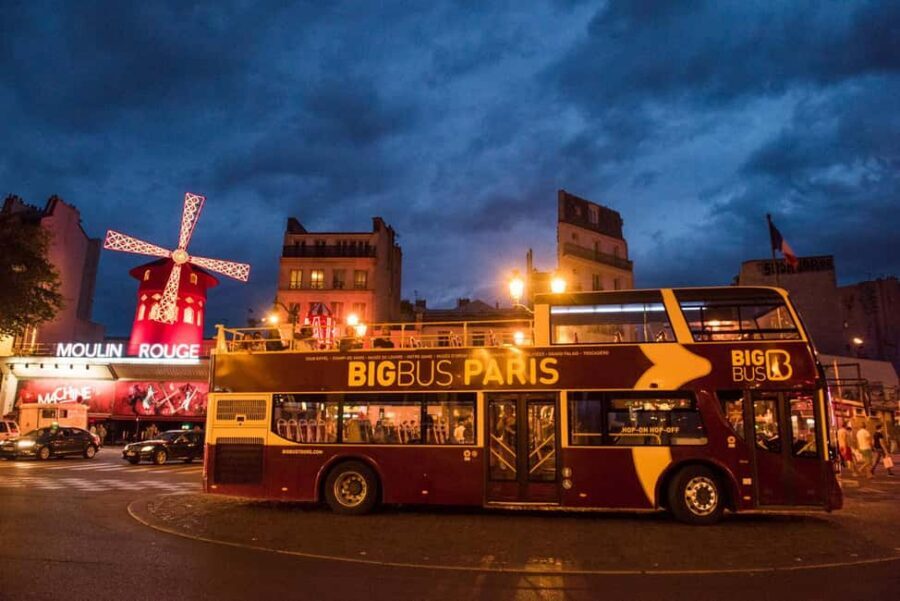
The route includes Moulin Rouge, and that’s one of the moments when Paris feels like a movie set. Even without leaving the bus, you get the visual cue: you’re now in the part of the city where nightlife and tradition overlap.
From there, the bus passes the Galeries Lafayette, Paris area and Avenue de L’Opera, Paris. This stretch is useful for two reasons. First, it shows how Paris groups its landmarks: you’re seeing clusters, not random points. Second, it gives you a sense of where shopping, theatre energy, and landmark architecture connect.
If you’re the type who likes to photograph at night but hates standing in place, this segment is a win. You can shoot from the move, then adjust as the bus slows near intersections. Just keep your hands and phone grips secure—night viewing is fun, but bus turns are real.



Carrousel du Louvre, Pont des Arts, and Île de la Cité: Where the Seine Turns into a Photo Line
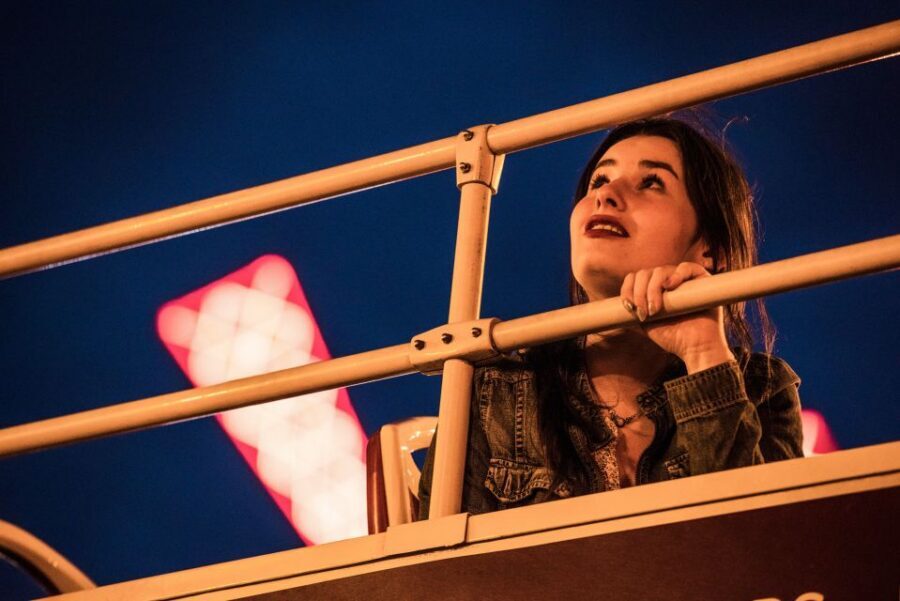
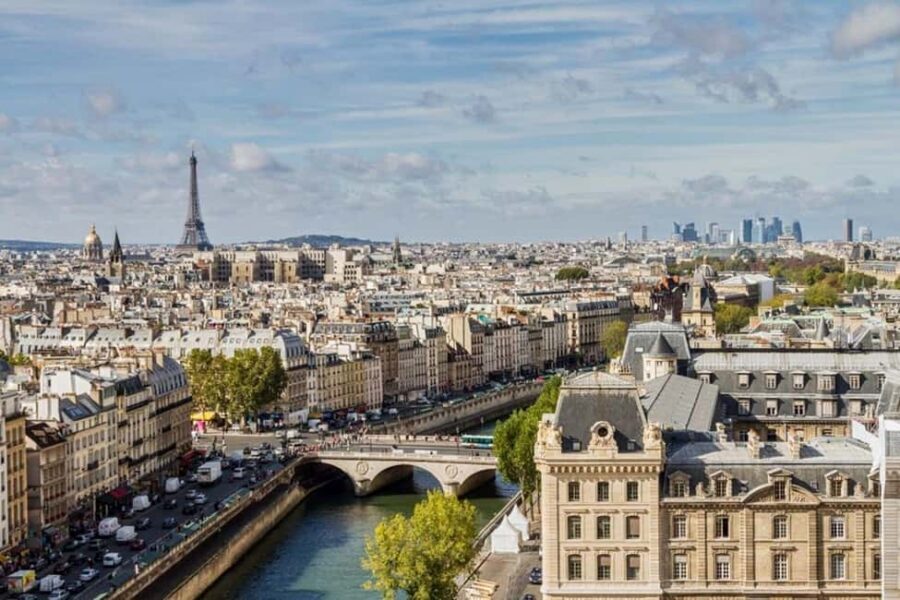
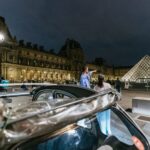
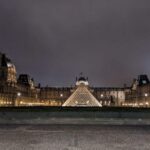
Now you’re moving into the zone where the reflections start doing the heavy lifting. The bus passes Carrousel du Louvre, which gives you one of the city’s most recognizable museum-adjacent panoramas. Even if you’re not touring the Louvre, this view is about scale and symmetry—two things that night lighting loves.
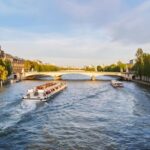
Next is Pont des Arts. From the top deck, it’s a great “connector” stop in your camera roll because you can usually line up the bridge angle with the city behind it. Bridges in Paris make good sense at night: they’re natural framing devices.
Then comes Île de la Cité and Notre Dame Cathedral. This is a moment most people wait for, because the cathedral area reads instantly even from a distance. You’re also seeing the city’s historic core as a geographic idea, not just an attraction.
Place Saint-Michel appears next. It’s another classic, and it helps you understand the river corridor as a continuous story rather than separate stops.
Why I think this section is valuable: it teaches your eye how Paris “stitches together” north-south views. By the time you reach the next river-facing area, you’ll be able to tell what’s river, what’s architecture, and what’s just street glow.
Musée d’Orsay and the Seine Glow: A Softer Night Mood
The bus passes Musée d’Orsay. At night, this area can feel calmer than the shopping corridors. Even without getting out, you can notice how the architecture sits against the night skyline and how the lighting shapes the mood.
This is also one of the easiest parts of the route for video. The bus keeps moving, but the views have enough structure to stay interesting. If you’re traveling with kids or you want an efficient sightseeing hit, this is a good “sit back and enjoy” stretch.
Just remember: because it’s one loop, you don’t have time to chase your shot. If you miss a view, you’ll have to wait for the next angle at the next prominent crossing.
Place du Trocadéro and the Eiffel Tower Sparkle: The Moment You Paid For
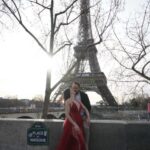
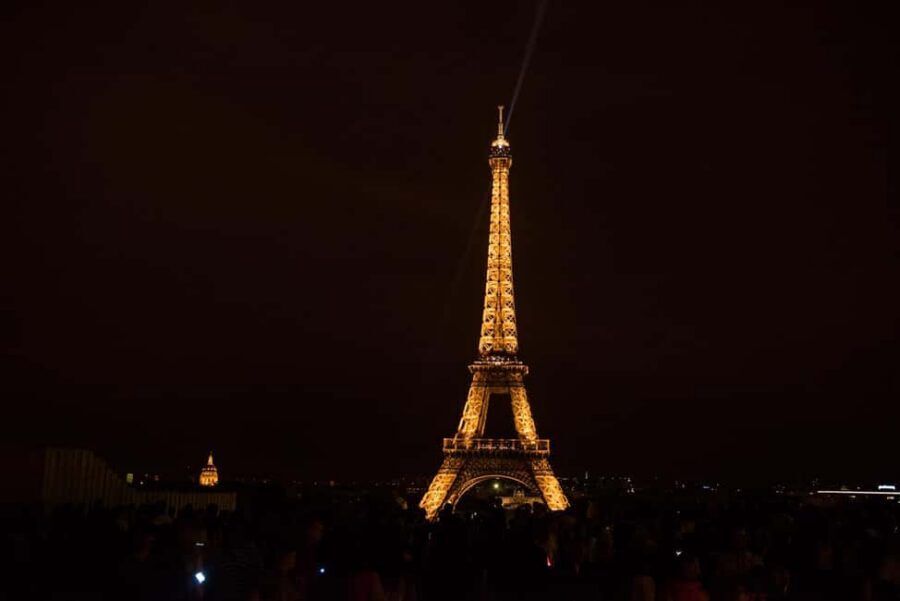
The route brings you to Place du Trocadéro before finishing at the Eiffel Tower area. Trocadéro is a key night stop for anyone who cares about iconic silhouettes. From there, the Eiffel Tower is no longer just a landmark—it’s the main event.
Finally, you arrive at the Eiffel Tower and then you pass Parc du Champs de Mars. This is where the timing becomes part of the experience. Multiple riders note that the driver times the viewing so you can catch the Eiffel Tower sparkle—sometimes right as the lights turn on.
One practical consideration: since it’s a bus ride and not a guided on-foot viewing, you don’t get a long, freeform window to roam around the tower area. You get the view from your seat and the timing from the driver. If you want to spend an hour lingering in person, this shouldn’t be your only Eiffel plan. If you want the efficient, high-reward highlight from a comfortable vantage point, this is exactly what the tour is built for.
Weather and the Closed-Top Switch: How to Dress for Paris at Night
Paris nights can flip from gorgeous to miserable fast. Here’s the important operational detail: the tour may run with a closed top in poor weather conditions. That means you won’t always get full open-air rooftop viewing.
The good news is you can still enjoy it. One rider mentioned that when weather was bad, the top was covered so it stayed warm and dry. Another noted the indoor lower deck feels heated and cozy in cold weather.
So dress like you’ll be outside but don’t bet everything on being in freezing wind. Bring a warm layer and something windproof. If you’re serious about photos, expect fewer “perfect shots through open air” on rainy departures. Still, lit monuments and damp streets can look great even when you’re sheltered.
Price and Value: Is $35 Worth It for 2 Hours?
At around $35 per person for a 2-hour night loop, this tour isn’t trying to replace everything you can do in Paris. It’s a tool. You’re buying:
- Transport plus panoramic viewpoints in one package
- Digital audio commentary in multiple languages
- Headphones/earbuds and Wi-Fi onboard
- A route that hits major icons in a single evening window
If you’re short on time, it can be good value because it compresses a lot of “big sight” seeing into a manageable block. If you’re already doing museums and you hate repeating long walks just to see viewpoints, this ride is a clean way to get a first-night sense of direction.
If you’re planning an intense, photo-heavy evening where you want to walk between stops and linger at each one, then the lack of hop-on freedom may feel restrictive. But if your goal is to see the city lights and get your bearings without exhaustion, the math tends to work.
Who This Tour Fits Best (and Who Should Skip It)
This is a strong match for:
- First-time visitors who want to get oriented fast
- People who want a night activity that’s mostly sit, look, and photograph
- Families who prefer comfort and a predictable route over long evening walks
- Anyone who wants a big highlight hit, especially the Eiffel Tower sparkle moment
It might be less ideal for you if:
- You’re the type who wants to hop off, explore, then return later
- You rely on audio being perfect every minute (some riders reported audio cutting out)
- You want a deeper, museum-style explanation of one site rather than “many landmarks, quick context”
Should You Book the Big Bus Paris Night Tour?
I’d book it if you’re trying to make your first or second night in Paris count. The route is built around the city’s most recognizable icons, and the top-deck panoramic format is exactly what you want after dark. The $35 price also makes sense when you factor in the digital multilingual audio, included earbuds, and Wi-Fi.
If you’re going to be picky about audio quality, keep your expectations realistic and plan to enjoy the sights visually too. And if the weather is questionable, dress for both open-air and closed-top scenarios.
Bottom line: if your goal is Paris at night with minimal effort and maximum landmark payoff, this tour is a very sensible bet.
FAQ
How long is the Big Bus Paris Night Tour?
The tour duration is 2 hours.
Is this a hop-on, hop-off tour?
No. The Night Tour is not hop-on, hop-off. It’s a single-loop ride.
Where does the tour start?
The meeting point is at 156 Av. des Champs-Élysées (75008), at the corner of the Champs-Élysées opposite the Arc de Triomphe.
What languages are available for the audio guide?
The audio guide is available in Spanish, Chinese, English, French, German, Italian, Portuguese, Russian, and Korean.
Is Wi-Fi included?
Yes. Wi-Fi onboard is included.
Is hotel pickup included?
No. Hotel pickup and drop-off are not included. You need to reach the meeting point on your own.
Is the tour wheelchair accessible?
Yes. The tour is wheelchair accessible.