REVIEW · PARIS
Seine River Guided Cruise Champagne Option by Vedettes de Paris
Book on Viator →Operated by Vedettes de Paris · Bookable on Viator
Paris from the water hits different. This 1-hour Seine cruise is an easy, good-value way to see the city’s top landmarks while a live guide narrates in English and French. I like that it pairs prime sightseeing with a real Champagne moment, and I also like the tight timing: you get a lot of Paris in one simple outing. One thing to keep in mind is that crowds and the boarding line can be slow, and you’ll want to manage expectations around where you sit on the boat.
The Duval Leroy Champagne is served with your ticket, so you’re not just paying for a drink that never materializes. I also appreciate the live commentary style that helps you understand what you’re looking at—Eiffel Tower, bridges, churches, museums, and palaces all glide by in an order that makes sense. The main drawback is that the river can be busy and some onboard areas may be limited depending on conditions, so your best photos may require a bit of positioning.
In This Review
- Key things worth knowing before you cruise
- Entering The Seine at Port de Suffren
- Champagne and the live bilingual guide
- What you’ll actually see in one hour (and why it feels faster)
- The Eiffel Tower, bridges, and skyline moments you can photograph
- Hotel de Salm to the Louvre area: Paris institutions from the river
- Notre-Dame, Île de la Cité, and the Gothic details you miss on land
- Les Invalides, Saint Genevieve, and modern cultural stops
- Conciergerie, the Louvre, and Place de la Concorde from the waterline
- Grand Palais, the Flame of Liberty, and Palais de Chaillot
- Deck comfort, seating, and sound (the stuff that affects your enjoyment)
- Is this $38.44 Champagne cruise a good value?
- When to pick your departure time
- Should you book this Seine River Champagne cruise?
- FAQ
- How long is the Seine River guided cruise?
- Where does the cruise start and end?
- Is the cruise guided in English?
- Does the ticket include Champagne?
- Do you need a phone ticket?
- Is food included?
- What age is required for alcoholic drinks?
- Is there a group size limit?
- Is the cruise refundable if the weather is bad?
Key things worth knowing before you cruise
- Champagne is ticket-based: bring your mobile ticket or paper ticket and present it at the boat bar
- Your hour is packed with landmarks: the route highlights Eiffel Tower, Notre-Dame, the Louvre area, and Trocadéro viewpoints
- Bilingual live narration: commentary is delivered in both English and French during the cruise
- Timing matters for mood: sunset cruises tend to look extra magical over the water
- Deck access can change: upper deck access may be restricted for safety in some situations
- Staff help can make or break it: on-the-spot support is a clear theme in the best experiences, including named guides like Maureen and staff members like SAMMA
Entering The Seine at Port de Suffren
This cruise starts and ends at 2 Port de Suffren, 75007 Paris, which is handy because you’re not stuck on the far edges of the city. It’s also listed as near public transportation, so you can pair it with other sights without building a whole day around transit.
I’d treat this as a “between-events” plan. It works well if you’ve already walked a lot that day, or if you want a fast way to get your bearings before tackling the big museums and churches on land.
You can also read our reviews of more boat tours in Paris

Champagne and the live bilingual guide
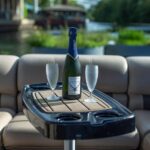
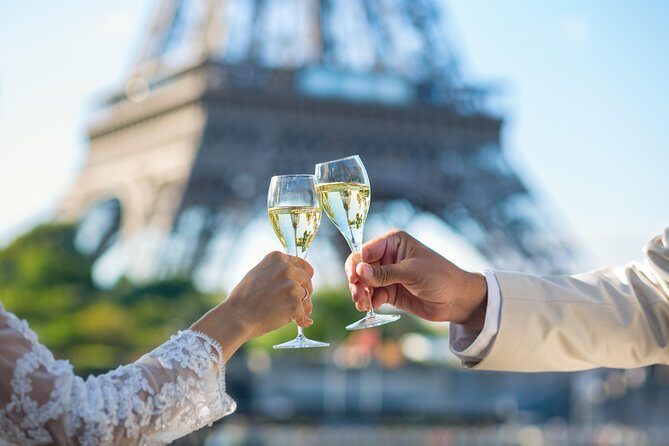
The included drink is a glass of Duval Leroy Champagne. It’s not just floating around as ambiance—you’ll need to go to the boat’s bar and show your ticket to the barman to receive it. That small step is exactly where some unhappy moments come from when people didn’t present the ticket.
The live guide also matters. You’ll get commentary on what you’re seeing as you pass key Paris landmarks, and it’s delivered in English and French, so you don’t have to rely on a phone audio guide while you’re trying to frame photos.
If you’re traveling as a group and language comfort is an issue, this is one of those rare tours where both languages are actually part of the experience, not an afterthought.
What you’ll actually see in one hour (and why it feels faster)
The route is built around a classic Paris loop: you go past the big “postcard” landmarks, plus a stack of bridges and institutions that you’d miss if you only stayed on the major boulevards.
You’ll notice two things on the water:
1) Paris looks more “designed,” because bridges and façades line up in a way streets rarely allow.
2) landmarks feel less separate. From the Seine, the city reads like one connected scene.
Below is a guided sense of the sights in the order you’ll typically see them, with what makes each one worth your glance.
The Eiffel Tower, bridges, and skyline moments you can photograph
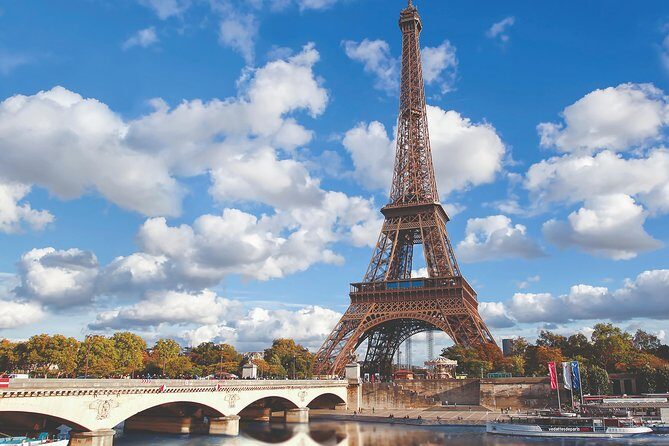
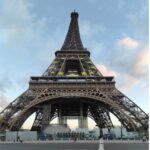
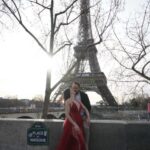
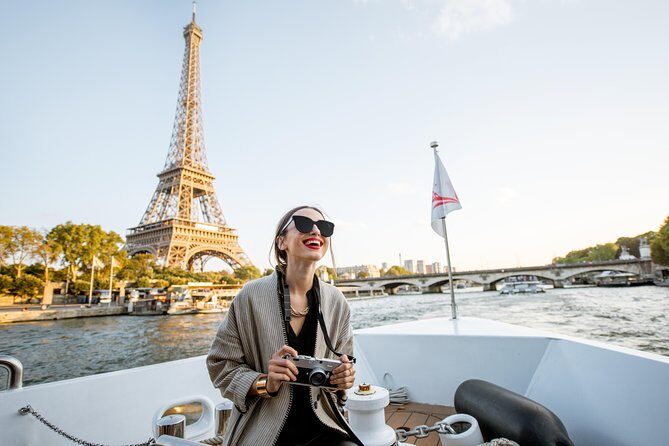
Your cruise starts with Eiffel Tower area views. The tower was built for the 1889 Universal Exhibition, went up in just over two years, and rises to 324 metres. Even if you think you already know it, seeing it from the river gives you scale—plus the way it frames the skyline is hard to replicate from the Champ de Mars.
Then you glide past religious and cultural landmarks along the banks:
- The Holy Trinity Cathedral (Russian Orthodox) is known for its presence of education and a cultural center in the complex.
- The American Church in Paris (green clock-tower) dates to 1931, and its stained-glass windows are by Louis Comfort Tiffany.
Next comes one of the most impressive bridge “photo stages” on the Seine:
- Pont Alexandre III is tied to the 1900 Universal Exhibition and the Franco-Russian Alliance. Look for the Paris coat of arms covered in gold leaf and the nymph figures representing the Seine—and on the opposite side, the Saint Petersburg arms with nymphs for the Neva.
As you move onward:
- Pont de la Concorde is built using stones from the former Bastille prison (stormed during the French Revolution in 1789). It funnels the view toward the Palais Bourbon on one side and toward Place de la Concorde on the other.
Hotel de Salm to the Louvre area: Paris institutions from the river
One of the clever things about this cruise is that it doesn’t only show famous buildings. It also gives you a read on how power and culture shaped the river’s edges.
You’ll pass the Hotel de Salm, known today through Napoleon I’s era as the Légion d’honneur Palace, which is the home of one of France’s highest honours.
Then you’ll see the former Orsay railway station, later turned into Musée d’Orsay in the 1980s. It’s the kind of building you’d walk past quickly on foot, but from the river it looks like a proper landmark stop, especially if you like architecture and art history.
Next is the Institut de France (formerly the Collège des Quatre Nations). It’s tied to funds left by Cardinal Mazarin in 1661 and houses multiple academies, including the Académie Française.
The cruise also gives you a close-up feeling for older bridge design:
- Pont Neuf is the oldest bridge in Paris. It’s stone with pavements rather than houses along the sides, and it features 381 grimacing stone masks, each unique.
You can also read our reviews of more guided tours in Paris
Notre-Dame, Île de la Cité, and the Gothic details you miss on land
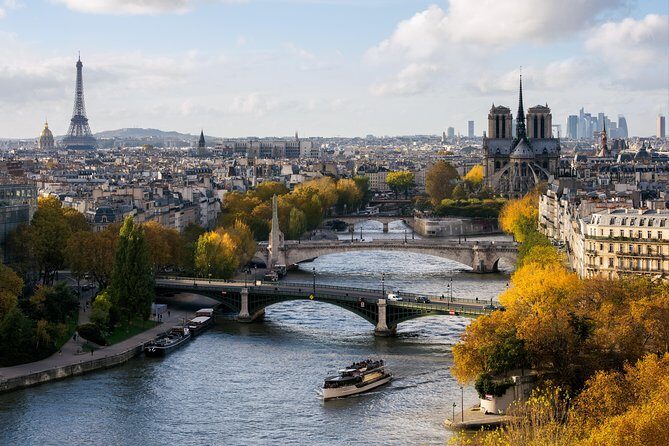
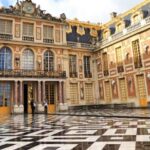
Around the Île de la Cité area, you get the “origin” feeling. This island is associated with Paris’s earliest settlement—long before the city’s modern layout—tied to the Parisii tribe calling it Lutetia.
Then comes the visual highlight for many people:
- Notre-Dame Cathedral began in 1163 and was completed in 1345. From the water, you can spot the cathedral’s sculptural crowd: gargoyles and stone figures. The south rose window, called the Rose du Midi, is dedicated to the New Testament and was a gift from Saint Louis.
This is also where you learn how the river changes what you think you know. On land, Notre-Dame can feel like one big face. On the Seine, it’s a relationship between stone, water, and surrounding structures.
Les Invalides, Saint Genevieve, and modern cultural stops
Your route continues with military history and religious symbolism:
- Hotel des Invalides was ordered by Louis XIV as a hospital for injured soldiers and officers. Its royal chapel holds the tomb of Napoleon I.
- You’ll also see the statue of Saint Genevieve, patron saint of Paris, sculpted by Paul Landowski—the same sculptor known for Christ the Redeemer in Rio de Janeiro.
Then the cruise shifts from classic monuments into a modern cultural viewpoint:
- The Arab World Institute opened in 1987 and focuses on history, art, society, religions, and science related to the Arab world.
You’ll also pass the seats of civic power:
- Hotel de Ville de Paris has housed the City Council since 1357, and the building draws inspiration from Neo-Renaissance style.
And if you like neighborhood texture:
- Île Saint-Louis is one of Paris’s prestigious residential islands, associated with 17th-century town houses like Hotel Lambert and Hotel Lauzun.
Conciergerie, the Louvre, and Place de la Concorde from the waterline
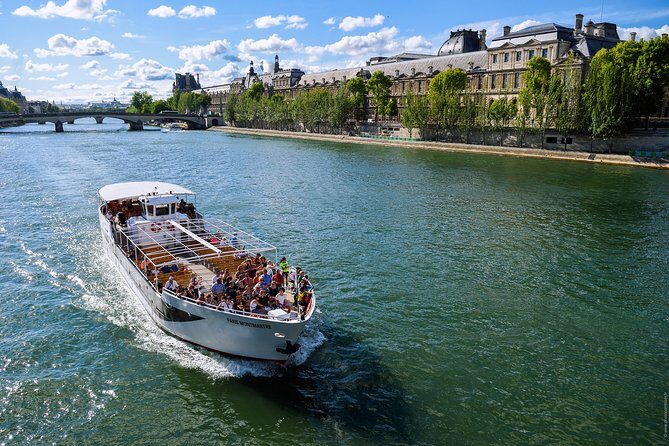
As you cruise, you’ll pass the Conciergerie, built in the 14th century under Philip IV. It later became a prison, and it’s closely tied to Marie-Antoinette’s final months before her execution at Place de la Concorde in 1793.
Then comes the Louvre area:
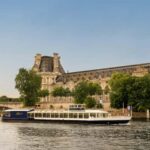
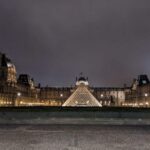
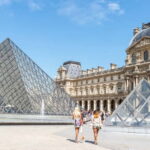
- The Louvre began as a royal palace and became a museum in 1793. It’s enormous, with over four kilometres of façades and nearly 14 kilometres of galleries, and it’s famous for works like the Winged Victory of Samothrace, Venus de Milo, and of course the Mona Lisa.
Near this stretch, you also see Place de la Concorde. This is where Louis XVI and Marie-Antoinette were executed during the French Revolution. The central obelisk comes from Luxor in Egypt and was brought to France in 1836.
Grand Palais, the Flame of Liberty, and Palais de Chaillot
As the cruise continues toward the Trocadéro side, you’ll pass major exhibition-era architecture:
- The Grand Palais was built for the 1900 Universal Exhibition. It’s known for its glass roof, and today it hosts cultural events, exhibitions, and even a skating setup.
- The Flame of Liberty is a gift from the United States and connected to thanks for restoring the Statue of Liberty. It’s an exact reproduction of the flame in New York.
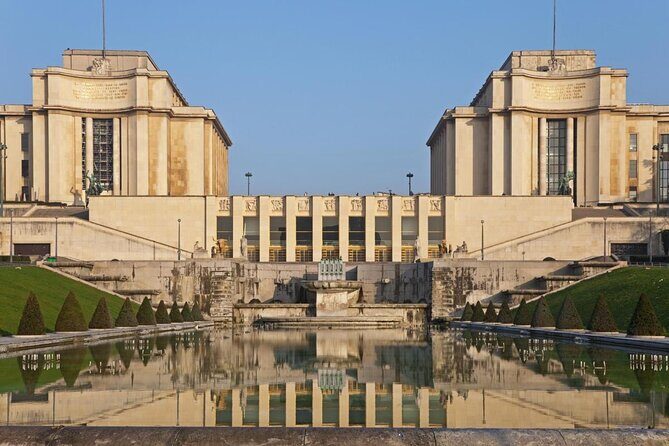
Then you reach Palais de Chaillot on Place du Trocadéro. Built for the 1937 Universal Exhibition, it includes two Neoclassical pavilions and looks directly over the Trocadéro gardens. It houses several institutions, including the National Navy Museum, the Museum of Humankind, and the National Theatre of Chaillot.
If you’re chasing that “Paris is glowing” feeling, this area is often where the cruise payoff becomes really visual—especially near sunset.
Deck comfort, seating, and sound (the stuff that affects your enjoyment)
This is where I’d be practical. Some cruises feel great until you realize you can’t see over heads or you can’t hear the guide.
Here’s what’s supported by how these trips can go:
- Seats can be limited on some sailings, and boarding lines can be long. Go with a calm plan and be ready to board when your time window arrives.
- The boat is used for a 1-hour cruise, and you’ll likely want to position yourself where you can see both the banks and the landmarks as they appear.
- The upper decks may be closed for safety reasons due to the height of the Seine in some situations, so don’t build your whole strategy on being outside the entire time.
- Boat noise can make commentary hard to hear. If it’s tough, ask the crew to increase the guide’s volume.
My simple advice: bring a phone with your camera ready, but also plan on using the guide’s narration as your “translation layer” while you look. That combination is what turns a sightseeing cruise into real understanding.
Is this $38.44 Champagne cruise a good value?
At $38.44 per person for about 1 hour, you’re paying for a focused sightseeing loop plus a live bilingual guide plus a glass of Champagne. That’s the key value math: it’s not just transportation, and it’s not just a drink.
You can also compare it to the cost of doing the same area as separate stops via taxis or multiple paid transit segments. Even if you’re already walking a lot, this gives you a different angle quickly.
A final value note: because the Champagne is tied to ticket presentation at the bar, you’ll get exactly what you paid for if you do the simple step when you board.
When to pick your departure time
This cruise offers multiple departure times in the morning and afternoon, so you can match it to your day.
If your goal is mood and photos, plan for the light. One of the best-feeling cruise moments is when the city starts to sparkle in the evening—people love it when the Eiffel Tower lighting kicks in.
If your goal is comfort over everything else, midday can be hot depending on the season, and you’ll be happier if you’re not committed to being outside on deck the entire time.
Should you book this Seine River Champagne cruise?
I’d book it if you want a low-stress, high-hit sightseeing outing. This is a smart choice for first-timers who want a guided view of Eiffel Tower, Notre-Dame, the Louvre area, major bridges, and the Trocadéro side—without spending the whole day in transit.
Skip it (or rethink) if you hate any kind of boarding line uncertainty, or if you need guaranteed top-deck access no matter what. Also, be ready to manage the easy Champagne step: show your ticket at the bar and you’ll get your glass.
If you’re flexible and you time it for good light, this is one of those Paris activities that feels like it pays you back instantly.
FAQ
How long is the Seine River guided cruise?
The cruise is about 1 hour.
Where does the cruise start and end?
It starts at 2 Port de Suffren, 75007 Paris, France, and it ends back at the same meeting point.
Is the cruise guided in English?
Yes. The experience is offered with English and includes a live guide with bilingual French and English commentary.
Does the ticket include Champagne?
Yes. It includes one glass of Duval Leroy Champagne, served when you present your ticket at the boat bar.
Do you need a phone ticket?
You’ll have a mobile ticket option, and you can also use a paper ticket.
Is food included?
No. Food is not included.
What age is required for alcoholic drinks?
Alcohol is served only to travelers 18 years old and above. Under 18 are served non-alcoholic drinks.
Is there a group size limit?
Yes. The maximum is 220 travelers.
Is the cruise refundable if the weather is bad?
The experience requires good weather. If it’s canceled due to poor weather, you’ll be offered a different date or a full refund.