REVIEW · PARIS
Two Days Private Tour to Normandy from Paris
Book on Viator →Operated by Private Trip · Bookable on Viator
Normandy can be heavy, but this plan has a smart rhythm. It pairs Monet’s gardens and Rouen’s famous historic spots with a full day along the D-Day line, including cemeteries, beaches, and key bridges. You’re not stuck on a fixed group schedule either—this is a private setup with a guide and dedicated transportation.
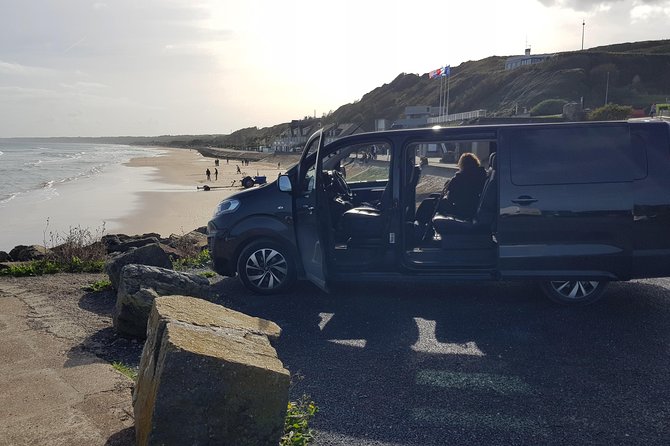
Two things I especially like: you get a real guide experience (you’ll spend time talking through what you’re seeing, not just looking at it), and you travel in a luxury Mercedes minivan so the long Paris-to-Normandy logistics don’t eat your whole day. The main drawback to consider is that it’s a fast-moving two days with several stops that are timed tightly, so if you like slow museum-style wandering, you may want to plan extra time on your own.
In This Review
- Key highlights to look forward to
- Why this Normandy tour feels different than a checklist
- Price and value: what you’re really paying for
- Day 1 in Rouen and Monet’s World: start with beauty, end with stakes and bells
- Fondation Claude Monet gardens (2 hours, admission included)
- Rouen Cathedral / Notre-Dame de Rouen (1 hour, free admission)
- Aitre Saint-Maclou ossuary (30 minutes, free admission)
- Gros-Horloge clock (20 minutes, free admission)
- Le Bûcher de Jeanne d’Arc (30 minutes, free admission)
- A second Notre-Dame cathedral stop (30 minutes, free admission)
- Day 2: the D-Day route that hits the right emotional beats
- Cimetiere Militaire Allemand de La Cambe (40 minutes, free admission)
- Pointe du Hoc (1 hour, free admission)
- Omaha Beach (1 hour, free admission)
- Cimetiere Americain de Colleville-sur-Mer (1 hour, free admission)
- Batterie Allemande de Longues-Sure-Mer (30 minutes, free admission)
- Pegasus Bridge (40 minutes, free admission)
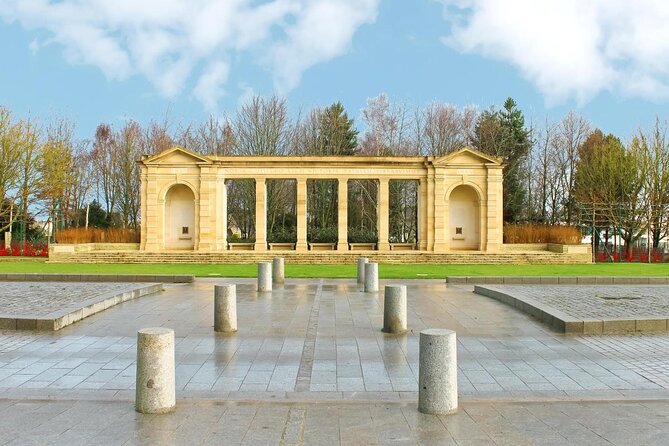
- Ranville War Cemetery (40 minutes, free admission)
- What makes the private guide style worth it
- How to pace yourself across two days without feeling rushed
- Logistics you should know before you book
- Should you book this two-day Normandy private tour?
- FAQ
- How many people can this private Normandy tour accommodate?
- What time does the tour start and how does pickup work in Paris?
- Is hotel accommodation included in the price?
- Are entrance tickets included?
- What about meals on the tour?
- Does the tour run in bad weather?
- Is the tour offered in English?
- What is the cancellation policy?
Key highlights to look forward to
- Private guide and transportation: your own pace, your own questions, and no waiting on other groups
- Claude Monet’s gardens at Fondation Claude Monet: a longer, included visit (2 hours) instead of a rushed photo stop
- WWII stops with emotional context: from Rouen’s Jeanne d’Arc sites to the D-Day beaches and major cemeteries
- D-Day terrain in the right order: cliffs and batteries, then Omaha, then American and German memorial grounds
- A guide who adapts: multiple guides’ stories point to flexibility for families and different mobility needs
- Value depends on filling the van: the group price works best when you’re closer to a full party
Why this Normandy tour feels different than a checklist
You’re doing two major parts of France in one trip: art and medieval/Rouen landmarks on Day 1, then the D-Day corridor on Day 2. That structure matters because it helps you shift gears. On the first day, you’re building context—France’s identity, faith, and power—before you hit the raw geography of 1944.
What I like most is the balance of famous landmarks and the sort of details that make history click. The route isn’t only about the big-name places; it also includes sites like the ossuary at Aitre Saint-Maclou and the Gros-Horloge clock mechanism—small stops that teach you the feel of the region.
This is also the kind of tour that works well when you want questions answered in real time. In feedback tied to this company, the guide is described as punctual, friendly, and funny, with an ability to adjust on the spot for family needs and even mobility issues. If you want a guide who tells stories instead of reading slides, this fits.
You can also read our reviews of more private tours in Paris


Price and value: what you’re really paying for
The price is $4,092.78 per group (up to 7) for about two days. That sounds steep until you do the math the way it actually affects you:
- If you fill all 7 seats, it’s roughly $585 per person.
- If you’re only a party of 2 or 3, your per-person cost rises fast, because this is a private vehicle with a guide.
So here’s the practical way to judge it: you’re paying for convenience + time + interpretation. You’re not just buying tickets. You’re buying a dedicated driver/guide, hotel pickup/drop-off across Paris, and a route that hits high-impact WWII sites without you spending hours sorting public transport, transfers, and timing.
Also note: lunch and dinner are not included, and entrance fees are mostly free along the itinerary except for the Fondation Claude Monet gardens (included). That means your day-to-day costs won’t explode, but you should still budget for meals. The provided estimate is about €20 for lunch.
Day 1 in Rouen and Monet’s World: start with beauty, end with stakes and bells
Day 1 is set up as an art-meets-history day. It starts with Fondation Claude Monet, then moves through Rouen’s landmarks tied to famous figures and moments of conflict.
Fondation Claude Monet gardens (2 hours, admission included)
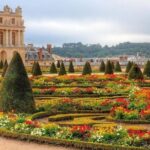
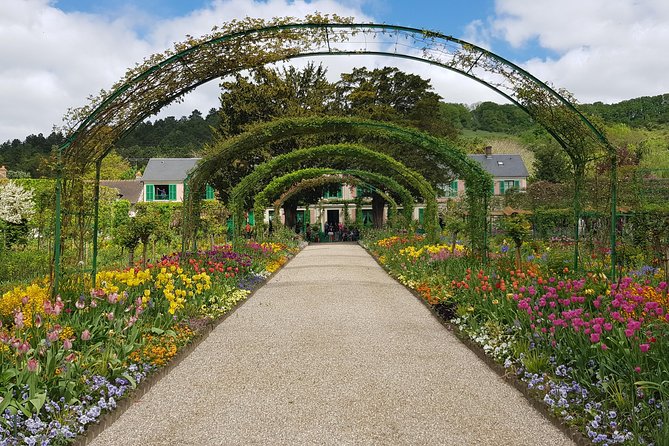
This is the one longer, included attraction, and that matters. Two hours gives you room to slow down and actually see what Monet designed, not just walk through for a quick look. If you’re the type who likes gardens, water, and light, this is your payoff early in the trip.
If you’re more history-focused, don’t skip it. Monet’s Rouen connection also sets you up for the city’s artistic legacy—so later, when you’re looking at Rouen’s cathedral through the lens of art, it lands with more meaning.
Rouen Cathedral / Notre-Dame de Rouen (1 hour, free admission)
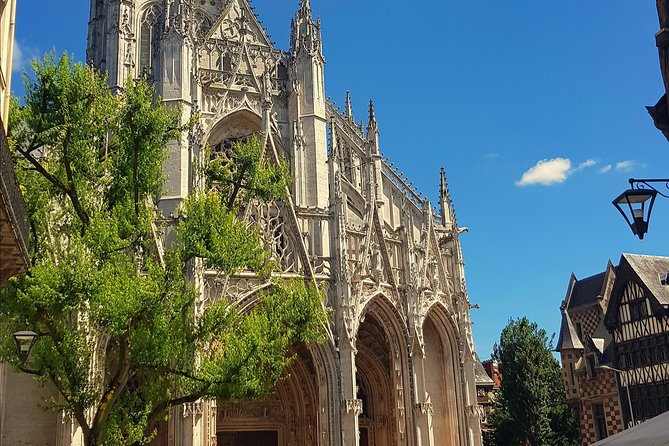
Rouen Cathedral is a key stop, and the detail provided for you is excellent: the cathedral houses a tomb containing the heart of Richard the Lionheart. That’s not just a trivia tidbit—it changes how you read the building.
If you’ve seen Monet’s cathedral paintings before, this stop connects that art to the actual stone and scale. I like this kind of stop because it makes the famous version feel real.
You can also read our reviews of more tours and experiences in Paris
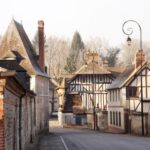

Aitre Saint-Maclou ossuary (30 minutes, free admission)
Next comes Aitre Saint-Maclou, an old cemetery mass grave dating from the 16th century. It’s described as one of the rare examples of this type of ossuary remaining in Europe.
This is not a “pretty corner” kind of stop. It’s a stark, human-scale reminder of how communities coped with death centuries ago. If you don’t handle somber sites well, give yourself a slow minute here and let it land—don’t rush.
Gros-Horloge clock (20 minutes, free admission)
Then you get a cultural palate cleanser: Gros-Horloge, with its clock mechanism noted as one of the oldest in France (movement made in 1389). This is a short stop, but it gives you a sense of how life moved in Rouen before modern time.
It’s also a nice break before the next two emotionally charged sites.
Le Bûcher de Jeanne d’Arc (30 minutes, free admission)
This stop marks the place where Joan of Arc was burned at the stake. Even with just a half hour, you’ll feel the weight of it.
I recommend treating this as a guided reflection stop rather than a photo stop. Ask your guide what matters most here—what changed, what lasted, and why Rouen matters in the story.
A second Notre-Dame cathedral stop (30 minutes, free admission)
The itinerary includes another Cathedrale Notre-Dame stop described as the famous cathedral of Bayeux. The timing is short, so treat it as a quick orientation stop—something to catch a sense of architectural style rather than a deep dive.
If you care about this part specifically, I’d confirm with your guide what you’ll see during this stop so expectations match reality.
Day 2: the D-Day route that hits the right emotional beats
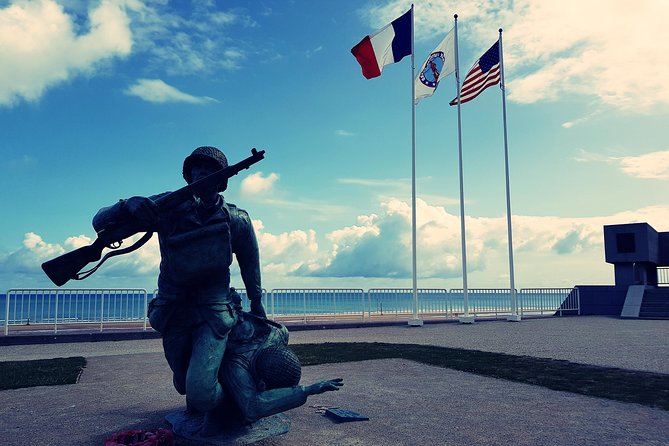
Day 2 is about 1944’s coastline and its aftermath. You start in memorial grounds, move into the action terrain (cliffs and beaches), then end with the cemeteries and bridge sites that symbolize courage and survival.
This is the day when shoes matter. Some locations involve uneven ground and walking on memorial sites. Dress for weather because the tour operates in all weather conditions.
Cimetiere Militaire Allemand de La Cambe (40 minutes, free admission)
You begin with the German war grave cemetery at La Cambe. Starting here is deliberate: it grounds you in the full human cost before you move into the battlefield narrative.
If you want the story to feel complete, this opening helps. It’s also the kind of moment that makes the rest of the itinerary hit harder.
Pointe du Hoc (1 hour, free admission)
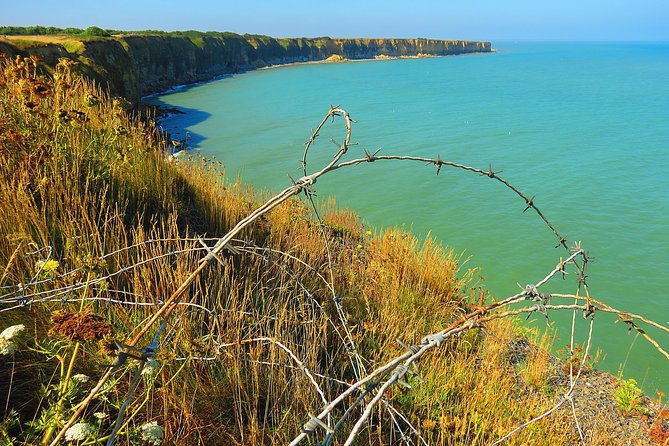
Then you go to Pointe du Hoc, described as one of the most impressive D-Day sites, with rangers scaling the 100-foot cliffs.
This stop is where the geography really starts talking. The cliffs aren’t abstract from here—they’re a physical obstacle you can understand. If your guide explains what was positioned where and why, this becomes more than viewing; it becomes understanding.
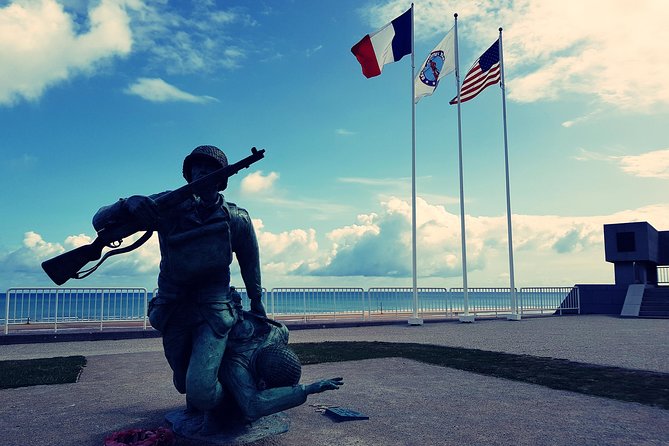
Omaha Beach (1 hour, free admission)
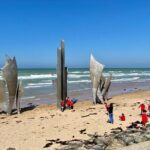
Next is Omaha Beach, specifically the Charlie & Dog Green section, noted as the area pictured in Saving Private Ryan. It’s the sort of reference point that helps film fans get oriented quickly.
If you’re sensitive to heavy history, pace yourself. The beach is beautiful in weather, and that contrast can feel strange. A good guide helps you keep both truths in focus.
Cimetiere Americain de Colleville-sur-Mer (1 hour, free admission)
Then comes the American Cemetery at Colleville-sur-Mer, described as a pilgrimage place for all visiting Normandy.
This is often the emotional anchor of the whole trip. Give yourself time for the layout, the names, and the silence. If you have limited energy, still don’t skip the cemetery’s center spaces—those are usually where the meaning consolidates.
Some guides in feedback also mention the value of the on-site museum inside the cemetery grounds. Your plan here is timed at about an hour, so if the museum is a priority, ask your guide whether you’ll have enough time to include it.
Batterie Allemande de Longues-Sure-Mer (30 minutes, free admission)
You move to a German coastal battery. This is a shorter stop, so the goal isn’t to memorize every detail—it’s to connect the earlier cliff action to the artillery and defenses along the coast.
A guide can turn this quick stop into something memorable by pointing out what you can still see in the terrain today.
Pegasus Bridge (40 minutes, free admission)
Then: Pegasus Bridge, famous from The Longest Day with the line about holding until relieved. It’s a classic symbol stop, and the 40 minutes gives room for explanation and photos.
I like that this stop is not only about war. It’s about what the bridge represented for the larger operation and how that single crossing fit into a bigger plan.
Ranville War Cemetery (40 minutes, free admission)
Finally you end at Ranville War Cemetery, described as the place tied to the first casualties of D-Day.
Ending here keeps the story from feeling like it simply stops at the beach. You’re left with the timeline and the cost, which is what a memorial route should do.
What makes the private guide style worth it
The itinerary is impressive, but the guide is the engine. In feedback connected to this tour, the guide is repeatedly described as:
- Punctual and friendly, with humor that doesn’t ignore the subject matter
- Flexible when you need to adjust pace, especially with older travelers or mobility limits
- A strong storyteller, not a lecture machine
- Willing to tailor focus when you want more of one era, one topic, or one type of site
One standout detail: the guide has been described as a level 2 sommelier, with wine knowledge woven into the day. That matters because it changes the tone. After intense WWII stops, a small shift into French culture and taste can help your brain reset without turning the tour into a party.
Also, several comments point to smart local planning, like arriving before crowds at at least one key viewpoint. That’s not guaranteed for every stop, but it’s a good sign for how your time may be protected.
How to pace yourself across two days without feeling rushed
Even with a private tour, the schedule has multiple stops and timed visits. That’s normal for a 2-day Normandy-from-Paris run—still, you can make it feel easier.
Here’s what helps:
- Wear comfortable shoes with grip. Memorial grounds and coastline areas can be uneven.
- Bring a light layer even in good weather; coastal conditions can change.
- Plan meals strategically. Lunch is roughly €20, but dinner isn’t included, so you’ll want restaurant ideas lined up.
- Use the guide for priority setting. If you care most about Omaha or Pointe du Hoc, say so early so the time feels right.
If you’re with family, this kind of flexible guiding is a big win. Comments attached to the tour highlight the guide taking care of an 82-year-old traveler with mobility issues. That tells me the planning includes real human needs, not just route compliance.
Logistics you should know before you book
This tour includes driver/guide, hotel pickup and drop-off, and transport by private vehicle. You’re picked up directly from your Paris accommodation, including hotels, airbnbs, and even airports like CDG and Orly, with a start time of 8:00 am.
A hotel is booked for convenience, but you pay directly to the reception on the second day morning at about €150 per room (plus or minus). Entrance fees are not universally included, though the Monet gardens ticket is included, and many other stops are listed as free.
The tour uses a mobile ticket, runs in all weather conditions, and is offered in English.
Should you book this two-day Normandy private tour?
I’d book it if you want three things: private pacing, a guide who tells stories (not just facts), and a D-Day route that’s balanced between battlefield geography and memorial context.
It’s especially good value if you have up to 7 people and you’ll fill the minivan seats. If you’re traveling as a couple and don’t mind paying more per person, it can still be worth it because the alternative is piecing together transport and interpretation across multiple sites.
Skip or reconsider if you hate timed stops. Some sections are only 20–40 minutes, and you’ll move on whether you’re ready or not. In that case, you might prefer adding extra independent time in Normandy after this tour.
FAQ
How many people can this private Normandy tour accommodate?
It is priced per group for up to 7 people. It is described as a private tour, so only your group participates.
What time does the tour start and how does pickup work in Paris?
The start time is 8:00 am. You get direct pickup and drop-off to any accommodation in Paris, including hotels, airbnbs, and airports CDG or Orly.
Is hotel accommodation included in the price?
Hotel accommodation is not included. The provider books a hotel for convenience, but each guest pays directly to the hotel reception on the second day morning (about €150 per room, plus or minus).
Are entrance tickets included?
Entrance tickets are not included across the board. The Fondation Claude Monet gardens admission is included. Many other listed stops are noted as free admission.
What about meals on the tour?
Lunch is not included (about €20). Dinner is also not included.
Does the tour run in bad weather?
Yes. It operates in all weather conditions, so you should dress appropriately.
Is the tour offered in English?
Yes, the tour is offered in English.
What is the cancellation policy?
You can cancel up to 6 days in advance of the experience for a full refund. If you cancel 2–6 days before, you receive a 50% refund. Less than 2 days before start time is not refundable. Cut-off times follow the local time where the experience takes place.