REVIEW · PARIS
The Essentials of Paris in a Classic Open Top Car Citroën DS
Book on Viator →Operated by Classic 60's Paris Tours · Bookable on Viator
Paris looks better from a classic car.
This private, open-top Citroën DS tour is built for getting your bearings fast, with a guide who can answer your questions on the spot. I like that it mixes big-name landmarks with street-level detail, plus the car has heating and comfortable seating for a long-ish ride in real Paris weather.
Two things I really like: private hotel pickup/drop-off so you’re not wrestling with maps, and the tour’s focus on an “I want the essentials” overview rather than museum homework. The route also gives you plenty of chances to take photos from key vantage points, and you’ll get local recommendations from your guide as you go.
One consideration: with so many stops crammed into about 3 hours, traffic can slow the pace, and street noise in an open-top car can make narration a little harder at times. If you’re sensitive to sound or you hate delays, plan to bring patience.
In This Review
- Key things you’ll notice on this Citroën DS tour
- Why this Citroën DS “Essentials of Paris” tour feels worth it
- Price and logistics: what you’re really paying for
- How a 3-hour route covers so much without feeling chaotic
- First stops: La Madeleine, the Tuileries, and Concorde in perspective
- Power along the Seine: Assembly, Élysée, and the Grand/ Petit Palais
- Arc de Triomphe to the Eiffel Tower: monuments you can feel
- Les Invalides and the Seine: where the “romance” becomes geography
- Musée d’Orsay and the Louvre: how to see them without pretending you can do everything
- Place Vendôme and Opéra Garnier: luxury and spectacle on the same route
- Montmartre by car: art streets, cabarets, and Sacré-Cœur views
- Île de la Cité and the Latin Quarter: Notre-Dame, Sainte-Chapelle, Panthéon, and more
- Luxembourg gardens and Saint-Germain-des-Prés: Paris as a lived-in neighborhood
- Riverfront classics: Pont Neuf, Palais Royal, and the glass-roof passages
- What your guide actually adds (and how to use it)
- Best for first-timers, short stays, and people who hate transit stress
- Should you book it?
- FAQ
- Is the tour private?
- How many people can be in a group?
- What language is the tour offered in?
- Is pickup included, and where can you be picked up or dropped off?
- What vehicle and comfort features are included?
- Can I cancel for a full refund?
Key things you’ll notice on this Citroën DS tour
- Hotel pickup and drop-off by request: You can be collected and returned to a central address inside Paris (with a few area limits).
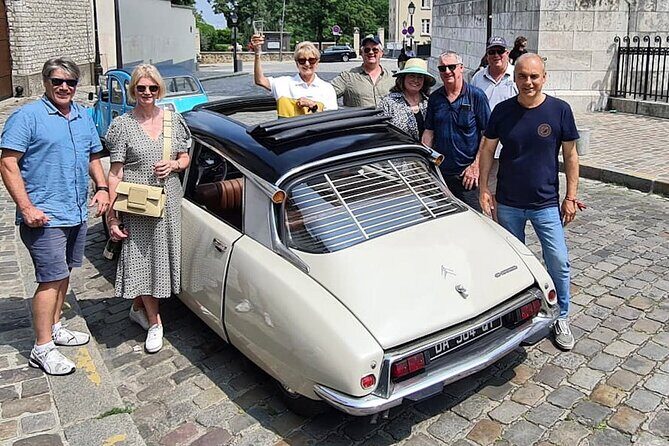
- A real classic: Citroën DS comfort: Open-top views, plus heating and legroom that make the ride easier than you’d expect.
- Guide Benjamin brings context: You can ask questions and get practical takes, not just dates and plaques.
- A fast “best-of” route: Big sights on both banks and in Montmartre, timed for a short visit.
- Bottled water included: A small thing that helps when you’re bouncing around famous neighborhoods.
- Private group experience: Only your group rides together, up to 4 people per booking.
Why this Citroën DS “Essentials of Paris” tour feels worth it
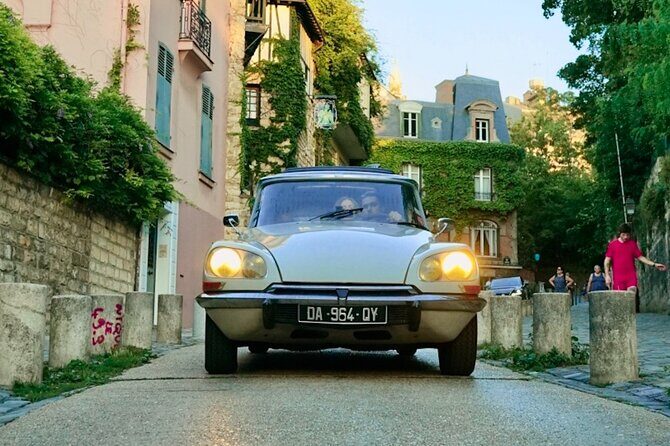
If you’ve ever spent your first day in Paris trying to figure out the right subway line and the right entrance, you’ll understand the appeal here. This tour is basically a stress-reducer with an iconic soundtrack: you’re traveling in a classic Citroën DS, you stay comfortable, and you get a high-quality guided overview without spending the whole day lost.
The open-top part matters. From the street, a lot of Paris feels “almost there,” like you’re passing through without absorbing it. From a DS with a guide narrating what you’re seeing, the city clicks into place. You spot landmarks in the right sequence, and you start to understand how neighborhoods connect—by river bends, boulevards, and viewpoints.
Comfort is handled in a very practical way. The car has heating and comfortable seats with plenty of legroom. That means you can actually enjoy the ride instead of counting minutes until you can stand up. Plus you get bottled water, which sounds minor until you’re on hour two.
And because it’s private, the pace can match your group. Your guide can slow down for an extra question, explain what you’re looking at, and point you toward options for later: where to walk, what to skip, and how to plan around the city’s rhythms.
You can also read our reviews of more tours and experiences in Paris.



Price and logistics: what you’re really paying for
$480.44 per group (up to 4) can look steep if you compare it to a shared bus tour. But you’re not just buying a ride—you’re buying time saved and less hassle on a first trip.
You get:
- Private transportation in a classic car
- A private tour guide (Benjamin)
- A professional licensed driver with passenger insurance
- Pickup offered (with specific area limits) and drop-off at a location of your choice
- Mobile ticket and bottled water
That bundle matters if you’re arriving from a long travel day, have limited time, or simply don’t want to figure out where you should stand for the best views. The tour is also scheduled to run best between 10AM and 4PM, which helps you avoid the worst traffic crush.
There are trade-offs. You’re touring by car, so you won’t “do” every sight like an all-day visit. Think of it as guided orientation plus photo-friendly stops. If you’re the type who wants to spend an hour inside each museum, you’ll still want a separate museum day.
How a 3-hour route covers so much without feeling chaotic
This tour is designed like a highlight reel with short “checkpoints.” You see major attractions from strategic angles, and then you stop briefly for photos and quick appreciation. Several locations explicitly list about 15 minutes for a stop, while others are handled with shorter photo moments.
That time structure is the heart of the value. In 3 hours, you can’t realistically do full museum circuits. But you can:
- Build a mental map of the center of Paris
- Learn what’s where (and why it matters)
- Get the names right, not just the photos
- Decide what deserves your time on a later visit
A lot of the itinerary also zigzags intelligently: west toward the Eiffel area, then back through the center and into Montmartre, then across to the Île de la Cité and the Latin Quarter style sights, and finally toward riverfront and classic passages. If you’re new to Paris, you’ll feel less like you’re ticking boxes and more like someone is drawing you a route you can reuse tomorrow.
First stops: La Madeleine, the Tuileries, and Concorde in perspective
You start in central Paris at the Church of La Madeleine. It’s famous for its grand neoclassical façade and richly decorated interior, and it works well as an opening because it sets a tone. It’s not a medieval postcard building—it’s about how Paris flexed its power and style in a more formal era.
Next comes the Tuileries Gardens, one of the easiest places to “read” Paris from a distance. The gardens connect major landmarks in a long, visual line: you understand why the Louvre area matters and how Place de la Concorde anchors the west end of central Paris.
Then you reach the Luxor Obelisk at Place de la Concorde. It’s a striking reminder that Paris didn’t just absorb French milestones—it also imported global monuments into its own urban storytelling. From a tour perspective, the obelisk is a great orientation marker because it ties together the grandeur and the geometry of the area.
At Place de la Concorde itself, you get a focused look at the fountains, statuary, and the iconic obelisk setting. This is the “classic Paris” scene people picture before they even arrive. If you’re trying to understand the city’s symmetry, this area is a good start.
Power along the Seine: Assembly, Élysée, and the Grand/ Petit Palais
From Concorde, the route moves into political and cultural Paris. You’ll see the French National Assembly in the historic Palais Bourbon along the Seine. Even without going inside, it’s useful to understand this location as the heart of France’s legislative power, because the Seine corridor is where the city’s “official” face is most visible.
Then it’s a short hop to the Champs-Élysées. The point here isn’t shopping or flashing lights—it’s learning the boulevard’s role as a central axis of Paris, with luxury history layered into the street.
You also pass the Élysée Palace, the official residence of the French President, which reinforces how this part of the city blends ceremony and modern governance. Nearby, the itinerary then touches the Grand Palais—famous for its glass-domed splendour—and the Petit Palais, a calmer pause with elegant architecture and a peaceful garden setting.
Here’s the practical win: these are architectural “bookends” to help you spot what’s central versus what’s more neighborhood-scale later in the trip. If you only have a short visit, this kind of big-picture context saves you time when you’re making plans for later.



Arc de Triomphe to the Eiffel Tower: monuments you can feel
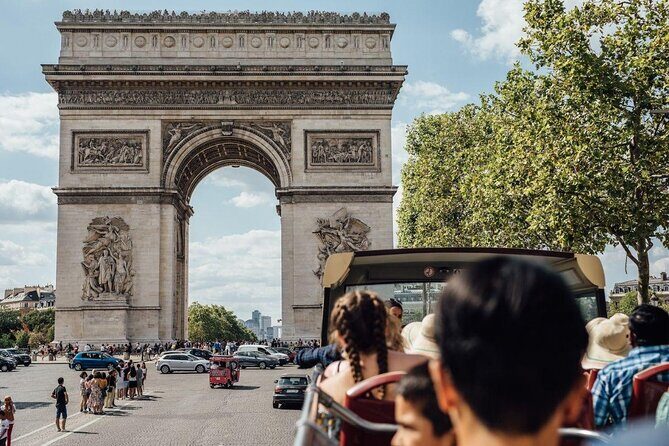
One of the best moments in this tour is the area around the Arc de Triomphe. You get brief time to look up at France’s heroes commemorated beneath the sculpted archways. It’s also a key junction for understanding how Paris organizes movement in multiple directions.
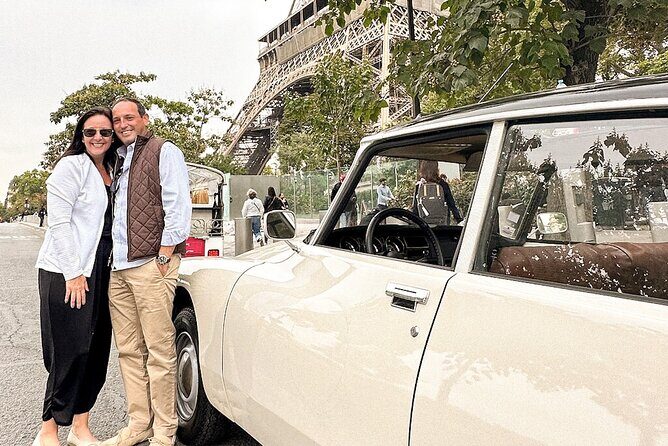
From there, you head through the corridor near the Eiffel Tower. The itinerary includes a stop at the Eiffel area, plus nearby landmarks like the École Militaire. This matters because the Eiffel Tower can be visually over-whelming. Adding context from the surrounding 18th-century landmark helps you anchor it in the broader city story instead of treating it like a solo attraction.
The tour also checks off Rue de l’Université, which is a quick taste of traditional townhouses and cafés just steps from the tourist magnet. It’s a reminder that the Eiffel area isn’t only “viewpoints and crowds.” There’s everyday Paris here, too.
Then you cross into the grand visual set: the Pont Alexandre III is known for its opulence and golden sculptures, and it’s one of those bridges where you understand why Paris looks so photogenic from the river.
Les Invalides and the Seine: where the “romance” becomes geography

You’ll also see Les Invalides, centered around the golden dome and closely associated with Napoleon Bonaparte’s tomb. Even if you don’t go inside, the scale signals why this complex is such a major marker of French military heritage.
Then comes the big Paris feeling: the Seine. The itinerary includes time to drift along the Seine and/or stroll across iconic bridges for views from multiple angles. This is one of the most useful parts of the whole tour because it tells you where the “front doors” of Paris are. Many later attractions make more sense once you understand which side of the river they’re on and how bridges connect neighborhoods.
You pass Pont de la Concorde, which connects Place de la Concorde to the Jardin des Tuileries. Seeing the bridge helps you visualize where you’ll want to walk later if you enjoy riverside wandering.
Musée d’Orsay and the Louvre: how to see them without pretending you can do everything
The route includes stops for both Musée d’Orsay and the Louvre. These are two of the most important art stops in Paris, and they deserve real attention—but in a 3-hour tour, you’re mainly here to recognize the buildings and get your bearings for a future museum day.
Musée d’Orsay is housed in a beautifully restored former railway station and is known for Impressionist and Post-Impressionist masterpieces. The building itself is part of the experience, and even quick viewing helps you understand why people connect so strongly with this museum when they return.
The Louvre is the world’s largest art museum and is anchored by its glass pyramid in the center. The advantage of seeing it early is that it demystifies what feels enormous from the outside. Once you’ve matched the shape to the map, you can plan a smarter second visit—where to enter, what areas to prioritize, and how not to waste time crossing the wrong courtyard.
Because the included section does not list museum entry, I suggest you budget separately if you want to go inside.
Place Vendôme and Opéra Garnier: luxury and spectacle on the same route
Next, the tour touches the high-end side of central Paris. Place Vendôme is framed by prestigious boutiques and dominated by the Vendôme Column. This is a quick lesson in how the city mixes luxury with political memory through monuments.
You’ll also see Opéra Garnier, famous for ornate architecture and its artistic heritage. Even a brief look helps you recognize the building’s design cues from other viewpoints later. If you want to understand why people get emotional about Paris theater and opera, this is a good starting point.
Montmartre by car: art streets, cabarets, and Sacré-Cœur views
Montmartre is included in a big way, and this is where the tour shifts from grand monuments to smaller stories. You’ll pass through the area around Pigalle, known for cabarets, music venues, and a lively mix of bars and theaters. Nearby is Moulin Rouge, famous for its red windmill façade and classic Belle Époque cabaret identity.
You’ll also hear about Le Chat Noir, a legendary Montmartre cabaret that became known for artists and writers. Then you move into the quieter charm of streets like Rue de l’Abreuvoir, with historic old houses, and into Montmartre’s local traditions like Clos Montmartre, a vineyard tucked into the hill district.
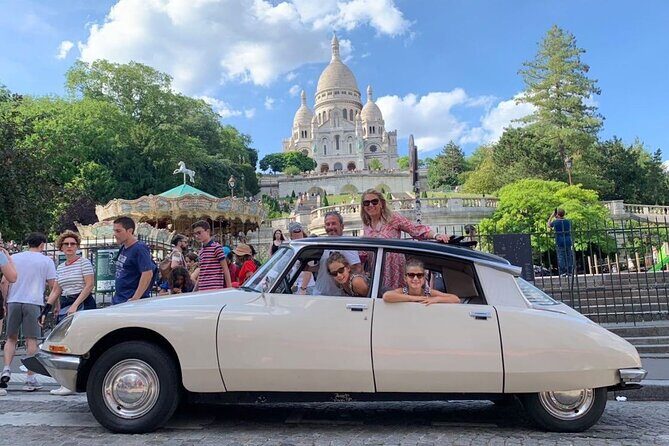
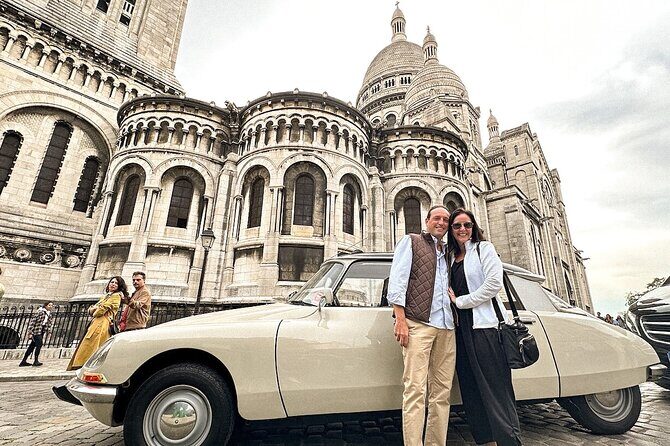
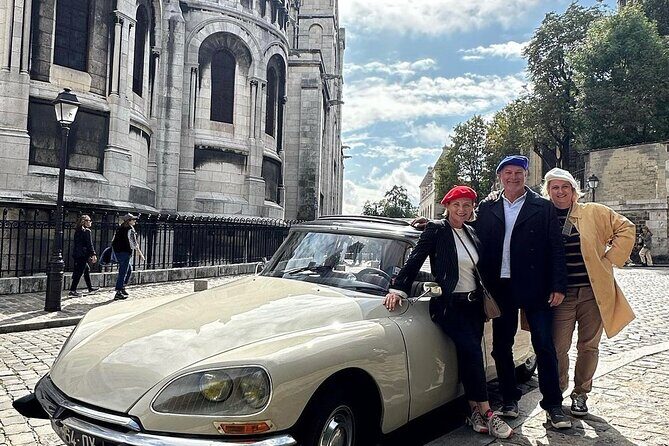
For church and viewpoint lovers, the highlight is Montmartre’s Sacré-Cœur Basilica. You get a stop of about 15 minutes, with time to appreciate the white domes and get the panoramic feel of Paris from the hilltop.
And if you’re a fan of art history on a walkable scale, the tour also includes Van Gogh’s House and Renoir’s House. Both are personal “time capsule” stops that help you connect the artistic names to the streets where they lived.
You’ll also see the classic Montmartre street-and-square vibe: Rue Lepic (including the Café des 2 Moulins area tied to Amélie), Moulin de la Galette and its historic windmill atmosphere, plus Place du Tertre, where painters show their work amid cafés. Add in the Montmartre stairs and the Wall of I Love You, and you’ve got both the postcard and the playful side of the neighborhood.
The itinerary also lists La Maison Rose, the Moulin de la Galette, and even Saint-Pierre de Montmartre, one of the oldest churches in the area. In a short schedule, these are quick name-and-location moments—but they help you choose what to revisit on your own.
Île de la Cité and the Latin Quarter: Notre-Dame, Sainte-Chapelle, Panthéon, and more
If you want the “center of Paris” feeling, this is where it clicks. You go to Île de la Cité, home to the famous Cathedral area and major Gothic landmarks.
The tour includes Notre-Dame de Paris with a brief stop (about 15 minutes listed). It’s presented as an iconic Gothic presence with deep historical weight. Right nearby, Sainte-Chapelle gets another short highlight. You’ll be able to see the famous stained-glass work from the outside and around the area, which is especially helpful if you’ve got limited time and want to decide whether you’ll book a deeper visit later.
The itinerary also includes 36 Quai des Orfèvres, once tied to Paris police investigation history along the Seine, and a stop near Shakespeare and Company, the beloved literary bookstore on the Left Bank.
You’ll also visit or pass Île Saint-Louis, known for narrow streets, historic townhouses, and quaint café energy. That island feel helps balance the larger monument intensity with something more human-scale.
Then you head toward the Panthéon in the Latin Quarter. Another 15-minute stop is listed there. You’ll see it as a grand neoclassical mausoleum that honors France’s thinkers and heroes. Nearby in the same wider zone, you also get sights like Saint-Étienne-du-Mont, a church known for intricate Gothic and Renaissance architecture and the resting place of Sainte Geneviève.
The route also points out La Sorbonne, and squares like Place de l’Estrapade, plus the general Latin Quarter atmosphere: youthful energy, old streets, and café stops.
Luxembourg gardens and Saint-Germain-des-Prés: Paris as a lived-in neighborhood
The tour expands beyond monuments with the French institutional and café culture. You’ll see the French Senate in the Palais du Luxembourg area, then Jardin du Luxembourg—a peaceful garden oasis with fountains and spots to relax and watch the world go by.
Next comes Saint-Sulpice Church with its Baroque architecture and murals, and then the itinerary shifts into Saint-Germain-des-Prés, known for classic cafés and a literary/art scene.
The names matter here. You’ll pass Les Deux Magots and Café de Flore, two iconic cafés associated with writers and thinkers. Even if you don’t stop long, seeing these places on the route helps you connect the intellectual vibe to actual street locations.
Also included are the Abbey of Saint-Germain-des-Prés and Rue de Buci, a pedestrian street known for food shops and boutiques. If you’ve ever read about Paris cafés but only experienced them in pictures, this part helps you translate that romance into real geography.
Riverfront classics: Pont Neuf, Palais Royal, and the glass-roof passages
Near the end, the itinerary goes back to Paris’s classic “walk around and look” assets. You’ll see Quai de Seine viewpoints and cross Pont Neuf, noted as the oldest standing bridge. You also pass Place Dauphine on Île de la Cité, a calmer square that feels like a step away from the main tourist flow.
The route includes Palais Royal, with arcades, gardens, and the famous striped Colonnes de Buren. It also checks off Galerie Vivienne, with its 19th-century covered passage feel—glassy, elegant, and made for short breaks.
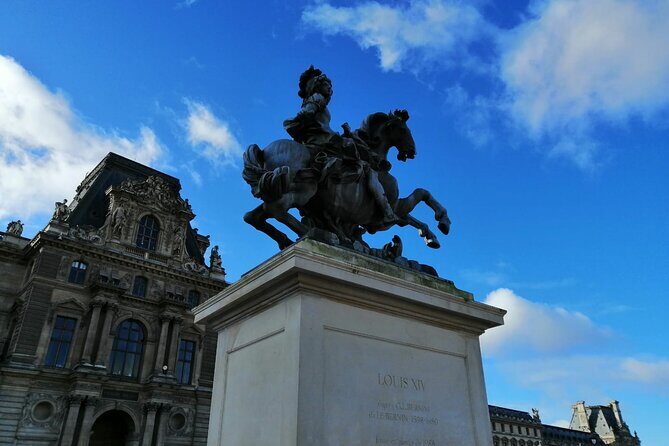
You’ll also see Place des Victoires with its statue of Louis XIV, plus the Bourse de Commerce, described as a circular architecture and contemporary art museum.
And finally, Place de Valois appears as a quiet square close to cultural stops. This ending style is smart because it’s calmer and more “Paris on foot” even if you’re still in the car for transit.
What your guide actually adds (and how to use it)
This is a private tour with Benjamin as the guide, and that changes the whole interaction. You can ask questions as you go, and the guide can translate what you’re seeing into practical context: what matters most, what’s easy to miss, and where you might want to spend more time later.
From the tour design, you can get the most value if you come with at least two interests in mind. For example:
- If you love architecture, ask what to compare between Gothic and neoclassical around the areas you’re seeing.
- If you care about art, ask how Musée d’Orsay and the Louvre are best approached when you have limited time.
- If you’re planning a second day, ask which neighborhood makes the easiest walking loop starting from your hotel.
The car setup also supports this. With comfy seating and heating, you can stay relaxed enough to focus on the conversation rather than feeling wrung out before you even start sightseeing.
Best for first-timers, short stays, and people who hate transit stress
This tour is a strong match if:
- You’re on your first trip to Paris and want an instant map of the city
- You have only a few days and you want to prioritize later plans wisely
- You’d rather pay for pickup and comfort than spend time routing yourself
- You want a guide who can answer questions in real time
It’s less ideal if:
- You want long museum visits and deep entry tickets during this single outing
- You’re easily bothered by traffic slowdowns (Paris road congestion is a fact)
- You travel with a child under 10, since children under 10 aren’t allowed on the back seats due to no seat belt provision there
Should you book it?
Yes, if you want the essentials of Paris with low stress. The combo of private pickup/drop-off, a comfortable heated classic car, and Benjamin’s guided context is exactly the kind of shortcut that makes a short trip feel longer—in a good way.
I’d book it especially if you’re the type who likes to see the big landmarks first, then return later for the deeper stuff. If you’re allergic to delays or sound issues, plan to be flexible on timing and pick a day with better weather. And if you’re museum-focused, treat this tour as your orientation day, then schedule separate time for whatever you truly want to enter.
FAQ
Is the tour private?
Yes. It’s a private tour/activity, and only your group participates.
How many people can be in a group?
The price is per group up to 4 people.
What language is the tour offered in?
The tour is offered in English.
Is pickup included, and where can you be picked up or dropped off?
Pickup is offered to any location inside the city of Paris except in the 3rd, 4th, 10th, 11th, 12th, 19th and 20th arrondissements. It also doesn’t pick up or drop off at Le Marais, Bastille, République, or Gare du Nord. Drop-off can be to your chosen location inside those limits.
What vehicle and comfort features are included?
You’ll ride in a classic Open Top Citroën DS with heating and comfortable seats with plenty of legroom. Bottled water is included.
Can I cancel for a full refund?
Yes. You can cancel up to 24 hours in advance for a full refund. If you cancel less than 24 hours before, the amount paid isn’t refunded.