REVIEW · PARIS
WW1 Belleau Wood and American Monument in Château-Thierry – Day trip from Paris
Book on Viator →Operated by ADRIAN ROADS · Bookable on Viator
Belleau Wood is history you can walk. This day trip from Paris lets you see the ground where the U.S. Marines fought in 1918, then connect it with the big memorials and the Museum of the Great War in Meaux. I especially liked how the tour pairs field walking with clear context, so you understand what you’re looking at instead of just passing by stone markers.
Two things I really like: the group stays small, capped at seven people, so questions don’t get lost and the pace stays human. And you get an included stop at Meaux’s Museum of the Great War, which fills in the wider story behind the battles you’re visiting.
One consideration: this is a long day with early departure and more walking than you might expect, since you’ll spend time in the woods around the battle sites. If you prefer a lighter day or you’re sensitive to emotional war cemeteries, plan for a steady pace and breaks.
In This Review
- Key highlights worth planning around
- Why Belleau Wood hits harder with a guide
- Getting there from central Paris: the 7:00 am start and a full day
- Stop 1: Aisne-Marne Memorial & Cemetery and the battlefield traces of June 1918
- Stop 2: Aisne-Marne American Cemetery and the chapel names you can’t forget
- Stop 3: Devil Dog Fountain and the bulldog memory at Belleau
- Stop 4: German Military Cemetery of Belleau and facing the whole human cost
- Stop 5: Château-Thierry American Monument with Paul Cret’s big terrace views
- Stop 6: Museum of the Great War in Meaux connects the battlefield to the whole war
- Price and value: why $282.36 can make sense for WWI sites
- What to bring and how to survive a 13–14 hour WWI day
- Who should book this Belleau Wood and American Monument day trip
- Who leads the day: the guide style you’ll want for WWI
- Should you book this tour, or plan a DIY day?
- FAQ
- How long is the WW1 Belleau Wood and American Monument day trip?
- What time does the tour start, and where is the meeting point?
- Where does the tour end?
- Is lunch included in the price?
- What’s included in the tour price?
- Which sites are visited on the day trip?
- Is the tour offered in English?
- How big is the group?
- Is the museum ticket included?
- What happens if the weather is poor?
Key highlights worth planning around

- Small-group experience (max 7): more time for questions and less rushing between sites.
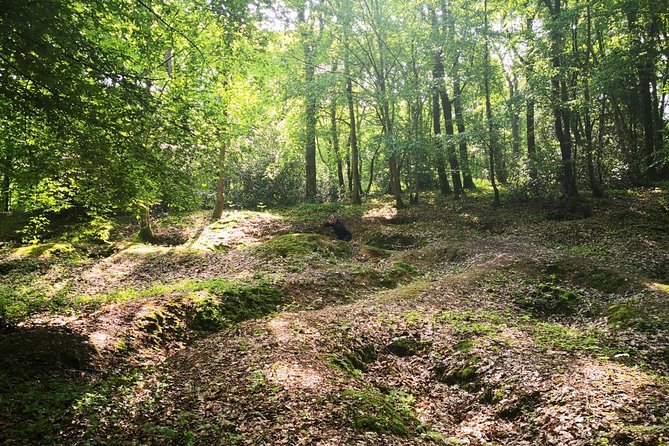
- Belleau Wood on foot: you walk the area and see traces like trenches, foxholes, and bomb craters that are still visible.
- Aisne-Marne American Cemetery details: 1,060 names of the missing on the chapel interior wall, plus rosettes for those recovered.
- Both-side perspective: you also visit the German Military Cemetery of Belleau, with ossuaries and named graves.
- Château-Thierry views from the memorial: a double colonnade and terrace above the Marne valley with interpretation inside.
- Museum of the Great War in Meaux included: you leave with political, technical, and human context, not just battle locations.
Why Belleau Wood hits harder with a guide
Belleau Wood is not a “quick photo stop.” It’s a real battlefield landscape south of Belleau village, where high ground shaped what soldiers could do—and where the fighting still shows in the terrain. A good guide matters here because the names, dates, and units help your brain map the story onto the place.
I also like that the tour is led by a driver guide in English, with enough time at each stop to actually absorb what’s in front of you. That may sound obvious, but in war memorial touring, most of the value is interpretation: what you’re seeing, and why it mattered.
And yes, the tone is emotional. You’ll be visiting American and German cemeteries and memorials, plus the Belleau sites that earned Marines their Devil Dog nickname. If you go in with respect and a calm pace, the day feels focused rather than chaotic.
You can also read our reviews of more tours and experiences in Paris.



Getting there from central Paris: the 7:00 am start and a full day

The day begins at 7:00 am near the Théâtre du Lido on the Champs-Élysées area. There’s no hotel pickup or drop-off, so you’ll want to get yourself to the meeting point early and ready for departure.
You travel in an air-conditioned vehicle, and you’ll get a mobile ticket for the tour. Because this is a 13 to 14 hour day, I recommend you treat it like a marathon, not a casual outing—plan snacks, hydrate, and wear shoes that can handle outdoor walking.
Lunch is not included, and that’s a big practical point. You’ll need either money and time for a meal near Château-Thierry or your own plan for grabbing something to eat while keeping the day’s schedule smooth.
Stop 1: Aisne-Marne Memorial & Cemetery and the battlefield traces of June 1918
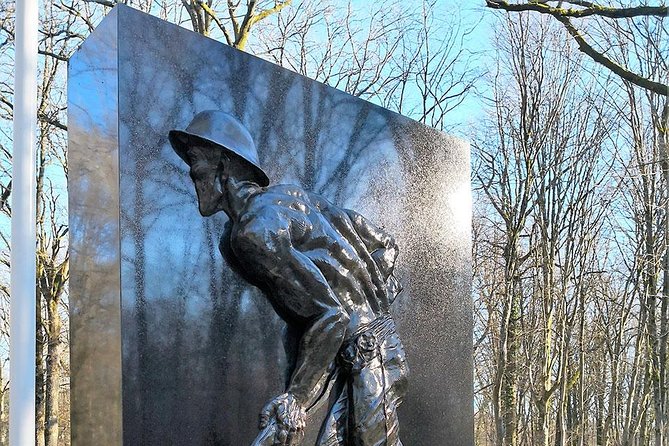
Your first major stop focuses on the Aisne-Marne Memorial & Cemetery area, where you’ll walk through the woods with your guide. This is where the tour really earns its keep: you see physical traces of conflict that remain visible today, including trenches, foxholes, and bomb craters.
In the Belleau Wood area, you’ll reach the central spot in the road through the woods with a flagpole and a monument tied to the U.S. Marines’ actions in 1918. What I like is that the guide connects the location to specific units and timing, so the story doesn’t feel like a blur of generic WWI facts.
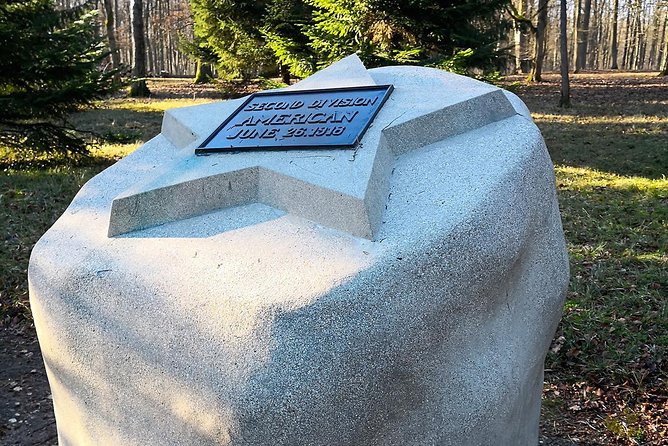
Here’s the key context you’ll be hearing: the American 2nd Division attacked German positions starting June 6, 1918. The 4th Marine Brigade was part of that effort and liberated Bouresches that day, then Marines from the 5th and 6th Marine Regiments fought in Belleau Wood for most of June. The Battle of Belleau Wood is described as ending June 26, and then on June 30 the French 6th Army officially renamed Belleau Wood to the Wood of the Marine Brigade.
That sequence helps you read the land. Instead of imagining “a battle happened here,” you start recognizing the flow: attack start, heavy fighting period, end of fighting, and the later formal recognition of Marine valor.
A note on pacing: this stop is scheduled for about an hour, so you’ll want to listen for the guide’s wayfinding cues. If you try to read everything at your own speed, you’ll end up behind the group and lose the interpretation that makes it stick.
Stop 2: Aisne-Marne American Cemetery and the chapel names you can’t forget
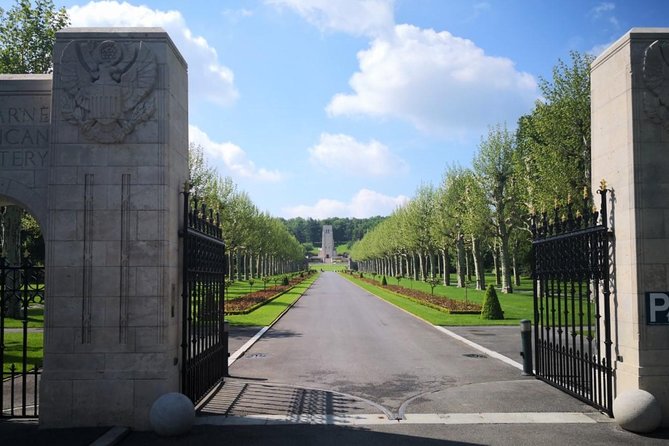
After Belleau Wood, the day shifts to the Aisne-Marne American Cemetery. This site sits at the foot of Belleau Wood, and it’s laid out with headstones in a sweeping curve that feels intentional rather than random.
The cemetery covers 42.5 acres and includes graves of 2,289 war dead, mostly tied to fighting in the vicinity and in the Marne Valley in the summer of 1918. It’s not just scale for scale’s sake—walking the rows makes the losses feel human and close, especially when you think about how far families traveled from the U.S. to remember them.
I also found the chapel area especially powerful. It sits on a hillside and is decorated with sculptured and stained-glass details of wartime personnel, equipment, and insignia. Inside, the interior wall carries 1,060 names of the missing, and rosettes mark names of those recovered and identified.
There’s also a World War II reminder that adds a second layer of weight. During WWII, the chapel was damaged by nearby fighting, and repairs were made except for one shell hole left as a reminder. It’s the kind of detail that’s easy to miss if you’re rushing, so use the time you have to look slowly.
This stop is listed for about an hour, and it feels like the right amount for most people—enough to absorb layout and chapel, without turning it into a long, draining slog.
Stop 3: Devil Dog Fountain and the bulldog memory at Belleau
Next comes a short visit to the Devil Dog Fountain. This is one of those sites that makes the history feel personal, because it connects a nickname to a place.
At Belleau, veterans and Marines have long been drawn back to see it after wandering the battlefield remnants and visiting the chapel. The fountain is in the form of a bulldog head throne, located in the courtyard of the former stables of the castle of Belleau, which was destroyed during World War I.
Even if you don’t go into the day already obsessed with Marine lore, this stop helps connect the emotional identity of the conflict to something tangible. It’s quick—about 15 minutes—but it works as a mental reset between the heavier cemetery moments.



Stop 4: German Military Cemetery of Belleau and facing the whole human cost
One of the most important parts of the day is the German Military Cemetery of Belleau. It’s a reminder that the ground you’re walking held suffering on both sides, not only the armies you came to focus on.
This cemetery was created by France in March 1922 to gather remains from 123 different places between the Chemin des Dames and the Marne. You’ll find 8,625 German soldiers resting there, mainly in two ossuaries, with 4,308 individual graves marked by stone crosses.
The details here matter. Twenty-two soldiers are noted as not identified to date, and among the bodies in the two ossuaries, 487 were identified. The cemetery also includes German prisoners of war who died between the end of 1914 and the beginning of 1918, which expands the story beyond the battles you saw earlier.
This stop is brief—about 10 minutes—but it can feel longer emotionally. If you’re prone to fatigue in memorial settings, this is where you should keep your eyes open and your breathing steady. Looking at names and symbols without trying to “solve the whole war” in ten minutes is the right mindset.
Stop 5: Château-Thierry American Monument with Paul Cret’s big terrace views
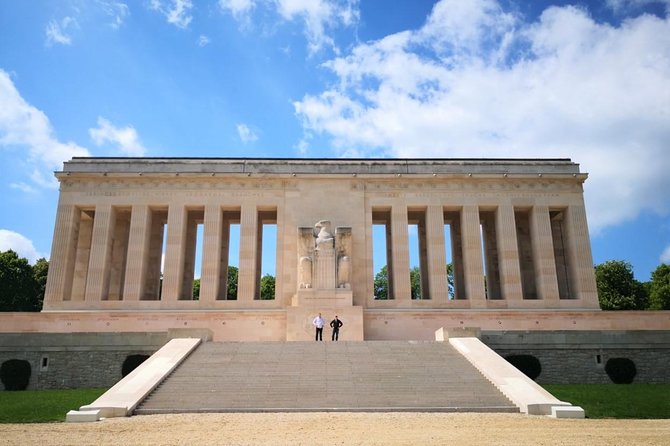
After the cemeteries, you shift to commemoration with a long view. The Château-Thierry American Monument (also known as the American Aisne-Marne Memorial, and referenced as Le Monument américain à côté 204) sits on a hill about two miles west of Château-Thierry, commanding an expansive view of the Marne River valley.
It was designed by Paul Cret, and the structure is built around a striking double colonnade rising above a long terrace. On the west facade, you’ll find heroic sculptured figures representing the United States and France. On the east facade, there’s a map showing American military operations in the region and an orientation table that helps you connect the memorial to the battle sites you just visited.
What I like here is how the monument ties together different phases of fighting. German advances in late May 1918 led to the 3rd Division joining the struggle, and units helped French troops prevent German forces from crossing the Marne River. The 3rd Division held the south bank until a French-American counteroffensive forced German withdrawal, earning the nickname Rock of the Marne.
There’s also a modern layer to the visit. A 2,000 square-foot visitor center opened at the monument in May 2018 to celebrate the centenary of the battle of Belleau Wood. That’s useful if you want a bit of structured interpretation before you go deeper into the museum later.
This stop is about an hour, which works well. You get the outside architecture, plus time to orient yourself with what you’ll see next and what you might want to remember.
Stop 6: Museum of the Great War in Meaux connects the battlefield to the whole war
To close out a heavy day, you visit the Musée de la Grande Guerre in Meaux. This is included in the tour price, and I think that’s a smart choice because battlefield visits alone can feel like isolated chapters.
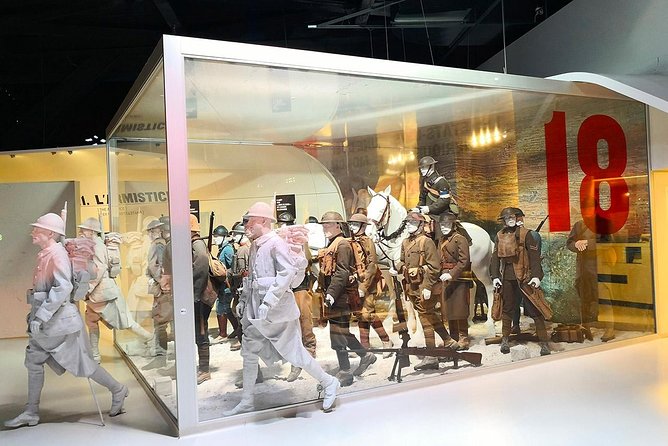
The museum houses a huge collection—up to 50,000 artefacts—and it’s described as the largest museum in Europe focusing on the First World War. You’ll learn about political reasons behind the war, and then you’ll see materials, vehicles, uniforms, and weapons used by soldiers.
One story inside is especially worth noting: the museum’s early collection was built over 50 years by Jean-Pierre Verney, a historian and passionate collector. In 2005, the town of Meaux bought the exceptional collection and built the museum to preserve and explain it. Today, more than 65,000 items make up the collection.
What I like is that the museum doesn’t treat WWI only as strategy and weapons. It also tackles human and societal angles, plus daily life on the front line and back home. If you’ve been focused on Marines, trenches, and memorial names all day, the museum helps you expand your mental frame—how politics and technology shaped what soldiers endured.
You’ll have about an hour here, so don’t try to see everything. Pick a few sections that match your interests, and let the guide’s earlier context give you a stronger reading of what you’re viewing now.
Price and value: why $282.36 can make sense for WWI sites
At $282.36 per person, this day trip isn’t cheap. But value comes from three things you’re not doing alone: transportation from Paris, a guide with interpretation, and an included museum ticket.
The included items are clear: air-conditioned vehicle, driver guide, and admission to the Museum of the Great War in Meaux. Meanwhile, the cemetery and monument sites you visit are listed as free admission. So you’re paying mainly for getting you there efficiently and making the day coherent through narration, timing, and transitions.
The small group cap at seven travelers also shifts the value. It makes a guided WWI day feel less like a factory schedule, and more like a careful walk through meaning, especially at places like Aisne-Marne American Cemetery and the German cemetery where the details matter.
One more value point from how the day is described: the tour includes entrance fees to the museum, and you avoid the “do we have to figure out tickets and transit ourselves?” stress on a packed 13 to 14 hour timeline. For many people, that stress reduction is worth real money.
What to bring and how to survive a 13–14 hour WWI day
Here’s the practical stuff that will make or break the experience.
Wear comfortable shoes with grip. You’ll be walking in woods and at battle-related sites, and the day is long. The tour notes a moderate physical fitness level, which is a good indicator that you’ll want your legs ready.
Bring a light layer for weather changes. The tour is described as requiring good weather, and the sites outdoors (like Belleau Wood) are exactly the kind of place where rain makes everything slower and less pleasant.
Pack water and a small snack. Lunch is not included, so plan for food before you get hungry. Even if you stop for a restaurant meal later in the day, carrying a backup snack helps you stay calm.
If you’re doing this during peak season, arrive early at the meeting point. Starting at 7:00 am means you don’t have margin for lateness or last-minute metro anxiety.
Who should book this Belleau Wood and American Monument day trip
This trip is best for you if you want WWI history tied to place, not just names on a page. You’ll enjoy it if you’re interested in the Marines’ role at Belleau Wood and the way the American memorials and cemeteries are organized around the summer of 1918.
It also fits people who appreciate a respectful, balanced tone. The German Military Cemetery stop adds an important layer that many WWI itineraries skip or shorten too much.
And if you’re traveling in English and want a small group format, it’s a strong match. A group capped at seven makes a big difference when you’re asking questions about trenches, the Marine Brigade timeline, or the symbolism inside memorial architecture.
Who leads the day: the guide style you’ll want for WWI
The tour is run by ADRAIN ROADS, with a driver guide on board. In the past, the name Regis Piteux comes up often for his detailed, accurate way of bringing WWI events to life while standing in the woods and pointing out what you’re seeing on the ground.
That matters because WWI history can be overwhelming fast. When a guide can connect the unit timeline—like June 6, June 26, and June 30—with the actual terrain, the day becomes easier to follow and more meaningful.
Should you book this tour, or plan a DIY day?
If your goal is to see Belleau Wood plus the American and German cemeteries, then add Château-Thierry and a museum, booking is the easier route. You’ll save time sorting logistics and you’ll get interpretation for places that are hard to “decode” on your own in a short window.
On the other hand, if you’re the type who wants lots of free time to wander independently and you don’t care much about guided context, a DIY approach might feel cheaper. But the tradeoff is that you’d have to manage routing, timing, and interpretation across a long day.
My call: book this if you want a guided WWI day that stays organized, small, and emotionally grounded, with the Museum of the Great War finishing the story.
FAQ
How long is the WW1 Belleau Wood and American Monument day trip?
It’s listed as about 13 to 14 hours.
What time does the tour start, and where is the meeting point?
It starts at 7:00 am at Théâtre du Lido, 116 bis Av. des Champs-Élysées, 75008 Paris.
Where does the tour end?
It ends back at the same meeting point in Paris.
Is lunch included in the price?
No. Lunch and food and drinks are not included.
What’s included in the tour price?
You get an air-conditioned vehicle, a driver guide, and admission to the Museum of the Great War in Meaux.
Which sites are visited on the day trip?
You visit Aisne-Marne Memorial & Cemetery, Aisne-Marne American Cemetery, the Devil Dog Fountain, Cimetiere Militaire Allemand de Belleau, the Château-Thierry Monument, and the Musée de la Grande Guerre in Meaux.
Is the tour offered in English?
Yes, it’s offered in English.
How big is the group?
The tour has a maximum of 7 travelers.
Is the museum ticket included?
Yes, the Museum of the Great War admission ticket in Meaux is included.
What happens if the weather is poor?
The tour requires good weather. If it’s canceled due to poor weather, you’ll be offered a different date or a full refund.