REVIEW · PARIS
Paris: 2-Hour Passages Private City Tour in German
Book on GetYourGuide →Operated by HelpTourists · Bookable on GetYourGuide
Paris’s shortcuts hide in plain sight.
This private 2-hour tour takes you into the passages couverts tucked in the heart of Paris, where the city feels more like the early 1800s than today’s glossy streets. I like that the tour explains why these covered corridors existed in the first place, when Paris was dirtier and less modern than it is now, and the passages became practical answers to everyday life.
I also like the German-speaking guide angle. The host is HelpTourists, and guides such as Solene are known for connecting details to the bigger picture, so you don’t just see pretty architecture. One consideration: this is a German tour, so if you don’t feel comfortable in German, you may miss part of the story.
In This Review
- Key Points You’ll Care About
- Why Paris’s Passages Feel Like a Time Machine
- Private, German-Only Guiding (and What That Means for You)
- Meeting at Le Peletier and Getting Oriented Fast
- Passage Verdeau: Starting the Story with a Hidden-Paris Moment
- Passage Jouffroy: When the Passage Feels Like a Proper 19th-Century Room
- Passage des Panoramas and the Shift Toward the Streets Again
- Grands Boulevards: Putting the Passages Back Into Modern Paris
- Palais-Royal Quarter and the Finish at Palais-Royal
- Price and Value: Is $94 for Two Hours Worth It?
- Who Should Book This Tour (and Who Might Skip It)
- Should You Book This Tour or Not?
- FAQ
- How long is the Paris Passages private tour in German?
- How much does it cost?
- Where do I meet the guide?
- Where does the tour finish?
- What language is the tour guide?
- Is this a private group tour?
- What days does it run?
Key Points You’ll Care About
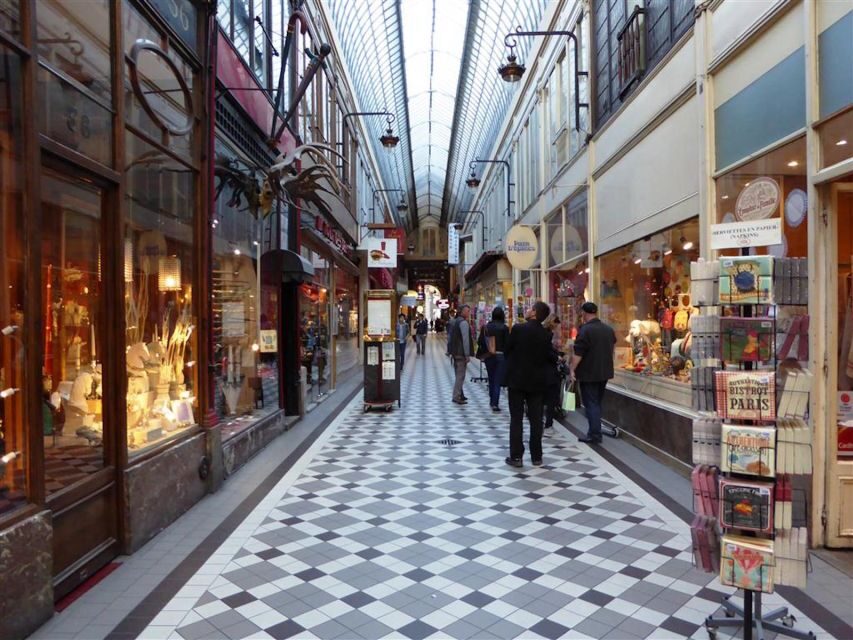
- Hidden passages, not big-name landmarks: you get a different side of central Paris.
- 19th-century context: you learn why these passages were built when Paris wasn’t so clean and polished.
- Private, German-only guiding: the story is tailored for German speakers, with plenty of explanation.
- A tight route in 2 hours: you’ll cover multiple passages and end in the Palais-Royal area without dragging the day.
- Good finishing location: you leave near an area where it’s easy to keep exploring on your own.
Why Paris’s Passages Feel Like a Time Machine
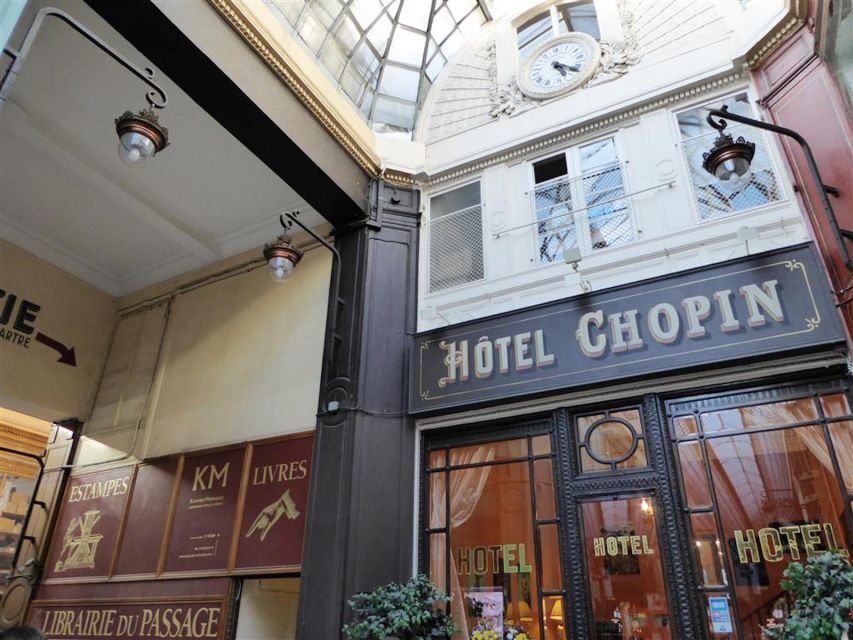
Paris passages can look like an accident at first glance. You walk the city grid, then suddenly you notice a passage entrance that feels like it belongs to another era. That’s the point of this tour: you go from modern streets into covered pedestrian corridors that carry you back to when Paris still wore the grime of the 19th century.
What makes it more than a photo stop is the framing. These passages weren’t built as today’s polished shopping arcades. Think of them as solutions to the conditions of the time—practical spaces for walking indoors and moving through the city with less hassle. And yes, the tour connects them to the later idea of the grand magasins.
I like how that context changes what you notice. Instead of asking, What is this place?, you start asking, Why did people need it then? The vibe is often charming, but the explanation makes it feel real rather than decorative.
You can also read our reviews of more city tours in Paris


Private, German-Only Guiding (and What That Means for You)
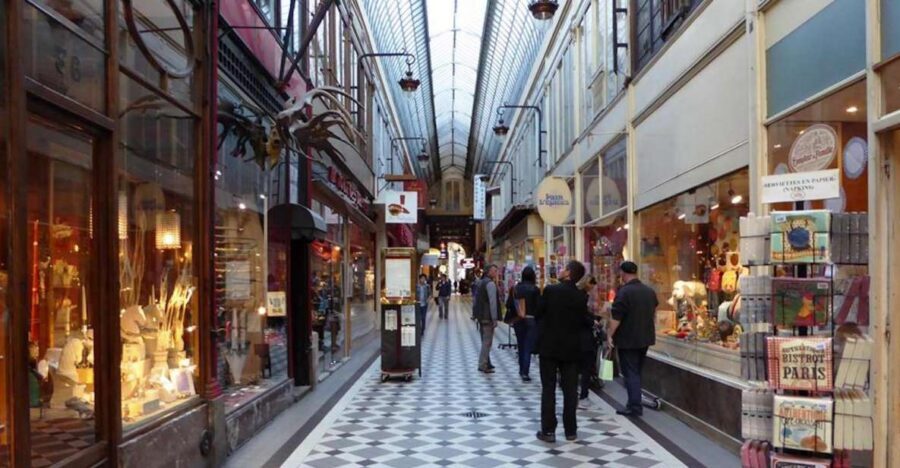
This is a private group city tour in German. That’s great if you want your questions answered and you don’t want to listen to a headset for the whole time. It’s also ideal if you’re a German speaker who wants more than “look left, look right” sightseeing.
The tour is run by HelpTourists with sympathetic German guides who know Paris inside out. In the feedback, the friendliness and the amount of connections explained come up again and again. I take that as a sign the guides try to teach you how Paris developed, not just what to look at.
Here’s the trade-off: the language is German, and the tour is designed for that. If your German is basic, you can still enjoy the architecture and atmosphere, but the full value comes from following the story.
Meeting at Le Peletier and Getting Oriented Fast
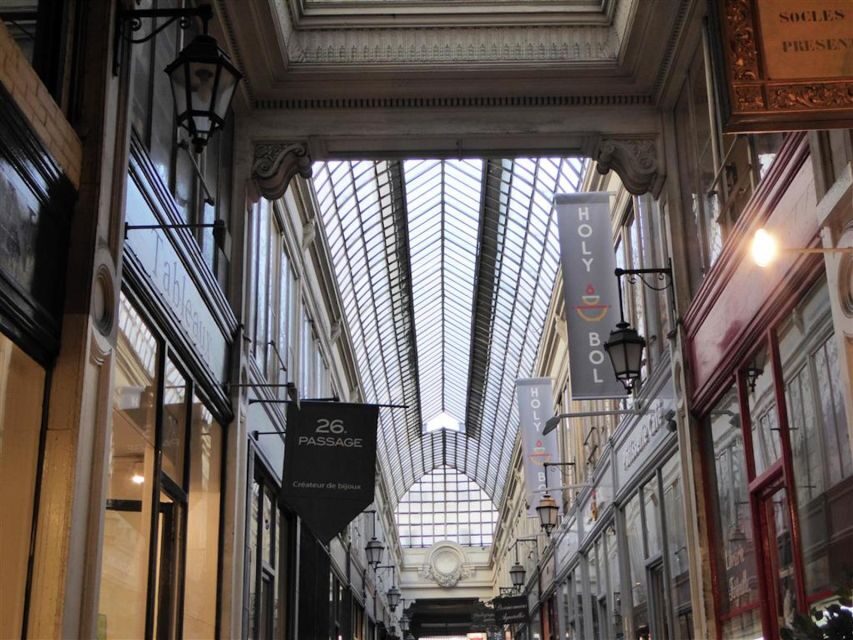
Your starting point is Metro Le Peletier (Line 7). You’ll look for your guide carrying a HelpTourists bag. This matters more than it sounds. These passages are easy to miss because they’re tucked in and not always obvious, and the whole experience depends on finding the entrances smoothly.
You’ll also be starting your walk in a way that keeps things central. Le Peletier puts you in the thick of the city, so you can fit the tour into a day of sightseeing without long travel time. And since it’s only two hours, you’ll want to be ready to move as soon as you meet.
Passage Verdeau: Starting the Story with a Hidden-Paris Moment
The first real stop on the walk is Passage Verdeau. I like that the tour doesn’t start with something you’d already expect from a Paris checklist. It begins with one of the hidden passages that feels like a quiet discovery, the kind you’d only stumble onto by accident.
At this stage, the guide’s job is to set the emotional and historical tone. You’re not just learning the facts; you’re learning how to read the space. The passages are often narrow, covered, and slightly removed from street chaos. That makes them feel like a separate pocket of Paris, which is exactly what you want on a short tour.
A practical consideration: passages can be a bit dim compared to the open street. If you’re aiming for photos, give yourself time at the beginning to adjust your eyes and camera settings.
Passage Jouffroy: When the Passage Feels Like a Proper 19th-Century Room
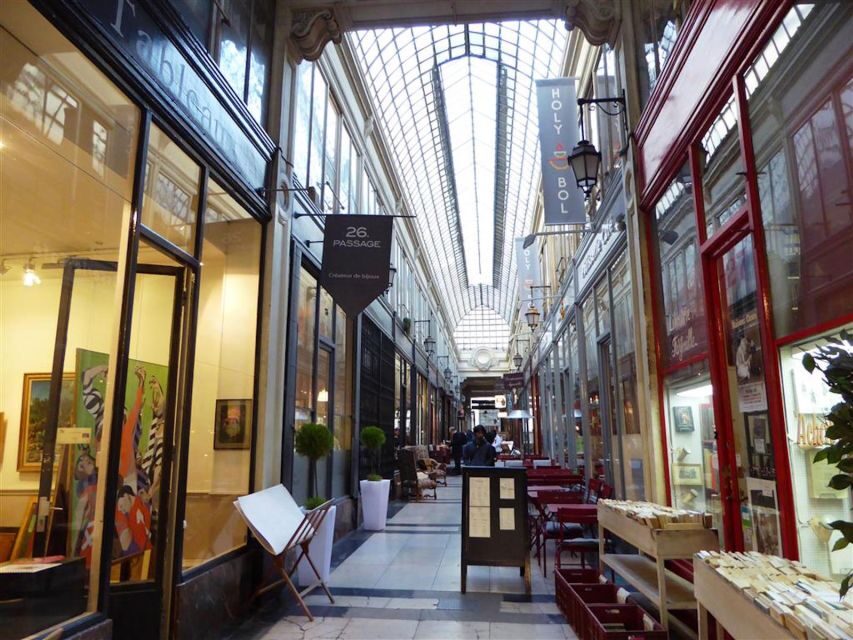
Next comes Passage Jouffroy, and this is where you really start to feel the theme. The tour aims to take you away from modern Paris and into the period when covered walkways offered comfort and convenience.
Even if you’ve seen photos of arcades before, a guide helps you notice what’s different. The passages are part transportation route, part social space. They were designed for movement and daily use at a time when the outside city wasn’t as pleasant to be in.
The subtle drawback here is also part of why this works. You’re moving through a sequence of passage spaces, not standing at one location for ages. If you’re the type who loves long museum-style stops, two hours might feel quick—but the quick pace is what keeps it from becoming repetitive.
You can also read our reviews of more private tours in Paris





Passage des Panoramas and the Shift Toward the Streets Again
After Jouffroy, you’ll head to Passage des Panoramas. This one helps bridge the feeling of being inside with the reality that you’re still in the center of Paris. The name is tied to the idea of views and movement, and the tour uses it as a turning point from the “hidden corridor” feeling back toward the broader city.
This is also a good moment to pay attention to how the guide frames the passages historically. The tour isn’t trying to make you think these were shopping centers like you know today. It presents them as early solutions—predecessors to the later department-store style shopping that became more common.
If you like learning the why behind design choices, you’ll probably enjoy this section most. It’s where the story starts to connect to the Paris you see in everyday life.
Grands Boulevards: Putting the Passages Back Into Modern Paris
The itinerary then reaches the Grands Boulevards for sightseeing. This part matters because it anchors everything you’ve seen. You’re still in the heart of the city, and you can better understand how the passages sit within the larger urban plan.
For me, this stop is the reality check. Those passage worlds are beautiful, but they make more sense when you can place them beside the busy boulevards outside. It helps you understand the passages as shortcuts, transitions, and controlled indoor routes, not isolated fairytale corridors.
If you’re sensitive to crowds, pay attention to timing. The tour runs Monday to Saturday, and the central areas can be active. The benefit is that you’re guided, so you’re not wandering randomly while trying to find your way.
Palais-Royal Quarter and the Finish at Palais-Royal
The tour continues into the Palais-Royal quarter, and it finishes at Palais-Royal. This is a strong ending choice. Even after a focused two-hour walk, you’re left in an area where it’s easy to keep exploring at your own pace—especially if you want to pair the tour with cafes, shops, and more classic Paris sights.
I like finishing here because it gives you options. You can stretch the day into more sightseeing without needing to backtrack to where you started. And since the passages were the star of the show, reaching Palais-Royal feels like a natural transition rather than a hard stop.
Price and Value: Is $94 for Two Hours Worth It?
At $94 per person for a 2-hour private German tour, the price isn’t cheap. But it also isn’t trying to be a mass-market experience. You’re paying for three specific things: private guiding, a language-specific story, and access to a route that’s hard to discover on your own.
This is the big value point for me: hidden passages can be frustrating without help. They’re “out there,” but not always obvious. A guide who can bring you from entrance to entrance and explain the context saves you time and prevents the experience from turning into a guessing game.
Also, the tour has a 4.9 average rating across 30 reviews, which is a strong signal that the guides deliver on the experience length and the explanations. You’re not buying a long day; you’re buying a tight, curated walk that stays focused.
If you’re traveling with a group of German speakers who want something different from standard Eiffel Tower and Louvre routines, this is good value. If you only want a quick look at pretty passages with no interest in the story, you might decide it’s pricier than it needs to be.
Who Should Book This Tour (and Who Might Skip It)
This tour is best for you if you:
- Enjoy walking tours that teach you how cities evolved.
- Want something that not every Paris visitor does.
- Like history that’s tied to real spaces you can stand in and walk through.
- Speak or understand German well enough to follow the guide.
You might skip it if:
- You’re only looking for major landmarks and don’t want a focused two-hour corridor route.
- German is a barrier. The tour is German-speaking, and the value is clearly in the explanations.
Should You Book This Tour or Not?
Yes, I’d book it if you want a Paris experience that feels tucked away and explained. The passages are the kind of thing you can miss completely on your own, and the guide turns them into a story about how 19th-century Paris tried to solve real everyday problems.
Book it especially if you’re traveling with German-speaking friends or family and you want a short tour that gives you a strong sense of a hidden side of the city. If language is an issue, you’ll still get the atmosphere, but the core benefit is the German narration and context—so only choose it if you’re comfortable following along.
FAQ
How long is the Paris Passages private tour in German?
It’s a 2-hour private city tour.
How much does it cost?
The price is $94 per person.
Where do I meet the guide?
Meet at Metro station Le Peletier (Line 7). Look for your guide with a HelpTourists bag.
Where does the tour finish?
The tour finishes at Palais-Royal.
What language is the tour guide?
The guide speaks German.
Is this a private group tour?
Yes, it’s a private group tour.
What days does it run?
The tour takes place Monday to Saturday.