REVIEW · PARIS
2 Days in Paris with a Friendly Local Guide
Book on Viator →Operated by Friendly Local Guides · Bookable on Viator
Paris feels big until you have a plan.
This private 2-day tour is built for walking plus smart metro connections, with a guide who can shape the day around what you actually care about. You start right from your hotel lobby, then move site to site at a pace that’s meant to help you see Paris like locals do, not like a checklist.
What I like most is how you get iconic landmarks and real street time in the same trip. You’ll cover the classics (Notre-Dame, Louvre area, Eiffel Tower, Arc de Triomphe, Montmartre) and still spend real energy on neighborhoods and viewpoints that make Paris click. I also love the guide’s job as your photo and “where do we go next” helper, which matters a lot when you’re tired and the streets start looking the same.
One thing to consider: this is a walking-heavy experience. Expect a lot of steps, and if you’re not ready for long days on foot (plus metro when needed), you may feel it by day two.
In This Review
- Key highlights worth knowing up front
- Hotel-lobby pickup and the calm start that makes everything easier
- Two 5-hour days that connect the big sights to the streets around them
- Day 1: Notre-Dame and Île de la Cité like a local walkway
- Louvre area from the outside, plus Tuileries for the easy reset
- Eiffel Tower and Champs de Mars: photos with the right angles
- Arc de Triomphe to wrap day one with a real “big city” feel
- Day 2: Place des Vosges and Le Marais with street-by-street context
- Luxembourg Gardens for a break from the crowd energy
- Saint-Germain des Prés: narrow streets and an easy lunch reset
- Montmartre and Sacré-Cœur: the viewpoint payoff
- Palais Garnier finish: a quick stop that still lands
- The metro + walking combo: why it feels efficient instead of exhausting
- Price and value: what $495 buys when it’s truly private
- Where the tour shines most: guide skill and photo practicality
- A fair heads-up on walking pace and guide variability
- What to pack and how to survive two days of Paris feet
- Should you book this 2-day Paris private tour?
Key highlights worth knowing up front
- Hotel-lobby meeting and flexible start times so you’re not wasting your morning
- Private guide with a customizable route instead of a fixed group script
- Metro-linked walking to cover more without turning the day into a car tour
- Classic Paris + neighborhoods: Île de la Cité, Le Marais, Saint-Germain, Montmartre
- Photo-stop logic built around where the best angles actually are
- Entrance fees mostly not included, but several key areas are free to view
Hotel-lobby pickup and the calm start that makes everything easier
Meeting your guide in the hotel lobby is one of those simple things that quietly changes the whole day. You’re not hunting for a rendezvous point in busy streets with heavy camera bags. You also get to start on your schedule. The tour notes multiple start times, and that flexibility can help if you want a slower morning or you’re trying to dodge the biggest crowds.
Because it’s private, you’re also free to speak up early. If you want more neighborhood wandering, say so. If you prefer faster “see it, photograph it, move on” transitions, you can do that too. The route is designed for foot travel and public transit, so the guide’s job is to keep you moving while still leaving room for questions and small detours.
And yes, it’s in English. That matters when you want real explanations, not just location names and a shrug.
You can also read our reviews of more guided tours in Paris



Two 5-hour days that connect the big sights to the streets around them
You get about 5 hours each day across two days. That’s long enough to feel like you actually learned something about how Paris is laid out, but not so long that you end up rushing everything in panic mode.
The overall structure is smart:
- Day 1 leans classic and central: cathedral, islands, art area, major viewpoints, and big monuments.
- Day 2 shifts into neighborhoods and “Paris at street level,” with time for parks, shopping streets, and Montmartre.
Also, the tour states it runs in all weather. That means you should pack for real Paris days: rain that shows up without permission, wind on open viewpoints, and sudden sun that makes you want more photos.
Day 1: Notre-Dame and Île de la Cité like a local walkway
Your first stop is Cathédrale Notre-Dame de Paris. Even if you’ve seen photos, being there in person hits different. You’ll focus on the Gothic details on the facades, including the buttresses and the famous gargoyles. The schedule gives roughly 10am to 3pm for day 1, with a short break for lunch on your own. Admission ticket is listed as free for the time there, which is a helpful cost saver.
From Notre-Dame, you head to Île de la Cité. This is where Paris began, and it’s also where the city feels tightly packed—historic, dramatic, and walkable. You’ll also visit Île Saint-Louis, associated with famous writers like Voltaire, Molière, and Rousseau, plus its reputation for wealth. In practical terms, this stretch is a good “orientation moment.” You see how the Seine shapes the city’s geometry, and suddenly other neighborhoods make more sense.
Then comes a quick change of pace.
Louvre area from the outside, plus Tuileries for the easy reset
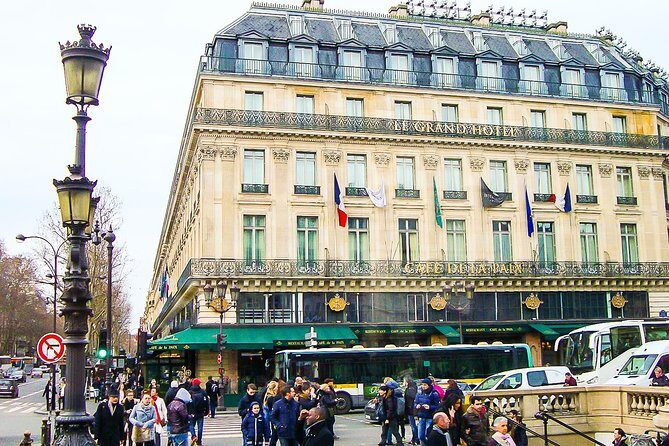
At the Louvre, the tour is outside-focused. You’ll admire the Louvre Palace and get context for the Musée du Louvre without buying a full museum ticket as part of this experience. That’s a key value choice for anyone who wants to see Paris landmarks but doesn’t want to spend half a day inside a museum on day one.
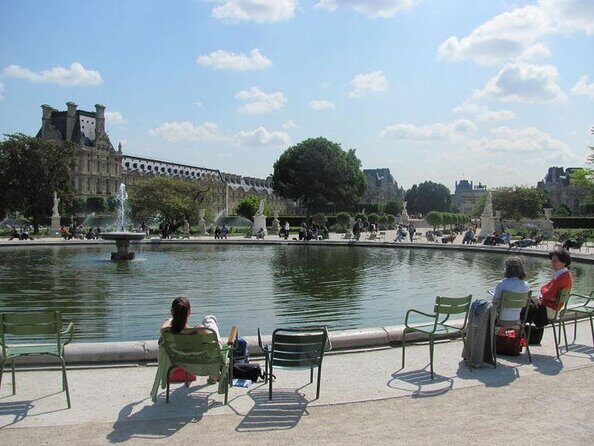
Next is Jardin des Tuileries. This is where you can breathe. It’s a free park break with a calm, straight-run feel, and you get good city views as you move along the embankments of the Seine. The route times this around early afternoon, which also helps if you want a natural “reset” before Eiffel Tower photography time.
The trade-off is that you’ll lose some flexibility if you’re hoping for a long sit-down lunch or a long museum stop. This day is built around movement, not slow wandering.
Eiffel Tower and Champs de Mars: photos with the right angles
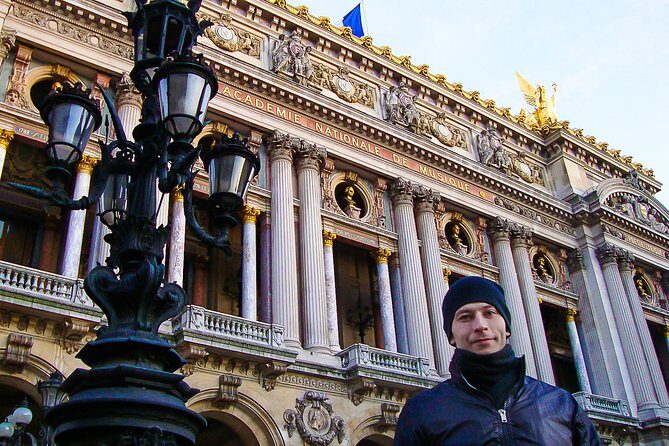
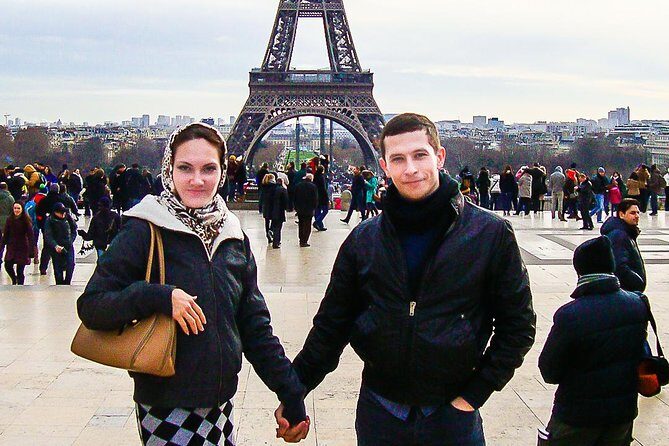
At Eiffel Tower, the tour gives you about one hour for photos and a look around. The Eiffel Tower admission is listed as not included. That’s normal for a walking route, but it does affect what you can do: you’re viewing from outside rather than treating this as a “go up the tower” day.
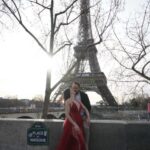
Still, Champs de Mars right after helps a lot. You get the big sweeping views across to the Iron Lady, plus guide context on the landmark’s history. If you care about photos, this sequence works because Champs de Mars gives you space for wider shots and a better sense of scale.
From there, you move toward Champs-Élysées for a short look at the famous boulevard, including window displays. It’s about 30 minutes and free for the stop.
You can also read our reviews of more tours and experiences in Paris






Arc de Triomphe to wrap day one with a real “big city” feel

Your day ends with Arc de Triomphe. The schedule shows about 3pm, with a shorter stop. Entrance is listed as not included, so plan on exterior viewing.
This stop matters because it bookends the visual story of day one: you started with medieval Gothic grandeur and ended with a monument that screams 19th-century nation-building. Even if you don’t go inside, you’ll feel how Paris stages its history in stone.
If you want the best experience here, bring your patience for pedestrian flow. This area can be busy, and it’s not a place you want to rush through if you want solid photos.
Day 2: Place des Vosges and Le Marais with street-by-street context
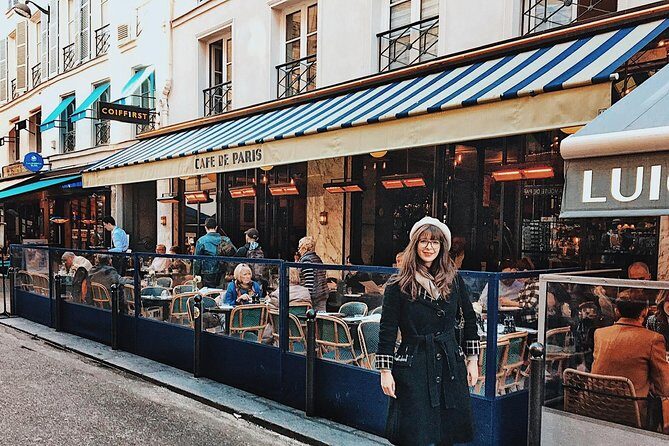
Day two begins at Place des Vosges, one of the oldest squares in Paris. You’ll look at the red-brick mansions in Louis XIII style. This is a great start because it’s structured and easy to understand visually, which helps your brain transition from landmarks to neighborhoods.
Then you head into Le Marais, described as one of the hippest quarters. The walk includes highlights like the Panthéon and Sorbonne University. Even though those aren’t deep museum stops here, the guide context helps you connect what you see to what you’re actually looking at. The stop time is about one hour, free, which is usually enough for orientation without dragging you through ten side streets you don’t care about.
If you love Paris for architecture and street texture, day two is where the feeling really grows.
Luxembourg Gardens for a break from the crowd energy
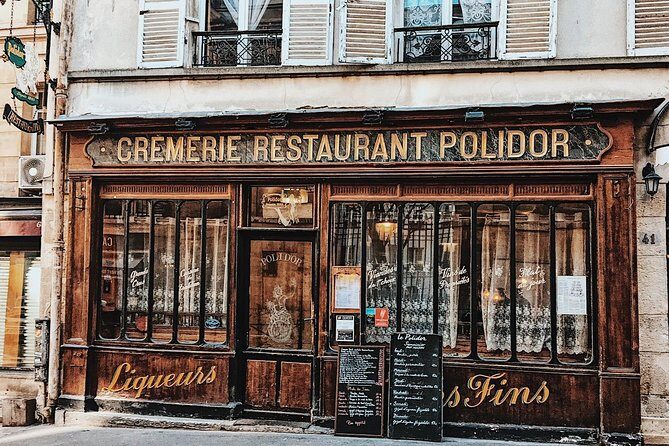
Next up is Luxembourg Gardens. This is your decompression stop. It’s also one of the best ways to avoid the “all day monument fatigue” that can happen when you cram too many attractions.
You get about one hour to sit, walk paths, and enjoy statues, monuments, and fountains. Admission is free. This part of the tour works especially well if you’re a photography person who still wants a slower pace between bigger “must-sees.”
The only drawback is that this is a park, not a destination with a single ticket gate. If your idea of a tour is nonstop action, you might feel like you’re taking a breather too early. But for most people, that pause makes the rest of the day more enjoyable.
Saint-Germain des Prés: narrow streets and an easy lunch reset
After Luxembourg Gardens, you go to Saint-Germain des Prés for about 30 minutes of wandering. This is the area where the streets start feeling stylish and alive, with lots of small storefronts and lanes that reward slow walking.
Then the plan shifts to lunch time in Montmartre on day two. Lunch isn’t included, but the timing matters: it keeps you from eating too early and then losing energy for the climb and viewpoints later.
You’ll also hear about or see nearby landmarks like part of the Montmartre area approach through Moulin Rouge and the Moulin de la Galette windmill story.
Montmartre and Sacré-Cœur: the viewpoint payoff
At Moulin Rouge, the tour is about the Bohemian spirit of Montmartre, plus the Moulin de la Galette windmill immortalized in paintings by Renoir, van Gogh, and Pissarro. Admission is listed as not included, which makes sense since this is a walking route designed around seeing and photographing, not buying show tickets.
Then you reach Basilique du Sacré-Cœur with about 20 minutes. You’ll feast your eyes on the basilica and snap a quirky photo in front of the Love Wall. Entrance isn’t included, so think exterior viewing and atmosphere.
If you’re the type who wants the big “Paris postcard” feeling, Montmartre is where you get it. Just remember: you’ll be on your feet for a long time across both days.
Palais Garnier finish: a quick stop that still lands
Your day ends at Palais Garnier with a short exterior look. The tour lists no entrance, and the stop is only about 5 minutes.
This is a good “wrap” because it gives you one last grand building moment without eating your entire afternoon. If you want to go inside later, you can. But as part of this tour’s rhythm, it keeps the pace from becoming too exhausting.
The metro + walking combo: why it feels efficient instead of exhausting
This tour is described as a private walking tour with the use of metro. That’s important. You’re not just walking in a straight line for two days, and you’re not stuck waiting in lines for a bus. The guide uses metro connections to bridge longer distances while keeping you in the neighborhood flow.
In other words, you’re not fighting Paris as a map problem. You’re letting someone who reads the city’s layout handle the logistics so you can focus on what you’re seeing.
One practical note: transportation is not included in the pricing, so you’ll want to budget for metro tickets and have your method ready (payment card or transit ticket, whichever you plan to use in Paris).
Price and value: what $495 buys when it’s truly private
The price is $495 per group (up to 1) for two days. That’s not cheap, but here’s the honest value math in plain terms:
- You’re paying for two full days with a private guide (about 5 hours per day).
- You’re getting someone to plan the route around walking and metro timing.
- You’re also getting help with “what to do after” and expert recommendations beyond the stops you see.
If you compare this to piecing together multiple standard group tours plus trying to figure out transit on your own, this can start to look like the more efficient spend. Especially if you’re new to Paris or you simply don’t want to waste your first days making wrong turns.
That said, the experience is still a walking route. If you’re expecting a driver to shuttle you between far-apart sights, you’ll feel disappointed. This is built around foot travel and public transit.
Where the tour shines most: guide skill and photo practicality
The tour’s heart is the guide. Some guides are praised for being friendly, attentive, and helpful with direction and pace. Names that come up include Aliya, Sabrina, Jacopo, Mehrdad, Jean, Anastasia, and Clare.
The strongest repeated themes from those accounts:
- Guides made the day feel alive, not just informational.
- Several focused hard on helping with photos, including positioning for better angles.
- A few guides helped guests feel confident with public transportation, which is a big deal in a city that can feel confusing at first.
You’ll still want to manage your own expectations about “magic.” A guide can’t stop crowds from existing. But they can help you avoid wasted time and keep you moving toward where you want to be.
A fair heads-up on walking pace and guide variability
Be realistic about steps. One account flagged over 25,000 steps per day, which is intense for anyone with limited mobility or low endurance.
Also, guide quality can vary. One negative note mentioned a guide looking at a phone for directions and not providing much depth. Another said a day started late and the route felt more church-focused than expected. That doesn’t mean this will happen to you, but it does mean you should speak up early if you want a different balance of neighborhoods vs landmarks.
My practical advice: before day one, tell your guide your must-dos and your no-thanks. If churches aren’t your thing, say so. If you want more photo time at Eiffel Tower or more street wandering in Le Marais, make that clear from the start.
What to pack and how to survive two days of Paris feet
Since the tour runs in all weather, pack for the forecast you get and the weather Paris decides to add later. Bring:
- Comfortable shoes you trust
- A light rain layer
- Sunglasses or a hat if the sun shows up
- A small day bag for water and phone charging
Also plan lunch as a separate budget. Food and drinks are not included, and lunch breaks happen on your own. This is usually easier because Paris offers so many good options that you’ll appreciate choosing what fits your taste and energy.
Should you book this 2-day Paris private tour?
Book it if:
- You want two days of structured walking with a friendly local to connect the dots
- You care about neighborhoods, not just landmarks
- You like the idea of photo stops and photo positioning
- You’re okay with a lot of steps and you want to see Paris efficiently without big tour-bus logistics
Skip it or reconsider if:
- You strongly dislike long walking days
- You’re expecting entrance tickets to major sites included (they are not)
- You want a car-driven route between sights
- You prefer museums as your main activity rather than “see it from the street and move on”
If you go in knowing what it is—a private walking + metro plan with guide storytelling and smart sequencing—you’ll likely come away feeling that Paris makes sense. And you’ll have a clearer idea of where to return on your own afterward.