REVIEW · PARIS
3-Hours Walking Tours Around Paris – Choose your own!
Book on Viator →Operated by Tour Up in Europe · Bookable on Viator
Paris can feel like a lot.
This private, English-guided walk helps you sort it fast, with a classic route plus a choose-your-own feel built in. I especially love the way it connects big landmarks to the stories behind them, and I like that you get real context without spending the whole day stuck inside lines. One thing to keep in mind: some stops do not include admission, so you’ll want to plan your ticket choices.
If you care about Paris as a living city, not just postcard views, this tour fits well. You’ll move through several of the most important areas in about 2 hours, and the guide shapes what you pay attention to. The only drawback I’d flag is that the pace is quick—think orientation and key moments, not a slow, full-depth visit to any one museum.
In This Review
- Why This Private Choose-Your-Own Paris Walk Works
- The Louvre to Île de la Cité: Paris’s Power Center, Quickly
- Notre-Dame and the Quartier Latin: From 800 Years of Faith to Student Streets
- Saint-Germain-des-Prés and Le Marais: Class, Creativity, and Neighborhood Attitude
- Montmartre’s Rebel Stories: Panoramas, Pop Culture, and Sacré-Cœur Energy
- Ending by the Eiffel/Invalides Views: Iron Lady to War History
- Guides You Might Get: Names That Signal Strong Storytelling
- Price and Value: Is $180+ Worth It?
- Timing, Pace, and What to Do With Your Free Time
- What You Get (and Don’t): Tickets, Lunch, and the Real Expectations
- Who This Tour Suits Best
- Should You Book This Paris Walk?
- FAQ
- How long is the walking tour?
- Is it a private tour?
- Is admission included for major sites like the Louvre or Notre-Dame?
- What language is the tour offered in?
- Is lunch included?
- What’s the cancellation policy?
Why This Private Choose-Your-Own Paris Walk Works
This is a private guided tour around central Paris, offered in English, with a mobile ticket. The big promise here is balance: you get the essentials—Louvre area, Île de la Cité, Notre-Dame, Quartier Latin, Saint-Germain-des-Prés, Le Marais, Montmartre, and a final look toward the Eiffel / Invalides corridor—without treating the day like a checklist.
The choose-your-own part matters because Paris has too many good options. Instead of forcing you into one rigid script, the guide can adjust what you linger on. In practice, I like tours that keep the structure but still let you ask smart follow-ups on what you’re seeing right now: a street name, a neighborhood mood, why this spot matters, or how a famous building ties into Paris history.
You’ll also notice the design of the schedule: short stops add up to a “map in your head.” You’re not meant to master every detail by the end. You’re meant to leave with cleaner geography and better story connections so your later self-guided wandering is easier and more fun.
The Louvre to Île de la Cité: Paris’s Power Center, Quickly
The tour starts in the Louvre area, which is a funny choice if you think about it. The Louvre is huge, and it can swallow your whole day if you let it. Here, the goal is different: you get a tight orientation moment—brief time, Louvre included only as a landmark context, and admission not included—so you understand why this spot matters beyond its museum reputation.
Then you shift toward Île de la Cité, the original core of Paris. This is where the city’s story becomes more human and less museum-like. If you’ve ever wondered how Paris grew from an early settlement into the place that shaped Europe, this stop is the bridge. It’s also a change of pace: you’re moving from royal and cultural symbolism into the geography that made Paris possible in the first place.
One practical plus: this early part sets your bearings. After that, you can connect later neighborhoods to what you learned about the city’s beginnings. Even if you do not go inside any museums on this day, you’ll still gain a lot because the guide ties what you see to why it exists.
You can also read our reviews of more walking tours in Paris



Notre-Dame and the Quartier Latin: From 800 Years of Faith to Student Streets

Next comes a stop at Cathedrale Notre-Dame de Paris. Admission isn’t included here, and time is short—so don’t expect a deep, ticketed cathedral visit during this tour. What you do get is the story spine: the cathedral’s long history and what it represents for Paris across centuries.
After that, the tour heads into Quartier Latin, tied to the idea of Latin and the city’s intellectual tradition. This is where the walking tour starts to feel less like “look at that building” and more like “why did Parisians build life this way?” Quartier Latin is also famous for being energetic and full of history layers, and a guide can help you connect the academic legacy to the streets you’re walking now.
This pairing—Île de la Cité into Notre-Dame into Quartier Latin—is smart. It tracks Paris as it evolved: origins first, then major institutions, then the cultural brainpower that gave the city its distinctive feel. If you like history that explains how people lived, not just what rulers did, you’ll probably enjoy this section a lot.
Saint-Germain-des-Prés and Le Marais: Class, Creativity, and Neighborhood Attitude
You then move into Saint-Germain-des-Prés, where the tour frames the area with a social lens—often described as a quarter associated with newer wealth and a particular Parisian vibe. The time is brief, but the point is that neighborhoods have personalities. The guide helps you read those personalities instead of just passing through.
After Saint-Germain-des-Prés, you step into Le Marais, a district known for being packed with stories. Here’s where the tour can surprise you in a good way: the guide doesn’t just point at landmarks. The stories get fun—mystery vibes, famous figures, and the idea that Paris keeps reinventing itself without ever deleting its past.
I also like how the tour uses Le Marais as a pivot. By the time you reach it, you’ve already learned the core geography (Cité and the cathedral area) and you’ve seen how culture and institutions shaped the city. Le Marais then shows you how Paris becomes a stage for people—artists, writers, and others—who leave traces in streets and buildings.
Montmartre’s Rebel Stories: Panoramas, Pop Culture, and Sacré-Cœur Energy
Montmartre is the part of the day that usually turns casual sightseeing into an actual memory. You get a stop focused on legendary rebels of Montmartre—think of it as the neighborhood’s mindset more than a single biography. The time is short, but the guide’s job is to help you understand why Montmartre feels different from the rest of Paris.
If you love storytelling tied to real places, this is where the guide quality really shows. One guide named Emy is described as energetic and able to handle a busy Montmartre with confidence. That matters because Montmartre can be crowded and confusing if you’re trying to self-navigate while also taking in views.
In that same Montmartre context, Emy also connected the panorama from the top of the hill to why the viewpoint mattered. The Sacré-Cœur church is called out as a highlight, and that checks out with the neighborhood’s whole energy.
The best part for many people is how Montmartre becomes more than history. In one guide’s telling, you hear about the painters’ square, famous stairs used in parts of John Wick and Emily in Paris, and details like where Picasso lived and a tragic story tied to Dalida. You don’t need to be a film fan to enjoy that. It just helps the neighborhood click faster because you’re seeing Paris through multiple lenses at once.
So if your goal is to leave Paris with at least one neighborhood that feels vivid and personal, Montmartre is a strong bet.
Ending by the Eiffel/Invalides Views: Iron Lady to War History
The tour finishes with a quick stop labeled around the Eiffel and Invalides area. The timing is brief, and admission is free for this segment, which is perfect because you’re not trapped in a museum to end the day. This is a final snapshot—plus a history angle tied to war and memory.
Even if you’ve seen the Eiffel Tower from photos a thousand times, ending here helps you stitch together the day. You start with early Paris gravity (Cité), then shift to institutions and culture (Notre-Dame, Quartier Latin), then to neighborhood identity (Saint-Germain, Le Marais), then you land in Montmartre’s theatrical spirit, and you close with a recognizable symbol zone connected to national history.
It’s a nice way to make the walk feel like a journey, not just a series of stops.






Guides You Might Get: Names That Signal Strong Storytelling
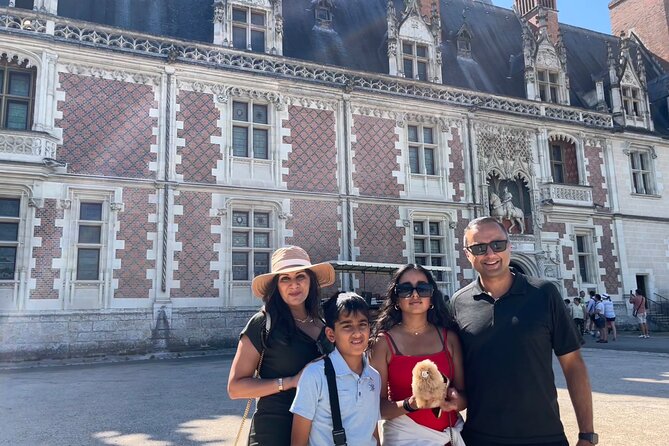
A big reason people rate tours well in Paris is not the route. It’s the guide’s voice—clarity, humor, and the ability to answer real questions while you’re walking.
This tour has surfaced guides with distinct strengths. Nataly is linked to a Paris-under-Nazi-occupation style of storytelling, which signals she can handle heavier historical material with care and structure. Maryan is credited with a great overview across four arrondissements and being flexible about what the group wanted to cover. Valentin gets high marks for being a true scholar and for going beyond the scheduled time, with a strong connection between history and ballet. Helene is praised for humor and for linking Paris to writers, artists, actors, and the creative people who shaped its identity. And Emy, as mentioned, is described as energetic, guiding through crowded Montmartre and turning viewpoints and details into a memorable story.
You can’t guarantee a specific guide, but this list gives you a sense of what the experience is built to deliver: informed, story-driven walking that doesn’t treat Paris like a textbook.
Price and Value: Is $180+ Worth It?
At $180.24 per person, this is not a budget “grab-and-go” walking tour. But it can still feel fair if you compare what you get: a private guide, multiple neighborhoods, and a tight context package that helps you explore more efficiently later.
Here’s how I think about value for this kind of tour:
- If you want an easy way to understand Paris geography fast, the price starts to make sense. You reduce wasted hours wandering without a plan.
- If you plan to visit big sites anyway, it helps to do this first. The guide’s framing can make your later museum time feel more purposeful.
- If you only want a couple of highlights and you don’t care about history context, you might feel it’s pricey for the short time spent at each location.
Also note what you do and don’t pay for. Some key stops have admission ticket not included, so you’re buying guided storytelling, not guaranteed entry fees into major venues. That’s normal for city walks, but it’s important for decision-making so you don’t end up paying twice for the parts you hoped would be covered.
In short: this is good value when you treat it as orientation plus storytelling, then build the rest of your trip around what you’re most curious about.
Timing, Pace, and What to Do With Your Free Time
The tour is listed at about 2 hours (even though the name uses 3-hour wording). The stop durations are short, which is typical for a “big Paris overview” approach. That pace can be perfect if you like movement, or if you’re on a tight schedule and want to pack value without burnout.
But it also means you should treat each stop like a preview. If you want to go inside Louvre or spend a full session at a major cathedral, you’ll likely need separate time outside this tour. The guide’s job here is to help you decide what’s worth deeper time later.
A practical tip: think about your priorities before you start. If you’re most excited by art, ask the guide questions that connect the neighborhoods to artists. If you love modern Paris culture, bring up pop culture references you’ve seen in Montmartre. If you’re more into political history, you can steer the conversation that direction since the guides have demonstrated they can handle heavier themes.
What You Get (and Don’t): Tickets, Lunch, and the Real Expectations
The included part is the private guiding itself, plus the historical background and the overall romantic-city atmosphere the tour aims for. There’s no lunch included, so if you’re touring at a meal hour, plan food afterward.
On the ticket side, you should expect that some stops include free viewing and others require you to handle admission separately. If you’re the type who needs a full ticketed experience at major attractions, this tour still helps, but you’ll pair it with dedicated entry plans.
Also, the tour notes that service animals are allowed and that most travelers can participate. It also says it’s near public transportation, which usually means it’s easier to get to and from than far-flung areas.
Who This Tour Suits Best
This walk is a strong match if you want:
- A private guide who can adjust to what you care about
- A fast orientation across several classic neighborhoods
- A history-and-stories focus, not just photos
- English narration and a mobile ticket setup
It’s likely less ideal if:
- You want long museum time and deep entry-based experiences during the same session
- Your schedule is so tight that a 2-hour format feels too short to be worth the cost
- You dislike walking through multiple areas quickly
Should You Book This Paris Walk?
I’d book it if you’re the kind of traveler who wants Paris to make sense quickly. It’s especially good for first-timers and for anyone returning to Paris and wanting a sharper sense of how neighborhoods connect. The strongest reason to choose it is the guide quality pattern—people highlight flexibility, scholarship, humor, and the ability to turn places like Montmartre into something you remember.
I’d hesitate if you’re mainly chasing one or two ticketed attractions and you already know the geography well. In that case, you might be happier with a museum-focused plan or a neighborhood-only walk where you can go slower.
If you do book, arrive ready with questions. Ask for the story behind the street. Ask what to see later in the week. This is the type of tour where your curiosity changes the value.
FAQ
How long is the walking tour?
It’s listed at about 2 hours (approx.), with a schedule that includes short stops at multiple landmarks.
Is it a private tour?
Yes. It’s private, so only your group participates.
Is admission included for major sites like the Louvre or Notre-Dame?
No. Admission tickets are not included for some key stops (the Louvre and Notre-Dame are listed as not included), while some other viewing stops are marked as free.
What language is the tour offered in?
It’s offered in English.
Is lunch included?
No, lunch is not included.
What’s the cancellation policy?
You can cancel for a full refund if you cancel at least 24 hours before the experience’s start time. Free cancellation is available up to that 24-hour window.