REVIEW · PARIS
America’s Founding Fathers in Paris, Walk in their Footsteps (Small Group Tour)
Book on Viator →Operated by Visit the Hidden Paris · Bookable on Viator
Great stories start on real streets. This small-group walk connects Benjamin Franklin and Thomas Jefferson to the cafés and neighborhoods that shaped their thinking, with stops tied to Le Procope, Luxembourg Gardens, and more. I especially like that the tour feels focused on people, not plaques, and that it can be shaped to your questions. The one catch is the route takes about 2 hours of walking, so it’s not ideal if your legs have limits.
You’ll get a true walking-tour rhythm, but without the big-chaos feel: the group max is 8. You’ll also have an audio commentary in your pocket, which helps when you want to reread a detail as you move between stops.
The itinerary is compact and centered on the Left Bank, so you can stitch it into a day of wandering. Still, if you’re hoping for lots of sit-down time, plan for more standing and moving than pausing.
In This Review
- Key things I’d watch for before you book
- Le Procope: where Franklin and Jefferson traded ideas over coffee
- Luxembourg Gardens: John Paul Jones and the case of the missing tomb
- Odeon and Thomas Paine: Paris after Common Sense
- Rue Bonaparte: Jefferson’s Paris address and the ambassador pipeline
- Small group touring: how max 8 keeps the stories personal
- Walking time and what it means for your comfort
- Price of $98.90: what you’re paying for, and what you should budget too
- Itinerary in real terms: what each stop feels like
- Who this tour is best for
- Should you book America’s Founding Fathers in Paris?
- FAQ
- How long is the tour?
- How many people are in the group?
- Where does the tour start and end?
- Is there audio included?
- Are admission tickets included for the stops?
- What’s not included in the tour price?
- Is the tour suitable for people with mobility issues?
- What’s the weather requirement?
- Is free cancellation available?
- Is this tour near public transportation?
Key things I’d watch for before you book

- Small group, max 8: enough attention for questions, not so many people that you can’t hear.
- Le Procope in 1686: Paris’s earliest café stop, with a direct link to Revolutionary-era meeting culture.
- John Paul Jones’ forgotten tomb story: the kind of detail that makes history feel personal and unfinished.
- Thomas Paine near Odeon: a quick stop with clear context around Common Sense and his time in Paris.
- Jefferson at Rue Bonaparte: a short walk that connects his Paris stay to his later role as ambassador.
- Tour can be flexible: at least one guide (Ellen) handled a non-walking alternative when someone sprained an ankle.
Le Procope: where Franklin and Jefferson traded ideas over coffee
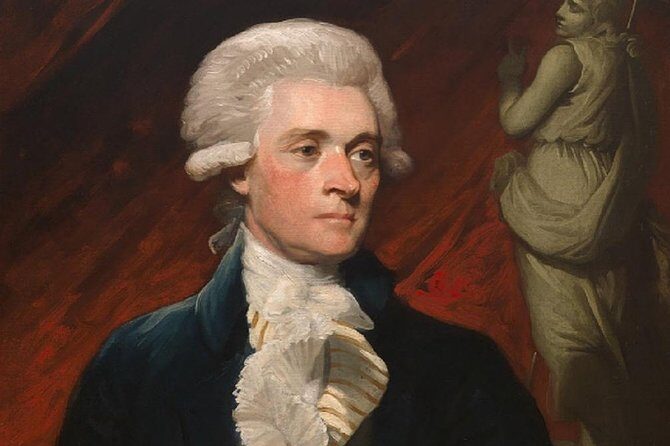
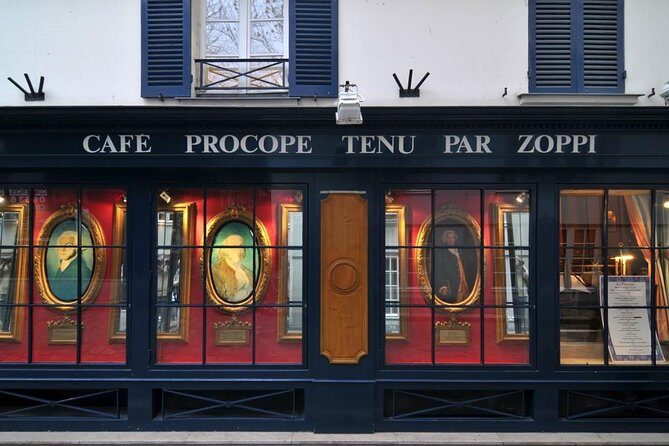
The tour opens at Place Saint-Germain des Prés, then you work your way toward Le Procope, often described as Paris’s first café (opened in 1686). This is a smart start. It anchors you in the everyday places where big conversations happened, not just in grand buildings that only look important from the outside.
At Le Procope, you get the idea that Enlightenment-era politics wasn’t all salons and speeches. It was coffee, chess, and meeting other revolutionaries. The tour frames Franklin and Jefferson as regular-style visitors, not distant monuments. That shift matters. It’s easier to remember what you learn when you can picture how people actually spent an afternoon.
Practical tip: this is a stop where your mind will drift into “wait, did history really happen in this doorway?” mode. Lean into it. Look around while you listen. It’s not about catching a perfect photo. It’s about building a mental map of where these men moved through Paris life.
One drawback: you should expect that the energy of Le Procope can make it feel busy in the real world. The tour is designed for short, story-led pauses, so don’t plan to lounge here.
You can also read our reviews of more walking tours in Paris


Luxembourg Gardens: John Paul Jones and the case of the missing tomb
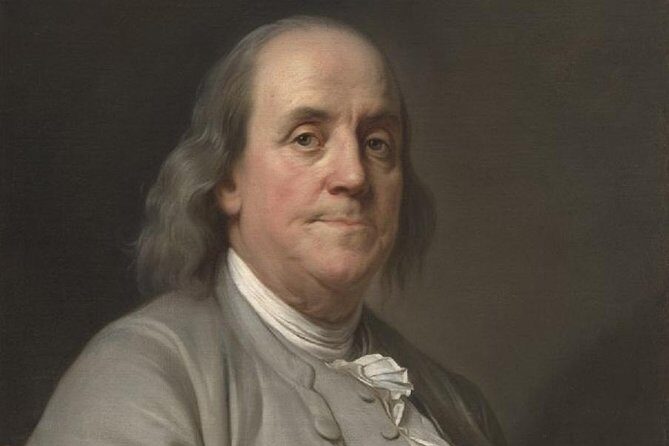
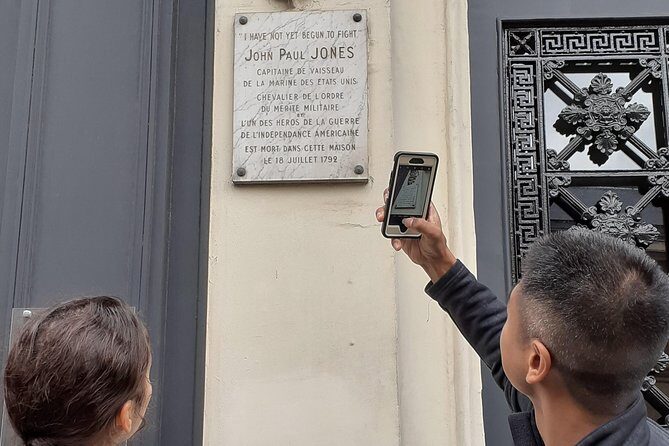
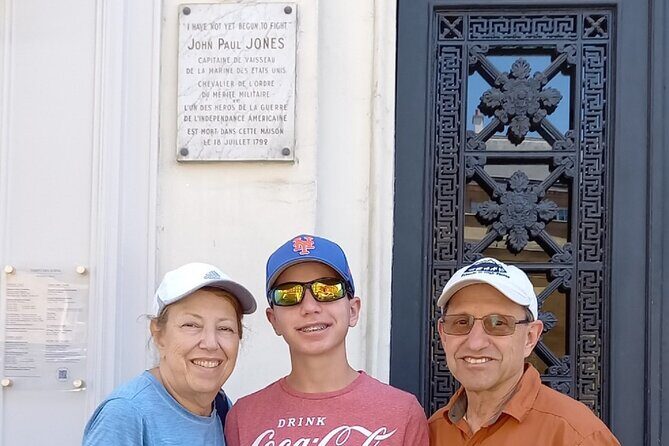
Next up is the area around Luxembourg Gardens, where you’ll hear about John Paul Jones, including an emotional thread that stretches from his final residence to the long recovery of his remains. The tour explains that Jones died in Paris, and that his remains were initially placed in a cemetery that was later paved over and forgotten.
What makes this stop click is the turn from tragedy to effort. The story doesn’t end with a grim detail. It tracks what it took to locate his tomb, repatriate his remains, and eventually give him a full military burial in the United States. That’s a reminder that history isn’t only what happens. It’s also what people later decide to fix, record, and honor.
This stop also pairs well with how the Left Bank feels. Even if you don’t spend time in the gardens themselves, the tour gives you a reason to look at the area with a new layer: it’s not just pretty scenery. It’s a place where personal lives and political legacies overlapped.
Practical drawback: this is still a walking route, and the stop is timed for quick context. If you want to linger for a slow stroll through the gardens, arrive ready to do that on your own after the tour ends.
Odeon and Thomas Paine: Paris after Common Sense
Near Odeon, Théâtre de l’Europe, you’ll connect to Thomas Paine and his time in Paris. The tour notes that Paine lived in Paris for five years after publishing his best-seller, Common Sense. That’s a key framing line. It links the pamphlet that helped fuel revolutionary momentum with the quieter, living-in-a-city stage that followed.
This stop works best if you like the “how did it unfold next?” style of history. You’re not only learning what Paine wrote. You’re also seeing that the story of revolution included travel, adjustment, and staying power in a foreign capital.
If you’re the type who reads political classics, you’ll probably enjoy how the tour ties a famous text to a specific geography. It turns a book reference into a real route you can walk.
Potential consideration: this is a short stop. If you want a big visual experience, this one is more story-heavy than monument-heavy.
Rue Bonaparte: Jefferson’s Paris address and the ambassador pipeline

The last meaningful geography stop is Rue Bonaparte, tied to where Thomas Jefferson lived briefly during his five-year stay in Paris. The tour uses this location to connect two big ideas:
1) Jefferson’s Paris years weren’t just sightseeing. They were part of his political education.
2) His later role as Ambassador to France in 1784 fits into a broader pattern—following in Franklin’s footsteps.
This is where the tour feels especially satisfying for people who like cause-and-effect history. The walking route gives you time to mentally link Franklin’s earlier influence to Jefferson’s later official position. It’s a clean arc, and it helps you remember names in the right order.
Also, you finish still in the Left Bank area, so you can keep going without having to teleport across town. The tour ends near Rue de Tournon.
One drawback to consider: Rue Bonaparte is not a huge “single landmark” moment. It’s a street location. So if your ideal tour is one where you stand in front of a blockbuster building for photos, this part may feel more subtle.
Small group touring: how max 8 keeps the stories personal
This is a small group experience with a maximum of 8 people, and that affects everything. For one, you’re more likely to hear details clearly without leaning in. Two, you have more chance to ask questions and get answers that match what you actually care about.
The reviews also point to something you should treat as a real value marker: the guide approach can be flexible. One case shared with the tour noted that when someone sprained an ankle, the guide handled it by meeting separately for a non-walking version. That doesn’t mean everyone will get the same workaround, but it does tell you the tour isn’t allergic to solving problems.
If you’re the kind of traveler who hates being rushed, this format is a better bet than the big bus-to-walking shuffle.






Walking time and what it means for your comfort

The tour requires 2 hours of walking (with stops), and it’s not recommended for those with walking difficulties. That doesn’t mean it’s a brutal hike. It means you should plan as if you’ll be on your feet for a good stretch.
My practical advice:
- Wear comfortable shoes with decent traction.
- If you’re sensitive to long standing, bring a light recovery snack plan even though snacks aren’t included.
- Pace yourself early. If you save your energy for stop 4, stop 1 may already feel like a test.
Also, the tour depends on good weather. If it’s cold, wet, or miserable, you may need to adjust your expectations, bundle up, or consider a different date.
Price of $98.90: what you’re paying for, and what you should budget too
At $98.90 per person, this tour sits in the mid-range zone for a guided, story-led walking experience in central Paris. The key value isn’t just “a guide.” It’s that you get:
- A compact route with multiple meaningful stops
- Audio commentary included
- Free access for the stops themselves (the tour notes admissions for stops like Le Procope, Luxembourg Gardens area, and the Odeon area as free tickets)
- A small group size (max 8), which usually translates to better attention
What’s not included is important for budgeting. The tour doesn’t include coffee/tea, bottled water, or snacks. So if you’re the sort who needs caffeine or hydration on the go, plan ahead. A quick buy before the start can prevent a headache later.
One more pricing angle: because the walking is about 2 hours, you’re buying “time on the street plus storytelling.” If you normally skip guided walks, it can feel like you paid for information you could read online. But this type of tour is different because it connects locations into a narrative you’ll remember—especially with the Franklin/Jefferson and Paine/Jones threads.
Itinerary in real terms: what each stop feels like

Here’s the rhythm you can expect, without pretending it’s a museum visit.
Stop 1: Le Procope
Short, vivid, and loaded with a Revolutionary-meeting vibe. You’ll get the “Paris café culture mattered” angle fast.
Stop 2: Luxembourg Gardens area
Short context with a longer emotional payoff: the forgotten tomb and later repatriation adds weight.
Stop 3: Odeon / Théâtre de l’Europe area
A quick geographic landing for Paine, anchored to Common Sense and his five-year Paris stay.
Stop 4: Rue Bonaparte
Your final location connection to Jefferson’s Paris address and his ambassador role in 1784.
The tour ends near Rue de Tournon, which is useful because you can roll directly into more Left Bank exploring afterward.
Who this tour is best for
This is a strong pick if you:
- Like the Founding Fathers as real people with habits, not just textbook names
- Want to see Paris through American-influence history rather than generic postcard routes
- Prefer a guide-led story walk where questions are welcome
- Are comfortable walking about two hours in a central, walkable neighborhood
You might skip it if:
- You need step-by-step wheelchair-level flexibility (the tour requires substantial walking)
- You want long sit-down moments at every stop
- You’re visiting on a day where weather is uncertain and you can’t pivot
Should you book America’s Founding Fathers in Paris?
I’d recommend booking if you want a focused, story-driven Left Bank walk that connects Franklin, Jefferson, Paine, and John Paul Jones to specific Paris places. The small group size, the built-in audio commentary, and the mix of café culture plus the human tomb/repatriation story give this tour a memorable backbone.
I’d hesitate if your walking tolerance is limited or if you hate moving around for two hours, because this isn’t a “pause every five minutes” style of outing. If you’re even a little unsure, ask at booking time about alternatives—since the guide approach has shown flexibility in at least one real situation.
FAQ
How long is the tour?
It runs about 2 hours 30 minutes (approx.), and it includes about 2 hours of walking.
How many people are in the group?
The tour has a maximum of 8 travelers.
Where does the tour start and end?
It starts at Place Saint-Germain des Prés and ends at Rue de Tournon (near the Luxembourg Gardens).
Is there audio included?
Yes. Audio commentary is included.
Are admission tickets included for the stops?
The stops listed are shown as admission ticket free during the tour (so you do not need paid entry tickets for those stops).
What’s not included in the tour price?
Coffee and/or tea, bottled water, and snacks are not included.
Is the tour suitable for people with mobility issues?
The tour requires good walking and about 2 hours of walking, so it is not recommended for those with difficulties in walking.
What’s the weather requirement?
This experience requires good weather. If it’s canceled due to poor weather, you’ll be offered a different date or a full refund.
Is free cancellation available?
Yes. You can cancel up to 24 hours in advance for a full refund.
Is this tour near public transportation?
Yes. The meeting area is near public transportation, and the start/end points are central.