REVIEW · PARIS
Best of the Left Bank: Self-Guided Tour of the Latin Quarter
Book on Viator →Operated by VoiceMap Audio Tours · Bookable on Viator
Paris rewards slow wandering. This self-guided Latin Quarter walk lets you move at your pace while the audio tells you what you’re looking at. I especially like the offline access (audio, maps, and geodata) and the fact you get lifetime access to replay it later.
The route starts in front of Shakespeare and Company and follows a classic Left Bank arc of writers, churches, museums, and big-name Paris landmarks. One thing to keep in mind: the experience depends on your phone and app working smoothly, and a small number of people have run into audio cutting out or confusing directions.
In This Review
- Key Highlights Worth Knowing
- Starting in Front of Shakespeare and Company
- An Easy Left Bank Route You Can Adjust on the Fly
- Le Théâtre de la Huchette and the Theater That Refuses to Quit
- Eglise Saint-Severin: Notice the Pillars, Not Just the Facade
- Cluny Museum Area: Abbot, Roman Baths, and Medieval Art in One Neighborhood
- Sorbonne and the Left Bank’s Academic Roots
- Panthéon: France’s Who’s Who Under One Big Dome
- Saint-Étienne-du-Mont and Sainte Geneviève’s Protection Story
- Rue Mouffetard: The Old Market Street That Loves Food Breaks
- Jardin des Plantes: From the King’s Garden to Today’s Green Space
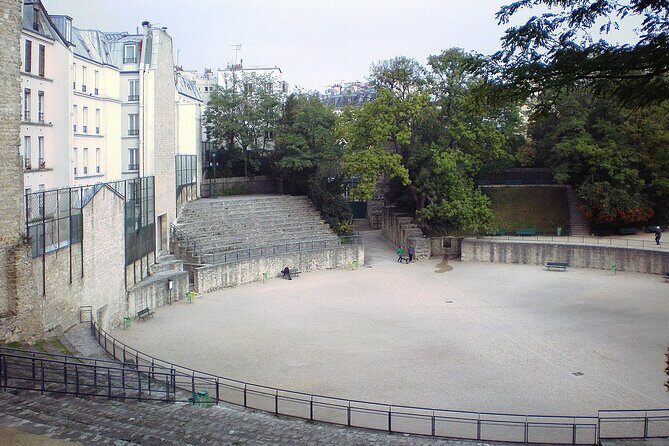
- Arènes de Lutèce: Your 2,000-Year-Old Finish Line
- Price, Offline Audio, and Whether $14.99 Really Works
- Who Should Book This Self-Guided Latin Quarter Walk
- The One Thing to Watch: Audio and Location Tracking
- Should You Book It?
- FAQ
- How long does the Latin Quarter self-guided audio walk take?
- Where does the tour start and end?
- Is this tour private?
- What language is the audio available in?
- Can I use it offline?
- What’s included, and what’s not included?
- Is it refundable if I cancel?
Key Highlights Worth Knowing

- Shakespeare and Company start point tied to Ernest Hemingway, Gertrude Stein, and Ezra Pound
- Le Théâtre de la Huchette and its long-running tradition of short plays since 1957
- Eglise Saint-Severin and its expanding nave you can still read in the rows of pillars
- Cluny Museum area where you pass from abbot’s residence to Roman baths to medieval art
- Rue Mouffetard on the way—Paris’ oldest market street, built for snacks and strolling
- Arènes de Lutèce finish at a 2,000-year-old Roman amphitheater
Starting in Front of Shakespeare and Company

Your walk begins at 37 Rue de la Bûcherie, right in front of Shakespeare and Company. This isn’t just a cute bookstore stop. The audio frames it as a magnet for writers: Ernest Hemingway, Gertrude Stein, and Ezra Pound all shopped here back in the day. It sets the tone fast—Latin Quarter Paris isn’t only about famous monuments. It’s also about ideas, books, and people watching.
If you like to orient yourself with something human-scale, this start helps. You’re not dropped into a maze of streets without context. You’re starting at a known spot, then the route gently guides you into quieter lanes and bigger landmarks.
Practical tip: bring comfortable shoes. This is a walking tour, and the Latin Quarter streets are old and sometimes uneven. If your phone battery is shaky, consider charging it before you set out, since the audio and location features are the whole engine.
You can also read our reviews of more guided tours in Paris



An Easy Left Bank Route You Can Adjust on the Fly
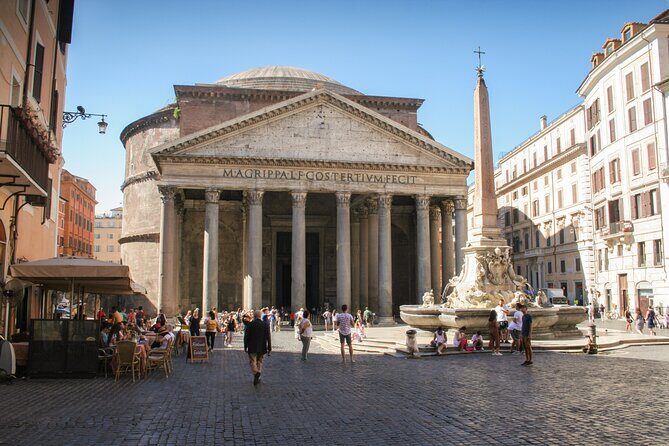
This is built as a self-guided audio walking tour in English, with an estimated time of about 2 to 2.5 hours. That timeframe is realistic if you walk steadily, pause briefly at key buildings, and don’t get lost in every side street (easy to do here).
What makes this type of tour valuable is control. You can linger at the Panthéon when you feel like it, speed up through a stretch that doesn’t grab you, or take a stop for a drink while you’re near Rue Mouffetard. One review emphasized the value of giving yourself time to sample food and drinks along the way, and that’s sound advice. Rue Mouffetard is the kind of place where a quick bite turns into a mini break.
The app is VoiceMap for Android and iOS, and the big win is offline support: you get offline audio, offline maps, and geodata. In practical terms, that means you’re less at the mercy of spotty mobile coverage as you weave through neighborhoods.
One caution: since the experience relies on your device, you want your setup to be ready before you walk. You’ll also need to bring your own smartphone and headphones, since those aren’t included.
Le Théâtre de la Huchette and the Theater That Refuses to Quit
As you move through the Latin Quarter, the audio pulls you toward Le Théâtre de la Huchette. This is a famous narrow-lane theater with a specific claim to fame: it has been staging the same short plays since 1957. The audio mentions The Bald Soprano and The Lesson by Ionesco.
Even if you don’t plan to attend a show, this stop is useful because it teaches you how to “read” the area. Paris theaters aren’t just venues. They’re local traditions with continuity. Hearing that a theater has kept the same short-play lineup for decades changes how you view the building when you pass it.
If you’re the type who likes atmosphere, this is one of those moments where you might slow down just to take in the street energy. And if you’re not into theater, no worries—the audio keeps you moving with the next cultural landmark right after.
Eglise Saint-Severin: Notice the Pillars, Not Just the Facade
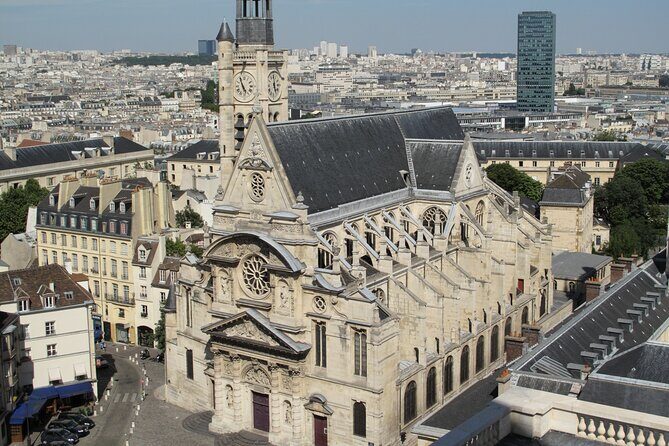
Next up is Eglise Saint-Severin, and the audio gives you a neat visual clue: the church started smaller, then grew by enlarging outward. The walls were pushed outward over time, which is why you can see different rows of pillars.
That detail matters because it changes how you look. Instead of treating churches like static postcards, you’re encouraged to notice “layers” and construction choices you can literally see. It’s also a good mental shortcut for Gothic architecture: you’re not just looking at style; you’re looking at problem-solving and growth.
A practical tip here: give yourself a moment to stand where the pillars make sense. If you rush, you’ll miss the whole point of the audio’s guidance. A 20-second pause can do more than a 2-minute scroll on your phone.
Cluny Museum Area: Abbot, Roman Baths, and Medieval Art in One Neighborhood
The route then passes through the area of the Cluny Museum, described in the audio as a collection of several different worlds in one setting:
- the lavish residence of the Abbot of Cluny
- the city’s ancient Roman Baths
- Alexandre du Sommerard’s medieval art collection
What I like about this stop is how it connects time periods without requiring museum tickets from you. Even if you don’t go inside, the audio makes the outside feel meaningful by reminding you that you’re standing near sites from very different eras.
You’ll also find that this part of the walk is a relief if you want a museum vibe without museum scheduling. You’re not fighting ticket lines or fixed entry times. You can just keep going and take in what’s visible from the street.
If you love architecture and layers of Paris, this is the point where the Latin Quarter starts to feel like a living timeline.
You can also read our reviews of more tours and experiences in Paris





Sorbonne and the Left Bank’s Academic Roots
As the route continues, the audio brings you by the Sorbonne. It ties the school’s origins to Robert de Sorbon, described as the chaplain of King Saint Louis, who also built the Sainte-Chapelle.
This is a classic Latin Quarter theme: education isn’t a modern add-on here. It’s part of the neighborhood’s identity. When you hear that the Sorbonne’s beginning connects to royal religious projects, the campus stops feeling like just another big building and starts feeling like a long-running institution with influence.
If you’re curious, take a moment to look at the space around you. The audio doesn’t ask you to memorize dates; it asks you to notice why the Left Bank feels different. A lot of that is the energy of scholarship, debate, and students. Even at street level, you’ll feel the difference.
Panthéon: France’s Who’s Who Under One Big Dome
Then the route swings into one of the most recognizable Paris landmarks: the Panthéon. The audio frames it as a shrine to French national heroes and gives you a list that helps you place the building culturally:
- Marie Curie
- Voltaire
- Victor Hugo
- Rousseau
- Alexandre Dumas
- André Malraux
- Josephine Baker
This stop is where the Latin Quarter stops being only local and turns national. If you know a few of these names, you’ll get a quick hit of context without needing to enter a museum. If you don’t know them, the audio gives you a starting point that makes the Panthéon feel more than a photo op.
Practical tip: plan for a short pause. Even if you don’t go inside, standing at the right angle helps you appreciate scale. The Panthéon is the kind of monument where rushing makes you miss the wow factor.
Saint-Étienne-du-Mont and Sainte Geneviève’s Protection Story
After the Panthéon, the walk continues to Saint-Étienne-du-Mont, which the audio describes as the burial place of another saint: Sainte Geneviève. You also get the local protection legend—she protected the city from Attila the Hun.
This is the kind of storytelling that makes churches feel like community anchors rather than stone structures. Paris has a talent for mixing legend, faith, and civic pride, and this stop is a good example.
I also like it because it slows the walk down in a different way. You’re not just looking at famous national names; you’re hearing a story that connects local identity to a dramatic character. It’s small, but it’s memorable.
Rue Mouffetard: The Old Market Street That Loves Food Breaks
One of the most practical parts of the route is the section down Rue Mouffetard, identified by the audio as the city’s oldest market street. This is where you should give yourself permission to wander. This street is built for strolling, window-shopping, and—yes—snacking.
The audio makes it part of the narrative, not just a detour. That’s useful because it turns a “walk through” into a planned moment where food fits naturally. One piece of advice worth repeating: don’t schedule this tour so tightly that you have to skip the food and drinks. Build a little slack.
Even if you’re picky, you’ll likely find something that works with your budget and tastes. And if you’re not hungry yet, you’ll be tempted soon enough.
Jardin des Plantes: From the King’s Garden to Today’s Green Space
The route then goes through part of Jardin des Plantes, first created in 1635, when it was called the King’s Garden. This is a nice contrast after the density of churches and monuments. It gives your legs a mental break, too.
I like this stop because it’s another example of what this audio tour does well: it adds meaning even when you’re not going inside a formal ticketed attraction. You understand why the space exists, and that makes it feel more intentional when you pass through.
A practical tip: since gardens can involve more open space, make sure your phone screen brightness and volume are comfortable. If you step away from the route, location tracking can sometimes get fuzzy in any walking tour format, so stay near the main path when possible.
Arènes de Lutèce: Your 2,000-Year-Old Finish Line
The tour ends at Arènes de Lutèce, a 2,000-year-old Roman amphitheater. The finish point is listed at 49 Rue Monge, 75005 Paris, France, and the site is marked as open daily 12:00 AM to 11:59 PM.
This ending is a big payoff. After a walk that moves through writers, churches, academic institutions, and markets, you land at something ancient and solid. It’s the kind of finale that makes the route feel like more than a chain of stops. You’ve ended somewhere that compresses centuries into a single visible structure.
If you still have energy, pause here for longer than you think you need. The stones are old enough that your brain naturally slows down. Let the audio finish, then look around a minute more without the earbuds. It helps everything click.
Price, Offline Audio, and Whether $14.99 Really Works
At $14.99 per person, this is one of those deals that can feel either cheap or suspiciously simple—until you understand what’s actually included. You’re paying for:
- lifetime access to the audio tour
- the VoiceMap app experience
- offline access to audio, maps, and geodata
That combination is the core value. You’re not buying museum tickets or reserving timed entry. You’re buying time-saving context. You don’t have to research each stop in advance. You also don’t need a group meeting point inside a venue. You just follow the route and listen.
Where you get less value is if you hate being tied to a phone. If you want a fully human guide at every step, this won’t feel as satisfying. And if your device struggles with audio playback, you’ll feel it immediately.
Given the price, the risk is manageable. But I’d treat it like any phone-dependent experience: bring charged batteries, keep headphones connected properly, and give yourself a little patience if the app hiccups.
Who Should Book This Self-Guided Latin Quarter Walk
This experience is best for you if you:
- want to explore the Latin Quarter at your pace
- like short “story” stops rather than long lectures
- prefer offline-friendly audio touring
- can commit to wearing headphones and following turn-by-turn directions
It’s also a good choice for couples, solo walkers, or small groups who want flexibility. It’s described as private, meaning only your group participates, but since it’s self-guided, you still choose how much you pause or photo-stop.
If you’re traveling with kids, this can work if your group tolerates an audio format and you keep it moving. If you dislike walking tours, skip it.
The One Thing to Watch: Audio and Location Tracking
Most people will likely have a smooth time, but you should know the risk. A small number of people have reported the audio cutting out or the app not always clearly understanding where they were. That can make navigation frustrating.
My practical fix list:
- Make sure your headphones are working before you start.
- Keep your phone case-secure so you’re not fumbling with it every few minutes.
- Don’t walk while staring at the map—glance, then look up and line yourself up with the street ahead.
- If the app seems lost, pause, re-center, and only then restart. Don’t speed through on stress.
With that mindset, the tour stays a fun, low-cost way to see the Left Bank in a structured way.
Should You Book It?
Yes, if you want a smart, affordable way to tour the Latin Quarter without tickets, without crowds, and without waiting for a group. The offline support and lifetime access are strong value, and the stops hit the right balance of literature, architecture, and big-name Paris landmarks.
Hold off if you know you hate audio-on-a-phone experiences, or if you’ve had repeated trouble with apps losing connection or skipping audio on other trips. This tour can still be worth a try, but you should go in with your setup ready and your expectations realistic.
If you want, tell me your travel dates and whether you prefer churches, museums, or street atmosphere most. I can suggest a good time of day to start this route for the vibe you’re after.
FAQ
How long does the Latin Quarter self-guided audio walk take?
The tour is estimated at about 2 hours to 2 hours 30 minutes.
Where does the tour start and end?
It starts in front of Shakespeare and Company, 37 Rue de la Bûcherie, 75005 Paris, France, and ends at Arènes de Lutèce, 49 Rue Monge, 75005 Paris, France.
Is this tour private?
Yes. It’s listed as a private tour/activity, meaning only your group participates.
What language is the audio available in?
The tour is offered in English.
Can I use it offline?
Yes. It includes offline access to audio, maps, and geodata.
What’s included, and what’s not included?
Included: lifetime access to the tour, the VoiceMap app, and offline access. Not included: tickets or entrance fees, and you’ll need your own smartphone and headphones. Food, drinks, and transportation are also not included.
Is it refundable if I cancel?
No. The experience is non-refundable and cannot be changed for any reason.