REVIEW · PARIS
Paris: Openair Double Decker Bus Audio-Guided City Tour
Book on GetYourGuide →Operated by ParisCityVision · Bookable on GetYourGuide
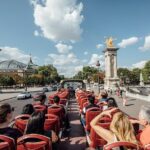
This bus tour is a fast Paris cheat code. It’s a simple way to see a lot of Paris from a comfortable air-conditioned panoramic double-decker, with sights sliding past like a live postcard. You get a guided/host-led experience plus expert commentary in many languages, so you’re not stuck guessing what you’re looking at.
I especially like two things. First, the enclosed, panoramic roof means better views and less misery when Paris weather turns moody. Second, the audio setup (app-based, downloaded to your device) keeps the commentary steady and usable across languages.
My main caution is the pace. You’re on roads with real traffic, so you can spend extra time crawling, and some people find it hard to see clearly unless they get a good seat or window position.
In This Review
- Key things to know before you board
- Meeting at Place de Sydney: What to do first
- Inside the air-conditioned double-decker: Where you’ll get the best views
- The 90-minute loop: Why the timing works (and when it doesn’t)
- Opera Square to Place de la Concorde: Your first big visual hits
- Champs-Élysées to Arc de Triomphe: The photo moment you’ll remember
- Passing the Eiffel Tower and Trocadéro Square: Glide-by views done right
- Les Invalides, Pont Neuf, and Bastille Square: Seeing the city’s layers
- Notre-Dame and the Luxembourg Gardens: When the bus turns more reflective
- Histopad and interactive tech: How to get more meaning from the ride
- Languages and audio: Getting the story in your comfort zone
- Price and value for around $34 per person
- What to watch for on the day (traffic, seats, and questions)
- Should you book this Paris double-decker audio tour?
- FAQ
- How long is the Paris open-air double-decker bus tour?
- Where do I meet the guide?
- Which public transport stops near the meeting point?
- Is the bus air-conditioned?
- Do I need headphones?
- Is the Eiffel Tower always included?
- What major sights does the tour pass?
- Are pets or smoking allowed?
- What audio languages are included?
Key things to know before you board
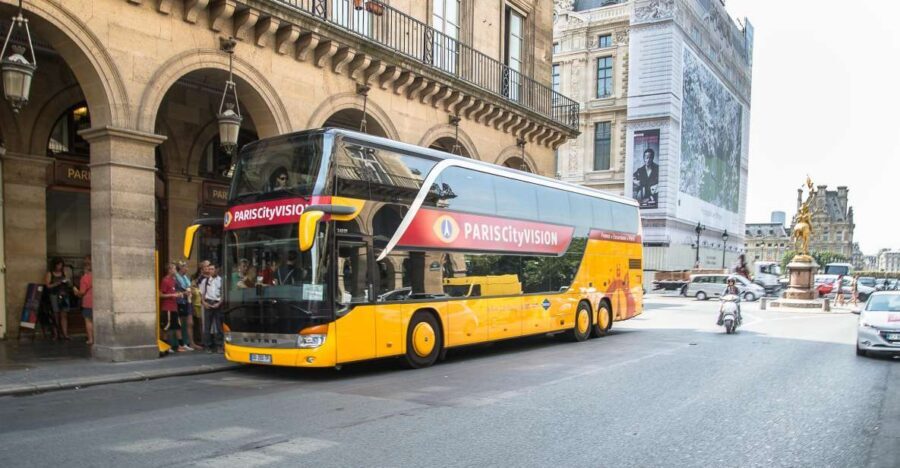
- Enclosed double-decker comfort: panoramic views with less wind and rain than open-top buses
- Multilingual commentary: many languages offered, plus an app-based audio guide in several options
- Big “pass-by” hits: Eiffel Tower area, Arc de Triomphe, Place de la Concorde, Champs-Élysées, and more
- Short, focused timing: 90 minutes is great for orientation, not for long stops
- Bring headphones: you’ll need them for the app audio on your own device
Meeting at Place de Sydney: What to do first
Your tour meeting spot is Place de Sydney, at the corner of Avenue de Suffren and Rue Jean Rey (75015 Paris). This is a big help if you hate hunting around the center with tired feet. Use the provided public transport options so you arrive calm, not sprinting.
Metro N° 6 to Bir-Hakeim works well, and RER C to Champ de Mars / Tour Eiffel is another easy option. If you’re riding Bus 82, plan to get off at Champ de Mars. The number-one practical tip: give yourself a little extra time. Even fast city planning can get messy once you’re on foot.
Also note the practical rules: no pets, no smoking, and no luggage or large bags. If you’re traveling with bulky bags, you’ll want a plan for storing them before you board.
You can also read our reviews of more guided tours in Paris


Inside the air-conditioned double-decker: Where you’ll get the best views
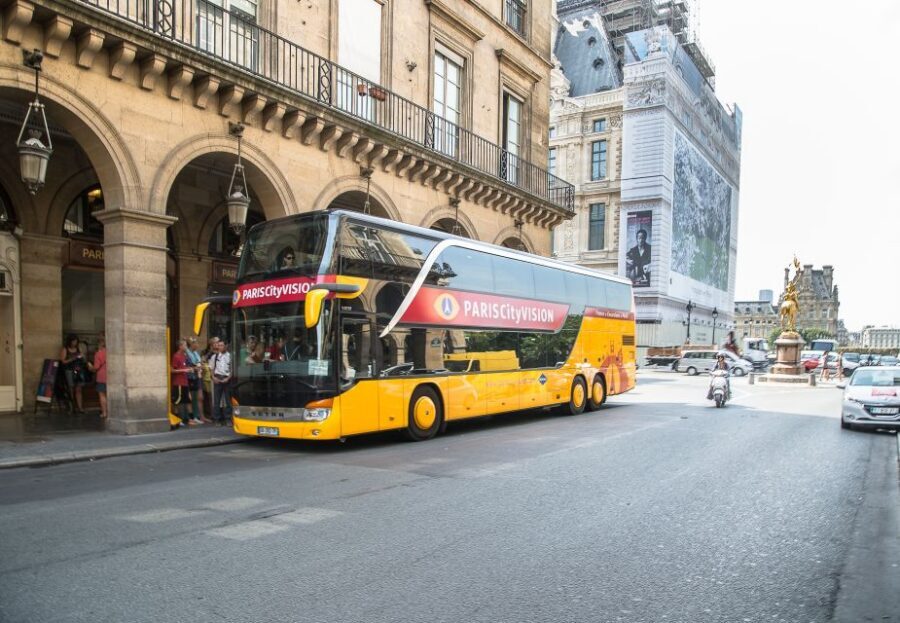
This tour’s real strength is the view without the torture. The bus is described as air-conditioned and enclosed, with a panoramic roof design on a double-decker. That matters because Paris can go from pleasant to chilly or rainy fast, and you’ll still keep your sightseeing momentum.
Seat choice is where you can help yourself. If you can, aim for a spot where the windows don’t block your angles. One common complaint is that if you sit in the wrong place, it can be harder to see out clearly. Upper vs. lower can also matter: one review noted that the top level may not always feel as cooled, so if you’re heat-sensitive, the lower deck can be the safer pick.
One more practical note: you’re doing a drive-and-watch experience, not a walk-and-explore one. Expect lots of views from moving windows. If you want your photos to look sharp, pick your spot before the bus fills up and settle in.
The 90-minute loop: Why the timing works (and when it doesn’t)
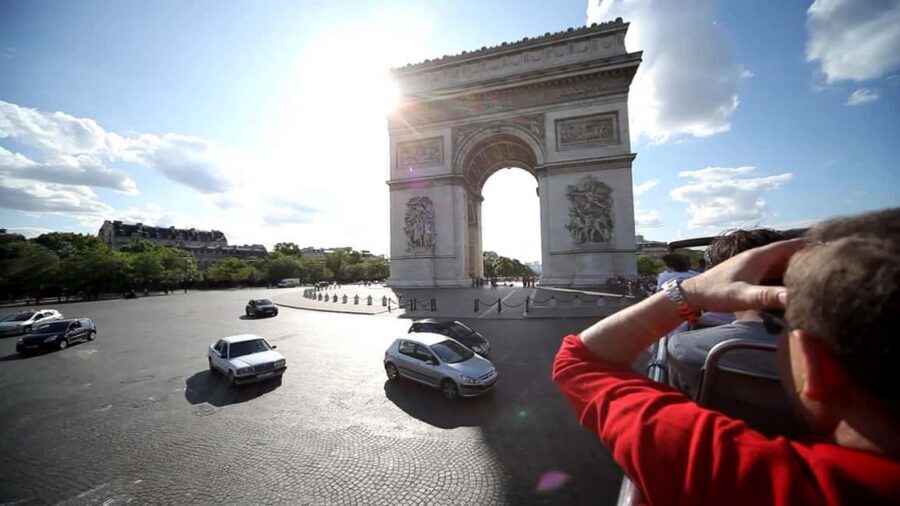
Ninety minutes sounds short for Paris. That’s the point. This is an express-style run that lets you see central landmarks in a tight window, which is ideal on day one (or day two when your feet need a break).
The downside is simple: you don’t control the traffic. Paris is famous for being photogenic and for slowing you down. If the bus hits heavy congestion, you may feel like you’re spending time parked in a moving line instead of sightseeing.
Still, for the right traveler, it’s great value. If you want a first orientation—where the major sights sit relative to each other—this kind of loop gives you a mental map fast. Then your next walk, museum, or Seine stroll makes more sense.
Opera Square to Place de la Concorde: Your first big visual hits
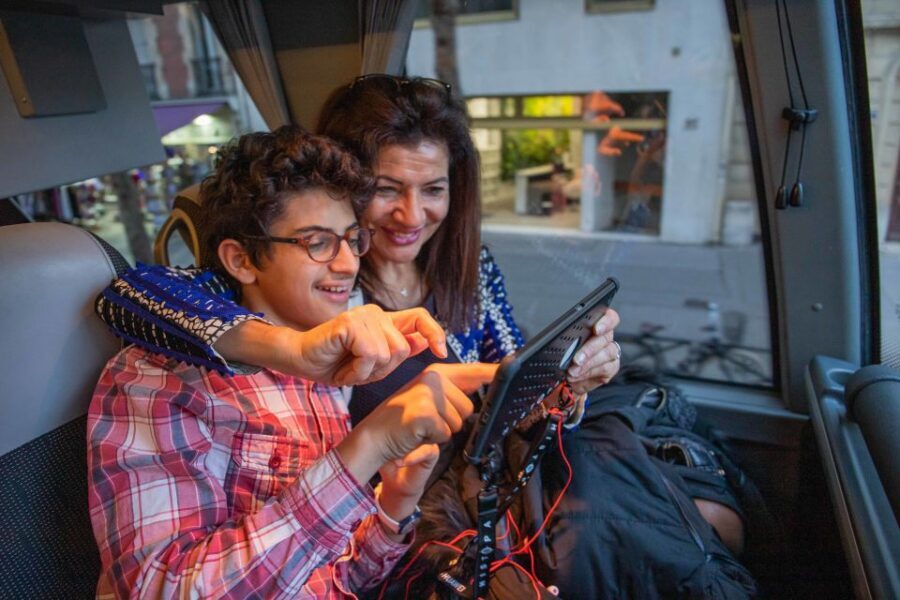
Early in the ride, you’ll get classic central Paris views. The route includes sights like Opera Square and the Obelisk of Place de la Concorde. These aren’t random stops. They’re the kind of landmarks that help you “read” the city: broad avenues, open plazas, and easy-to-recognize geometry.
Place de la Concorde is a great example. From the bus, you see the scale—how the city lays out space for movement and monuments. Opera Square is similar: it signals where Paris turns from neighborhood texture into grand, theatrical boulevards.
What I like about this early segment is how it builds confidence. After seeing these spaces from above and behind glass, you can walk later without feeling like you’re wandering.
Champs-Élysées to Arc de Triomphe: The photo moment you’ll remember
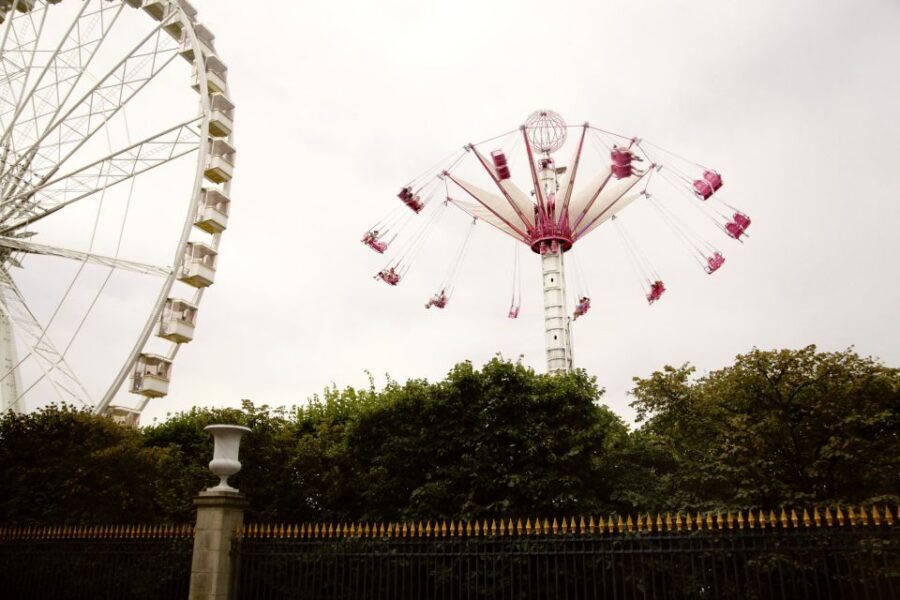
If Paris has a “main-stage” boulevard, it’s the Champs-Élysées. Passing it by bus gives you a clean, wide-angle look at how the street functions—movement, crowds, façades, and the long visual corridor effect.
From there, you head toward the Arc de Triomphe area. The big advantage here is that you get views without needing tickets or a timed climb right away. You also get the comfort factor: this is a sightseeing moment that would be much less pleasant on foot in rain or cold.
If your goal is iconic Paris in one sitting, this is the portion that often justifies the ticket. The challenge is timing: the Arc area can be busy and traffic can be slow. Even then, the bus experience keeps you seated and protected while you wait for the best angles.
You can also read our reviews of more city tours in Paris





Passing the Eiffel Tower and Trocadéro Square: Glide-by views done right
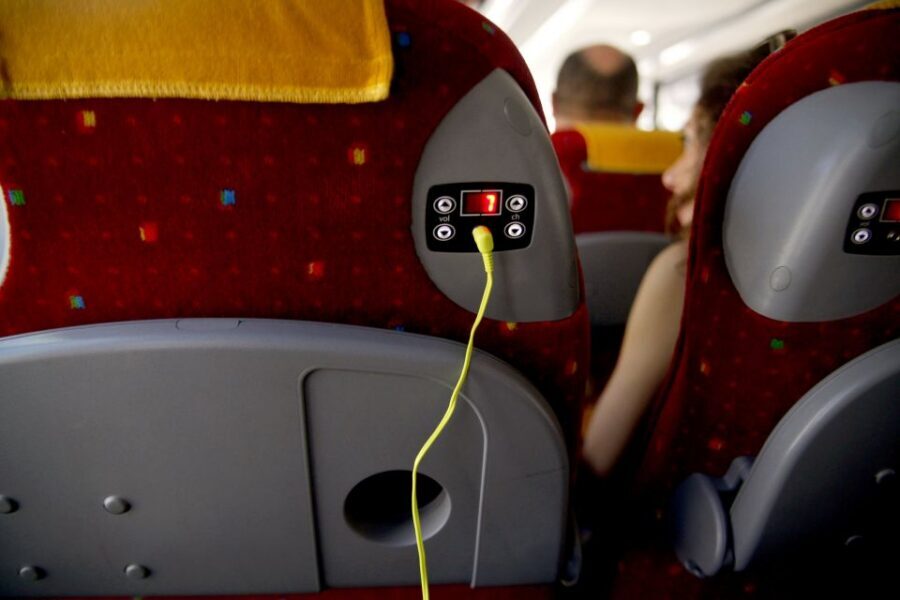
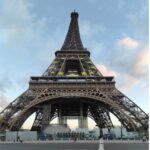
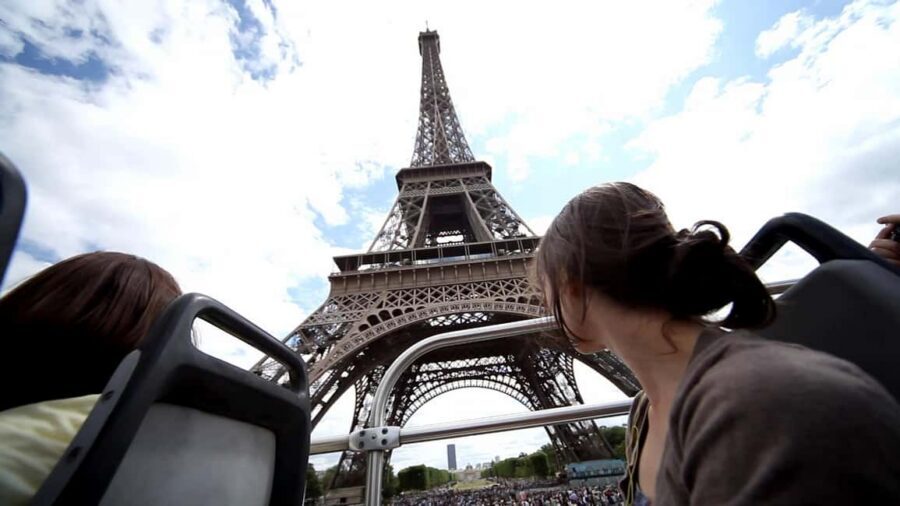
The Eiffel Tower is part of the route, and you’ll also see it from the Trocadéro Square area as it rises over the landscape. This is one of the most useful “orientation” moments you can have in Paris. Once you see the tower in relation to the surrounding streets and viewpoints, you’ll know where to aim later if you want a photo from a specific platform.
There’s also an important heads-up. The tour notes that if the Eiffel Tower is unavailable for reasons outside the supplier’s control, the bus will visit the Montparnasse Tower instead. That keeps the spirit of the tour intact: you still get a major Paris skyline moment, even if the famous tower can’t cooperate.
One more practical detail: if you’re traveling at night, you might catch the Eiffel Tower area when it’s lit. At least one guest specifically mentioned seeing the Eiffel Tower glitters, which tells me the tour can line up beautifully with evening hours when conditions allow.
Les Invalides, Pont Neuf, and Bastille Square: Seeing the city’s layers
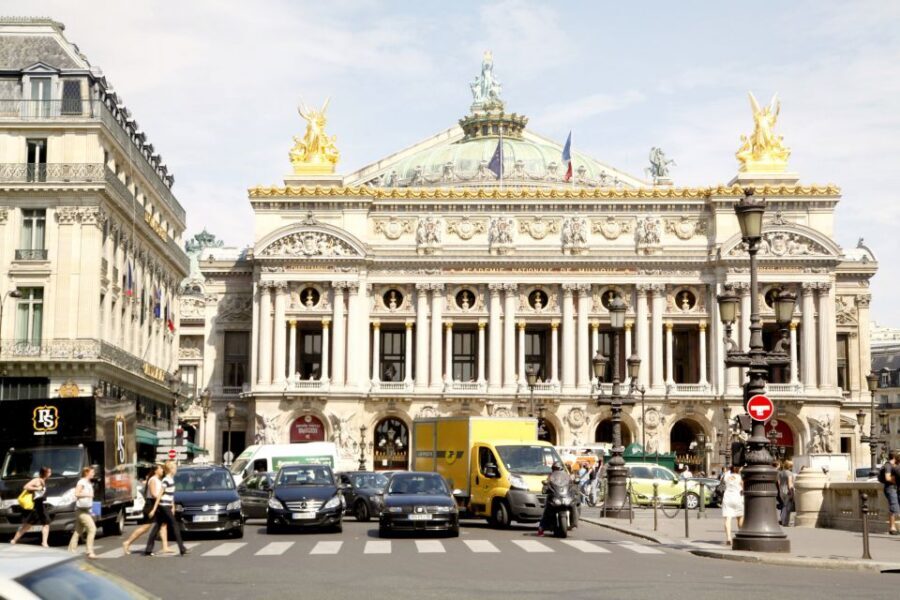
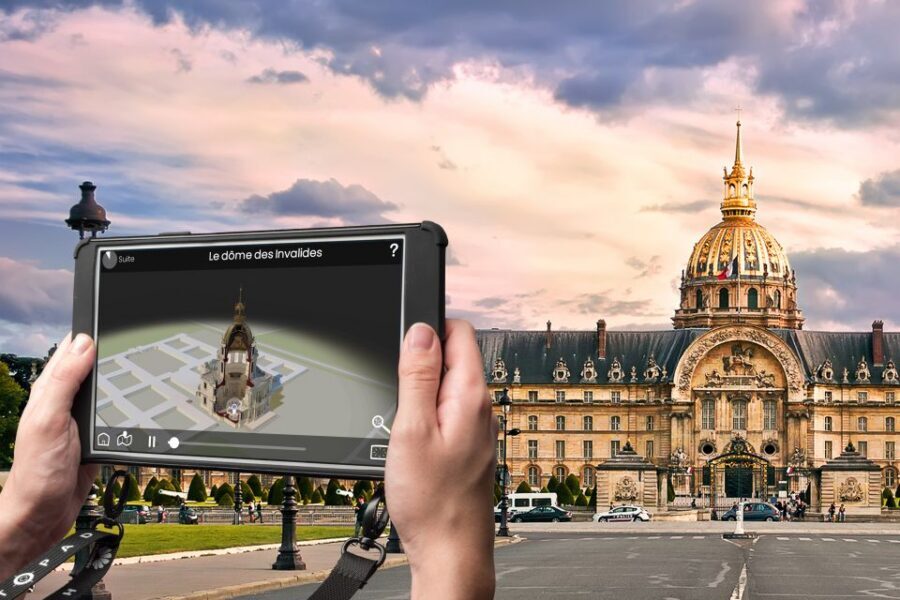
After the big postcard landmarks, the tour keeps going through neighborhoods and historic nodes that feel more like real Paris. You pass Les Invalides, Pont Neuf, and Bastille Square—all of them are useful because they anchor different eras and different rhythms of the city.
- Les Invalides gives you a sense of monumental government-and-military Paris. From the bus, it’s a quick way to place it on your mental map.
- Pont Neuf is one of those crossing points that makes the Seine feel central, not just decorative.
- Bastille Square helps you understand the city’s story of change and movement. It’s a major hub, not a tiny hidden corner.
The practical value here is that you’ll return to these areas later with better context. Paris is huge on details, and this kind of pass-by storytelling helps you notice patterns when you walk.
Notre-Dame and the Luxembourg Gardens: When the bus turns more reflective
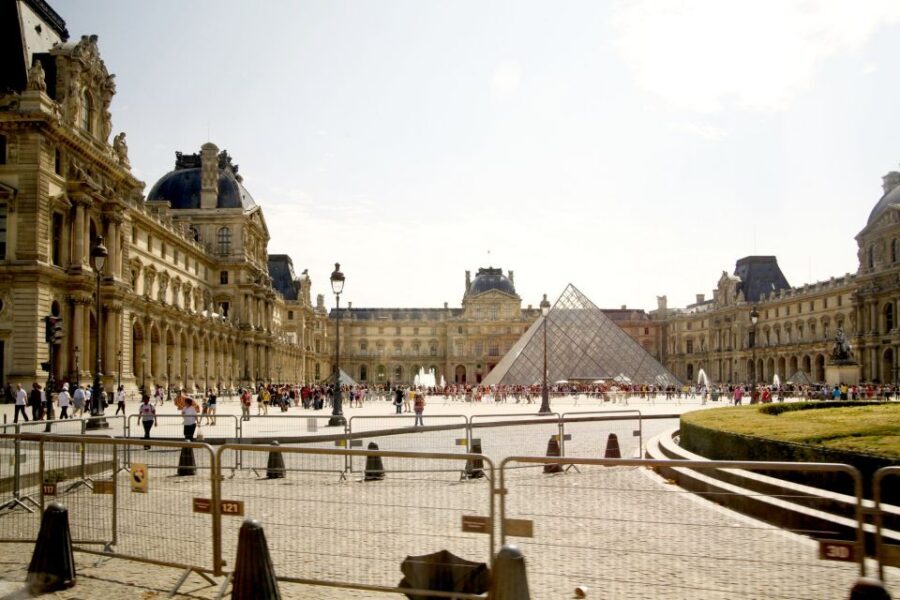
This tour also includes big religious and park-side Paris moments, including Notre Dame Cathedral and the Luxembourg Gardens. Seeing Notre Dame from the bus can help you understand how the cathedral sits within its wider street-and-square network, not as an isolated icon.
The Luxembourg Gardens segment is the one that can surprise people. From moving traffic, gardens can look like a slice of calm tucked into the city. It’s a reminder that Paris isn’t only grand buildings and wide avenues—it has everyday green space too.
If you’re chasing the feeling of Paris, these segments help. If you’re chasing a schedule, just keep your expectations realistic. This isn’t a stop where you get to linger for hours.
Histopad and interactive tech: How to get more meaning from the ride
ParisCityVision offers an optional immersive-style experience tied to a device called the Histopad. The tour mentions an interactive tablet and notes that starting April 1, 2020, a new immersive and exclusive city tour exists with a €30 refundable deposit required for the tablet.
Here’s the practical way to think about this: the audio app gives you facts as you pass landmarks, but interactive tech can help you connect what you’re seeing to how the area looked across time. If you like structure and visuals, this option may make the ride more than just viewing.
If you don’t care much about added tech, you can still get solid value from the main audio narration and the scenic pass-by route. The bus itself does most of the heavy lifting.
Languages and audio: Getting the story in your comfort zone
The bus experience includes expert commentary in a long list of languages, and the app audio guide is also available in multiple options. The details you should know:
- Commentary is listed in languages including French, English, Spanish, German, Italian, Portuguese, Dutch, Swedish, Korean, Russian, Greek, Japanese, Danish, and Mandarin Chinese.
- The audio guide app is listed in Spanish, Chinese, English, French, German, Italian, Portuguese, Russian, and Japanese.
That’s a lot of coverage. It matters because audio that’s actually understandable turns a ride from noise into a guided walk-around-the-window.
Bring your own headphones. The tour specifically lists headphones as required. One small gotcha: make sure your phone is charged. You’re downloading/using the audio on your device, so you don’t want the battery warning to hit right when the Eiffel Tower appears.
Price and value for around $34 per person
At about $34 per person for a 90-minute tour, you’re paying for three things: comfort, coverage, and interpretation.
1) Comfort: the enclosed air-conditioned setup can be worth it when it’s warm or wet. You’re not stuck in the elements.
2) Coverage: you pass a concentration of major landmarks—Eiffel Tower area, Arc de Triomphe, Place de la Concorde, Champs-Élysées, and several more. For many people, that’s the core reason they buy a bus tour.
3) Interpretation: audio and commentary explain what you’re seeing, so you don’t just memorize silhouettes.
The value gets worse if you want long stops. This is not a hop-on hop-off bus where you can jump out whenever inspiration hits. It’s a single loop experience.
So my rule of thumb: if you’re in Paris for a short time and want your bearings fast, $34 can be a smart buy. If you already know you’ll want extended time at one or two landmarks, you may get better mileage from separate ticketed sights plus one walk.
What to watch for on the day (traffic, seats, and questions)
A few practical issues can affect how enjoyable the ride feels.
Traffic delays are real. Some people describe sitting in traffic with little happening, which is basically the downside of any road-based sightseeing tour in a big city. If you’re sensitive to delays, choose a start time that avoids the busiest commute windows.
Seat and visibility matter. If you don’t get a good window seat, you might struggle to see clearly. Upper-deck viewing also depends on how your bus is set up and how the air conditioning is working that day.
Finally, the narration is built to run continuously. The experience is more “listen and look” than “ask your questions.” If you want a lot of back-and-forth, you may feel limited by the audio-first format.
Should you book this Paris double-decker audio tour?
I’d book it if you want a fast, comfortable introduction to central Paris and you value sitting down while the city passes by. It’s especially good for a first day, a recovery day, a rainy day, or any time you want to reduce decision stress. The enclosed double-decker and the audio guidance are the two reasons it works.
I’d skip or pair it with other plans if your priority is long time at one major monument, or if you hate road-traffic uncertainty. Also, if you’re picky about photo angles, aim for a seat with clear window sightlines before the bus pulls away.
If you’re flexible, you can usually choose timing that matches your interests. And if the Eiffel Tower can’t be used, you’re still not left empty-handed thanks to the Montparnasse Tower swap.
FAQ
How long is the Paris open-air double-decker bus tour?
The tour duration is 90 minutes.
Where do I meet the guide?
Meet your guide at Place de Sydney, 75015 Paris, at the corner of Avenue de Suffren and Rue Jean Rey.
Which public transport stops near the meeting point?
You can use Metro N° 6 – Bir-Hakeim, RER C – Champ de Mars Tour Eiffel, or Bus 82 – Champ de Mars.
Is the bus air-conditioned?
The tour is described as using an air-conditioned, enclosed panoramic roof double-decker bus.
Do I need headphones?
Yes. Headphones are listed as what to bring.
Is the Eiffel Tower always included?
The route includes the Eiffel Tower area, but if the Eiffel Tower is unavailable for reasons outside the supplier’s control, the tour visits Montparnasse Tower instead.
What major sights does the tour pass?
You pass landmarks including the Eiffel Tower, Arc de Triomphe, Place Concorde, Opera Square, the Champs-Elysées, Les Invalides, Pont Neuf, Bastille Square, the Luxembourg Gardens, and Notre Dame Cathedral.
Are pets or smoking allowed?
No—pets and smoking are not allowed.
What audio languages are included?
The audio guide app is available in Spanish, Chinese, English, French, German, Italian, Portuguese, Russian, and Japanese. The commentary language list includes many more languages as well.