REVIEW · PARIS
Guided tour of the Louvre Museum with tickets included
Book on Viator →Operated by Matteo Allavena · Bookable on Viator
The Louvre can feel like a maze. This 2-hour guided tour is a focused way to hit the museum’s best-known stops fast, with context you usually do not get on a self-guided walk. I like the skip-the-line entry with your included ticket, and I like how guide Matteo Allavena connects art to the story of the building and the eras you are seeing.
You are guided through a set route that runs from the 13th-century layers of the museum all the way to the Classical and Romantic rooms, including the Mona Lisa and the big-name statues people come for. The one thing to keep in mind is time: it is a highlights-style tour, so 2 hours means you will not linger everywhere as long as you might on your own.
In This Review
- Key things to know before you go
- Louvre in Two Hours: How This Route Saves Your Sanity
- Meeting at Le Café Marly: Finding Matteo and Starting on Time
- Skip-the-Line Value: What You Actually Get for $114.93
- Medieval Louvre and the 13th-Century Walls: The Louvre Before the Louvre
- Tanis Sphinx (4,000 Years Old): Ancient Egypt’s Shock of Presence
- Greek Department Icons: Athena of Velletrie, Venus de Milo, and Victory of Samothrace
- Galerie Apollon and the Mona Lisa: How the Tour Handles the Biggest Crowd Magnet
- The Classical Room: Napoleon’s Coronation and David’s Leonidas
- The Romanticism Rooms: Géricault and Delacroix’s Political Emotion
- Group Size, Pace, and Who This Tour Fits Best
- Price Check: Is $114.93 Good Value for a 2-Hour Louvre Tour?
- Should You Book This Louvre Skip-the-Line Tour?
- FAQ
- How long is the Louvre guided tour?
- Is the tour offered in English?
- What is the group size limit?
- What is included in the price?
- Where do we meet, and where does the tour end?
- Do children get free admission?
- What is the cancellation policy?
Key things to know before you go

- Skip-the-line starts you sooner. The price includes entrance plus line bypass, so you spend more time looking and less time waiting.
- A tight group (max 6). Smaller groups help the guide keep pace without losing people.
- You walk through the Louvre’s layers. 13th-century walls, then ancient Egypt, Greece, and major European painting rooms.
- Mona Lisa happens in the plan. You do not just hear about it; you see it as part of a bigger route.
- Big art names, plus the why behind them. You cover Venus de Milo, Victory of Samothrace, David, and Delacroix with meaning, not just labels.
- Matteo Allavena is praised for pacing and flexibility. People highlight his friendly service and the way he answers questions.
Louvre in Two Hours: How This Route Saves Your Sanity
The Louvre is big enough to eat a full day and still leave you wondering what you missed. This tour takes a different approach: instead of trying to see everything, it gives you a smart cross-section of the museum’s most important themes and masterpieces. If you like structure, this works well.
I also like that the group is capped at 6 travelers, which makes the experience feel controlled rather than chaotic. In a museum full of queues, the biggest win is not speed alone. It is knowing where to look, what to notice, and how to connect objects across centuries.
The duration is listed at about 2 hours, so treat it as a “high-impact primer.” You get a clear route through the major departments and key rooms, then you can decide what you want to revisit after.
You can also read our reviews of more tours and experiences in Paris



Meeting at Le Café Marly: Finding Matteo and Starting on Time
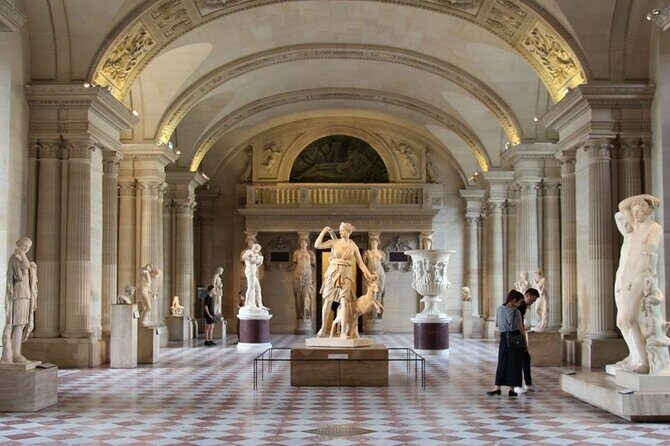
Your meeting point is Le Café Marly, 93 Rue de Rivoli, 75001 Paris, and the tour ends back at that same spot. That simple loop matters, because it helps you keep your bearings when you are surrounded by museum entrances and side streets.
One practical note from real experiences: people sometimes find it hard to locate their guide in the crowd. If you want to make your morning smooth, arrive a few minutes early and keep an eye on messages sent through the booking platform. Matteo Allavena has been known to coordinate via WhatsApp and the Viator app, and if you miss those pings because you have no service, you can end up looking longer than you need to.
Tip: if you are taking photos before the tour, pause and check the meeting details right at the start. It is one of those small moves that saves stress.
Skip-the-Line Value: What You Actually Get for $114.93
At $114.93 per person, it is not a budget tour. But your money is not just paying for someone to talk. You are also paying for entrance tickets (listed as 28 euros) and a skip-the-line arrangement.
In the Louvre, time is the real currency. Waiting in line during peak hours can drain your energy and make you less likely to enjoy what you see. With skip-the-line, you spend that time on the art and the stories that turn it from “postcard objects” into real historical artifacts.
You also avoid the mental load of planning a route inside the museum. Instead, you follow a guide-built path that hits the major stops people expect, plus a few earlier layers (like medieval walls) that most first-time visitors never clock.
Medieval Louvre and the 13th-Century Walls: The Louvre Before the Louvre
Most museum tours jump straight to famous paintings and big sculptures. This one starts earlier, with the program’s focus on the medieval Louvre—specifically the 13th-century walls.
This matters because the Louvre is not a museum that sits in isolation. It is a building that evolved. Seeing the earlier layers gives you a framework for what you are walking through: architecture as history, not just a container for masterpieces.
If you like “how the place got made” moments, this stop is a strong start. Even if you are not an architecture person, the idea is simple: you get context before you get overwhelmed by scale.
One possible drawback of starting this way: if your only goal is Mona Lisa and statues, you might feel like you are walking before you are seeing. But the benefit is that the rest of the visit makes more sense when you understand how the museum’s shape connects to its past.
Tanis Sphinx (4,000 Years Old): Ancient Egypt’s Shock of Presence

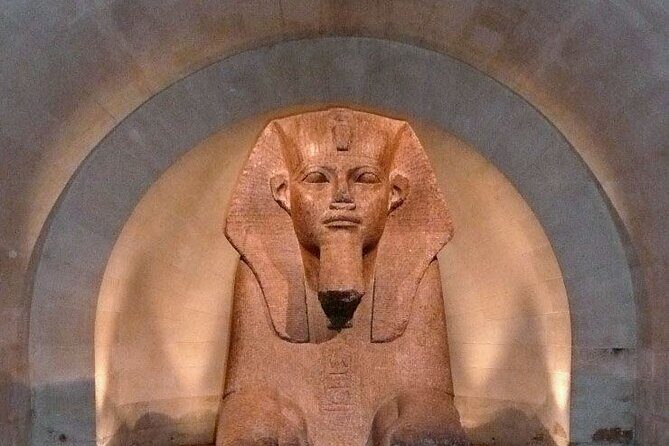
Then comes a time-travel stop: the Tanis Sphinx, a 4000-year-old monument. Egypt galleries can be visually powerful, but people often miss the deeper reason why they feel so striking.
On this tour, the guide context is the point. You are not just looking at a relic; you are being taught how to place it in time and culture, and how that changes the way you view details like posture, scale, and symbolism.
If you are the type of visitor who gets bored when explanations turn into lectures, you will probably like this format better. The tour is set up as a sequence of major stops with context attached to each one, so you keep momentum.
You can also read our reviews of more guided tours in Paris






Greek Department Icons: Athena of Velletrie, Venus de Milo, and Victory of Samothrace
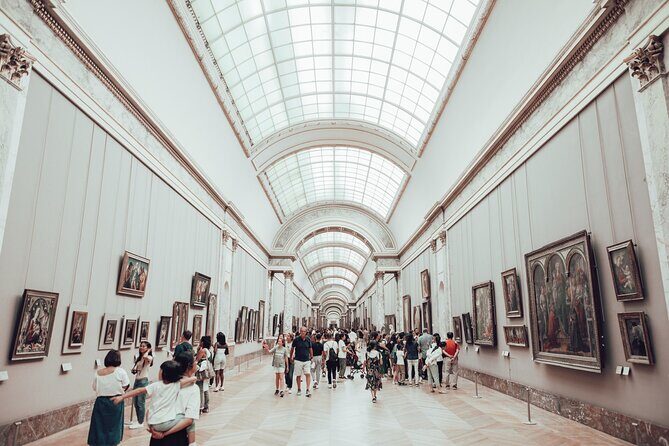
The Greek section is where the Louvre delivers the kind of museum experience that feels almost unfair to people who come without a plan. The tour hits three headline works:
- Athena of Velletrie
- Venus de Milo
- Victory of Samothrace
Here is why I think this part works well in a guided route: these pieces can blur together when you see them only as “the famous ones.” A guide helps you notice differences in style and purpose. You learn what to look for beyond face and form—like how artists aimed for a certain effect, and how the museum presents objects across different periods.
Victory of Samothrace especially benefits from this kind of framing. People usually see her as pure drama, but it helps to understand why she became such a symbol of movement and victory. When you get that context, your visit stops being passive.
A practical consideration: these rooms can be busy. The skip-the-line helps you later too, because it keeps your schedule from slipping. Still, if you hate crowds, be mentally ready for packed viewing areas around the most famous Greek statues.
Galerie Apollon and the Mona Lisa: How the Tour Handles the Biggest Crowd Magnet

After Egypt and Greece, you move into one of the most eye-catching parts of the museum: the Grande Galerie and the program’s focus on Galerie Apollon. This is where the Louvre feels cinematic—long lines of architecture and galleries that seem built for scale.
You also get name-checked works here:
- Guirlandao’s L’enfant et l’ancien
- Veronese’s Les noces de Cana
- and, of course, Leonardo da Vinci’s Mona Lisa
What I like about this approach is the sequencing. You are not dropped into Mona Lisa like it is a standalone event. You are moving through the spaces that connect major artworks and styles, which makes the museum feel like one story instead of a checklist.
And yes, Mona Lisa is always crowded. The best part of a guided visit is that you are not spending your time guessing where to stand, or how to make your viewing count. The guide helps you understand what makes the painting famous and how to look at it with more intention.
The Classical Room: Napoleon’s Coronation and David’s Leonidas
Next you shift into a different tone: Classicism. The stops include Jacques-Louis David’s The Coronation of Napoleon and Leonidas at Thermopylae.
This is a smart contrast after ancient sculpture and religious or myth-based themes, because David’s paintings are political and dramatic in a very direct way. You are seeing how art became a tool for ideas—power, identity, heroism, and national storytelling.
The tour format is built to help you read these paintings instead of just stare at them. When you know what the scene is arguing, details start popping: posture, expression, staging, and the way the painter controls attention.
If you are someone who usually walks past paintings because you do not know what to look for, this Classical room is a good place to change that habit. It is also a strong segment for teens and kids, because the images feel like history-on-a-wall.
The Romanticism Rooms: Géricault and Delacroix’s Political Emotion
Then the tour takes you into Romanticism, featuring:
- Géricault’s Raft of the Medusa
- Eugène Delacroix’s Liberty Guiding the People
This is the emotional high point for a lot of people, because Romantic painting hits with drama. But drama without context can feel like noise. A guide helps you understand what each work is trying to say, including the social and political currents beneath the paint.
Raft of the Medusa feels urgent and human. Liberty Guiding the People feels like myth mixed with real street energy. When you see these with explanations attached, you start noticing how the artists use motion and contrast to push emotion forward.
At this stage, you are also past the initial overload of the Louvre. That matters. By the time you reach Romanticism, you have a mental map. You can connect the emotional storytelling of Romanticism back to the earlier “how art worked” lessons you picked up in Classicism and before.
Group Size, Pace, and Who This Tour Fits Best
This tour runs with a maximum of 6 people, and that small size shows up in the pacing. People often say they learned a lot in a short period without feeling rushed, and that the guide answers questions patiently. You get a kind of guided museum conversation rather than a loud march.
It also seems like the route works well for mixed ages. There are mentions of great results with an 11-year-old, including the guide answering kid-level questions while still giving depth to the art history.
Who I’d recommend it for:
- First-time Louvre visitors who want the top pieces without guessing
- People who feel overwhelmed by giant museums
- Families with kids who want a clear structure
- Anyone who cares about context, not just photos
Who might want a different plan:
- People who want to spend long stretches lingering in a single room
- Visitors who are okay figuring out the Louvre by themselves and do not mind line time
Price Check: Is $114.93 Good Value for a 2-Hour Louvre Tour?
Let’s be practical. You are paying $114.93, and the included ticket value is listed as 28 euros. The rest of your payment supports the guide, the skip-the-line access, and the fact that the tour is organized with a tight route.
For me, this becomes good value when two things are true:
- You care about time. The Louvre can swallow hours.
- You want context that turns art into understanding.
If you were planning to buy tickets and still figure out your own route, you would likely spend time searching for the next stop while also losing the benefit of someone explaining what you are seeing.
If you are unsure about paying for a guide, ask yourself one question: do you want to optimize your first visit, or do you want the slow wandering experience? This tour is built for the first option.
Should You Book This Louvre Skip-the-Line Tour?
Yes, I think you should book it if you want a Louvre visit that feels organized and meaningful in just two hours. The strongest reasons are the skip-the-line entry with included tickets and the fact that Matteo Allavena structures the visit around art history context, not just names.
I would hold off if you hate crowd pressure or if you plan to spend your day doing long, unhurried viewing in specific rooms. This is not that kind of tour. It is a smart, time-efficient route through major works, with early historical context to keep you from feeling lost.
If you do book, do one thing to improve your odds of a smooth start: arrive a few minutes early at Le Café Marly, double-check the meeting details, and keep an eye out for guide messages through the app.
FAQ
How long is the Louvre guided tour?
It runs about 2 hours (approx.). The aim is a time-efficient route focused on key Louvre highlights.
Is the tour offered in English?
Yes, the tour is offered in English.
What is the group size limit?
This experience has a maximum of 6 travelers.
What is included in the price?
You get a speaker guide, the entrance fee (listed as 28 euros), and skip-the-line entry. Coffee, food, and drinks are not included.
Where do we meet, and where does the tour end?
You meet at Le Café Marly, 93 Rue de Rivoli, 75001 Paris, and the tour ends back at the same meeting point.
Do children get free admission?
Free admission applies to visitors under 18 and EEA residents under 26, as long as they show valid ID and proof of residency.
What is the cancellation policy?
Free cancellation is available if you cancel at least 24 hours in advance for a full refund. If you cancel less than 24 hours before the start time, the amount you paid is not refunded.