REVIEW · PARIS
Impressionist Paris: d’Orsay & Montmartre Exclusive Guided Tour
Book on Viator →Operated by Babylon Tours Paris · Bookable on Viator
Art and neighborhoods in one tight route.
This tour is interesting because it stitches together two of Paris’s biggest art worlds in one afternoon. You start at the Musée d’Orsay, a converted Beaux-Arts train station, where your guide helps you see the art movements that led to Impressionism. Then you head to Montmartre, where the streets, cabarets, and hilltop views connect back to the same artists and ideas.
I especially like the reserved museum entry approach, which saves time and lets your guide focus on the good stuff inside. I also like that this is truly private in practice: you get a guide focused on you and a private car transfer from Orsay to Montmartre so the day doesn’t turn into logistics.
One consideration: the Montmartre portion involves a real climb plus cobblestones. The tour calls for moderate physical fitness, and one guest explicitly warned it can be a lot of walking, so plan for your legs and your pace.
In This Review
- Key highlights to know before you go
- Orsay to Montmartre: one afternoon, one art story
- Musée d’Orsay: reserved entry in a former station
- The best part: technique, not just titles
- Practical note that can save you stress
- Montmartre after Orsay: climbing the butte with context
- Sacré-Cœur: views plus inside time
- Stop-by-stop: what you’ll see on the Montmartre walk
- Moulin Rouge area (cabaret roots)
- Van Gogh’s house near Rue Lepic
- Place Dalida and nearby song-history moments
- Jardin Sauvage de St-Vincent and the surprising nature break
- Clos Montmartre vineyard
- Au Lapin Agile: a bohemian symbol
- The Basilica interior mosaic
- Place du Tertre: artists with easels
- Dali Museum Paris, Bateau-Lavoir, and Espace Dali area
- Timing, walking pace, and how to make it feel easy
- Price and value: is $259 per person worth it?
- What to watch for: closures, lines, and your day bag
- Orsay can have occasional closures
- Skip-the-line isn’t magic
- Dress and bag limits
- Who should book this tour?
- Should you book this Impressionist Paris tour?
- FAQ
- What’s included in the tour price?
- How long is the tour?
- What time does the tour start, and where does it begin?
- Is this a private tour?
- Is food included?
- Do I need tickets for the sites in Montmartre?
- How much walking is involved?
- Are there any rules for what I can bring into the Orsay museum?
- What if Musée d’Orsay has a closure?
Key highlights to know before you go
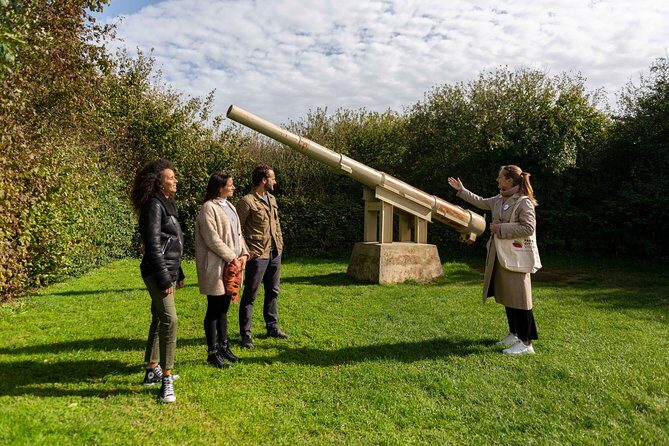
- Skip-the-line museum time at Musée d’Orsay with a guide who maps the art movements leading to Impressionism
- Private car transfer from Orsay to Montmartre, with a short break before the walking starts
- Impressionist-to-Montmartre connections tied to artists like Monet, Renoir, Van Gogh, Cézanne, and more
- A classic Montmartre photo target at Sacré-Cœur plus time to go inside
- Lots of real neighborhood stops such as Moulin Rouge windmill areas, Rue Lepic, Place du Tertre, and Bateau-Lavoir
- Artful Montmartre details you might miss solo, like the Jardin Sauvage de St-Vincent and the Clos Montmartre vineyard
Orsay to Montmartre: one afternoon, one art story
What makes this day work is the way it links paintings to places. At Orsay, you’re looking at how artists broke with tradition—color, light, subject matter, brushwork. Then Montmartre brings that same story into real street corners: cabarets, studios, artist squares, and the hilltop that framed the city for painters.
This is the kind of tour you choose when you don’t want a museum “hit list,” and you don’t want Montmartre as a postcard loop either. You want the connections—how a movement grows out of people, neighborhoods, and new ways of seeing.
You can also read our reviews of more guided tours in Paris



Musée d’Orsay: reserved entry in a former station
You’ll start at the Musée d’Orsay around 1:30 pm, meeting at the museum itself. The setting matters here: the building is a former railway station, so even before you reach the galleries, you feel like you’re in a grand, working-era hall rather than a white box.
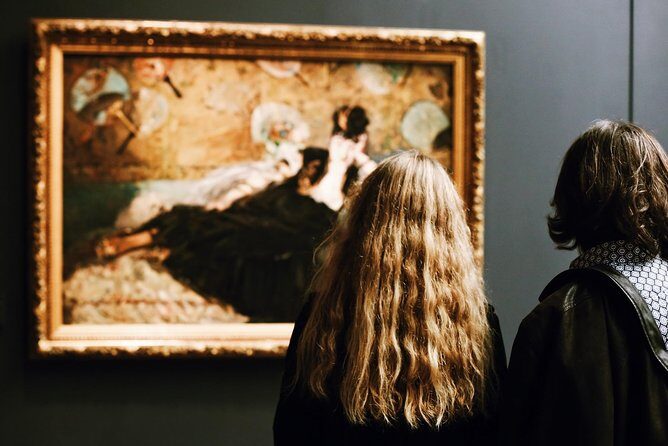
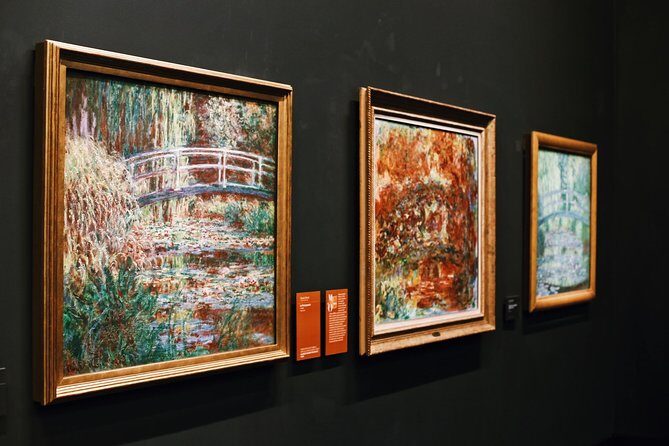
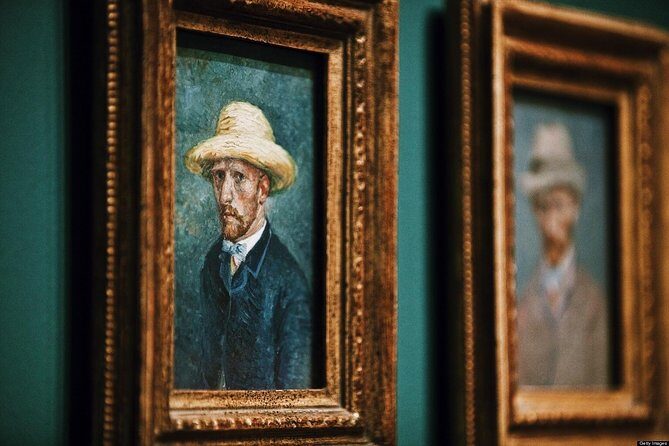
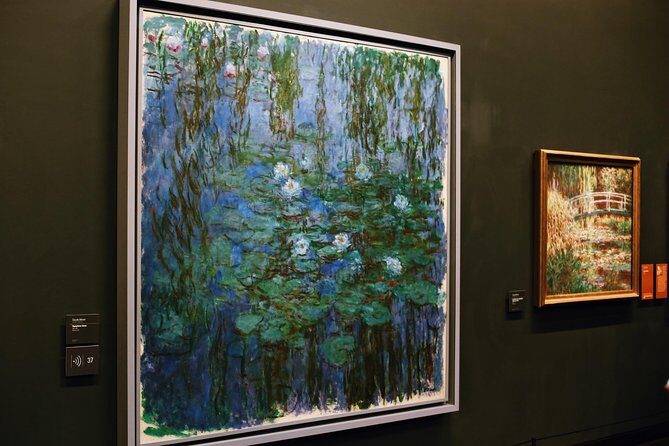
Inside, the guide’s job is to make Impressionism make sense fast. You’ll look at what came before—artists such as Millet (including his Gleaners story)—and you’ll see what changed afterward, including Post-Impressionist work like Van Gogh’s Bedroom in Arles. Then you’ll hit the painters most people come for, including:
- Manet’s Luncheon on the Grass, often discussed because it was so controversial for its time
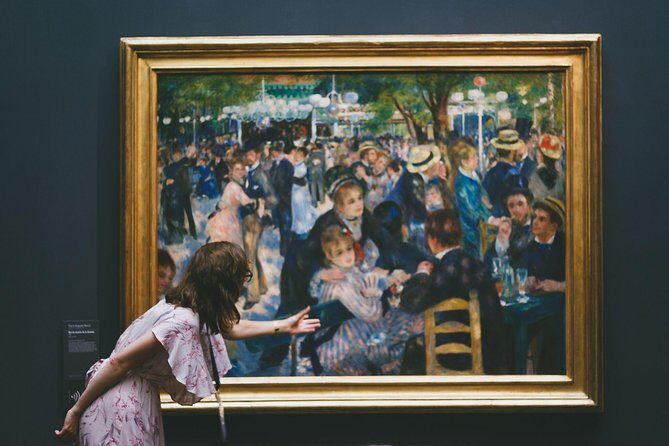
- Renoir’s Dance at Le Moulin de la Galette
- Monet’s famous poppies
- And the broader Impressionist and post-Impressionist mix, totaling more than 4,000 works on display (you will not see it all, but you’ll see the parts that explain why these styles landed when they did)
The best part: technique, not just titles
A lot of museum tours say, here’s a painting. This one focuses on why the painting looks the way it does—how Impressionists and post-Impressionists approached light, color, and technique. That turns the museum from a slideshow into something you can actually read.
There’s also a helpful heads-up built into the tour style: some rooms can have quiet or restricted speaking rules, so your guide will handle the explanations before you enter those areas.
Practical note that can save you stress
Orsay security can be strict about bags. The tour notes that no large bags or suitcases are allowed inside—only handbags or small, thin bag packs. If you’re the type who travels with a backpack, bring a smaller day bag so you don’t get stuck adjusting at the entrance.
Montmartre after Orsay: climbing the butte with context
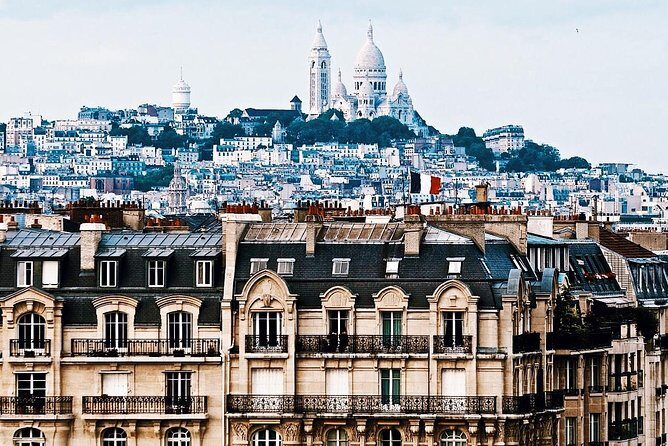
After Orsay, you take a private car to Montmartre, plus a short break. That’s a nice buffer because by the time you leave Orsay, you’ve already spent about 2.5 hours on your feet inside the galleries.
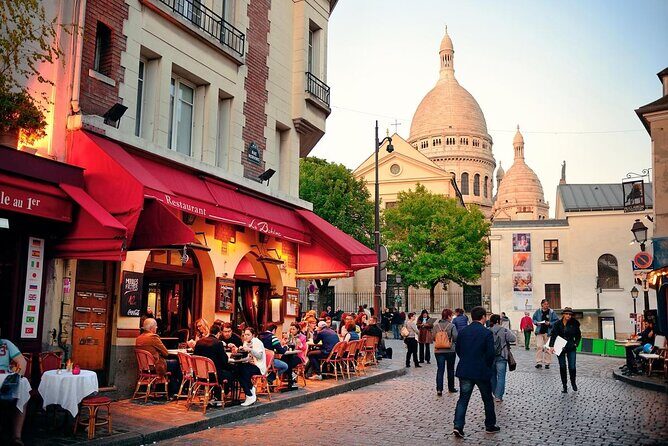
Then you start the walking at the base of Montmartre, beginning near the Moulin Rouge area. The tour describes winding uphill through cobbled streets, where you can feel how the neighborhood shaped the art—especially the lives of painters who lived and worked there.
Your guide brings the places into focus with multiple artist links: Renoir, Monet, Van Gogh, Cézanne, and others. You’ll also hear film-world references tied to Amélie, since parts of the movie were filmed in this district.






Sacré-Cœur: views plus inside time
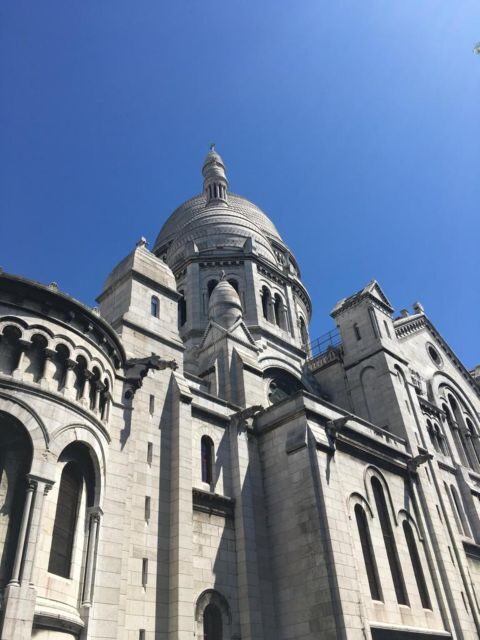
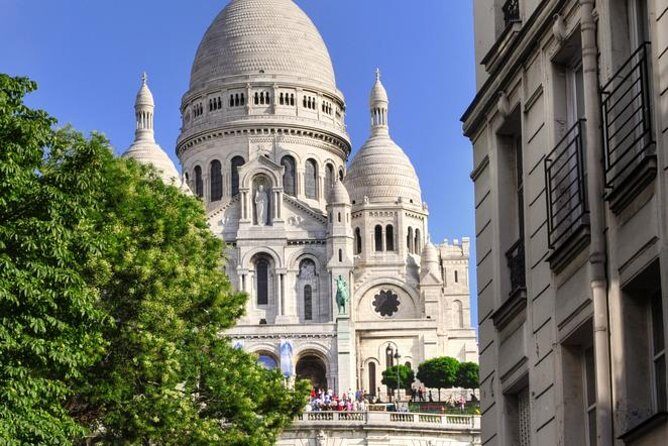
At the top, you enter the Sacré-Cœur Basilica and get a major Paris viewpoint. The tour is timed to allow a spectacular photo moment from one of the city’s higher points, and there is also time to explore the basilica interior.
If you’re doing this day in good light, you’ll be glad you’re on the hill. Even on an average day, the angle helps you understand why Montmartre attracted artists in the first place.
Stop-by-stop: what you’ll see on the Montmartre walk
The Montmartre segment is built from several short stops, many of them outside or pass-by in nature. That’s a good way to keep momentum without spending half your time in ticket lines.
Here’s what you’ll be walking past or checking in on:
Moulin Rouge area (cabaret roots)
You’ll head toward the Moulin Rouge cabaret, known for attracting a wide public and for inspiring international artists such as Toulouse-Lautrec. The tour portion here is brief, but the point is context: this is part of the cultural engine that fed modern art.
Entry is not included for this stop, so if you want to go inside, you’ll need to budget separately.
Van Gogh’s house near Rue Lepic
Next is Van Gogh’s house on Rue Lepic, the home of the artist and his brother beginning in 1886. This is one of the more emotional stops for art fans because it’s tied to a specific time and place.
Again, entry is not included here, so plan on seeing it as part of the exterior-and-area experience unless you add your own tickets.
Place Dalida and nearby song-history moments
You’ll pass Place Dalida, dedicated to the French icon Dalida. The tour also includes a visit past La Maison de Dalida, which marks where Dalida lived between 1962 and 1987, including the location associated with her death in 1987.
This isn’t just trivia. It shows how Montmartre kept changing—artists weren’t the only creative force in the hilltop scene.
Jardin Sauvage de St-Vincent and the surprising nature break
You’ll stroll past Jardin Sauvage de St-Vincent, a sloped patch of land left in a more natural state so the ecosystem and wild plants can survive. It’s the kind of stop that breaks the art-only focus and gives your legs and eyes a breather.
Clos Montmartre vineyard
Then you’ll make your way toward Le Clos Montmartre, a hidden vineyard tucked behind the Sacré-Cœur area, described as one of the last remaining vines in central Paris. It’s a reminder that the hilltop isn’t just stage sets—it includes real everyday land use and local tradition.
Au Lapin Agile: a bohemian symbol
You’ll pass by Au Lapin Agile, a cabaret known as part of the Montmartre bohemian set until 1914, with its sign still acting like a visual landmark for the neighborhood.
Entry isn’t included for this stop, but even without paying in, it’s a recognizable slice of the Montmartre mythology.
The Basilica interior mosaic
At Sacré-Cœur you’ll spend about 20 minutes, including time for the interior. The tour notes that the basilica contains one of the world’s largest mosaics depicting Jesus Christ.
If you’re planning to take your time here, this is one of the stops where you’ll feel the tradeoff: you either skim quickly to keep moving, or you slow down for the mosaic details.
Place du Tertre: artists with easels
You’ll pass Place du Tertre, where artists set up easels each day. It’s a living reminder of Montmartre’s long-running identity as a place where modern art and public performance overlap.
Dali Museum Paris, Bateau-Lavoir, and Espace Dali area
You’ll also pass the Espace Dali area and the Bateau-Lavoir (Bateau-Lavoir Saint-Julien). The Bateau-Lavoir is described as a major creation spot for many painters, writers, actors, and art sellers starting in the late 1800s.
Entry is not included for these stops, but the tour uses them to widen the timeline beyond Impressionism. It helps you see Montmartre as a continuing creative magnet.
Timing, walking pace, and how to make it feel easy
The full tour runs about 5.5 hours starting at 1:30 pm. Orsay takes about 2.5 hours, then you transition to Montmartre for roughly 55 minutes plus multiple short stops before finishing in the Montmartre area.
That structure is good for most people, but you should know what you’re signing up for:
- Orsay galleries mean walking and standing
- Montmartre means cobblestones and uphill effort
- The day is spread across many micro-stops, which reduces long boring stretches but keeps you moving
One review also called out that it’s a lot of walking. That doesn’t mean it’s impossible—it just means you’ll enjoy it more if you wear supportive shoes and keep a steady pace with breaks when offered.
If you’re the type who wants to stop and look quietly at paintings or take your time with photos, tell your guide early. Some guides on this experience are known for customizing pacing, helping people choose what they want most.
Price and value: is $259 per person worth it?
At $259.04 per person, this isn’t a bargain. But it’s also not just a ticket-and-headphones situation.
Here’s what you’re really paying for:
- A private guide for the museum part (and overall day focus)
- Reserved entry at Musée d’Orsay
- Private transport from Orsay to Montmartre
- All entrance fees included where the tour includes them (Orsay is included; many Montmartre stops are free or pass-by, while specific ticketed sites are marked as not included)
So the value equation depends on you. If you love Impressionism and want the why behind the brushwork, the guide component matters a lot. If you’re the kind of traveler who can wander museums alone and only needs a quick ticket, you may feel the cost more than the benefit.
A simple way to decide: if you’d normally spend extra time trying to interpret paintings, this tour helps you get that understanding faster—without you hunting for context.
What to watch for: closures, lines, and your day bag
There are a few real-world friction points worth noting before you book.
Orsay can have occasional closures
The tour warns that Orsay may have occasional closures without prior warning. If that happens and the museum opening is delayed by more than 1 hour from the tour start time, the provider says you’ll get an appropriate alternative, but you cannot expect refunds or discounts.
This is rare, but it’s the kind of risk you should accept when you choose a timed museum slot.
Skip-the-line isn’t magic
The tour describes bypassing lines and reserved entry, which helps. Still, the notes say that due to security measures at many attractions, some lines may form even with skip-the-line or no-wait access. Plan as if you might still need a few patience minutes.
Dress and bag limits
Appropriate dress is required for entry into some sites, and bag size is restricted at Orsay. If you pack lightly and dress for indoor religious sites, you’ll avoid last-minute stress.
Who should book this tour?
This is a strong fit for you if:
- You care about Impressionism and want the story of how it evolved
- You want Montmartre with a guide who connects streets to artists
- You’re okay with walking and climbing hills
- You prefer private attention over large groups
It’s also a good option for a first-time Paris visitor who wants a high-impact art day without spending the time building a plan from scratch.
If you hate museums and only want the photo spots, you’ll likely be happier with a lighter Montmartre-only experience.
Should you book this Impressionist Paris tour?
Yes—if you want art understanding plus Montmartre atmosphere, and you can handle cobblestones and a hillside climb. This is the kind of day where Orsay gives you the visual language, then Montmartre gives you the setting that made the art possible.
If you’re on the fence, here’s my practical test: imagine spending 2.5 hours in Orsay with no guidance. If you’re pretty sure you’d spend that time mostly reading labels and moving on, this tour can be a better use of your limited Paris hours. If you already know the artists well and you mostly want to stroll, you might not need a private guide at this price.
Guides seem to make a big difference here—people have specifically praised tour leaders such as Lili, Michele, Mattieu, Lucien, and Belene for enthusiasm, passion, and customization—so if you can align your expectations to an art-focused day, you’ll get more out of it.
FAQ
What’s included in the tour price?
The tour includes the guided museum and walking tour, reserved entry at Musée d’Orsay, private transport from Orsay to Montmartre, and all entrance fees that are part of the tour.
How long is the tour?
It runs about 5.5 hours.
What time does the tour start, and where does it begin?
It starts at 1:30 pm at Musée d’Orsay, 75007 Paris, and ends in Montmartre, 75018 Paris.
Is this a private tour?
Yes. It’s described as a private tour/activity, meaning only your group participates, and there’s a guide exclusively for you.
Is food included?
No. Food and drinks are not included.
Do I need tickets for the sites in Montmartre?
Some stops are marked as admission ticket not included (for example Moulin Rouge, Van Gogh’s house, and certain museums/cabarets). The tour does include the sites where entrance is part of the experience.
How much walking is involved?
You should have a moderate physical fitness level. Montmartre involves climbing and cobblestones, and the tour includes many short stops.
Are there any rules for what I can bring into the Orsay museum?
The tour notes that no large bags or suitcases are allowed inside Orsay—only handbags or small thin bag packs allowed through security.
What if Musée d’Orsay has a closure?
The tour warns Orsay may occasionally close without warning. If delayed by more than 1 hour from the tour starting time, an alternative may be provided, but refunds or discounts are not available in those cases.