REVIEW · PARIS
Invalides War Museum the World Wars Guided Tour
Book on GetYourGuide →Operated by Babylon Tours LLC · Bookable on GetYourGuide
Great museums need good guides.
This Invalides War Museum tour strings together the causes and consequences of the World Wars in a way that feels chronological, not random. You start with the 19th-century tensions that set the stage for 1914, then move through the key turning points that shaped how France lived through the fighting and its aftermath.
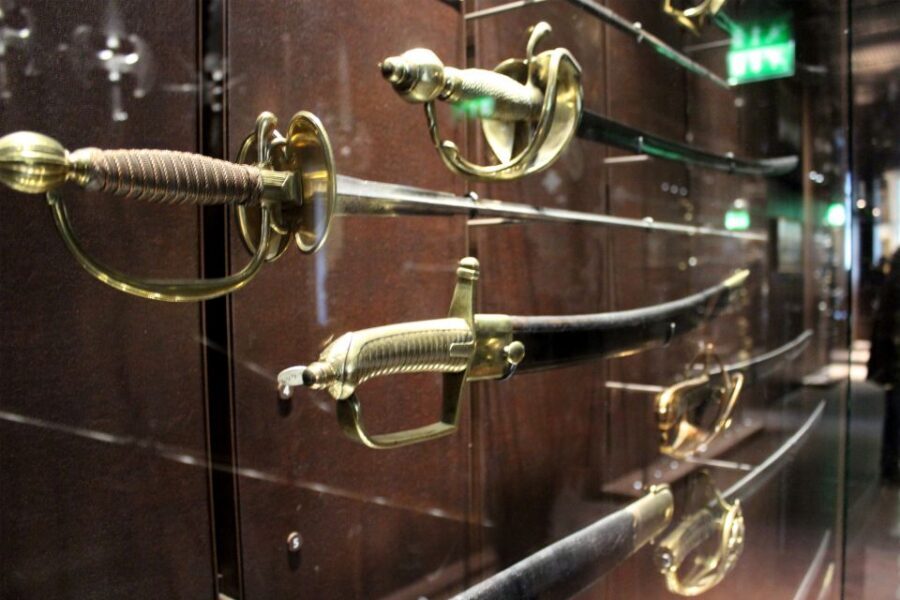
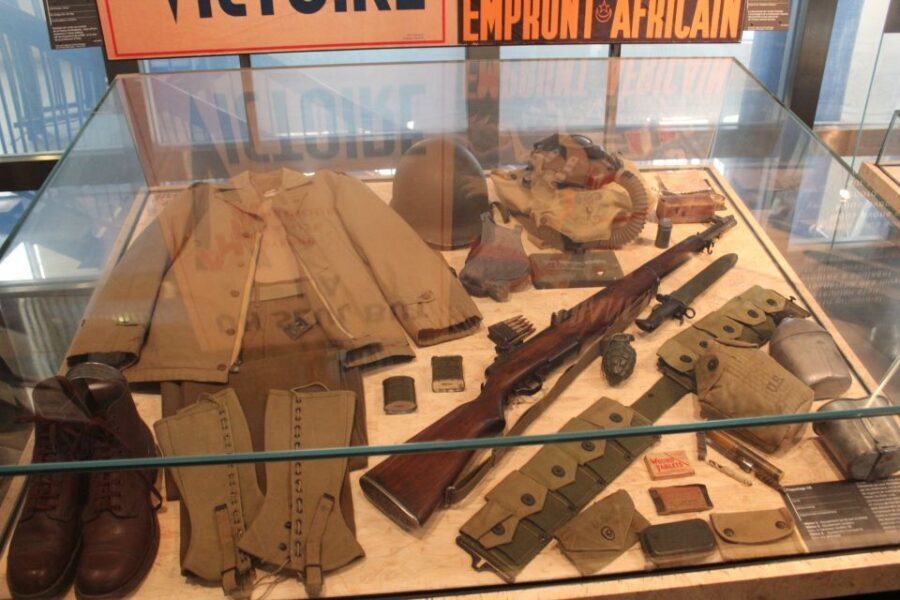
I especially like how the guide uses real objects—uniforms, weapons, and equipment—to make the story concrete. I also like the practical setup: skip-the-line access and a small group size, which means you can ask questions instead of just taking photos and hoping it makes sense later.
One thing to plan around: the tour involves moderate walking, and there are rules about quiet in some rooms plus no large bags allowed. If you’re traveling light and can handle a brisk walk, it’s a smart, focused way to tackle a big topic in just two hours.
In This Review
- Key things to notice before you go
- Why Invalides turns WWI and WWII into a story you can follow
- The 19th-century roots: Bismarck, Franco-Prussian pressure, and the road to 1914
- WWI set pieces you can see: weapons, the Marne, and the iconic taxi
- The Treaty of Versailles and the armistice train car
- From the rise of Hitler to World War II pressure points
- Petain, De Gaulle, Normandy, and Liberation of Paris
- A practical value check: $128, two hours, and what you actually get
- Who should book this Invalides World Wars guided tour
- Should you book the Invalides War Museum World Wars guided tour?
- FAQ
- How long is the Invalides War Museum World Wars guided tour?
- Do I get skip-the-line access?
- What will I see during the tour?
- Are tickets included in the price?
- Does the tour include transportation or hotel pickup?
- What languages are available for the live guide?
- Are large bags allowed inside?
Key things to notice before you go
- Small group pacing inside Invalides: up to 8 guests per guide for a calmer experience.
- Skip-the-line museum entry: less time stuck at ticket counters, more time with the exhibits.
- A clear chain of events: from Franco-Prussian roots and Bismarck to Franz Ferdinand and the start of WWI.
- WWI artifacts with strong story links: like the Battle of the Marne and an iconic taxi used for a crucial moment.
- The armistice ending of WWI: you’ll see the train car connected to the armistice signing.
- WWII explained through set-piece moments: Ligne Maginot, Dunkerque, the Occupation of Paris, and the lead-up to Liberation.
Why Invalides turns WWI and WWII into a story you can follow

Invalides does not try to be subtle. It’s a grand setting built for national memory, and the War Museum uses that space to help you understand why these conflicts mattered to France. A good guide matters here, because the museum covers a lot—and without a thread, it can feel like history fragments.
This tour gives you that thread fast. In about two hours, you go from the roots of World War I to the armistice that ended it, then jump to the rise of Nazi power and the major pressure points that led to World War II. The result is a guided timeline where the names, dates, and objects connect instead of piling up.
I also like that the tour is built around artifacts, not just speeches. You’ll get up close to the kind of equipment and uniforms soldiers wore and used, so the war stops being an abstract concept. Even when you’re looking at something static behind glass, the guide’s explanation helps you picture the real-world decisions behind it.
Finally, the experience is sized for attention. With a maximum of 8 guests per guide, you’re not shouting across a crowd, and the guide can actually respond when you ask questions. That small-group feel shows up especially when the guide is willing to take detours for clarity.
You can also read our reviews of more guided tours in Paris



The 19th-century roots: Bismarck, Franco-Prussian pressure, and the road to 1914
Most World War I tours start when shots are already fired. This one starts earlier, and that choice is worth it. You begin with the 19th-century roots that led toward one of the bloodiest wars in history, and you’ll hear about characters like Bismarck and the Franco-Prussian War.
That background matters because it explains why leaders and nations were primed to treat the next crisis like a match near dry grass. You’re not just memorizing dates; you’re learning what changed in the political mindset and power balance. By the time the guide hits 1914, the story feels less like a sudden explosion and more like a buildup.
In practical terms, this opening section helps you orient your brain for the rest of the tour. When you later see WWI-era equipment and uniforms, you’ll understand what kind of pressures and alliances shaped how the war was fought. It turns the exhibits into evidence, not just museum objects.
If you’re sensitive to intense topics, keep expectations in mind. The tour later includes original footage showing atrocities, and that can be heavy. The good part is that the guide frames it as part of understanding what happened, not as shock value.
WWI set pieces you can see: weapons, the Marne, and the iconic taxi
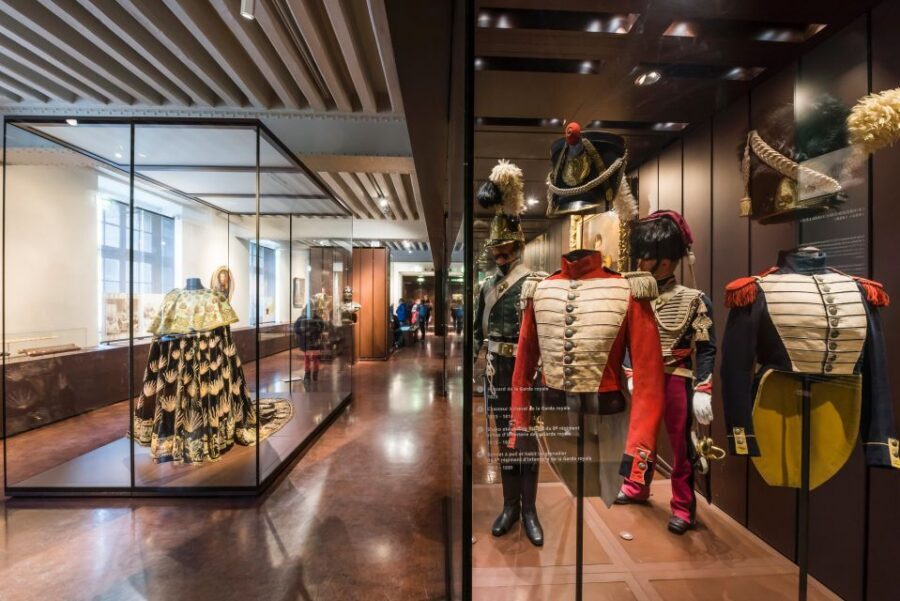
Once the tour moves into World War I, it leans hard on what you can actually look at. You’ll come face to face with WWI weaponry and equipment, along with uniforms and other artifacts tied to battle. The guide doesn’t treat these as relics; the goal is to make you understand what these items meant in combat and logistics.
A highlight is the way the guide relives the Battle of the Marne while pointing you toward an iconic taxi tied to a key moment in that story. That kind of detail sticks. It’s the difference between learning that the Marne happened and understanding why a specific, memorable event became part of how the war is remembered.
You’ll also watch original footage connected to the realities of the war. This is one of the strongest “aha” moments on the tour because it adds motion and human cost to the objects you’ve just seen. It’s also where the guide’s framing helps: you’re not just watching footage, you’re using it to interpret what the exhibits represent.
One practical drawback: this museum covers a lot of ground visually, and the guide is giving you key points quickly. If you want to read every label yourself, plan to do it for a longer self-guided visit later. On this tour, the value is speed plus expert context.
The Treaty of Versailles and the armistice train car
After the war’s main chapters, the tour pivots to how it ends. You’ll learn how the Treaty of Versailles shaped the conclusion of World War I and what “ending the war” actually meant in terms of politics and consequences. This part is crucial, because it sets up why the next conflict was still waiting in the wings.
One of the most memorable exhibit points is the train car where the armistice was signed. Seeing an object tied to such a symbolic moment gives you that rare museum experience where history feels both distant and uncomfortably real. The guide’s explanation helps you understand that the armistice was not a reset button; it was a pause with unresolved tension.
This section is also where the tour does something smart for first-timers. It takes a concept that’s often treated like an ending lesson—Versailles—and turns it back into a cause. You’ll leave with a clearer sense of why the post-war settlement became part of the setup for later events.
Tip: if you’re a reader, slow down for a few key stops here. The guide’s talk will move on, but taking 30 seconds to look at the train car and any accompanying context helps the story land in your memory.
From the rise of Hitler to World War II pressure points
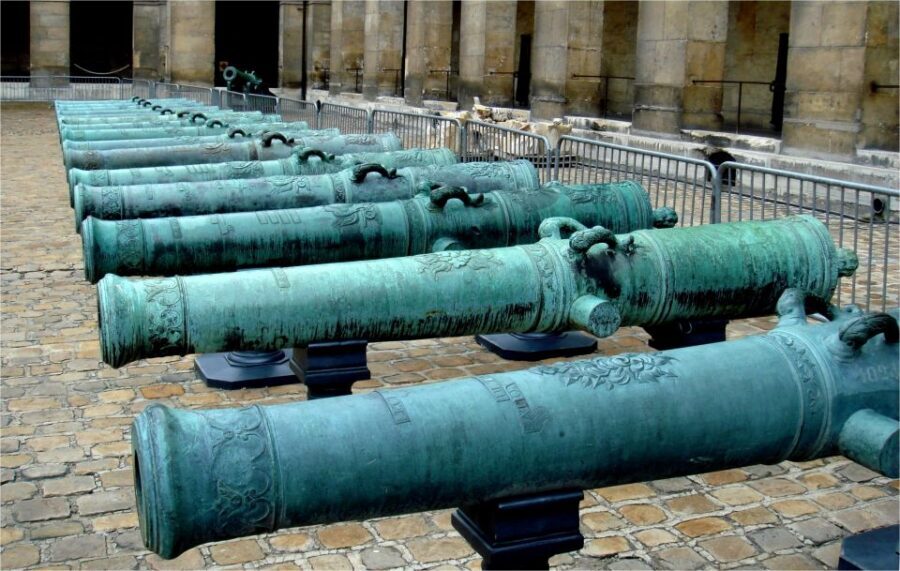
The transition from World War I to World War II is handled like a bridge. You’ll hear about the threat of Adolf Hitler becoming a reality, and the guide connects how the post-1918 world helped create the conditions for that rise. This is where you’ll notice the tour’s “cause-and-effect” focus.
Instead of treating World War II as a totally separate story, you keep seeing links. That continuity is one of the tour’s biggest strengths because it answers the question you’d otherwise ask later: how did Europe get from one catastrophe to the next without a true reset?
From there, the tour moves through major WWII moments tied to France and the surrounding theater. You’ll discuss Ligne Maginot, Dunkerque, and the Occupation of Paris. Those aren’t just headline terms. The guide uses them to explain what France faced—defense plans, setbacks, and the lived reality of control and hardship.
You’ll also meander among artifacts collected from battlefields. That pacing matters: it gives your eyes a break from pure narration, and it keeps the tour grounded in physical evidence rather than only political summaries.
You can also read our reviews of more museum experiences in Paris






Petain, De Gaulle, Normandy, and Liberation of Paris
The guide also brings in key French leaders to explain how France navigated these horrifying years. You’ll hear about Pétain and De Gaulle, not as names to memorize, but as figures tied to turning points and choices people faced. The contrast between leaders helps you see that “France in WWII” wasn’t one single storyline—it was competing narratives under extreme pressure.
Then the tour reaches the final stretch: Normandy and the Liberation of Paris. This is where the experience becomes more than military history. You start to understand why Liberation mattered beyond the battlefield, because it led to the preservation of parts of the city that visitors can still enjoy today.
If you’re spending time in Paris after this tour, this ending section pays off. It’s easier to walk around the city when you have a clear picture of what changed and why. Even if you can’t point to a single street and say this moment happened there, the guide’s framing makes the city feel less like a postcard and more like a place shaped by decisions and suffering.
One more real-world note: some rooms inside the museum have rules that restrict right to speak or require quiet. That’s normal in major museums, but it can affect the flow of questions in those spaces. The guide will still do a good job, but you may need to save some questions for areas where discussion is allowed.
A practical value check: $128, two hours, and what you actually get
At $128 per person, this tour isn’t a budget add-on. You’re paying for two things that matter in museums: an expert art historian guide and a guided route that saves you from wandering blindly through hundreds of objects.
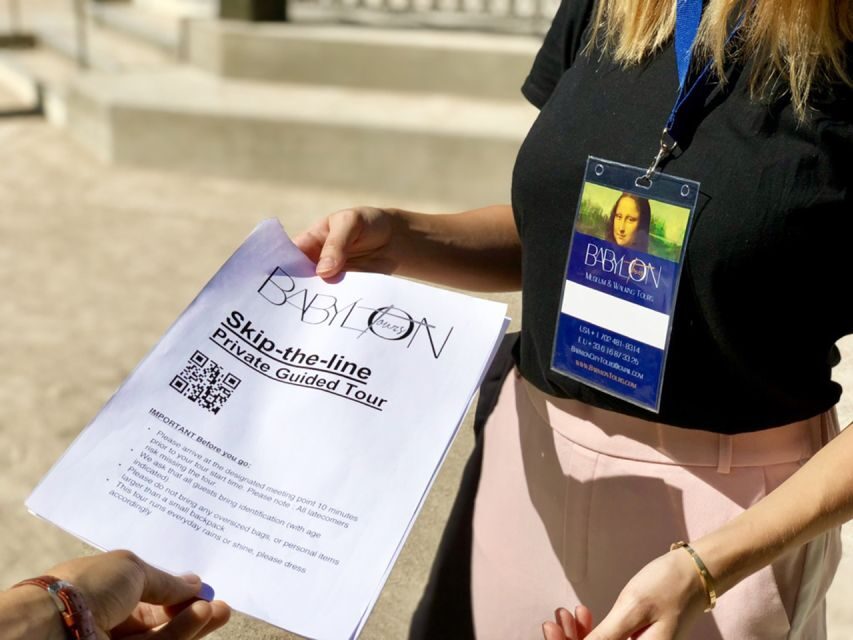
What makes the price feel more reasonable is what’s included. You get entrance fees and skip-the-line access, so you’re not spending your limited time in queues. You also get a walking tour format inside Invalides that’s designed to cover the high-impact story beats, not every single corner.
The other value lever is group size. With private or small group options and a maximum of 8 guests per guide, you’re less likely to feel like a seat-filler. The guide’s explanation style—clear, personal, and even a bit humorous—helps a lot in a topic that could otherwise feel grim and too heavy to absorb.
Also worth knowing: occasional museum closures can happen without warning. If opening time gets delayed more than an hour from the tour start, you’ll be provided with an alternative. In those cases, refunds or discounts aren’t guaranteed by the provider, so it’s smart to keep your schedule flexible if possible.
Who should book this Invalides World Wars guided tour

This tour is a great fit if you want a highly structured way to understand both World War I and World War II in one visit. If you’ve studied history in school but struggled to connect the dots, the cause-and-effect approach will feel like someone finally drew the lines between the chapters.
It’s also a good choice if you like museums but hate the slow pace of self-guided guessing. The guide turns the exhibits into answers. Instead of wondering what you’re looking at, you’ll get context right where it matters.
I’d also steer you toward this tour if you’re traveling with limited time. A two-hour window at Invalides can’t cover everything, but it can cover what you need to start making sense of what you see afterward. You’ll leave with names, battles, and key objects that you can anchor to when you continue exploring Paris.
Finally, bring your expectations into alignment with the physical reality. There’s moderate walking, and the tour is not set up for everyone with mobility needs. The information provided says the semi-private tour isn’t available for wheelchair users, while wheelchair tours are mentioned as possible only on request—so if mobility is a concern, confirm details ahead of time rather than assuming.
Should you book the Invalides War Museum World Wars guided tour?
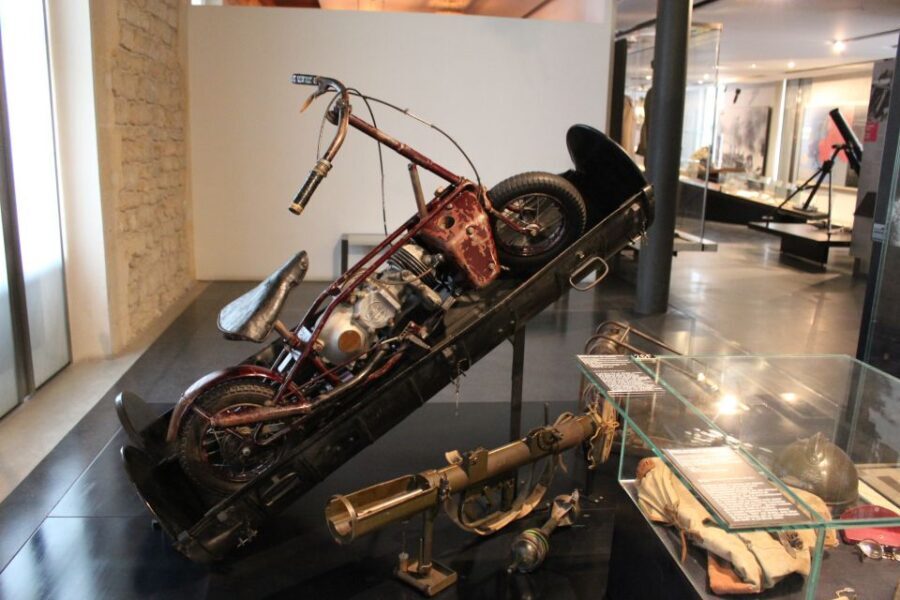
Yes—if you want history that’s explained, paced, and tied to objects you can see. The best reason to book is simple: two hours is long enough for real understanding when you have an expert guide, but short enough that you won’t lose the thread.
I’d skip it only if you want total freedom to wander and read every label at your own speed. On this tour, the structure is the product. You’ll get a guided narrative, not a choose-your-own-adventure through every room.
If you’re curious, bring ID and travel light, aim to arrive on time, and plan to stay engaged during the heavier moments like the original WWII-related footage. You’ll walk away with a clearer sense of how France experienced both wars—and why the places and stories of Paris still matter.
FAQ
How long is the Invalides War Museum World Wars guided tour?
The tour lasts about 2 hours.
Do I get skip-the-line access?
Yes. Entrance fees and skip-the-line access are included.
What will I see during the tour?
You’ll explore World War I and World War II with the help of an expert guide, including WWI weaponry and equipment, original footage, the Treaty of Versailles context, and the train car where the armistice was signed. You’ll also discuss WWII events and figures and see related artifacts.
Are tickets included in the price?
Yes. Entrance fees are included.
Does the tour include transportation or hotel pickup?
No. Hotel pickup and drop-off are not included.
What languages are available for the live guide?
The live guide is available in Spanish, French, English, German, Italian, and Russian.
Are large bags allowed inside?
No. Luggage or large bags are not allowed.