REVIEW · PARIS
Louvre Late Opening Guided Tiny Group Tour
Book on Viator →Operated by Toorers · Bookable on Viator
A late Louvre ticket changes everything. This small-group guided visit is built for seeing more with less stress, thanks to the quieter evening pace and an art historian leading you through the highlights. You get a maximum 6-person group and a chance to steer the route toward what your group cares about most.
I especially like the focus: you cover Egypt and Greece antiquities plus the must-sees like Venus de Milo and Samotrace’s Victory, and you still make time for French and Italian paintings, including the Mona Lisa. One smart bonus is that your guide can adjust the itinerary to your group’s interests instead of forcing the same script on everyone.
One thing to consider: the Louvre is enormous, and a 2-hour guided route means you will not see everything. You’re choosing a curated evening circuit, not a full museum marathon.
In This Review
- Key highlights you’ll actually feel during the tour
- A tiny-group Louvre that respects your time
- Meeting at Le Kiosque des noctambules (and why the start matters)
- Two pre-museum stops: modern architecture and an iconic metro pause
- Your guide’s focus: how the route stays inside your attention span
- Egypt and Greece antiquities: Venus de Milo and Samotrace’s Victory
- Medieval times: the Louvre beyond the postcards
- French and Italian paintings, including the Mona Lisa
- What makes this tour feel worth $215.32
- The “late opening” benefit: calmer viewing, better focus
- Who this Louvre late-opening tiny-group tour is best for
- A quick guide to what to bring (and what you’ll likely want)
- Should you book this tour?
- FAQ
- How long is the Louvre Late Opening guided tiny group tour?
- What’s included in the price?
- What is the maximum group size?
- Is the tour offered in English?
- Where does the tour start?
- Do I get a mobile ticket?
- What highlights will the guide cover?
- Is coffee, tea, or water included?
- What is the cancellation policy?
- Are there cases where admission may be free?
Key highlights you’ll actually feel during the tour
- Tiny group (max 6): more room for questions and fewer bottlenecks in crowded galleries.
- Late opening, quieter viewing: you’ll spend time in the popular areas when the mood is calmer.
- Art historian guidance: you get context for what you’re looking at, not just a checklist.
- Big-ticket works included: Venus de Milo, Samotrace’s Victory, and the Mona Lisa make the route.
- Flexible pacing: ask the guide to adapt the plan to your group’s preferences.
- Mobile ticket and admission included: the €22 adult entrance ticket is part of the deal.
A tiny-group Louvre that respects your time
If you’ve ever stood in a long line at the Louvre and wondered how anyone finishes, this is the antidote. The tour is scheduled for the Louvre’s late opening window, when the museum atmosphere tends to be less chaotic. That matters because the Louvre rewards momentum: you spend less time stuck and more time looking closely.
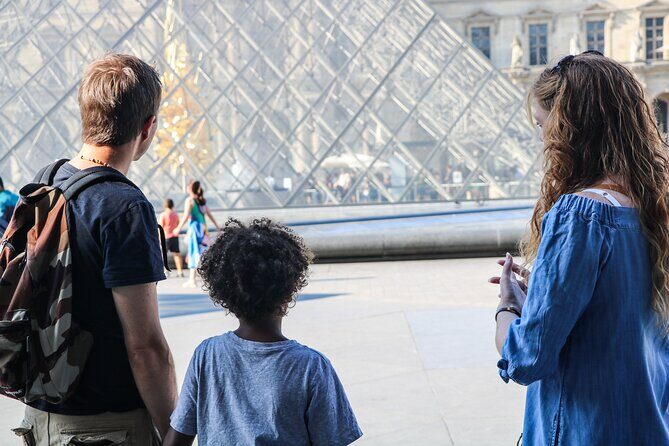
The group size is capped at 6 travelers, so you’re not getting shuffled through rooms like part of a crowd-control experiment. Instead, the guide can slow down where your group has questions and speed up when everyone is ready to move. In a place as large as this, “small and purposeful” is a real advantage.
The time frame is about 2 hours, admission included. That’s enough time to hit the iconic collections and learn what to notice, but not enough to wander every wing at your own pace. Think of it as a guided evening route that helps you understand the Louvre’s big ideas fast.
You can also read our reviews of more guided tours in Paris



Meeting at Le Kiosque des noctambules (and why the start matters)
The tour meets at Le Kiosque des noctambules, 12 Pl. Colette, 75001 Paris, France. The good news is that this area is near public transportation, so you can usually arrive without a complicated transit plan.
From the start location, your guide takes you through a couple of quick outside or transition stops before you’re fully in museum mode. That’s helpful. It gets your bearings before the galleries start blurring into one long visual overload.
Also note the tour ends back at the meeting point. That means you’re not left trying to figure out your own exit plan at night, which is a small but real quality-of-life win in Paris.
Two pre-museum stops: modern architecture and an iconic metro pause
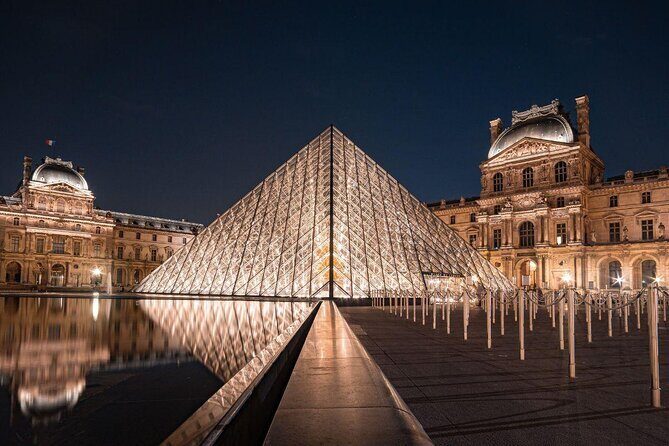
Before you enter the Louvre galleries, you’ll make two transition stops. One is at a modern architectural feature within the Louvre complex. The other is at a major Paris metro station described as an icon in its own right, where your guided tour begins.
Why does this matter? Because it gives you a quick sense of contrast. The Louvre isn’t just one thing. It’s a collection housed in a historic palace—plus modern Paris engineering around it. Those short stops help you shift your brain from street level to art museum mode without feeling like you’ve been tossed directly into a maze.
Practical note: bring comfy shoes. Even in a short tour, you’ll be walking. Late evening is also when feet get tired first, not your enthusiasm.
Your guide’s focus: how the route stays inside your attention span
Your small group is led by an experienced art historian guide. The guide introduces the Louvre’s dense story, and you can ask them to adapt the itinerary based on what your group wants to see most. That flexibility is key because no two people approach the Louvre the same way.
The route is built around major collections and a logical flow through the museum’s world-class highlights. You’ll see:
- the medieval era,
- Egypt and Greece antiquities,
- and major French and Italian paintings,
- including the Mona Lisa.
The benefit is not just that you check off famous names. The benefit is that you understand why these objects were collected and how the Louvre became what it is today. With an art historian explaining what you’re looking at, you’re less likely to miss the meaning hiding in plain sight.
Egypt and Greece antiquities: Venus de Milo and Samotrace’s Victory
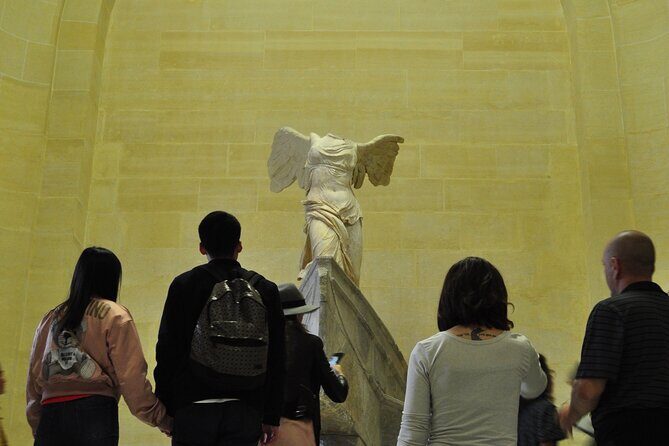
If your goal is to see the Louvre’s most famous sculptural moments, this tour delivers early energy. You’ll spend time with Egypt and Greece antiquities, with standout stops that include Venus de Milo and Samotrace’s Victory.
Here’s what a guide changes for these works. Without guidance, you can end up staring at the pose and the fame and not much else. With a historian, you’re more likely to notice details like how the sculpture communicates with its viewers, what materials and design choices imply, and why these works became enduring symbols of art history.
This is also the part of the Louvre where crowds can get intense. Visiting in the evening helps. You still see the headline pieces, but you’re more likely to have enough room to actually look rather than only photograph.
Drawback to keep in mind: even with a smaller group, the Louvre is still the Louvre. Some rooms will be busy. The late time slot helps, but it doesn’t erase the fact that the museum draws millions of people.






Medieval times: the Louvre beyond the postcards
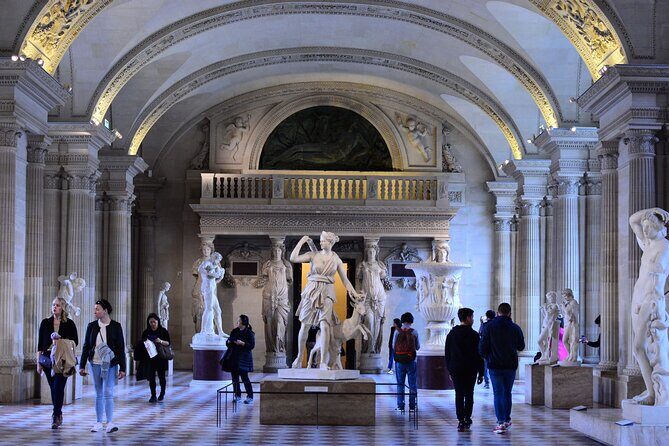
You’ll also make sure to cover medieval times, which is a smart choice. Many people walk into the Louvre thinking it’s mostly about a few paintings and a couple famous sculptures. Medieval pieces broaden your understanding of how European art and power worked before the museum’s later glory took over.
In a guided setting, medieval stops are valuable because your guide can frame what you’re seeing so it clicks. Instead of feeling lost in objects that look strange or unfamiliar, you get context that connects them to the wider story of the Louvre.
This section also helps balance your evening. You get a mix of art types—sculpture, works from different periods, and painting—so the tour doesn’t feel like one long museum photo session.
French and Italian paintings, including the Mona Lisa

No matter what you love, the route includes French and Italian paintings, and yes, you’ll see the Mona Lisa. This is a practical inclusion. If you’re coming to the Louvre for the first time, skipping the Mona Lisa usually feels like missing the point—even if you’re not a die-hard portrait fan.
The key here is pacing. In a guided route, you’re not wandering randomly from one room to another. You’re being led to the places where paintings matter, and you get help figuring out what to notice: style, composition, and what makes these works historically significant.
Evening timing can be a win for people who dislike the full-day museum crush. You’ll likely experience the Mona Lisa area with a calmer rhythm than the busiest daytime hours.
Quick reality check: the Mona Lisa is famous, and that means it attracts people. A guide can help you manage the flow, but you should still expect some crowd energy in that zone.
What makes this tour feel worth $215.32
At $215.32 per person, you’re paying for much more than just entry. The tour includes an adult admission ticket valued at €22, and the rest is the guided experience: art historian leadership, a planned route, and the benefit of a small group.
Is it pricey? It can be, depending on how you travel and how much you value guidance. But for a first-time or art-curious visit, it often makes sense because:
- You’re buying time efficiency. The Louvre can eat hours with no payoff if you’re not sure where to focus.
- You’re buying interpretation. A guide helps you understand what you’re seeing, not just where to stand.
- You’re buying a smaller-group flow. Max 6 is a real quality difference compared with large groups.
Also, because the tour ends back at the meeting point and covers a focused circuit, you’re less likely to spend additional effort planning an evening route yourself.
If you’re a seasoned Louvre expert who already knows exactly what you want to see, you might question the value. But if you want direction and context, this price has a clearer purpose.
The “late opening” benefit: calmer viewing, better focus
Late opening changes the feel of museum visiting. Even when the Louvre is still busy, the evening rhythm tends to support slower looking. That helps with sculptural works and paintings, because both demand more attention than a quick glance.
You also get the tour’s key promise: you’ll tour the popular gallery in quieter evening hours. That’s not just marketing language. It impacts your ability to ask questions, compare details, and feel like you actually saw something rather than only passed through rooms.
Bring patience anyway. Paris at night can be busy, and museum crowds can surge at famous stops. But the format here is designed to make your experience smoother.
Who this Louvre late-opening tiny-group tour is best for
This tour fits especially well if you:
- love art but want a guided plan instead of wandering,
- want the Louvre highlights without trying to conquer every gallery,
- appreciate an art historian’s context for major works,
- prefer small groups where you can ask questions,
- are visiting in the evening and want a calmer museum experience.
It may be less ideal if you:
- want a full, self-paced museum day with no structure,
- plan to obsess over niche sections not included in a focused route,
- need a very long period in one gallery, since this is about 2 hours.
A quick guide to what to bring (and what you’ll likely want)
The tour does not include coffee or tea or bottled water. So plan on bringing your own bottle, especially if you tend to get thirsty during walking and standing.
For comfort, wear shoes you trust. The Louvre involves a lot of walking even on a short guided visit. In the evening, tired feet can turn a great tour into a survival mode, so start out comfortable.
You’ll receive a mobile ticket, which is convenient. Just make sure your phone battery is healthy.
If you qualify for free admission—like visitors under 18 or EEA residents under 26 with valid ID and proof of residency—plan accordingly. The tour includes an adult entrance ticket, but your situation could change how you handle admission.
Should you book this tour?
I think this is a strong booking if you want the Louvre experience with structure and context, in an evening time slot, and without a huge crowd. The max 6 group size and the art historian leadership are the heart of the value. You’re not just seeing famous works; you’re understanding them in a route that fits inside about two hours.
Book it if you’re a first-timer, art-curious, or short on time. Skip it if you’re trying to do the Louvre like a personal scavenger hunt with zero guidance.
If you’re on the fence, choose the version of the Louvre where someone else handles the hard part: figuring out what to see and how to make it make sense.
FAQ
How long is the Louvre Late Opening guided tiny group tour?
The tour runs for about 2 hours.
What’s included in the price?
The tour includes a guided experience and a museum admission ticket for adults (€22 entrance ticket included).
What is the maximum group size?
The tour has a maximum of 6 travelers.
Is the tour offered in English?
Yes, it’s offered in English.
Where does the tour start?
The meeting point is Le Kiosque des noctambules, 12 Pl. Colette, 75001 Paris, France.
Do I get a mobile ticket?
Yes, the tour uses a mobile ticket.
What highlights will the guide cover?
You’ll focus on medieval times, Egypt and Greece antiquities (including Venus de Milo and Samotrace’s Victory), and French and Italian paintings including the Mona Lisa.
Is coffee, tea, or water included?
No, coffee/tea and bottled water are not included.
What is the cancellation policy?
You can cancel for free up to 24 hours in advance for a full refund.
Are there cases where admission may be free?
Yes. Free admission applies to visitors under 18 and EEA residents under 26 with valid ID and proof of residency.