REVIEW · PARIS
Paris Marais Quarter 2-Hour Private Walking Tour
Book on GetYourGuide →Operated by Paris in person private tours · Bookable on GetYourGuide
Paris’s Marais is one big story.
This private 2-hour walk takes you through the neighborhood that went from swamp to power center, and then through some very dark chapters. I like the way the guide turns street corners into a timeline, especially the way they connect the Middle Ages to the modern Centre Pompidou.
Two things I really love: you get a focused route with major sights packed into a short time, and you also get the human side of the area, from the old Jewish center around the Pletzl to the grand civic buildings. One drawback: at this length, you won’t have time to linger long at each stop, so it’s best if you’re happy with walking-and-learning rather than slow sightseeing.
In This Review
- Key things you’ll notice on this Marais private tour
- The Marais in 2 hours: a compact timeline you can walk
- Start at Metro Étienne Marcel, guided by a red tote
- Les Halles and Fontaine des Innocents: where Paris’s daily life used to be
- Centre Pompidou and the medieval-to-modern link
- Hôtel de Ville: the opulent civic statement
- Pletzl and Rue Pavée synagogue: seeing the Jewish center in context
- Hôtel de Sully, Place des Vosges, and the walk toward Bastille
- Price and pacing: is $176 per person worth it?
- Should you book this private Marais walking tour?
- FAQ
- How long is the Paris Marais Quarter private walking tour?
- Where do we meet for the tour?
- Is this tour private?
- What’s included in the price?
- Is food or drinks included?
- What languages are offered?
- Does the tour run in bad weather, and is cancellation flexible?
Key things you’ll notice on this Marais private tour
- A “layers of Paris” route: you trace how the Marais changed from swampy ground to elite courts, to hardship, and back again
- Les Halles to Hôtel de Ville: markets and power sit close together, and the guide explains how that shaped daily life
- Pletzl and Rue Pavée: you get real context for the historic Jewish heart of the neighborhood
- Pompidou with a historical link: you learn why a modern icon makes sense in this older neighborhood
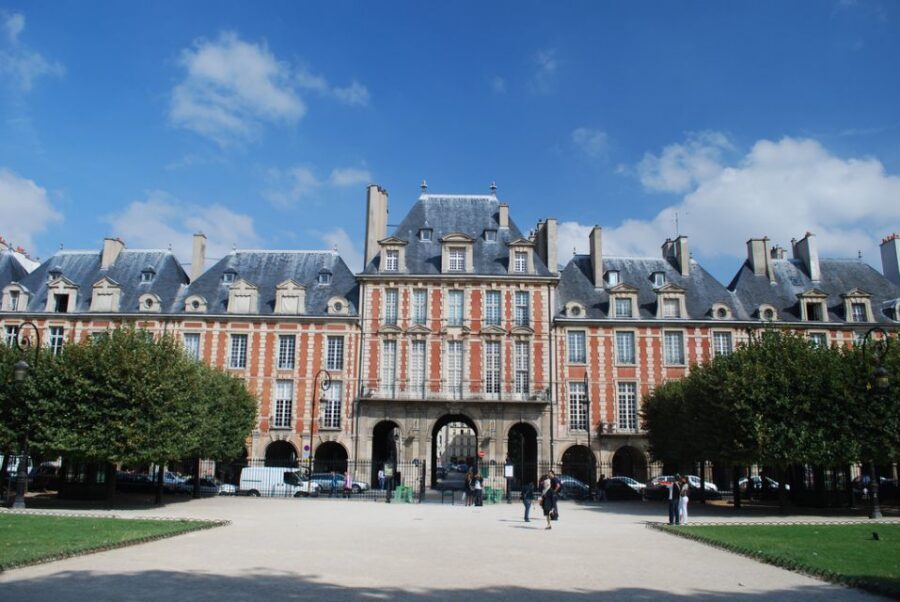
- Place des Vosges: you end up at one of Paris’s most beautiful squares, not just a quick photo stop
The Marais in 2 hours: a compact timeline you can walk
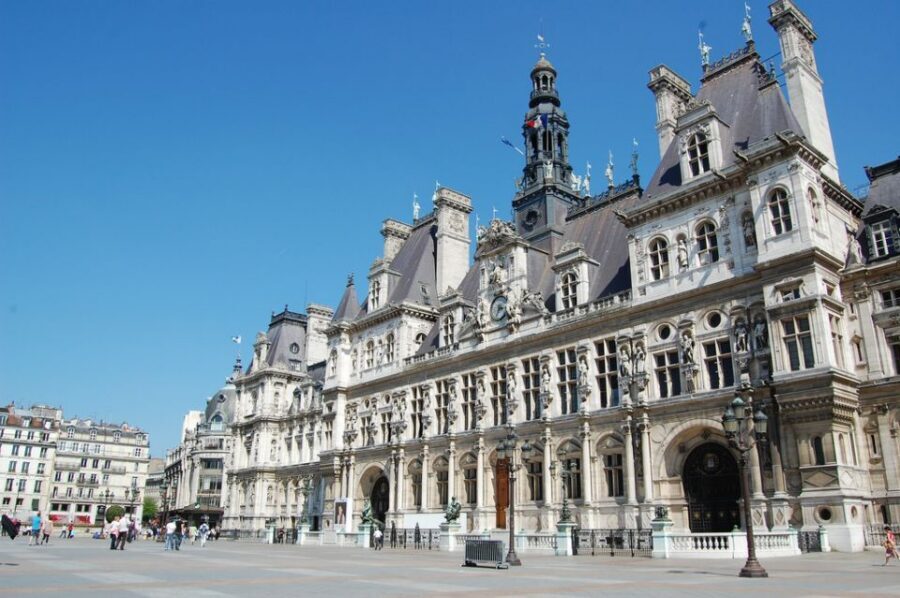
The Marais can feel like two different neighborhoods at once. One side is postcard Paris: squares, stone arcades, careful façades. The other side is the “how did this happen?” Paris, where the streets look the same but the story changes completely depending on the century.
That’s why this tour works. You start in the core area where the Marais originally became habitable after the land was drained. Once people could live there, the neighborhood quickly grew into a central piece of Paris life. The guide then threads the story forward: it became closely tied to the city’s Jewish community (the heart of that story is around the Pletzl), and it later swung between high-status living and rougher times. In other words, you’re not just ticking off sights. You’re seeing how a place can rise, fall, and reinvent itself without moving very far.
You can also read our reviews of more walking tours in Paris



Start at Metro Étienne Marcel, guided by a red tote
Your meeting point is at Metro Étienne Marcel, and the guide carries a red canvas tote bag. That sounds like a small detail, but it matters on a tour that depends on getting an efficient start. You don’t want to spend the first 15 minutes playing find-the-guide.
The tour is private, so the pace can flex to your group. Past experiences with guides such as Alexander, Caroline, Boris, Alexandre, Fabienne, Yvana, and Anja were praised for staying clear with the group they had, including mixed ages. That’s a good sign if you want explanations that land, not a monologue that floats over everyone’s heads.
Also, the tour runs rain or shine. In a neighborhood like the Marais, weather changes the mood fast—so plan on comfortable walking shoes and bring a light layer even if the morning looks fine.
Les Halles and Fontaine des Innocents: where Paris’s daily life used to be
You’ll visit Les Halles, a name that still carries weight in Paris even though it’s easy to overlook if you don’t know what to look for. The guide frames it as a historic hub—once described as the biggest open market in Paris—so you understand why this corner mattered. Markets don’t just sell food. They pull in people, money, news, and small drama, all day long.
Right after, you’ll see Fontaine des Innocents. Even if you’ve seen the fountain in photos, a guide changes how you read it. You start noticing the “why here?” feeling—why this kind of landmark ends up near a major market area. The fountain becomes more than decoration; it turns into a marker of public life and civic focus.
Two practical takeaways for you:
- If you care about city planning and the logic of urban spaces, this pairing is smart. Market life and water features tell you a lot.
- If you hate tight time windows, don’t worry—you’ll get context rather than a rushed sprint through everything.
Centre Pompidou and the medieval-to-modern link
This is one of the most interesting parts of the tour, because it’s not a standard “go see the big modern building” stop. You’ll visit Centre Pompidou, but the guide specifically explains the connection between the Middle Ages and the modern centre.
That kind of storytelling is what makes the Marais special. Paris loves to layer styles on top of old routes and old priorities. A modern landmark can feel out of place until someone shows you the underlying thread—like how the neighborhood’s long role in movement, culture, and city life continues even when the architecture changes.
What I’d watch for here is how the guide ties history to what you can actually see from the street. The best moments aren’t usually inside buildings. They’re the moments when you look up and realize the area has been doing something similar for centuries, even if the surface looks brand new.
Hôtel de Ville: the opulent civic statement
Next up is Hôtel de Ville, and this is where the tour shifts from street life to political power. The city hall is Renaissance-era and visually dramatic, so it’s a natural place for the guide to talk about what the city wanted to project—confidence, authority, and legitimacy.
This stop also helps you understand the Marais as more than a neighborhood for strolling. It was central enough to become a stage for major civic moments. When you connect that to earlier stops, the market-and-government rhythm starts to make sense.
If you’re the type who thinks architecture is a language, you’ll probably enjoy this section. If you’re not, you can still treat it as a mental reset: the guide gives you the “big picture” before heading back into more personal neighborhood history around the Pletzl.
You can also read our reviews of more private tours in Paris






Pletzl and Rue Pavée synagogue: seeing the Jewish center in context
The Pletzl area is the historic center of Paris’s Jewish community, and your guide brings that history to life with specific local references. You’ll also visit the synagogue at Rue Pavée.
Here’s the value for you: in many places, religious history gets turned into a single building and a quick note. In the Marais, it’s more meaningful to see how the community sat within the neighborhood’s daily fabric. That’s what turns this section into more than a photo moment.
A practical note: even with a tight schedule, this is usually where people slow down. You’ll likely find yourself standing still more often, just to take in the street atmosphere and the significance of the landmarks. If you prefer quiet reflection over nonstop motion, this is the best portion to mentally savor.
Hôtel de Sully, Place des Vosges, and the walk toward Bastille
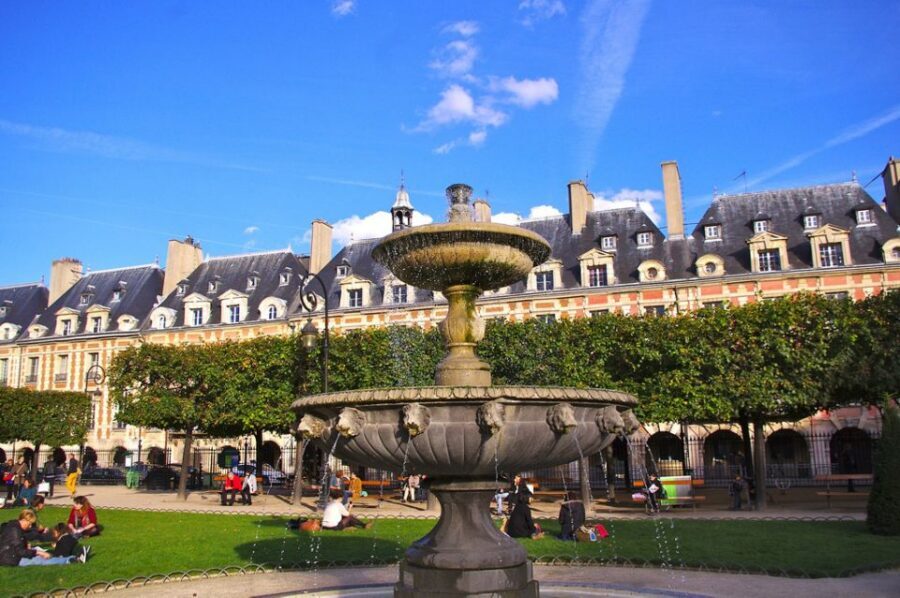
After the Pletzl, you move through scenes that feel more “ideal Paris” at first glance—stone, symmetry, elegant squares. You’ll visit Hôtel de Sully and then one of the world’s most beautiful squares: Place des Vosges.
Place des Vosges matters because it’s a real pivot point. You go from community history and civic power into a space built for presence and prestige. The guide’s job here is to keep the story connected—so you don’t just see a pretty square, you understand what kinds of people the Marais attracted in different eras.
Finally, you’ll reach Place de la Bastille. This stop gives your walk a directional feeling, like the Marais is part of a bigger Paris story rather than an isolated pocket. It’s a strong ending point because it feels like a “turn of the page” in the city’s wider narrative.
Price and pacing: is $176 per person worth it?
At $176 per person for a 2-hour private walking tour, the price isn’t for bargain hunters. But it can be good value if what you want is depth in a short time with personalized attention.
Here’s how I’d judge the value for your trip:
- You’re getting a guided route that hits multiple big-name places (Les Halles, Hôtel de Ville, Centre Pompidou, Place des Vosges, and more) without having to plan connections yourself.
- The tour isn’t just sightseeing. It includes explanations that connect eras—especially the Middle Ages to Pompidou idea—and that kind of linking is what most people can’t replicate well on their own.
- Because it’s private, you’re not stuck with a one-size-fits-all pace.
The one place it can feel less “worth it” is if you’re hoping for slow museum-style time at any single site. This is a walking tour. You’ll learn a lot, but you’ll also keep moving.
What to bring to make the money feel more worth it:
- Comfortable shoes (the Marais is flat enough, but it’s still plenty of walking)
- A small rain layer since the tour runs in bad weather too
- A plan for snacks afterward, since food and drinks aren’t included
Should you book this private Marais walking tour?
Book it if you want Paris that makes sense, not just Paris that looks good in pictures. This is best for you if you like history explained through streets—especially if you want the Marais’s shift from swamp to power center, from aristocratic prestige to hard times, and then into today’s renewed energy.
Skip it if your ideal tour is long sit-down stops, long interior visits, or slow pacing. With only 2 hours, you’ll get strong orientation and plenty of highlights, but you won’t have time to linger in one place for ages.
If your group is mixed in interests or ages, this tour also sounds like it fits well—guides like Alexander, Caroline, Boris, Alexandre, Fabienne, Yvana, and Anja have been praised for adjusting their explanations to the people they had.
FAQ
How long is the Paris Marais Quarter private walking tour?
It lasts 2 hours.
Where do we meet for the tour?
You meet at Metro Étienne Marcel. The guide will be carrying a red canvas tote bag.
Is this tour private?
Yes, it’s a private group tour.
What’s included in the price?
The tour includes the 2-hour guided walking tour.
Is food or drinks included?
No. Food, snacks, and beverages are not included.
What languages are offered?
The live guide is available in English, French, and Serbo-Croatian.
Does the tour run in bad weather, and is cancellation flexible?
It operates rain or shine. There is free cancellation up to 24 hours in advance for a full refund.