REVIEW · PARIS
Montmartre en chansons: tour with a professional singer
Book on GetYourGuide →Operated by Montmartre en chansons · Bookable on GetYourGuide
Two hours of Montmartre in song. This tour uses a capella street performances to tie famous French music to real places, from the cabarets of the Butte to singer hangouts. I love the way the singing happens right in the neighborhood streets, not on a stage, and I love the stop-by-stop storytelling that connects songs you know to the people and addresses that shaped them.
One thing to consider: you’ll be walking in a hilly area for the full 2 hours, so wear hiking shoes and plan for uneven sidewalks and stairs. It’s also not suitable for mobility impairments.
In This Review
- Key highlights at a glance
- Why this Montmartre tour turns songs into real places
- Anne-Sophie’s street singing: what makes the show work
- Stop by stop: Abbesses, Wall of Love, Rue Lepic, and the Moulin de la Galette
- Place des Abbesses
- Wall of Love (Wall of Je t’aime)
- Rue Lepic
- Le Moulin de la Galette
- Quick note on the “5-minute concerts”
- Dalida, Théâtre Lepic, La Maison Rose, and the Clos Montmartre vineyard vibe
- Maison de Dalida
- Théâtre Lepic
- Dalida Statue
- La Maison Rose (and the feeling of the boheme)
- Vigne du Clos Montmartre
- Lapin Agile, La Bonne Franquette, Place du Tertre, and the walk to Sacré-Cœur
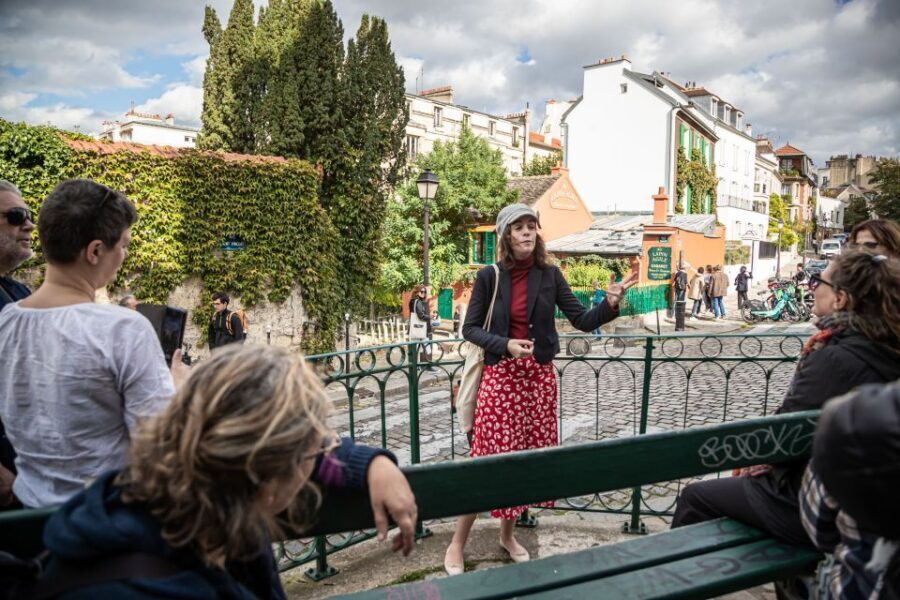
- Lapin Agile
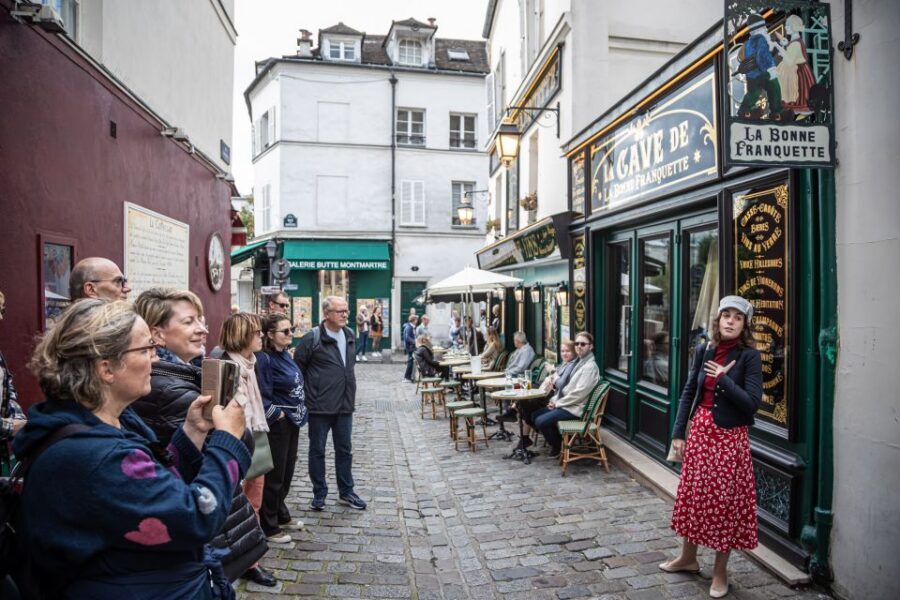
- La Bonne Franquette
- Place du Tertre
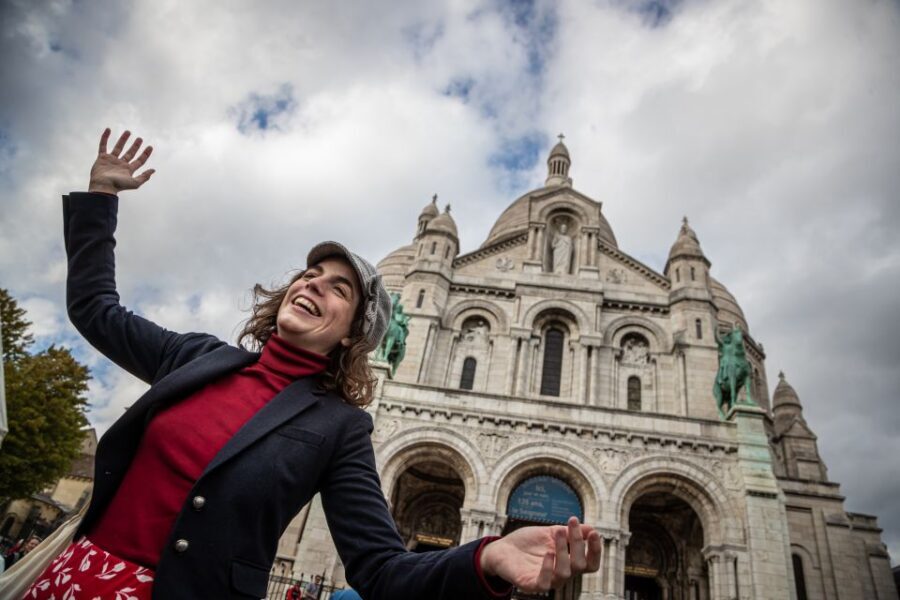
- Sacré-Cœur Basilica (finish at Parvis du Sacré-Cœur)
- Price and value: what $34 buys you in 2 hours
- What to bring, how to dress, and when the tour is tough
- Who should book this Montmartre en chansons tour
- Should you book Montmartre en chansons?
- FAQ
- Where is the meeting point?
- How long is the tour?
- What languages are available?
- What should I bring, and are backpacks allowed?
- Is the tour suitable for people with mobility impairments?
- Is food and drinks included?
Key highlights at a glance
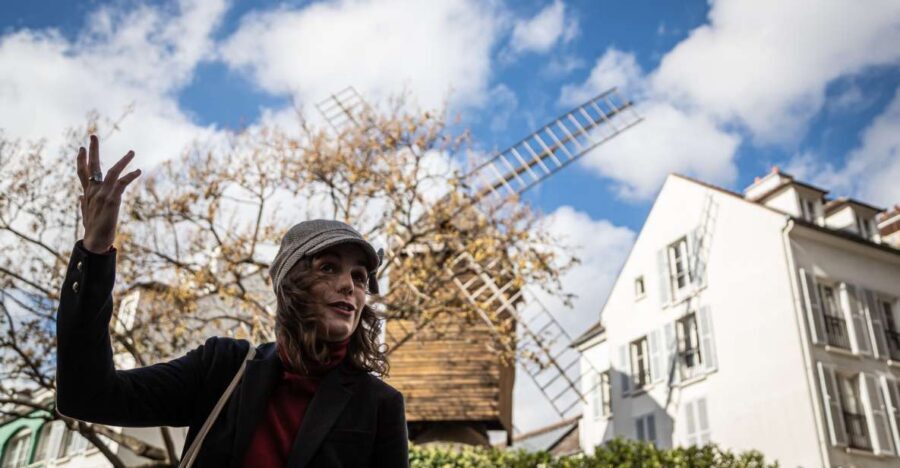
- Street-style a capella with a professional singer that brings the neighborhood to a quiet, listen-up moment
- Real singer stories tied to specific spots linked to Édith Piaf, Charles Aznavour, Jacques Brel, Dalida, and more
- Iconic Montmartre landmarks in one smooth loop, from the Wall of Love to Sacré-Cœur
- Cabaret and bohemian atmosphere you can feel as you walk, not just read about
- A local guide approach via Anne-Sophie, with upbeat, personal energy that matches the music
Why this Montmartre tour turns songs into real places
Montmartre is full of plaques, paintings, and postcard views. This is different. Instead of treating the area like a museum, the tour treats it like a living stage—where songs grew up, got performed, and became part of the street rhythm.
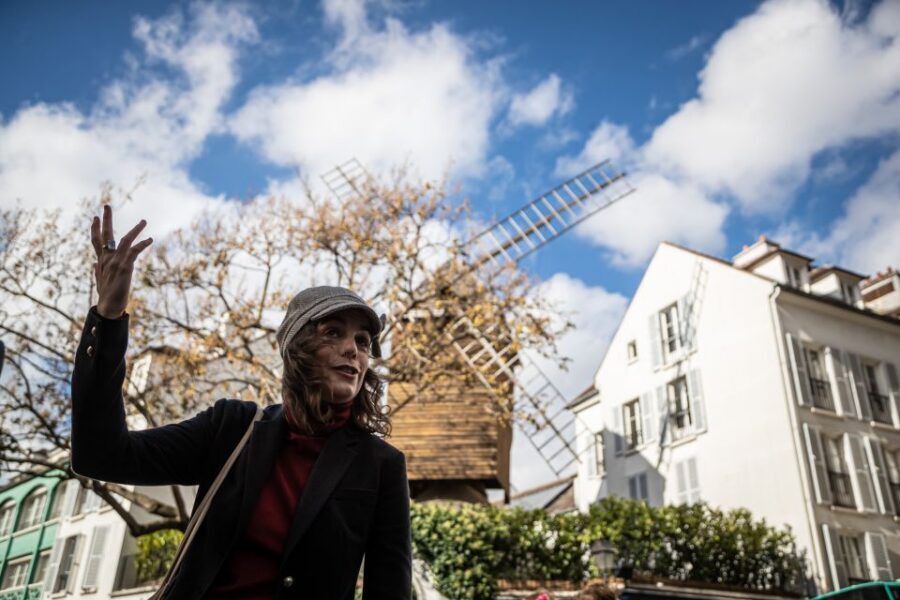
At the center of it is Anne-Sophie, who brings a performer’s focus and a neighborhood inhabitant’s familiarity. The goal is simple: you don’t just hear classic French songs. You hear them in the right setting, while learning what’s connected to those lyrics—who lived here, where cabarets operated, and how the bohemian spirit of the Butte shaped the artists.
You’ll especially appreciate this if you’re the type who likes your sightseeing with context. The music gives you an anchor, and the stories give you the map in your head. By the end, Montmartre tends to feel less like a stop on your itinerary and more like a place with a voice.
You can also read our reviews of more tours and experiences in Paris.



Anne-Sophie’s street singing: what makes the show work
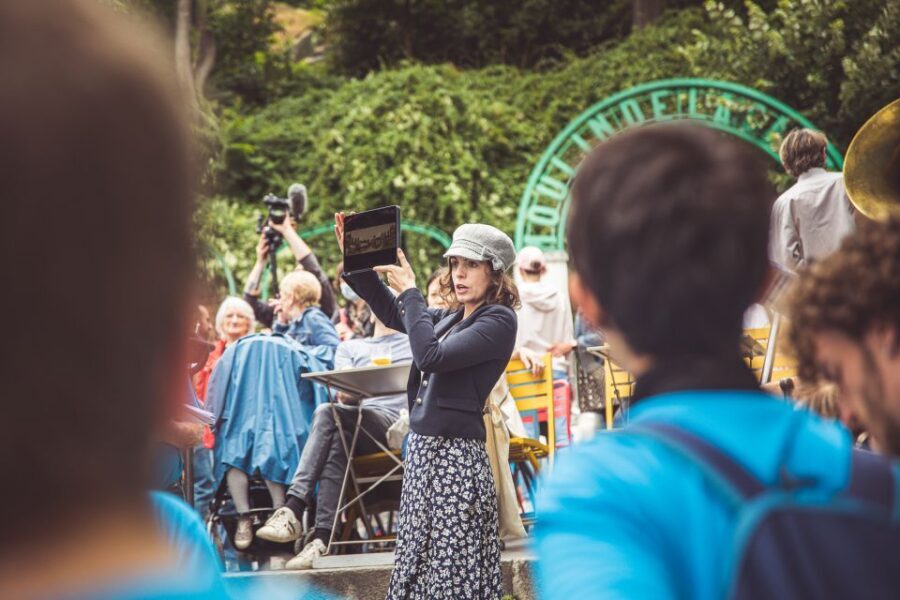
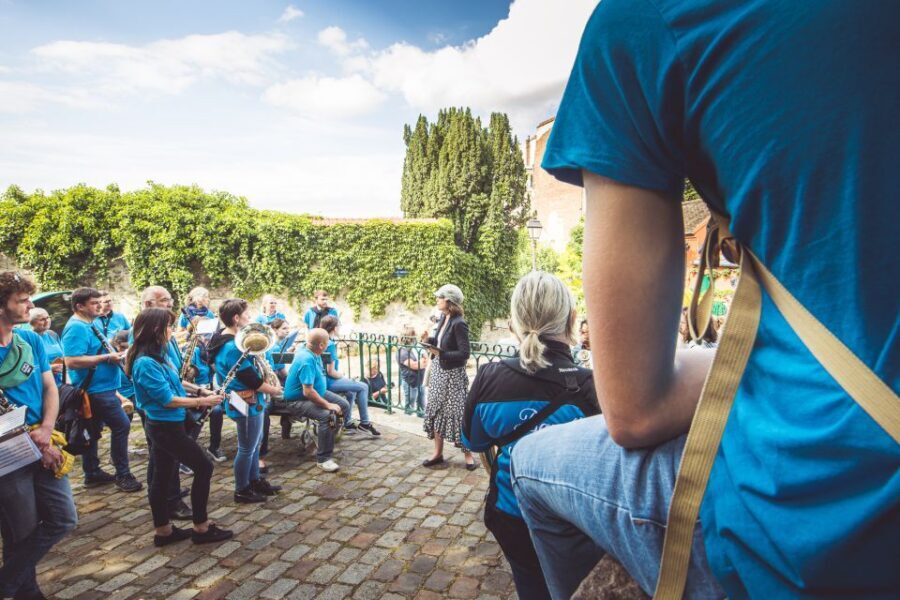
The standout “wow” isn’t just that the singer is good. It’s the format. A capella singing in open-air streets has a different impact than headphones or a theater sound system. The voice carries, and it’s powerful—so much so that passers-by and people on nearby terraces can pause and fall silent for the moment.
That’s why this tour is worth your time. You’re not waiting around for one performance at the end. You get repeated short singing moments as you move from spot to spot, so the walk stays lively and your ears stay focused.
Anne-Sophie’s style is also part of the magic. She’s described as bubbly and smiling, and that energy matters here. Montmartre can be hectic, and the best moments are the ones where the tour slows you down just enough to notice details you’d otherwise miss—street angles, little facades, and the way the neighborhood opens up at certain corners.
If you can, aim to go when the light feels atmospheric. One of the most memorable ways to experience Montmartre is at dusk, when the streets feel more theatrical. The tour’s “old Paris” vibe fits that timing well.
Stop by stop: Abbesses, Wall of Love, Rue Lepic, and the Moulin de la Galette
You meet behind the exit of the Abbesses subway station, which is a handy start because you can anchor yourself quickly and get moving without extra transfers. From there, the route is designed to hit visual anchors early, then build into the music and cabaret story.
Place des Abbesses
This is your warm-up. It’s a strong neighborhood gateway, and it sets the tone: Montmartre as a lived-in place, not a staged attraction.
Wall of Love (Wall of Je t’aime)
In a few minutes you reach the Wall of Love, a quick “yes, I’ve seen this before” stop that still lands emotionally. You’ll pair it with singer-and-song anecdotes, which turns it from a photo stop into a context stop.
Why it matters: lyrics and neighborhoods belong together. This wall is an easy reference point for the emotional side of the songs, even if you’re not a French-music superfan.



Rue Lepic
Rue Lepic is the kind of street where you start to feel the climb and the character at the same time. It’s also a natural corridor for the tour’s rhythm: short walk, short storytelling, then another performance moment.
Le Moulin de la Galette
This is one of Montmartre’s big classic images, and visiting it with commentary makes a difference. You’re not only looking at a famous windmill landmark. You’re hearing about the cabaret world and the artistic orbit around the Butte.
Possible drawback: this is a high-visibility area, so expect crowds depending on the time of day. If you’re sensitive to busy foot traffic, plan to treat the performance moments as your “get your focus back” pause.
Quick note on the “5-minute concerts”
At several stops, there’s a short performance moment while you’re already there. That pacing keeps the tour from dragging, but it also means you’ll be listening while people come and go around you. If you need total silence to hear well, bring patience—and try to stand where the voice carries best.
Dalida, Théâtre Lepic, La Maison Rose, and the Clos Montmartre vineyard vibe
After the Moulin area, the tour leans deeper into singer-specific stops—especially around Dalida. This section is great if you like music history that feels personal. The places you visit have names tied to the artists, and the anecdotes help you connect the song titles to the neighborhood.
Maison de Dalida
This is where the tour shifts from general Montmartre atmosphere into a more focused singer connection. Instead of treating Montmartre as one big “artist zone,” you get an understanding of how particular people lived and worked here.
Théâtre Lepic
The theater name signals entertainment and stagecraft. You’ll see it as part of the story of how performances weren’t just occasional events—they were part of daily culture on the Butte.
Dalida Statue
A statue can easily become a quick photo and move on. Here, it’s used as a prompt to talk about the artist’s Montmartre link, so the stop feels less like a landmark checklist and more like a chapter title.
La Maison Rose (and the feeling of the boheme)
La Maison Rose is one of those places that looks like it belongs in a film. In this tour, it’s not only about the facade. It becomes a marker for that sharing, artist, bohemian mood that Montmartre is famous for.
Why this is valuable for you: if you’re visiting Montmartre for the first time, you often see a lot of views. This kind of stop helps you remember the tone of the neighborhood too: expressive, artistic, and slightly theatrical.
Vigne du Clos Montmartre
This stop adds a surprising note to the tour: the vineyard side of Montmartre. It’s a reminder that the Butte wasn’t only about nightlife. There’s heritage here that’s not all music clubs and alleyway photos.
A short performance moment here also helps the vineyard feel less like a “nice view” and more like part of the living Montmartre story.
Lapin Agile, La Bonne Franquette, Place du Tertre, and the walk to Sacré-Cœur
The later half leans into the cabaret tradition and the street-singer spirit—the exact thing the tour’s format recreates with the singer’s voice as your soundtrack.
Lapin Agile
Lapin Agile is an easy highlight because it’s strongly associated with Montmartre’s performing culture. You’ll visit it as a place where the boheme shows up in a very concrete way—less “imagined romance,” more “this is where it happened.”
La Bonne Franquette
This is another cabaret-linked stop that keeps the theme going. It helps you understand how food, drink, and music were tied together in the neighborhood’s social life.
Place du Tertre
This area is one of the most recognizable “artist square” spaces. With the tour’s musical focus, you’re more likely to understand what you’re seeing—why artists gather, why people perform, and why the square feels like a stage even when no show is advertised.
Practical tip: Place du Tertre can get busy. If you want clear listening moments, position yourself thoughtfully so you’re not stuck facing away while the singer performs.
Sacré-Cœur Basilica (finish at Parvis du Sacré-Cœur)
The tour ends with a short walk to Sacré-Cœur’s parvis. It’s a satisfying finish because you’re closing the loop with one of Montmartre’s biggest views.
Why the ending works: you’re done with the “story building” part, so now you can look up and take in the city panorama. It’s a natural way to convert all those music-and-history stops into a final visual payoff.
Price and value: what $34 buys you in 2 hours
At $34 per person for about 2 hours, you’re paying for more than a guided walk. You’re paying for a professional vocalist and multiple performance moments built into a route through recognizable Montmartre sites.
What makes the value feel real:
- You don’t just get anecdotes; you get songs performed in place.
- You cover a concentrated loop of landmarks without having to plan the route yourself.
- You get a local-feeling guide experience via Anne-Sophie, including singer-centered context around Piaf, Aznavour, Brel, Dalida, and more.
What it does not include:
- Food and drinks (so treat this like a sightseeing-and-music event, not a meal plan).
- Any transportation from your hotel (you’ll go to the meeting point on your own).
If you’re deciding between a standard walking tour and this one, my advice is straightforward: pick this if you want Montmartre with your ears and your emotions, not only your eyes.
What to bring, how to dress, and when the tour is tough
This walk is designed for comfortable feet. The tour asks you to bring hiking shoes, water, an umbrella, and a sun hat. That’s not just fine print—it’s what keeps you comfortable while you move through steps and uneven ground.
Also plan for the rules:
- No bikes
- No oversize luggage
- No backpacks
- Electric wheelchairs aren’t allowed
- It’s not suitable for people with mobility impairments
If you’re bringing day-bag basics, keep it minimal. Aim for a small crossbody style bag you can manage easily.
Weather matters too. Umbrella is useful in Paris at any season, but especially if you’re going when there’s a mix of sun and sudden showers.
Who should book this Montmartre en chansons tour
Book it if you:
- Love French classics and want them connected to real places
- Enjoy walking tours that still feel fun and a little theatrical
- Want a guide who brings enthusiasm, not just facts
- Like the idea of seeing Montmartre at a slower pace, guided by song moments
You might skip it if you:
- Need a fully accessible route (it’s not set up for mobility impairments)
- Prefer tours with no performance elements or heavy crowds
- Want a long, meandering food-and-drink experience (food isn’t included)
Should you book Montmartre en chansons?
If your goal is to experience Montmartre beyond photos, this is a strong choice. The professional, street-style a capella singing turns common landmarks into story stops, and the singer-focused anecdotes make the neighborhood feel specific instead of generic.
My call: if you’re even slightly into Edith Piaf, Charles Aznavour, Jacques Brel, Dalida, or classic French chanson in general, this tour is a great way to get more meaning per hour. It’s also an especially good option when you want something memorable that doesn’t require museum time.
FAQ
Where is the meeting point?
You meet behind the exit of the subway station Abbesses.
How long is the tour?
The tour lasts 2 hours.
What languages are available?
The live tour guide is available in English and French.
What should I bring, and are backpacks allowed?
Bring hiking shoes, water, an umbrella, and a sun hat. Backpacks are not allowed.
Is the tour suitable for people with mobility impairments?
No. The tour is not suitable for people with mobility impairments.
Is food and drinks included?
No. Food and drinks are not included.