REVIEW · PARIS
Latin Quarter Private Walking Tour
Book on Viator →Operated by My Paris Insider · Bookable on Viator
Paris’s Latin Quarter tells stories fast. This private walk focuses on one of the city’s most walkable zones, so you don’t just see sights—you connect the dots from Roman Paris to student Paris. I like that you get a local guide and a plan designed for real pacing, with a mobile ticket to keep things simple.
Two things I especially like: you’ll get a proper walk through the Quartier Latin with clear context, and the itinerary mixes big names with quieter stops like Place de la Contrescarpe and Montagne Sainte-Geneviève. The other plus is the scale: it’s set up for groups up to seven, so questions don’t get swallowed by a crowd.
One possible drawback: most stops are quick, and the Panthéon entry isn’t included, so if you want to go inside you may need extra time and a separate ticket. Also, the route assumes moderate physical fitness since it’s a walking tour.
In This Review
- Key highlights you’ll feel on the street
- Quartier Latin orientation: why this walk works
- Two hours that connect Roman, medieval, and modern Paris
- Quartier Latin first pass: the neighborhood feel you’ll remember
- Arènes de Lutèce: the oldest standing arena in Paris
- Collège des Bernardins: medieval education that scaled up
- St. Étienne-du-Mont and Geneviève: a shrine inside a church
- Panthéon: what you get on a short stop (and what you miss)
- Place de la Contrescarpe: the café square where life happens
- Fontaine Saint-Michel: a 19th-century landmark at the center of the walk
- Luxembourg Gardens: where your feet get a break
- Medici Fountain: a fountain stop with an art-story payoff
- Montagne Sainte-Geneviève and Place de la Sorbonne: small spaces, big meaning
- A second Quartier Latin sweep: tying landmarks together
- Price and value: what you’re paying for
- What to wear and bring for a smooth Latin Quarter walk
- Who this tour fits best
- A note on the guide quality
- Should you book this Latin Quarter private walking tour?
- FAQ
- How long is the Latin Quarter Private Walking Tour?
- Where does the tour start and end?
- Is the tour private?
- What language is the tour offered in?
- What’s included in the price?
- Are the entrances included for the stops?
- What kind of fitness level do you need?
- What’s the cancellation policy?
Key highlights you’ll feel on the street
- Private pacing for up to seven people, so the guide can adjust to your interests and questions
- Arènes de Lutèce: an ancient arena built in the 1st century AD, still partly standing
- Luxembourg Gardens at the right moment, with time to slow down rather than rush through
- Saint-Étienne-du-Mont and its shrine of Geneviève, patron saint of Paris
- Medici Fountain + Victor Hugo inspiration, a detail that makes the garden stops more fun
- Most site access is free on the walking route, with Panthéon listed as not included
Quartier Latin orientation: why this walk works

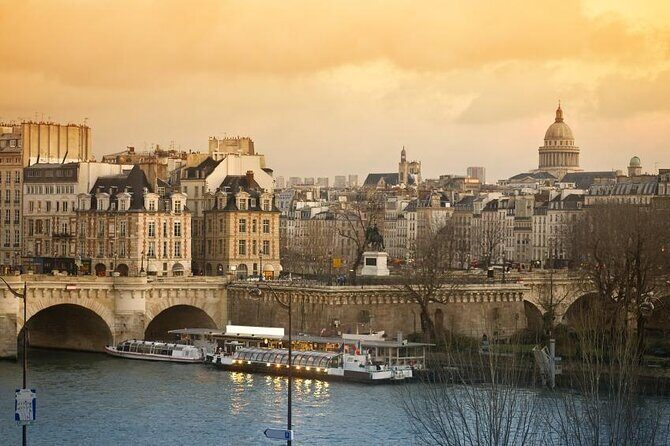
The Latin Quarter, or Quartier Latin, is famous for its schools, churches, and bookish energy. This tour helps you get your bearings fast because it keeps you moving through the 5th arrondissement while explaining what you’re seeing and why it matters.
I like guided walking here because the landmarks don’t sit in isolation. Instead, you connect them: a hill here explains a view, a square there explains a neighborhood vibe, and a church explains a saint’s place in Paris.
You can also read our reviews of more walking tours in Paris



Two hours that connect Roman, medieval, and modern Paris
This experience is a private walking tour in English, designed to last about 2 hours. Even though the route includes many named stops, the timing is set up for quick looks, short explanations, and lots of strolling—so you leave with a mental map, not a stack of ticket stubs.
You’ll start at 7 Rue de Poissy (75005) and finish near Fontaine Saint-Michel at Pl. Saint-Michel, close to the Saint Michel metro. That end point is convenient because it drops you right into another busy part of the Left Bank, so you can keep exploring after the tour without a long transit.
Quartier Latin first pass: the neighborhood feel you’ll remember
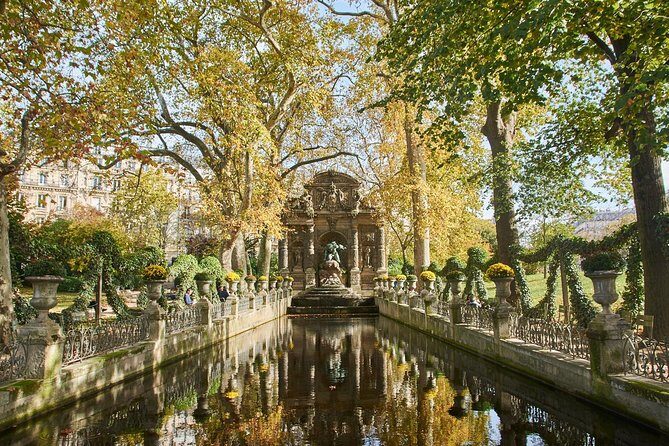
Expect your tour to begin with a classic introduction to Quartier Latin. The idea isn’t just photos of street corners; it’s learning how the district’s identity formed around education and religious life.
This is also where a private format helps. If you’re the type who wants to know why a street is laid out the way it is, or what to look for when you pass a landmark, your guide can tailor the story instead of repeating the same script for everyone.
Arènes de Lutèce: the oldest standing arena in Paris
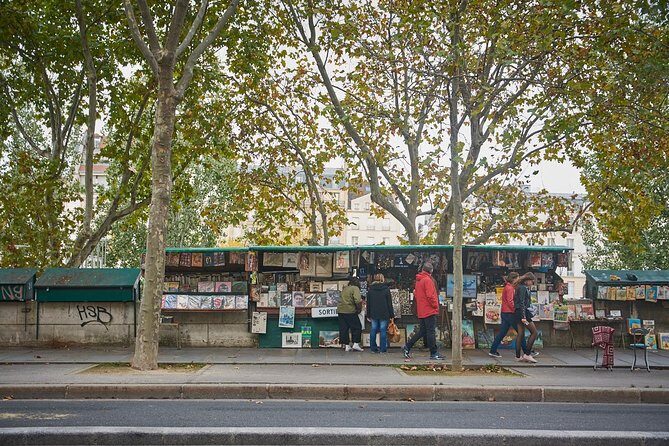
One of the most striking stops is Arènes de Lutèce. It’s described as the oldest monument built in Paris and still partly existing, built in the 1st century AD. The arena could seat around 17,000 people, and it was used not just for theatre but also for gladiatorial fights.
Here’s the value for you: this is a rare chance to see physical proof that Roman Paris wasn’t just an idea—it’s in the ground beneath your feet. Even if your time is short, the explanation makes the stone feel less random and more intentional.
Practical note: because the stop is brief, you should treat it like a “get oriented” moment. If you want lingering photos or a deeper visit, you can build that in on your own afterward.
Collège des Bernardins: medieval education that scaled up
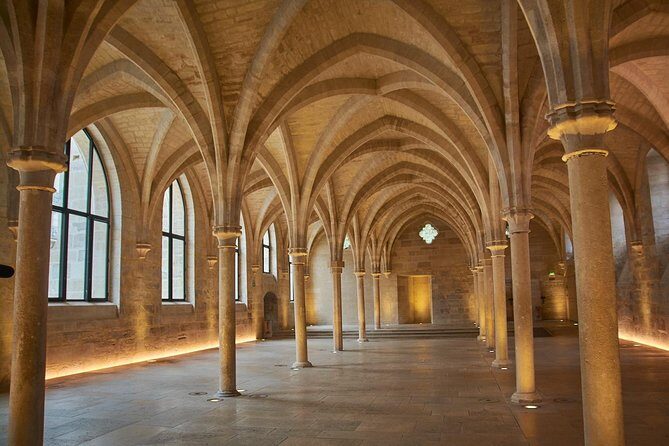
Next comes Collège des Bernardins, a former Cistercian college within the University of Paris. It’s noted as one of the largest and oldest medieval buildings in Paris, originally created in the 13th century to welcome and train young monks.
What makes this stop especially interesting is the scale of what it enabled. It was designed for a few students, yet it trained thousands of monks from across Europe between the 13th and 15th centuries.
The takeaway for you: when you’re walking the Latin Quarter, it’s easy to treat “schools” as a modern identity. This stop reminds you the district’s educational role goes back centuries, with buildings that were made to function, not just decorate.
You can also read our reviews of more private tours in Paris






St. Étienne-du-Mont and Geneviève: a shrine inside a church
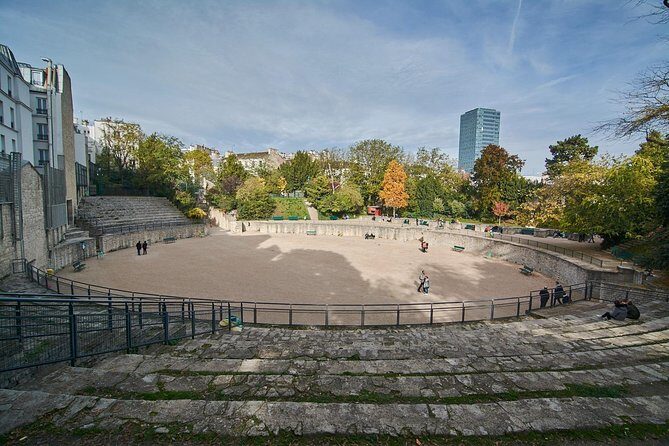
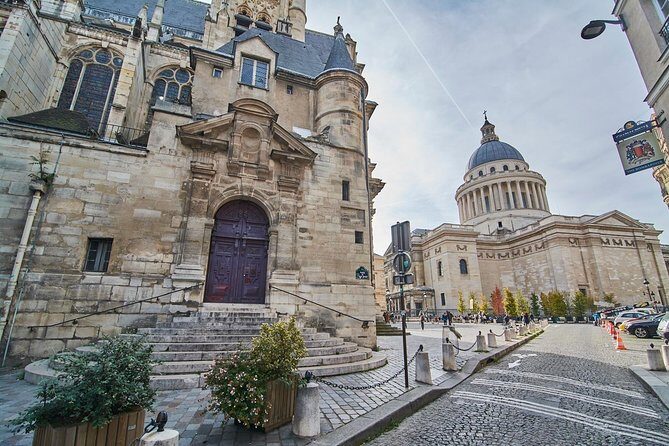
You’ll also pause at Saint-Étienne-du-Mont, on Montagne Sainte-Geneviève. The key detail here is the shrine of Geneviève, the patron saint of Paris, located inside the church.
This is a helpful stop even if you’re not a church-history person. A quick, guided explanation turns it from another stone facade into a landmark with a role in the city’s sense of identity and protection.
Panthéon: what you get on a short stop (and what you miss)
The tour includes the Panthéon but notes that admission isn’t included. Built as a church and later converted into a mausoleum for distinguished French people, it’s one of the biggest visual anchors of the Latin Quarter area.
With a short stop, you’ll likely get orientation and context more than an in-depth visit inside. If the Panthéon interior is a must for you, plan to add it separately—this tour is better for understanding where it fits than for replacing a full museum-style visit.
Place de la Contrescarpe: the café square where life happens
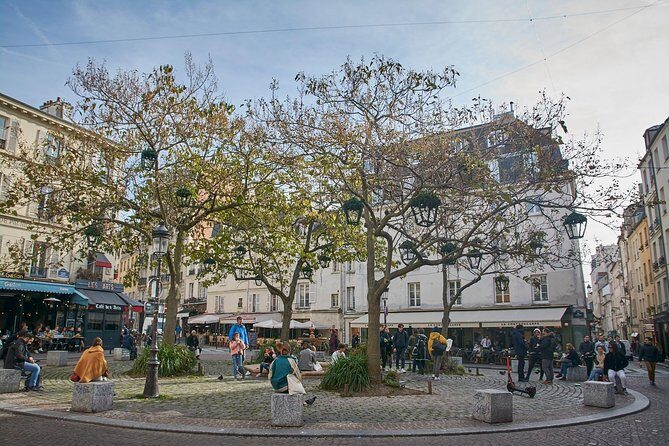
At Place de la Contrescarpe, you’ll see a typical French square surrounded by cafés. Even though the time is brief, this stop gives your brain a reset.
I like including squares because they help you feel the neighborhood, not just the monuments. After stone and centuries, you get a sense of how locals actually move through space—slow, practical, and social.
Fontaine Saint-Michel: a 19th-century landmark at the center of the walk
The Fontaine Saint-Michel is a tidy, visually strong stop. It’s described as a fountain built in 1860, and it works as a natural waypoint because it’s easy to spot and easy to revisit later.
If you’re walking with kids, or you just want a moment that feels more “Paris street-life” than “museum stop,” this is a good place for it. The explanation also helps you see it as more than a background landmark.
Luxembourg Gardens: where your feet get a break
The tour spends time at Jardin du Luxembourg, often considered one of the best gardens in Paris. It was created in 1612 by Marie de Medicis, and today it’s owned by the French Senate.
This is one of the most valuable parts of the route because you get a proper block of time—enough to step out of traffic rhythms and into a slower pace. You can also use it to regroup if you’ve already done a lot of walking that day.
Medici Fountain: a fountain stop with an art-story payoff
Inside the garden area, you’ll also see the Medici Fountain. It was built in 1630 by Marie de Medicis and renovated and rebuilt in 1866. A standout extra detail: it’s linked to inspiration for Victor Hugo.
This is the kind of fact that makes you look twice. Instead of just seeing water and stone, you understand why the location has long attracted attention from writers and artists.
If you like details, ask your guide what to look for here so you can catch the right angles and features without losing time.
Montagne Sainte-Geneviève and Place de la Sorbonne: small spaces, big meaning
Next you’ll head to Montagne Sainte-Geneviève, a small hill with several old Parisian monuments. Even a short stop helps because the hill explains why certain buildings feel “anchored” and why this area carries so much historical weight in a compact area.
Then you’ll reach Place de la Sorbonne, described as a small square in front of the Sorbonne. These smaller public spaces matter because they show you the Latin Quarter’s everyday scale—less dramatic than grand boulevards, but full of everyday significance.
A second Quartier Latin sweep: tying landmarks together
The final stretch loops back toward Quartier Latin again to cover main landmarks of the neighborhood. That repetition isn’t redundancy; it’s structure. You start with orientation, you collect key stories, and then you revisit the bigger picture so the district starts to feel coherent.
I find this approach helpful if you’re the type who gets confused by Paris geography. By the end, you should feel like you can point out where you are, what direction you’re facing, and how the sites relate.
Price and value: what you’re paying for
At $305.54 per person for an approximately 2-hour private tour, this isn’t a budget option. But it also isn’t meant to be a low-cost “stand in a line” activity.
Here’s where value comes from for you:
- Private format for groups up to seven means you can ask questions and move at your pace
- Local guide adds context so free sights feel meaningful instead of random
- Most stops are free entry on the route, so you’re not constantly paying to see each place
- A group discount is mentioned, which can help if you’re booking with more people
One thing to keep in mind: because the Panthéon isn’t included, you might pay extra if you want inside access. For a smoother day, decide ahead of time whether you want a quick “outside viewing” or an “inside visit” plan.
Also, this is a tour that tends to get booked fairly ahead—on average 79 days in advance—so if your dates are firm, it’s smart to lock it in early.
What to wear and bring for a smooth Latin Quarter walk
The route is marked as requiring moderate physical fitness. That usually means steady walking with some stops, not a slow stroll where you never break a sweat.
I’d wear comfortable shoes you trust, since Paris stone sidewalks can be slippery. And because snacks aren’t included, it’s smart to bring water and a light option if you’re likely to get hungry before your next meal.
Who this tour fits best
This private walking tour is a strong fit if you want:
- A hands-on orientation to the Latin Quarter without managing logistics yourself
- A guide to explain why places matter, including Roman Paris and medieval education
- A group setting of up to seven where the pace stays personal
It’s also a good match if you like both major sights and smaller stops, because the itinerary intentionally mixes grand names like the Panthéon with café squares and fountains.
If you’re traveling solo and want a group vibe, private tours can still work, but the real appeal is that you get undivided attention rather than a crowd script.
A note on the guide quality
One review highlights Quentin as excellent and specifically mentions that he led people through interesting sections of the Latin Quarter. That aligns with what you want from a walking tour: clear explanations, smooth pacing, and the ability to guide your attention so you notice the details you’d miss on your own.
Should you book this Latin Quarter private walking tour?
Book it if you want a private, English-language guide who helps you turn a famous area into something you understand quickly. The mix of free stops, Roman-era remains, medieval education, and time in Luxembourg Gardens makes it a practical way to see more than one side of the 5th arrondissement without bouncing between unrelated attractions.
Skip it or plan differently if the Panthéon interior is your main goal. Since admission isn’t included and the stop is short, you may end up wanting a separate add-on. And if you’re trying to keep costs low, you may prefer a group tour or self-guided route.
If your dates are set and you care about getting context while walking, this is the kind of tour that saves you time and helps you enjoy the Latin Quarter more from your first steps.
FAQ
How long is the Latin Quarter Private Walking Tour?
It lasts about 2 hours.
Where does the tour start and end?
The tour starts at 7 Rue de Poissy, 75005 Paris and ends near Fontaine Saint-Michel, Pl. Saint-Michel, 75005 Paris, close to the Saint Michel metro station.
Is the tour private?
Yes. It’s a private tour/activity, so only your group participates.
What language is the tour offered in?
The tour is offered in English.
What’s included in the price?
A local guide is included, and you’ll have a mobile ticket. Snacks are not included.
Are the entrances included for the stops?
Most stops are listed as free on the route, but Panthéon admission is not included.
What kind of fitness level do you need?
The tour is marked for travelers with a moderate physical fitness level.
What’s the cancellation policy?
You can cancel for a full refund if you cancel at least 24 hours before the experience’s start time. Free cancellation is available.